Minor Hotels has named Shobhit Khattri as associate vice president of development for India, Nepal and Bangladesh. Based in New Delhi, Khattri reports to Omar Romero, chief development and luxury officer, and works closely with the Asia business development team.
In this role, Khattri is responsible for identifying and managing new development opportunities across the three countries, from site selection to hotel openings. He will also support the expansion of Minor Hotels’ brands – particularly in India – and work with operations teams to ensure new projects align with brand standards and operational goals.
Khattri brings over 17 years of experience in hospitality development across South Asia, the Middle East and Africa.
Pullman Chennai Anna Salai has appointed Vinodh Ramamurthy as general manager.
With over two decades of experience in the hospitality sector, he has held senior leadership roles across several hotel groups in India, and most recently served as general manager at three properties in various cities. His prior experience includes leadership roles at Taj and Hilton.
In his new role, Ramamurthy will focus on enhancing guest services, developing talent, and strengthening the hotel’s position as a destination for both business and leisure travellers in Chennai.
Cosmos Hotel Management Co., operator of the apartment-hotel brand Mimaru, has partnered with Arukikata Co., publisher of the Chikyu no Arukikata travel guide series, and Good Luck Trip, a platform for international visitors to Japan, to launch the country’s first free accessible travel guide in English, traditional Chinese, and Japanese.
According to the World Health Organization (2023), around 16 per cent of the global population lives with some form of disability. Available in print at all Mimaru locations and online, the guide is designed to help more travellers explore Japan with confidence. It highlights accessible facilities and routes in Tokyo, Osaka, and Kyoto, presented in a format typical of Japanese travel guides, with personal columns and photos to encourage inclusive travel.
The guide helps travellers explore Tokyo, Kyoto, and Osaka with accessible routes and tips
This initiative forms part of Mimaru’s broader approach to inclusive hospitality, built around three principles: diversity in people and work styles, connection with guests and communities, and environmental responsibility. These align with the United Nations Sustainable Development Goal 11, which promotes inclusive, safe, and sustainable cities.
Mimaru rooms include kitchens and spacious living areas, making them suitable for families, groups, and travellers with varied needs. Staff are trained in universal manners, and the company works with accessibility experts to improve services.
Although urban accessibility has improved, reliable travel information remains limited. The guide helps address this by providing clear, practical details on barrier-free transport and facilities in Japan’s major cities. It aims to make travel more accessible and to show that exploring Japan is possible for everyone.
The 16-page guide, titled Explore the Highlights, includes QR codes for real-time updates. It features seasonal highlights, suggested routes, and detailed local access information for Tokyo, Kyoto, and Osaka. It also provides tips on transport, useful contacts, and an introduction to Mimaru’s apartment-style accommodation and its ongoing work in accessible tourism.
The digital edition is free to use, share, and distribute, helping more people find inclusive ways to discover Japan.
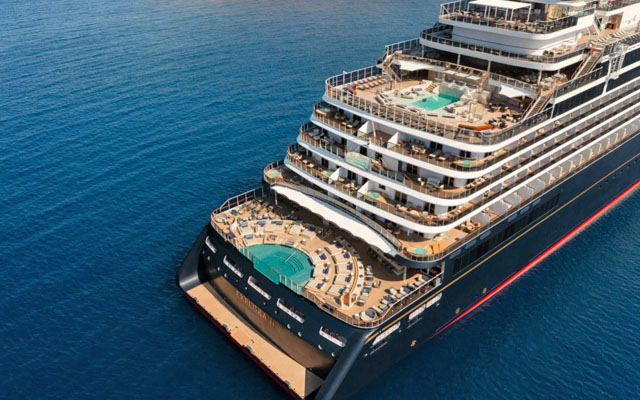
Explora Journeys, the luxury lifestyle ocean travel brand of the MSC Group, has launched Explora Club – a new loyalty programme designed to recognise and reward returning guests.
The programme features a five-tier structure: Classic, Silver, Gold, Platinum, and Diamond. Each level unlocks a curated set of benefits, including priority access, tailored events, personalised gifts, and exclusive savings. As members travel more, they gain additional privileges that enhance their experience both on board and ashore.
The Explora Club loyalty programme offers exclusive benefits for returning guests
Membership levels are determined by weighted nights at sea, adjusted by suite category. Additional points can be earned through Destination Experiences booked before or during the journey, as well as through eligible onboard spending. This includes Ocean Wellness treatments, culinary experiences, beverages, laundry services, and purchases at The Journey boutique.
Explora Club also offers Status Match, allowing guests with loyalty status from other luxury cruise lines to receive an equivalent membership level from their very first journey.
By July 2025, members will have access to a personalised My Explora area online, where they can view their benefits, status level, and past journeys—all contributing to their overall membership tier.
As members move through the levels, they enjoy an expanding range of benefits. These include a welcome on board, exclusive gifts, birthday surprises, and turndown touches. Members also receive savings and credits across Ocean Wellness, Destination Experiences, and future journeys. Higher tiers unlock special offers, boutique discounts, and a complimentary week-long journey for two.
Before each journey, members benefit from early access to new itineraries, a dedicated members’ area online, and priority assistance. Top-tier members also enjoy private airport transfers and complimentary suite upgrades.
On board, guests are invited to exclusive events, such as cocktail receptions with ship leadership and signature culinary experiences. Services are further enhanced with perks like a welcome from the general manager, laundry services, priority bookings, behind-the-scenes tours, and private shopping opportunities.
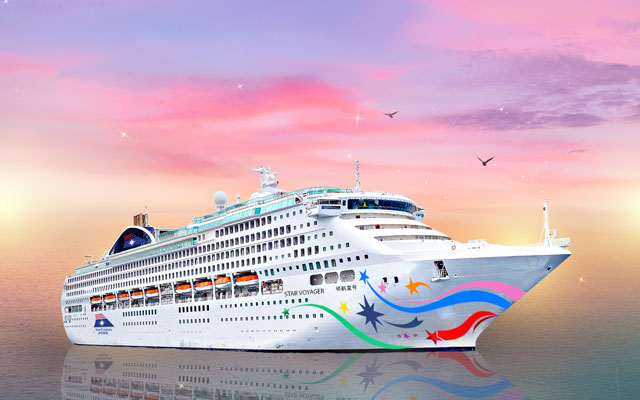
StarCruises has introduced a new series of shorter itineraries aboard Star Voyager, sailing from Singapore and Ho Chi Minh City. These three- and four-night voyages offer a practical option for school holidays in Singapore and Vietnam, first-time cruisers, families, busy professionals, and spontaneous getaways.
Starting May 15, 2025, Star Voyager will begin a series of three-night cruises from Singapore to Phuket, Thailand. The ship docks in Phuket on the second day and stays until 01.00 for guests to explore. Additional sailings are scheduled for May 18 and May 24, 2025.
Star Voyager’s new short cruises from Singapore and Ho Chi Minh City provides options for quick getaways to nearby locations
Star Voyager will also offer a three-night cruise from Singapore to Penang and Melaka, departing on May 21, 2025. This sailing offers the chance to visit both destinations in one trip.
Embark on a four-night cruise from Singapore to Ho Chi Minh City, departing on June 11, 15, and 19, 2025. Guests can explore historical landmarks such as the Saigon Notre-Dame Cathedral, the Central Post Office, the War Remnants Museum, and the Reunification Palace, and enjoy shopping and local experiences.
Star Voyager has moved its July sailings to June, with three four-night cruises to Singapore from Ho Chi Minh City, departing June 13, 17, and 21, 2025. This will be the first time Vietnamese guests can board a cruise ship in Ho Chi Minh City to travel overseas. The ship will dock at the Singapore Cruise Centre, next to Vivo City Mall and close to Sentosa Island and Gardens by the Bay.
Bali’s governor, Wayan Koster, has issued new regulations for foreign visitors to protect the island’s cultural practices and maintain respectful and sustainable tourism.
Under the rules, visitors must respect sacred sites, religious symbols, and Balinese customs. They are required to wear appropriate clothing in public areas and tourist spots. Proper behaviour is expected in temples, restaurants, and on the streets.
The new regulations aim to enforce respectful conduct and revive cultural education across Bali
The circular lists specific prohibitions, such as entering temples without traditional Balinese clothing, climbing sacred trees, and behaving disruptively at spiritual sites. It also bans littering, single-use plastics, and unsuitable behaviour, both in person and online.
This circular replaces one from 2023, which introduced similar rules but had limited effect. Implementation was affected by leadership changes and a lack of public education. The new version uses firmer language, clearer duties, and wider outreach, including through schools and traditional village networks.
Industry representatives have largely supported the measures but emphasise the need for enforcement.
I Putu Winastra, chairman of the Association of the Indonesian Tours and Travel Agencies (ASITA) Bali Chapter, stated: “The key challenge lies not only in having regulations in place but in ensuring their proper enforcement. Clear penalties for violations are crucial to making these rules effective.”
Nyoman Subrata, managing director of Bali Bedira Anugrah Tour & Travel, said education was essential for preserving culture: “Education and outreach about the new rules must get to not only tourists but also local residents. Communities, traditional leaders, and local authorities are the front line. Their discipline in upholding cultural values is vital.”
Sugeng Suprianto, managing director of Top Indonesia Holidays, suggested improving surveillance. “Increasing the number of CCTV cameras across Bali would provide a simple yet effective way to monitor compliance,” he said, adding that it would enhance both security and public trust.
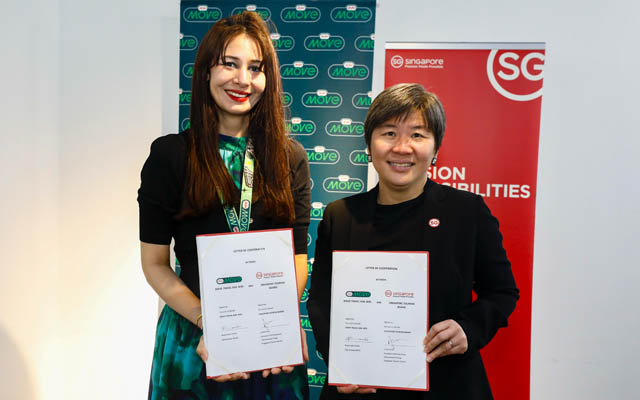
The Singapore Tourism Board (STB) and AirAsia MOVE have formed a strategic partnership to enhance travel experiences for visitors to Singapore, particularly from Malaysia and Thailand. The collaboration was formalised with the signing of a Letter of Cooperation (LOC) on April 17, 2025.
Through this partnership, Malaysian and Thai travellers can access attractive travel deals from AirAsia MOVE, combining flights, hotel stays, and event packages for a seamless getaway. The partnership focuses on leveraging data, technology, and content to offer personalised and engaging travel experiences. A joint campaign will launch in 3Q2025 to showcase Singapore’s offerings and increase visibility among regional travellers.
From left: AirAsia MOVE’s Nadia Omer and STB’s Juliana Kua
The collaboration will feature personalised recommendations, highlighting key events, must-visit places, and unique local experiences for both first-time and repeat visitors. For easier holiday planning, visitors can access up-to-date information on Singapore’s events, accommodation, and activities directly through AirAsia MOVE.
STB will also work with AirAsia MOVE to improve the travel experience for Muslim travellers, promoting a variety of Muslim-friendly offerings across Singapore.
“South-east Asian travellers have diverse needs and interests, and many are familiar with Singapore. To get them to return or do more, we need a more personalised and data-driven approach. That is why we are delighted to partner AirAsia MOVE – to leverage their insights and capabilities to deliver better experiences and to help travellers maximise their time in Singapore,” said Juliana Kua, assistant chief executive, international group, STB.
Nadia Omer, CEO of AirAsia MOVE, added: “By leveraging our digital ecosystem and consumer insights, we aim to enhance conversion and engagement while simplifying travel planning to Singapore. This synergy allows us to jointly unlock new opportunities in key markets like Malaysia and Thailand, and deliver greater value to both travellers and tourism stakeholders.”
Malaysia Aviation Group (MAG), the parent company of Malaysia Airlines, has warned that its operating costs could increase by up to 25 per cent due to global supply chain disruptions and new US tariffs.
MAG managing director, Izham Ismail, said MAG is monitoring cost movements closely, particularly for aircraft components affected by tariffs when shipped from other countries to the US.
Izham notes that MAG is preparing for rising costs due to US tariffs and supply chain challenges, but fleet upgrades remain on track
“Naturally, there will be cost pressure – the cost of sales will go up, and businesses will pass on the cost to customers,” Izham shared at a recent press conference.
MAG’s concerns stem from the expected rise in aircraft component prices. This increase, coupled with ongoing global supply chain uncertainty, could impact the group’s profitability in 2025.
MAG reported a net profit after interest and tax of 54 million ringgit (US$12.3 million) last year. Despite these challenges, Izham stated that the group does not currently expect any delays to the scheduled delivery of 18 Boeing 737-8 and 12 Boeing 737-10 aircraft, due to begin arriving from 2029.
These new aircraft will be deployed on Asian routes of up to six hours and form part of the group’s fleet modernisation strategy to improve operational efficiency and flexibility across domestic and international markets.
Malaysia Airlines was recently ranked 45th in the Brand Finance Airlines 50 2025 report, published on April 15. Now in its 15th year, the report is the longest-running study of its kind, ranking the world’s most valuable and strongest airline brands.
The airline returns to the list after a decade, emerging as the fastest-growing airline brand with a 209 per cent increase in brand value.
“That is a huge achievement. It has taught us to dream of becoming number one in the world in the future,” Izham said.
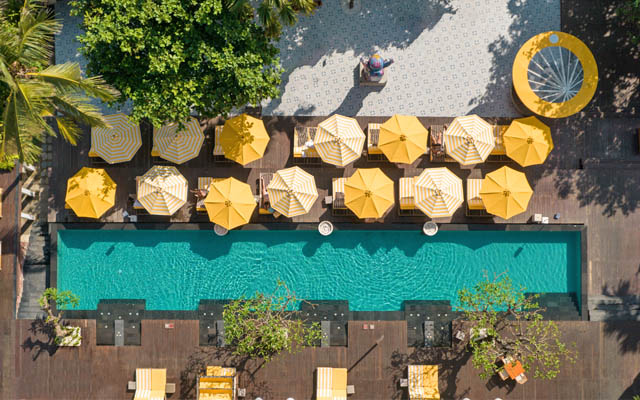
Ennismore’s Hyde Hotels will make its Indonesian debut with the signing of Hyde Suites Seminyak Bali, slated to open in 2026 as the brand’s first hotel in Asia.
Located in tropical gardens with views of the Indian Ocean, Hyde Suites Seminyak Bali will feature a beach club, rooftop dining, and suites with private balconies. The hotel will offer activities such as yoga, surfing, live music, and two restaurants, including a rooftop bar with views of Seminyak sunsets.
Hyde Suites Seminyak Bali will open in 2026
Hyde Suites Seminyak Bali will feature 59 suites, including swim-up options. The hotel’s social scene includes Hyde Beach with music, cocktails, and a rooftop restaurant serving coastal dishes and wines with ocean views. Guests can enjoy activities like yoga, DJ sets, surf lessons, and Balinese spiritual ceremonies.
Located in the heart of Seminyak, known for its beaches, dining, and nightlife, the hotel offers easy access to Bali’s cultural sites, including temples, architecture, art, and rice fields.
Hyde Hotels operates in Miami, Dubai, Ibiza, London, Johannesburg, and Bodrum, which is the brand’s first adult-only all-inclusive resort. The brand has a growing pipeline of exciting projects in key destinations, including Perth, Australia, and upcoming developments across Asia and the Pacific, with significant openings this year, including Mondrian Gold Coast Australia, 25hours Sydney, and Mama Shelter Singapore.
Phil Zrihen, brand COO of Hyde Hotels, said: “The Hyde brand and Bali have so much in common; both are world-renowned places for people coming together seeking exploration and a sense of community. We are delighted to have found the perfect partner in Maxima Realty Group to bring the Hyde vision to life in a stunning landscape rich in culture and history.”
Djoni Hasjim, CEO of Maxima Realty Group, added: “This collaboration to bring Hyde to Bali marks an exciting and progressive chapter in Grand Seminyak’s journey as we align with one of the world’s most innovative and culturally attuned hospitality groups. We have always envisioned more than just a resort – we aim to deliver immersive experiences, thoughtful design, and redefine exceptional hospitality.”
Santan, the F&B business of Capital A, has begun replacing single-use plastics with biodegradable materials to reduce environmental impact. All inflight disposable items, including cups, lids, and cutlery, are now made from polylactic acid (PLA), a material derived from renewable sources such as corn and cassava.
Developed with Rightway New Material, PLA decomposes more quickly than conventional plastics. Studies show PLA breaks down by over 90 per cent in industrial composting, whereas traditional plastics can take hundreds of years. Santan’s PLA-coated paper cups are certified for home composting, offering passengers a simpler disposal method.
Santan’s eco-focused initiatives aim to minimise waste and enhance sustainability across AirAsia’s inflight services
The initiative is being introduced in Malaysia and Thailand, with plans to expand across the seven airlines under the AirAsia brand.
By adopting PLA, Santan demonstrates that quality service can align with sustainable practices in the aviation sector.
Recognising the challenges of waste management, where disposable packaging is necessary for hygiene and operations, Santan is supporting its move to compostable cutlery with AI to improve food resource management. By enhancing forecasting and reducing overproduction, this approach minimises food waste and enhances supply chain efficiency, contributing to more sustainable operations.
Santan CEO Catherine Goh noted: “This strategic shift to compostable PLA packaging plays an important role in addressing the issue of plastic waste in the aviation sector. By implementing this change, AirAsia will reduce carbon emissions by 500 tonnes annually in Malaysia and Thailand and we hope it will inspire others in the industry to make meaningful changes for the planet.”



 Khattri brings over 17 years of experience in hospitality development across South Asia, the Middle East and Africa.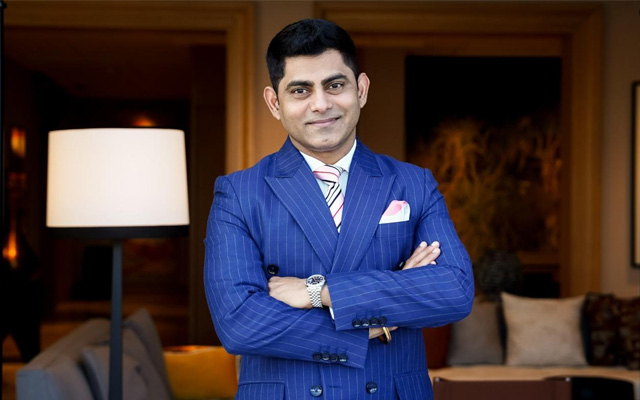
 In his new role, Ramamurthy will focus on enhancing guest services, developing talent, and strengthening the hotel’s position as a destination for both business and leisure travellers in Chennai.