TTGmice e-Weekly will be taking a break next week due to the Lunar New Year holidays and will resume the following week. We wish all readers a happy and prosperous Lunar New Year!
Resorts World Genting dangles sweet Elite C-Suites deal
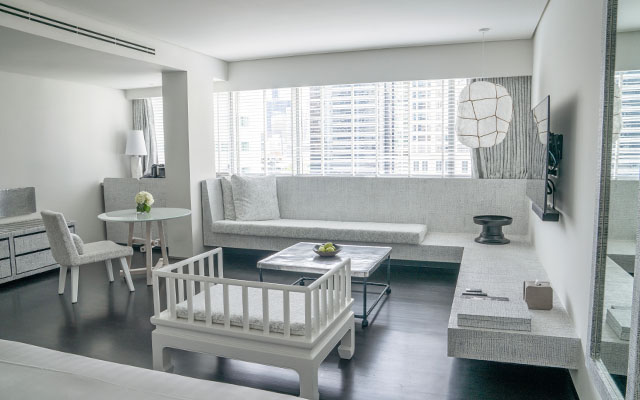
RESORTS World Genting MICE division introduced the Elite C-Suites Deal on February 1 exclusively for corporates.
Offerings for meeting planners include luxury limousine services, reserved car parks, golf, gourmet tea break menus and choice of hotel accommodation, among others.
Stella Sum, the resort’s assistant vice president MICE, said: “Elite C-Suites Deal was conceptualised after listening to meeting planners who told us they want more than just standard meeting packages of one lunch and two tea breaks.
“It has been well received because it is flexible and allows planners to pick any offerings that suit their needs and pay accordingly. We sold 42 Elite C-Suites the day it was launched.”
Arokia Das, senior manager, Luxury Tours Malaysia, said: “The new offerings will further enhance the quality of meetings. Elite C-Suites also makes it easier for us to promote Resorts World Genting to the high-end segment.
“As it is, Resorts World Genting has fantastic meeting facilities and the MICE team, from sales to operations, are very proactive. We’ve done a couple of events there, and they’ve all run smoothly.”
MyCEB adds more minds to Kesatria programme
MALAYSIA Convention & Exhibition Bureau’s (MyCEB) Kesatria 1Malaysia Programme, which identifies industry leaders to be tasked with attracting global meetings and conferences to Malaysia, recently appointed six new kesatria (or knights).
The addition brings the total number of kesatria to 37, and hails from various key economic sectors such as science, medical, research and innovation, identified in Malaysia’s Economic Transformation Programme.
Zulkefli Sharif, CEO of MyCEB, said: “Since the programme was introduced in 2012, it has generated 71 business leads, attracting an estimated 124,958 delegates and contributing an estimated RM1.4 billion (US$39.2 million) to the country’s economy.
“Of these, 39 per cent of bids were won and supported with 28 events secured, amounting to approximately 50,800 delegates and RM371 million.”
International association conferences and events secured by the kesatria for up to 2020 include International Harm Reduction Conference 2015, International Federation of Freight Forwarders Association World Congress 2017 and World Federation of Hemophilia World Congress 2020.
Mohamed Nazri Abdul Aziz, minister of Tourism & Culture Malaysia, who is also chief patron for this programme, said: “These conventions will complement the efforts of the Ministry in achieving its target of 29.4 million arrivals and RM89 billion in tourist receipts for 2015, and will also raise Malaysia’s standing on a global scale, contributing to our business tourism target of RM3.9 billion in gross national income by 2020.”
SACEOS partners Nanyang Polytechnic in talent retention project
THE Singapore Association of Convention and Exhibition Organisers and Suppliers (SACEOS) and Nanyang Polytechnic (NYP) signed an MoU last week with an aim to attract and retain talent within the local MICE industry.
Under the MoU, students enrolled in NYP’s Diploma in Hospitality and Tourism Management will receive exemptions of up to two days for two internationally accredited SACEOS courses of Professional Conference Management and Professional Exhibition Management.
NYP’s School of Business Management will work with SACEOS members to develop real business cases for students to work on and recommend solutions.
Industry professionals from SACEOS will also participate in a mentorship programme for final-year students.
Additionally, NYP students will be eligible for SACEOS student membership at a discounted rate, gaining access to networking events that SACEOS organise for members.
SACEOS honorary secretary, Ong Wee Min, said: “The key to success is always talent, and that is the biggest problem we face. Our talent is not just sought after locally, regionally but also internationally.”
NYP deputy principal, Henry Heng, added: “Singapore is facing a significant leakage of talent at the graduate level for the MICE industry, meaning they go on into other career tracks or move on to higher education.
“We think that now, with the help that SACEOS will provide through this MoU, there is a good chance that we can encourage students to view this path as a significant avenue for them to pursue which hitherto, was not on their radar.”
Phillips India holds 1,600-pax mega event in Sri Lanka
A GROUP of 1,600 delegates descended on Sri Lanka last month for meetings and leisure, the single largest MICE tour from India to Sri Lanka so far.
Handled by Sri Lanka’s largest DMC Walkers Tours, the 1,600-strong Phillips India group visited the island from January 16-19.
The group occupied more than 800 rooms at leading hotels in the capital and had simultaneous meetings and events per day, with special appearances by Indian cricket stars.
Vasantha Leelananda, executive vice president of John Keells Holdings, parent company of Walkers Tours, said: “With this experience we are now in a position to fully exploit the MICE potential in the Indian market and I am confident we will have many opportunities for conferences, meetings as well as large events including weddings in the future.”
Enthuse Answers, an event management agency from India, managed the group from India.
India is Sri Lanka’s largest source market and grew 16.3 per cent year-on-year to hit 242,734 arrivals, out of 1.5 million in total for 2014.
Pacto signs up for Euromic membership in drive for bigger MICE business
LEADING Indonesian DMC Pacto has joined Euromic to make MICE a central focus of its business objectives for the next three years.
Explaining the move, Umberto Cadamuro, COO inbound of Pacto, said: “In terms of products, Pacto is strong in Indonesia. Our incentive groups and high-end incentive market have experienced strong growth last year.
“We had a buy-out of St Regis Bali last year and another buy-out of Kupu Kupu Barong Resort and Tree Spa this year, just to name a couple of events.
“We have the capacity to grow our market and we feel we have not marketed (our products and services) enough.”
Joining the non-commercial association is an efficient way of building business, he opined. “We have gone through different options to grow this segment, including the possibility of appointing overseas representatives or joining different networks, and in the end we believe joining Euromic is the best opportunity.”
Euromic has 38 DMC members worldwide with a comprehensive database that is accessible by members. Umberto remarked: “The good thing about this association is that there is only one DMC member per country, and each of us is only interested in bringing business to our countries. One partner winning an event will be an opportunity for others to grab the next time.”
The membership also allows Pacto to be part of Euromic’s participation at tradeshows and sales mission, and the DMC is collaborating with the Euromic Chicago office to reach out to the US market “now that the (international) image of Indonesia has improved”.
Developing the MICE sector will be the company’s focus in the next three years and Umberto expects business growth of 15 per cent per year.
‘Third generation’ of MICE companies in China?
CHINA’S nascent MICE industry is coming into its own as MICE players ditch labour-intensive ways for modern tools, in what has been hailed as the birth of a “third generation” of MICE.
These comments were made at the formal launch of the China Smart MICE Group this week, with CEO David Chen expressing hope that his company will be a pioneer in a new generation of smart MICE industry players as it harnesses IT to provide holistic solutions for MICE businesses.
Chen commented that the first generation of MICE in China came about before 2002, when professional MICE companies did not exist and MICE travel was regarded as high-end travel.
But between 2002 and 2014 came the second generation that witnessed embryonic forms of MICE travel product, though the lack of service and product differentiation resulted in price wars.
However, while the absence of an effective regulatory mechanism is the main obstacle to the MICE industry today, Generation 3.0 will see a departure from labour-intensive and differential pricing-driven profit models and will incorporate the high-tech tools of today’s workplace – cloud computing, mobile technology and big data analytics – to understand consumers’ needs and provide cost-effective, legally compliant and holistic solutions.
Supported by Phoenix Travel Group and Legend Capital, China Smart will focus businesses in Beijing, Shanghai, Guangzhou, Chengdu and extend its reach to neighbouring cities to offer a range of services.
This includes MICE products, PR events, business customisation, auxiliary systems development and business network receptions.
Translated by Ong Yanchun from the original TTG China e-Daily, February 10, 2015 article
By Nadia Chung
A pulse on tourism
Tran Trong Kien ditched the medical profession for travel & tourism and listens so well to its heartbeat that his Thien Minh Group, which owns Buffalo Tours and Victoria Hotels & Resorts, is going regional.
You ran local tours to fund your medical studies. How did you end up as a tourism entrepreneur rather than a doctor?
It was summer work and I found guiding French tourists enjoyable. I set up a small tour guides’ office to create jobs for friends, who were six or seven other medical students.
We were all born in 1973, Year of the Buffalo, hence, Buffalo Tours. None of us had any guiding experience. What we had was pride in our country and the desire to show visitors its authenticity – the street food, villages, etc.
How did tourists find you?
At the time (1994), Vietnam was opening itself to the world. There was no infrastructure. There were only state-owned tourism companies like Saigontourist. Our tour guiding was far superior – we were young, educated, eager – and as a result, travel companies started approaching us. A lot was also through word of mouth.
Soon, we started booking transport and became rather like a DMC. This wasn’t the plan at all.
What made you stick to the industry?
1995 was a special year; it’s quite like Cuba today: after years of isolation, the US embargo was lifted. Private sector was allowed to enter and business suddenly grew.
I also began to enjoy running a business. Later, as we grew, I went for an MBA, as running a business requires you to know how to read a balance sheet, how to do marketing, etc, which medical studies does not teach you.
Are the others still with you?
Yes. It’s because of trust and it made me realise what a treasure it is to have the trust and the belief of your team.
Your parents must have flipped when their son became a DMC chief rather than a doctor.
They were proud when I went to medical school. My parents always give me the total freedom to do what I want to do, including going to medical school, then going into this business. It was a shock for my friends, however.
What about the business did you particularly enjoy?
We were young, had the best education in the city and were eager to learn. We had a blank slate to create something and, by 1997-98, we created a name as the first company in Vietnam to offer the concept of experiential travel – nothing fabricated, helping people to enjoy the culture and even, having a commitment to the community.
As medical students, we were trained to do no harm – try to find the root cause first and the different solutions to a problem. Through tour guiding, we also met amazing people. One of them, Mike, was a founder of the ecotourism society in Washington DC. It’s people like him, through a week of kayaking with us, who opened my eyes as to why tourism should be a business that supports community conservation.
Everyone now professes to be engaged in sustainability. So how do you stay different when the USP is now the norm?
Yes, it’s a standard today, but that’s good for the environment. As for staying different, there is never a boundary that stays still or fixed. It moves everytime. We just have to be nimble and flexible, and adopt changes quickly as a result of changes from the demand side, be it geographical or the tastes of clients.
You went on to buy Victoria Hotels & Resorts, seaplanes, cruises, etc. Why?
As a DMC, we’re a middleman. If we’re to grow, especially in a developing country in the 90s, we need to be able to control the entire supply chain.
So we started buying smaller hotels and now we own 12 hotels. We also looked at innovative transportation means, so that our guests could travel from point A to B with our train, then cruise on our boat and stay in our hotel – imagine the total experience and how we could control this whole experience.
And now Buffalo is going regional with the JV with
Flight Centre (TTG Asia e-Daily, December 19, 2014). Why Flight?
They share our fundamental belief that the passenger is a human being and wants interaction. And this is why tour operators and retail agencies will continue to thrive.
In a small country like Singapore where you’ve just opened office, how do you compete with the other established DMCs?
We compete by bringing the company spirit and our beliefs and values to the market. We don’t mind investing and we’re looking at six to eight new, authentic experiences in Singapore unique to Buffalo. It could be, for example, a seaplane experience, an overnight cruise, a cycling programme across the island – each will be an engaging experience.
We also have local experts, the right people on the ground who have the ability to connect with clients and who can create a total experience. Our general manager in Singapore, Carol Tan, for example, is extremely experienced. Combined with our technology and distribution, we will do well.
Why do you prefer to set up afresh than buy an existing regional DMC?
It’s easier to create a new one and train the people on the culture and spirit of Buffalo, compared with buying company X, where we have to scrap their values, then retrain.
What’s your advice to young entrepreneurs in emerging markets such as Indochina?
We don’t need to follow the models or brands set up in the West. We can create our own. I have often wondered why it is rare for an Asian homegrown model to grow regionally, then globally. I believe if you have the guts and the intelligence, you can create something that comes from your own backyard. Hopefully, this message will be an inspiration to young entrepreneurs in places like Vietnam, Cambodia, Laos and Myanmar.
This article was first published in TTG Asia, February 13, 2015 issue, on page 11. To read more, please view our digital edition or click here to subscribe.
Singapore to drive demand from Chinese tier-two cities
THE drastic fall in Chinese arrivals last year had hurt Singapore’s overall visitor numbers, prompting the Singapore Tourism Board (STB) to step up promotions in China this year.
Total international arrivals in 2014 dipped 3.1 per cent to 15.1 million, from the record 15.6 million in 2013.
Following China’s imposition of anti-zero-fare tour laws, Thailand’s political unrest and the disappearance of Malaysia Airlines’ flight MH370 – with the latter two having turned multi-destination Chinese visitors away – China was the only source market among Singapore’s top 15 to record a double-digit fall, at 24 per cent year-on-year.
At STB’s year-in-review conference this morning, Lawrence Leong, the board’s assistant chief executive, told TTG Asia e-Daily the board will be intensifying marketing efforts in tier-two Chinese cities to drive demand this year.
He said: “We have identified seven cities – Tianjin, Nanjing, Qingdao, Xiamen, Fuzhou, Chongqing and Wuhan – to reach out to more effectively. For instance, we will be doing roadshows and partnering closely with the local trade there, bringing them to Singapore on fam trips.”
Social media promotion will be one of the key approaches as well. Leong added: “We are also forging new digital partnerships with Baidu, Alibaba and Tencent Group to widen our audience reach in China.”
The silver lining, though, was that overall, visitors had stayed longer and spent more last year, allowing for tourism receipts to at least stay flat at S$23.5 billion (US$18.8 billion), according to STB’s preliminary estimates.
Singapore also welcomed more visitors from Hong Kong, South Korea and Vietnam.
On the back of a stronger won against the Singapore dollar and stronger outbound travel sentiments, South Korean arrivals increased 14 per cent year-on-year. Hong Kong and Vietnam sent 17 and 11 per cent more visitors respectively, year-on-year.
Danang reaches out to families with new entertainment park
DANANG today witnessed the launch of an entertainment park, the Helio Center.
Besides local families, the park is also targeting the domestic tourism market and Asian tourists visiting Vietnam’s Central Coast.
With bumper boats, an indoor car-racing track, dining outlets and other indoor and outdoor spaces, the park is also suitable for corporate events with a fun twist, said its PR and communications manager Dinh Dinh Phuoc.
Having taken two years to construct, the US$20 million project is based on the American FEC (family entertainment centre) concept and features games, equipment and rides imported from the US. Notable attractions include a special go-kart track and ice skating.
While the games are suitable for all, an edutainment area plus driving and boating schools are dedicated for children.
F&B outlets include a coffee shop, bakery and foodcourt. Visitors access all games and services, including dining, via the Helio PowerCard, which can be loaded with money like a debit card.
By Louis Allen.