TTG Asia
Asia/Singapore Thursday, 28th May 2026
Page 2

JW Marriott New Delhi Aerocity welcomes new director of rooms

0

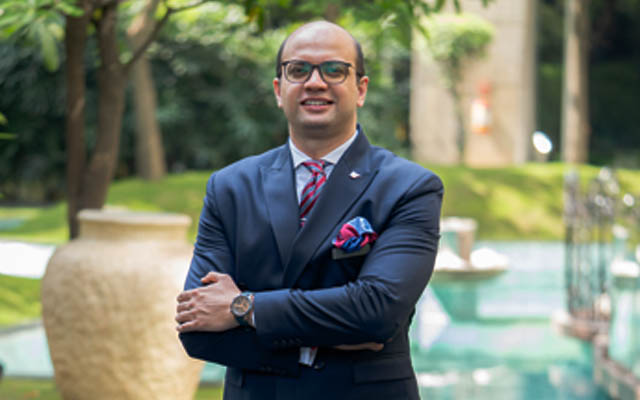
Himanshu Kala has been appointed as director of rooms of JW Marriott New Delhi Aerocity.

He joins from Bengaluru Marriott Hotel Whitefield, where he was director of rooms overseeing operations for the 520-key property.

With over 13 years of hospitality experience, he has worked across luxury, business and MICE hotels.

Zipair charts expansion through turbulence

0

Congratulations on your appointment. What are your priorities as CEO, how have they changed with the ongoing war on Iran, and what in your view is the biggest impact for Zipair?
Our top priorities are preserving the New Basic philosophy, evolving through technology, and further strengthening safety.

We will refine our model to allow customers to select only the services they need, while simultaneously enhancing customer value and efficiency through the digitalisation of operations and maintenance, including the implementation of Starlink (operated by SpaceX to provide free high-speed Internet connectivity onboard).

Given the geopolitical risks, including the situation in Iran, fuel cost resilience has become a growing priority. This is not an issue unique to Zipair, but facing the entire aviation industry, and we must closely monitor future developments.

And the greatest impact on longhaul LCCs is the increased cost and uncertainty resulting from fuel prices and airspace restrictions.

While longhaul LCCs have been made possible through rigorous cost-cutting and efficient operations, the current situation is extremely challenging.

Although Zipair’s routes are not affected by airspace restrictions, soaring fuel prices remain a significant burden. Nevertheless, Zipair remains committed to further strengthening our ongoing cost-cutting efforts and operational efficiency to continue offering tickets at affordable prices to our customers.

Is Zipair on track to expand its fleet from eight to 20 Boeing 787-8 Dreamliners by 2030, and which cities are being considered for route expansion?
Progress is on schedule. We plan to add two B787-8 aircraft in fiscal year 2026, increasing the fleet from eight to 10. In the medium- to long-term, we will phase in the B787-9 starting in 2027, with the goal of doubling the scale of our operations by early 2030s.

The decision to add B787-8s is based on network strategy and demand profiles. The company maintains a consistent policy that standardisation within the B787 family (synergies in range, fuel efficiency, maintenance, and operations) contributes to cost efficiency and operational stability.

Route expansion is starting with Kuala Lumpur within 2026, and we will prioritise major cities in Asia, North America, and Oceania where strong two-way demand for travel to Japan is anticipated, and which are suitable for the B787’s range.

Selection criteria include demand volume, seasonality, slot availability, potential for direct sales, and opportunities for partnership collaboration.

In addition to scheduled flights, we plan to continue operating charter flights with flexibility, utilising our aircraft resources, starting with the Las Vegas charter flight in June, announced earlier this month.

How much has JAL invested in the subsidiary to date, how much is being allocated for the next phase of expansion, and what contribution has Zipair made since launching passenger services in 2020?
Zipair, has received total capital of approximately 20 billion yen (US$125.80 million), including the preparatory phase prior to the commencement of operations.

In the next expansion phase, an additional investment of around 10 billion yen is planned to support network expansion, fleet augmentation, and enhancements to digital services.

Launched in 2020 during the pandemic, when many other airlines were pulling back operations, Zipair overcame initial losses to turn a healthy profit from 2023 as passenger demand recovered.

You describe Zipair as the airline of the future – lean, tech-enabled and focused on delivering value to passengers and partners. What innovations are you exploring to further personalise and scale the Zipair experience sustainably?
First: safety. We will utilise the newly introduced Starlink to address the most critical aspect of safety – ensuring that passengers are safely transported to their destinations, which is the fundamental mission of an airline.

For example, by sharing real-time weather information between the aircraft and ground control, we will be able to select safer and more efficient flight routes.

Secondly: service. We will use Starlink to create an environment where passengers can freely enjoy their time on board, thereby realising our goal of “making the flight feel shorter”.

We aim to make activities that were previously only possible on the ground, available in the air as well. This is the New Basic we aspire to achieve.

Third: operation. With the introduction of the new MacBook Pro within all Zipair aircraft, cabin attendants can deploy in-flight services more stably and quickly, consolidating multiple devices into one, thereby streamlining flight preparation.

Passengers can also easily access the in-flight portal without a dedicated app, reducing the workload for attendants. Future development of crew support features is expected to enhance operational support.

Everyone is talking about AI and agentic AI. What is Zipair exploring in this area, and what are you hoping to achieve beyond automation?
While we cannot provide specific details on implementation projects at this time, we strongly believe in empowering our employees with technology to help them serve our customers better.

AI is undoubtedly a key area of focus, and plans are currently underway internally. We view AI as an indispensable foundational technology for taking our long-standing commitment to cost reduction and operational efficiency to the next level.

We believe it will contribute to achieving our goals of streamlining operations and improving productivity, enhancing quality and consistency, increasing safety and resilience, and refining the customer experience, in addition to providing autonomous support for multi-stage tasks.


Balancing privacy and personalisation for Chinese HNWIs

0

Capturing the Chinese high-net-worth individual (HNWI) travel market requires hospitality operators to balance bespoke service with absolute discretion, according to The Luxury Travel Trends in China White Paper, a 99-page research project by Dragon Trail International and DONG Luxury Travel Collection released in May 2026.

Based on surveys of 200 Chinese HNWIs, the report found that a property’s brand reputation and ability to deliver personalised experiences are highly influential, with 79 per cent of respondents identifying both as important decision-making factors.

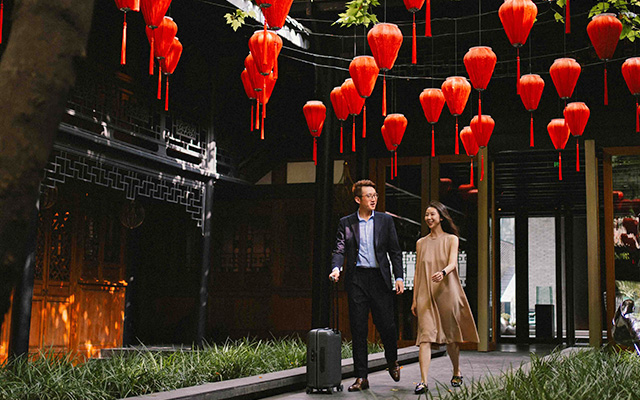
China’s HNWI segment remains resilient, with 85 per cent planning to increase travel spending in the coming year; photo by Upper House Chengdu

Privacy is also a major consideration, with 70 per cent of surveyed travellers saying exclusivity and discretion directly influence their travel choices.

The report noted that building brand reputation requires strong cultural localisation.

Operators are encouraged to develop a distinctive brand identity while tailoring services to ensure cultural relevance. This extends to digital storytelling on Chinese platforms such as WeChat and Xiaohongshu, where emotional resonance is considered more effective than overt promotional messaging.

Balancing hyper-personalisation with privacy expectations also requires a move away from intrusive digital processes.

“To maintain discretion, properties should rely on highly trained staff to gather guest preferences naturally. Highly trained and capable staff will be able to gather information just by observation, in addition to conversation, further respecting guest privacy,” said Sienna Parulis-Cook, director of marketing and communications at Dragon Trail International, adding that guest data must be carefully protected.

“The data must then be deployed with the utmost discretion, feeding into subtle, detailed, anticipatory service and personalisation that is delivered quietly and offered but not imposed,” Parulis-Cook said.

Meeting demand for exclusive, once-in-a-lifetime experiences also requires enhanced security measures and private access arrangements.

“Operators must cater to this desire by facilitating specialised VIP amenities such as alias check-ins, full property or floor buyouts, private villa entrances, and closed-door access to cultural attractions,” Parulis-Cook said.

The report added that securing future market share will depend on delivering these nuanced service elements alongside strong B2B operational support, with 78 per cent of Chinese HNWI travellers relying heavily on word-of-mouth recommendations when making travel decisions.

Marriott Bonvoy builds loyalty through local experiences

0

Marriott Bonvoy, Marriott International’s loyalty programme, is continuing to build membership and loyalty by focusing on what matters most to travellers.

Evolving from a traditional earn-and-redeem model, the programme has become more experience-led and lifestyle-focused, said John Toomey, chief commercial officer, Marriott International, APEC, in an interview with TTG Asia.

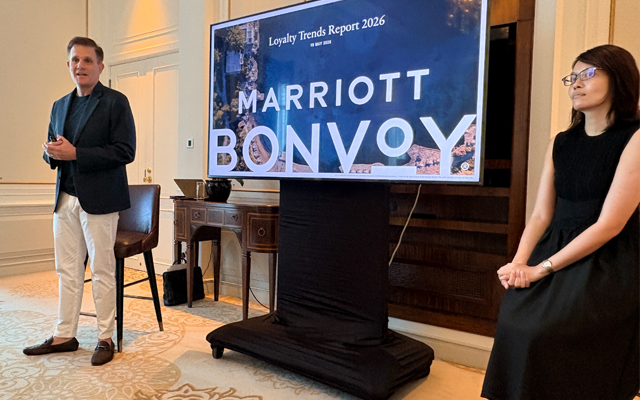
From left: Marriott International’s John Toomey and Mei Xue Ying; photo by Audrey Ng

This approach aligns with findings from the recently released Loyalty Trends Report 2026 for the Asia-Pacific region excluding China (APEC).

“The transformation of the programme is in part due to us identifying that it’s not one-size-fits-all for all travellers. So we have different passion points we create for our members by focusing on entertainment, sports and culinary. And I think that’s the exciting piece of it,” he said.

The report found that travellers engage with loyalty programmes based on a mix of travel priorities, expectations around everyday value, and local market dynamics.

The top five travel priorities identified across APEC were food and dining, nature and sightseeing, shopping, cultural immersion, and recharge and disconnect, with food and dining emerging as the leading driver of travel and hotel loyalty.

The report also found that travellers value the ability to earn loyalty points through everyday spending.

Toomey highlighted Marriott Bonvoy’s partnerships with local companies such as Flipkart and Swiggy in India, and Rakuten in Japan, which allow members to earn points through daily transactions. He added that co-branded credit cards and airline partnerships have also performed well.

Marriott Bonvoy currently offers the Marriott Bonvoy American Express credit card for residents in Japan and recently launched the Marriott Bonvoy Mandiri Credit Card in Indonesia. The programme also partners with Japanese airlines All Nippon Airways and Japan Airlines, allowing members to transfer points into air miles.

“We need to have key strategic hyperlocalised partners in all countries where we do business,” said Toomey, adding that Marriott hopes to establish another strategic airline partnership in Japan and additional partnerships in Singapore and Vietnam.

“We can be a part of our members’ journey from the moment they make their hotel reservation, getting on the flight and transportation of the hotel and so forth.”

Experiences remain another major focus of the programme, which Toomey described as Marriott Bonvoy’s “secret sauce”.

Local teams work with brands and event organisers to create Marriott Bonvoy Moments, offering members access to curated experiences.

“To give you a good example, we’ve got our team on the ground in Bangkok. They know what the members in Bangkok, our Thai members are looking for. They will do special tie ups and member Marriott Bonvoy moments for the Bangkok Jazz Fest or Music Festival,” Toomey shared.

With more hotels opening over the next few years in destinations such as Laos and Mongolia, catering to travellers seeking new experiences, Toomey said he remains confident that programme membership will continue to grow.

Insight Vacations adds 35 itineraries to new small group collection

0

Insight Vacations has expanded its premium guided travel portfolio with the introduction of a new Small Group Tours collection featuring 35 itineraries across five continents.

Now open for bookings for 2027 departures, the collection has been developed for travellers seeking smaller group sizes and more immersive experiences. Most itineraries are capped at 24 guests, while selected Africa journeys will accommodate a maximum of 18 travellers.

The Northern Lights of Scandinavia itinerary includes a stay at Aurora Cabins in Saariselkä, Finland, as part of Insight Vacations’ new small group tours collection

The new tours retain the brand’s premium inclusions, including hand-picked accommodation, guided experiences, luxury coaches with additional legroom, and access to Travel Directors and Local Specialists.

The launch reflects growing demand for smaller-scale travel experiences focused on comfort, access and deeper engagement with destinations. Insight Vacations said the itineraries were designed to offer experiences that may be more difficult to accommodate with larger groups.

Featured itineraries include Country Roads of Portugal, where guests explore the Ria Formosa lagoon with a marine biologist and visit a local oyster farm; Wonders of Japan, which includes a hands-on bonsai experience with a Bonsai Master Apprentice; and Northern Lights of Scandinavia, featuring a stay in Aurora Cabins in Saariselkä, Finland.

In Africa, small group departures include Ancient Wonders of the Nile and Kenya Safari with Maasai Mara, with guest numbers limited to 18.

The collection also forms part of the company’s broader strategy to appeal to repeat travellers seeking a different perspective on familiar destinations through more personalised and experience-led itineraries.

To support the launch, Insight Vacations has introduced a dedicated selling guide for travel advisors outlining the collection, traveller profiles and tour highlights.

“Travellers are looking for the ease of guided travel, but with more space to connect deeply with the places they visit,” said Mae Cheah, managing director, Asia, TTC Tour Brands. “This is a significant expansion of our portfolio, and for advisors, it creates new opportunities to offer clients an even more immersive way to travel, backed by the quality and expertise they already expect from Insight Vacations.”

Vista sees rising demand for private aviation across China

0

Vista is reporting continued growth in private aviation demand across China and Asia-Pacific, driven by increasing cross-border business activity and the expansion of the region’s ultra-high-net-worth population.

According to the company, annual flight traffic across China grew by 32 per cent from 2024 to 2025, while Asia-Pacific recorded a 25 per cent increase during the same period. China accounted for particularly strong momentum, with flight activity rising 28 per cent year-on-year in 2025.

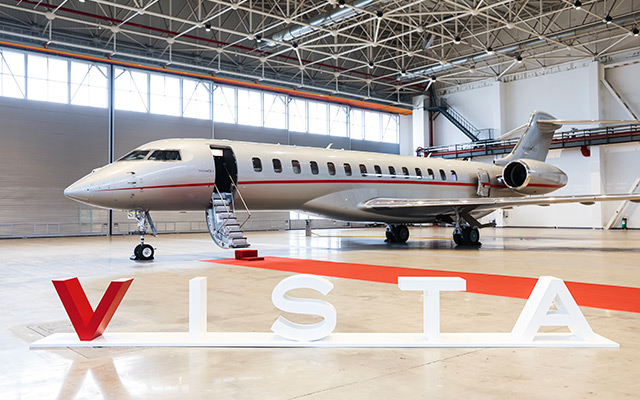
Vista reported continued growth in private aviation demand across China and Asia-Pacific, supported by rising cross-border travel and business activity

Vista said routes between Hong Kong and Shanghai have emerged among its three busiest in the region this year, alongside Hong Kong-Tokyo services. Demand originating from Hong Kong increased by 35 per cent, reflecting continued cross-border business and travel activity.

The company attributed the growth to stronger regional economic connectivity and rising demand for flexible longhaul travel among high-net-worth individuals and corporations. China’s ultra-high-net-worth segment continues to expand, according to the Knight Frank Wealth Report referenced by the company.

Vista stated travel across Asia, Europe and North America remained resilient in 2025, supporting continued demand for ultra-long-range private aviation services.

The company also highlighted the role of its newly introduced Bombardier Global 8000 aircraft, positioned for long-range intercontinental travel. The aircraft has a range of 8,000 nautical miles and can operate nonstop flights of up to 17 hours, with cabin configurations designed for both business and leisure travel.

The introduction of the Global 8000 follows Vista’s broader expansion strategy in Asia, including the launch of XO in Asia in October 2025, providing access to real-time private flight booking services alongside VistaJet’s subscription offering.

Vista’s global network provides access to more than 2,400 airports across 96 per cent of countries worldwide.

“Today’s ultra-high-net-worth individuals and corporations in China expect more than just access to an aircraft. They seek the very best: the latest innovations, personalised service, and the speed and flexibility to match their demanding lifestyles,” said Crystal Wong, president, Asia Pacific at Vista. “This is why regional expansion is central to our strategy.”

The Sebel Sydney Parramatta set for August 2026 opening

0

Accor is set to expand its presence in Western Sydney with the opening of The Sebel Sydney Parramatta in August 2026. Developed by Nirskam Group and to be managed by Accor, the new-build property will introduce an extended-stay offering in one of the region’s fastest-growing economic and cultural centres.

Located on Victoria Road, the hotel will comprise 51 studio, one- and two-bedroom suites designed to accommodate both short and longer stays. The property is positioned to offer a residential-style experience, with a focus on space, flexibility and comfort for corporate and leisure travellers.

The Sebel Sydney Parramatta will introduce a 51-suite extended-stay hotel in Western Sydney when it opens in August 2026

The opening comes as Parramatta continues to develop as a major hub for business, culture and tourism. Supported by ongoing public and private investment, the city has an economy valued at approximately A$28.86 billion (US$19.1 billion), making it the second-largest in New South Wales. Employment currently stands at around 178,000 jobs, with the population projected to exceed 500,000 by 2050.

Recent and planned developments, including Parramatta Square, the Powerhouse Parramatta museum and upgrades to Riverside Theatres, alongside improved transport links and the upcoming Western Sydney International Airport, are contributing to the area’s growth as a key gateway for the region.

The Sebel Sydney Parramatta will feature contemporary interiors with integrated technology, including high-speed Wi-Fi, in-room casting and self-check-in facilities. Additional amenities will include in-room dining, fitness centre, communal work and leisure spaces, and on-site parking.

Food and beverage options will include an all-day dining restaurant focused on Italian cuisine, as well as a rooftop bar and terrace. A small meeting room adjoining the terrace will accommodate intimate gatherings.

The property is within walking distance of CommBank Stadium, Parramatta CBD and surrounding dining precincts, with convenient access to central Sydney and major business hubs across Greater Western Sydney.

Adrian Williams, chief operating officer, Accor Pacific, commented: “Parramatta is evolving rapidly as a centre for business, culture and visitation, and this hotel is well placed to meet growing demand for high-quality accommodation that offers the comforts of home.”

“The hotel has been thoughtfully designed to deliver the space, comfort and flexibility today’s travellers are seeking, while also creating a stay experience that feels genuinely connected to the energy and character of Parramatta,” added Michael Rignall, general manager, The Sebel Sydney Parramatta.

Grand Hyatt Bali promotes long-stay wellness retreats in Nusa Dua

0

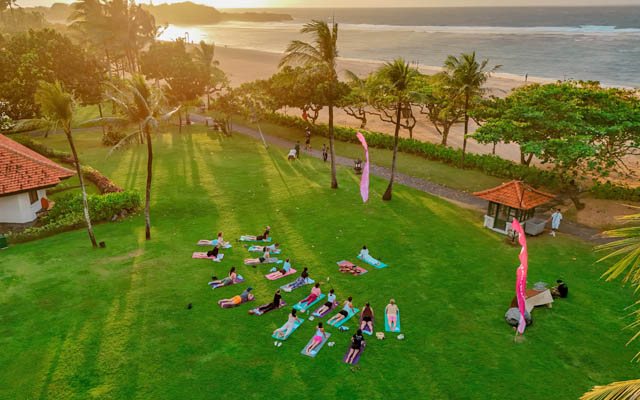
Grand Hyatt Bali has introduced a long-stay wellness programme in Nusa Dua, designed to offer travellers a slower-paced retreat that combines wellness, leisure and cultural experiences within a secure resort environment.

Located within the gated resort enclave of Nusa Dua, the beachfront property is positioning its “wellcation” concept around longer stays that combine accommodation, wellness activities and cultural experiences.

Grand Hyatt Bali introduces a long-stay wellness programme combining spa, cultural and leisure experiences in Nusa Dua

Guests staying a minimum of seven nights can receive up to 20 per cent off daily room rates, alongside daily breakfast, resort photoshoots, laundry benefits and a US$100 food and beverage credit.

The programme includes wellness activities such as sunrise yoga, aqua aerobics, mat pilates, sound healing and spa treatments at Kriya Spa. Cultural sessions including Balinese dance, coconut leaf crafting and canang-making are also available.

Dining experiences across the resort’s venues form part of the itinerary, including Indonesian, Japanese and Italian cuisine. Guests are also encouraged to explore nearby attractions such as Bali Collection, golf courses, water sports and beach clubs.

For more information, visit Grand Hyatt Bali.

New Zealand visa trial lifts China arrivals

0

New Zealand’s trial visa policy relaxing entry requirements for Chinese travellers arriving via Australia is delivering strong early results, with the country recording a sharp rebound in Chinese visitation and reshaping inbound travel patterns.

Speaking to TTG Asia during TRENZ in Auckland, Tourism New Zealand (TNZ) CEO Rene de Monchy said the policy, introduced last November for a 12-month trial period, had accelerated demand from China by allowing eligible travellers to enter New Zealand using their Australian visa.

Tourism New Zealand’s Rene de Monchy at TRENZ in Auckland; photo by Adelaine Ng

The results midway through the trial have been significant. Between November 2025 and March 2026, 59,000 Chinese visitors arrived in New Zealand via Australia, either as a transit stop or part of a dual-destination itinerary, representing year-on-year growth of at least 144 per cent. This compared with 42 per cent growth in overall Chinese arrivals during the same period.

“What we’ve seen is direct travel to New Zealand growing, while travel via Australia is also growing,” said de Monchy. “It has actually lifted the desire for New Zealand overall, not just those coming through Australia.”

The new visa pathway is also improving access to regional New Zealand.

“If you come through Australia, you can fly directly into Dunedin, Hamilton, Queenstown, Christchurch and Wellington,” de Monchy said.

The rebound is particularly important given China’s role in New Zealand’s visitor economy. China remains one of the country’s three largest international visitor markets, alongside Australia and the US, together accounting for 65 per cent of international tourism spending.

Winter tourism and ski travel are also seeing strong growth, particularly following increased interest in snow holidays after the Beijing Winter Olympics. Tourism New Zealand has stepped up winter campaigns across Asia, especially in China, while also recording encouraging growth from South-east Asia, Japan and South Korea.

He added that Air New Zealand’s newly announced Singapore-Christchurch service, launching in late October, would further strengthen New Zealand’s appeal as part of a multi-destination itinerary with Australia.

According to TNZ regional director for Asia Greg Wafelbakker, the rebound from China is being driven not only by easier access, but also by changing traveller behaviour following the pandemic.

“We’ve gone from more traditional group travel to much more immersive travel,” said Shanghai-based Wafelbakker. “People are looking for a deeper connection with the places they visit.”

He said Chinese travellers are increasingly seeking “slow travel” experiences, spending more time exploring regions at their own pace rather than following tightly packed itineraries. The trend aligns closely with New Zealand’s strengths as a self-drive and nature destination.

Wafelbakker added that FIT, family and small-group travel are now driving the strongest growth from China, replacing the large, price-sensitive group tours that dominated before the pandemic.

The market is also becoming more segmented, with strong growth from both younger travellers seeking immersive experiences and “silver” travellers aged over 50 with more time and spending power.

“They’re coming to explore and stay longer,” said Wafelbakker. “There’s a much deeper desire now to connect with the people and the place.”

Despite the rebound, de Monchy noted that the China market is still operating at about 80 per cent of pre-pandemic levels, leaving room for further growth.

Mekong Tourism Forum 2026 to focus on community and purpose-led travel

0

Tourism stakeholders from across the Greater Mekong Subregion will gather in Yangon from June 16-18, 2026 for the Mekong Tourism Forum (MTF) 2026, centred on the theme Tourism for People, Travel with Purpose.

Organised by Myanmar’s Ministry of Hotels, Tourism and Culture together with the Mekong Tourism Coordinating Office, the annual forum will examine how tourism can deliver greater benefits for local communities, support cultural preservation and strengthen regional cooperation while responding to changing traveller expectations.

MTF 2026 will bring together tourism leaders and community tourism practitioners in Yangon to discuss sustainable and people-focused travel development across the region

The event will take place at the Pan Pacific Hotel Yangon and will feature keynote presentations, panel discussions, networking sessions, gastronomy showcases and technical visits across the city.

Ahead of the main programme, delegates will also be able to attend a pre-forum workshop focused on evidence-based destination marketing, tourism intelligence and cross-border collaboration.

The forum will bring together tourism professionals, destination specialists, educators, hospitality representatives, social enterprises and community tourism practitioners from Cambodia, China, Laos, Myanmar, Thailand and Vietnam.

Keynote speaker Masaru Takayama will open the forum with a presentation titled “Tourism for People: From Principles to Lasting Impact”, examining tourism through the themes of conservation, community, culture and commerce.

Additional sessions will cover community-based tourism, cultural preservation, inclusion, workforce development and regional tourism cooperation. Participating organisations include AirAsia Move, Planeterra, Asian Ecotourism Network, Clickable Impact, ASEAN Tourism Association and Local Alike.

Delegates will also experience Yangon through technical visits and cultural activities highlighting the city’s architecture, heritage, spirituality and artisan traditions. A regional gastronomy exhibition featuring culinary traditions from across the Greater Mekong Subregion will form part of the programme.

“Tourism is one of the few sectors where local communities can directly benefit from human connection, cultural exchange, and shared experiences. MTF 2026 is built around the belief that tourism should serve people and places first,” said Dee Suvimol Thanasarakij, executive director of the Mekong Tourism Coordinating Office.

Registration for Mekong Tourism Forum 2026 is complimentary and now open via the organisation’s website.