TTG Asia
Asia/Singapore Friday, 22nd May 2026
Page 2

Bhaya Cruises returns with annual Clean The Bay initiative in Halong Bay

0

Bhaya Cruises will hold the ninth edition of its annual Clean The Bay environmental initiative on May 28, 2026, in Halong Bay. The Green Promise – For the Bay We Love programme continues the cruise operator’s long-running sustainability efforts within the UNESCO World Heritage destination.

First introduced in 2017, the initiative brings together travel partners, volunteers, NGOs, local communities and travellers to support marine conservation and environmental awareness in the bay. Over the years, the programme has developed into a collaborative platform focused on preserving the ecological health of one of Vietnam’s most visited natural attractions.

Bhaya Cruises’ annual Clean The Bay programme returns to Halong Bay with conservation and sustainability activities on May 28

This year’s activities will take place aboard Au Co Cruise and include kayaking and tender boat clean-up sessions, waste sorting and environmental impact recording, alongside awareness activities centred on responsible tourism and ocean conservation.

The programme will conclude with a sunset gathering featuring music and refreshments to mark the collective efforts made throughout the day.

Bhaya Cruises said the initiative forms part of its broader commitment to integrating sustainable practices across operations while encouraging greater environmental awareness within the tourism sector.

As interest in responsible travel continues to grow, the company aims to support greater participation from both industry stakeholders and travellers in conservation-focused activities linked to Halong Bay.

Clean the Bay is more than an annual event for us, it represents a long-term commitment to safeguarding the natural heritage of Halong Bay,” said Tran Thanh Nam, CEO of Bhaya Cruises. “Through this initiative, we hope to inspire both travellers and industry partners to take meaningful action and recognise that even the smallest efforts can contribute to preserving the bay for generations to come. Sustainability must remain at the heart of how we travel, operate, and engage with the environment.”

Agoda introduces single checkout for flights, hotels and activities

0

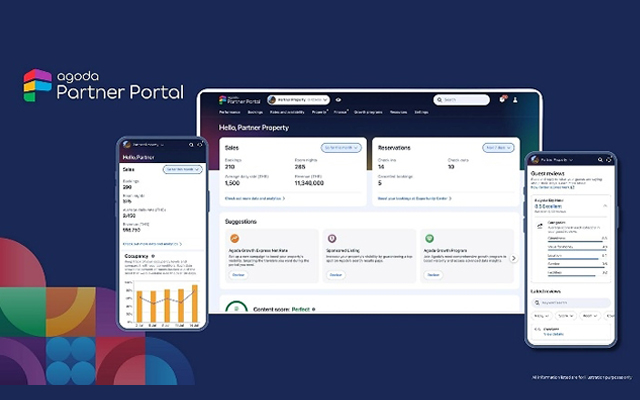
Agoda has launched a new multi-product booking engine that enables travellers to book flights, accommodation and activities in a single transaction.

The update allows users to plan and complete entire trips in one flow, removing the need for separate bookings across different travel components. All bookings are consolidated within the My Trips section of the platform, where travellers can manage and organise their itineraries.

Agoda introduces a single booking flow that combines flights, hotels and activities in one transaction

The system integrates multiple suppliers into a single workflow, handling payment processing, fraud checks and inventory confirmation behind the scenes. The aim is to simplify the booking process with one checkout and a unified confirmation.

The feature is designed to operate across Agoda’s global network, adapting to different supplier requirements while maintaining a consistent user experience across markets.

Agoda currently offers access to more than six million properties, 130,000 flight routes and 300,000 activities through its platform.

“Travellers want simplicity and convenience. They shouldn’t need to manage separate bookings, payment processes, and confirmations. By bringing flights, accommodation, and activities into a single booking flow, we’re making it easier to plan and manage trips from start to finish, while handling the complexity behind the scenes,” said Idan Zalzberg, chief technology officer, Agoda.

Club Med Bintan refreshes resort with family-focused upgrades

0

Club Med Bintan is introducing a series of enhancements across the resort, with upgrades rolling out progressively through 2026. The updates include new family spaces, refreshed dining concepts, renovated accommodation and expanded leisure facilities.

Located on Bintan Island, the resort’s changes reflect a shift towards more flexible, experience-led travel, with a focus on shared activities and unstructured time for families.

Club Med Bintan introduces new family-focused spaces and upgrades across the resort, with enhancements rolling out through 2026

A key addition is the introduction of Asia’s first Amazing Family! Hub, scheduled to open in July 2026. The 300m² space will include an indoor playground, activity areas, games and lounge spaces, designed to support family interaction alongside independent play.

New leisure features include a splash pad for younger guests and pickleball courts, adding to the range of activities available across the resort.

Dining spaces have also been updated to reflect more flexible usage throughout the day. The Panorama Coffee Shop offers a casual setting from morning to evening, while the Terrace Gourmet Club transitions from daytime dining to an evening concept. A new restaurant, The Grill, is expected to open later in 2026.

Accommodation upgrades are being introduced across all 308 guestrooms, with redesigned interiors drawing on coastal influences. New family-themed rooms include separate spaces for children and adults, alongside updated amenities tailored for younger guests.

“At Club Med, we have spent more than 75 years understanding what truly makes family holidays memorable – not simply through facilities, but through the way experiences unfold naturally throughout a stay,” said Olivier Monceau, general manager for Club Med Singapore and Malaysia.

“The transformation of Club Med Bintan reflects this philosophy. Every enhancement has been thoughtfully designed to support the rhythm of modern family travel – creating more opportunities for connection, spontaneity and genuine downtime… so holidays feel more effortless, balanced and meaningful for today’s families.”

Frasers House Singapore joins Marriott Bonvoy staycation campaign

0

Frasers House, a Luxury Collection Hotel, Singapore has joined Marriott Bonvoy’s Singapore campaign, The Never-Ending Staycation, featuring a series of Instagram giveaways and curated guest experiences.

The campaign includes a short-form video series highlighting everyday reasons for staycations, from taking a break from routine to marking personal occasions. The content presents a range of local scenarios reflecting how urban travellers engage with hotel stays.

Frasers House Singapore introduces staycation giveaways and dining experiences as part of Marriott Bonvoy’s Singapore campaign

As part of the activation, Frasers House is offering an Instagram giveaway with 30 winners. Fifteen winners will receive a two-night staycation, while 15 will be awarded dining experiences across the hotel’s venues: The Lobby Lounge, Man Fu Yuan and LUCE. Dining prizes include afternoon tea, dim sum brunch and buffet experiences.

The giveaway runs from now to May 31, 2026. Participants are required to follow the hotel’s Instagram account, tag two users and submit a comment on the campaign post.

In addition, the hotel has introduced a two-night staycation package including daily breakfast for two and a set dinner at selected dining venues. Early check-in and late check-out are included, alongside dining privileges for up to two children under 12 when accompanied by a paying adult.

During June 2026, Marriott Bonvoy members who dine at the hotel’s outlets and pay with Visa cards will be eligible for a lucky draw to win tickets to the FIFA World Cup 2026.

For more information, visit Frasers House.

Oliver Schwartz leads as GM at Parmelia Hilton Perth

0

Parmelia Hilton Perth has appointed Oliver Schwartz as general manager, leading the property into its next phase.

He joins from DoubleTree by Hilton Melbourne Flinders Street, where he was hotel manager.

With 17 years of experience, he has held senior roles with Hilton in Beijing and across luxury hotels in London, spanning both operational and commercial leadership.

voco Amritsar appoints new leadership team

0

voco Amritsar has appointed Sunit Rana as director of sales and Roshan as director of finance and business support, leading its commercial and financial strategy.

Rana brings 19 years of experience across brands including IHG Hotels & Resorts, The Leela Palaces Hotels and Resorts, Radisson Hotel Group and Hyatt Hotels Corporation. Roshan joins from IHCL Goa and has previously worked with Hilton and Marriott International.

From left: Sunit Rana, Roshan and Shivendra Singh

The hotel has also appointed Shivendra Singh as director of human resources, overseeing people strategy and talent development.

Other leadership appointments include Saurabh Singh as executive housekeeper, Narendra Yadav as chief engineer, Radhika Chhetri as front office manager and Faizan Malik as security manager.

Fuel shocks reshape airline economics

0

Given your expertise in aviation finance, how severe is the threat to the industry’s structural integrity right now?
It’s important to distinguish between the challenges that the airlines are having and also the suppliers, including the lessors. Unfortunately, from a cost perspective, it’s the airlines who are the most directly impacted in this environment. The suppliers, be they the manufacturers, the MROs, the aftermarket providers, or the lessors – are one separate move away. The lessors have negotiated very long-term lease contracts with “hell or high water” restrictions that aren’t easily terminated, irrespective of what happens in the market, so the lessors are much more protected than the airlines.

Let’s talk about flight cancellations. Is tracking airline schedule data not so reliable now that the airlines are making changes to their schedules so quickly?
Yes. It’s a dynamic environment; airlines are shifting the schedules they’re publishing and also what they actually fly, so it’s hard to look at a schedule change and to infer or conclude something. Schedules are useful because they are forward-looking, but it’s also crucial to track what’s happening on the ground. Flight tracking data products like Flightradar24 or FlightAware help monitor how many hours planes are actually flying; if they are parked up or if airlines are scaling back on utilisation.

Also, commercial products that track exactly where the aircraft moves from and to, and on which dates, are more reliable information sources.

In some of the press, you’ll see talks about flight cancellations and discussions around capacity reductions. It’s important to distinguish between those two. You might have a shorthaul flight within Thailand cancelled, but that’s not what we think of as system capacity, which is defined by the Available Seat Kilometres (ASK) metric and more heavily influenced by longhaul flight cancellations. Some flights routing around the Middle East or changing flight plans can change the ASKs as well. Headline numbers of cancellations and capacity changes don’t always correlate, so it takes a nuanced analyst or reporter to unpack that.

You fly often, so as a passenger, what are you looking out for when you book now?
Like all businesses, airlines at certain times have ceased operations and gone out of business. Being in the industry, it’s something that I track and monitor closely. As a consumer, you need to think about the viability of airlines. When certain airlines are teetering on the viability of continued operations one can consider the various insurance products that can provide relief, or refundable fares that afford more flexibility. While most airlines will weather this storm as they have other pressures on the industry, certain carriers aren’t as well-positioned, so the consumer needs to be a little bit more cautious and careful.

How is this sudden unreliability in airline schedules and capacity directly impacting aircraft leasing agreements and investor confidence?
We’re still seeing a significant amount of investor confidence in the aircraft leasing sector. One potential indicator is the publicly listed aircraft lessors, of which there’s a few. The largest lessor is a company called AerCap; their share price is up year-to-date, signalling that there’s still confidence in the sector from the public markets. In the private markets, there are a number of M&A processes still happening, which means the investors aren’t hitting pause and there’s still money to be deployed.

The investors are taking a long-term view on the attractiveness of air travel and aircraft leasing as being essential to supporting those airlines. So, some investors will look through the short-term turbulence. Even at the transaction level, lessors are buying and selling aircraft with the leases attached to them, and we still see trading volumes, so the investor confidence is there, although the risks have changed from what they were three months ago.

With the dual threat of the jet fuel crunch and war in Iran, how are lessors and operators factoring these into their mid-term planning?
We’re still in the near-term approach because it’s only been a couple of months since the conflict began and the fuel price has increased. But I think there will be a tendency to fly the older aircraft less, because they burn more fuel and the economic differential between those new generation aircraft and the current generation aircraft is changing a lot. Some of the big airlines like Lufthansa, for example, have early-retired some of their older aircraft – 747s, A340s – the four-engine gas guzzlers. That’s the tendency if the fuel prices continue to stay high.

But that’s actually good for sustainable aviation, isn’t it? Will it make that happen faster?
Yes, it should accelerate for sure, but it also would be a result of less demand because the supply of new aircraft coming into the system isn’t going to be any greater. Airbus and Boeing are maxed out at their current production levels. Yes, airlines may take out the aircraft, but it’ll just mean less flying for now if they take out the least fuel-efficient aircraft first.

Are we entering an era where only well-capitalised airlines can survive fuel shocks?
There are a large number of different airline business models, and some airlines in certain environments have done very well with having fuel-efficient aircraft, or the newest and youngest aircraft.

If I go back 15 years ago, we had an environment of high fuel prices. That’s when Airbus and Boeing came to the market and said they’re “going to re-engine these older planes and come to the market with the neo and the Max aircraft”. Once they made those announcements, shortly thereafter, fuel prices declined – and they’ve been fairly moderate since that time. The value proposition of those aircraft with new technology lessened because the fuel prices had also come down. We’re now in an environment where fuel prices have increased quite significantly, so the value proposition of those new aircraft comes back to the foreground. They become very valuable assets relative to older technology. If fuel prices are sustained at this level, you’ll probably see those new aircraft retaining their values well.

The market consistently adapts to these cycles, but rapid transitions in fuel prices inevitably cause short-term distress because it takes time for the market to adjust.

Okay, so who’s folding? Is it airlines with weak credit, and is the era of low-cost carriers (LCCs) over?
Ryanair – based in Ireland and operating all throughout Europe – is one of the most profitable airlines. It’s an ultra-low-cost carrier with a very successful business model. So we can’t say that the LCC model is over or broken. Those carriers serve a very valuable market. It’s simply challenging when dynamics change very quickly and those carriers have to adjust. In terms of the winners and the losers here, we need to look at how much an airline is hedged on fuel prices along with the mix of traffic they carry.

Airlines that have hedged their fuel costs should be better positioned to weather the storm. Frequently, but not exclusively, the larger flag carriers and full-service carriers, some of which are state-owned, have had the balance sheet strength to effectively hedge. These airlines are also targeting the higher-end customer who is less price-sensitive, where the demand elasticity is lower, and so should be able to better pass on increased fuel costs through higher airfares without as much impact on demand.

An LCC that is not hedged, doesn’t have a great balance sheet and is serving a more price-sensitive market tier will be more impacted.

From a financing and leasing perspective, what’s the worst case scenario for the aviation market if these shortages persist through the summer?
The industry has, for as long as it’s existed, gone through cycles and waves of challenges. The Covid-19 pandemic impacted the aviation market more than any other downturn because traffic demand fell so substantially. What we have here is a supply shock to the system. Demand is still there, so it’s a very different kind of environment. Covid was very much a worst-case scenario. It’s hard to see that repeated.

We’ve already gone through rising fuel prices in the past; right now the airlines are on a spectrum of being really strong, well-capitalised, or able to withstand some short-term changes.

There are some airlines who have already been teetering on the edge. It will be very challenging for them if fuel prices are sustained for the long term. For other airlines, physical fuel availability would represent another concern altogether.

Are you seeing an influx of new players or individuals who are wanting to enter the aircraft trading market just because there’s a lot of fluctuation right now?
There continues to be investor interest in the sector, but since the market isn’t distressed, there isn’t a wave of new distressed investor capital that is coming into the market. In past crises and downturns, there has been new capital entering the market. It’s still pretty early in the crisis, and there’s no shortage of liquidity or capital at the moment.

It’s been three months since the conflict began, so what would you count as a medium term?
The summer season for the northern hemisphere carriers is always a very strong season because schools are on holidays and there’s much more demand. It’ll be interesting to see how the airlines come through the summer season, and then how they manage in the fall when demand naturally falls back a bit. Traditionally, in the northern hemisphere, carriers make most of their profit in the summer season, and they might break even or even incur losses in the winter season.

We’re coming into an environment where families have already booked their holidays and vacations, so the demand has been there. Hopefully there’s a resolution by the fall; a key point to watch is what happens with forward bookings at the end of the fall season.

Malaysia tourism off to strong start

0

Malaysia recorded a strong start to Visit Malaysia Year 2026, welcoming 10.64 million international visitors in the first quarter of the year, a 5.4 per cent increase compared with the same period in 2025. The achievement marks the second consecutive year the country has surpassed the 10 million-arrival mark in the first quarter.

Tourism, arts and culture minister Tiong King Sing said the growth reflected Malaysia’s continued appeal as a regional tourism hub despite ongoing global economic and geopolitical uncertainties.

Malaysia’s strong first-quarter performance was supported by robust regional travel demand and improved air connectivity; Kuala Lumpur International Airport, pictured; photo by Markus Mainka

“The performance of visitor arrivals for the first quarter of 2026 can still be considered good,” Tiong said, noting that rising airfares and disruptions linked to the Middle East conflict had affected several tourism markets.

According to ministry statistics, February recorded a historic milestone with 3.47 million international arrivals, the highest monthly figure recorded by Malaysia. The surge was largely driven by increased travel during the Chinese New Year festive season.

Singapore remained Malaysia’s largest source market with more than 5.14 million arrivals, while China emerged as a key growth driver with 1.41 million visitors, up 25.2 per cent year-on-year. Thailand, Brunei, Australia and the United Kingdom also posted growth, with Australia recording an increase of 11.4 per cent.

Tiong noted that South-east Asian and East Asian markets continued to underpin Malaysia’s tourism recovery, while Europe showed encouraging momentum. “The number of European visitors to Malaysia in the first quarter for the first time exceeded 500,000,” he shared.

To support further growth, Malaysia expanded its international air connectivity with 20 new scheduled routes and six charter services launched during the quarter, adding 95 weekly international flights.

The minister also stressed the importance of strengthening partnerships with global tourism and aviation players ahead of Visit Malaysia Year 2026.

Earlier this year, Tiong led Malaysia’s delegation to the ASEAN Tourism Forum in Cebu and ITB Berlin 2026, where discussions were held with major industry players including Lufthansa Group, Expedia, Airbnb and Marriott International.

At ITB Berlin, Tiong met representatives from Lufthansa City Center International’s travel sales network to explore cooperation to advance European and global markets. The organisation has around 320 member travel agencies worldwide.

Malaysia’s tourism campaign has also been extended until December 31, 2027, with the government focusing on high-growth markets, enhanced connectivity and longer stays to boost visitor spending and strengthen the sector’s contribution to the national economy.

Air India cuts likely to drive fare hikes

0

Air India last week announced a rationalisation of services on select international routes across North America, Europe, Australia, the Far East, South-east Asia and South Asia for the June to August 2026 period. The move includes temporary suspensions on some routes and reduced frequencies on others.

In a statement, the airline said the adjustments are driven by a combination of factors, including ongoing airspace restrictions in some regions and record-high jet fuel costs affecting international operations.

Air India’s route cuts and frequency reductions may push up airfares during the peak summer travel period

The announcement comes during the summer school holiday period in India, which typically sees a surge in outbound travel demand. Some travel agents expect airfares to rise as a result.

Subhash Goyal, chairman of STIC Travel Group, said: “If the number of available seats decreases while demand remains high, I am sure that the prices for the tickets are likely to increase across all international routes. At the same time, other international airlines may benefit from this situation as passengers may shift to alternate carriers for better connectivity and availability. However, since many foreign airlines also operate with high loads during the summer period, overall market fares may remain high.”

Following the network adjustments, Air India has suspended services on routes including Delhi-Chicago, Delhi-Shanghai, Chennai-Singapore, Mumbai-Dhaka and Delhi-Malé. Frequencies on several other routes have also been reduced, including Delhi-Toronto from 10 to five weekly flights, Delhi-Paris from 14 to seven, Delhi-Sydney from seven to four, and Mumbai-Singapore from 14 to seven.

Sandeep Arora, director of Brightsun Travel, said: “While outbound travel demand from India remains resilient, reduced capacity during summer will lead to increase in airfares, especially for last-minute bookings and premium cabins. We estimate that the impact on leisure customers would be about a 15 per cent increase in airfares while corporate fares could rise by as much as 25 per cent, assuming demand remains unchanged.”

Goyal added that higher airfares and limited seat availability could affect budget-conscious travellers, who may postpone travel plans.

“As more visa free countries open their borders to Indian nationals, travellers have shown strong intent to travel internationally despite fare fluctuations. However, price-sensitive segments may shift towards closer regional destinations in South-east Asia while domestic tourism could also see an uptick,” concluded Arora.

Hilton grows Asia pipeline with Busan and Hyderabad signings

0

Hilton has signed agreements for two Hilton Garden Inn properties in South Korea and India, reinforcing its expansion across key growth markets in Asia. The new hotels in Busan Gijang and Hyderabad Kompally are both expected to open in 2028 and will form part of mixed-use developments in their respective locations.

In South Korea, Hilton has entered into a franchise agreement with MS&C Co. for Hilton Garden Inn Busan Gijang. The 111-room property will be located in Gijang, a coastal district in Busan that has seen increasing demand driven by tourism, wellness and medical travel. Facilities will include an all-day dining restaurant, café and lounge, fitness centre, swimming pool, spa and sauna. The hotel will also offer access to nearby attractions such as Haedong Yonggungsa Temple, Lotte World Adventure Busan and Shinsegae Busan Premium Outlets.

Hilton Garden Inn Busan Gijang will feature 111 guestrooms and wellness-focused facilities within a mixed-use development in Busan’s coastal Gijang district

In India, Hilton has signed Hilton Garden Inn Hyderabad Kompally with Fairmount and Friends, part of the Fairmount Group. The 96-room hotel will be Hilton’s first Hilton Garden Inn in Hyderabad and its third property in the city. Located within a mixed-use development, it will be positioned near commercial and retail hubs, with connectivity to key business districts via the Outer Ring Road. The property will feature an all-day dining restaurant with bar and more than 929m² of meeting and event space.

Both signings reflect Hilton’s continued focus on expanding its focused-service portfolio in markets supported by strong business and leisure demand. Busan Gijang is emerging as a destination for long-stay and wellness-led travel, while Hyderabad continues to grow as a centre for business, IT and life sciences, contributing significantly to new Global Capability Centre developments in India.

Clarence Tan, senior vice president, development, Asia Pacific, Hilton, said that the Busan signing reflects the strength of South Korea as a growth market for the group, while the Hyderabad project highlights the role of focused-service brands in supporting Hilton’s wider expansion across India.