TTG Asia
Asia/Singapore Sunday, 15th February 2026
Page 1985

Mark Bulmer chosen as GM of Carlton Hotel Singapore

0

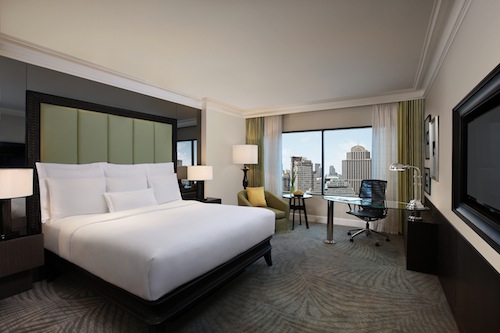
CARLTON Hotel Singapore has appointed Mark Bulmer as general manager of its flagship property.

mark-bulmer-chosen-as-gm-of-carlton-hotel-singapore
Credits: Carlton Hotel Singapore

An Australian, Bulmer has more than 18 years of international hospitality experience. He graduated from La Trobe University with a Bachelor of Business in Hospitality Management and started out as a corporate management trainee with Southern Pacific Hotel Corporation.

He has held various rooms and revenue management positions with Le Meridian Hotels in Melbourne, Port Vila (Vanuatu) and Siem Reap (Cambodia). He then spent seven years in Bangkok in general manager roles with Amari Hotels & Resorts and Carlson Rezidor (Radisson).

Prior to his current appointment, Bulmer was general manager of Carlton City Singapore for close to three years.

Malaysia’s rAWr Awards to recognise incentive operators with new award category

0

THE second edition of the rAWr (Recognising Award Winning Results) Awards will include a Special Award category this year to recognise incentive operators who have brought large groups to Malaysia in 2013/ 2014 with the support of Malaysia Convention & Exhibition Bureau (MyCEB)’s Twin Deal ++ global campaign.

Three international operators will receive the Special Award – the International Incentive Operator Award for Excellence at the event on November 12 at Kuala Lumpur Convention Centre.

The annual rAWr Awards, a joint collaboration between MyCEB and the Malaysia Association of Conference & Exhibition Organisers & Suppliers (MACEOS), also features four other categories – Business Events, Conventions, Incentive, and Exhibitions. Winners must be Malaysian registered companies that are members of either MyCEB and/or MACEOS, and event owners such as national associations.

Zulkefli Sharif, CEO MyCEB, said: “It is important we recognise extraordinary and innovative excellence in the business events industry to lift Malaysia’s stature in world rankings. Winning a rAWr Award seals your reputation as an events professional, instilling a sense of awe and respect for your company and individuals who are game-changers, challenging boundaries and continuously adding value to clients and the industry.”

Entries will be accepted until September 30, 2015. For more details visit www.rawrawards.com.my.

UIA to host round-table discussions in Bangkok

0

THE Union of International Associations (UIA) will be holding its annual Associations Round Table Asia-Pacific 2015 in Bangkok, Thailand, with the support of IT&CMA and Thailand Convention & Exhibition Bureau (TCEB).

Running from September 29 until October 1, the event will feature keynote presentations and round-table discussions between international associations.

Nancy Carfrae, coordinator of the UIA Associations Round Table, explained that the event aims to promote and facilitate the work of international associations by providing learning and networking opportunities.

“Our sign of success is that association representatives leave the Round Table with ideas, information, and contacts that will help and inspire them in their association work,” she added.

The event targets people working in and with associations, mainly international and regional ones but also national and local, and participants are expected to come from diverse associations.

Carfrae added: “For the Round Table Asia-Pacific, we invite in particular associations based in the Asia-Pacific region, or those with members in the area.”

Programme highlights include the opening keynote by Laura Lopez, a representative from the UN regional office, and case studies during the “Crisis and Victory” session. Participants can also join in interactive discussions and panel forums on other major topics.

“Governance and communication, which are topics of perennial interest and necessity to associations, will be featured this year,” Carfrae added.

By Samual Ng

Lanyon rolls out enhanced event management tools

0

US-BASED Lanyon, which specialises in cloud-based software for managing business events and travel programmes, has released an enhanced version of its Smart Events Cloud.

The solution, which helps business event planners through the entire lifecycle of their events, now offers a new navigation and user interface that simplifies the meeting and event process into logically ordered key components.

The attendee management module for meetings and events is also completely redesigned, making it easier for the user to plan, design and manage tasks such as theme builder, registration and reporting.

 Event theme are also now configurable and business event planners can choose from an existing library of themes or edit a template to create a customised version. A preview feature is also available.

David Bonnette, CEO of Lanyon, said in a press statement: “We have put a particular focus on the user experience for meeting planners, and designed tools to be easy to use and mobile friendly. This is vital as we help companies consolidate their programmes and drive adoption around the globe.”

Additionally, with the increased usage of mobile devices, Lanyon has released a new mobile app, Lanyon Mobile, which aims to improve attendee experience and deepen engagement between the organiser and attendee.

Renovated InterContinental Wellington fields high-tech conference spaces

0

A MULTIMILLION dollar refurbishment has boosted InterContinental Wellington’s conferencing capability with what is said to be the most technologically-advanced conference spaces in Wellington, New Zealand.

Interactive whiteboards that allow presenters to wirelessly connect via iOS and Android devices, and space-saving disappearing projector screens and data projectors are among the new highlights of the hotel’s six meeting rooms. These venues are also equipped with a wall-mounted touch-screen control panel for lighting, sound and visuals, and they all sport a contemporary sleek interior design.

New conference menus have also been developed to allow for broader dietary requirements and dining preferences during events. The hotel has observed a rise in breakfast meetings, for instance.

 The upgrade of InterContinental Wellington’s conference floor was the final stage of a two-year refurbishment project that brought sweeping changes to the property’s Club InterContinental Lounge, club rooms, Chameleon Restaurant, The Lobby Lounge and the reception area. It also carved out a new Deluxe Guest Room category.

SriLankan Airlines to commit more flights from India to aid SLCB’s growth plans

0

NATIONAL carrier SriLankan Airlines is planning to increase services from India, the island nation’s largest source market, in an effort to support Sri Lanka Convention Bureau’s (SLCB) goal of growing inbound MICE business.

The airline is studying the feasibility of flying to Visakhapatnam, Chandigarh and Hyderabad in addition to increasing frequencies to other popular destinations in India.

Gayan Peiris, a senior manager at SriLankan Airlines, said the company now operates 86 flights to seven destinations – Mumbai, Delhi, Chennai, Cochin, Trivandrum, Trichy and Bengaluru, and frequencies to some of these destinations will increase.

Meanwhile, SLCB general manager Vipula Wanigasekera told TTGmice e-Weekly that the CVB is bringing forward an October roadshow in Bengaluru to September 6-8, coinciding it with PATA Travel Mart that will be held in the Indian city that week. SLCB is also planning to run a MICE promotion for some 200 to 300 buyers during PATA Travel Mart.

MICE promotions in Mumbai and Delhi are also in the pipeline.

Wanigasekera said these efforts are aimed at “reviving interest from our neighbours” and added that the CVB “didn’t do much MICE promotion in India last year”.

India is Sri Lanka’s largest source market, contributing 170,134 arrivals in the first seven months of 2015, up 27.4 per cent from the same period last year. Indian MICE travellers account for around 30,000 arrivals a year.

STB, CAG, SIA band together to court Philippine MICE

0

SINGAPORE Tourism Board (STB), Singapore Airlines (SIA) and Changi Airport Group (CAG) have joined forces to lure business travellers and events from the Philippines with generous perks and intensified marketing.

The trio “have been working individually behind the scenes in the Philippines” but have decided to come together due to the “huge volume of traffic from the Philippines,” said Carol Ong, SIA general manager Philippines, Guam and USTT (United States Trust Territories).

“The three parties have high confidence in this market when it comes to MICE and corporate segments. We have an ambitious target of 15 to 20 per cent increase”, said Ong.

Total Philippine arrivals to Singapore reached 676,000 last year, of which 20 per cent is MICE.

Adrian Kong, STB area director Philippines and Brunei, said arrivals from the Philippines is “consistent” and is Singapore’s seventh biggest Asian market.

Targeted at BTMICE to and through Singapore via SIA and its subsidiary SilkAir, perks from STB, SIA and CAG include customised packages featuring land and air components with preferential rates, and financial grants depending upon group size, among others.

Under this falls the trio’s collaboration called Singapore MICE Advantage Programme (SMAP), valid till December 31, 2016 for events taking place by December 31, 2017, and Be in Singapore 2 (BEiS2) which offers different qualifying criteria for different BTMICE segments.

Likewise, all MICE bookings made on SIA and SilkAir from now till October 31 for travel before January 1, 2016 will receive travel incentives.

Adeline Lee, CAG assistant manager for passenger development, said that as the first point of contact for MICE visitors, the airport wants to ensure a seamless passage and a world-class airport experience. CAG is offering perks like Changi Dollar vouchers as part of SMAP.

Tourism’s samurai

0
Ryoichi Matsuyama


You joined in October 2011, just after the tsunami. Was that the biggest challenge of your illustrious career?
It was one of the most difficult challenges. I have been in the private sector for some time now and there have been so many ups and downs (laughs). But the tsunami was very serious, because of the number of lives lost and the nuclear radiation fears. Even when we had said Japan was safe to visit, no one believed us. But we kept giving only the facts and we invited 1,000 journalists and travel agency people to see Japan for themselves. As well, celebrities like Lady Gaga – she loves Japan – was spreading the good message for us.

Eventually we were able to restore the confidence of visitors, including those from countries such as Singapore and Germany who were sensitive (about safety). Arrivals went up drastically and we hit 10 million in 2013. We had 8.6 million in 2010, 6.2 million in 2011 (disaster year), 8.3 million in 2012, 10 million in 2013 and 13.4 million in 2014.

Ryoichi Matsuyama

Was visa easing the main reason why Japan rose to such prominence in the last couple of years?
It was a combination of factors, including our effort to restore the confidence of people to visit Japan; Abenomics, which saw the devaluation of the yen and made Japan cheaper for people to visit; a growing middle class in Asia; visa facilitation on our part of course. But I believe a major driving force was that the private sector – airlines, hotels, meetings sector, etc – was eager to collaborate with one another to bring back arrivals. In the past they operated more on an individual basis; the disaster brought them closer together.

Regarding the visa easing, was that a government initiative or did you have to push for it?
We assess the different visa requirements for different countries and try to streamline them. But of course we always have to work with other government departments and approach visa facilitation with the perspective of having a balance: ease visa on the one hand but maintain law and order on the other, making sure the ‘right’ people are coming in and they don’t stay longer than they should.

Singapore, Thailand and Malaysia now enjoy visa-free status and we are now seriously working to try and get this facility for Vietnam, Indonesia and the Philippines – but it will take time. India and China now have multiple-entry visa status, from single entry previously.

We are also trying to speed up visa processing and are studying to implement electronic visas but again, this will take time.

So now your task is to double the 10 million to 20 million by 2020.
Yes, as you know, Japan is hosting the Olympic Games in Tokyo in 2020. We have also successfully bidded for the 2019 Rugby World Cup (which will be held in 12 venues across Japan) and, in 2021, we will host the World Masters Games (in Kansai – the event is an international multi-sport athletic competition which gives the middle-aged and older generation the opportunity to participate).

With the Olympics you can draw some 10 thousand visitors. With the World Masters, 26 thousand, sometimes even more.

So there is a chain of mega events and everyone can take this opportunity to visit Japan. We also believe these events will expand and strengthen the image of Japan as a place for meetings.

How so?
Actually right after we won the bid to host the Olympics, in September 2013, Japan secured four big events with more than 6,000 delegates, outbidding strong countries including Singapore.

I think such events demonstrate to planners our capability to host and organise meetings. For example, we took over the IMF/World Bank meetings in 2012 when they had to move from Cairo. Such meetings are huge and complicated; normally it takes four years of preparation but we did it in two years.

So track record and the ability to perform are important for MICE.

Studies have shown it isn’t necessary that host countries of mega events actually benefit from them.
Yes, there is an argument that they require lots of investment in the construction of the necessary infrastructure, that afterwards the economy drops. Sometimes that happens, especially to emerging countries, but in the case of Japan, we hosted the Olympics in 1964 and there is some legacy remaining. Then, we had invested heavily in building freeways, bullet trains, stadiums, hotels, so for the Tokyo Olympics we will try to use the existing facilities as much as possible. Our Olympics investment isn’t huge, estimated at 340 billion yen (US$2.5 billion), compared with more than US$13 million for the London Olympics.

There are lessons from the past which we can learn from. For example, when Nagano hosted the Winter Olympics (in 1998), it built huge facilities and faced serious financial trouble afterwards. Mega events create a good impact but the key is to pay attention to what happens after the event – how do we persuade people to come back as repeat visitors?

This is what we are now seriously discussing with VisitBritain, with which we signed an MoU. London, which successfully hosted the Olympics in 2012, is also a mature city like Tokyo and there is much we can learn from it. London used the Olympics as a means to change the image of Great Britain as a friendlier destination. Los Angeles was so commercial, with lots of sponsorships. Barcelona used it to build a new city. We are at the stage of discussing with the many stakeholders in Japan what legacy we want the Tokyo Olympics to leave behind. One is perhaps as the most handicapped-friendly Olympics; another is as a model of how a mature city can successfully host the games without the normal heavy investments that come with them, and one that is able to sustain the benefits after the event. 2020 is a milestone, it’s not the end.

There are not enough rooms as it is in Tokyo. What are you doing about it?
We are persuading hotel developers to come in and build more hotels, especially more four-star hotels. We don’t give incentives; we present the facts and they can see for themselves how attractive it is to build. Price increase is a worry but presently Tokyo hotels are two-thirds of London prices, so they are fairly cheap.

This article was first published in TTG Asia, August 7, 2015 issue, on page 9. To read more, please view our digital edition or click here to subscribe

Goran Aleks takes on dual leadership role at AccorHotels

0

2
Credit: AccorHotels

ACCORHOTELS has appointed Goran Aleks in a dual role as vice president, operations of South China and general manager of Sofitel Macau At Ponte 16.

Based in Sofitel Macau At Ponte 16, Aleks will oversee over 40 properties in operation and development across South China, including luxury Sofitel brands like Pullman and MGallery, as well as Mercure and AccorHotels Hong Kong.

Aleks specialises in the Sofitel brand, having worked with AccorHotels since 1995. He oversaw the opening and management of Sofitel Khao Lak in Thailand from 2002 before moving on to Sofitel Paris in 2005. He had also been the general manager at Sofitel Gold Coast and Brisbane as well as Novotel Langley in Perth.

He moved to Asia to launch and run Sofitel Philippine Manila Plaza for three years before his most recent appointment as area general manager of Sofitel Indonesia and Sofitel Bali Nusa Dua.

Akyra Manor Chiang Mai targets a younger, affluent crowd

0

akyra-manorCredit: Akyra Manor Chiang Mai

MANOR Group will launch the 30-suite Akyra Manor Chiang Mai this October, as part of its planned 500 million baht (US$14.2 million) investment in Thailand’s hospitality and F&B sectors, said CEO John Lim.

The Singapore-based developer has invested about 350 million baht in the hotel, which is located in the west of the city near Chiang Mai University and will be managed by the Akaryn Hotel Group.

According to Lim, the property will leverage its contemporary design, high service standards and hallmark F&B offerings to differentiate itself in the market, as well as pricing rooms in the US$200-US$250 segment.

Lim admitted he was “taking a bit of a risk” developing a property with an investment cost of about US$333,000 per suite, but he was confident that the high-design city hotel would create the demand needed to hit the profitable occupancy rate of 70–90 per cent.

“Currently Chiang Mai has a lot of properties at the US$10 per night market and the traditional five-star properties at about US$200 per night,” he said. “There are also some very successful luxury boutiques charging US$400 per night. So we’re targeting a different guest, someone who’s younger, design conscious and wants to stay in an iconic property.”

Akyra Manor, which also has meetings facilities, will focus on its F&B offerings, including the poolside/rooftop Rice Bar, to attract customers in a city with a burgeoning café culture but lacks high-concept branded venues.

Manor Group recently opened Italics restaurant in Bangkok, a joint venture with Akaryn, and plans to develop another property in Chiang Mai.