TTG Asia
Asia/Singapore Wednesday, 6th May 2026
Page 1938

Franc-ly speaking

0

The rising popularity of Switzerland may be put to test this year as Asian currencies weaken
15-jan-franc-ly

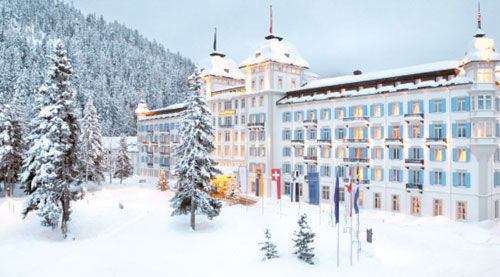
Two major developments – Asian currency depreciation, which continues to slow travel from South-east Asia, and recent terrorist attacks and threats to Europe – will determine how Switzerland inbound will fare this year.

In the aftermath of the November attacks in Paris which were followed by terrorist threats to Belgium and England, travel consultants are looking out for alternative destinations in Europe – Switzerland and lesser-known cities included – as they expect the general demand for the continent to drop this year.

Ian Evasco, retail team leader-travel products of Adventure International Tour, Philippines concurred that tourists could divert to Switzerland as “it is in the heart of Europe and has always been a very safe and secure destination, which is very important”.

Indeed, safety and security have always been Switzerland’s selling point, apart from its natural charm as an “all-time, all-season destination” with clean air, water and environment and efficient transport system.

But its expensive image – dearer than Paris and other more popular European countries – is a challenge, according to South-east Asia travel consultants who attended the 18th Switzerland Travel Mart in Zermatt last September.

They noted that the depreciation of a basket of Asian currencies made Switzerland even more expensive, while the economic and political situation in specific countries kept people hesitant to travel. So much so that towards the end of 2015, business from Singapore and Malaysia to Switzerland were reported as “bad”, and from Indonesia “very bad”.

While Switzerland is not about to cheapen its prices, it is luring Asian FITs, families, repeats and mini groups with value-added products. Foremost of these

is the Swiss Travel Pass for unlimited travel by rail, road or waterways across the country.

Cynthia Tan, operations director of Roystar Travel & Tours, Malaysia, said considering the expensive public transport in Europe, the Swiss Travel Pass made Switzerland affordable, enabling travellers to stay longer and see more.

There is good demand for the pass, agreed Yen Thing, tours consultant of Boustead Travel Services, Malaysia as the pass also features attractive discounts for youths and adults and is free for kids below 16 years old, among perks.

Feliz Gracielle Axalan, marketing executive, Tradewings Tours & Travel, Philippines, foresees ample potential for Switzerland from the new and small Philippine market which still “lacks awareness” of the destination.

She said that Switzerland’s continued marketing and promotions would unlock opportunities in groups, corporates, students travelling on semester breaks and young employees going on summer vacations.

Another new market, Vietnam, is still small but there is potential including for luxury travel, said Dang Tran Thuc Doan, director of strategic planning for Tourist Service & Trading Corp.

In Asia, Switzerland Tourism works largely with the travel trade and its director of South-east Asia, Ivan Breiter, said it “can help with pricing” by advising agents to step up sales during the low and shoulder seasons, and during weekdays, when rates are lower.

Breiter said 40 per cent of tourists from South-east Asia were generated during the shoulder season.

This article was first published in TTG Asia, January 8, 2016 issue, on page 14. To read more, please view our digital edition or click here to subscribe.

ANA to buy US$108 million stake in Vietnam Airlines

0

vietnamairlines

JAPAN’s ANA Holdings has signed a MoU with Vietnam Airlines to purchase an 8.8 per cent stake in the the South-east Asian state-owned carrier for a sum of 2.43 trillion dong (US$108 million).

This satiates ANA’s ambition to enter into the region’s fast-growing aviation market. It almost transacted a deal for 49 per cent of Myanmar’s Asian Wings Airways for US$25 million in 2013, but backed out because of increasing competition.

Vietnam Airlines, which completed an IPO in 2014, but has yet to list due to insufficient return on equity, in turn gets much-needed funding and a partner with plenty of operational expertise to tap on.

Also, as part of the deal, the two airlines will codeshare on certain routes, have their loyalty programmes combined, and have an ANA-appointed member sit on Vietnam Airlines’ board of directors.

Study shows best times to book flights in 2016

0

kayak

FOLLOWING an analysis of over one billion flight searches, travel tool Kayak.sg has unveiled when Singapore travellers should book flights in order to get the lowest prices.

Visits to popular Asian cities should be booked two to three months in advance to save up to 56 per cent on airfares. For instance, trips to Bali and Hong Kong can see potential savings of over 40 per cent when booked two months in advance, while Tokyo and Taipei is best booked five months in advance with savings amounting up to 63 per cent compared to the most expensive month to book.

As well, it is more cost-saving to travel to Asian cities on weekdays. Travellers are advised to depart on a Wednesday and return on a Tuesday for trips to Hong Kong or Bangkok. Trips to Tokyo and Chennai sees cheaper fares when departure and return is booked for a Friday.

For longhaul destinations like Los Angeles or Paris, it is recommended to book up to six months prior to departure while other popular international cities like Melbourne or London is best booked three to five months earlier, with savings of up to 48 per cent on airfares for the latter.

The best way to save on airfare for international flights to cities such as Zurich, Perth and Los Angeles is to book departure and return on the same weekday, where Saturdays are recommended for these cities.

It is also recommended to consider the hour of day when making bookings. For instance, savings of up to 34 per cent on airfares can be enjoyed should flights be booked in the morning at around 08.00 as compared to the most expensive hour to book.

An infographic on the analysis can be viewed here.

Don Muang Airport Terminal 2 reopened

0

don_muang9

MOST domestic flights at Bangkok’s Don Muang Airport now operate from the partially reopened Terminal 2 since December 24, 2015.

Nitinai Sirismatthakarn, president of Airports of Thailand, revealed that the terminal had undergone renovation works and is set to help ease traffic at the overcrowded Terminal 1 which now takes care of Don Muang’s international flights. Terminal 2 will fully open in February.

According to Petch Chancharoen, director of Don Muang Airport, Terminal 1 only has the capacity to serve 18.5 million passengers a year. In 2015, the estimated traffic at Don Muang stood at 28.5 million.

The reopening of Terminal 2, with a capacity of 11.5 million passengers a year, will increase the total serving capacity of Don Muang to 30 million passengers a year.

Going forward, Airports of Thailand states that more renovation works and the construction of a new Junction Terminal will be undertaken.

By Athip Jittarerk

Kuala Lumpur unveils slew of tourism initiatives

0

kltourism

THE recently set up Kuala Lumpur Tourism Bureau has identified several initiatives targeted at improving ground services and product development, slated to be introduced in the city in the first quarter of 2016.

These include positioning Kuala Lumpur as Malaysia’s cuisine haven; introducing weekly cooking classes for international tourists and spouses of MICE delegates; launching two new heritage walking trails; creating culture hubs in the city including Central Market and Kuala Lumpur Performing Arts Centre; publishing a luxury tourism product directory; forming a business events desk within the bureau to coordinate business events in the city; and offering short courses for front-liners in the hospitality industry, including taxi drivers, aimed at improving service quality.

Noraza Yusof, general manager at Kuala Lumpur Tourism Bureau explained that in 2016, “the bureau will also promote medical and educational tourism in a strategic manner, and attractions in the city will be graded to ensure quality are on par with global standards.”

The bureau was set up on November 11, 2015 with an initial funding of RM16 million (US$3.63 million) and is essentially a rebrand and replacement of the Tourism Unit of City Hall. “The organisation structure provides greater focus on sustainable development of tourism segments and key support functions,” said Mohd Amin Nordin Abdul Aziz, mayor of Kuala Lumpur.

An advisory board provides guidance to the bureau and comprises representation from the city police, the Tourism and Culture Ministry, the Land Public Transport Commission and representatives of tourism linked associations.

Adam Kamal, Malaysian Inbound Tourism Association deputy president 2, said: “Noraza is a capable and experienced person to helm the bureau and under her leadership, I am sure the bureau will meet all that it has set out to do. It is good to have a dedicated government body to systematically develop and promote tourism in the city as Kuala Lumpur is the main gateway.”

Alitrip goes live with Singapore travel products

0

alitrip1

FOLLOWING the MoU signed between the Singapore Tourism Board (STB) and Alitrip in October last year, Alibaba Group’s online travel platform has now officially begun offering travel products and services for Chinese tourists visiting Singapore.

Travel-related companies in Singapore, including airlines, hotels and agencies, will be retailing on the website, with Ascott, Resorts World Sentosa and Six Stars Tours already present.

Alitrip president Li Shaohua, said: “Singapore has been a preferred travel destination for Chinese visitors, backed by its rich tourism resources, streamlined visa procedures for Chinese visitors, wide use of Chinese and ease of access by air travel.

“We hope to bring consumers and service providers closer together so travellers can easily obtain first-hand travel products and services, while Singaporean merchants also grow their commercial opportunities,” Li added.

Quek Choon Yang, chief technology officer of STB, said: “Our deepened collaboration with Alitrip aims to further boost direct sales and bookings of Singapore’s travel products online, creating a holistic and enjoyable experience for Chinese outbound tourists.”

According to Quek, China is Singapore’s second largest contributor to international arrivals, with some 1.8 million tourists visiting from January to October 2015, a year-on-year growth of more than 20 per cent.

Myanmar introduces new visa regulations

0

myanmarvisa

MYANMAR’s Ministry of Immigration and Population announced yesterday new visa regulations effective immediately.

Under the new system, there are 12 types of entry visas: Diplomatic; official; tourist; social; journalist; crew; workshop; business; employment; religious; educational; and transit.

The diplomatic visa is free and the duration offered is based on the length of duty required. The 28-day official and tourist visas cost US$20, while the 70-day business, employment, religious and education visas cost US$36. Meanwhile, the 28-day social, journalist, crew and workshop visas cost US$36. The 24-hours transit visa costs US$18.

Applications for business, workshop, crew and transit visas can be obtained on arrival at Yangon International Airport, Mandalay International Airport and Nay Pyi Taw International Airport while other visas can be applied at Myanmar embassies worldwide.

There are also three types of multiple-entry visas. Multiple-journey special re-entry visas cost US$180, while special re-entry visas cost US$54 for permitted period. Six-month re-entry visas cost US$4.

Re-entry visas can be applied in Yangon, at the Foreign Affairs Branch located at 122 Pansodan Street, Kyauktada Township.

Phyoe Wai Yar Zar, chairman of Myanmar Tourism Marketing said the new visa system was introduced to better align with ASEAN standards.

“I find this new visa system will have no significant effect on the leisure market, but it is diversifying visa categories for work and business. It will likely draw more business travelers to the country,” he added.


Ctrip to invest US$180 million in MakeMyTrip

0

LEADING travel service provider Ctrip.com will be investing US$180 million in MakeMyTrip, India’s largest online travel company, via convertible bonds.

Permission has also been granted for Ctrip to acquire MakeMyTrip shares in the open market. This, in addition with the shares convertible, may result in Ctrip obtaining up to 26.6 per cent of MakeMyTrip’s outstanding shares.

Once the investment is completed, Ctrip will be able to legally appoint a director for MakeMyTrip’s board of directors.

New Sofitel hotels to open in Singapore, KL

0

tanjong-pagar-centre
Artist impression of Tanjong Pagar Centre

SINGAPORE and Kuala Lumpur will be welcoming a new Sofitel property in 4Q2016 and 2H2016 respectively.

The 222-key Sofitel Singapore City Centre will be located between Chinatown and the CBD, and will be part of the upcoming multi-billion dollar Tanjong Pagar Centre, which will be the tallest tower in the city, standing at 290 metres, when completed. The tower also features a residential and office tower, as well as retail and event spaces.

Meanwhile, the 312-room Sofitel Kuala Lumpur Damansara is part of a new 3.4 hectares integrated development in Damansara City. The development also consists of two office towers, two luxury high-rise residences and a F&B-centred lifestyle mall.

The two new properties will be managed by AccorHotels as signed in a deal with developer GuocoLand.

Centara now known as Central Hospitality International

0

CENTARA Hotels & Resorts has rebranded and is now known as Central Hospitality International (CHi).

While its hotel brands, products and services remain unchanged, the new corporate identity serves to differentiate CHi from its member hotel brands.

“Our objective is to strategically grow the business and build international brand awareness and recognition through acquiring and managing hotels in global cities and resorts,” said Thirayuth Chirathivat, CEO of CHi.

“These locations will be carefully identified according not only to the global travel profile of our existing and prospective guests but also in recognition of those destinations which embrace and value the elements of Thai service style that will continue to form part of the DNA of our brands,” added Chirathivat on the inclusion of the word ‘International’ in the new name.

Currently, CHi operates Centara Grand Hotels & Resorts, Centara Hotels & Resorts, Centara Residences & Suites, Centara Boutique Collection, Centara Hotels & Resorts and COSI Hotels.