TTG Asia
Asia/Singapore Sunday, 26th April 2026
Page 1906

Malaysia Airlines embarks on medical tourism initiative

0

malaysia_airlines-boeing-777-200er

MALAYSIA Airlines has entered into a MoU with Malaysia Healthcare Travel Council (MHTC) to position Malaysia as a premier healthcare destination regionally and globally.

Under the agreement, Malaysia Airlines will be promoted as MHTC’s preferred healthcare tourism airline. Both parties are also exploring marketing initiatives.

As the official airline, Malaysia Airlines will support MHTC with sponsored tickets for fam trips to Malaysia, as well as offering discounted rates for guests travelling to Malaysia for medical tourism purposes.

The MoU, signed by Paul Simmons, CCO, Malaysia Airlines and Sherene Azli, CEO, MHTC, took place during the Malaysia Healthcare Media Week organised by MHTC.

Koh Samui tourism sees positive growth last year

0

sunrise-at-lamai-beach-koh-samui-island-thailand-nickolay-khoroshkov

KOH Samui’s tourism sector has been experiencing steady growth in 2015, with airport passenger arrivals growing by seven per cent to over one million, average daily rate (ADR) of hotels up by 12 per cent, and RevPAR increasing by 15 per cent, according to a report by consultancy C9 Hotelworks.

Favourable supply-and-demand conditions for hotels and the increase in passenger capacity from Bangkok Airways has largely contributed to the growth.

As well, despite concerns from industry players about Koh Samui’s Bangkok Airways-owned airport, the preventing of LCCs into the island has actually had a positive effect, serving to buffer Koh Samui’s tourism sector from mass market volatilities, the report explained.

Still, as tourists continue to visit in greater numbers, Koh Samui’s hotels are undergoing systematic improvements, with two of this year’s highlights including the completion of a US$20 million renovation of the Santiburi Beach Resort and the reopening of the overhauled Amari in Chaweng.

Samui International Airport is also in the early stages of a US$29.2 million expansion plan.

TTS Corporate booking solution completes beta phase

0

tts-corporate

TRAVEL technology company TTS has launched its corporate booking platform, TTS Corporate, allowing agents to sign up and utilise the solution for free on both desktop and mobile.

The booking tool had been in open beta for the past one year and over 300 agencies and 1,000 corporations worldwide had been involved in the testing stage.

Flight, hotel and car rental content is accessible for free on the platform, and boasts no setup, implementation or booking costs for agencies.

However, specific advanced features, such as accessing LCC content, utilising travel policy management and agency branding will incur cost as each gets activated.

TTS Corporate works exclusively with Travelport GDS.

Playing tourist close to home

0
A second look is also what NTOs should give to domestic travellers…Countries with a strong domestic tourism are generally better equipped to withstand fluctuations in the international demand.

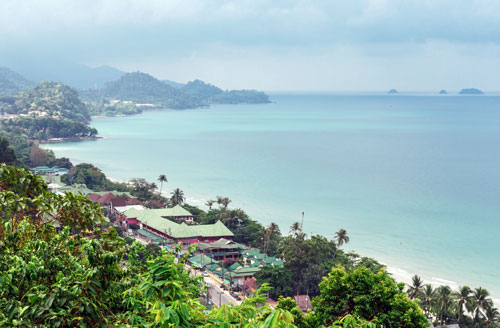
04-mar-tropical-beach-on-the-island-of-koh-chang-in-thailand

During the recent Lunar New Year break, my family and I visited Koh Chang, Thailand’s second largest island near the Cambodian borders in the Gulf of Thailand. I was initially disappointed to see the many 7-Eleven stores which have popped up since my first visit close to a decade ago, as well as the visibly greater number of tourists to the island. The visitor profile is no longer restricted to locals or in-the-know Western families; joining the fray are Asian tourists, in particular Chinese FITs, a clear reflection of how the tourism fortunes of Thailand – like so many places elsewhere in the world – have so swiftly changed in a matter of years.

But disappointment soon gave away to delight when I discovered that White Sand Beach – where we were staying – was the location for the Sea Sand Song @ Koh Chang tourism fair, a collaborative project between the Office of Tourism and Sports and the Tourism Authority of Thailand Trat Office. When dusk fell, beachgoers came out in droves to check out the beachside stalls offering grilled seafood, cocktails and snacks, while a female singer belted soothing jazz tunes from a mini stage. I soon found myself swaying to the rhythms of the music and lull of the waves – even my nine-month-old was contented to sit on the picnic mat without fussing.

At that moment, I see a  beautiful Koh Chang that has attracted visitors from far and near: long strips of sandy white beach, crystalline water, lush greenery, tumbling waterfalls, picturesque views and a smorgasbord of places and activities. This was one of the most memorable seaside vacations I had in a while, and I’m glad I gave Koh Chang a second look.

A second look is also what NTOs should give to domestic travellers. While Thailand can fete its record 29.9 million international arrivals in 2015, the kingdom will be ill-advised to neglect the domestic market – the backbone of any tourist industry. Countries with a strong domestic tourism sector are generally better equipped to withstand fluctuations in the international demand. The recent rouble trouble had caused Russian numbers to tumble, who knows if a global recession would cause the latest wave of Chinese travellers to break too?

Even Singapore, with a small population base, is seeing the significance of its domestic market. Singaporeans are increasingly seeking out staycations, presenting opportunities for local hotels to make up for the shortfall of foreign visitors amid a challenging economic climate.

We should all play tourist every now and then in our country, as that will allow us to be reacquainted with our home and see it in new light. Visiting a foreign country and learning about its culture is one of the joys of travelling, but our own country can be a worthy place for exploration and appreciation too. Let’s not be dismissive of the beauty of our own country, just because it is our own country.

Asia air travel demand continues to soar

0

apac-1

THERE was robust growth in international air passenger demand for Asia-Pacific carriers in January, according to preliminary traffic figures for the month released by the Association of Asia Pacific Airlines (AAPA).

A total of 24.5 million passengers were carried by the region’s airlines in January, a strong 9.2 per cent increase compared to the same period last year.

The availability of affordable airfares, coupled with the rise in leisure travel ahead of the Lunar New Year period, helped boost passenger demand, resulting in a 9.9 per cent surge in revenue passenger kilometres (RPK).

Growth in demand continued to exceed capacity expansion, with load factors climbing 2.1 percentage points higher to reach 79.6 per cent in January in spite of a relatively firm 7.1 per cent expansion in available seat capacity.

Andrew Herdman, APAA director general, said: “For the region’s carriers, the continued strong growth in passenger demand was a very welcome start to the year, against a backdrop of volatile markets and an increase in global economic risks.”

He added that while travel demand outlook remains broadly positive for the coming year, airlines are expected to be vigilant in closely monitoring regional economic developments and managing costs due to the highly competitive market conditions.

India’s railway to receive extensive upgrades

0

23247819_l

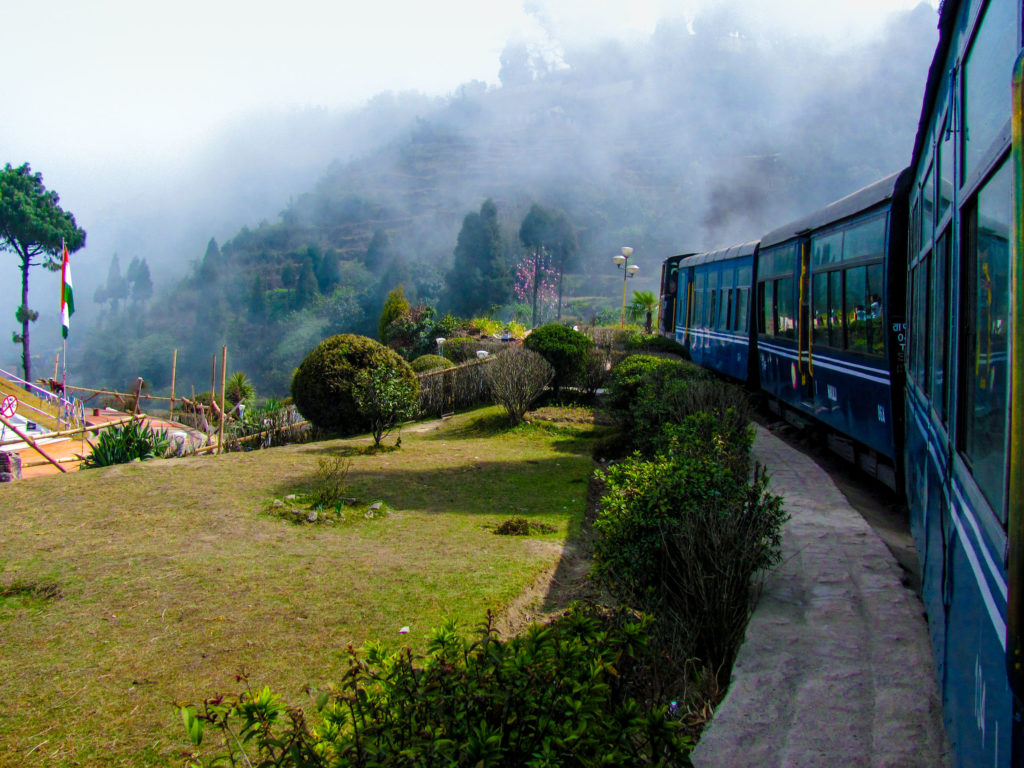
INDIA’s railway minister, Suresh Prabhu, announced in the 2016-2017 railway budget a slew of measures to modernise and improve India’s railway infrastructure and facilities.

Among the improvements put forward are the launch of Tejas, high-speed trains that will operate at speeds of 130 kmph and offer onboard services including entertainment and Wi-Fi connectivity, overnight double-decker trains to service busy routes, as well as a ‘Clean My Coach’ service for passengers on SMS request.

Train services will also be launched to connect the states of Mizoram and Manipur to the rest of the country and Wi-Fi will be extended to 400 railway stations. Within the next three months, e-ticketing facilities can be expected as well.

Agents interviewed expressed enthusiasm over some of the new plans. “We are delighted with strategic initiatives like Asha circuit trains to connect important pilgrim centres in the country, as well as the introduction of Tejas,” said Madhavan Menon, managing director, Thomas Cook India.

Subhash Goyal, president, Indian Association of Tour Operators, said: “We welcome the idea to adopt Japan’s high-speed bullet trains on the Mumbai-Ahmedabad route. We need such trains for all major tourist routes.”

InterContinental Singapore completes renovation works

0

interconINTERCONTINENTAL Hotels Group, in collaboration with design firm Fbeye International, has completed a major five-year renovation of InterContinental Singapore.

The redesign sees the enhancement and continuation of the hotel’s colonial and Peranakan heritage theme, with the hotel lobby, lobby lounge, all-day-dining restaurant Ash & Elm and the 316 tower rooms and suites overhauled.

Fbeye also previously redesigned the hotel’s executive club lounge, 67 ‘shophouse’ guestrooms and suites, as well as Cantonese restaurant Man Fu Yuan.

South Korea to develop IR at Incheon airport

0
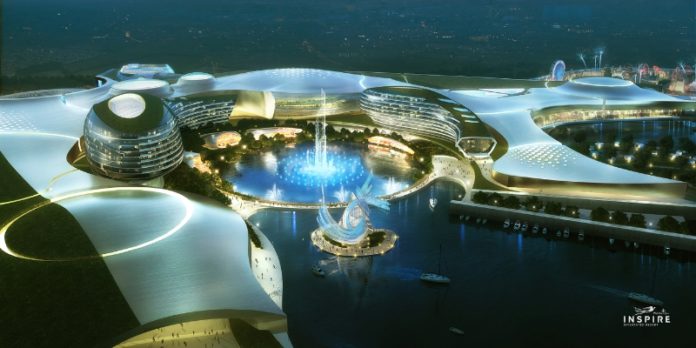
Phase I of Mohegan Sun's Project Inspire is estimated at US$1.6 billion, with a commitment total of US$5 billion over multiple phases (PRNewsFoto/Mohegan Tribal Gaming Authority)

Phase I of Mohegan Sun's Project Inspire is estimated at US$1.6 billion, with a commitment total of US$5 billion over multiple phases (PRNewsFoto/Mohegan Tribal Gaming Authority)

SOUTH Korea plans to develop an integrated resort at Incheon International Airport, with the government awarding the licence to US-based operator Mohegan Tribal Gaming Authority (MTGA), along with developer KCC Corporation and partner Incheon International Airport Corp (IIAC).

MGTA, operator of the Mohegan Sun properties throughout the US, has named the multi-phase development Project Inspire, which will include the construction of a 1,350-key, three-tower luxury hotel complex. A 20,000m2 retail and F&B space is also in the works, as well as a 4,500m2 South Korean cosmetics and beauty hub.

Further plans include having a 100,000m2 Paramount Studios Themed amusement park; a 33,000m2 Eco Adventure Park featuring indoor rock climbing, zip lining, an indoor rainforest, and an archaeology experience; an entertainment arena with 15,000 capacity; and a 20,000m2 casino with 250 tables and 1,500 slot machines. As well, an adjacent private air terminal is on the cards.

Phase one of Project Inspire is estimated to cost US$1.6 billion, with the total development projected at US$5 billion.

No major setback for Nok Air after pilot strike

0

nokair_3

TRAVEL agents interviewed are unfazed by Nok Air’s pilot strike in February and are continuing to offer the LCC’s flights in their tour packages.

The cancellation of Nok Air flights have persisted since the strike, but Patee Sarasin, Nok Air’s CEO, said that “more than 90 per cent of problems are expected to be addressed by March 10.”

In the meantime, the airline is dealing with the crisis by offering 16 charter flights per day from VietJet Air and Lion Air and transferring passengers on cancelled flights to their alliance airlines such as Thai Airways, Thai Smile Airways and NokScoot Airlines.

A number of travel agencies in Thailand are continuing to offer Nok Air flights in their tour packages as well. Tangmo Tour for instance, is still offering Burmese tour packages with Nok Air flights included.

Kritchanat Meesamran, vice president of the Thai Travel Agents Association, who is also travel managing director of Sun Smile Holidays, expressed that the strike is a minor crisis that will not dampen the travel industry significantly and that travel agents are confident in Nok Air’s ability to handle the situation.

Singapore tourism revenue fell nearly 7 per cent in 2015

0

picture1

EVEN though total arrivals in Singapore increased 0.9 per cent to 15.2 million in 2015, tourist receipts declined 6.8 per cent to S$22 billion (US$15.6 billion), resulting in a “mixed tourism sector performance” last year, according to a statement by the Singapore Tourism Board (STB).

The decline in tourism receipts was largely due to a six per cent fall in BTMICE visitor arrivals, with a corresponding eight per cent drop in per capita expenditure.

According to STB’s chief executive Lionel Yeo, while 25 per cent of the total number of visitors to Singapore belong to the BTMICE pie, their expenditure can be double that of a leisure traveller.

Yeo said: “As the average BTMICE visitor spends about two times more than the average leisure visitor, the fall in BTMICE visitor arrivals and spending due to companies cutting back on both travel and trip budgets has had a significant impact on our tourism receipts.”

Nevertheless, Yeo said: “But we take heart that we are still attractive as a leisure destination as we saw an increase in leisure visitor arrivals.”

Indonesia once again emerged as Singapore’s largest source market with 2.7 million visitors, despite registering a year-on-year drop of 10 per cent.

Visitors from Malaysia, Japan and Australia also declined by five per cent, four per cent, and three per cent respectively, due to macroeconomic factors such as currency depreciation and an uncertain economic outlook.

On a positive note, China, which is Singapore’s second largest source market, brought in 2.1 million visitors – a 22 per cent jump from 2014.

lionel-yeo

Yeo: 2016 an uncertain year for Singapore tourism

Looking ahead, Yeo said: “For 2016, we will be cognizant of the uncertainty and volatility that lies ahead.”

STB expects tourism receipts to grow between 0 and 2 per cent in 2016, to reach between S$22 to S$24 billion. It also anticipates visitor arrivals to be in the range of 15.2 to 15.7 million, a growth of 0-3 per cent.