TTG Asia
Asia/Singapore Tuesday, 10th February 2026
Page 1905

Frasers expands UK portfolio

0

frasers-expands-uk-portfolioThe Montpellier Chapter.

SINGAPORE-BASED Frasers Hospitality has acquired four properties in the UK from Malmaison and Hotel du Vin Property Holdings for a sum of 36.1 million pounds (US$54.7 million).

The four properties include the 75-room Avon Gorge Hotel in Bristol, 59-room Magdalen Chapter in Exeter, 60-room Montpellier Chapter in Cheltenham and the 71-room Hotel Seattle in Brighton. All four hotels house F&B outlets and meeting facilities.

The hotels will be rebranded to Malmaison and Hotel du Vin properties, bringing the total boutique establishments under the brands to 33 and the total number of keys to 2,347.

For now, the properties will continue to operate under their existing brands until 2016 when development plans will be revealed for each hotel.

Frasers had also recently purchased 29 other properties from Malmaison and Hotel du Vin for a sum of 363.4 million pounds (US$551.4 million) in June this year.

International SOS now rates travel security risk

0

international-sos-now-rates-travel-security-risk

INTERNATIONAL SOS and Control Risks have jointly published the Travel Risk Map 2016, a heat map which displays medical and security hotspots around the world.

An annual Health Risk Map has been published since 2010, but is now renamed Travel Risk Map for 2016 to take into account the added travel security risk ratings.

Countries and regions are rated either ‘Extreme’, ‘High’, ‘Medium’, ‘Low’, or ‘Insignificant’ in security risk while medical risk ratings range from ‘Low’, ‘Medium’, ‘High’, ’Very High’ or ‘Rapidly Developing Variable Risk’.

David Teo, regional medical director, South and South-east Asia, International SOS, said: “We created the Travel Risk Map to help travellers align their pre-trip preparations proportionately with the risks they may encounter in a particular location.

“Even in countries with a low medical risk rating and state-of-the-art medical services, travellers may still need assistance with language or navigating an unfamiliar health care system – both of which can be significant barriers to obtaining care.”

The Travel Risk Map 2016 can be viewed here.

Mövenpick to open Vietnam’s first IR

0

2-1

SWISS hospitality firm Mövenpick Hotels & Resorts has signed a management deal to operate Vietnam’s first IR, the Mövenpick Resort Phu Quoc in 2017.

Located along Ong Lang Beach in Phu Quoc, the beachfront resort spans across 51.62 hectares of land and will encompass facilities including 250 hotel rooms, 100 residences and 50 luxury pool villas.

A themed retail village, water park, pool, destination spa, 1,000m² convention area, amphitheatre, cooking school, hotel school, beach club, kids club, water sports centre, fitness centre and an adventure and teambuilding activity course will also be available.

The IR will be sited close to the island’s largest town, Duong Dong, and to Phu Quoc International Airport, which is an hour’s flight from Ho Chi Minh City.

In Vietnam, Mövenpick Hotels & Resorts already operates the 154-room Mövenpick Hotel Hanoi, with plans to open the 229-key Mövenpick Resort & Spa Quy Nhon in 2018.

Celebrating travel people

0
dec_rainiPeople, not companies, disrupters, technology or behemoths, make travel go round.

What makes the world go round? For many, love makes the world go round. For the World Travel & Tourism Council (WTTC), travel makes the world go round, a point it is at pains to get governments of the world to understand. I’d go with The Stylistics – People Make the World Go Round – a song it debuted in 1972. Better yet, I’d change that to People Make Travel Go Round, the theme and constant refrain of this issue.

In a year where the travel industry was whirling faster than ever, it’s easy to lose sight of the people who made it go round. The last thing we want is for people to feel they have been spun in a washer that ran at 1,000 revolutions per minute. People have feelings, unlike a pair of old jeans in the dryer, and their feelings matter more than ever.

Which is why central to our theme in this year-end edition is the issue of personalisation: How do we win over people, i.e. clients, so that they remain loyal to us? How do we take care of our own people, i.e. our staff, so that we don’t lose them to our competitors or worse to another industry?

How else if not by personalisation? This has become even more critical at each passing year, thanks to new disrupters such as Airbnb, lots more disruption to business (everything from the economy, currency, climate, to terrorism, health disasters, etc), consolidation of businesses, you name it. The more these occur, the greater the need for personalisation in order for companies to survive. Just think of Marriott International’s acquisition of Starwood Hotels & Resorts, which will result in a behemoth with 1.1 million rooms, 5,500 hotels and 30 – yes, 30 – brands. As we go to print, the SPGs (Starwood Preferred Guests) are pouring their hearts out to the mainstream press over concerns of losing the recognition they’ve enjoyed, with many reportedly feeling that Starwood does a better job at lavishing attention on them than Marriott. Owners are concerned it will take longer – perhaps even impossible – to reach the leadership and that they’ll just be a number in the portfolio of 5,500 hotels. Staff are worried what this might mean for their livelihoods – for only the most positive of people will think consolidation is not about cost savings.

It just goes to show that people could get lost in all this.

Thus, for your year-end reading, we thought we could inspire you to reflect on people and the power of personalisation. Hear from industry CEOs what it really means to be ‘bespoke’, or look at how Asian outbound agencies have upped their service levels this year and the rewards they received in return, to name two sections. In keeping with the people theme, we’ve also tried to put a ‘face’ to a person – the millennial who has views on how to make the industry better; the women of the industry whom we all know have harder choices to make than men as they juggle both family and career commitments; the achiever who has finally risen to the top of his or her profession in the industry, even us, the whole editorial team at TTG Asia – get to know us better, especially our newcomers!

People, not companies, disruptors, technology or behemoths, make travel go round.

Let’s celebrate, people.

On that note, happy holidays and a peaceful and prosperous 2016 from us happy people at TTG.

What personalisation means

0

Kicking off our year-end issue themed People Make Travel Go Round, Raini Hamdi invites three leaders to pen their thoughts on winning people through personalised acts

dec_ceo1_lindsey-ueberroth2Changing consumer behaviour, really?

HANS LERCH
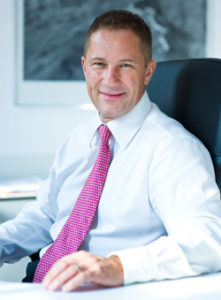
A partner at Abercrombie & Kent, Lerch is himself a demanding customer – and has always been and always will be. The customer, says Lerch, has not changed, and therefore there will always be space for companies that provide personalised service

When was it that consumers changed? When did it come to people’s mind that buying a US$9,000 Hermès handbag in the morning and a pair of Levis for 30 bucks in the afternoon was perfectly fine? That etiquette did not matter that much or do not matter at all. Was it 30 years ago, 40 years ago? And what else has changed with customers, i.e. with us people, since?

Nothing! And I mean: Nothing!

I often eat in the same restaurants. The waiters know me and they call me by my name when I walk in. I drink expensive wines, I tip them well, they give me outstanding, personalised service and I love it. Swiss (International Air Lines, SWISS) does the same thing. I’m a Black cardholder, in the top 100 of 17 million clients, and they call me by my name 20 times before I’m seated. It’s embarrassing but it feels good.

I live in Zurich, so what do I do if I want to spend my weekend in Vienna? I book my flight on the Internet, like everybody else. I call the GM of the Sacher hotel to book me a room and I call the Steirereck to reserve my table. It’s among the 10 best restaurants in the world and they know me there. Do I need a travel agent? Would that enhance the experience? No. Do I get personalised service? Yes. The last link in the chain provides that, although since I’m an experienced traveller I use other channels to book my trip.

Why is Abercrombie & Kent successful in luxury travel? It’s because of the brand and personalised service, as almost everything else can be copied. FIT clients are treated like royalty when they book, when they travel and after they have returned.

I know of another company in the UK which specialises in city breaks, a product which almost everybody book online. This company has many knowledgeable travel consultants who know the destinations well. Clients book the good old-fashioned way, by phone, and the consultant quotes the good old-fashioned way, by hand, whilst on the phone! After a sale is made, the company concierge calls up the client and helps with booking opera tickets, good restaurant seats and whatever else that could enhance the experience. And what is the result? Thirty million pounds (US$45.5 million) turnover, a gross margin of close to 40 per cent and an EBIT margin of 15 per cent. Prices are high and operational costs too but it’s a very good business because of its highly competent and personalised service!

What has changed are the channels, opportunities to buy, information load, competition, the knowledge each individual today possesses, thanks to the societies we live in and thanks to the changes the Internet has created over the years. But has the individual, the person, the client, the consumer, you and me, really changed that much? I seriously don’t believe that. We mortals still look for what we have been looking for all along. Appreciation. Recognition.
Because we are clients, whether we buy luxury or anything else.


dec_ceo1_hanslerchHave a heart, not a CRM system

LINDSEY UEBERROTH
The president & CEO of Preferred Hotels & Resorts encounters an experience that makes her ponder what personalisation is not. In this inspiring essay, she pens the true meaning and acts of personalised service

I travel approximately 150 days a year, logging hundreds of hours on airplanes. I recently boarded a flight and was unceremoniously handed an index card by the flight attendant stating that I had just passed the one million mile threshold on that airline. There were no words of congratulation, no glass of champagne, or any attempt to make me feel special.

What should have been a momentous occasion honouring my loyalty to this airline only brought a sense of depression and disappointment, and made me reflect on the importance and power of personalisation.

Personalisation is taking the extra time to understand what matters to someone and showing them you care. There is a fine line between personalisation and personal intrusion, but when done right, tailored approaches create a desire to come back, to commit, and to care – key sentiments that are incredibly important to me when I think about our hotel partners, associates and guests.

Preferred Hotels & Resorts has built a culture around celebrating our associates’ successes to show them that we appreciate their dedication to helping our business succeed, and to create a work environment that fosters trust, loyalty and emotion beyond a pay check. I personally recognise every associate’s birthday or milestone anniversary with the company and reach out to celebrate major life events like a long-awaited marriage proposal. Marking these occasions that are happening inside and outside of the office makes the difference in having associates feel like Preferred Hotels & Resorts is a company they enjoy working with, not just a “job.”

We dedicate the same level of personalisation to our hotel partners by celebrating every contract renewal with a bottle of champagne and a note of thanks for their continuous trust and partnership. More importantly are the random acts of thoughtfulness that show we value them as so much more than a client, which could be mailing a copy of a great book to the client who is an avid reader, to sending an Uber credit to someone who recently undertook a two-hour commute as a respite from the daily drive.

These same small acts of recognition go a long way with guests staying in our hotels. I have countless stories of little touches that have made me feel at home when I am literally thousands of miles way. One of my favourite examples is when The Jefferson Hotel in Washington, D.C. placed a framed picture of my dog in the room along with homemade biscuits that I could take back home because they knew how much I missed her and how much she would appreciate the treats. And when Wequasset Resort in Cape Cod gave me a room amenity of Bumble & Bumble shampoo and conditioner because it noticed I travel with my own and was running out of them.

These memorable experiences had nothing to do with a fancy high-tech CRM system. At the end of the day, authentic personalisation comes down to a person taking the time to notice and to execute on the little things that are important to someone.

While I won’t hold my breathe that the next flight attendant I encounter will somehow know I never want the peanuts, I will be forever appreciative of all the little efforts when it comes to personalisation.


dec_ceo1_williamheinecke

Lipstick and WhatsApp messages go together

WILLIAM HEINECKE
The founder, CEO and chairman of Minor Group still gets a lipstick message on the mirror (it’s not what you think) and this simple, old-fashioned act – along with today’s technology – gives him a lot to hope for in the industry’s continued capability to deliver personalised service

PERSONALISATION has always been a fundamental aspect of the luxury hospitality industry but never more so than today.

As technology has advanced and made the world much more instant, so has the need for hoteliers to make use of it to fully personalise their guests’ experiences. Whether it is allowing all of our hotels to know that a guest’s favourite drink is a Tanqueray gin and tonic because he orders it every evening at sunset when staying in one of our hotels, or giving guests the ability to contact one of our hotel GMs directly through email or WhatsApp, today’s world allows for more personalisation and helps us to know and understand our customers better.

We all have our own needs and wants, our own desire for personalisation, but these needs and wants are exactly that – personal. How we recognise that, allow it to flourish and remember it, will continue to set us apart from what other organisations are doing. Personalisation is the key to making a luxury hotel successful. We all have good beds, loyalty programmes, spas and restaurants but it is the emotional connection with the people that makes the difference.

I was recently on a trip to the Maldives and the team at the hotel had taken the time to write ‘welcome back’ to Cathy and I in lipstick on the bathroom mirror in our room. Not only does this make me feel good but I know that the team has taken the time (the rarest commodity we have) to do something that we will appreciate and make us feel special.

Personalisation is also important for our team members. The more the teams feel like they are part of a big family and that we know what is important to them, the more they will be inspired to deliver great experiences for our guests. The Heinecke Foundation scholarships were born out of us wanting to understand and support our most important assets – our people and the most important part of their lives, their children and their education.

In the coming months, Anantara will celebrate its 15th birthday. The brand has come from a very humble beginning on the beaches of Hua Hin in Thailand, and has since expanded into deserts, jungles and cities, growing into a collection of 34 luxury hotels and resorts in 10 countries – with two new countries to be added soon with Anantara resorts opening in Sri Lanka and Oman. Anantara was born in response to the emergence of discerning travellers seeking luxury with a sense of indigenous discovery. During the last 15 years the way people travel and experience the world has changed but Anantara continues to satisfy guest desires to connect deeply and personally with their travel destinations.

Have the demands of our guests changed over the last 15 years? Not necessarily. Travel trends have changed but the hospitality industry is still effectively the same – people still want incredible experiences. Technology has helped improve the guest experience but our people are still the most important part of the success of our brands and our company, and it’s our people who consistently ensure that our guests enjoy a fully personalised experience every time they stay at our hotels and resorts.

This article was first published in TTG Asia, December 11, 2015 issue, on page 8. To read more, please view our digital edition or click here to subscribe.
[INTELLIGENCE] Safety, security among top priorities for corporate travel managers in 2016: CWT study

0

EIGHTY per cent of global travel managers surveyed for CWT’s Travel Trends, Program Priorities: A Traveler-Centric 2016 have named safety and security as factors that have a high or very high impact on their travel programmes next year.

The same sentiment is shared by their peers in Asia-Pacific, with 75 per cent of travel managers here ranking safety and security as top priority.

The online study which had surveyed 1,016 travel managers/travel buyers from 515 organisations in 55 countries worldwide in October and November, also found that 63 per cent of respondents expect mobile and wearable technology to have a big impact on their travel programme next year, while 58 per cent of them are looking for more data on traveller behavior and programme performance.

In addition, low-cost carriers (LCCs) will continue to have a high or very high impact on travel programmes in 2016, according to 53 per cent of respondents.

Growth has been particularly dramatic in Asia-Pacific in recent years, researchers noted, adding that LCCs have taken over 60 per cent of capacity share in several domestic markets, such as India, Indonesia, Malaysia and Thailand.

The study pointed out that in business travel, LCC’s capacity share has grown to 12 per cent overall, but varies widely between countries, ranging from only a few per cent in Australia and Japan to the bulk of air bookings in Thailand and India.

Commenting on the study, David Moran, executive vice president of CWT, said: “Travel managers have told us loud and clear that the traveller experience will play a major role in the 2016 travel programme. Whether it’s proactive destination information, help in an emergency, multichannel access or personalised services – everything is designed to provide travellers with a seamless experience at every stage of a trip.”

Fast facts:
The percentage of respondents who agreed the trend would have a high or very high impact on their travel programme:

  • Safety and security – 80%
  • Mobile and wearable technology – 63%
  • More data to consolidate – 58%
  • Big data and personalised travel programs – 54%
  • Low cost carriers – 53%
  • Virtual payment – 51%
  • Personalisation – 49%
  • Virtual assistants – 36%
  • Environment – 35%
  • IATA’s New Distribution Capability – 33%
  • Sharing economy – 32%
  • Enhanced TMC services – 28%
  • Bleisure – 16%

Taj Tashi Thimpu welcomes conferences

0

TAJ Tashi Thimpu, located within Thimpu Valley in Bhutan, is offering a conference package that features the use of a conference hall between 09.00 and 18.00 on the days of stay, buffet breakfast, lunch and dinner at a designated venue, and 10 per cent off spa treatments.

The package is priced at 12,000 rupees (US$180) per room night for single occupancy and 14,000 rupees for double, including taxes.

Guests can enjoy complimentary basic Wi-Fi, although premium access requires a nominal fee.

The offer is valid for bookings with at least 15 rooms, for stays in December 2015 as well as January and February next year.

Email tajtashi.thimphu@tajhotels.com for reservations.

CINZ embraces plan for convention centre and movie musuem in Wellington

0

CONVENTION and Incentives New Zealand (CINZ) has agreed to collaborate with a company formed by Wellington-based international filmmakers Peter Jackson and Richard Taylor, along with Wellington City Council in a plan to build a combined convention centre and movie museum.

The building is to be sited opposite Te Papa Museum on the Wellington waterfront and will boast exhibition space and six meeting rooms that can accommodate 1,100 people for full-format conventions and 2,250 theatre style, as well as props from the collection of Jackson and Taylor’s company for the museum.

“Wellington is the geographical centre of New Zealand, and a hub for creativity, technological expertise, culture and cuisine. It is the base for many associations, with a good range of accommodation, easy access to government, and it’s walkable. This purpose-built convention facility, configured to meet modern and future needs and expectations, promises huge benefits for the city and the country,” said Sue Sullivan, CEO, CINZ.

Corporates going ahead with year-end parties despite economic conditions

0

REDUCED buying power among some Asian clients as a result of weakening currencies, and a less than desirable economic climate of late have done little to dent year-end corporate party bookings for Hong Kong hotels popular for such gatherings.

The Langham Hong Kong’s director of sales and marketing, David Fung, told TTGmice e-Weekly that forward group bookings are keeping pace with expectations, adding: “We have good (bookings) for December and had done a number of events and year-end functions. Our loyal clients have booked their annual events this year, as they had done last year. We have also acquired new clients.”

The Peninsula Hong Kong shared that it has seen a slight increase in the number of bookings and budget for year-end gatherings.

Director of catering and conference services, Vindy Lui, said: “We’ve generated more revenue from corporate events (this year-end). A few of our key corporate clients have held large-scale events, such as Moet Hennessy’s 150-year celebration and Van Cleef & Arpels’ gala dinner which unveiled the new Seven Seas jewellery collection.”

And according to Grand Hyatt Hong Kong’s director of sales and marketing, Cecilia Lo, budgets for such dinner-and dance parties have not been cut.

Lo explained that clients regarded such activities as being “absolutely necessary”, as they serve to appreciate clients and to entertain and engage employees.

There are, however, some hotels whose year-end corporate event bookings have softened.

The Ritz-Carlton, Hong Kong saw fewer corporate dinner-and dance parties this year despite recording a higher overall MICE volume for 2015, noted director of sales and marketing, Kristy Lee.

Four Seasons Hotel Hong Kong’s clients from Europe, Japan and Australia – countries whose currencies had weakened this year – had reduced group sizes and stuck to standard menus for their year-end gatherings.

Director of catering Anna Wong said: “Clients are less inclined to upgrade the menu and beverage arrangement. We are being as flexible as possible in accommodating their budget, as long as we make a reasonable profit.”

Westin Siray Bay Resort names new GM

0

westin-siray-bay-resort-names-new-gmPiyoros Naronglith.

THE Westin Siray Bay Resort & Spa, Phuket has appointed Piyoros Naronglith as general manager, effective since November 23, 2015.

Naronglith has over 10 years of hospitality management in Thailand and was most recently the executive assistant manager of W Retreat Koh Samui. Prior to that, he had held various roles at properties such as the Anantara Hua Hin Resort & Spa and Sheraton Grande Laguna Phuket.