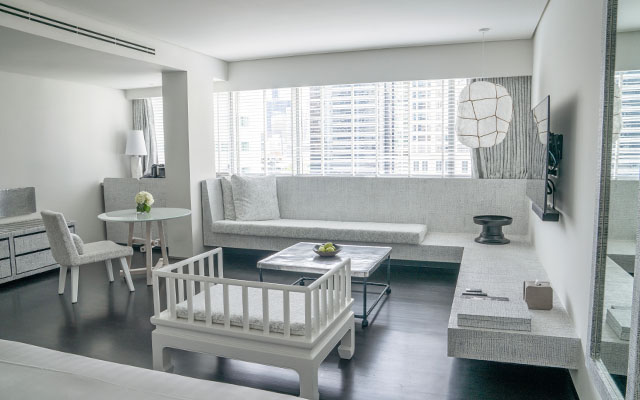
Photo of the Day: Anantara turns 15

China gets 13 new Finnish visa centres

FINLAND hopes to ease access for mainland Chinese travellers with the setting up of 13 new visa centres across the country.
By spring 2016, new visa centres will open in the cities of Changsha, Chengdu, Chongqing, Fuzhou, Guangzhou, Hangzhou, Jinan, Kunming, Nanjing, Shenyang, Shenzhen, Wuhan and Xi’an. Currently, Finland has application centres in Beijing and Shanghai.
A new stopover service, announced last year, will also be launched by Finnair in partnership with Finnish travel companies by end-March, offering packages to mainland Chinese visitors staying in the country for a period that ranges from five hours to five days.
The new moves are coming on the back of a 40 per cent increase in overnight stays by mainland Chinese visitors to Finland in 2015. Mainland Chinese travellers are already the biggest spenders per visit of all international visitors to the Nordic country.
Study shows luxury travellers have diverse needs

Papas: Luxury travel can be better understood
ONGOING studies by MyTravelResearch.com shows that the luxury travel segment consist of a diverse mix of consumers with a broad range of expectations.
“Our initial research says that the travel industry needs to stop looking at high-end travel consumers as homogenous,” said Carolyn Childs, co-founder of MyTravelResearch, adding that she has identified multiple types of luxury travel consumers, namely the ‘hedonists’, ‘jet setters’, ‘philanthropists’, ‘lotus eaters’, and more.
The research also looks at the growing trend of executive assistants handling travel management budgets, which range from US$10,000 to US$2 million, as well as MICE, noting an increasing focus on meetings, events and executive travel in the luxury space.
Michelle Papas, director of marketing and buyer relations at Luxperience, said: “With these kind of budgets, a clear understanding of how executive and personal assistants work will boost the high-end travel sector.
“We will continue to work with partners to better inform the industry on the needs of the various market sectors as they affect luxury travel.”
The full study is scheduled for publication in tandem with Luxperience 2016 in September.
Arrivals in APAC led by intra-regional travel

FOREIGN arrivals in Asia-Pacific averaged a year-on-year growth of 5.2 per cent in 2015 to reach a total of more than 455 million travellers, according to preliminary data collected by PATA.
Regionally, arrivals grew most in South Asia (8.2 per cent), followed by South-east Asia (6.7 per cent) and North-east Asia (3.5 per cent), with overall growth in Asia reaching 4.5 per cent in 2015 compared to the year before.
At the destination level, Japan had an especially strong year, growing by over 47 per cent year-on-year and setting a new record with more than 19.7 million foreign arrivals.
Also remarkable were arrivals to Thailand and Sri Lanka, which grew by 21 and 18 per cent to almost 30 million and 1.8 million respectively.
The gains were supported by the continued expansion of scheduled air seat capacity, with an 8.7 per cent annual growth in 2015 for the Asia-Pacific compared to the global average of 6.7 per cent.
According to PATA’s forecast, growth rate up to 2020 is expected to be around 3.4 per cent for North-east Asia, around 6.8 per cent for South-east Asia and 7.6 per cent for South Asia to collectively reach 650 million total arrivals.
Overall, Asia is predicted to see its foreign arrivals count increase by an average of 4.5 per cent per annum between 2015 and 2020.
In terms of source markets, the Pacific enlarged substantially in 2015 with annual growth of over seven percent to reach almost 27 million people. The Americas – which excludes the US – also grew significantly by nine percent to almost more than 54 million arrivals.
Origin markets within Asia will generate the largest volume of arrivals into Asia-Pacific heading into 2020. From a proportionate volume of 66 percent in 2015, Asia will increase its relative share of arrivals to more than 68 percent by 2020. Asian source markets are expected to generate close to 400 million arrivals annually into the Asia-Pacific region by then.
At the destination level, unsurprisingly, China will lead as the largest generator of foreign arrivals. It is expected to create over 60 million arrivals to non-mainland China destinations in Asia-Pacific in 2020.
Emirates not bailing out SriLankan Airlines

EMIRATES has stated that it is no longer interested in investing or managing another airline again, citing an unsuccessful partnership with SriLankan Airlines that concluded in 2008.
Since the 10-year management contract with Emirates ran out, SriLankan Airlines has accumulated losses totalling 145 billion Sri Lankan rupees (US$1billion).
But the national carrier is once again on the lookout for a partner. Quashing Emirates as a possible option, Matt Raos, vice president corporate sales at Emirates, said: “We don’t intend to go back down that road (either by investing in or managing other airlines).”
SriLankan Airlines, like many global aviation players, is faced with an increasingly difficult operating environment as competition rises and margins tighten. Recently, it announced plans to stop flying to Rome from May.
Japanese DMC Zenses targets luxury market

Photo credit: The Ryokan Collection
JAPAN’s H.I.S. and R Project have joined forces to form a new luxury DMC named Zenses: Japan Ultimate Experience, targeting upscale, sophisticated travellers from around the world.
H.I.S. is one of the largest integrated travel agencies in Japan with 514 sales offices worldwide, while R Project specialises in luxury travel marketing and operates high-end Japanese inn consortium The Ryokan Collection.
The combined Zenses will feature tailor-made itineraries; specialised guides; luxury transportation services; private admission to famous temples, shrines and gardens; dinners and parties at heritage sites; private meetings with noteworthy artists and craftsmen; as well as admission to special galleries.
Shuichi Tezuka, general manager new business promotion at H.I.S., said: “I think the business potential of this market is huge. By utilising the know-how, manpower and marketing strength of H.I.S., combined with The Ryokan Collection’s domestic expertise, we aim to quickly establish the most exclusive DMC service in Japan.”
Concurring, Hiroki Fukunaga, founder and CEO, The Ryokan Collection, said: “This kind of DMC service – focusing on exclusivity, specialising in individuals, and with the ability to satisfy discerning travellers – is not so common in Japan yet. Our partnership with H.I.S. creates a travel agency with a high sense of value.”
Editor’s Picks from TTG Asia, March 4, 2016
The latest issue of TTG Asia has many features and insights you won’t want to miss. Here are three picks from the print for your weekend reading.

Rocking and rolling in Asia
A Hard Rock hotel has just opened in Goa and the brand will also debut in China in Shenzhen, followed by Haikou. It’s rock-and-roll in Asia for EVP and chief development officer-hotels Marco Roca, who speaks to Raini Hamdi.
Uniquely Singapore staycations
Singapore’s small population base belies a strong domestic demand which is helping hotels at a time they most need it. By Raini Hamdi.
Playing tourist close to home
A second look is also what NTOs should give to domestic travellers, says Xinyi Liang-Pholsena. Countries with a strong domestic tourism are generally better equipped to withstand fluctuations in the international demand.
UN to hold sustainable tourism conference in Beijing

THE United Nations World Tourism Organization (UNWTO) and the government of China will be organising the First World Conference on Tourism for Development, with a view to advance tourism towards UN Sustainable Development Goals (SDG).
Meetings will be held in Beijing from May 18 to 21 under the theme ‘Tourism for Peace and Development’. The programme includes three main forums on May 19 – Summit on Sustainable Development through Tourism, Tourism for Poverty Reduction and Tourism for Peace – as well as a ministerial meeting on May 20.
The high-level segment will bring key decision-makers together to discuss how countries can align their national development strategies with the SDGs and the role of public and private partnerships in the 2030 Sustainable Development Agenda.
Explaining tourism’s potential to contribute to development, UNWTO secretary-general, Taleb Rifai, said: “Tourism is one of the most dynamic economic sectors, with significant global reach, and as such can make an important contribution to the achievement of the SDGs, particularly in the areas of job creation, sustainable consumption and production and the preservation of natural resources.”
The decision to hold the conference in Beijing came after Chinese officials decided to promote rural tourism as an effective means to fight poverty.
China also launched a nationwide tourism development plan to lift 17 per cent of the country’s impoverished population out of poverty by 2020.
TripConnexion links travellers and agencies with global site

FRANCE-based TripConnexion has unveiled the English language version of its travel search engine, allowing agencies to sell directly to travellers worldwide via the portal www.en.tripconnexion.com.
Travellers can search for specific tours, packages and agencies on the site and book directly from any of TripConnexion’s inventory of 150 local guides and agency partners via the platform.
“We are not a travel agency,” said Bruno Lapeyre, co-founder of TripConnexion in a press statement. “We take no commission on trips sold through the platform.”
He adds: “Instead, local travel agencies become our partners, and pay a monthly subscription to ensure they are visible on our website.”
The company has also recently raised 260,000 euros (US$282,464) to be used to improve its websites, increase number of agency partnerships and to create a mobile app.
TripConnexion was first launched in France in November 2013.
Sheraton Pattaya rebranded Intercon

OWNER of the Sheraton Pattaya Resort, Sunny Bajag of Amburaya Hotels & Resorts, has signed up InterContinental Hotels Group (IHG) to manage the resort, which will be rebranded InterContinental Pattaya Resort, effective April.
Amburaya still retains Starwood for its resort in Samui, a W hotel.
The 156-key beachfront resort is located south of Pattaya Bay and a short walk away from the Pattaya Exhibition and Convention Center.
Facilities include an all-day-dining and signature restaurant, three lagoon swimming pools, a fitness centre and a spa.
There are plans for a Club InterContinental lounge and Planet Trekkers, a dedicated space for young guests. Guest rooms will also be renovated, including the addition of Club InterContinental rooms on a dedicated floor.
IHG currently operates the Holiday Inn Pattaya as well.