TTG Asia
Asia/Singapore Saturday, 2nd May 2026
Page 1851

RCI: No need for purpose-built China ships

0

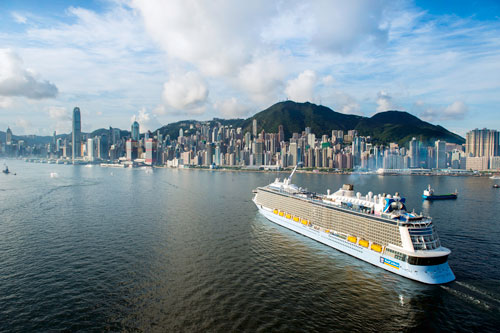
3-june-quantum-of-the-seas_aerial-shot-2_cmyk

Zinan Liu, Royal Caribbean International (RCI) president China and North Asia Pacific
Zinan Liu, Royal Caribbean International (RCI)
president China and North Asia Pacific

Swimming against the current, Royal Caribbean International (RCI) president China and North Asia Pacific, Zinan Liu, said “we do not do purpose-build (ships) for the China market and we never said any ship was built for China”.

Chinese travellers do not like purely Chinese products, said Liu. Rather, they like international products with some Asian or Chinese elements.

Royal Caribbean has been successfully tapping Chinese cruise passengers by homeporting in China and Asia since 2008 – without custom-made Chinese ships. Many Chinese guests are not seeking fly-cruise vacations, and homeports in the region with their friendly visa policies make them attractive to this group of people, he pointed out.

“Chinese consumers enjoy a three-year multi-entry visa to Singapore while ports of call such as Thailand, Malaysia and Vietnam offer convenient visa processing for cruise travellers. Australia also has friendly visa procedures for the Chinese. Plus, when China enters its winter season, Australia and Singapore are suitable for cruising,” he said.

Recounting its China milestones, Liu said it first tested the waters with Rhapsody of the Seas in 2008. In 2009, Legend of the Seas drew attention to cruising among consumers and the trade, and also hosted one of the most successful corporates charters in China.

In 2012, Voyager of the Seas arrived and “was referred to as the ship that brought China into the Super Boat era.”

“In 2013, with the arrival of Mariner of the Seas in China, we celebrated the fourth year in a row where there was a 100 per cent increase of passenger capacity in this region. Finally in 2015, the arrival of Quantum of the Seas, the most technologically advanced ship in the world, moved us from the Super Boat era to the Quantum era,” he said.

Even with the strong Royal Caribbean  development in China, the penetration rate of cruising is far behind the rate of the North American market, thus great potential still awaits.

“The market is becoming mature and guests now are focusing more on the ship itself instead of the port-of-call destinations,” said Liu.

Is JW right for South Beach? Starck answers

0

philippe-starck1

TTG Asia’s senior editor Raini Hamdi interviewing
Philippe Starck during M Social’s media event held yesterday

HOTEL design is nothing without the right operator to bring “life” to the property, says pioneer of design and lifestyle hotels Philippe Starck, who was in Singapore yesterday at the media launch of Millennium and Copthorne Hotels (M&C)’s first M Social hotel in the world which he designed.

Responding to a question from TTG Asia e-Daily if he thinks hotels such as The South Beach in Singapore will be more original if it is self-managed than operated by a global hotel brand, Starck said this was the difficult question for owners.

“Me, I make the stage. You, now you need the movie director and without the right one, all of this will never work. They have to have the same ‘mood’, the same ‘tribe’; it’s difficult otherwise to drive a hotel like that, which is so personal,” he said.

M Social and South Beach both represent the dream of Singapore tycoon and developer Kwek Leng Beng, chairman of M&C, to create an iconic impact in the global industry. Kwek is in two minds about self-managing the South Beach and is in talks with Marriott International to flag it as a JW.

When asked about it at M Social’s media event yesterday, Kwek said it was “still not confirmed” if JW would manage South Beach and declined to say more.

Starck designed both South Beach and M Social. In an interview, he said in the wake of so many design, boutique and lifestyle brands, the life and soul of hotels have become ever more crucial.

“Design is nothing. Before design, there’s humanity, generosity, vision. I am not making a design but a movie. When I design something, I don’t know if it is beautiful or not, I don’t care. But I know step by step what my friends will feel, see, what emotions they will have and when they leave, they will say to their wife, ‘Oh my god, I was in a place and it was full of energy, it gave me ideas, it made me creative. Design is not life,” Starck said.

If South Beach was well-managed, he added, it would be the most “classic” hotel in Singapore, which he defined as “perfect, timeless, with astonishing quality”; not because it was on some front cover of a magazine but because it did not forget the people aspect and it made guests feel they were at home with “mood, feeling, soul”. He added it was ridiculous how so many hotels now were lifeless.

“I invented the boutique hotel and when we see the ‘children’ of boutique hotels today, I’m ashamed. My wife and I travel every day. We prefer classic hotels; we never go to trendy hotels,” he said, adding that super trendy hotels riled him the most. “You know its lifespan is two years. When you go to sleep, you don’t know where the switch is and when you wake up, you wait two hours for the breakfast.”

When asked how South Beach and M Social inspired him when designing them, Starck said: “My body has the age to go to South Beach, but my brain has the age to come here,” referring to M Social, which is designed for the millennial mindset.

“South Beach is a very well done hotel. It is for interesting, intelligent, cultured, fun businessmen and fun parents. Here (M Social), it is for the crazy children, because we hope all our children will be crazy.

“South Beach talks about the serious part of Singapore, money. M Social talks about the future of Singapore – the life, creativity, what the young people will do in Singapore.”

Meanwhile, Starck hints of a new brand he is developing in France which he said would be a “revolution”. It is set to be launched in September. In Asia, he is designing another hotel in Taiwan.

He is not interested to set up a Philippe Starck hotel brand.

“My job is to dream and create, not to know if the champagne is cold. We’re not operators. Everybody has to know his know-how and make the best use of it,” he said.

– Read more on TTG Asia’s July issue as Millennium Hotels & Resorts’ president-Asia, Cetin Sekergioglu, and M Social general manager Ting Huong Tak talk about injecting life into M Social

Armed with fat budgets, California heads to China

0
The new Lumix GX1 arrived today.

The new Lumix GX1 arrived today.

Beteta: China is a very important market

TOURISM promotion organisation Visit California recently led a trade mission to China, its first one in the country, as part of efforts to attract more Chinese travellers to the US state.

The 12-member team headed to the key cities of Beijing, Shanghai, Guangzhou and Hong Kong.

President and CEO of Visit California, Caroline Beteta, said: “With this market being so important and (with their businesses) being driven by relationships, we want to make sure to come over and establish relationships ahead of the others. This will be a regular practice.”

California is already receiving a good level of Chinese visitation, having recorded 1.1 million Chinese arrivals in 2014, but Beteta said she wants to better capitalise on the projected 60 per cent growth over the next four years.

She added that the agency’s global operating budget has been more than doubled from US$50 million last year to US$115 million this year, allowing it greater firepower.

Also expecting an increase in funds is Greater Palm Springs Convention and Visitors Bureau, which would likely have its marketing budget bumped up from US$300,000 to US$500,000 in 2016-17.

“We’ll invest more in social media and plan to partner with other destinations like Santa Monica and Gateway to Death Valley in order to explore FIT itineraries,” said its president and CEO, Scott White.

The bureau, which sees meetings traffic dominated by domestic travellers, hopes to attract more MICE groups from China.

Online GDS training tool for agents goes live

0

gds_genie_screenprint

GDS Genie, the world’s first online resource dedicated to GDS training, is now accessible.

The portal offers proficiency in three of the world’s largest GDSs, namely Galileo, Amadeus and Sabre.

Across all three systems, 40-hour introductory sessions cost 199 pounds (US$286) while the 120-hour professional sessions cost 229 pounds. Various other refresher courses and specialised training are also available.

Fees are inclusive of examination and certification.

“A career in travel is much sought-after and many jobs are advertised asking for GDS experience, but it’s not easy to get official training from GDS companies unless you already work in travel; it’s a Catch-22 situation,” said managing director of GDS Genie, Bruce Martin, who has been in travel recruitment and training for over a decade.

GDS Genie is being launched alongside two distribution partners, social media strategy firm Ginger Juice, which was founded by Martin, and travel trade e-learning platform Online Travel Academy.

Corporates spur demand aboard United’s first direct Singapore service

0

united-airlines-san-francisco

BUSINESS travellers and FITs are driving demand on United Airlines’ direct Singapore-San Francisco service, the only non-stop air link between Singapore and the US since Singapore Airlines suspended their direct services to New York and Los Angeles in 2013.

The inaugural flight departed from San Francisco International Airport on June 1 and touched down in Changi International Airport this morning. Its first flight from Singapore also took off earlier today and will land in San Francisco at 09.15 the same day.

Asked why the carrier is offering the service now, Laurence Chin, country manager Singapore and offline sales, United Airlines, said: “It is important for us from a business and strategic perspective, and we can do it because of the 787-900 Dreamliner aircraft that we have recently received with the capability of doing this in a profitable manner.”

He added: “We know this product is what customers want because they have told us as such and we are comfortable with the numbers so far from both the business and leisure side of things. In fact, passenger load has exceeded our projections.”

According to travel agents in Singapore, corporates are especially keen on the service given the four hours saved by taking the direct route. Previously, Singapore travellers needed to transit at Tokyo or Hong Kong.

Jane Chang, spokesperson for Chan Brothers Travel, said the time saving is a clear advantage, especially for corporate travellers.

There was also strong FIT response on economy seats during a recent three-day sale. “During the promotional period, the under S$1,000 (US$724) air fares were attractive in comparison to other indirect flights to San Francisco traditionally priced between S$1,300 and S$1,500,” said Chang.

However, she also observed that some leisure travellers may prefer a transit to break the long commute from Singapore to the US.

But even as United ceased services between Singapore and Tokyo as of June 2, Chin argues that it’s all about giving customers more options.

“Before, they have to fly via Narita or Hong Kong to San Francisco. Now, they have the option to fly direct and save four hours. For those who still want to go via Narita or Hong Kong, that is still available too through our joint venture with All Nippon Airways,” he said.

Strong interest for the flight have been garnered from firms in the technology, finance and pharmaceutical sectors, added Chin, stating that corporate clients have always been strong supporters of United’s offerings, and the Singapore-San Francisco service is no exception.

Dynasty Travel is also seeing an uptake especially on business class seats by corporates.

Alicia Seah, spokesperson for Dynasty Travel, said: “For corporate clients entitled to travel in business class for flights longer than seven hours, United’s BusinessFirst is selling the best (compared to Economy Plus and Economy).”

Seah also noted that United’s new service in economy class is about 20 per cent to 30 per cent cheaper compared to SIA, depending on travel dates and timings.

She further added that Singapore’s position as a regional air traffic hub means “demand can also derive from Indonesia, Malaysia, Myanmar and Vietnam”.

When asked if SIA’s plan to revive direct flights to the US in the near future is a threat, Chin said: “We welcome competition because we believe that by having good, robust and fair competition, everybody benefits. The consumer obviously benefits and we benefit by being forced to come up with better products to compete effectively.”

Additional reporting from Dannon Har

Travel industry sees wave of interest in messaging chatbots

0

smartphone-chat-apps

WITHOUT the lambaste and fanfare often associated with new technological trends, chatbots have crept their way into social messaging applications and are being used by travel companies to engage with their customers.

Skyscanner made known this week that users can now search for flights or get destination inspiration conversationally via Facebook Messenger, the first metasearch engine to implement such technology.

The chatbot is powered by several internal components, such as its flights API data and machine learning of user search trends. For instance, users can simply type “not sure” when the chatbot asks where they wish to go, and suggestions given will be tailored to each user based on what the bot knows about that person.

“The messaging economy and conversational search are areas which we believe are incredibly important evolutionary features for the travel industry. It has been a top priority for us to take a pioneering approach when it comes to building a bot for Facebook Messenger,” said Filip Filipov, director of B2B at Skyscanner.

“We want to make travel search as easily accessible as possible, and believe that the launch of our Messenger bot will allow more people to search for their travel in a fun and informative way.”

Explaining why this is taking off in the travel space, Fergal Kelly, chief commercial officer at Mobile Travel Technologies (MTT), told TTG Asia e-Daily during the sidelines of Travelport LIVE APAC Customer Conference 2016: “The first instinct (for many people) these days is to text. It’s how they interact with each other and it’s how they expect to manage and sort out their lives. What chatbots are simply doing is allow them to interact that way.

“(Even as social technologies evolve), people still want to be treated like a human, an individual customer. Chatbots come as an efficient way of servicing this need compared to (having someone) take a call, for example.”

Meanwhile, hotel operators such as Onyx Hospitality, with brands like Amari Hotels and Resorts and Ozo under their belt, have integrated chatbots with their property management systems, offering guests round-the-clock automated chat services with the hotel.

They take a blended approach however, with chatbots replying automatically to customers while at the same time allowing the option for hotel staff to also conduct “real” chats via the integrated system developed by Hong Kong-based hospitality solutions provider StayPlease.

Said founder and CEO of StayPlease, Alan Sun: “Guests can choose to interact through visual interfaces (on the chat apps) to request service amenities, but they can also simply type it out (like having a) normal conversation.”

Hotel customers of StayPlease are currently offered integrated solutions on an array of social chat apps, including WeChat, Whatsapp, Line, Facebook Messenger, Skype and Telegram. Services that guests can request via chat range from room upgrades to in-room dining as well as car, spa and restaurant bookings.

On the airline front, KLM Royal Dutch Airlines is a pioneer, offering real-time 24/7 social media interaction as a service with their customers since 2009. They don’t use chatbots at all however, preferring instead to hire a dedicated team of over 200 service agents.

But the big idea remains the same and they have even taken this a step further as of end-March this year.

Via Facebook Messenger, customers can check booking and check-in details, as well as be given boarding pass and flight status updates, the only airline to do so. Passengers can also contact KLM’s social media service agents directly on the same platform.

“We believe we should be where our customers are,” said Pieter Elbers, president and CEO of KLM.

“Our customers feel comfortable sharing info with us via a more personal platform like Messenger. Last year, we activated the Messenger button on our Facebook page, allowing customers to contact KLM even more directly via private messaging. Cases increased by 40 per cent, which shows customers appreciate this form of communication.”

Kelly observes that this is a positive move by brands to better cater to customer needs.

He said: “What we are seeing is a call to action in travel, like in any other industry, to build a relationship where customers already are, whether it’s Whatsapp, WeChat or Facebook Messenger. The brand has to follow.”

Still, “it is very early days so it’s not yet possible to see what the impact is”, he warns, advising that “(as such apps proliferate), it is important to find the balance between interaction and irritation.”

When asked if Kelly’s customers at MTT, which include the likes of Singapore Airlines and BCD Travel, and recently Etihad Airways, are looking into this, he said: “Yes, everybody is looking at it right now and it’s a very current topic.”


[SPONSORED POST] Finding the Lowest Hotel Rates

0

Individual corporate travelers do not always possess an overall view of the travel volume generated by all their colleagues. Finding a one­ – off cheap rate doesn’t help companies consolidate volumes, neither does it gain negotiation power with hotels. With increased transparency and knowledge of public rates through the Online Travel Agencies and price comparison websites, corporate buyers today have trouble distinguishing between the different hotel pricing options available. The availability of free information also means that travelers may see low non – ­refundable saver rates on a hotel’s website and compare them to fully flexible rates negotiated by the company.

hrs

Corporates require the best of both worlds – a choice of hotels to meet travelers’ needs at the lowest price, bearing in mind booking conditions. Effective rate negotiation is as much about choice as price; the mix of rates available is determined by the corporate’s choices. The lowest rate may not be the most cost effective rate, as negotiated rates often include airport or local transportation, breakfast, Internet, parking and other amenities. Corporate buyers no longer need to choose between dynamic and fixed price models when it comes to finding the lowest hotel rates. Neither do procurement managers need to invest the time to create a hybrid model. In order to leverage the best value, HRS, the leading hotel solutions provider, has a few key pieces of advice for buyers:

  1. The key driver in any hotel rate negotiation is occupancy. Volumes can be leveraged to source and shortlist hotels that meet the corporates quality and location requirements – as well as price objectives. Develop an understanding of the day of week, location and seasonality patterns in order to take advantage of the available rate types.
  1.  The cost of amending or cancelling a booking should also be factored into the negotiation. HRS estimates that one in six corporate bookings are cancelled or changed. The incremental cost to the corporate could be as much as 100% of the first night’s stay.
  1.  The dynamic nature of hotel rates means that price does not necessarily equate to quality. It does not always follow that a better quality of hotel should cost more. New hotels are generally more prepared to offer lower rates because they need to ‘lock in’ corporate business and have the flexibility to do so.

corporate.hrs.com/sg

salesapac@hrs.com

+65 6580 2828

twitter@HRS_AsiaPac

A9R9C2DHRS Global Hotel Solutions

hrs

Singapore to develop 126-hectare eco-tourism hub

0

singapore-ecotourism-hub

Concept art of the new Rainforest Park

SINGAPORE will be home to a 126ha wildlife and nature precinct dedicated to eco-tourism come 2023.

The space in development, situated just outside the Central Catchment Nature Reserve in Mandai, is currently home to the Singapore Zoo, Night Safari and River Safari.

The plan is for two more wildlife parks to join its ranks – a brand-new Rainforest Park and the Bird Park, which will relocate from its current space in Jurong. Eco-friendly accommodations are also in the works.

Visitors will be able to stroll on aerial walkways at the 12.5ha Rainforest Park, or relax in pods and watch birds take flight in nine aviaries that feature different landscapes at the 17ha Bird Park. The precinct’s surrounds will also boast nature trails, boardwalks, gardens, waterways and playgrounds.

The main hub area will feature an indoor nature-themed education centre and hold exhibitions aimed at raising awareness and appreciation for the region’s biodiversity and natural heritage.

“Visitors have asked for more novel, engaging and immersive experiences and we hope the new Mandai nature precinct will provide all that and more,” said Mike Barclay, group CEO of Mandai Safari Park Holdings.

“We are also mindful of the need to provide appealing public spaces so that everyone can enjoy the beauty of the Mandai nature precinct.”

The new developments at Mandai are slated to be completed in phases from 2020 onwards.

[Sponsored Post] Bali welcomes first Hilton Garden Inn

0

bali-hilton-19-dawn-pool-21

New Hilton Garden Inn Bali – Ngurah Rai Airport is the Gateway to Bali’s Plethora of Attractions

Only 500 meters away from the island’s international airport, Hilton Garden Inn Bali – Ngurah Rai Airport is situated at a prime location to offer travelers a great launch pad to discover Bali from the moment of arrival. Conveniently located at Jalan Ngurah Rai Airport, the hotel is approximately five kilometers’ drive away from the well-known Kuta beach precinct, which boasts a wide array of retail, dining and entertainment options. Hotel guests arriving from the airport can expediently check in and immediately head out to Kuta, and the other famous enclaves such as Ubud, Nusa Dua and Seminyak, to explore the beauty of Bali.

Guests can dine on-property at The Garden Grille and Bar®, which offers a full cooked-to-order breakfast and dinner, cocktails*, and evening room service. The Pavilion Pantry® is open 24 hours and features a complete selection of salty snacks, sweet treats, cold beverages, and ready-to-cook meals.

Outfitting to business purposes and MICE, the hotel also features a total of six small- to medium-sized meeting rooms, one multi-function hall, and one ballroom. Hilton Garden Inn guests will see why Life’s Better at the Garden™ through amenities and services offered at each location, including complimentary Wi-Fi throughout the hotel, 24-hour business center with Print Spots™ remote printing, a state-of-the-art fitness center, a bar and an outdoor pool.

bali-hilton-deluxe_king1
The award-winning Hilton Garden Inn hotel brand provides guests with upscale accommodations and the modern amenities needed for a successful and comfortable experience for both business and leisure guests. The satisfaction promise affirms that Hilton Garden Inn will to do whatever it takes to ensure every guest is satisfied, or they don’t pay. You can count on us. Guaranteed™.

All 291 guest rooms boast the brand’s signature bedding featuring fresh, white duvets and crisp linens; a spacious and clutter-free work desk with an ergonomic desk chair; and an in-room “hospitality center” with a mini fridge and coffee/tea maker.

The hotel participates in Hilton HHonors®, the only hotel loyalty program that allows members to earn Points & Miles® on the same stay and No Blackout Dates on reward stays. To celebrate the hotel’s opening, Hilton HHonors members will receive Double Points per stay on the best available rate through stays completed between May 1 and July 31, 2016. HHonors members always get the lowest price with its Best Price Guarantee, along with HHonors Points, free Wi-Fi, digital check-in and no booking fees only when they book directly through Hilton.

Hilton Garden Inn Bali – Ngurah Rai Airport is located at Jl. Airport Ngurah Rai No.7, Kuta, Bali, Indonesia. For more information or to make reservations, please contact the hotel via +62 361 8976100 or visit Hilton Garden Inn Bali – Ngurah Rai Airport.

Read more about Hilton Garden Inn at www.hgi.com and www.news.hgi.com.

Online marketplace for MATTA members goes live

0

matta-lol

Screenshot of matta.travel

THE Malaysia Association of Tour and Travel Agents (MATTA) is urging its members to sell their packages on matta.travel, the association’s newly-launched B2C online marketplace.

Having gone live yesterday, the portal currently has more than 340 domestic packages submitted by more than 100 members and is the largest travel package portal in the world, according to Rohizam Md Yusoff, deputy president at MATTA.

Features of the portal include subsections for outbound packages, halal tours, Umrah (pilgrimage to Mecca that can be undertaken any time of the year) and special needs.

Rohizam, who is also CEO of Creative Advances Technology, the company that developed the portal, said: “We are targeting 700 packages to be online by this year-end.”

The number he quoted isn’t far-fetched considering that MATTA has 3,200 members.

“MATTA will promote the site locally, regionally and globally as well as actively use it during MATTA fairs,” said Hamzah Rahmat, president of MATTA.

Creation of the portal is MATTA’s way of offering opportunities for members to sell their products online, while at the same time eliminating unlicensed operators, as only MATTA members are allowed access to sell.