TTG Asia
Asia/Singapore Monday, 13th April 2026
Page 1827

Faster immigration clearance for Singapore, US citizens

0

ica-us-sg

(From left) Gil Kerlikowske, commissioner, US Customs & Border Protection; Kirk Wagar, US ambassador to Singapore; Amrin Amin, parliamentary secretary, Ministry of Home Affairs; and Clarence Yeo, commissioner, Singapore Immigration & Checkpoints Authority

TRAVELLERS from Singapore and the US are now eligible for expedited clearance at selected airport immigration checkpoints in both countries.

It is part of the Trusted Traveller Programme (TTP) bilateral initiative which came into effect since June 27. Under the agreement, Singapore passport holders who meet prevailing criteria for the TTP may make an online application via the US’ Global Entry Programme (GEP) website at www.cbp.gov.

After submitting an application, those qualified will receive a notification to schedule an in-person interview at the US Embassy in Singapore.

For eligible US passport holders aged six and above, they can apply for the use of enhanced-Immigration Automated Clearance System (eIACS) in Singapore by applying online with the Immigration & Checkpoints Authority (ICA) at www.ica.gov.sg.

Approved applicants will receive a notification of their application outcome and they will be advised on the completion of enrolment procedures.

Ctrip populates its platforms with ArrivalGuides content

0

DESTINATION guide content provider ArrivalGuides has entered into a partnership with leading Chinese OTA Ctrip to provide them with points of interest (POI) information.

Around 47,000 POI content from over 550 destinations will be made available for users of Ctrip under this agreement.

“We are thrilled that the biggest OTA in China has chosen ArrivalGuides as the newest partner to help expand their global presence,” said Magnus Aideborn, CEO of ArrivalGuides.

“Through this partnership, Ctrip will supply their members with our authentic destination content, input directly by the tourism boards and destination experts.”

Cambodia needs more than Angkor Wat to boost arrivals

0

angkor-wat

AGENTS in Cambodia are finding it necessary to offer more in their packages, including Cambodia-only itineraries, in order to sustain long-term growth.

The latest figures from Angkor Institution revealed that 972,753 international tourists visited the UNESCO World Heritage site between January and May this year, a slight 0.25 per cent increase on the same period in 2015. A total of US$28 million was made from ticket sales – a 1.7 per cent increase.

But agents say this isn’t enough.

Said Khiri Travel country manager Miles Gravet: “Massive short-term rises in tourist numbers always were unsustainable for Cambodia and we need to focus on long-term sustainability. I think if we continue to promote Cambodia and not just Angkor, and shift from an overreliance on the budget-focused regional market, the numbers will continue to rise.”

Meanwhile, Exo Travel, which sees many of its customers spend five days in Cambodia as part of a multi-city trip from Vietnam and Thailand, hopes to push destination Cambodia further by promoting it as a standalone destination.

About 80 per cent of Exo’s customers travel only to Phnom Penh and Siem Reap.

“These figures show the need to showcase other parts of Cambodia apart from Angkor Wat,” said it’s general manager Pierre-André Romano. “We are working on 100 per cent Cambodia tours with some agents.”

The largest source of foreign visitors to Angkor Wat currently hail from China, South Korea and Japan.

ASEAN gets serious about ecotourism development

0

asean-ecotourism-forum-aef

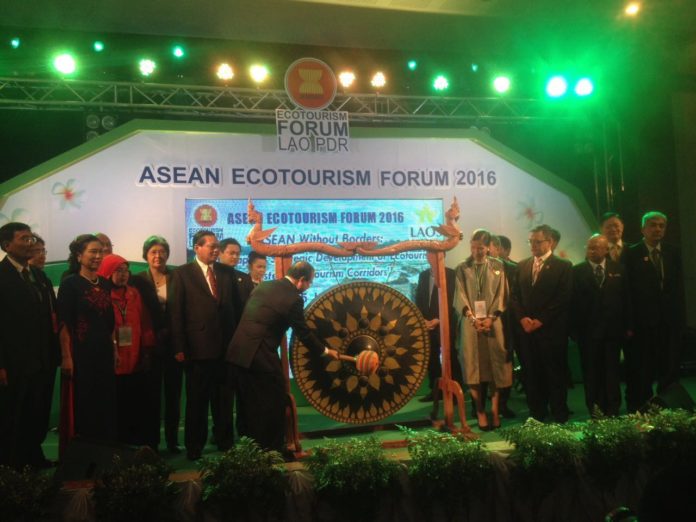
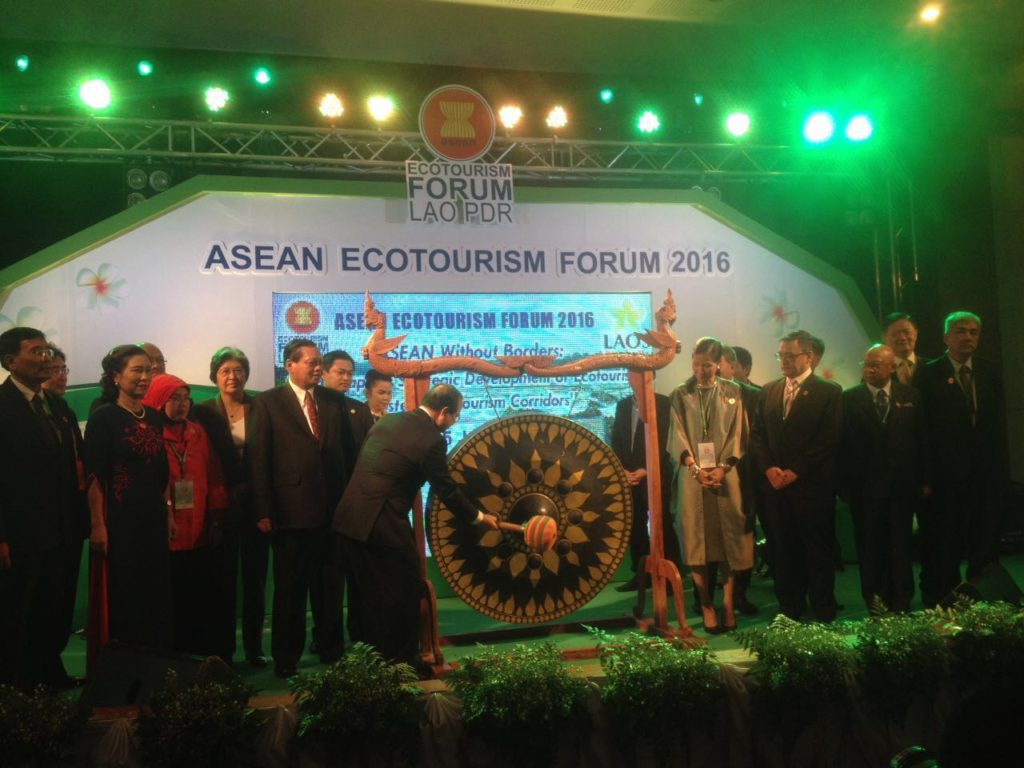
ASEAN tourism ministers and top executives at the opening ceremony of AEF 2016

RECOGNISING the high-yield, low-impact benefits of ecotourism, governments in South-east Asia are now putting serious efforts to develop this niche market by including sustainable and responsible travel in national planning policies.

At the regional level, the first-ever ASEAN Ecotourism Forum (AEF) which took place in Pakse, Laos last week saw the adoption of the Pakse Declaration, which will lead to a roadmap for the strategic development of ecotourism clusters and tourism corridors.

Speaking during the AEF, Frans Teguh, director of infrastructure development & tourism ecosystem at Indonesian Ministry of Tourism, sees “big potential for marine tourism” and projects ecotourism to contribute to 10 per cent of the country’s tourism market within the next five years.

The Indonesian government will integrate ecotourism into the national masterplan this year, in addition to identifying destinations like Toba Lake, Labuan Bajo and Mandalika as priority areas for ecotourism development. As well, a special pavilion dedicated to sustainable tourism will debut at PATA Travel Mart this year, Frans told TTG Asia e-Daily on the sidelines of the forum.

The Malaysia National Ecotourism Plan 2016-2025 will be using the cluster approach – i.e. grouping a critical mass of competitive and/or complementary tourism products in a geographical area – as a planning tool to foster integration, informed Amran Hamzah, a professor in tourism planning and director of the Centre of Innovative Planning and Development at Universiti Teknologi Malaysia.

While he declined to reveal more details of the plan at press time as the strategy was still undergoing discussion, Amran said that it will seek to avoid earlier weak points in the National Ecotourism Plan 1996 such as the absence of “buy in” from the private sector.

For Thailand’s minister of tourism & sports Kobkarn Wattanavrangkul, bringing standards at ecological sites, national parks and historical cultural centres to international levels is a key concern. Besides working with global organisations like UNWTO to pursue internationally recognised standards, the Tourism Authority of Thailand has rolled out the Seven Greens campaign to promote responsible travel and destinations, she revealed.

Many areas still need the strong support of governments in the ecotourism development field though, industry stakeholders pointed out at the AEF.

Owing to the “high startup costs” in ecotourism ventures, Asian Development Bank’s senior portfolio management specialist of Lao PDR Resident Mission, Steven Schipani, urged governments to proactively identify viable tourism projects and provide stronger destination marketing in order to lend a helping hand for SME entrepreneurs in this niche sector.

Meanwhile, Xu Jing, regional director for Asia and the Pacific, would like to see more open visa policies. “Unless visa issues are facilitated and seriously taken up by governments, ecotourism benefits cannot be fully realised,” he remarked.

Indian operators up in arms against OTA pricing policies

0

india-ota-protest

MORE than 1,000 tour agents, transport operators and hoteliers held a protest late last week at Jantar Mantar in New Delhi against what they termed as “unethical pricing policy by OTAs”.

All major Indian travel trade associations in the country were represented, including Travel Agents Association of India, Travel Agents Federation of India, Association of Domestic Tour Operators of India and the Indian Tourist Transporters Association.

According to the protestors, Indian OTAs are misusing foreign direct investment to offer heavy discounts on the tariff of hotel rooms. They contend that this will in turn outprice smaller agencies and unfairly wipe them out of the market.

“This is not an issue of brick-and-mortar operators against OTAs. We understand that technology is good for the industry. We are just protesting against unethical business practices where they are using foreign funding to heavily subsidise products in such a way that small players can’t exist in the trade,” said Neeraj Rustagi, director, Regency Tours.

“Recently there was a flash sale on an OTA where they were offering a hotel room worth 4000 rupees (US$59) for as low as 125 rupees.”

Ctrip had invested US$180 million in MakeMyTrip earlier in January, while Naspers alsorecently injected US$250 million in the Ibibo Group, which runs Goibibo.com.

An agent who wished to remain anonymous said most Indian OTAs are reporting losses because of the heavy discounts they are offering. MakeMytrip in May reported a loss of US$49.9 million for its fiscal year, the company’s 14th straight loss making quarter.

“Such absurd discounts are also diluting the brand value of hotels. We want the government to streamline policy for e-commerce portals so that they can’t subsidise the product in order to remove the competition,” said Harjinder Singh, team leader, 24×7 Travels.

The protesters also shared that it will soon file a case at the Competition Council of India.

Buffalo Tours launches MICE arm

0

BANGKOK-BASED leisure specialist Buffalo Tours is leveraging its 22 years of destination management experience across Asia to court the corporate events market, with the establishment of a MICE division.

At a trade party last week to present the new Buffalo Events to its corporate clients and business partners, Sarah Randall, regional MICE manager of the division, told TTGmice e-Weekly that the business events specialisation was formed in response to rising demands from clients to provide such support, especially for events that require unique experiences and CSR elements.

Buffalo Events will focus on delivering teambuilding and incentive programmes and on providing corporate transfers and unique venues for dinners, meetings and other gatherings.

Attention will also be paid to connecting clients with sustainable tourism products and services.

In a press statement, Randall said: “Our team of experienced MICE staff is committed to providing excellent customer service and delivering bespoke tailored events that are on point for our clients’ needs, while maintaining our commitment to responsible tourism.

“With a wealth of experience in the region, Buffalo Events is excited to offer engaging and impactful events which fit client agendas but also have a positive effect on the community in which we operate.”

Matt Masson, managing director of Buffalo Tours, pointed out that corporate clients can benefit from the company’s “own operations across 11 countries in Asia” as well as partnership with ” a large volume of hotels, tours and venues (which offer) competitive rates”.

Deloitte University sets up regional institution at Amara Sanctuary Resort

0

amara-sanctuary-mice-block
MICE Block at Amara Sanctuary Resort

LUXURY hotel Amara Sanctuary Resort, Sentosa has become the permanent base for Deloitte University’s first Asia-Pacific campus where Deloitte employees will receive enriching learning experiences.

Building upon the success of its flagship Deloitte University Leadership Center in Westlake, Texas, the US, the Deloitte University Asia Pacific (DU AP) campus will offer a tailored curriculum that suits this region’s business needs.

Albert Teo, CEO of Amara Holdings, revealed in a media statement that the hotel had undergone an enhancement exercise to rejuvenate its facilities in preparation for the Deloitte University appointment.

Teo said: “This is our first time providing a permanent base for a university. Although Amara Sanctuary had always been equipped with MICE facilities, we’ve spruced up the resort’s interiors and adapted our MICE offerings to meet the DU AP requirements (and) to transform the resort into an integrated ‘entrenched learning’ space where individuals can hone their leadership skills, network and socialise in an inspired, luxurious and relaxing setting.”

Renovation works had lasted six months and saw improvements made to the lobby and guestrooms while MICE equipment and network infrastructure were enhanced. More spaces were also added to encourage social networking, such as the extended Tier Bar, a new lounge and the newly renovated rooftop infinity poolside which now comes with increased seating capacity.

F&B offerings also received a shake up, with new and innovative menus now on the table at Shutters and Tier Bar.

Both DU AP’s appointment of the resort as training grounds and the refurbished hardware will serve to boost usage of the resort’s MICE facilities, according to Teo.

When asked if the resort’s special arrangement with the university would mean fewer opportunities for other events planners to use the property, Teo explained that “facilities are still being reserved on a first-come-first-served basis”.

Moreover, DU AP “is flexible in their approach as to the number of classes to be held and will make arrangements with Amara Sanctuary ahead of time”, he added.

Brexit spares impact on business travel and MICE into Asia for now

0

big-ben_online

GLOBAL stock markets may have been shaken by the Brexit vote last Thursday, but the state of business travel and MICE appears to have escaped unscathed despite worries of an impending financial crisis with the UK’s economic instability.

Leading global travel management companies told TTGmice e-Weekly that UK clients did not approach business travel and event plans with caution in the lead up to the historical Brexit vote on June 23, nor did they cancel or postpone any trips already made.

However, most opined that this is still early days.

A spokesperson with Carlson Wagonlit Travel said: “The vote has no immediate impact on CWT’s business in the UK or the EU. We will continue to monitor the situation as it evolves.”

Greg O’Neil, president – Asia-Pacific for BCD Travel, said: “Globally, we are preparing for some volatility – but at this time we are not adjusting annual projections for volume.”

He added: “We expect to see a conservative approach to internal travel and small meetings. Most of our clients are multinational, so their bookings are not isolated to the UK. Generally, our UK-based clients have been reluctant to share plans to curtail travel far in advance, so we may have to wait a few weeks to learn if that could happen.”

Also bracing for impact later is Linda Low, manager for strategic partnership & product marketing at Pacific World Singapore.

“We expect to see unscheduled business travel in the near term being held back, pending more clarity on the UK currency and economic prospect,” Low said.

Arokia Das, senior manager at Luxury Tours Malaysia, too, thinks a slowdown in corporate bookings is on the horizon, as companies will be cautious about spending and may wait until the economy and political situation stabilise.

And should demand for corporate meetings be impacted, O’Neil said small meetings would be first to be hit.

“Companies tend to drop small internal meetings first because those are planned closer to the time of the event and often can be (replaced) using virtual collaboration technology. Larger meetings typically include costly cancellation policies, so we expect them to proceed,” O’Neil explained.

However, he was quick to point out that as “summer is historically a bit slow for business travel”, any decline in corporate traffic now would likely be “independent of the Brexit vote”. What would happen is the usual summer slowdown occuring “a few weeks early”.

“By September, businesses often see a need to travel more to meet goals for growth, so we normally expect strong volume in Q4,” he added.

Offering a more optimistic view of the situation is HRS, whose spokesperson said that corporate travel is essential and will carry on, although UK clients will now, more than ever, seek cost-savings.

The spokesperson also suggested that the weakened pound might lead to increased inbound demand for the UK, as the cost of business trips and meetings will be lower.

Go deep, do good

0

Social enterprises are becoming a larger part of the sustainable tourism ecosystem but they too face competition and unique challenges, Raini Hamdi finds
24june_godeep_1

With clients increasingly hankering for more meaningful travel, social enterprises are becoming an even bigger component of the sustainable tourism ecosystem.

Three Asian finalists of this year’s Tourism for Tomorrow awards presented by the World Travel & Tourism Council show why these projects can easily endear themselves to today’s travellers.

Founded in late 2009 by three long-term expats living in Battambang, Cambodia, Kinyei International promotes youth entrepreneurship through two interconnected businesses: Soksabike, an educational bike tour, and Kinyei Cafe; a training cafe.

The cafe gives travellers, expats and locals a space to exchange and develop ideas through various workshops, talks and lectures, aside from serving good coffee with beans procured from Cambodia, Laos and Thailand by its own baristas, all of whom are young locals from disadvantaged backgrounds.

Its other business, Soksabike, offers four bicycle tours of 30km to 50km in length taking guests to discover family-run cottage industries in the Battambang countryside.

To date, Kinyei has trained 50 local staff in coffee and food service, tour guiding, finance, IT and management skills. “Three years ago we handed over small business operations to the local team,” said Katherine Hallaran, one of the founders.

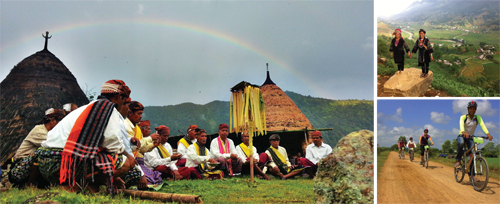
The second of the three Asian finalists concerns the Sapa region in northern Vietnam. Defined by terraced rice paddies, Sapa is regularly voted one of the most picturesque regions in the world. But its climate and topography mean the Hmong, Dao and other minorities who live there can only bring in one harvest a year, thus living on subsistence levels.

Launched in 2007, SapaO’Chau offers community-run tours, operates its own boarding facility, supports 11 homestays and employs 30 trekking guides. In 2013, it became Vietnam’s first minority-owned tour operator to gain an international licence and remains the only one operating in Sapa.

The third social enterprise saves a community from oblivion. Waerebo is an idyllic mountain setting for seven traditional thatched Mbaru Niang houses that are home to 25 families who farm the surrounding fields for coffee. But its remoteness – four hours’ walk to the nearest village with any access to motorised transport and from there, seven hours’ drive to Bajo, capital city of Flores – makes sustaining a livelihood a challenge. Only three of the houses are left standing. Local NGO Indonesia Ecotourism Network (Indecon) has helped preserve them and opened an income stream for the residents through community-based tourism.

These enterprises are proof that tourists today are willing to go to lengths in their search for authentic experiences. From only 155 tourists in 2008, Waerebo welcomed 2,100 guests in the first 10 months of 2014 from all over the world to enjoy trips such as A Journey of A Cup of Coffee. Meanwhile, over 15,000 guests have either passed through Kinyei Cafe or taken one of the bicycle tours.
24june_godeep_2

Tour operators interviewed said they constantly sought such projects out but infrastructure was a key hurdle for the mainstream players among them.

Khiri Travel  works with all three players and chairman of Yanna Ventures, which operates Khiri Travel, Willem Neimeijer, expects to do more as he expands the Ground division, which arranges educational trips and develops communities.

“Khiri Travel sent SapaO’Chau only a couple of bookings last year. They run fantastic programmes and Ground will have the type of clients for their more in-depth programmes around Sapa.

“Khiri Travel Cambodia works with Soksabike for clients in Battambang.  Their strength, but at the same time limitation is their location, which is away from where most tourists go, so for mainstream tour operators this is a bit of a handicap. However, my advice to them is stick with the area. Cambodia can do with the visitor dispersion.

“Khiri Travel Indonesia has worked with Indecon for a very long time and Waerebo features in many of our programmes. Sustainable tourism is playing a key role in the conservation of nature and culture in Indonesia (but) infrastructure remains a formidable obstacle and more investment in remote parts of Indonesia (so beyond Java and Bali) is needed.”

Laurent Kuenzle, CEO of Asian Trails, said often smaller projects were the ones that made a bigger impact in people’s lives because they were easier to manage, with less government red tape.

“My experience is that people who manage the smaller projects are more passionate and focused on actual results for the people and not PR for some kind of NGO or organisation,” he said.

Kuenzle said there were many sustainability projects today and Asian Trails chose to support the ones that “bring local people on their own two feet so they can support themselves”.  The projects are integrated into its tours as much as possible so clients “get that feel of being close to nature and to people when they travel with us”, said Kuenzle.

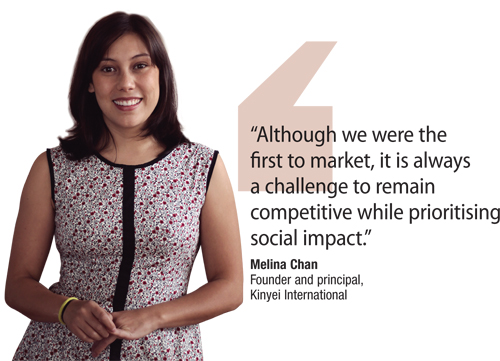
Melina Chan, founder and principal of Kinyei International, agreed there was more competition now, even with social enterprises.

“Although we were the first to market, it is always a challenge to remain competitive while prioritising social impact. One challenge we find is that the low barriers to entry combined with rapid economic growth in Battambang mean increased competition. We find that supply sometimes outstrips demand because we operate in a limited market. In this sense, to keep ahead, it is hard to remain ethical and sustainable.

“A second challenge we see is the issue of human capital. There is a lack of local technical expertise, which is valuable for our businesses. We are constantly needing to do internal development, grow and build our own expertise through in-house training. Of course this is also a huge and very exciting opportunity and part of why we love what we do. But, it remains difficult to engage specialist expertise and attract that talent internationally to a regional centre like Battambang.”

This article was first published in TTG Asia, June 3, 2016 issue, on page 4. To read more, please view our digital edition or click here to subscribe

A portal to Muslim travel

0

01jul-case
Halal partnership: Faeez Fadhlillah (right) and Juergen Gallistl

WHO Faeez Fadhlillah is the CEO and co-founder of Tripfez, a relaunch of Lagisatu.com which went live in 2013 as a travel metasearch site for Muslim-friendly hotels. He founded the travel portal together with Juergen Gallistl, after they both graduated from the University of Sydney.

In 2013, Faeez was awarded the NEF Awani Young Technopreneur Award by The Malaysian Association of Bumiputera ICT Industry & Entrepreneurs, and was most recently featured on Forbes’ list of 30 under 30 in the retail & e-commerce space.

He is also the vice president for research and technology with the Malaysia Association of Tours and Travel Agents.

WHAT Lagisatu.com was reintroduced as Tripfez in March 2016 to expand the portal’s offerings beyond its metasearch beginnings, while keeping its focus on Muslim travel.

“(Lagisatu) was the right positioning at that time because it differentiated us from other metasearches. We then saw the full potential of the Muslim travel market and realised we could be more than that,” said Faeez.

“Given the expertise we had built up in the market, we could expand into reviews and experiences… Over time, we will migrate Lagisatu into Tripfez fully,” he added.

Tripfez allows guests to book thousands of halal-friendly hotels globally, as well as Muslim-friendly tours and activities for selected destinations in South-east Asia. The portal offers information that is specific to Muslim travellers, providing reviews of hotels with halal food options, prayer mats and the Koran.

At the same time, participating hotels also get a set of tools to increase their service level for Muslim guests, such as providing a printout of prayer times as well as the prayer direction.

WHY “We aim to complement existing information on big travel portals by offering reviews and products that are relevant to the Muslim segment of the world population,” said Faeez. “We want (Tripfez) to be like the TripAdvisor or Viator for Muslim travellers.

“We believe hotels and accommodation providers that offer Muslim-friendly products will be ahead of the competition, and they will be well rewarded by a significant rise in the number of nights by Muslim guests.

A booming global Muslim tourism market is driving the “very high demand” for Muslim-friendly hotels on Tripfez, according to Faeez, citing a recent Thomson Reuters report that estimates the world halal market will grow in value to US$233 billion by 2020, up from US$142 billion in 2014.

TARGET Tripfez aims to broaden its horizons and offer listings of halal restaurants by end-2016 and grow its Muslim-friendly inventory to a high five-digit number by 2018.

As well, the founders hope to offer at least one hotel with Muslim facilities in every capital city in the world, in their quest to ensure a great travel experience and a blessed journey for Muslim travellers wherever they go.

This article was first published in TTG Asia, June 3, 2016 issue, on page 11. To read more, please view our digital edition or click here to subscribe.