TTG Asia
Asia/Singapore Monday, 6th April 2026
Page 1819

Photo of the Day: Dream Cruises takes China’s Got Talent to seas

0

dream-cgt-group-photo
(From left) Colin Kerr, senior vice president of entertainment, Genting Hong Kong; Vivian Yin, CEO of FremantleMedia China; Thatcher Brown, president of Dream Cruises; Michael McKay, president of activeTV; and Loui Lim, vice president, Dream Cruises officiating the lighting ceremony for China’s Got Talent – The Dream Experience

Dream Cruises will be the first cruise line to offer TV hit series China’s Got Talent at sea when it inaugural ship Genting Dream sets sail in November. Named China’s Got Talent – The Dream Experience, the 45-minute theatrical show will take place in the cruise ship’s 999-seat Zodiac Theatre.

New hotel openings: July 1 to 8, 2016

0

hotel-indigo-gallery

Hotel Indigo Singapore Katong
InterContinental Hotels Group’s first Hotel Indigo in Singapore has opened in the city’s iconic Katong neighbourhood. Integrating a modern multi-storey building with a former police station, the hotel features 131 guestrooms across Deluxe and Premium categories, each 30m2 in size; a 24-hour fitness centre; and a rooftop infinity pool. The all-day dining restaurant, Baba Chews Bar and Eatery, serves Peranakan cuisine and western fare. The property is a 15-minute drive from Changi Airport and the CBD.

four-points-singapore-premium

Four Points by Sheraton Singapore, Riverview
The Lion City’s first Four Points hotel has debuted by the Singapore River near the Robertson Quay district. Four Points Singapore, Riverview was launched after a redevelopment of the former Riverview Hotel’s common areas, meeting spaces, facilities and all 476 guestrooms. The hotel received an additional meeting room on top of its seven existing event spaces which include a ballroom with capacity for up to 320 pax. Amenities include the all-day dining The Eatery, a lobby bar, a 24-hour fitness centre, a pool and complimentary Wi-Fi.

amba-taipei-songshan

amba Taipei Songshan
The amba Taipei Songshan has opened just five minutes’ drive from the Taipei 101 tower. Over 70 per cent of the hotel’s 189 guestrooms are said to have views of either Taipei 101 or the Keelung River. Room categories range from Smart Rooms (27m2) to Studio (107m2). All guestrooms offer complimentary Wi-Fi, a 48-inch HD TV and a Nespresso machine. As well, the hotel features the Que restaurant, a modern chophouse, and an event space accommodating up to 150 for meetings and 200 for banquets.

Thailand, Khao Lak, Anda Mani hotel, pool

X2 Khao Lak Anda Mani
Boutique lifestyle brand X2 and Bespoke Hospitality Management Asia have launched the Khao Lak Anda Mani resort in Thailand’s Phang Nga province. All nine guestrooms (a combination of suites and villas) look out to Lam Kaen beach and the resort pool.

????????????????????????????????????

Grand Mercure Mysuru
AccorHotels has introduced the 146-room Grand Mercure Mysuru in India’s Mysuru city. The property features facilities such as a fitness centre, a terrace pool, a play area for children and a spa, while F&B options include a 24-hour multi-cuisine restaurant, a deli, a bar and a rooftop restaurant. Located on the New Sayaji Rao Road where Dasara processions take place, the hotel has availed a viewing gallery on the sixth floor from which guests can witness the iconic Dasara festivities.

APAC leads air passenger growth in 2015: IATA

0
Airlines

passenger-plane-sunset-generic

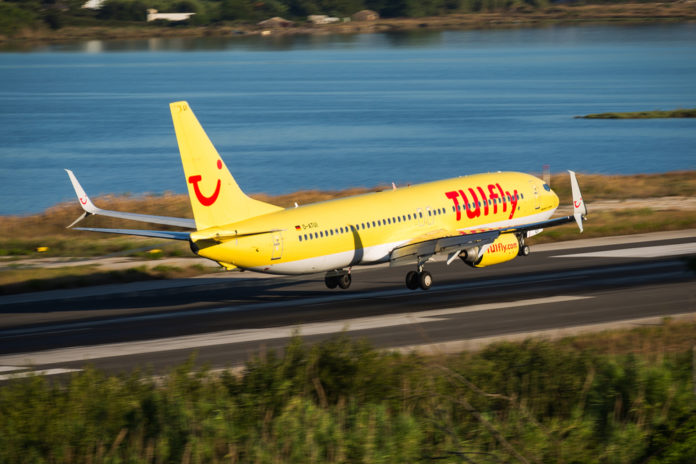
ASIA-PACIFIC continues to dominate global air passenger traffic growth, according to 2015 industry performance statistics released by IATA in its 60th Edition of the World Air Transport Statistics.

Airlines in the Asia-Pacific region once again carried the largest number of passengers at 1.2 billion last year, rising 10 per cent from 2014, to account for a 34 per cent market share.

Overall, airlines carried 3.6 billion passengers on scheduled services, an increase of 7.2 per cent over 2014 to represent an additional 240 million air trips.

India saw the fastest passenger growth of 18.8 per cent in 2015 with an annual growth of 18.8 per cent in a market of 80 million domestic passengers, surpassing Russia’s 11.9 per cent growth (47 million domestic passengers), China’s 9.7 per cent growth (394 million domestic passengers) and the US’ 5.4 per cent growth (708 million domestic passengers).

The top five international/regional passenger airport-pairs all reside within Asia-Pacific: Hong Kong-Taipei (5.1 million, up 2.1 per cent from 2014), Jakarta-Singapore (3.4 million, down 2.6 per cent), Bangkok Suvarnabhumi-Hong Kong (three million, up 29.2 per cent), Kuala Lumpur–Singapore (2.7 million, up 13 per cent) and Hong Kong-Singapore (2.7 million, down 3.2 per cent).

As well, the top five domestic passenger airport-pairs were also all in the Asia-Pacific region, led by Jeju-Seoul Gimpo (11.1 million, up 7.1 per cent over 2014), followed by Sapporo-Tokyo Haneda (7.8 million, up 1.3 per cent), Fukuoka-Tokyo Haneda (7.6 million, down 7.4 per cent), Melbourne Tullamarine-Sydney (7.2 million, down 2.2 per cent) and Beijing Capital-Shanghai Hongqiao (6.1 million, up 6.1 per cent) respectively.

Climate change needs urgent action from Asian tourism sector

0

cambodia-mekongMekong River, Phnom Penh, Cambodia

DESPITE such buzzwords as sustainable travel and ecotourism being bandied about at this year’s Mekong Tourism Forum, the travel sector is urged to pay even more attention to climate change and seek greater collaboration between the public and private sectors to avoid climate catastrophe.

“Climate change is existential – if we don’t deal with it, we will not exist,” warned Geoffrey Lipman, director of Greenearth.travel. “We should be careful in believing our own propaganda. Green marketing and ecotourism projects don’t scratch the surface of what sustainable income means in the future.”

Increasing urbanisation, mass tourism and air traffic will inevitably have knock-on effects on the environment, with the aviation industry set to become a serious emissions problem in the future. “The sector needs to find an alternative to (petroleum-based fuels),” said Lipman.

Failure to address climate change will increase the probability of droughts, diseases, water shortages, flooding, saline intrusions, etc, Lipman cautioned. “We are already witnessing these within the Mekong region,” he added.

Cambodia had experienced severe droughts across the country, observed Jo Crisp, general manager of DMC Peak Cambodia. “It is our responsibility to ensure that we have a sustainable industry for the future,” she said.

Sotea Sith, manager of Mekong Travel, said: “We have to take responsibilty but the lead has to come from governments with policies put in place and enforced to address climate change.”

Flights grounded as super typhoon slams into Taiwan

0

typhoon-warning-taiwan

WITH super typhoon Nepartak expected to hit Taiwan early this morning, airlines have been cancelling or rescheduling flights in and out of the island.

Taiwan’s Central Weather Bureau began issuing typhoon warnings on Wednesday as the storm advanced towards the island’s eastern shores from the Pacific Ocean, triggering a slew of flight cancellations.

Cathay Pacific and Dragonair were first to announce flight suspensions on Wednesday. By end Thursday, nearly 30 international services plying Taiwan had been cancelled or postponed.

Meanwhile, Hong Kong Airlines, Dragonair and Cathay Pacific will continue to ground flights to Taiwan on July 8. As well, China Airlines has cancelled all flights plying Taichung and Tainan on July 8 in addition to some flights to Kaohsiung and Taoyuan.

Flight schedules are subject to further change and passengers are advised to check the latest flight updates through the respective airline channels.

The storm is likely to attenuate from super typhoon to typhoon status today, and will hit southern China as a typhoon.

Asian Trails announces key management changes

0

ASIAN Trails Thailand will make changes to its top posts come November.

Claudio Kellenberger, managing director Asian Trails Thailand, will leave the company in November to migrate with his family to New Zealand.

Deputy managing director Asian Trails Thailand, Yves van Kerrebroeck, will be promoted to managing director Asian Trails Thailand effective November 1.

Stefan Bruns, a Swiss national with tour operator and Asian DMC background, will join the company on September 15 to replace van Kerrebroeck as deputy managing director Thailand position.

Lanith founder departs organisation

0

FOUNDER of Lao National Institute of Tourism and Hospitality’s (Lanith) Peter Semone has departed on June 30 following an eight-year stint as its chief technical advisor (CTA).

“Lanith was established as part of Luxembourg Development’s Project LAO/020,” Semone explained. “That project, along with my contract, expired at the end of June.”

semone_photo
Peter Semone, former CTA at Lanith

He added: “Luxembourg is starting a second Lao hospitality project with a new CTA, but this has nothing to do with Lanith, which has been handed over to the Lao Ministry of Education.”

Meanwhile, Saysavath Chasane has been tapped as Lanith director and is based at the Vientiane Centre of Excellence, while Chounlachan Phengdy heads up Lanith’s Luang Prabang Training Centre.

Following his tenure at Lanith, Semone has founded consulting firm Destination Human Capital, which is headquartered in Bangkok with a branch office in Bali. “Our mission is to establish a chain of Lanith-like institutions throughout South-east Asia,” he said.

Semone will continue to serve as PATA Foundation chairman.

What Brexit means for Asia

0

Asian travel industry leaders ponder the implications on tourism and business following Britain’s vote to leave the EU − and it’s not an entirely dismal picture

jul-08-brexit

Shock and jitters were felt across the globe after the UK voted itself out of the EU (“Brexit”) on June 23, sending the British pound plunging to a 30-year low and the market into turmoil.

The referendum outcome has also taken many travel industry leaders by surprise and they have yet to see the full-on effects on businesses, but for now a weaker British sterling pound and the uncertainty Brexit has triggered are the biggest challenges in the immediate wake of the seismic event.

Pall of uncertainty over Asia
“It’s too early to tell how Britain’s decision to leave the EU will affect global travel and, more specifically, incoming tourism to Asia; we need to wait for the dust to settle and see how things play out over the coming months,” said Lisa Fitzell, group managing director at Diethelm Travel Group, who revealed that the Bangkok-based DMC will not be changing its strategy for the UK market.

Judy Lum, senior vice president sales & marketing international market at Tour East Singapore, has not seen signs of UK travellers holding back bookings at the moment, but reckons that “the plummeting pound will no doubt affect the spending of the British”.

She added:“We should brace ourselves for a slowdown by the fourth quarter as the effects and reality of Brexit will kick in and this may last till 1Q2017 when the changes are more defined.”

However, Singapore’s leisure market is unlikely to take a big hit from a falling pound as the city is just a transit hub, opined Dominic Ong, general manager of Star Holiday Mart. But he has more reservations for the MICE market: “We foresee that local DMCs may face delays in payment.”

Hideaki Furusawa, global sales department manager of The Yokohama Bay Sheraton Hotel and Towers, is bracing for “inevitable” effects in the next few months, as foreign visitors make up 45 per cent of the property’s clientile; the hotel is also a corporate partner of Nissan Motor, which has its global headquarters nearby and significant business interests in Britain.

The uncertainty Brexit brings also threatens to undo the recent gains that the Philippine inbound sector has made for the UK market.

“The UK market has grown 25 per cent last year. New flights from London were launched, the EU lifted the ban on Philippine airlines and just two weeks ago we hosted top 10 UK agents,” said Marjorie Aquino, senior sales and marketing manager, Blue Horizons Travel and Tours. “Then all of a sudden comes Brexit.”

Meanwhile, Michael Wu, managing director at Gray Line Tours Hong Kong, is already reeling from Brexit, as the GBP’s depreciation has translated to a 12-15 per cent rise in his tour fees.

“There is an immediate impact to our business because FIT bookings for October dropped obviously and even group traffic has slowed,” he said. “I reckon my UK inbound traffic would fall 20-25 per cent due to Brexit.”

Siggi Neuhaus, general manager of Caraka Travelindo Inbound based in Makassar, South Sulawesi, told TTG Asia that UK buyers she met with at the recent Bali & Beyond Travel Fair had already received cancellations from their customers and they expect business to Indonesia to shrink by 20 per cent.

It isn’t all gloom and doom though, as Asia’s affordability could improve due to the sharp devaluation of the GBP.

While Hamish Keith, group managing director of Exo Travel, thinks that a “slowdown in bookings” from the UK is possible in the short term, he maintains a confident outlook for the market in the longer run.

“The UK traveller is historically and traditionally very resilient and we do not expect a significant drop in business from the UK,” he said. “There is also a possibility that Asia business from the UK could increase as South-east Asia is particularly seen by UK travellers as a safe, good-value destination.”

Yap Sook Ling, executive director, Asian Overland Services Tours & Travel, agreed: “If (the pound) deteriorates further, there is a possibility that those who plan vacations to South-east Asia may switch to Malaysia, as British travellers will want to stretch their pound. We will see the impact during the Christmas and New Year period.”

Said Ikuko Hanano, of Nippon Travel Agency’s inbound European division: “Over the longer term, we are still expecting more tourists, including Europeans, to visit Japan as the government is trying hard to promote Japan as a destination.
“We are still confident that more foreign visitors will want to come to Japan between now and the 2020 Olympic Games in Tokyo.”

Aye to British tourism
The biggest winner could be the British inbound tourism sector, as a plummeting pound might drive stronger travel demand to the UK, long a favoured destination in Europe for Asians.

Ross Veitch, CEO and co-founder of Wego, commented: “The (pound slump) means a UK holiday is going to be cheaper for most foreign tourists than it has been for about 20 years…In-destination trip costs such as accommodation, dining, entertainment and shopping will allow significantly better value for the foreign traveller after currency conversions.”

Karan Anand, head, relationships, Cox & Kings, agreed: “The UK is one of the most sought-after destinations for Indian travellers. Last year close to 422,000 Indians visited the UK and we expect the numbers to go up this year as well. We will aggressively promote packages to the UK as we see this as an opportunity to promote and attract more people to the destination.”

Likewise, Aloke Bajpai, CEO and co-founder, ixigo.com, posits now is the best time to visit the UK. “We have seen an immediate (five to six per cent drop in airfares) on a few flight routes between India and the UK,” he said. “Along with the favourable GBP fall and aviation fuel rate drop, the British summer is also expected to hold strong for another two months.”

Still, Sedunia Travel Services’ executive director Teoh Leng Lan is cautious in selling the UK despite the anticipated stimulus the depreciated pound will bring to FIT travel. “We don’t know what the currency exchange rate will be like in two weeks, (let alone) one month, three months from now,” she remarked.

“If the pound continues to fall, tour packages will become cheaper. But how will my tour fares stand against the competitors?” elaborated Teoh, who prefers to adopt a wait-and-see approach to avoid any over- or under-pricing of her packages in the market.

Desmond Lee, group managing director of Apple Vacations & Conventions, meanwhile, does not expect a weaker pound to boost travel demand for the UK as the destination is still pricey for Malaysians, who are also suffering from a weaker purchasing power amid ringgit woes.

That, together with the higher frequency that Malaysians are denied entry at UK immigrations compared with other European destinations, have led him to rethink his strategy and focus on France, Amsterdam, Brussels and Germany for Central Europe tours.

Ramifications in the longer run
Considerable uncertainty also shrouds the UK aviation market, one of the stand-out beneficiaries of the EU single-market framework.

Preliminary estimates by IATA suggest that the number of UK air passengers could fall three to five per cent by 2020, but a bigger issue lies in aviation regulation as the UK faces a trade-off between accessing the European Single Aviation Market and having the policy freedom to set its own regulations.

One of the trade-offs could be a hike in airfares for the UK’s national carriers, suggested Wego’s Veitch. “Accommodation costs however, could drop, as Britain fights to retain its large inbound visitor numbers from Europe who will no longer be able to travel freely into the country,” he said in a media statement.

The full effects of Brexit will take years to play out, and even so no one can accurately predict how the scenario will turn out with so many variables. And making light of the unfolding drama is David Tarsh, managing director of Tarsh Consulting, a strategic communications firm with several clients in the travel industry. “Overnight, hotel rooms, taxis, restaurants and all visitor attractions in the UK are better value, and similarly my firm’s services have become better value too.”

Perhaps the best way the trade can cope with this uncertainty is to abide by the venerable English phrase: Keep calm and carry on.

Reporting by Paige Lee Pei Qi, S Puvaneswary, Xinyi Liang-Pholsena, Julian Ryall, Rohit Kaul, Rosa Ocampo, Mimi Hudoyo and Prudence Lui

This article was first published in TTG Asia, July 8, 2016 issue, on page 4. To read more, please view our digital edition or click here to subscribe

Sabre – a year later

0

It’s been a year since Abacus International became Sabre Travel Network (STN). Raini Hamdi asks Roshan Mendis, who heads STN in Asia-Pacific, what has changed.

jul-08_roshan-mendis3

What has changed since Sabre gained full ownership of Abacus a year ago?
We have a new organisation, a new leadership team, doubled our investment in product and organised ourselves as part of Sabre global to ensure we get all the goodness of Sabre without losing our Asian heritage, culture and way of doing business that Abacus had been sensitive to.

An example of the more ‘goodness’?
Before (Abacus) didn’t have the ability to leverage much of Sabre global development or global innovation pipeline.

Now, for example, while we retain a product function in the region, we can work with the global development team to ensure that the Asian business gets the necessary investment on things that are important for the region.

When you came in a year ago, you told me you wanted to meet all the travel agencies and understand how business was changing for them. What are your findings?
Firstly, the traditional agencies are feeling rapid competition from online entrants, both locally and internationally.

Secondly, they are feeling the pressure from customers demanding more of them, making it necessary for them to be better equipped and better informed about pricing, trends, destinations, etc.

Thirdly, our larger customers who were traditionally one-market customers are becoming regional if not global customers.

So we have been organising ourselves, in terms of our structure, product investment and service models, to better cater to those needs.

Examples?
In terms of the larger agencies becoming regional or global, as part of our reorganisation, we are developing two global customer service centres in Singapore and India (Sabre currently has these centres in Uruguay, Poland and the US), so these customers can access product or service specialists instantly.

It can be on something as tactical as a billing or pricing question to something more complex like ‘how do I price and ticket this multi-stop, multi-airline, multi-class fare?’

I also talked about travel agents feeling the need to be better equipped and informed. We are launching later this year Sabre Red Workspace 3.0, the next-generation desktop that will empower travel consultants to deliver far more seamless and personalised travel experiences – not just itineraries – by combining data-driven insights with intuitive design.

And to enable traditional agencies to have an effective online presence, we are rolling out a number of products, including our next-generation WebStart later this year.

What’s new with WebStart?
With the passing of time, things just get much more sophisticated and capable.

A defining feature of the next-generation WebStart is an online/offline interaction. A customer can shop online, make a reservation, then walk into a traditional store and have the agent pull out that reservation and fulfil it. Or vice versa: they can walk into a store, book a trip, go home and talk to their family about it, pull out the reservation online and confirm it.

We’re also looking to equip agencies who are new to having an online presence with the basic level of e-commerce marketing, so not only will they have an online presence but effective marketing in channels new to them such as Google, Facebook and TripAdvisor.

You had B2C experience with Zuji and Travelocity. What new perspectives can you offer agents now that you’re on the GDS side?
My observation from other parts of the world, even in online markets that are more mature, is that there is space for both online and offline players to grow their respective businesses – as long as they’re innovating and continuing to bring value to their customer.

We pride ourselves in being strategic partners to our customers, so we often find ourselves in the room with our customers thinking ‘what are the differentiating elements of our business? Which of those are sustainable?’ together.

Through this process we learn what their needs are, then match our products with their needs. If we don’t have a product that matches those needs, then we either build it or bring in a third party that can fulfil the role.

What are the differentiating elements of agencies today?
There are travel agencies that differentiate themselves on a very unique service level. There are agencies that differentiate themselves on running robust corporate travel programmes. There are those that differentiate themselves by just having ubiquitous presence.

There’s no way travel agencies will die?
I can confirm that the traditional travel agency will continue to grow and thrive.

Why?
Because we have seen that in markets where the OTA business has grown, it’s not necessarily at the expense of the traditional travel agencies, but by bringing new travellers into the market.

What motivates you in the job?  
I’m now coming to 20 years with Sabre, and in those 20 years I haven’t had a job for longer than three years, so I got to do a lot of different and exciting things under the same organisation. That includes Zuji, Travelocity and now Abacus’ integration into Sabre.

The industry is a fascinating business and I have had the benefit of being on the online side for a number of years and now coming back to the GDS side and having OTA customers. What motivates me also is the rapidly changing business and having constituents that have been around for as long as Sabre has been – in excess of 50 years – along with some brilliant young startups that are looking to disrupt the environment. There’s never a dull moment!

In the past 12 months from the word go, we have rebranded ourselves, restructured ourselves and rightly skilling ourselves with the right people to achieve our goals and objectives (most recent was the appointment of Todd Arthur as vice president sales and market development, replacing Brett Henry).

And with the product investment that has gone into Asia-Pacific, I’m excited about how well poised we are for growth in this region.

This article was first published in TTG Asia, July 8, 2016 issue, on page 10. To read more, please view our digital edition or click here to subscribe

Photo of the Day: Costa Asia marks a decade of cruising in China

0

costa-10th-anniversary
Costa Group Asia president Buhdy Bok (third from left) and Carnival Asia COO Michael Ungerer (fourth from left), together with industry partners and staff representatives, attended the 10th anniversary ceremony in Shanghai

Costa Asia marked its 10th anniversary milestone in China by inviting industry partners and staff representatives to its celebration in Shanghai on July 1. The 2,000,000th passenger also attended the celebration as the guest of honor and was awarded a free ticket for a Costa Cruises vacation. Since its maiden China voyage in July 2006, Costa Asia has served two million passengers in the China and Asia markets.