TTG Asia
Asia/Singapore Monday, 6th April 2026
Page 1817

Cybercrime has its eyes on the hotel industry

0

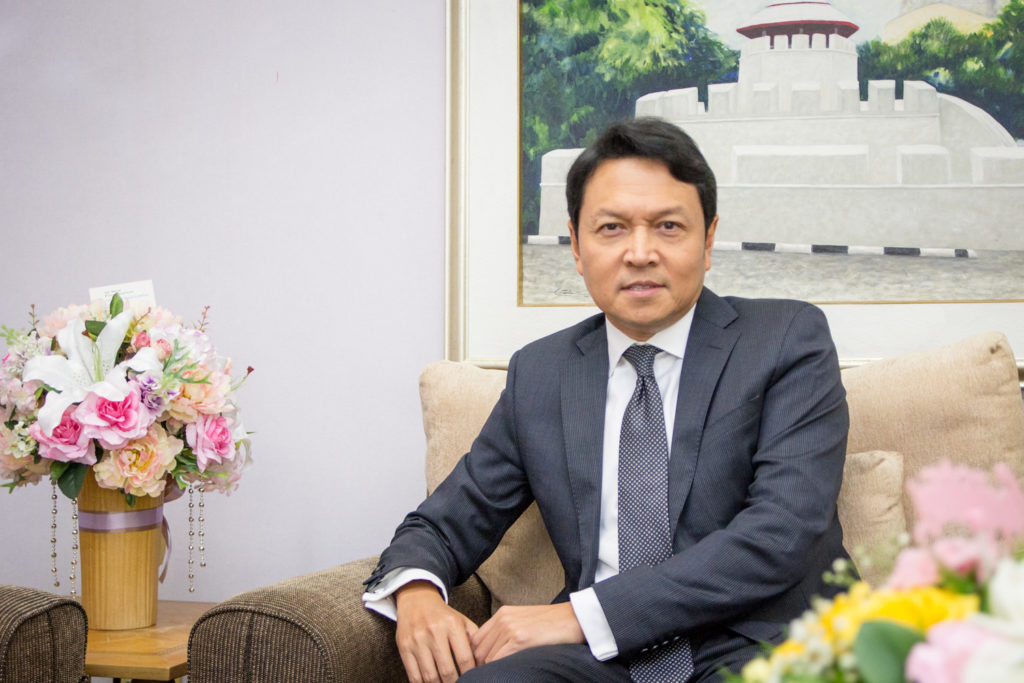
David Topolewski, CEO of Qooco, which provides mobile language learning and vocational training solutions for the hospitality and service industries, shares the importance of cyber security in the hotel sector

jul-12-david-topolewsk

There is no question that technology has brought great convenience and benefits to our everyday lives, and has had far-reaching influence in every industry you can think of. Amongst hoteliers, technology has helped streamline everything from managing guest relations to organising the day-to-day operations of restaurants.

Hotels are a veritable treasure trove of customer data – personal information, credit card details, addresses, allergy information, etc, all of which allows hotels to provide an extremely smooth experience for their guests. This mass of data is highly sensitive, and also highly attractive to cyber criminals.

The hotel industry is a ripe target because the majority of hoteliers do not seem to place enough emphasis on cyber security. In 2015, Trump Hotels in the US and Canada admitted that a virus had been lurking in their computer systems for over a year and is believed to have stolen thousands of guests’ credit card data. Most crimes involve the criminals hacking into point-of-sale terminals using malware that disguised itself as a legitimate programme.

In this instance, credit card data was stolen. Now imagine if a celebrity or well-known world leader had his or her sensitive personal information nabbed, and then splashed across the front page of the tabloid papers. Embarrassing for the celebrity, potentially destructive for the hotel brand.

Hoteliers would be ill-advised to have a laissez-faire attitude towards cyber security, because cybercrime has numerous consequences which go beyond the business of losing some lawsuits or handling fines or compensation to guests. A public security debacle has the potential to destroy your brand, and the trust between your business and your customers – and trust once lost, is almost impossible to regain.

The tried-and-tested adage – prevention is better than cure – works well when it comes to cyber security. Hoteliers should start to look into ways to prepare for, and mitigate against, cyber-attacks. Five simple ways include: (1) educating staff members on basic cyber security knowledge; (2) reviewing and changing protocols to include steps on dealing with cyber security breaches; (3) developing sound cyber security processes e.g. regularly changing passwords or having a clear chain-of-command for dealing with cyber-related incidences; (4) purchasing a reputable security system/software for your business; and (5) ensuring that staff training includes modules on cyber security.

Ultimately, cyber basics need to be incorporated into staff training. No one wants a repeat of the 2014 Sony Pictures incident – a breach was facilitated by the fact that employees had named a file that contained many relevant user passwords within the Sony system, “Password”. And even more incredulous, the password to access this file was “password”.

Hotels are uniquely vulnerable to hackers, given the sheer number of guests staying in a hotel who willingly giving up their personal information in return for a smoother stay and better service. This, mixed with a hotel workforce that is young and often transient, presents numerous opportunities for criminals to digitally steal information and money. Staff training and protocols should reflect this, otherwise it is only a matter of time before the trust a hotel brand has spent decades building, is shattered by a person with a computer.

Contributed by David Topolewski

Not just a surfer’s paradise

0

Major malls in the Gold Coast are undergoing extensive renovations to show tourists that the destination offers more than just the sun, sand and sea. By Paige Lee Pei Qi

jul-15-aust-1

Already renowned as a holiday haven with sandy beaches, the Gold Coast now wants to establish itself as Australia’s biggest shopping mecca with extensive upgrading and redevelopment of major malls, which will place the destination in good stead in its pursuit of Asian travellers.

Pacific Fair Shopping Centre is set to become the fourth largest shopping centre in the country when its A$670 million (US$482 million) expansion is completed this year. The expansion will also transform the property from a regular shopping mall into a designer destination debuting brands like Givenchy, Gucci, Hermes, Louis Vuitton and Prada.

Meanwhile, this year, the Australia Fair Shopping Centre will brandish a fresh look after a A$15 million revitalisation, while Robina Town Centre’s A$160 million expansion is expected to complete by the end this year.

Harbour Town Gold Coast, which is Australia’s largest outlet shopping centre with more than 220 stores, is also currently undergoing a A$20 million expansion. New stores include brands like Coach, Hugo Boss, Calvin Klein, Ralph Lauren, and Australia’s first Victoria’s Secret Outlet store.

Commenting on the rejuvenation of the Gold Coast’s retail landscape, Tourism Australia’s managing director, John O’Sullivan, said: “The unique thing about the Gold Coast is that you’ve got an amazing beachfront and coastline and good (shopping) products. The important thing is that the Gold Coast can now provide a concentrated premium shopping experience.”

The Gold Coast trade is also positive that the city’s improved shopping offers will make the destination more attractive to international visitors, particularly those from China.

The latest statistics from the Gold Coast Tourism Corporation showed that China was key to international growth in recent years, with the number of Chinese travellers reaching 242,000 in 2015, a 20 per cent increase from the previous year.

Last year, China was the Gold Coast’s largest inbound market for visitor arrivals, and also Australia’s largest market for total spend and visitor nights.

George Liu, general manager of Gold Coast-based Conrad Travel, said: “Asian travellers, and the Chinese especially, like to have at least one free and easy day for shopping because they are always looking to bring something home (from their travels).

“The Gold Coast has never been known as a shopping destination. But with these new shopping malls it will be possible for us to include them as new products for free and easy days in our itineraries,” Liu added.

Similarly, Adeline Yeo, operation manager of Perfect Tours Australia, said the revamped shopping malls would attract Asians.

“Previously, shopping in the Gold Coast was more about the factory outlets. But with premium brands entering the market, we will be able to get a good mix of budget and luxury shopping,” Yeo said.

She added: “The main complaint that tourists give is the limited shopping hours, since late-night shopping is only available on Thursdays.”

Apart from shiny new malls, Jupiters Hotel and Casino is also transforming under a A$345 million refurbishment. One of Gold Coast’s most significant hotel refurbishments, the property will soon welcome a new six-star 700-key hotel tower rising 17 storeys in front of its existing 592-key hotel. The new tower is touted to feature some of Australia’s most luxurious accommodations, and is slated to be completed ahead of the 2018 Commonwealth Games.

Meanwhile, the ongoing A$1.4 billion Ruby development – an integrated residential and resort precinct in Surfers Paradise – has also been hailed as another game changer on the coastline. It will also be ready to welcome guests in 2018.

Andy Indra, senior sales manager of Experience Tours Australia, commented: “These new infrastructure and shopping attractions show that the destination is doing a lot to improve itself and these will definitely make it more attractive for us to promote the Gold Coast beyond its sand and sea.”

This article was first published in TTG Asia, July 8, 2016 issue, on page 27. To read more, please view our digital edition or click here to subscribe

Photo of the Day: Sabre Travel Network marks a year of growth in APAC

0

sabre_apac_one_year_anniversary_-_cake_cutting_singapore

Sabre Travel Network’s senior vice president for Asia-Pacific Roshan Mendis (centre), together with staff at its Singapore regional headquarters, celebrated the one year anniversary of Sabre’s expansion into Asia-Pacific and acquisition of Abacus International in July 2015.

Air China flies to San Jose from Shanghai

0

air-china

AIR China will begin thrice-weekly flights between Shanghai and San Jose from September 1, 2016 to become the first Chinese carrier to operate this route.

Utilising an Airbus A330-200, flights will depart Shanghai at 13.00 on Tuesdays, Thursdays and Saturdays, and arrive in San Jose at 10.10 on the same day. Return flights will depart San Jose at 12.00 and arrive in Shanghai at 16.40 the following day.

Currently, Air China operates about 140 weekly flights between the two countries, covering six major cities in the US.

To celebrate the launch of the route, Air China is offering special round-trip fares for economy and business classes at RMB 1,500 (US$224) and RMB 13,000 respectively, excluding taxes. Tickets are available for booking from now until August 31.

SriLankan Airlines axes flights to Paris, Frankfurt

0

sri_lankan_airlines

IN A reversal of an earlier decision to continue flights to Paris and Frankfurt, SriLankan Airlines has announced plans to suspend both sectors this winter.

Ajith Dias, chairman of the national carrier, told TTG Asia e-Daily: “The two destinations, Paris and Frankfurt, have been under evaluation for awhile. The decision to pull out from both stations is not sudden. Deteriorating yields in both markets compelled the airline to take this decision.”

SriLankan Airlines will continue flying to London, its gateway to Europe and North America, said Dias.

The national carrier’s withdrawal from Germany, Sri Lanka’s fourth largest source market, had prompted some travellers to change carriers while others had cancelled their bookings, revealed Sri Lanka Association of Inbound Tour Operators’ president, Devendra Senaratne.

Ahintha Amerasinghe, managing director at Worldlink Travels, foresees a short-term fallout from SriLankan Airlines’ pull-out but expects a recovery in the long term, adding that KLM’s twice-weekly flights from October will also cushion the impact.

Industry sources said that Austrian Airlines, which began winter flights to Colombo last October, had helped to boost the European market.

In the meantime, Dias indicated that restructuring plans is underway for SriLankan Airlines, which is still struggling to recover from a US$3.5 billion debt and seeking a foreign partner to pull it out of the woods.

Seoul, Singapore join hands for tourism memorandum

0

seoul-sg-moc
(From left) Park Won-soon, mayor of Seoul; Lynette Pang, assistant chief executive, marketing, STB; Kim Eui Seung, director-general, Tourism & Sports Bureau, SMG; Low Yen Ling, parliamentary secretary, Ministry of Education & Ministry of Trade and Industry, Singapore. Image credit: Hunsoo Kim

THE Seoul Metropolitan Government (SMG) and the Singapore Tourism Board (STB) have inked a Memorandum of Cooperation (MOC) to drive two-way tourism traffic and exchanges between the two destinations.

This is the first such MOC between both organisations, and the general framework of cooperation will be in three main areas: tourism exchanges to share knowledge and experiences, marketing and promotion to drive awareness, and regional integration which encourage the participation of business communities and tourism enterprises.

“The MOC between SMG and STB will help unlock new opportunities for both destinations through tourism exchanges and cross-marketing efforts,” said Lynette Pang, STB’s assistant chief executive, marketing.

“Last year, Singapore received about 580,000 South Koreans, a 7.5 per cent increase over 2014. We look forward to welcoming more visitors from South Korea, an important source market, with this collaboration,” she added.

Kim Eui Seung, director-general, SMG’s Tourism & Sports Bureau, added: “I am positive that this (MOC) will strengthen ties between the two cities with the increase in tourism traffic, as well as exchanges in business and culture.”

In addition, a gala dinner was held last weekend for over 300 invited guests and foreign dignitaries at the Flower Dome in Gardens by the Bay to commemorate the signing.

Asian stopover tourists wanted for Finland

0

finnish-lapland
Snowmobiling in Finland

VISIT Finland is stepping up its attention on North Asia to offset the significant decrease in Russian visitors, traditionally a key market, having launched the Stopover Finland campaign in Asia to stay in the country for a few hours or days.

The Finnish NTO has seen encouraging growth from North Asia, according to Visit Finland’s head of global sales promotion, Heli Mende.

“Travel from China to Finland keeps growing and we see a lot of potential there in the coming years. In fact, overnights from Asia grew from 591,342 to 728,806 last year. Japan is a mature market while South Korea is a new market for us,” she said.

“We are also looking into ways to strengthen Finland’s position as mono-destination,” said Mende, adding that Visit Finland wants Asian visitors to venture beyond Helsinki and Lapland to lesser-known areas like the Lakeland district and coastal archipelago.

Finnair, head of travel products for product development and ancillary business, Anssi Partanen, said: “Finland in summer is a hidden jewel and needed to be explored by Asians. Our traffic from Asia increased by 6.9 per cent to 10.3 million in 2015 and (Finnair) just added Fukuoka and Guangzhou this summer season.”

For Tallink Silja Line, which has recorded double-digit growth from Asia, getting Asians to cruise the Baltic Sea in winter is what the luxury cruise line hopes to achieve.

Said its international sales director, Nina Tähtinen: “In winter (Asians) might visit Lapland as a mono-destination (to view the Aurora Borealis) without cruise, so we want them to try our Helsinki-Tallinn or Helsinki-Stockholm cruises before they fly back home from Helsinki.”

Thailand rethinks its value strategy for 2017

0

yuthasak-supasorn1
TAT governor Yuthasak Supasorn speaking at the event

THAILAND wants to change its tourism marketing position from a value-for-money destination to a value-for-experience destination as the country seeks to become a quality leisure destination, announced Tourism Authority of Thailand (TAT) governor Yuthasak Supasorn at a market briefing yesterday to unveil its marketing directions in 2017.

The new strategic policy is designed to bring tourism, now recognised by the country’s leaders and policymakers as of one of Thailand’s most successful economic pillars, in line with the 20-year reform programme Thailand 4.0 that is being charted by the government under prime minister Prayut Chan-o-cha.

“We will still promote Thainess but through deeper, more nuanced ways, using unique local experience as a selling point,” said Yuthasak. Such experiences are not just restricted to community-based or rural experiences but will draw on the strengths or identity of a destination, he elaborated.

Even big cities like Bangkok have unique local experiences to offer, the governor added, citing the Wat Traimit enclave in the capital’s Yaowarat district as a hidden repository of Chinese culture and lifestyle.

Both Yuthasak as well as minister of tourism and sports Kobkarn Wattanavrangkul, who was also present at the media briefing, acknowledge that it will no longer be a numbers game for Thailand under the new strategic policy. Instead, emphasis will be given to driving traveller expenditure through longer length of stay of visitors and better quality of traveller experience.

In 2017, TAT aims to raise revenue earnings from domestic and international visitors by 10 per cent to 950 billion baht (US$27 billion) and 1.9 trillion baht respectively.

As well, Yuthasak wants to encourage Thais across all sectors of the society to travel more extensively in the country to drive domestic tourism.

“This will enable Thais to see the value of tourism and foster a stronger sense of belonging, thus leading to stronger foundation for the development of unique local experiences,” he said.

“We want to ensure that Thailand is seen as a preferred destination in the minds of international visitors. At the same time, visitor arrivals will have to be managed by greater focus on sustainability and management of the natural resources.”

TAT will also develop a broad range of marketing communications materials aligned with the objectives to give greater prominence to the unique local experiences of Thailand on the world stage. At the same time, the Amazing Thailand slogan will remain in place, supported by Discover Amazing Stories in Amazing Thailand narratives.

Roomorama names new MD

0

VACATION and short-term rental accommodation aggregator Roomorama.com has appointed Nina Kubik-Cheng as managing director. She was most recently vice president – partnerships at the company.

In December 2014, Kubik-Cheng was appointed senior vice president – business development – of Beijing-based Dragon Trail Interactive. Prior to this, she was vice president, sales at Daodao.com and Qunar.com.

nina-kubik-cheng

Her appointment comes just as Roomorama is strengthening its foothold in the B2B space through partnerships with Tujia and HomeAway in April and with the launch of its new B2B identity, Bridge Rentals, an aggregator and supplier of non-hotel inventory worldwide.

Jordan qualifies as a MICE destination: Amman mayor

0

mayor-daniel-sim
(From left) Akel Biltaji, mayor of Amman; and Daniel Sin, CEO Deks Air (Singapore)

JORDAN’S available tourism infrastructure, the business-oriented mindset of its people and country leaders, safe environment, and location in the heart of the Middle East, are the qualities that make the country ready to capture more international business events, opined capital city mayor, Akel Biltaji.

Speaking to TTGmice e-Weekly during his one-day visit to Singapore, Akel said the country is keen on growing the business events sector.

He said: “Jordan is business-oriented and sees itself as the launch pad for advancements into the Middle East. Our country’s high-level leadership is frequently overseas, engaging peers in talks for possible business opportunities. As we speak, His Majesty King Abdullah II bin Al-Hussein is in Sun Valley (the US) on a business mission. Our people are always looking to bring international business investments into the country.

“Because of (all that and) Jordan’s tranquillity, security and the swell of intellectual capital, the country is home to many international organisations with humanitarian and commercial interests in the Middle East.”

In terms of infrastructure, Akel pointed out that the country has “almost all the big hotel brands you can think of – The St Regis, Kempinski, Le Meridien, etc – and a Ritz-Carlton is now being built”, in addition to the King Hussein Conference Centre at the Dead Sea, and the Zara Conference Centre and King Hussein Business Park in Amman.

Jordan will host the World Economic Forum on the Middle East and North Africa come May 2017, an event that Akel said would “demonstrate how much a peace-loving people we are and how safe the country is” and “serve to raise Jordan’s profile as an attractive tourist destination in the minds of global travellers”.

Another high-profile business event in Jordan is the Pan Arab Construction Forum, which Akel said would be attended by delegates from the Middle East, South Africa and Europe.

At present, China is regarded as an important source market for both leisure and business traffic.

“The Chinese government has earmarked US$50 billion for investments in the Middle East, and Jordan’s portion will be about US$10 billion to US$15 billion over the coming decade. His Majesty visits China every year for trade talks, and the Chinese view Jordan as a launch pad for further investments in the Middle East,” Akel shared.

“My city Amman is looking to engage Chinese companies to build our underground metro and possibly a railway system that may extend across the country and then region,” he added.

Akel pointed out that “trade follows travel and tourism”, and Jordan’s tourism industry can expect to benefit from both out of China.

To enable traffic from China, Royal Jordanian inaugurated its first service in China in April. The airline flies thrice weekly between Amman and Guangzhou Baiyun International Airport.

Daniel Sin, group CEO of Deks Air (Singapore), GSA for Royal Jordanian, said the demand for the service has been strong because it attracts passengers from Shanghai too. The service enjoys an average load factor of 80 per cent.

Royal Jordanian’s network in Asia also includes Hong Kong (four times weekly), Bangkok (daily), Jakarta (thrice weekly), and Kuala Lumpur (thrice weekly).