TTG Asia
Asia/Singapore Wednesday, 4th February 2026
Page 1812

HRS expands into Australia with Lido Group investment

0

hrs_lido_group_brianbridgewood_tobiasragge_stevemackenzie

(From left): Brian Bridgewood, founder of The Lido Group; Tobias Ragge, CEO of HRS; Steve Mackenzie, CEO of The Lido Group

CORPORATE hotel booking platform HRS has expanded its global portfolio by investing in The Lido Group, an Australian business travel specialist.

This marks the OTA’s first foray into the Australian market, the seventh largest corporate accommodations market in the world.

The Lido Group is a corporate and government accommodation aggregator and provider of integrated payment solutions. It has about 6,700 Australian hotels in its portfolio and its network includes both large cities and more remote locations.

Said Tobias Ragge, CEO of HRS: “Thanks to the investment in The Lido Group and the expansion of our portfolio into Australia, HRS is now well-positioned in all of the world’s top business travel markets.”

With this deal, hotel partners associated with HRS will also gain access to a new pool of potential business travellers from Australia.

China outbound show slowest growth since 1997

0

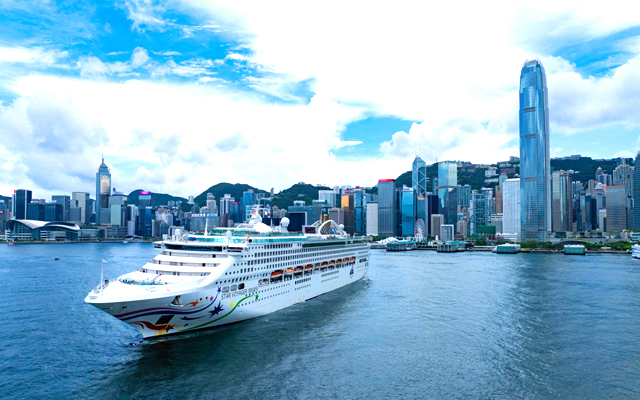
hong-kong-sar

OUTBOUND traffic from China increased only 2.4 per cent in 1Q2016 (30.2 million) from the same period in 2015 (29.5 million), the lowest growth rate reported since the beginning of outbound tourism from China in 1997, and the first single-digit growth rate in the current decade.

According to the China Outbound Tourism Research Institute, the growth rate is primarily dampened by the drastic 11 per cent decrease in Chinese visitation in China’s Special Administrative Regions (SARs).

Meanwhile, outbound travel into other parts of the world, especially into Europe and North America, grew by 22 per cent.

Hong Kong saw a 15 per cent fall in Chinese visitors from 12.3 million to 10.4 million and Chinese arrivals into Macau slipped by 2 per cent from 5.0 million to 4.9 million.

Roughly two-thirds of the missing arrivals into Hong Kong were not leisure visitors but day trippers, a likely result of the restrictions on “ant traders” who used to cross daily from Shenzhen into Hong Kong. Chinese nationals living in Shenzhen and working in Hong Kong also face the same restrictions.

The number of overnight Chinese visitors in Macau actually increased by about 100,000 in the first quarter of 2016, while day tripper arrivals fell by about 200,000.

The declines saw Hong Kong and Macau SARs’ share of overall departures fall from 59 per cent to 51 per cent.

With the negative trend for Hong Kong and Macau likely to continue, the second quarter of 2016 will most likely be the first time that the SARs are no longer responsible for more than half of all departures from Mainland China.

Likely boon coming for Japan’s home sharing sector

0

tokyo-apartments

THE Japanese government has proposed sweeping changes to laws governing tourist accommodations that has the home sharing sector particularly upbeat.

Deregulation of Japan’s hotel sector has been a priority for the government, largely due to the surging number of foreign visitors and the shortage of accommodations, particularly in popular urban destinations.

A panel on deregulation had earlier proposed allowing private citizens to take in fee-paying lodgers for up to 180 days a year without requiring a hotel operator licence.

Known as minpaku in Japanese, the practice is generally illegal in Japan, but the advent of businesses such as Airbnb are challenging such laws.

“We welcome that Japan has made great progress in policy discussion on home sharing,” a spokesman for Airbnb Japan told TTG Asia e-Daily.

“Since the details of such rules are still under discussion, I don’t want to speculate. But we look forward to working closely with the Japanese government so more local residents can welcome guests from around the world into their homes.”

Japan’s move is in part motivated by its desire to ensure it receives tax from property owners, while also hoping to ease room shortages in the lead up to the 2020 Tokyo Olympic Games.

Rich Chinese millennials show spending firepower but Asia stands to lose

0

chinese-millennial

RICH Chinese millennials have an average household travel spend of 420,000 yuan (US$65,000) per year and are set to go on more trips in the next three years, but Asia as a destination overall stands to lose as their reasons for travel have changed.

Hurun’s report on The Chinese Luxury Traveler 2016, done in conjunction with Marriott International, surveyed 525 rich Gen Ys aged 18 to 36 years old with an average personal wealth of, get this – 38.8 million yuan – from sources including investment returns (42 per cent), personal salary (23 per cent) and inheritance (20 per cent). Over half (55 per cent) were male, 77 per cent married and, of that, 75 per cent with one child.

The just-released report shows leisure travel has dropped as the major motivator for travel, with 68 per cent citing this as the reason for travel in the next three years, compared with 82 per cent in 2015.

Exploring the world has jumped as reason for travel in the next three years (50 per cent, from 40 per cent in 2015), along with adventure travel (35 per cent from 23 per cent), cruises (28 per cent from 26 per cent), polar exploration (22 per cent from 16 per cent) and road trips (21 per cent from 12 per cent).

Travel for celebrations and events, study and golf has also dropped.

Because of the shifting trend, interest in neighbouring countries such as Japan (ranked the most memorable travel destination in 2015), South Korea, Hong Kong, Macau and Taiwan have dropped. Longer haul countries such as the US, the Pacific Islands & Oceania, Africa, the Middle East and the North & South Poles have seen more interest, increasing by 27 per cent, 49 per cent, 179 per cent, 129 per cent and 73 per cent respectively.

WeChat emerged as the primary source of travel information for these travellers, however, 73 per cent said they had tried personalised travel services offered by a travel agency. The three most important factors that influenced their choice of agent were personalised travel services (70 per cent), expertise (57 per cent) and itinerary planning (54 per cent). But what they found poor most about agencies were their ability to book flights (28 per cent), plan an itinerary (27 per cent) and make food arrangements (27 per cent).

The top 12 outbound luxury travel agencies in mainland China 2016 are My Tour, Ctrip, 8 Continents, HH Travel, Zanadu, Imperial Tours (first time in top 12), CITS, CITS Amex (first time in top 12), Diadema, CYTS, Wild China and CTS, while American Express is considered the best outbound agent in Macau and Taiwan. This was based on a survey with 56 respondents from senior hotel management during April-May 2016.

At a media conference, when asked what Asian destinations could do so as not to lose out to longer haul destinations, Rupert Hoogewerf, chairman and chief researcher of Hurun Report, told TTG Asia e-Daily: “In terms of frequency of travel, there is still going to be the trips to Japan, South Korea, South-east Asia, etc, because of the geographical advantage – four hours and you’re there.

“But in terms of aspirations, this generation wants to go farther. It strikes me how different they are; I have friends in the UK or Europe, we may go to Italy, Greece, maybe Thailand, but rarely do we see the younger people just travelling absolutely anywhere in the world, which is the case for China. And some of the remote or experiential places are pricey. They could well be US$20,000 per person.

“So I see they will travel two or three times within Asia and longhaul becomes the annual trip. It’s not really a threat to Asian destinations but a demonstration of young Chinese travellers wanting to go further afield.”

Peggy Fang Roe, chief sales & marketing officer Asia-Pacific of Marriott International, agreed there was no threat. “In Asia-Pacific, we operate in 12 countries. With China as the largest and fastest-growing source in every single market except India, everyone is just trying to figure out how we can look after demand than worry about demand being small.”

From the latest findings, Fang Roe said Marriott took away three lessons in particular that it would use: that these travellers want more personalised service, more digital interactions and more adventurous trips.

– More reports to follow

Singapore gets its first bungy tower

0

sentosa-bungy-tower

RENOWNED bungy operator AJ Hackett International has broken ground for the construction of a 50m-tall bungy tower on Sentosa Island, the first of its kind for Singapore.

The custom-built tower will feature several experiences such as Double Bungy, a 47m high jump deck; Duo Giant Swings, the world’s first double swings where two groups of participants race each other towards the ground; and a Vertical Skywalk where guests can walk 44m down the centre tower shaft.

There is also a 40m-long vertical Skybridge that will allow participants of all ages to walk along an open-air platform to take in the sights and watch jumpers take the leap.

“A lot of time and effort has been put into the design and flow of this site, and in working with all stakeholders, we’ve tried to create a destination where people of all ages and adventure levels can challenge themselves and be entertained,” said AJ Hackett, the company’s founder and CEO.

The tower is scheduled to be completed by end-2016, and a limited number of tickets will be put up for auction prior to the opening of the attraction.

Parkroyal Yangon to groom Myanmar’s hospitality staff

0

jean-marc-poli-parkhotel-yangon

Jean-Marc Poli, general manager, Parkroyal Yangon

PARKROYAL Yangon and the Singapore-Myanmar Vocational Training Institute (SMVTI) have signed a MoU to support the training of Myanmar’s hospitality students after their graduation from the school.

The hotel will offer industrial attachments, opportunities for full-time and part-time employment, sponsorship of a housekeeping training programme, an immersion programme, the secondment of staff to SMVTI as trainers, as well as scholarships on a case-by-case basis.

Said Jean-Marc Poli, general manager of Parkroyal Yangon: “Human resource is the most important factor in Myanmar. Due to the scarcity of local talents, we have joined hands (with SMVTI) to nurture the passion and enthusiasm of young people who will one day be leaders in the hospitality industry.

“Our sister hotel, Pan Pacific Yangon, will be opening soon and there will be even more career opportunities coming soon in the near future.”

Added Chong Chon Hsien, principal of SMVTI: “We recognise a need for skilled workers in the booming service industry in Myanmar and are very happy to be working with Parkroyal Yangon in the area of hospitality and tourism.”

SMVTI currently has 160 students enrolled in its School of Hospitality and Tourism, which started its school term on September 28, 2015.

Singapore millennials prefer direct flight bookings

0

flight-booking

MOST millennial travellers in Singapore favour booking flights via airline websites rather than from OTAs and metasearch engines, according to a recent study by travel intelligence provider Adara.

Adara’s data revealed that 56 per cent of its Singaporean respondents aged between 18 and 34 prefer direct booking channels when its comes to flights as opposed to only 34 per cent of their counterparts in the US indicating likewise.

But for hotel bookings, the reverse is true, with 67 per cent of them saying general travel websites are preferred. Only 19 per cent say they would rather book rooms directly.

Asked why this is so, Jonathan Hardy, vice president of sales at Adara, said: “When it comes to hotel bookings, millennials in Asia-Pacific value reviews and frequent sites like TripAdvisor, Yelp and Airbnb.

“In the case of flight bookings, they prefer to book directly with airline websites partially due to the availability of flights and destinations, (but especially because of) cost-sensitivity. A majority of the regional LCCs offer direct booking models to appeal to the budget conscious.”

In line with this finding, 82 per cent of Singaporean millennials in the study were found to prioritise price over airline brands when choosing which flight to take. Almost half of them further state that they don’t see the point of loyalty programmes.

This is because of their love to try out new things, according to Hardy. “Millennials take time to test out different brands, and make considered choices on what brands they prefer and suit their travel lifestyle,” he explained.

“Interestingly, over half of millennials in Singapore have a travel-related credit card, indicating that they still very much value loyalty, despite the young age,” he added.

The study also showed that millennial travellers in other Asia-Pacific countries such as Hong Kong and Australia have a significant preference for direct online channels with 45 per cent and 44 per cent expressing so respectively.

When asked if offline travel bookings are showing any signs of popularity among the millennial demographic, Hardy said that “online and mobile remains the priority”.

Still, not all is lost for those willing to better cater to their needs.

Said Hardy: “From our observations, the Singaporean millennial traveller often values experiential travel. They seek unique and rare encounters and this means investing a significant amount of time to plan elaborate itineraries drawn from both traditional and online sources.

“Over three in four Singaporean millennials prioritise travel over any other expenses. For travel brands who understand the value, they are able to capitalise on their willingness to spend and offer different services to fit different priorities.”

Bandung an easy sell for first-time buyers

0

bandung-tea-plantation

A tea plantation in Bandung

FIRST-TIME longhaul buyers attending the West Java Travel Mart (JTX) 2016 last week say that Bandung and the surrounding area is great for their clients who are searching for exotic new destinations and experiences in the Far East.

Faten Baini, general manager of Daily Tours Travel Lebanon, said: “To see the places of interest here and (being able to meet) with local suppliers has given me ideas for new programmes (beyond Thailand and Bali).”

This helps her clients who were looking for new holiday destinations in combination with Jogjakarta and Bali, she added.

Pierre du Plessis, owner of Facets – The Tour Company in South Africa, said: “South African travellers are interested in beach holidays and Indonesia offers more than just that. Our visit to mountainous Bandung showed that the people, culture and nature makes the destination interesting.

“Besides, the exchange rates make the destination affordable.”

He added that he would post videos and photos onto social media channels alongside his package offers in order to relay what he has seen to his potential customers.

Meanwhile, Jeanette Hackenberg, assistant product manager of Explorer Fernreisen Germany, said: “Travellers today are different from before. They want more experiences and Bandung as well as its surrounding areas have something for them.

“In the Ciater Tea Plantation, we can not only see the plants and try the tea, but learn the whole process from leaf picking to packaging. This is very interesting (for our European clients).”

However, buyers from Windrose Finest Travel Germany and Reiseservice WTF Austria, who have been selling overland tours in Indonesia for a long time, say that Bandung needed new products as existing ones aren’t enough to lure tourists.

Both companies had previously dropped Bandung from their Java itinerary.

Sarah Hartman, assistant manager of Windrose Finest Travel Germany, said: “For our high-end clients, we need something exclusive. If we can have an angklung show exclusively for our group, for example, that would be interesting.”

Elisabeth Koch, area and product manager of Reiseservice WTF Austria, said: “We cannot offer the same things all the time. The heritage sites and colonial buildings could at least be of interest if they were well maintained.”

Photo of the Day: Best Western Plus Wanda Grand Hotel opening

0

best-western-plus-wanda-grand-hotel-grand-opening

(From left) Olivier Berrivin, managing director of international operations for Asia, Best Western Hotels & Resorts; Wichai Bandasak, mayor, Pakkret Municipality; Krisda Thitipunya, co-owner, Best Western Plus Wanda Grand Hotel; Nisit Jansomwong, governor, Nonthaburi; and Wanna Thitipunya, co-owner, Best Western Plus Wanda Grand Hotel

The Best Western Plus Wanda Grand Hotel welcomed industry guests to its 927m² Grand Ballroom for its opening earlier this month. The hotel hopes to become a major addition to the MICE sector with the ability to cater to 900 pax spread across nine function rooms and a ballroom.

New hotel openings: May 23 to 27, 2016

0

The latest hotel openings and announcements made this week

the_langham_haikou_-_deluxe_ocean_view_room_%e8%b1%aa%e5%8d%8e%e6%b5%b7%e6%99%af%e6%88%bf

The Langham, Haikou
Hong Kong-based Langham Hospitality Group is set to open the 249-key The Langham, Haikou on May 28, its eighth hotel in China. The 14 story hotel offers both rooms and suites with views of the South China Sea, while their luxurious 356m2 Chairman Suite features two bedrooms, a kitchen, dining area and an oversized jacuzzi in the main en-suite bathroom. A range of restaurants and bars are available, including Michelin-starred Chinese restaurant T’ang Court, and facilities such as 1,564m2 of meeting space, a TCM spa, gym and pool.


ibis_styles_samui_chaweng_beach

ibis Styles Samui Chaweng Beach
AccorHotels, in partnership with Destination Resorts Company, will be launching the ibis Styles Samui Chaweng Beach in early 2017, to be located a 10 minute drive away from Samui International Airport. The 129-room resort is catered to millennial travellers through an emphasis on design and technology and featuring a ground-floor bar, lobby, and market-style restaurant that encourages social interactions. Other amenities include a swimming pool and rooftop bar.


maritim-hefei

Maritim Hefei and Hangzhou
German hotel owner-operator Maritim is expanding in China with two upcoming properties – Maritim Hefei and Maritim Hangzhou – scheduled to open in July and December 2017 respectively. In keeping with its “meetings and accommodation under one roof” positioning, the 300-key Maritim Hangzhou would boast a 1,400m2 pillarless conference space while the 335-room Maritim Hefei features a 2,000m2 ballroom, among many other MICE facilities. Both hotels are likely to feature a fitness centre, a spa as well as German and Asian F&B options.