TTG Asia
Asia/Singapore Monday, 6th April 2026
Page 1786

Travel employers offer fresh look at younger generation workers

0

tern-event

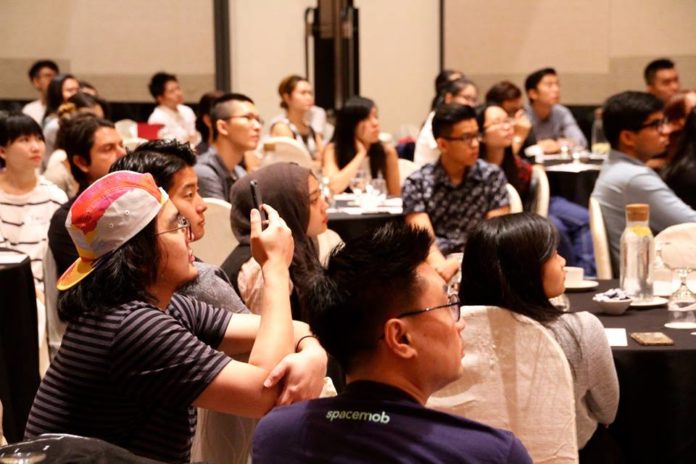
WHILE the new generation of workers have routinely come under criticism for being coddled, idealistic and lacking in resolve, travel industry leaders in Asia-Pacific are suggesting a different perspective.

A foremost concern, declining job longevity, they say, may be a result of the dilemma of choice in today’s dynamic labour market rather than the fault of young job seekers themselves.

Louise Daley, executive vice president & CFO, AccorHotels Asia Pacific, who entered the workforce at a time when “there were no jobs and you basically got a job that was offered”, opined that the plethora of choices available to today’s workforce “is not always a good thing”.

“(Back then), working (came with) a certain doggedness of getting things done, solving problems and achieving things. Part of this was born out of having to battle it out to get a job,” she said last Saturday at Tern, a travel industry career event held in Singapore.

While this form of motivation has become less typical today, many in the younger generation can still identify with roughing it out but at the same time aligning it to their self-interests.

Lionel Yeo, manager hotel partnerships, APAC at TripAdvisor, for example, shared his personal mantra of “doing hard things that sound interesting”.

Having ran an e-commerce business selling t-shirts, started a successful blog on personal finance (after experimenting with various topics) and worked for five years at Singapore Airlines in different roles, he stressed that having an innate passion cannot be taken as a given.

For those who do not know their desired career path, “testing different areas” of their interest and strengths is a good way of figuring where they should head towards.

Some of those present at Tern expressed it is not only unpragmatic, but also potentially costly to take a “tunnel vision” approach to careers.

“(For) young professionals, when they have passion, they have only one goal. Young people come in and say, ‘this is where I want to go’, ‘this I where I need to be at in X number of years’. When it doesn’t happen, they’re shattered and lose direction,” opined Bina Tulsidas, area manager partner services at Booking.com.

One piece of advice I give to my team is to have not one but several (goals) and test them out. If it’s not happening now try something different. With career progression it doesn’t have to be vertical. It can be lateral too.”

Concurring that it was “important to not get stuck on choosing”, Daley added that being agile can be valuable at a time like this.

“It is a wonderful thing to chase your passion, but it is also wonderful to bring your passion to the job,” she said.

Still, reminds Loh Lik Peng, founder of the Unlisted Collection, job hopping unnecessarily can be a detriment to job seekers. He said: “Maybe you want advancement and for your skills to be valued, but I want to see three or four years (in the same company) on your CV.”

Zsanett Maizl, team lead recruitment at Booking.com, added: “Changing jobs every year may come across as negative because when we hire, we’re looking for people who would like to stay at the company and who are committed.

“However, you can have your reasons such as relocating. We also try to look beyond the CV and get to know the person.”

Thailand’s oldest travel agency sheds 80 per cent of staff

0

world-travel-service-bus

THAILAND’s oldest travel agency is shedding about 80 per cent of its staff in an overhaul its general manager says is essential for survival.

World Travel Service (WTS) general manager Thongchai Phithakstrakul said the company would have about 100 employees, down from more than 500, when the restructure is complete. Most had already departed and branches have been closed in favour of local representatives.

The 69-year-old travel agency had been under pressure from the digital revolution. “It is very difficult for us to adjust ourselves. And since we have high headcount, we now have to trim them down,” said Thongchai.

The downsizing is the result of both manual jobs that have become obsolete and weaker demand as younger generations move away from using traditional travel agencies.

Thongchai said WTS will continue by relying on corporate clients and a small sales team to respond to online requests, but said the cuts were essential to ensuring the agency had a future.

“We’ll be more flexible and we can survive. I think we have come to the minimum already at 100. So we will survive at this level,” he said.

“We are changing from a conventional agency. Now we have to adapt to the new market, the new generation.”

Thongchai, a 50-year veteran of the company established in 1947, described the challenges as the biggest WTS had faced.

The payouts have also been expensive, with WTS compensating many employees who had worked for the company for decades.

“Most of them worked with the company for more than 20 years, so they got 100 per cent of their last salary multiplied by the years they worked. That’s a lot of money.”

Accor finds momentum in Thailand’s economy hotel sector

0

paul_stevens
Paul Stevens

THE recovery of the Russian market, coupled with the Chinese tourist wave and a steadily growing domestic base, are giving strong impetus for AccorHotel’s expansion plans in Thailand, particularly in the economy hotel segment.

Boasting a current supply of 68 hotels and 15,946 rooms in Thailand, the French hospitality giant has 17 hotels and 4,099 rooms in its Thai development pipeline through 2019, revealed Paul Stevens, vice president operations Novotel, Mercure, ibis for AccorHotels Upper South-east Asia at a press conference yesterday to commemorate the eighth anniversary of ibis’ launch in the country.

Notably, ibis Styles (one of the three ibis brands) will take up a significant chunk of the new-builds in the next few years with nine properties, while three Novotels, one Mgallery by Sofitel, one Sofitel, two Mercures and one ibis make up the remainder.

The prominence of ibis Styles in the Thai pipeline reflects “good traction” for Accor’s relatively newer economy hotel brand, Stevens remarked, and underlines the increasing role that design-oriented stays are playing for some hotel owners and markets. There is no plan yet for ibis budget in Thailand, he added.

Bangkok will account for half of the upcoming properties, which include the 177-room ibis Styles Bangkok Sukhumvit 50 (4Q2016), 236-room Mercure Bangkok Sukhumvit 11 (2017) and 600-room ibis Bangkok Impact (2018/2019).

Beyond the capital city, the beach resort destinations will see the rise of the 137-room ibis Styles Phuket Phokeethra (3Q2016), 303-room Novotel Sriracha Marina Bay (2018) and 83-room So Sofitel Samui (2018/2019), among others.

The “generally healthy” economy hotel sector has translated into “pretty good performance” for the 11 ibis hotels in Thailand so far this year, commented Youssef El Khomri, executive general manager of ibis Hotels Thailand.

ibis hotels in Thailand recorded an average occupancy of 85 per cent from January-July 2016, a seven point growth from 77 per cent for the same period last year. Meanwhile, RevPar hiked 14.9 per cent while the number of rooms sold grew 10 per cent, he elaborated.

“The Russian market was a bit soft over the last two years, but we are seeing good recovery in Q3 and expect a recovery by this year-end,” Youssef added. “We saw a few cancellations for Hua Hin in August and September, but expect no long-term impacts.”

Elsewhere in South-east Asia, Indonesia also presents “amazing pipeline for ibis and ibis Styles” with around 40 properties in the pipeline, Stevens shared. South Korea, Myanmar and Vietnam are also destinations where Accor has an active pipeline for the ibis brand, he added.

According to Stevens, there are already 153 hotels and 26,781 rooms under the ibis brand in Asia-Pacific, with another 11,100 rooms projected in the next few years.

As well, Accor’s recent acquisitions – namely Raffles, Fairmont and Onefinestay – have expanded its portfolio in the upper and upper-upscale segments, and there is a strong likelihood of introducing new brands such as Mama Shelter into Asia, hinted Stevens.

VietJet increases frequency, adds more connections to Taiwan

0
???

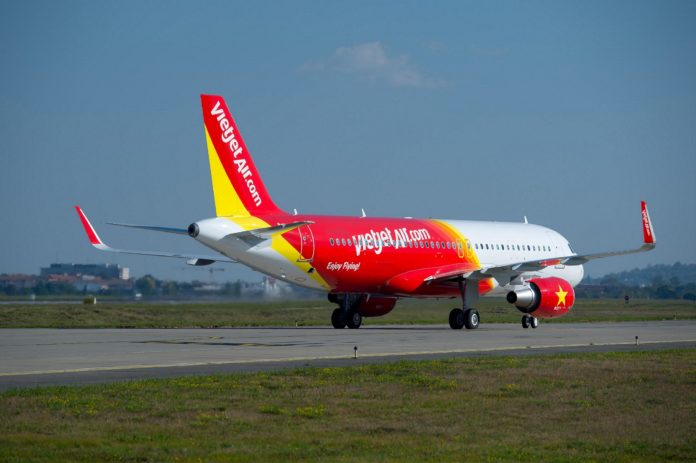
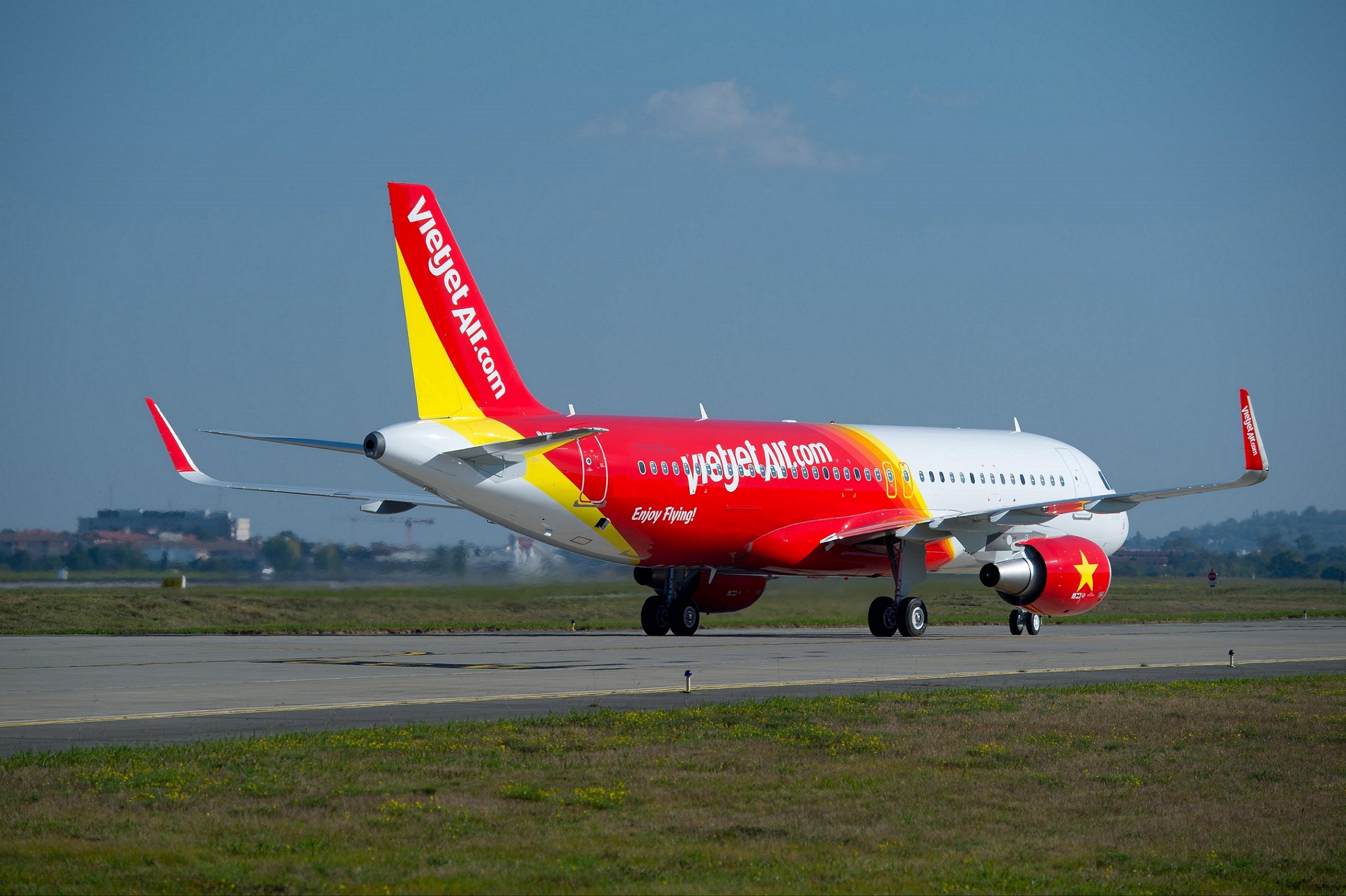
LCC VietJet will be operating two more routes between Vietnam and Taiwan by the end of this year.

The first will connect Hanoi with Taipei on a daily basis from October 30, departing from Noi Bai International Airport at 14.45 and arriving at Taoyuan International Airport at 18.00. The return flight leaves Taipei at 19.00 and arrives in Hanoi at 20.45.

The second service to launch on December 12 will link Ho Chi Minh City to Kaohsiung with five-weekly departures on Mondays, Tuesdays, Thursdays, Fridays and Sundays.

Flights depart from Ho Chi Minh City at 02.10 and arrive in Kaohsiung at 06.30. The return leg will depart Kaohsiung International Airport at 08.15 and arrive in Tân Sơn Nhất International Airport at 10.45.

These add to VietJet’s existing Ho Chi Minh City-Tainan and Ho Chi Minh City-Taipei routes.

From October 30, flight frequency between Ho Chi Minh City and Tainan will also increase to five return flights per week on Mondays, Wednesdays, Thursdays, Saturdays and Sundays.

Flights depart Ho Chi Minh City at 10.30 and arrive in Tainan at 14.45. The return flight will depart Tainan Airport at 17.45 and arrive in Ho Chi Minh City at 18.00.

Smiling Albino acquires stake in Indochine Exploration

0

daniel-fraser
Daniel Fraser

BANGKOK-BASED luxury adventure specialist Smiling Albino has acquired an unknown stake in Cambodia’s Indochine Exploration to form Smiling Albino Cambodia.

Based in Siem Reap, the new entity will leverage Indochine Exploration’s over 10 years of experience offering adventure tours to the Greater Angkor Historical Park and beyond.

“We’ve been associates with the Indochine Exploration team for years, and their active, out-of-the-box approach suits our style, and we share a vision to show travellers a different side of Cambodia,” said Daniel Fraser, founder of Smiling Albino.

Added Nick Butler, founder of Indochine Exploration: “Cambodia is a stunningly beautiful country best appreciated by taking that small cycle path off the main road that leads to a secret lake or a lost temple. We welcome this collaboration with Smiling Albino to enhance these experiences and expose more visitors to the Cambodia less seen.”

DMC Smiling Albino has operations throughout South-east Asia including in Thailand, Cambodia, Vietnam, Laos, Myanmar and Nepal.

PATA and Triip.me let milennials start their own tour business

0

triip_meScreenshot of Triip.me

PATA in partnership with Triip.me and the support of Gobi Partners, FWD Hong Kong and the Seychelles Tourism Board are launching a global competition for millennials and young professionals who wish to operate their own travel startup.

Called the Global Travel Entrepreneur Challenge 2016 (GTEC 2016), it is open to those between the ages of 18 to 35 with a maximum of five members per team.

Teams then create travel tours using Triip.me’s sharing economy platform and run that business at all stages from marketing and promotion to optimisation and operation. At the end of the competition, winners will submit a business report to compete for the final prizes.

“As part of our focus on human capital development and the young tourism professional, GTEC is the perfect platform for PATA to help empower today’s youth and support young entrepreneurs in the travel industry,” said Mario Hardy, CEO of PATA.

“The competition will not only provide funds to five winners to help grow their sustainable travel companies, but most importantly, allow all participants practical hands-on experience in creating a travel business.”

The Grand Prize is US$5,000 in cash plus a trip to Seychelles, inclusive of round trip flight and two-night accommodation to attend the Seychelles Ocean Festival taking place from December 3-10, where the winner will be presented with the award.

GTEC 2016 runs from August 15 to November 15. Details on joining the competition can be found on the official website http://www.globaltravelchallenge.com.

Asiatravel.com brings travel wholesale business into China

0

tacentre

THE leisure travel wholesale arm of Asiatravel.com, TAcentre.com, has made its first foray into China.

It has already begun operations in the country with four local offices – one each in Beijing, Shanghai, Guangzhou and Chengdu – and will officially kick-off at a launch event in Beijing on September 6 followed by a roadshow in Shanghai on September 8.

TAcentre.com, which has been in operation in South-east Asia since October 2012, will be known in China under the localised brand 汇订网, which roughly translates into “integrated web platform”.

Explaining and describing the move into China, Fred Seow, senior vice president of marketing & B2B at Asiatravel.com, said: “Everyone knows how big a market China is. It has become one of the top source markets for many countries. But just like the Great Wall, you don’t know the magnitude of the place until you are actually there. The complexity, the culture, the mindset, the way they run business is all different.

“Being a new player, we started preparations almost a year ago to get everything prepared before we officially launch it. We spent time modifying the product to suit the market needs.

“For example, TAcentre.com outside China uses standard credit card payment modes such as Visa and Mastercard. But in China’s context, no one uses those cards. They want to pay by WeChat, Alipay and UnionPay, so we had to integrate these local payment gateways into the system to serve our Chinese travel agents.”

He further illustrated that while the brand TAcentre.com serves well in international markets, it wouldn’t mean anything in China, thus the effort to come up with a localised brand.

Agents can access the Chinese platform via TAcenter.cn, which carries the same inventory as the international site of over 500 airlines, 200,000 hotels, and a multitude of activities, packages and car rentals worldwide. The company will also be leveraging its Asia and Middle East networks to offer procurement and destination management services to larger travel companies in China.

“We have been spending the past one year fine-tuning our strategies, operating style and pricing. We are also engaging with agents to find out exactly what do they need. There is nothing better than meeting agents face-to-face to find out about their business and their challenges,” added Seow.

“Currently we are already serving some of the biggest online and mobile players in China because of our API capability. Everyone uses a mobile in China but not everyone uses a desktop. So the mobile play is our main distribution channel.

“Having said that, there are still many offline agents that serve their own local community. 汇订网 is focused on reaching out to these traditional agents at the same time.”

When asked where in China offices would open next, he said: “Our B2B concept has always been focused on the proximity to the client, the agents. The more secluded they are, the greater their need and dependency for a system like TAcentre.com. We are looking at opening offices in cities like Nanjing, Fujian, Chongqing, Shenyang and a host of others.”

Concurrently, the company is launching TAcentre Exclusives, a selection of independent hotels that will be given greater prominence on the platform via a separate product tab. Independent hotels that appoint TAcentre.com as their exclusive distributor will be put on this list and be featured regularly in their marketing communication initiatives.

“Now that we have that distribution channel in China, we are announcing to the rest of the market that we intend to be one of the top B2B players in China, and we will be happy to support (the marketing efforts of independent properties) there. We have the platform and the API, so we hope to be able to help independent hotels gain (greater awareness) in China,” explained Seow.

As to whether they will be bringing the company’s namesake B2C business to China, Seow said the focus is on the outbound B2B side for now, but that it is definitely in the business plan to do so.

Photo of the Day: Agents rub shoulders with Korean stars during fam trip

0

spp_thailand_fam_tripPresenters of television show M.U.S.T., Irene Kim and Kim Jae Young (back row, second and third from right), with representatives from GTA, TAT, tvN and travel agencies

A three-way partnership between GTA, Tourism Authority of Thailand (TAT) and South Korean entertainment network tvN has resulted in a fam trip for travel agents unlike any other. Part of the fam trip, which took place from August 24-27, included witnessing the filming of tvN’s new travel series M.U.S.T (My Unexpected Sweet Trip) Thailand. Agents also got a chance to interact with the crew and stars of the show, celebrities Irene Kim and Kim Jae Young, as they explored the luxurious side of Bangkok. The partnership is in line with TAT’s efforts to reposition Thailand as an upscale destination.

Singapore international arrivals up 12.5 per cent in 1H2016

0

changi-airport-arrivals

FOREIGN visitor arrivals to Singapore rose by 12.5 per cent in the first half of this year compared to the same period in 2015, latest figures from the Singapore Tourism Board (STB) revealed.

Of the resulting more than 8.16 million visitors, the majority came from Indonesia and China with 1.41 million (up 7.3 per cent) and 1.47 million (up 55.2 per cent) total arrivals, respectively.

This signals a change in source market potential for Singapore with China quickly overtaking Indonesia as the leading visitor-generating market.

The third-largest source market for Singapore in 1H2016 is India with 573,010 visitors, up 10 per cent from the same period last year.

No data was provided for spending in the first half of this year, but was provided for 1Q2016, with tourism receipts up 2 per cent year-on-year to S$5.4 billion (US$3.9 billion).

Shopping spend grew 25 per cent, accommodation up by 7 per cent and F&B by 14 per cent, compensating for a major 21 per cent decline in sightseeing, entertainment and gaming expenditure.

Both the Marina Bay Sands and Resorts World Sentosa integrated resorts, where the bulk of profits are derived from casino gaming, have posted year-on-year revenue declines for many consecutive quarters.

Singapore’s international arrivals for 1Q2016 was up 14 per cent compared to 2015 to reach 4.1 million visitors.

Meanwhile, average occupancy rates for gazetted hotels, which mainly serve tourists and charge only nightly rates, in 1H2016 stood at 83.7 per cent, up 0.5 per cent from the same period last year.

While occupancy remains healthy, RevPAR has declined by 2.5 per cent to S$196.9 and standard average room rate was down 3 per cent to S$235.3.

Australia, Taiwan issue travel notice to Singapore after Zika outbreak

0

zika-virus

AUSTRALIA and Taiwan have issued travel notices following a spate of locally transmitted Zika virus cases in Singapore.

There has been 56 confirmed cases of the virus in Singapore so far.

“There is ongoing transmission of Zika virus in Singapore. All travellers should protect themselves from mosquito bites,” stated Australia’s Department of Foreign Affairs and Trade on its website on August 29.

It continued: “Adopt additional measures advised by the Department of Health, including deferring non-essential travel if pregnant, avoiding pregnancy for two months following your return.”

As well, the Taiwan Centers for Disease Control yesterday raised the travel notice level for Singapore to Level 2, which calls for a high degree of caution and strong protective measures. The highest alert level is 3, which cautions against non-essential travel to a country.

It stated on its website: “Pregnant women and women planning pregnancy are advised to postpone their trips to areas where Zika virus is active. Travellers visiting areas with ongoing Zika transmission are advised to avoid mosquito bites.”

Malaysia too has voiced concern over the spread of the virus with its health minister S Subramaniam warning of the high risk in disease transmission to its borders.

Screening measures have been stepped up at major entry points in Malaysia, especially at the causeway points where most travel between Singapore and Malaysia take place.

The Malaysian health minister estimates more than 150,000 Malaysians travelling back from Singapore via the Woodlands-Johor Bahru causeway daily.

Singapore’s Ministry of Health reported that those infected by Zika were not known to have travelled to Zika-infected areas recently, thus confirming that local transmission has taken place.

The ministry is now conducting joint operations with the National Environment Agency to combat mosquito breeding in hotspots throughout the island.