TTG Asia
Asia/Singapore Monday, 2nd February 2026
Page 1782

JNTO Singapore to lead Japan’s APAC MICE charge

0

susan-ong-deputy-director-jnto-singapore-office-3
Ong: towards greater intra-regional cooperation

THE Japan Convention Bureau and Japan National Tourism Organization (JNTO) have established their fourth international MICE office, under the care of JNTO Singapore Office, which now joins existing specialised business events operations in New York, London and Seoul.

The new MICE bureau in Singapore, helmed by JNTO Singapore’s deputy director, Susan Maria Ong, focuses on bringing business events from South-east Asia and the Pacific to Japan. It provides business event planners in these regions with a host of services such as bid facilitation, liaison with government ministries to lobby for funding towards major congresses as well as local convention bureaus for onsite event support, assistance on site inspections, and recommendations for DMCs, venues and other event suppliers, among others.

In an interview with TTGmice e-Weekly, Etsuko Kawasaki, executive director of JNTO headquarters, said Asia-Pacific is an important market for Japan because “all kinds of business” are being conducted here while six major countries in South-east Asia had contributed an excess of two million arrivals in 2015, registering a 30 per cent leap over 2014.

Kawasaki said the tourism bodies are keen to “welcome travellers from these regions with visa-free entries”, so as to “create more opportunities for new businesses to meet and network” in Japan.

“JNTO Singapore will work closely with existing JNTO offices in South-east Asia such as Bangkok and Indonesia, as well as upcoming ones in Malaysia, the Philippines and Vietnam which are due to open next year,” said Ong, adding that her action plan includes conducting MICE-related workshops and seminars, networking meetings for associations as well as fam trips for the region’s planners.

Several trade events have been confirmed, and they include an association-focused meeting come October, meetings during ITB Asia in Singapore, and a series of Travel Incentive Seminar events in Indonesia, Malaysia, Thailand and Singapore next year.

JNTO Singapore will also be inviting major MICE planners in the region to attend the annual Visit Japan MICE Mart for B2B meetings and a fam trip.

“We will also enhance communication with local and regional MICE media to increase JNTO Singapore’s presence and the role its plays in MICE development,” Ong added.

When asked what immediate goals have been set by JCB for the Singapore office, Ong said: “Japan ranked top in Asia in ICCA’s 2015 ranking of countries for association meetings. In order to maintain that position, we have to identify prospective associations based in Asia-Pacific and host their meetings in Japan. We also have to recognise active MICE players in this region (and) provide support and training through fam trips and seminars.”

Sabre to launch integrated mobile corporate travel solution

0

sabre-mobile

SABRE has made public that they are set to launch a new integrated corporate travel product that provides itinerary management, mid-trip policy compliance, and payment and expense management, all via a mobile device.

The platform will offer the online booking capabilities of GetThere, the itinerary management suite of TripCase, Sabre’s Virtual Payments solution, as well as relationships with expense management services.

The new solution is aimed at simplifying the travel management process and to enhance business traveller satisfaction while improving corporate travel programme compliance and reducing costs for corporations.

Sabre is embarking on this project due to a recent study they conducted in partnership with GBTA, which shows that business travellers look to technology to create an easier, more seamless experience but are forced to use multiple apps and services to manage their trip. Sabre’s objective is to provide a single place to manage all trips.

“The proliferation of corporate travel tools and apps creates challenges for both the traveller and the travel programme. That’s why we’re making a significant investment in a new integrated platform to provide one seamless experience,” said Clinton Anderson, senior vice president of strategy and traveller experience at Sabre.

“It’s going to be a better experience for the business traveller. And because it helps them be more compliant and lower transaction costs, it’s a better solution for travel managers too. It’s a solution that our industry needs and we’re excited to be leading the charge.”

No launch date for the platform has been given yet although an official statement said it is coming “soon”.

Singapore Food Festival a boon for tourism spend

0

lim-rui-shan
Lim Rui Shan, executive director, Restaurant Association of Singapore

THE 23rd edition of the annual Singapore Food Festival (SFF), organised by the Singapore Tourism Board (STB), kicked off last weekend with a record lineup of 18 events taking place around the city-state featuring local cuisine presented with a modern twist.

This year’s festivity takes place from July 15 to 31 and once again includes participants ranging from F&B chains to hawker centres and hotels. The festival also launched just as the Singapore Bib Gourmand list was announced on July 14. On July 21, the very first Michelin Guide Singapore will also be introduced.

During this three-week celebration of Singapore’s culinary scene, participating businesses do expect sales to pick up as tourists and locals alike partake in food-related activities such as the anchor STREAT Signature Event, Kueh Appreciation Day, ION Orchard Culinary Creations 2016: Picnic in Style, One Farrer’s Food Street and many more.

According to Lim Rui Shan, executive director of the Restaurant Association of Singapore (RAS), tourism dollars account for a significant portion of F&B business earnings. Depending on the location and the menu, “it could go as as high as 30 per cent in high tourist density areas such as Chinatown”, she said.

Taking part in this STB-led initiative also allows smaller F&B outfits a chance to let themselves better stand out in an otherwise crowded and saturated industry.

“Our partnership with STB for the upcoming Singapore Restaurant Month (happening during the Singapore Food Festival) serves as a way for F&B players to be part of a nationwide food celebration that they previously might not have been able to participate on their own,” commented Lim.

“It allows them to tap onto a wider platform to further drum up awareness about their restaurant offerings to both locals and tourists.”

RAS currently has a membership of more than 300 members comprising over 2,200 F&B outlets.

Other SFF participants such as Orchard Turn Developments, which manages the ION Orchard shopping mall, are also thinking of creative ways to lure more traffic to the building through its dining options during this period.

“We are the only official mall partner of the Singapore Food Festival and are excited to offer shoppers a unique experience with our first in-mall picnic garden in the heart of Orchard Road,” said Chris Chong, CEO of Orchard Turn Developments.

“Savouring good food is a favourite pastime of many in Singapore and a key highlight for overseas visitors.”

Commenting on the success of SFF over the years, Ranita Sundra, director of attractions, dining and retail, STB, said: “The Singapore Food Festival has been carrying the torch for Singapore’s vibrant food legacy since 1994. After 23 years, it is still the only food festival in Singapore to feature local flavours and showcase the inventive spirit of our ever-evolving food scene.”

Skal seeks to lure new generation of tourism professionals

0

nigel-pilkington
Nigel Pilkington, president of Skal International

NIGEL Pilkington, president of Skal International, a professional association of tourism leaders worldwide, has urged his club leaders in Asia-Pacific to not only grow their membership but also reduce the average age of members.

Today, there are 37 membership clubs in Asia-Pacific, with members totalling more than 2,300.

Speaking to TTG Asia e-Daily on the sidelines of the 49th Skal Asia Congress in Singapore last week, Pilkington said: “Asia-Pacific membership is growing – we inaugurated the Krabi club recently (July 2015) – but not at its full potential, especially since the tourism business is booming in this region.

“Tourism growth in Asia-Pacific has surpassed that of other regions in the world, but Skal’s membership here makes up only 15 per cent of the total. I would like Asia-Pacific membership to make up 20 per cent in the next five years.”

He added: “Asia-Pacific’s growing importance in the world tourism market also makes it imperative that Skal gets a stronger Asia-Pacific voice on the board. Now it is just me, from New Zealand, and Jason (Samuel, director) from India. I need more members from this region to stand up for higher office.”

Meanwhile, Skal’s global membership numbers have been declining, as the speed of replacing retiring members with new blood has been slow.

A study on membership demographics is now underway, but Pilkington expects the largest population to fall within the 55- to 65-year-old age bracket.

Pilkington said the ageing membership problem is “common across associations of all industries”.

He explained: “Young people are time-poor and believe that they have many other more important things to do than to sit in an association. That’s very different from us (from the older generation) who see participation in our industry association as a way of giving back to a community that had supported our career.”

“Skal needs to demonstrate value to new tourism professionals, and some ways we could do that is to emphasise the powerful global business network we have and involve them in sustainability or social media projects which they have knowledge and interest in,” he said, adding that it is up to club members to “identify young professionals in their market who have leadership potential and engage them in Skal activities”.

Accor, FRHI hotels to have common loyalty programme

0

michael_issenberg
Michael Issenberg, chairman and COO Accor Asia-Pacific

FOLLOWING the official acquisition of FRHI Hotels & Resorts made known last week, AccorHotels is now working on an integrated hotel loyalty programme.

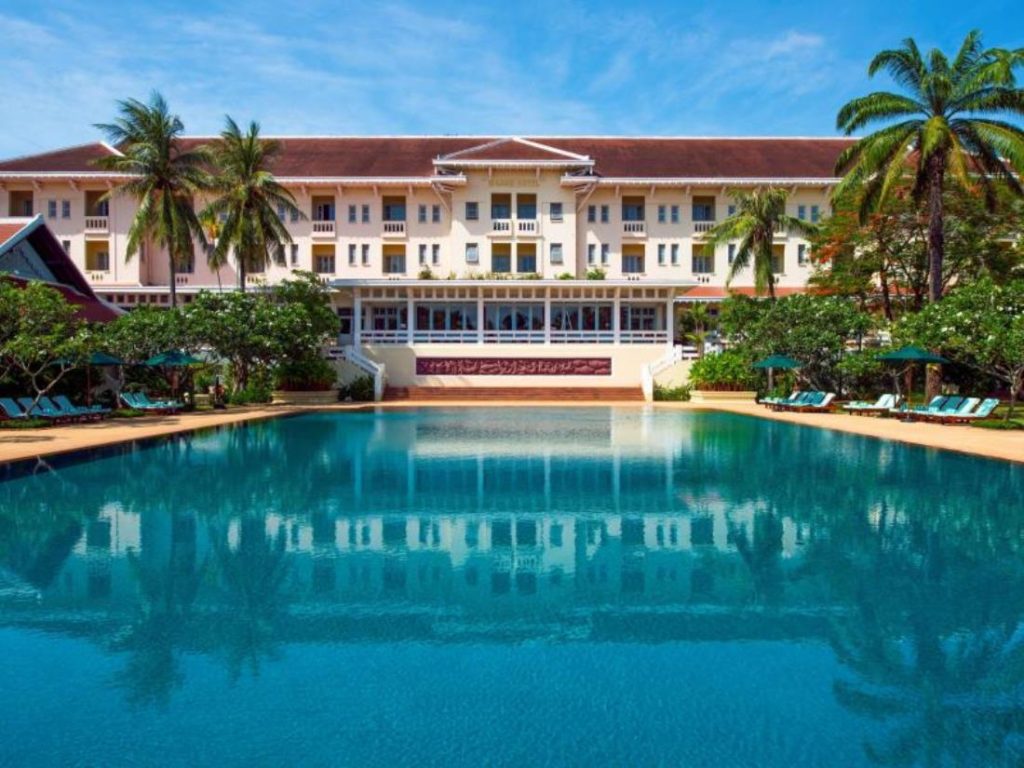
Speaking to TTG Asia e-Daily at a media luncheon hosted at the Raffles Hotel last Friday, Michael Issenberg, chairman and COO Accor Asia-Pacific, said: “We are working on the loyalty programmes now and we will ultimately have a combined programme.

“For instance, we know that the Fairmont loyalty program is more recognition based than point based. So that’s what we are studying now and we will (eventually) make sure our customers get what they need,” he elaborated.

While the acquisition now makes the upscale and mid-market operator now a key luxury hotel player, Issenberg emphasised that rebranding the hotels “is not part of the plan”.

He said: “On one hand it is important to have a common background for the brand but it is also very important for them to be distinct like we have the Fairmont and Raffles (names) which is all about the individual brand and we want to respect that.

“Perhaps we may do a bit of tweaking for one or two hotels but it is to ensure that they stay relevant and not about rebranding,” he added.

When asked about the potential job cuts with the generation of 65 million euros (US$72 million) in “revenue and cost synergies” with the integration, Issenberg said: “We announced this (figure) as part of the transaction and we are confident of achieving that, and synergies do mean job reductions.”

Issenberg said he was unable to comment further on the specifics of the downsizing due to its sensitive nature, but added that Accor will be finalising this over the next few months.

Flight bookings to Istanbul plunge after recent attacks

0

istanbul-ataturk-airport

FOLLOWING the terror attack at Istanbul’s Ataturk Airport last month, flight bookings to the Turkish city dropped dramatically to new lows, according to research by ForwardKeys.

Bookings fell by 69 per cent in the week after the bombing, from a base which was already down due to earlier terror attacks in January and March. Transfers through Istanbul, one of Europe’s busiest hubs, were also down 36 per cent.

Since January, Istanbul has suffered from three terror attacks and travel was down 29 per cent over the six-month period, compared with the previous year. Transit traffic through Istanbul was 9 per cent up before July.

“Before this latest incident, our analysis showed terrorism was having an impact on visitors to Istanbul, although transit numbers had continued to rise. But with this attack, transit numbers have also been affected,” said Olivier Jager, co-founder and CEO of ForwardKeys.

Meanwhile, forward bookings for international arrivals in Istanbul, as of July 2, are 36 per cent down compared to the same period in 2015.

As for transit traffic in the coming six months from Europe and Asia Pacific, numbers are also behind by 1 per cent and 6 per cent respectively from last year. However, transit traffic from the Americas and the Middle East are currently ahead by 13 per cent and 16 per cent respectively.

Jager concluded: “In my view, the airport minimised the commercial impact of the attack by reopening so promptly and is to be congratulated for such speedy action.”

India’s Maharashtra state gets new tourism minister

0

jaykumar-rawal
Jayjumar Rawal

JAYKUMAR Rawal was sworn in earlier this month as tourism minister, government of Maharashtra.

On July 8, Rawal took oath as a cabinet minister and aside from heading the tourism front of the Indian state, his portfolio includes overseeing the Employment Guarantee Scheme in Maharashtra.

“Tourism is one of the key industries which contribute significantly to the economic growth of a nation. Therefore, my key focus would be to advance the current tourism scenario in Maharashtra through the implementation of new policies aimed towards tourism growth and skill development,” he said in a statement.

Upon taking office, Rawal immediately met with Madan Yerawar, the state tourism minister, and other higher officials and various department heads with the Maharashtra Tourism Development Corporation.

During the meeting, he reviewed ongoing and future tourism projects like the Visit Maharashtra 2017 campaign and SAARC Summit in Aurangabad, and provided guidance and direction to the department.

Holiday Tours appointed Malaysian GSA of Uniworld

0

thomas_chong_left_and_robin_yap(From left) Thomas Chong, managing director, Holiday Tours & Travel; and Robin Yap, president, Asia, TravCorp

THE Travel Corporation’s (TravCorp) Uniworld River Cruises has appointed Holiday Tours & Travel as its GSA in Malaysia since July 12.

“As the Malaysian GSA for Trafalgar and Contiki (also owned by TravCorp), we felt that Holiday Tours & Travel has done a remarkable job in expanding the market,” said Robin Yap, president, Asia, at TravCorp.

“For those who have been on regular coach tours and are ready for a different experience, luxury river cruising with Uniworld River Cruises is a natural extension.”

According to Yap, Uniworld’s eight- to 10-day river cruises in Central Europe are popular among Asians.

With Christmas and the Malaysian school holidays coming up, Thomas Chong, managing director of Holiday Tours & Travel, said that the agency will mainly be targeting families.

While Uniworld River Cruises is open to all retail agents in Malaysia, the company will be conducting training programmes with Holiday Tours & Travel for other agents in order to equip them with the appropriate knowledge and skills. Fam trips will also be organised.

Bangkok’s rate quandary

0

Asian arrivals are filling up rooms in Bangkok, but while occupancy is strong, room rate growth isn’t because of the changing market mix, writes Raini Hamdi

17june_thailand-1

Thailand has risen from a quagmire in 2014 to “beyond recovery” as the “new leader” in South-east Asia, according to Jesper Palmqvist, area director Asia-Pacific, STR Global. From a slump of 6.4 per cent in 2014, thanks to the military coup in May that year, arrivals rose to nearly 30 million last year, a 20 per cent rise.

But recovery has many facets. Underpinning the growth are low-yield series  group tours from markets such as China and South Korea. The high-yield MICE business, especially large congresses, has never fully recovered from the political problems and coup in 2014; this market works on long lead times and there are issues – for instance, many US corporates and associations shy away from holding a large event in country with a non-elected, military government, said a source.

“Tourism to Thailand is growing but it is ever more dependent on Asia,” said David Cumming, Onyx Hospitality Group’s vice president & area general manager Bangkok and chairman of the British Chamber of Commerce Tourism Committee.

“Things need to be done to make the city a real MICE hub once again as, even though the medium MICE market is good, the large world congress events are not coming here.”

First quarter arrivals data show continued swarms of Chinese tourists – a staggering 31 per cent increase to 2.6 million over 1Q2015. Total arrivals rose 15.5 per cent to more than nine million.

Highlighting the challenge this poses, Bill Barnett, managing director, C9 Hotelworks, said: “Forward booking windows in this (China) market are increasingly getting shorter and hotels often throw down rates instead of focusing on demand and yield management. This inevitably results in a domino effect across the market and rate growth is muted.”

Peter Caprez, cluster general manager at JW Marriott Hotel Bangkok, said managing the business mix with the right price at the right time has become important.

“Rate yielding is necessary to drive higher average rate especially on peak dates,” he said.

But that’s easier said than done. Richard Chapman, general manager of Sheraton Grande Sukhumvit, said: “Rates are being heavily affected not only by supply and demand, but by the change in booking behaviour. The booking lead time has gotten shorter and shorter. Many online channels have launched special offers for same-day bookings. While the initiative was designed to support the sale of unsold rooms at the last minute, it has become more of a trend to wait for last-minute deals. With Bangkok having a substantial increase in the number of inbound flights and with over 1,000 hotels to choose from, guests feel comfortable in always finding a room. This further reduces the booking window and causes discounted pricing.”

With the changing market mix, luxury hotels have had to be flexible with rates to maximise revenues as a result of a drop in demand by the original five-star guests but a significant increase in demand for lower category of hotels, he said.

This article was first published in TTG Asia, June 3, 2016 issue, on page 32. To read more, please view our digital edition or click here to subscribe

Dream Cruises goes west with Chengdu roadshow

0

thatcher-brown
Thatcher Brown, president of Dream Cruises, speaking at the event

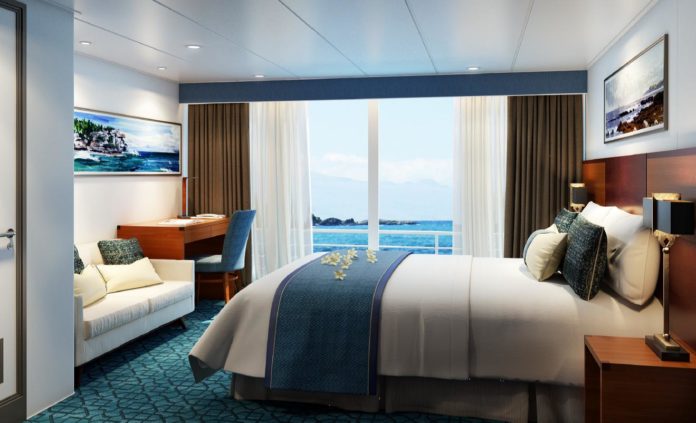
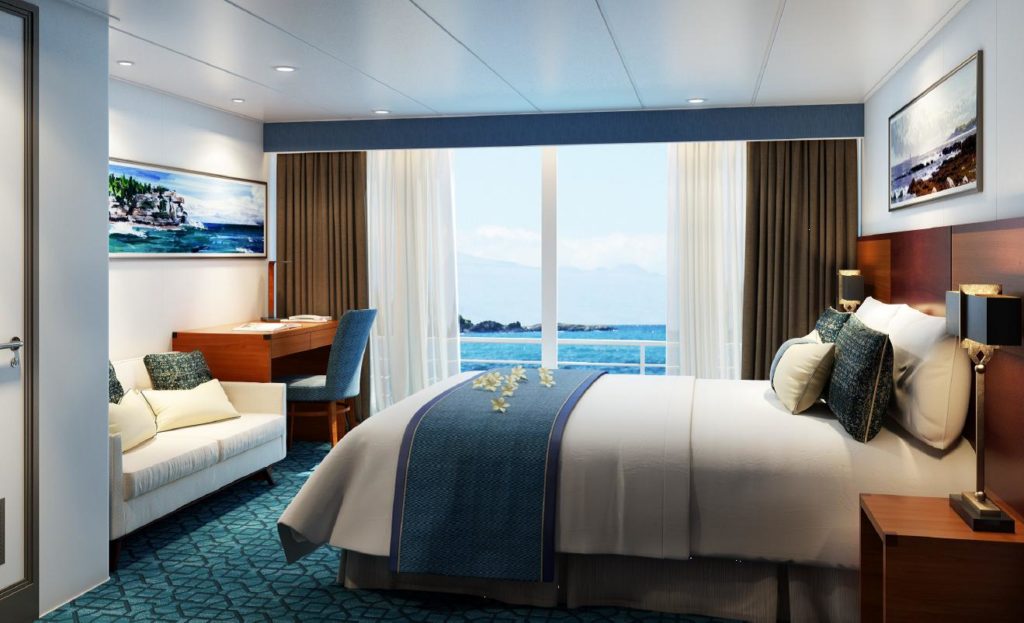
Genting Hong Kong’s newest cruise line, Dream Cruises, held a roadshow in Chengdu on July 12, with hundreds of trade partners and travel media representatives in attendance. They also had the opportunity to experience the luxury first-hand that will be featured onboard its inaugural cruise ship Genting Dream.