TTG Asia
Asia/Singapore Thursday, 15th January 2026
Page 1758

China’s Varitrip launches tours and activities GDS

0

tourists-great-wallTourists at the Great Wall of China

TRAVEL technology company Varitrip has unveiled a new GDS that distributes tours and activities available domestically.

The product is designed to connect and integrate with distributors to provide tours and activities inventory as well as enable operators of airlines, cruises and hotels to upsell, according to Dylan Zhang, CEO of Varitrip.

Zhang added the product is being launched on the back of increased inbound traffic in China, with the China National Tourism Administration expecting more than 137 million international visitors to China this year, a nine per cent increase over 2015.

“Traditional operators haven’t been able to keep up with the new demands,” he said.

“Varitrip’s technology connects and integrates with the distribution partners, operators and all possible resources to fulfill new growing demand.”

Costa to debut Aida Cruises in China next year

0

aida-china
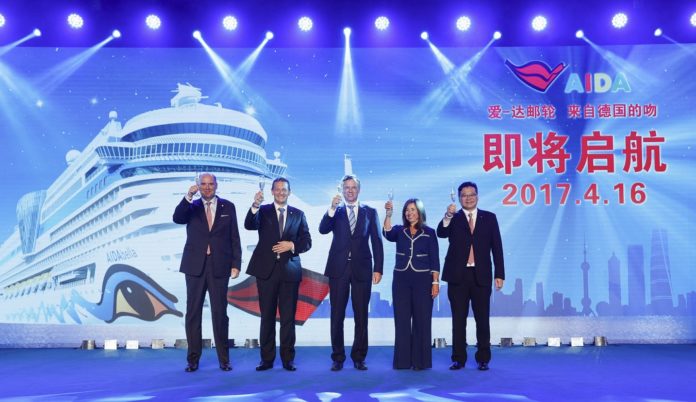
From left: Michael Ungerer, COO, Carnival Asia; Felix Eichhorn, president, AIDA Cruises; Michael Thamm, CEO, Costa Group; Christine Duffy, president, Carnival Cruise Line; and Buhdy Bok, president, Costa Group Asia President, at the Aida launch in China

COSTA Asia has begun a marketing offensive in China in anticipation of the launch of its Aida Cruises brand there come April 2017.

The AidaBella will be deployed year-round in China after a dockyard refit of the cruise ship in spring next year. According to a statement by Costa, the ship will be customised to the needs of Chinese guests while at the same time feature authentic German hospitality.

For instance, a spicy hot pot restaurant and Oktoberfest beer festival will both be introduced on the ship. New on board as well are German retail brands Rimowa, Fissler and Hugo Boss.

“With our Costa Asia brand, we have pioneered the way into China since 2006 and were the first international shipping company to develop the cruise market there,” said Michael Thamm, CEO of the Costa Group.

“The expansion of our product portfolio to include an Aida Cruises ship in the fastest-growing market in the world is a strategic step for the further successful development of Costa and Aida.”

Flights to UK surge following Brexit vote

0

brexit

FLIGHT bookings to the UK rose significantly in the aftermath of Britain’s referendum vote to leave the EU, according to research data released by ForwardKeys.

In the 28 days before the June 23 poll, flight reservations were running 2.8 per cent behind the same period last year. In the month after the Brexit decision, bookings were up 4.3 per cent, resulting in a 7.1 per cent increase in the period under observation.

Most of the traffic is driven by demand coming from the US and Asia-Pacific, buoyed by the pound’s fall against the Euro following the referendum.

Bookings from Europe were up 5 per cent while non-European arrivals were up by 8.7 per cent on average.

Hong Kong bookings to the UK rose most by 30.1 per cent while flights from the US was up 9.2 per cent. Meanwhile, traffic from Canada was up 7.4 per cent and from the UAE by 7 per cent.

Flights from China to the UK remained steady however, likely due to the need for visas to travel to the UK.

“It’s now confirmed that Brexit had an immediate, positive impact on inbound tourism to the UK, which is converting into better than anticipated arrivals,” said Olivier Jager, ForwardKeys co-founder and CEO.

“In the months ahead, our data will show whether this post-Brexit bounce is sustained.”

Direct room booking value nearly twice that of indirect channels

0

online-hotel-booking

THE average booking values derived from hotel websites are nearly double that found on third-party booking channels such as OTAs and metasearch engines.

Research conducted by hotel booking solutions provider SiteMinder revealed that the average reservation made on indirect channels amounted to US$340 over a 12-month period ending June 2016. Over the same period, the average cost of bookings made on direct sites was US$600.

According to Mike Ford, managing director of SiteMinder, the finding means that hotels should be investing heavily in ensuring they have a balanced approach to distribution with a focus on direct booking strategies in order to maximise direct conversions and therefore profit.

“Our data shows that hotels globally are achieving 1.8 times more, on average, for accommodation booked via their own direct website than via OTAs and other third-party channels,” said Ford.

“While we can’t forget the reach these third-party sites provide to hotels, it’s important to note that direct bookings are not only achieving higher value overall but there is no commission payable on them so they are very much more profitable.”

He added that “hotels need to ensure that they are at least at parity with OTAs and other third-party channels in order to compete effectively. Too many hoteliers are giving OTAs better rates than their own websites which is not smart given the profitability of direct bookings”.

SiteMinder’s finding is based on 43.5 million reservations that passed through the company’s Channel Manager and TheBookingButton solutions between June 2015 to June 2016.

Clark sees light of day

0

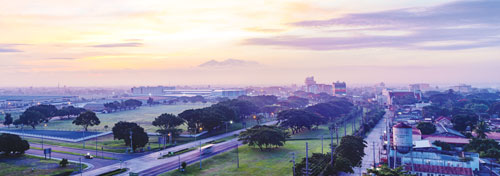
The new Philippine president has put infrastructure projects back into the spotlight, reigniting hope that the potential of Clark as a gateway and travel destination could finally be unlocked
aug-19-clark-shutterstock_456300250

A fresh presidential directive could provide the impetus for the Clark Freeport Zone in Pampanga, a former US military airbase, to get serious about developing its tourist infrastructure and emerge out of the shadows of neighbouring Manila.

Newly-elected Philippine president Rodrigo Duterte recently stressed the importance of completing projects such as the fast rail linking Clark Freeport Zone and metro Manila, which will help to decongest the overcrowded Ninoy Aquino International Airport (NAIA) and attract more airlines to Clark International Airport (CRK).

The rail link plan had failed to materialise under the previous administration, leaving the potential gateway airport in Clark underutilised and several international carriers such as AirAsia, Emirates and Etihad Airways to cease flying there several years ago due to low passenger volume.

The urgent need to develop CRK as an alternative airport was again underscored last month when a pothole on NAIA’s runway led to the massive diversion of flights to Clark.

Now with hopes of the inter-city rail project on the rise, Philippine Airlines has announced it will move some of its domestic flights to CRK to help decongest Manila’s NAIA.

Cebu Pacific is currently the only domestic carrier that operates in Clark although foreign carriers include Emirates, Asiana, Cathay Pacific, Dragonair and Tigerair.

Having moved its hub to NAIA’s terminal 4, AirAsia had repeatedly said it would return to Clark if the rail or road link to Makati was built. It recently resumed flying from Kuala Lumpur to Clark.

Emirates, which pulled out from Clark in 2014, returned to CRK in March this year with daily Dubai-Clark-Cebu services. The circular service saw “strong load factor”, with 150 to 200 passengers (of the 400-seat capacity) flying from Clark, said Emigdio Tanjuatco III, president and CEO of Clark International Airport Corporation.

The airport chief wants to show international airlines that CRK “is willing to take them back” by offering incentives such as reduced taxi and landing charges.

Explaining the strategy to attract more airlines, he added: “Some of our rates are 30 per cent lower than NAIA. We will help airlines in marketing their flights.”

Works on a new terminal to increase passenger capacity has begun this year, in addition to recent upgrades that increased the number of check-in counters from six to 32, immigration counters from four to 16 and VIP lounges to three, with plans to bring in more duty free concessionaires.

Favouring a dual airport strategy, Tanjuatco believes CRK can be positioned as a gateway to the Philippines through northern and southern Luzon, while NAIA serves visitors to metro Manila (National Capital Region) and southern Luzon.

Due to the size of the northern and southern Luzon catchment area, 10 million passengers fly out of the region annually but only a fraction of it was captured by Clark.

“It’s a ripe market,” said Tanjuatco, commenting on the prospects for CRK and tourism in the area.

Adding to Clark’s allure is its booming supply of new hotels, investment incentives and lower cost of doing business, luring more businesses and investors pushed away by the lack of space in heavily congested metro Manila.

Foreign investors choose Clark for its safety and security; proximity to metro Manila; green and unpolluted environs; English-speaking skilled workers; and resilience against natural disasters, protected by its 158m location above sea level among mountain ranges, explained Irineo Alvaro, immediate past president and chair of BB International Leisure and Resort Development, and who, at press time, is touted to become chief of Clark Development Corporation.

International-branded hotels that have opened in the area include the 268-key Hilton Clark Sun Valley Resort; newly minted 111-room Midori Clark Hotel and Casino, which is in the first phase of a 40 billion pesos (US$850 million) integrated resort development; and the 164-key Park Inn By Radisson. The 260-key Marriott at Clark is set to open next year.

More room keys are driving arrivals into Clark, said Malu Parungao, junior branch supervisor of Filipino Travel Center in Angeles City, Pampanga. In particular, tourists from Europe and the Middle East are increasing in numbers since Emirates started flying to Clark again.

Parungao said tourists are mainly attracted to Clark’s four golf courses, often combining it with the sun and sea in Subic just 45 minutes away.

While some remain doubtful of Clark’s appeal as a leisure travel destination, Tanjuatco insists there is much to see outside its perimeter, including the Mount Pinatubo crater and the Hot Air Balloon Festival every February.

Some hotels do not even have the capacity to cope with the influx of tourists during the Hot Air Balloon Festival, pointed out Othie Maninang, inbound tours supervisor at Mango Tours.

She also suggested ramping up the standards of existing attractions, such as Nayong Pilipino and Air Force City Park, and promoting go-karting and ultralight aircraft flights, which is unique to the area.

Beyond leisure, business tourism could also flourish as the destination spruces up its MICE hardware.

“Clark has a lot of MICE potential,” remarked Angel Ramos Bognot, president and managing director, Afro Asian Travel and Tours, who has chosen Clark as the base for the annual B2B Travel Business Exchange introduced last year.

This article was first published in TTG Asia, August 5, 2016 issue, on page 4. To read more, please view our digital edition or click here to subscribe.

New Guangzhou-Adelaide flights a boon for events, incentives

0

adelaide

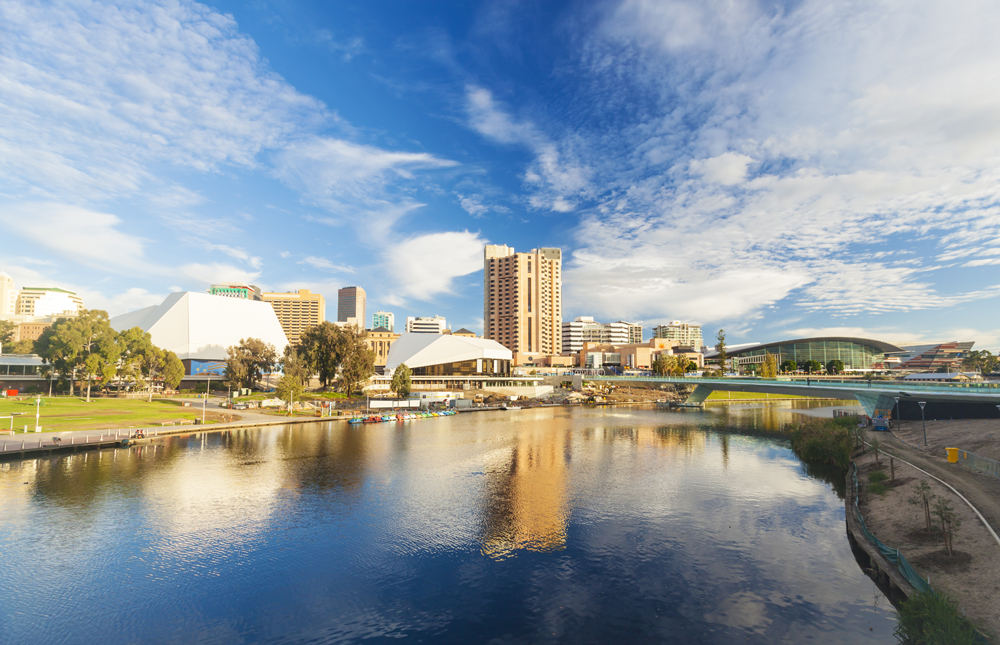
CHINA Southern Airlines will commence thrice-weekly service from Guangzhou to Adelaide starting December, the second airline to fly direct to the Australian city this year, with Qatar having started a daily service in May.

“This presents a huge opportunity for Adelaide with the Chinese market,” said Damien Kitto, CEO of Adelaide Convention Bureau.

“Over the past 18 months, our focus on China has been increasing with a dedicated Mandarin speaking staff member joining our team. Relationships (are also) being developed and strengthened via more regular in-market visits and showcase events such as Dreamtime.”

The Adelaide Convention Bureau stated that they will be channeling resources towards the wider Asian region as well as sending its director of sales and marketing to Qingdao in tandem with the Adelaide City Council’s trade mission happening this week.

The bureau is also positive that incentive groups will be lured by the nonstop service coupled with the prospect that South Australia produces 80 per cent of the country’s premium wine, allowing Chinese travellers the chance to visit the notable wine region while passing through nearby destinations such as Kangaroo Island and Port Lincoln.

Kitto added: “Adelaide’s offering of an abundance of fresh food including some of the best seafood in the world, premium wine, ease of accessibility and convenience with an enviable environment and lifestyle has, based on feedback from both delegates and those visiting on familiarisations, proven popular with the Chinese market.

“The direct flights by China Southern Airlines, along with flights from Asia by Singapore Airlines, Malaysia Airlines and Cathay Pacific further increase our opportunities within the Asian market and China.”

Making rail connections

0

Enhanced rail and road networks connecting to other parts of China have given rise to new tourist circuits around Guilin and raised the appeal of travel in the region

aug-19-chinamain

Riding on the region’s expanded high-speed rail network, the Guilin Tourism Administration is keen to draw repeated and new FIT traffic by combining Guilin with attractions in neighbouring Sanjiang, Danzhou, Longsheng, Longji and Liuzhou.

According to Guilin Tourism Administration, deputy secretary general, Zhao Gui Xing, new road networks such as the Liuzhou-Sanjiang Expressway have also boosted connectivity in the destination.

He said: “Traditionally, it took four to five days to tour around these towns with lots of time spent on the road. (Now), travel convenience has improved with an enhanced two-pronged rail and road system. Hopefully this will draw more tourist traffic from the Pearl River Delta, Hong Kong and Taiwan in the future.”

Since the launch of the inaugural Guiyang-Guangzhou high-speed rail in 2014 to link up China’s mountainous south-west with Guangdong, Guilin’s network has flourished with more new routes to cities such as Guangzhou, Shenzhen, Guiyang, Changsha, Wuhan and Zhuhai.

Sheraton Guilin Hotel’s director of sales & marketing, Portia Zhou, sees the greatest benefits from the Guangzhou-Guilin service, which boasts the highest frequency and shaves travel time on this route from 12 hours to two hours 40 minutes.

Said Zhou: “With the train network and construction of new highways, Guilin tourism and hotel markets have won new opportunities from the neighbouring countryside.

She added: “Longsheng and Sanjiang are now packaged together as new sightseeing points, strengthening Guilin’s appeal for the leisure market. The FIT segment grew 50 per cent from the previous year.”

Sanjiang – a remote town 150km from Guilin – can now look forward to more international visitor traffic with the D2975 (Liuzhou-Sanjiang) train service launched in May 2016. Plying between Sanjiang South Station and Guangzhou South via Guilin, the journey time from Guilin to Sanjiang now takes only 30 minutes, down from the previous three hours 45 minutes.

Commenting on the change, Guangxi Tourism Development Group, vice general manager, Lu Bo, said: “Given the birth of new highways, Sanjiang is now at the crossroads between Hunan, Guizhou, Guiyang and Guilin. Moreover, the town is home to the Dong people, who boasts  the biggest presence among Guangxi’s ethnic minority groups.

“Our company is keen to push a Greater Guilin Tourism Area concept, (integrating) small towns nearby like Sanjiang and Danzhou to create a brand emphasising culture, wellness and ecotourism.”

This explains why the group has actively pumped investment into Sanjiang’s tourism infrastructure, such as revamping the Chenyang Eight Villages (see page 27), constructing a large-scale resort centre at Sanjiang Bay, and upgrading the Sanjiang Bird Nest. The group welcomed its first fam tour from Taiwan in March 2016.

Shangri-La Guilin’s general manager, Leslie Wang, has noted an increase in leisure tourists since the expanded railway network places Guilin at the crossroads on the Guiyang-Guangzhou route.

“Our hotel received better results from the expanded railway network, especially in Hunan. It almost doubled our (guest numbers) from 2014,” he said.

“We observed a growth in Shenzhen, Guangzhou and Dongguan as well. The high-speed railway definitely accelerates Guilin towards the urban economy with this integration.”

This article was first published in TTG Asia, August 5, 2016 issue, on page 24. To read more, please view our digital edition or click here to subscribe.

Accor debuts Novotel in Xi’an, targets small business and event groups

0

Novotel Xian SCPG

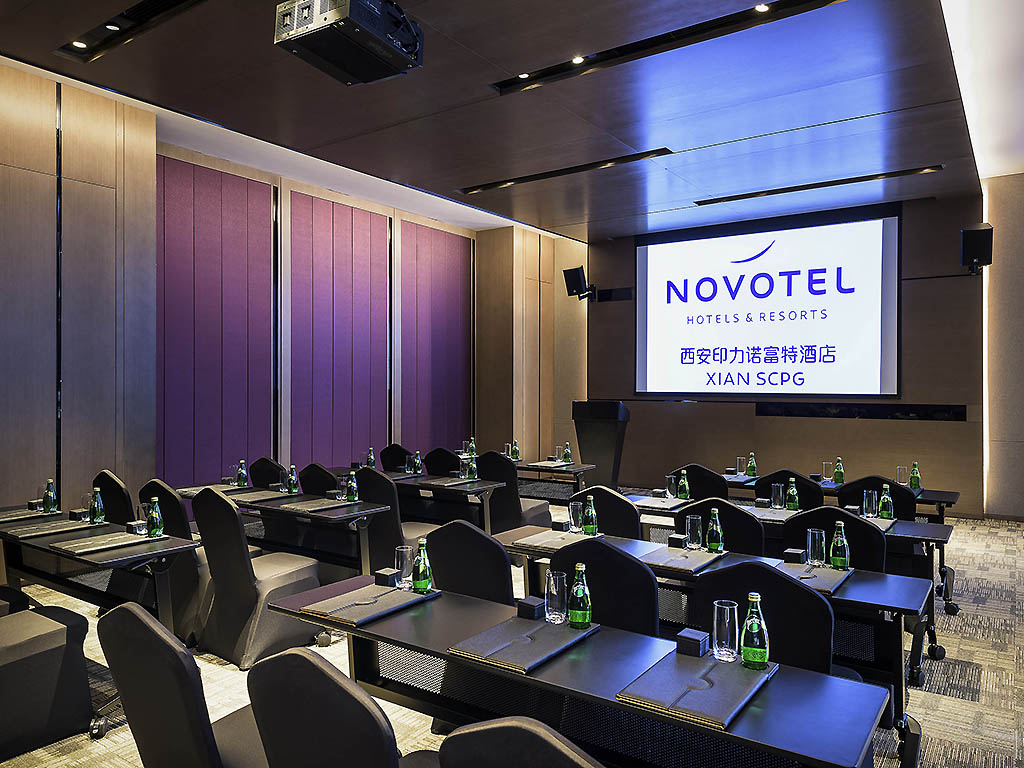
ACCORHOTELS debuted its Novotel brand in Xi’an’s CBD last month with an aim to lure small corporate meetings, incentive groups and product launches.

The 275-room Novotel Xian SCPG Hotel is a 15-minute drive to the China Railway High-speed station and 30 minutes to Xi’an Xianyang International Airport. Function rooms range from 60m2 to 130m2 in size and are able to fit between 50 and 110 pax theatre-style.

According to Accor spokesman Kelly Chen, the hotel has secured pharmaceutical, automobile and cosmetics industry meetings for between 20 to 80 participants since its opening on July 28.

The hotel features a “crab” set-up, ideal for meetings with audiovisual presentations as it allows the speaker to move among the participants and make visual contact with them.

Other facilities include three F&B outlets, a fitness centre and computers with Internet connection.

Novotel Xian SCPG Hotel sits alongside Accor’s four existing properties in the area, namely Sofitel Xian on Remin Square, Grand Mercure Xian Renmin Square, Sofitel Legend Peoples Grand Hotel Xian and Mercure on Remin Square Xian.

Hong Kong exhibition industry rakes in US$6.8 billion in 2014: HKECIA

0

economic-impact-study-shows-hong-kongs-exhibition-industry-worth-billions-to-the-city
Hong Kong

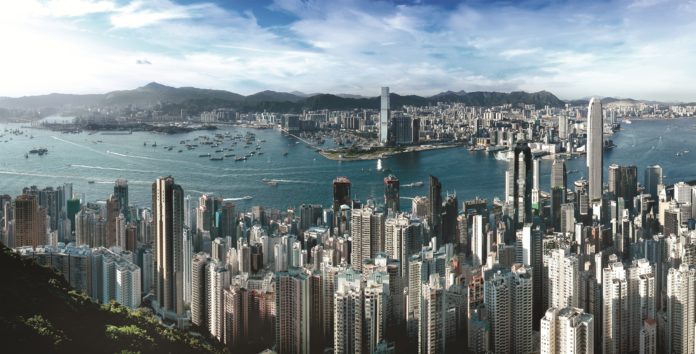
HONG Kong’s exhibition industry contributed HK$52.9 billion (US$6.8 billion) to the economy in 2014, up 29 per cent from 2012, according to a study commissioned by the Hong Kong Exhibition & Convention Industry Association (HKECIA).

The Economic Impact Study, which takes into account direct and indirect expenditure, found that the industry accounted for 2.3 per cent of the city’s total GDP for the calendar year.

It further revealed that the industry provided around 83,500 full-time jobs – a 9.6 per cent increase from 2012 – both within the industry and in supporting sectors including hotel, F&B, retail, stand design and construction, and logistics and freight forwarding.

As well, the industry contributed fiscal benefits (i.e. benefits arising from various government taxes associated with exhibition activities and participants) amounting to HK$2.1 billion.

Stuart Bailey, chairman of HKECIA, said: “The study shows the many ways in which exhibitions fuel Hong Kong’s wider economy – for example by spinning off economic benefits and extensive workforce to supporting industries, and attracting high-spending international business visitors to the city.

“(It also) reveals that overseas exhibition exhibitors and visitors continue to spend more than international overnight tourists,” he added.

According to the report, leisure travellers spend an average of HK$7,960 per visit. This is compared to foreign exhibition visitors who spend on average HK$12,776 per visit and international exhibitors who fork out HK$12,829 on average, a 61 per cent increase from their leisure counterparts.

Given these benefits, he urged: “I hope our policymakers will take the findings of this study into account as they plan for the infrastructure and facilities that Hong Kong needs in the years to come.”

Dedicated unit to manage Kuala Lumpur’s MICE sector gets green light

0

norazayusof
Noraza Yusof, general manager at Kuala Lumpur Tourism Bureau

THE board members of Kuala Lumpur Tourism Bureau have agreed to the formation of a dedicated body to coordinate the promotion, branding and facilitation of events in the capital of Malaysia.

This is being initiated as part of the Kuala Lumpur Tourism Master Plan 2015-2025, which identified the need to develop a Kuala Lumpur-specific business events unit with focused strategies and initiatives.

“There is no clear vision or strategy for the (MICE) sector in Kuala Lumpur. Governance/ organisation of the industry remains at the national level, under the Malaysia Conventions and Exhibitions Bureau (MyCEB), which is not able to focus its efforts on Kuala Lumpur,” stated a Kuala Lumpur Tourism Bureau report.

“Hence the need to develop a Kuala Lumpur-specific MICE unit with its own set of Kuala Lumpur-focused strategies and initiatives,” it further explained.

The new body will also provide event support and facilitation for organisers and help with liaising with Kuala Lumpur City Hall on approvals.

Noraza Yusof, general manager at Kuala Lumpur Tourism Bureau, said the dedicated unit will come under them. It will be made up of a small team who will work in collaboration with Malaysia Conventions and Exhibitions Bureau to strengthen the city’s business events branding and positioning.

Funding for the unit will come from charges that Kuala Lumpur City Hall plans to implement in the near future.