TTG Asia
Asia/Singapore Wednesday, 29th April 2026
Page 1756

Business travel spend on Airbnb growing faster than hotels

0

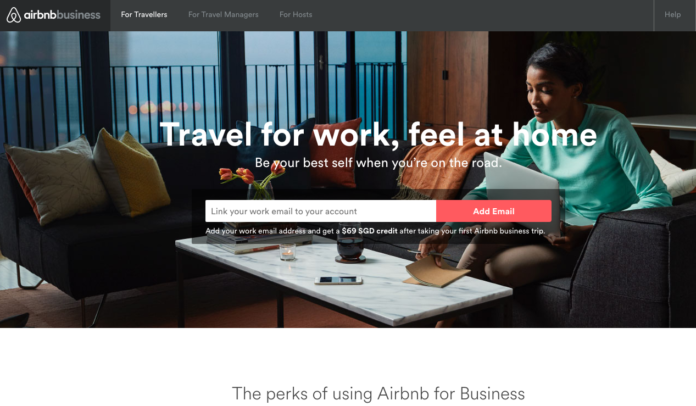
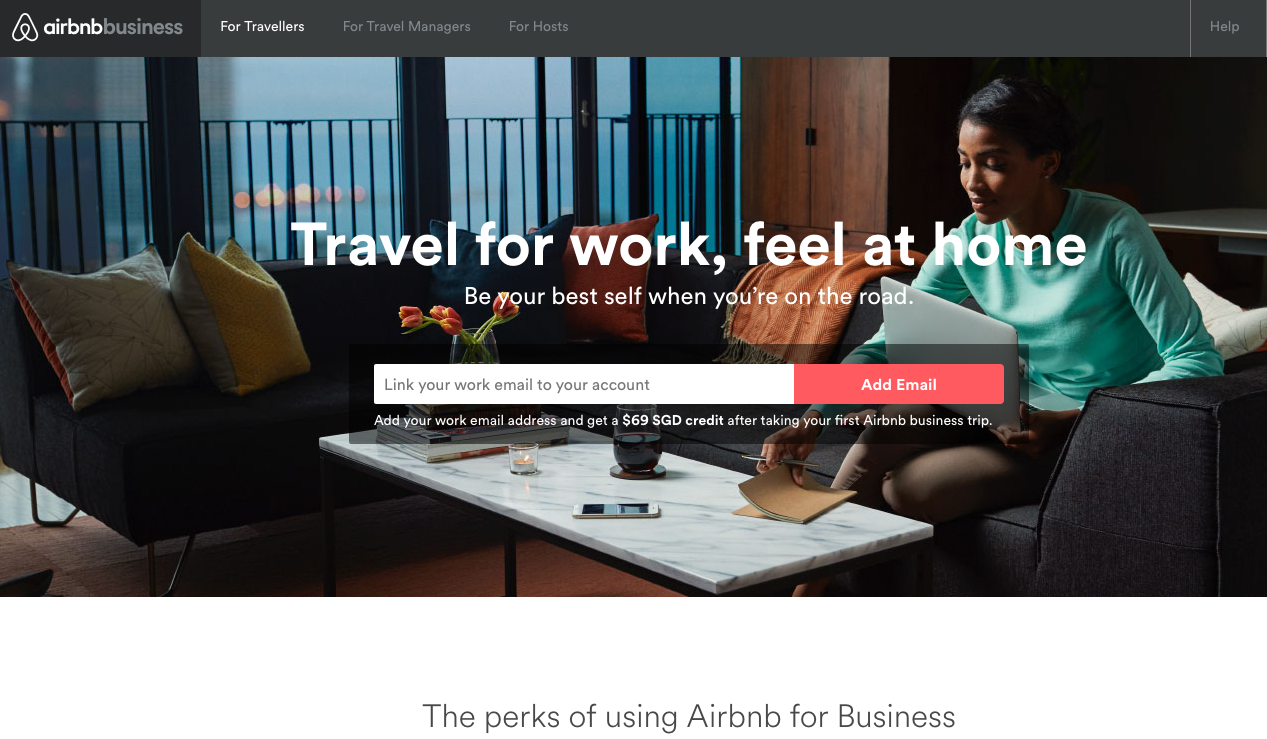
airbnb-for-business

Accommodations spending by corporates on Airbnb properties grew 42 per cent year-on-year in 2Q2016 to US$77 million, outstripping spending growth on hotel chains, according to a study conducted by Concur.

This growth is coming on the back of a 32 per cent climb in number of companies using Airbnb for Business over the same period.

However, on a volume basis, total business travel spend on major hotels was more than 250 times greater than business spend on Airbnb, based on an analogous data set for several major hotel chains gathered by Concur.

Corporate Airbnb stays are also mostly centred around a few hotspots in the world, the three most popular being the cities of San Francisco, London and New York.

Between 3Q2014 to 2Q2016, businesses consistently spent more money on Airbnb stays in San Francisco than in any other city in the world, with London at second place but accounting for less than one-third of the spending in San Francisco.

Reasons for Airbnb’s popularity in the Californian city could be the high average cost of hotels, plus the dominance of technology companies based there that are more open to using sharing economy accommodation options for work trips.

Major events are also major drivers. Looking at daily volume of Airbnb expenses, bookings increase dramatically in San Francisco during Salesforce.com‘s annual Dreamforce conference held in October. Airbnb usage was six times higher than average during the 2015 meet.

“Concur travel and expense data shows us that while Airbnb usage is growing across all segments and industries, momentum is strongest among small and midsized businesses and in the tech and higher-ed segments,” said Tim MacDonald, executive vice president of global products at Concur.

“While hotel spend still accounts for the majority of business lodging spend, there’s an increase in business travelers exploring alternative lodging, especially during major conferences and events.”
Theme park, more rooms coming to Bintan Lagoon Resort

0

moe_ibrahim
Moe Ibrahim

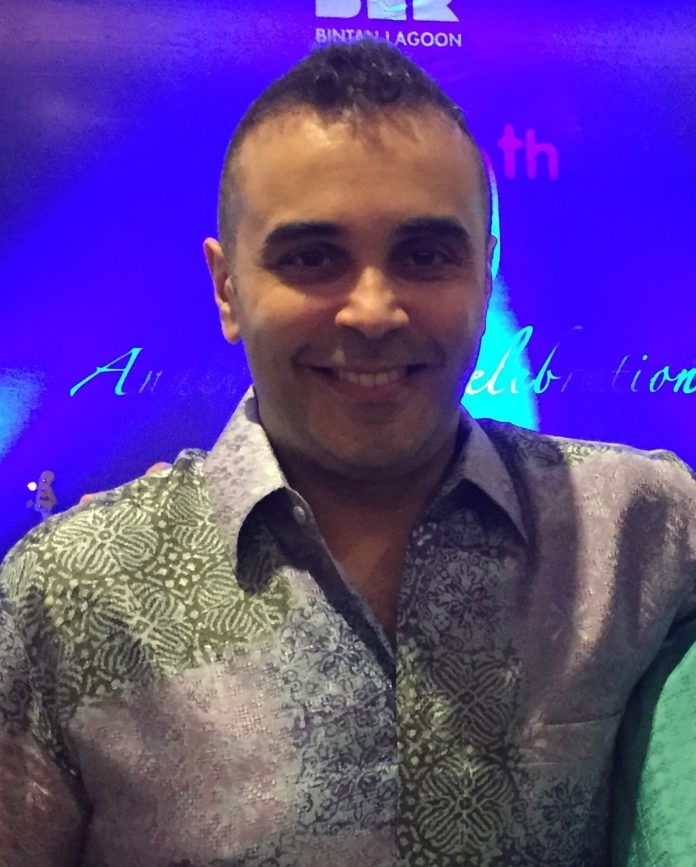
Bintan Lagoon Resort (BLR) unveiled a sneak peek of future developments as it celebrated its 20th anniversary last weekend.

Moe Ibrahim, BLR president director, said that the 300ha site, which currently houses a 500-room integrated resort, convention centre, two golf courses, a host of sporting and recreational options, its own ferry terminal and customs and immigration facilities, will embark on a five-year expansion plan.

New facilities being developed include a theme park, retirement village with medical facilities, a hospitality school, golf academy, business and budget hotels, a glamping site, warehousing facility, retail zone and connecting infrastructure.

Ibrahim added: “The master plan will be launched early next year and we are finding the right partners. The goal is to create a community and build different facilities to cater to the different customers we know who come to BLR.

“We have to evolve and make BLR interesting. Guests need to be stimulated and as a business, we have to challenge ourselves to stay relevant.”

The resort intends to garner more domestic traction as well, as many locals still do not know about Bintan and BLR, according to Ibrahim.

“Indonesians now make up 15 per cent of the market and demographically they are the highest spenders. We also want to tap more visitors from Singapore and India,” he said.

South Korea currently accounts for most of BLR’s arrivals followed by Japan and the Philippines.

Scoot brand to front SIA’s budget operations

0

scoot

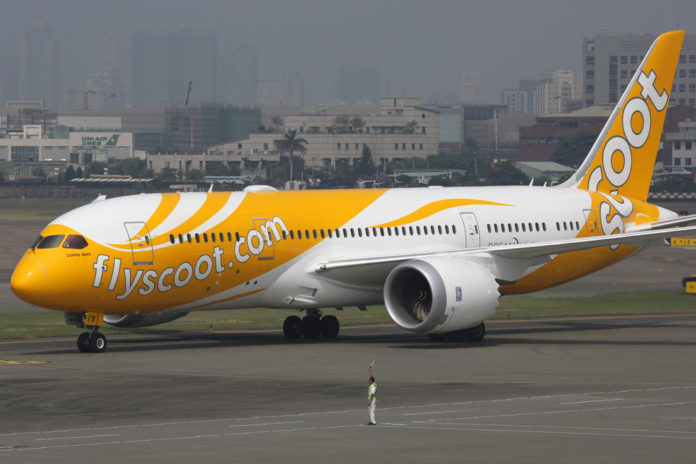
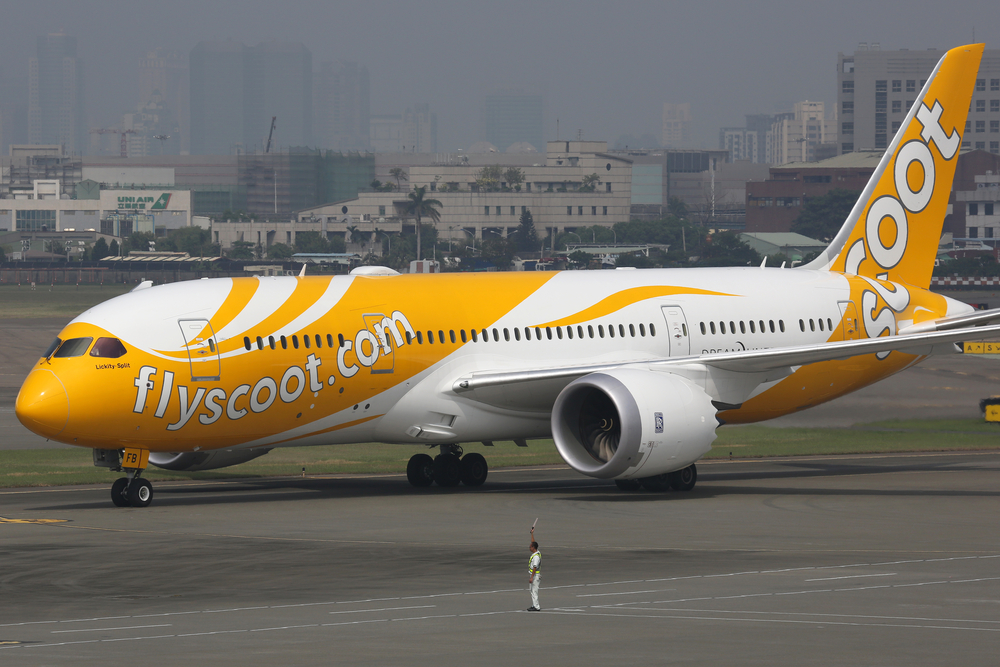
Tigerair and Scoot, which came under a single holdings company earlier in May, is set to integrate under a single operating licence in the second half of next year.

Both LCCs currently belong to Budget Aviation Holdings, under the SIA Group, and in an attempt to enhance the synergies of SIA’s budget operations, Tigerair will come come under the Scoot brand name.

This is a full integration that will encompass flight scheduling and connections, as well as a common website, contact centre and check-in counters.

“(The formation of Budget Aviation Holdings) has already led to commercial and operational synergies between Scoot and Tigerair that are providing growth opportunities for both airlines,” said Budget Aviation Holdings chairman Goh Choon Phong.

Goh, who is also CEO of Singapore Airlines, added: “Following a review, we have determined that the logical next step is to pursue a common operating licence and common brand identity to enable a more seamless travel experience for customers.”

EU, China to form new joint tourism committee

0

The European Union (EU) and China will be forming the EU-China Tourism Bureau, a joint committee that serves to represent the bilateral interests of the travel trade.

Ujhelyi Istvan, member of the European Parliament, speaking at the Global Tourism Economy Forum 2016 in Macau last month, noted that much more can be done to promote Europe’s tourism offerings.

Istvan, who is also vice-chair of the European Parliament’s transport and tourism committee, chair of the tourism task force, and also a member in the delegation responsible for relations with China, said: “We need more promotional campaigns about our cultures, cities and tourist destinations.”

He comments that current tourism work groups between the EU and China are insufficient. “In the EU parliament, we have a partner committee which works for the European tourists, but I think it’s not enough so we’ll create a new committee – a joint project to get tourist associations and political decision makers to serve both Chinese and European relationships.”

Hu Zhimin, headquarter vice president of China International Travel Service, agrees with the need for improved bilateral ties.

“We look forward to seeing more promotions from the EU, and Eastern Europe (especially), has been an emerging destination for sophisticated Chinese tourists given its rich tourism resources,” he told TTG Asia.

“It’d be helpful to have this bureau act as a centralised agency to do marketing rather than have individual destinations like Poland and Slovenia to rely on their limited budgets. They may ride on this platform to push their brands to Chinese visitors.”

The formation of the EU-China Tourism Bureau comes on the back of 2018 being declared the EU-China Year of Tourism.

Genting Dream a good fit for China, India markets

0
Genting Dream
genting-dream
Genting Dream

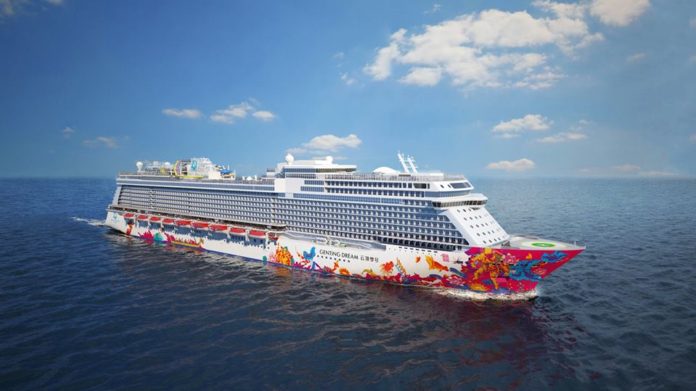
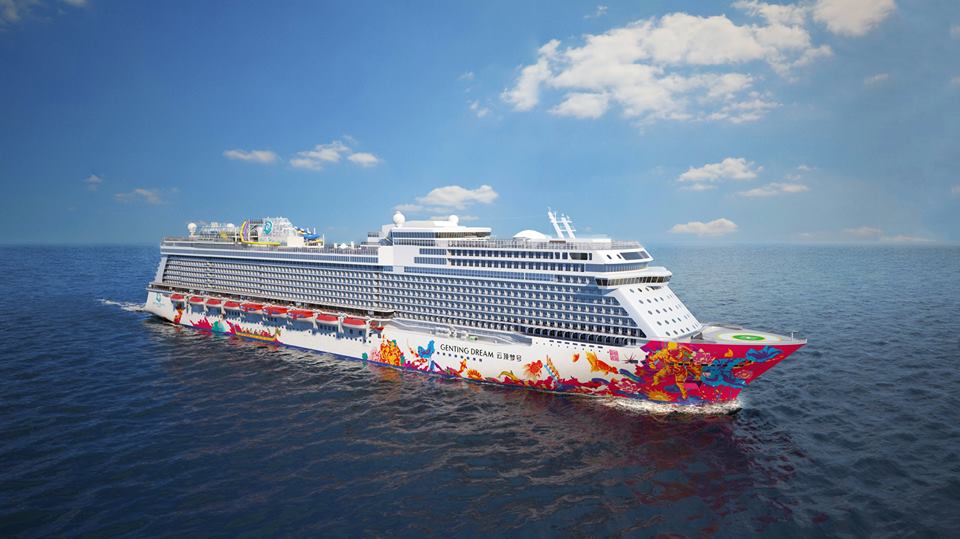
Dream Cruises, the first-ever Asia based premium cruise line brand, set sail from Singapore last week with its inaugural ship the Genting Dream.

Able to carry 3,400 guests and 2,000 crew, the 150,000-tonne German-built ship will be based in Asia with homeports at Guangzhou (Nansha Port) and Hong Kong.

Accommodation onboard the ship range from 13m2 Inside Staterooms to the 224m2 Garden Penthouse, with 70 per cent of rooms offering private balconies.

Facilities onboard include spas, 35 F&B options, numerous pools, six water slides, playrooms, a rope-climbing course, a bowling alley, and mahjong rooms. Unique elements include the first Zouk nightclub at sea as well as the first Johnnie Walker Bar on a ship.

Agents interviewed say that the China and India markets would be the most interested in sailing with Genting Dream.

“My clients will definitely be interested because it’s new and is a higher-class ship compared to Star Cruises,” said Cindy Goh, manager FIT-Worldwide department at ASA Holidays.

“There are a lot of facilities, and families will be drawn to it as there is something for everyone. There were quite a lot of enquires for the launch date sailing three months ago, and we completely filled up our allotment.”

When asked which Asian markets will be most interested in Genting Dream, she said: “I think Singapore, India – nowadays a lot of Indians like to go on cruises – China and Malaysia.

Stanley Yew, senior event sales executive, Pacific Arena, shared similar sentiments: “I think it is more for the China market. There will be some Singaporeans but not as many as the China market.

“(But) there will be a market for it as Singapore is quite small and we are on the constant lookout for new itineraries and new places to go.”

Kent Holidays’ travel planner, Aneesha Abdul, said: “We managed to fill half of our allotments, mostly to the China and India market, but we’ve also sold two cabins to Myanmar. These customers are booked in for the two-night cruise that will leave tonight (November 4).”

Abdul concluded: “It’s quite a big luxury ship and people are interested in it so they’ve taken a short cruise to explore it.”

Nida Rooms launches service for corporate travellers

0

nida-for-business

Budget hotel network operator Nida Rooms has lived its business travel solution, Nida for Business, targeted at SMEs.

The new platform allows travel managers to register their companies without pre-qualification and track and manage employee bookings, expenses and data from a central dashboard.

A key feature is the ability to change booking details or cancel bookings two days prior to the check-in date without being charged any penalties. Nida for Business is also catered especially for bleisure travel, according to Nida Rooms CEO Kaneswaran Avili.

“Nida for Business has been designed for business travellers who love to experience new adventures, that know how to combine their business skills and travel learnings to gain competitive advantages at their workplace,” he said.

“Even the benefits we offer with this service have two main aims, which are cost and time savings. We are offering an instant travel credit of RM 500 (US$118.70) for those businesses signing up before November 30.”

Nida Rooms currently has properties in four main countries, namely Indonesia, the Philippines, Thailand and Malaysia. Next year, the hotel room network operator has plans to expand into other countries in Asia.

“For the last 13 months, since our inception in September last year, we have identified and secured more than 4,000 hotels in hundreds of locations rich with culture, traditions, host to localised outdoor activities and immersed with the local flavor,” added Avili.

Training initiative kicks off for travel professionals in Cambodia

0

cambodia-tour-guide
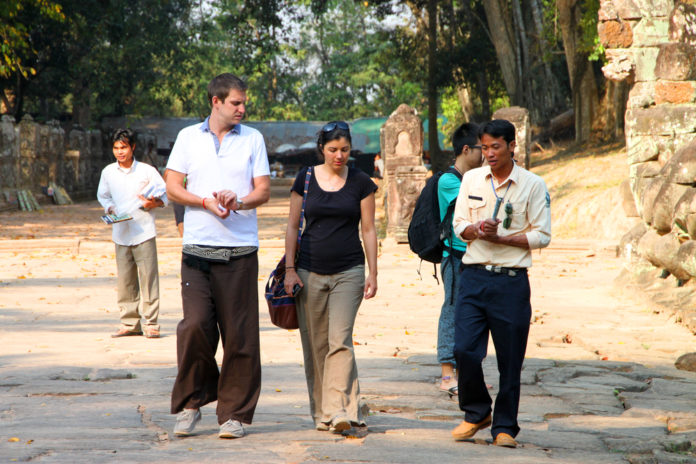
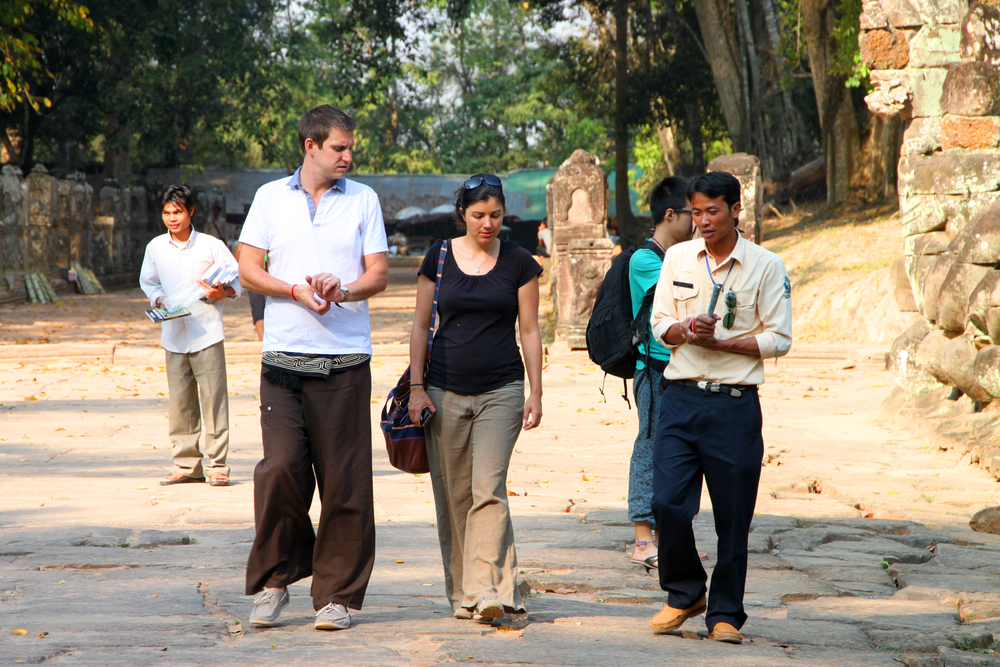
Tourists listening to Khmer local guide at Preah Khan in Siem Reap

Tourism industry stakeholders have welcomed a move by the Ministry of Tourism (MoT) to bridge the tourism skills gap in Cambodia.

The MoT has estimated that an additional 200,000 trained tourism professionals are needed to cater to the anticipated seven million foreign visitors in 2020.

To achieve this goal, a policy to promote vocational training for hotel and travel services has been developed. Twelve vocational training centres will be involved, offering a wide range of courses.

According to MoT deputy director general Try Chhiv, there are currently 620,000 Cambodians working in the tourism sector. But urgent training is needed to increase this figure to between 800,000 and one million.

Luu Meng, CEO of hospitality company Almond Group, agrees that there is insufficient skilled labour.

“We lack a lot of the skills and resources needed to meet tourist demand. We need to encourage all schools to invest in proper training, especially when it comes to language skills,” said Meng, who is also vice president of the Cambodia Tourism Federation.

The government is urging companies to invest in skills training at centres that meet ASEAN Economic Community standards so that professionals will gain regional recognition as well.

Jo Crisp, general manager of Peak Cambodia, agrees with the move, provided there is a “coordinated approach” and that quality training is provided.

As well, Amy McLoughlin, co-founder of tour operator Ayana Journeys, said: “We support any efforts to up-skill the Cambodian workforce, and are hopeful to see more confident and entrepreneurial bright sparks coming out of these centres.”

Malindo Air launches Kuala Lumpur-Chiang Mai flight

0

malindo-air

Malaysian carrier Malindo Air has launched daily direct flights from Kuala Lumpur to Chiang Mai, its second service to Thailand after Bangkok.

Flights depart from KLIA daily at 10.35 and arrives at Chiang Mai International Airport at 12.20 local time. The return service will then depart Chiang Mai at 13.40 and arrive at KLIA at 17.25. Flights take roughly 2 hours and 45 minutes.

A Boeing 737-800NG aircraft with a seat capacity of 162 – 12 business class and 150 economy class – will be deployed on the 1,762km route.

A third Malindo Air service to Thailand to Phuket is also set to launch on November 10.

Following in his footsteps

0

The best way for the people to honour the king’s exemplary life is to follow in his footsteps… A life goal of mine is to visit all the provinces in Thailand, tracing the king’s travels in each province.

nov_04_opinion

October 13 was a sad day for Thailand when King Bhumibol Adulyadej passed away at the age of 88. The beloved monarch reigned for 70 years with an almost legendary rectitude and devotion to his country. As a foreigner living in Thailand, I too felt the loss, and with my Thai family, mourn for the king’s death with the rest of the country.

A highly talented man, King Bhumibol was an avid jazz player, accomplished sportsman, keen photographer and innovative scientist. Also known as the World’s Development Monarch, he had undertaken many visits to rural areas throughout Thailand and initiated more than 3,000 projects in his lifelong support for opium elimination, poverty reduction and livelihood development.

Sumate Sudasna, managing director of CDM and president of Thailand Incentive and Convention Association, in his projection of the days ahead for Thailand tourism, thinks that King Bhumibol’s positive legacy and the many projects initiated and supported by the royal family will open up “a goldmine of attractions” for corporate travellers in their outreach programmes.

Not only that, I believe these royal projects can be sources of rewarding and educational experiences for general visitors to Thailand. While Thais are familiar with royal-associated attractions like Doi Tung and Doi Angkhang in the north or Doi Kham food products, to name just a few, not many foreign visitors are aware of these initiatives. Earlier efforts by the Tourism Authority of Thailand (TAT) to promote these projects were also more focused on the domestic market.

At the recent ITB Asia in Singapore, TAT revealed its latest plans to market the royal projects to the foreign audience. The greater publicity and promotion of the royal projects at the international level will definitely compel more foreign travellers to visit these sites, who through their visits will hopefully gain deeper insights into King Bhumibol’s dedication to the people and better understand the roots of Thais’ deep reverence for the late king.

Also worth mentioning is the Royal Park Ratchaphruek, a personal favourite of mine. First launched as a world-class horticultural expo from November 2006 to January 2007 to commemorate the king’s 60th anniversary of his accession to the throne, the breathtaking array of flora and landscaping at this 80ha attraction in Chiang Mai captivated me so much during my visit a decade ago that I was inspired to find out more about the king’s life. Today, this botanical gem is still as picturesque and alluring as ever.

That said, it will take time for Thailand to grief and recover from the loss of the nation’s guiding light, but I believe the best way for the people to honour the king’s exemplary life is to follow in his footsteps. And as I now call Thailand home, a life goal of mine is to visit all the provinces in the country, tracing the king’s travels in each single province, all 77 of them.

This article was first published in TTG Asia November 2016 issue. To read more, please view our digital edition or click here to subscribe.

Following in his footsteps

0

The best way for the people to honour the king’s exemplary life is to follow in his footsteps… A life goal of mine is to visit all the provinces in Thailand, tracing the king’s travels in each province.

nov_04_opinionOctober 13 was a sad day for Thailand when King Bhumibol Adulyadej passed away at the age of 88. The beloved monarch reigned for 70 years with an almost legendary rectitude and devotion to his country. As a foreigner living in Thailand, I too felt the loss, and with my Thai family, mourn for the king’s death with the rest of the country.

A highly talented man, King Bhumibol was an avid jazz player, accomplished sportsman, keen photographer and innovative scientist. Also known as the World’s Development Monarch, he had undertaken many visits to rural areas throughout Thailand and initiated more than 3,000 projects in his lifelong support for opium elimination, poverty reduction and livelihood development.

Sumate Sudasna, managing director of CDM and president of Thailand Incentive and Convention Association, in his projection of the days ahead for Thailand tourism, thinks that King Bhumibol’s positive legacy and the many projects initiated and supported by the royal family will open up “a goldmine of attractions” for corporate travellers in their outreach programmes.

Not only that, I believe these royal projects can be sources of rewarding and educational experiences for general visitors to Thailand. While Thais are familiar with royal-associated attractions like Doi Tung and Doi Angkhang in the north or Doi Kham food products, to name just a few, not many foreign visitors are aware of these initiatives. Earlier efforts by the Tourism Authority of Thailand (TAT) to promote these projects were also more focused on the domestic market.

At the recent ITB Asia in Singapore, TAT revealed its latest plans to market the royal projects to the foreign audience. The greater publicity and promotion of the royal projects at the international level will definitely compel more foreign travellers to visit these sites, who through their visits will hopefully gain deeper insights into King Bhumibol’s dedication to the people and better understand the roots of Thais’ deep reverence for the late king.

Also worth mentioning is the Royal Park Ratchaphruek, a personal favourite of mine. First launched as a world-class horticultural expo from November 2006 to January 2007 to commemorate the king’s 60th anniversary of his accession to the throne, the breathtaking array of flora and landscaping at this 80ha attraction in Chiang Mai captivated me so much during my visit a decade ago that I was inspired to find out more about the king’s life. Today, this botanical gem is still as picturesque and alluring as ever.

That said, it will take time for Thailand to grief and recover from the loss of the nation’s guiding light, but I believe the best way for the people to honour the king’s exemplary life is to follow in his footsteps. And as I now call Thailand home, a life goal of mine is to visit all the provinces in the country, tracing the king’s travels in each single province, all 77 of them.

This article was first published in TTG Asia November 2016 issue. To read more, please view our digital edition or click here to subscribe.