TTG Asia
Asia/Singapore Saturday, 11th April 2026
Page 1723

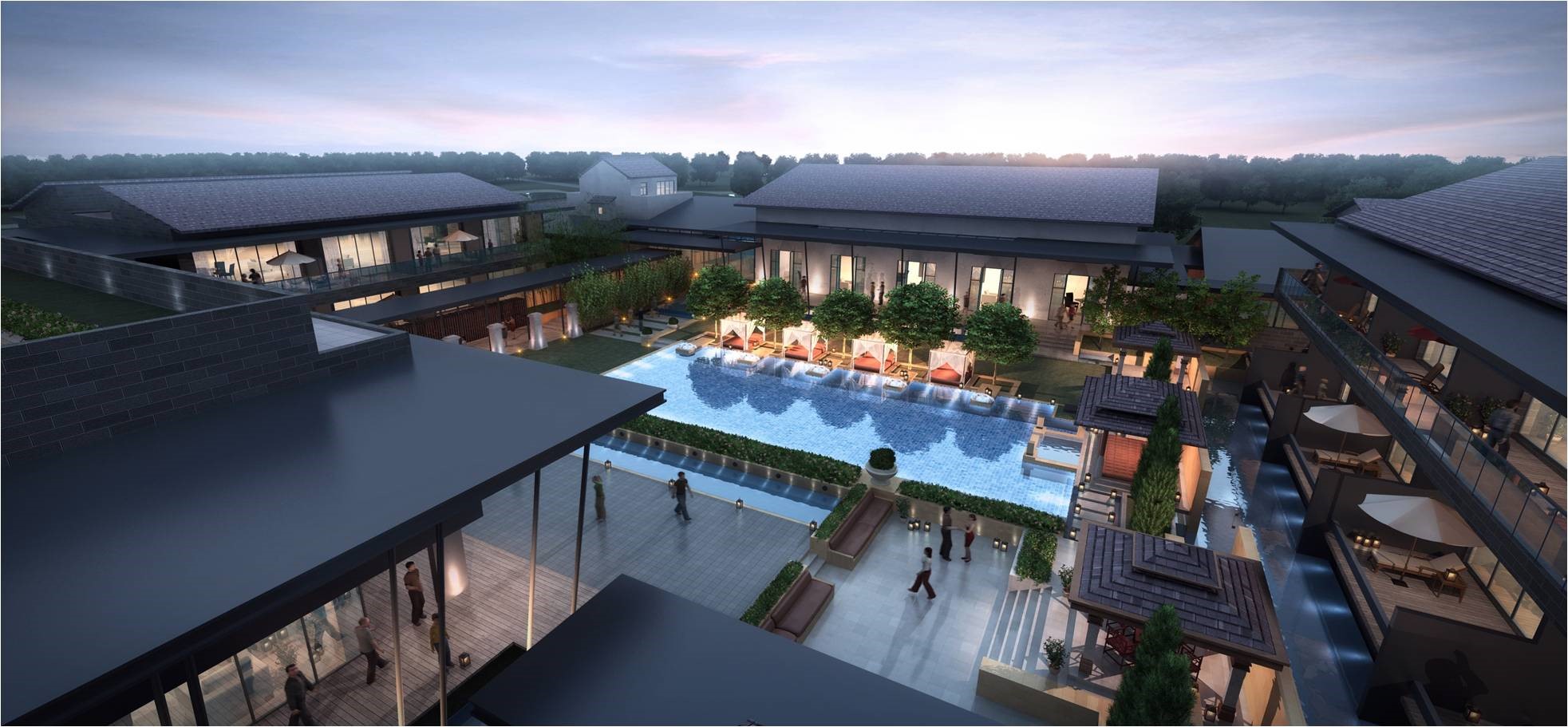
Undersea-themed resort planned for Palawan riles masses, developer responds

0

coral-world-park-2
Coral World Park concept art

Plans to develop the Nickelodeon Resort and Attraction in Coron, Palawan was met with strong opposition from the travel trade, environmentalists and the general public, thousands of whom made their displeasure known in online petitions in just two days.

AA Yaptinchay, general manager of Kirschner Travel Manila, which offers marine wildlife tours in Palawan, said: “Tourists have been enjoying Palawan’s nature as the main attraction. We want to feature Palawan as the Philippines’ last frontier, naturally perfect as it is.

“A monstrous construction like the Nickelodeon theme park will only degrade this environment and present it ‘artificially’. There is no point in doing that except to profit from its exploitation,” continued Yaptinchay, who is also the founder of Marine Wildlife Watch of the Philippines.

Al B Linsangan III, president of Palawan-based Calamianes Expeditions & Ecotours, said she found the development to be a “weird idea”.

Believing that Palawan should be a destination of natural wonders, he urged: “Do not reinvent the natural and exotic experience (in Palawan).”

But there has been a misunderstanding, according to a statement released yesterday afternoon by Coral World Park Undersea Resorts (CWP), partner of Viacomm International Media Network for the Nickelodeon Resort and Attraction.

CWP marketing and communications director, Susan Lee, said: “There has never been any form of communication from our side mentioning a theme park. Our plans are to build a resort and attraction, which we are designing as an undersea attraction with an ocean conservation focus”.

The release said that “the ‘undersea themed’ CWP is land-based and designed to meet the international standards” and “the only infrastructure in the water is floating and all developments are on land”.

The facility is sited on a private property and will undergo all the necessary approvals from the government before construction starts, according to the release.

AirAsia ups services from KL to three Indonesian cities

0

airasia-klAirAsia planes at KLIA2

From January 26, 2017, AirAsia will increase its frequency from Kuala Lumpur (KL) to the Indonesian destinations of Yogyakarta, Lombok and Pekanbaru, in Riau.

These additional flights will be operated by Indonesia AirAsia, bringing up the total weekly frequency to 21 from 14 for both the KL-Yogyakarta and KL-Lombok routes, and from 10 to 17 flights weekly for the KL-Pekanbaru route.

The existing three sectors are currently served by AirAsia Malaysia.

Iwan Kamaruddin, commercial director of Indonesia AirAsia, expects the additional flights to yield a growth of 30 per cent in international arrivals to Indonesia.

He elaborated: “These three routes operated by Malaysia AirAsia have recorded a significant growth of demand and the seat load factor has reached an average of 90 per cent. We hope that the additional frequencies will bring more international arrivals to Indonesia from our hub in Kuala Lumpur.”

Thai beaches still hot for Chinese New Year despite floods in south

0

koh-samui-coral-cove-thailand
Coral Cove, Koh Samui

Although much of southern Thailand is facing its worst flooding problem in three decades, forward bookings for Phuket and Koh Samui are still looking strong for the upcoming Chinese New Year.

Twelve southern provinces have been hit by severe floods since late December 2016, with 25 people confirmed dead. The floods have also damaged five government installations, 218 roads and 59 bridges, causing problems for land travel to the south.

But with air travel to main resort destinations unaffected, it is business as usual for tourism in Phuket and Koh Samui.

According to Tourism Council of Phuket president Bhuritt Maswongsa, Phuket’s hotel sector has not suffered, with average hotel occupancy estimated at 85-95 per cent in January and forward bookings for the Chinese New Year period almost full.

Over in Koh Samui, which saw 30 per cent of reserved rooms cancelled, forward bookings for the Chinese New Year period still translate to around 90 per cent, stated Bannasat Ruangjai, president of the Tourism Association of Koh Samui.

Seni Puwasepphawong, managing director of Coral Cove Chalet Samui, added that tourism operators were confident that the situation would bounce back at the end of January due to good levels of forward bookings.

But he expressed frustration over chronic flooding on the tourist island due to blockage of natural waterways, and urged the authorities to “have a good city plan to solve the problem for good”.

Krit Prapharasnikorn, managing director of President Hotel Hat Yai, did not observe any direct impacts from the flood on Hat Yai tourism. He added the media might have misrepresented the flood situation to make it seem like travel to the south was impossible.

Multi-generational travel on the rise for Chinese families

0

chinese-family-travel

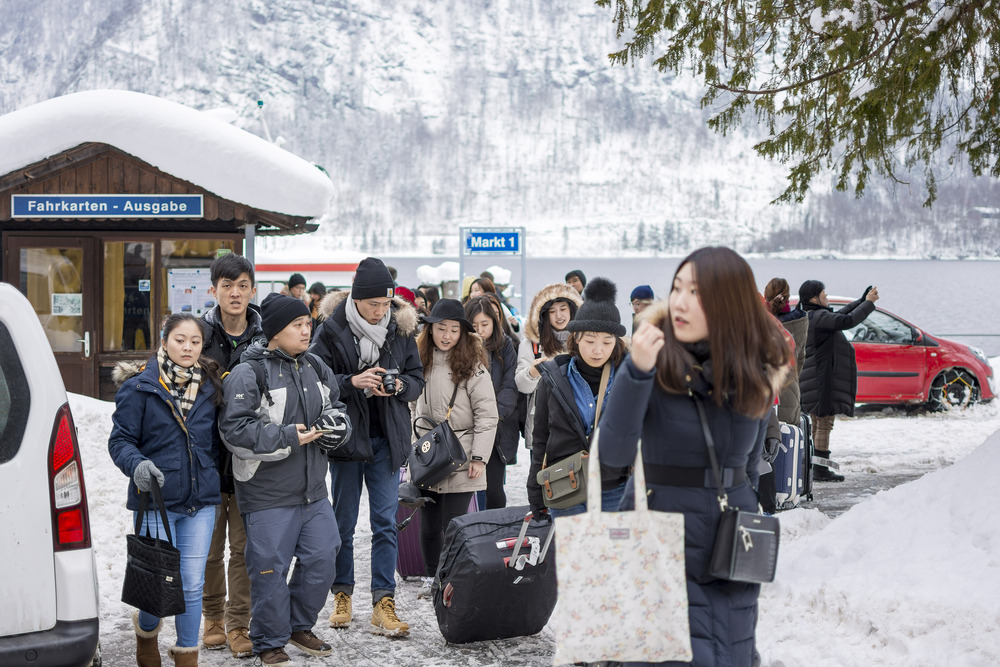
Travel search engine Wego.com has highlighted the growing trend of Chinese adult children travelling with elderly family members, especially as many of these young professionals have either relocated to first-tier cities such as Beijing or Shanghai, or have moved to other countries for their careers.

James Huang, market development manager, Wego, North Asia said: “Young Chinese professionals are taking the lead in travel planning and bookings for their parents and extended family to maintain the limited time they spend together.”

Chinese New Year thus presents a favourable opportunity for family travel, as adding annual leave to the Spring Festival holiday will translate into one of the longest continuous break for many Chinese executives. Long weekends are also becoming a popular time for outbound family travel.

Huang has also noticed an emerging trend of young professionals flying out their family to where they are based or to other destinations to spend quality time together.

“Young professionals living away from home are willing to spend more money to ensure their ageing parents especially travel in comfort by booking full-service flights for them. They prefer family-friendly hotels close to public transport in modern cities such as Tokyo and London,” said Huang.

“For destinations outside of Asia, they’ll select hotels who cater to Chinese tastes with familiar meals such as congee or hotpot, as elderly family members are less likely to adapt to Western food,” he added.

Amid changing market trends, Huang also urged a redefinition of the Chinese family segment to beyond that of younger families with small children in oder to pave for new opportunities and creative offerings.

“Hotels can incorporate local menus and larger, more comfortable road transfers, and airlines might consider flexible flight packages designed for three to suit an older family unit that includes options for premium economy seats (for older parents) and economy for an adult offspring,” he suggested.

CEO of Pan Pacific Hotels Group leaves

0

bernold-schroeder

Pan Pacific Hotels Group (PPHG) has announced the resignation of CEO Bernold Schroeder, with effect from January 1, 2017.

Schroeder, who has been with the group for three years, will be pursuing other interests. The appointment of a new CEO will be announced before the end of February, the company said in a statement.

In the interim, Gwee Lian Kheng, group chief executive of UOL Group (PPHG’s owning company) will oversee the management of the company.

HK’s Travel Expert inks inventory deal with JacTravel

0

jactravel-logo

One of Hong Kong’s largest agencies has partnered UK-based B2B wholesaler JacTravel to connect to its global accommodation inventory.

This agreement will give Travel Expert, a 40-year FIT specialist firm with 60 retail branches and 700 staff, access to over 12,000 directly-contracted hotels under JacTravel’s portfolio, in addition to an aggregated portfolio of over 130,000 properties worldwide.

Alfred Kam, Travel Expert’s COO, said: “JacTravel has a broad selection of city centre hotels in major destinations around the world, which will enhance our offer.”

Agents sold on standardised sales periods in Malaysia

0

malaysia-sale

Inbound agents are hopeful that the government’s recent decision, which limits the number of sales periods to four times annually, will maintain the uniqueness of the events and enhance Malaysia’s appeal as a shopping destination.

Put into place from January 1, 2017, the three sales periods as gazetted by the government will be the New Year Sale from March 1 to 30, Mega Carnival Sale from June 15 to August 31 and the Year-end Sale from November 1 to December 31. Traders are allowed to set a fourth period of their choice to hold another sale on their own.

All sales must have a minimum discount of 10 per cent according to the new regulation.

Abdul Rahman Mohamed, general manager at Mayflower Holidays, said: “It will make it easier to plan a group, especially from regional markets and China, to coincide with the sales periods.”

Nigel Wong, director of Urban Rhythms Tours, Adventures & Travel, said the new regulation now makes shopping sales “a tourism event”. But to strengthen Malaysia’s branding as a shopping destination, he pointed out that retailers too have a part to play to ensure quality and genuine sales.

Concurred Raaj Navaratnaa, general manager, New Asia Holiday Tours & Travel: “It is also important to ensure that branded goods have good discounts as Malaysia is also competing with Singapore’s shopping sales where branded goods can go as low as 70 per cent.”

But a current weak ringgit will work in Malaysia’s favour as accommodation and shopping will comparatively offer more value for money for inbound tourists, he added.

Singh joins Marco Polo Hotels – Hong Kong as hotel manager

0

Marco Polo Hotels has appointed seasoned hotelier Dalip Singh as hotel manager of its three Hong Kong properties – Marco Polo Hongkong Hotel, Prince Hotel and Gateway Hotel.

In his new role, Singh will be assisting the general manager to oversee the operational departments of the three hotels. He will also be managing the day-to-day operations, focusing on maintaining product and service standards across all departments in the hotels.

Dalip Singh

Singh previously served as the managing director of KOP Properties where he was responsible for strategic growth and positioning of the company’s business units.

Singh has held senior management positions for over 20 years in hotel groups in his native Singapore, as well as Malaysia and Dubai, including The Ritz Carlton, Millenia Singapore, Dusit Residence Dubai Marina and Pangkor Laut Resort.

Let personalities do the talking

0

To see, hear, and feel the locals’ emotional, cultural and spiritual connection to the land allows the Balinese personality, character and essence to shine more than any destination branding or marketing efforts.

jan_xinyi

I’m in two hearts over Bali, where I just spent a four-day break last month. I could easily see why this famed vacation island is a darling among travellers, with its beguiling charm and cultural energy, the people’s easy smiles and warm hospitality, lush rice terraces, and astounding temples dotted across a volcanic landscape.

Yet I couldn’t help but feel a tad miffed at the congestion on the roads as well as in the many hip lifestyle cafes and restaurants mushrooming across the island. In Ubud, Bali’s cultural heart, I was disappointed to find snaking traffic, tour buses emptying day trippers onto the narrow streets and terraced paddies, and macaques and humans jostling for each other’s attention in the Monkey Forest.

The Klungkung regency in eastern Bali, on the other hand, where I stayed at the newly opened Wyndham Tamansari Jivva Resort for two nights, offered a rustic sense of solitude. Come evenings, locals are seen relaxing on the black sand beach, some playing a game of football, others line fishing for snappers, while laughing kids lunge into the breaking waves.

Klungkung’s vibe is still palpably raw, honest and not yet pandering to the mass preferences of tourists. But for how long, I wondered. The plot of land adjacent to Wyndham is already marked for a Marriott.

But I could also see how the foray of an international hotel into a previously undeveloped area for tourism also brings with it economic and employment opportunities for the locals. Several hospitality staff I spoke with told me they no longer had to make the long daily commute to resorts in southern Bali, as the new Wyndham property offers work closer to their homes, something they very much prefer.

Although the effects of mass tourism on Bali are undeniable, what I also find remarkable is its unique culture and artistic way of life which, like the omnipresent Hindu gods overseeing the island, is still alive and thriving.

Balinese’ personal lives still appear to be very much influenced by local customs and Hindu traditions. While sharing about our personal lives, my driver Goesmank told me expenses was a major deterrent for him in not wanting more than two children. “Balinese have too many ceremonies each month, during full moon, no moon, and we still need to offer special black ducks too. I have no money left!” he exclaimed. We all laughed.

Now, that’s the real Bali for me – to see, hear, and feel locals’ emotional, cultural and spiritual connection to the land, which allows the Balinese personality, character and essence to shine more than any destination branding or marketing efforts.

And no doubt, it’s also this rich, complex and diverse nature of South-east Asia’s people, geography, history and culture that compel visitors to return to South-east Asia time and again, a constant theme for the 50 tour operators who share their most memorable travel experiences in ASEAN (see pages 9-12). This marks the first of our dedicated ASEAN@50 features in each issue this year to commemorate ASEAN’s golden jubilee in 2017, so look out for other interesting stories to come!


This article was first published in TTG Asia January 2017 issue. To read more, please view our digital edition or click here to subscribe.

A taste of finer things

0

Already renowned as a food destination with myriad dining options from hawker fare to celebrity restaurants, Singapore’s Michelin debut is just the icing on the cake in luring visitors, discovers Paige Lee Pei Qi

STB-Singapore

Singapore’s reputation as a thriving dining city was further elevated with the launch of its first Michelin Guide last year, which cemented the city’s honour of being the first and only country in South-east Asia to be covered by the guide.

Not only is Singapore the first South-east Asian city to boast two hawkers with the coveted Michelin star, it is also home to the world’s most affordable Michelin-star meal – Hong Kong Soya Sauce Chicken Rice and Noodles, rated one star, offers dishes from just S$2 (US$1.40).

Such attractions make compelling drawcards for tourists to Singapore, and tour operators in Singapore are quick to seize the Michelin buzz as marketing opportunities.

Fred Seow, senior vice president of marketing & B2B at Asiatravel.com, said: “This Michelin Guide will give us good mileage in the Singapore brand story. It is a clear recognition of our overall F&B standards and not just the credited restaurants. It also demonstrates our originality and creativity so this means we are an exciting place even when food, a basic need in travel, is concerned.”

Star Holiday Mart has since included several Michelin-listed restaurants and hawker stalls in some of its tours, a move that general manager Dominic Ong said has boosted the appeal of their packages due to the strong recognition of the food guide among global travellers.

Even for visitors who are not drawn to Singapore for its food, the city’s F&B offerings can still be “a great complement to their trip”, Ong opined. To encourage repeat visits, he suggests promoting more gourmet restaurants in the city to international travellers.

Also seeing a “good selling point” in the Michelin Guide, GTMC Travel CEO Samson Tan intends to include the newly crowned Michelin-star dining experiences in his packages, but will wait for the hype to die down before officially selling them. “There are too many long queues for the hawker stalls,” he said.

Such recognition naturally lends a hand in the Singapore Tourism Board’s (STB) destination marketing efforts. Said Ranita Sundra, director of attractions, dining and retail at STB: “This guide further reinforces Singapore’s standing as Asia’s hub for culinary excellence and encourages the growth of gastro-tourism by further elevating awareness and interest in our diverse dining options.”

But with or without the Michelin gastronomic guide, Sundra pointed out that the Lion City is already home to a dynamic array and diversity of dining experiences in culinary hotspots such as Arab Street and Tiong Bahru Market.

She said: “We also emphasise the experiential epicurean adventures available there. For instance, food lovers can enjoy a duality of dining experiences in unexpected places, like Bincho (in Tiong Bahru Market). It is a mee pok stall by day that transforms into a yakitori omakase restaurant at night.”

To heighten awareness of Singapore’s booming dining scene, Sundra said that STB has been supporting food programmes like the recent debut season of reality TV MasterChef Asia, which showcases Singapore’s culinary diversity, from street food to fine dining.

Meanwhile, Karni Tomer of walking tour operator Wok ‘n’ Stroll sees food tours as opportunities to introduce foreign visitors to bona-fide cultural experiences in Singapore.

“We don’t only eat during our food tours. We also guide tourists through the country’s food culture and tell them the story of Singapore through food,” said Tomer, citing examples of 
walking food tours that go into a heritage enclave boasting Indian and Chinese temples or visit a TCM shop stocked with herbs.

“Culinary tours are a big trend, especially in the past year. It is a great boost to the tourism industry as people are looking for more ways to feel the local experience.”

This article was first published in TTG Asia January 2017 issue. To read more, please view our digital edition or click here to subscribe.