TTG Asia
Asia/Singapore Tuesday, 7th April 2026
Page 1714

FIT Ruums devises new programme to reward agents

0

fit-ruum

FIT Ruums, Webjet’s new B2B travel distributor in Asia, has unveiled a new rewards programme.

The programme allows travel suppliers, including NTOs, to directly incentivise and educate agents with a series of rewards such as lifestyle products, hotel stays, bespoke event invitations and fam trips. Rewards can also be tailored to the individual needs of each market.

“FIT Rewards creates a platform for our supplier partners to launch their new products, allowing more targeted product penetration, education and adoption by their key bookers in the travel trade,” said Daryl Lee, director of FIT Ruums’ parent company, WebBeds FZ.

A series of online stores, similar to the iTunes Store, will be created for each Asian market, further enhancing the suppliers’ ability to target their local clients.

Kok Sheng Sun, chief commercial officer of FIT Ruums, said: “We anticipate high demand from the agent community, and look forward to unveiling an exciting new range of products and activities, and expanding our online reward stores across Asia in the coming months.”

To celebrate the launch of FIT Rewards, travel agents who sign up FIT Rewards before January 31, 2017 will receive 1,000 bonus FIT Points. Every booking made before the end of January 2017 will earn the member an additional 500 FIT Points.

FIT Ruums will also reward the travel agency that makes the most bookings in January 2017 with rebates of 50 per cent off its booking values.

For more information, please visit rewards.fitruums.com.

Daley takes on new deputy CEO, Asia-Pacific role at AccorHotels

0

AccorHotels has appointed Louise Daley as deputy CEO, Asia-Pacific, on top of her current role as CFO, Asia-Pacific.

In her new role, Daley will work closely with chairman and CEO Michael Issenberg and the executive team, while continuing to oversee AccorPlus, focusing on growing the business portfolio under AccorPlus, Accor Vacation Club and concierge services.

Louise Daley

Since June 2015, Daley has served as executive vice president and CFO, Asia-Pacific. Previously, she assumed the role of CEO, Accor Advantage Plus (now Accor Plus) in 2011, helping to grow the business to 45 sales offices in 11 countries and expanding membership by over 30 per cent.

Daley has been with AccorHotels for 26 years, having commenced her career in Australia before relocating to Bangkok in 2002 as general manager, finance for AccorHotels Asia. In 2005, she returned to Australia as CFO for AccorHotels Pacific. She is based in Singapore since 2011.

Celebrity Cruises names new sales and marketing head for Asia

0

Celebrity Cruises has appointed Apple Woo as head of sales and marketing for Asia.

Based in Singapore, she will work alongside the company’s travel industry partners in Asia to support their business development efforts, build awareness of Celebrity Cruises’ luxury positioning and attract more affluent holidaymakers.

Apple_Woo

She will report to Celebrity Cruises’ vice president and managing director, Asia, Jo Rzymowska, who recently added Asia on top of her UK and Ireland portfolio in end 2016.

Prior to this appointment, Woo has worked with luxury hospitality brands such as Jumeriah and Mandarin Oriental in South-east Asia and Dubai.

Quality over quantity in tourism, trade urges Asian NTOs

0

tourists-in-cambodia
European tourists sightseeing in Cambodia

Countries such as China, Japan and South Korea may already dominate the visitor tables of many South-east Asian countries, but the trade thinks more can still be done to attract high-end leisure travellers and nurture the FIT market coming into the region.

Sreat Mom Sophear, director of Sophiya Travel and Tours Cambodia, said while Chinese visitors are the country’s second highest market, the European market, which lags, is of more value.

She said: “It’s not just about numbers, it’s about the value of each tourist. The North Asian market tends to do more repeat visits and come more for shopping, whereas for the European market it will be a once-in-a-lifetime trip so they have a higher budget.”

Dong Hoang Thinh, managing director of Dong Travel in Vietnam, echoes her sentiments, saying the FIT market in these countries needs to be targeted more on a national level.

Said Dong: “(China) is a particularly hard market to break. It is very competitive, there are communication barriers and they tend to use their own operators, who organise specific hotels and tours.”

Sokhom Thok, director of international cooperation and ASEAN at Cambodia’s Ministry of Tourism, said efforts are being made to welcome higher spending Chinese tourists.

These include the signing of a tourism development agreement between the ministry and China’s Shanghai Spring International Travel Service Group and the launch of the China Ready Centre to determine the demands of Chinese tourists, as well as train Cambodian tourist operators’ Chinese language and cultural skills.

It is also hoped that plans to host ASEAN travel forums in China, Japan and South Korea this year, showcasing the region’s attractions, will lure more high-end travellers.

Cambodia is not alone in its quality visitor aim, with Vietnam also shifting its focus for the Chinese market. “China is one of the most important markets in Vietnam but now we need to focus on quality rather than volume,” said Ha Van Sieu, vice chairman, Vietnam Administration of Tourism (VNAT).

China and Vietnam have just entered into an MoU this month to foster visitor exchange, while VNAT will train more tour guides in Chinese and carry out marketing campaigns in China directed specifically at the segment.

As Myanmar’s Ministry of Hotels and Tourism gears up to embrace tourism countrywide, union minister Ohn Maung says attracting “quality” tourists is top of the agenda but tour operators need to lead the way.

He said: “We are focusing on the Western market but will not neglect the East; however, we want quality. Tour operators can choose the rates and lead the market so we get this quality.”

Ascott scales up in China, makes key appointments

0

citadines_qingshan_scpg_centre_wuhan
Citadines Qingshan SCPG Centre Wuhan

The Ascott has secured contracts to manage six properties with over 1,200 apartment units in China, expanding its presence in Changsha, Shenzhen, Tianjin and Wuhan while extending its footprint to two more cities – Handan and Xuzhou.

Of the six new serviced residences secured in China, Citadines Sunhope e-Metro Shenzhen, Ascott’s largest property in China, is slated to open this year. Citadines Qingshan SCPG Centre Wuhan and Tujia Somerset Jundu Tianjin are scheduled to open in 2018 while Ascott Xiangjiang FFC Changsha, Citadines Yunlong Lake Xuzhou and Tujia Somerset Congtai Handan will start operations from 2019.

The Singapore company is also poised to boost its fee income with record opening of over 30 properties worldwide this year, of which 16 will be in China.

Lee Chee Koon, CEO of Ascott, said: “Ascott crossed the 50,000-unit milestone last year, and there will be no let-up in our efforts to build up Ascott’s global scale and accelerate our growth in 2017. We clinched a record 10,000 units in 2016 and this is expected to contribute S$25 million to S$30 million of fee income to Ascott annually as the properties progressively open and stabilise.”

Tan Tze Shang, Ascott’s newly appointed managing director for China, said Ascott’s investment in Chinese online apartment sharing platform Tujia has propelled their growth and reach in the country. “Since the launch of our Tujia Somerset brand last year to tap on the booming middle-class segment, we have secured 11 properties and surpassed our 2016 target of 2,000 units under this brand,” he said.

He added that Ascott has set a goal of 20,000 units in China by 2020, up from its current 17,300 units in 96 properties across 27 cities. Last year, Ascott opened 14 properties in China, adding over 2,000 units to its portfolio.

Ascott is targeting 80,000 units worldwide by 2020 and has appointed Kevin Goh as COO to assist the CEO in overseeing operational aspects of the business and new growth opportunities, especially relating to its digital and online strategy.

Prior to this, Goh was Ascott’s managing director for North Asia since 2013, responsible for investments and operations in China, Japan and South Korea. He was the former regional general manager for Greater China and vice president for business development.

Middle East markets to Asia rosy on Gulf carriers’ growing network

0

emirates

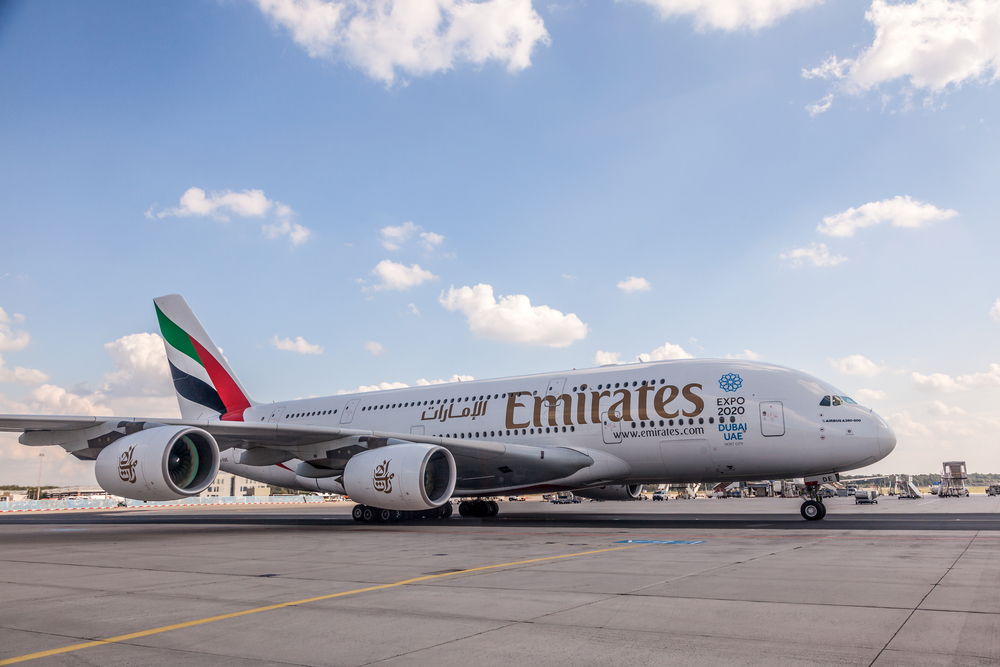
Travel agents specialising in the Middle Eastern markets are upbeat about business at the recent ATF 2017, all thanks to Gulf carriers’ continuous foray into Asia-Pacific.

They told TTG Asia that demand for South-east Asian packages are expected to rise this year, as more destinations in the region become easily accessible.

Ousama Al-Hosni, general manager of Kuwait-based Sham Tours & Travel, pointed to Thailand, Malaysia and Singapore as his star destinations, and added that interest in the Philippines is on the rise due to improving air connectivity.

Carriers that offer direct connectivity between Kuwait and Manila include Kuwait Airways and Cebu Pacific, with the former launched last year.
Ousama says outbound to the Philippines from Kuwait will rise further as more travellers come to know about the destination’s draws.

Manju Manchanda, director of Venture Planet in Sharjah, said her volume into Asia has “definitely grown” by at least 20 per cent over the past year as a result of new air links and availability of competitive fares.

Family groups and FIT travellers are especially fond of Asia, according to Manchanda who named Singapore and Malaysia as top favourites for their Muslim-friendly facilities.

“(Being able to) accommodate the dietary requirements of Middle Eastern travellers… is a big thing,” she said.

Manchanda intends to step up promotions of packages for Vietnam this year, leveraging Emirates’ new flights to Hanoi which commenced in August 2016.

Singapore-based Discovery Holidays, managing director, Rodney Yew, who specialises in the Middle Eastern market and whose company is auguably the city-state’s largest Iranian handler, said he draws many repeat travellers who favour Singapore’s easy access and constantly rejuvenated attractions.

According to Yew, the typical Middle Eastern traveller would pair Singapore with either Malaysia or Indonesia.

New opaque booking site wants to unlock hotel deals, revenue

0

song-eu-jin
Song: Staydilly to boost hotels’ occupany rates

Competition in the online booking space just got stiffer with the entry of new hotel distribution channel Staydilly, which touts to improve hotels’ RevPAR while offering travellers access to premium hotels at lower prices.

Launched in mid-October 2016, Staydilly is an opaque distribution channel that offers rooms from three- to five-star hotels at heavily discounted prices, by providing actual property photos, general location and facilities description. The hotel name, however, will only be revealed and made known to the traveller upon confirmation of booking.

CEO Song Eu Jin sees Staydilly as a channel to enhance hotels’ occupany rates and fill up rooms that would otherwise be left vacant. “We help hotels to sell a portion of their projected idle inventory and enable hoteliers to avoid price compression,” he told TTG Asia.

And by not revealing the property name until the booking is confirmed, hotels will be able to protect its branding efforts, Song remarked. Rates on Staydilly are also 30-40 per cent cheaper than the popular OTAs in the region, he added.

Song thinks what Staydilly is bringing to the table will benefit the industry as a whole, as the “mystery shopping model” offers an incremental solution to overcome the perennial RevPAR issue that’s afflicting many oversupplied cities in Asia.

“Increase in hotel rates need to come from increase in occupancy first,” he remarked, urging hoteliers to take back more control over their rates.

“Hotel rates currently work inversely to airfares, which is counter intuitive in my opinion. Shouldn’t hotels be charging top dollar (nearer the date of travel)?” he questioned.

When asked if Staydilly, as an alternative booking channel, will counter against hotels’ direct booking mission, Song stated: “We are not going after the same customers.

“Our target will be brand-agnostic customers who are less brand loyal but yet still seeking value and quality in their hotel stays,” he added. “I foresee us being a bigger challenge to last-minute booking apps instead.”

Staydilly is already “seeing good traction” with over 200 hotels signed up in Thailand, Malaysia and Indonesia. The company has just signed on its first hotel in Myanmar and is venturing into Vietnam next. Its target is to be present across all South-east Asian countries by the end of 2017.

However, Song also readily admits that cities like Singapore and Hong Kong, which have the region’s highest room rates, will pose the biggest challenge to Staydilly’s penetration in these markets.

Ex-Garuda chief, Thai Airways named in Rolls-Royce bribery case

0

thai-airways

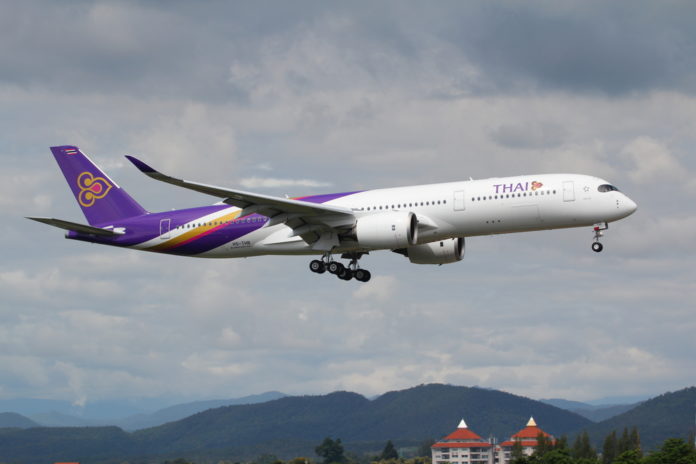
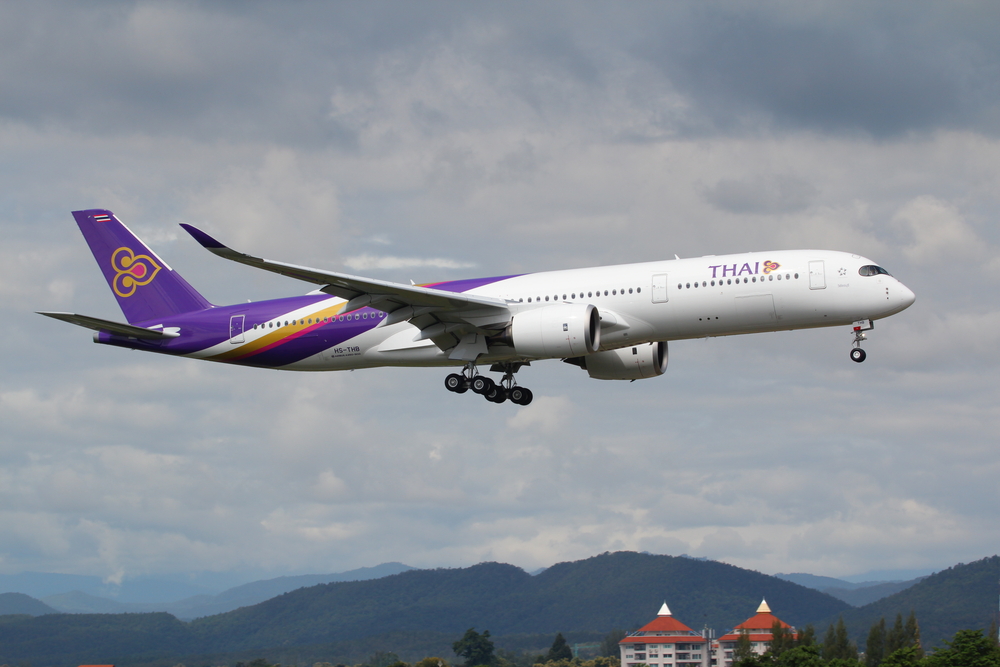
Emirsyah Satar, former Garuda Indonesia chief, has been named a suspect in a case of bribery-for-contracts by Rolls-Royce that has indicted other airlines including Thai Airways International (THAI).

Rolls-Royce recently admitted to the UK’s Serious Fraud Office on bribery for the procurement of Rolls-Royce jet engines in several countries such as Thailand from 1991 to 2005.

Emirsyah is one party alleged to have received benefits in exchange for procuring Rolls Royce engines for the Garuda’s Boeing aircraft, and the case is being handled by the Indonesia Corruption Eradiation Commission (KPK).

Speaking to the media in Jakarta, Laode Syarif, deputy chairman of KPK, said: “(The suspect) has received from SS (another suspect) 1.3 million euros (US$1.4 million) and US$180,000 in cash and US$2 million in goods.”

Benny Butarnutar, Garuda’s vice president corporate communications, stated that KPK’s investigation was not on the national airline. “It’s about the act of an individual,” he stressed, while stating that the carrier will fully cooperate in the investigations.

He added that as a public company, Garuda has its own mechanisms in running businesses, starting from the implementation of good corporate governance to transparency in providing information.

KPK confirmed that this was a personal case and not a corporate one.

And in Thailand, some US$36 million in bribes and incentives had reportedly been paid to intermediaries, including state agents and employees of THAI, to help Rolls-Royce win lucrative engine deals.

THAI released a statement saying it has set up a special task force for investigation of past engine procurement and another for corruption prevention.

Kuoni contract manager Asia leaves and goes on his own

0

darrenlancaster_jpg_jpeg
Lancaster: More room to shape own company

Kuoni UK contracts manager-Asia, Australasia, cruise, Darren Lancaster, has left the company after a decade to set up his own company, One World – Travel Sales & Marketing.

Lancaster said of his move: “I was with Kuoni for 10 years, primarily contracting Asia on behalf of Kuoni UK, but also within that three years were spent contracting additionally on behalf of the other European outbound Kuoni offices. As such, I have a wide spread of knowledge of the European market to Asia.

“Kuoni is a great company that has taught me so much, so it was a very hard decision to leave. But after 10 years there I decided that I wanted to put the knowledge that I had built up contracting Asia to wider use.

“In effect this means I no longer work to grow business to Asia for just one outbound operator, but instead I work hand in hand with many operators across the UK to support them in growing their business to Asia.”

Being on his own also means he can have control over choice of partners, working with those that appeal to the UK and European markets.

Lancaster said: “If I don’t think a partner is right for the UK and European markets, I will advise them so and not take their money. Secondly, running my own company gives me the freedom to direct the future size and shape of the company in the way I want it, at the pace I want it.”

Currently, these partners include The Diamond Cliff Resort & Spa, Phuket; The Soori Bali, The Elysian and the Bulgari Resort Bali; and Naman Retreat in Vietnam. But Lancaster is particularly keen to grow his company’s presence in Thailand, thanks to “a long history of very productive and profitable relationships between partners and UK-based representatives”.

“I also plan to expand the representation outside of the UK, to include more European source markets. This will allow me to deliver a more coordinated pan-European approach to my clients, which they have been asking for already,” he told TTG Asia.

Meanwhile, Jennie Moore has replaced Lancaster at Kuoni UK.

Vietnam gains new LCC connections to Singapore, Australia

0

hcmc-vietnam
Ho Chi Minh City

Vietnam has received two new connections from three cities, courtesy of VietJet and Jetstar.

VietJet will commence operations between Singapore and Hanoi on April 27, 2017. The daily flight will depart Singapore at 14.55 and arrive in Hanoi at 16.50. The return leg will depart Noi Bai International Airport at 10.00 and arrive at Changi Airport at 13.55. Flight time will take just under three hours.

This is VietJet’s second route connecting Vietnam and Singapore, after Ho Chi Minh City. The airline is also planning to connect Singapore with Dalat and Danang in the future.

As well, Jetstar has announced two new direct flights routes from Melbourne and Sydney to Ho Chi Minh City.

Thrice-weekly flights from Melbourne will begin on May 10, 2017 while four-times weekly flights from Sydney will commence on May 11 , 2017, subject to government and regulatory approval. Both sectors will be operated with a Boeing 787 Dreamliner.