TTG Asia
Asia/Singapore Friday, 2nd January 2026
Page 1704

Growing access opens Pandora’s box

0

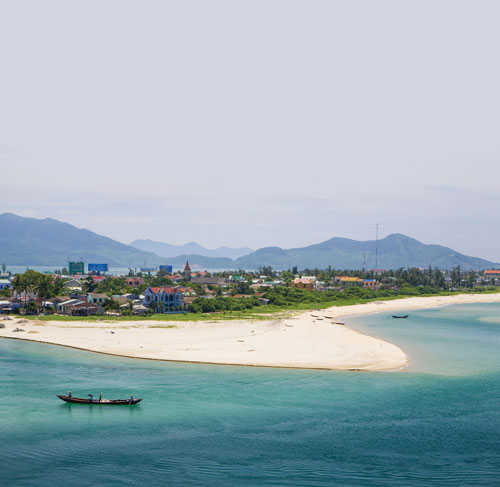
Improved accessibility has brought greater visibility to Vietnam’s central coast alongside other issues.
oct-21-vietnam

An increase in international flights into Danang is allowing Vietnam’s central coast to better hold its own alongside Hanoi and Ho Chi Minh City, but the strengthening appeal is also bringing a new set of challenges for the Vietnamese trade.

In May, Bangkok Airways began four-times-weekly Bangkok-Danang service and Vietnam Airlines followed quickly on its heels with the launch of the same route.

Travellers responded so well to this that Bangkok Airways – barely three months into the launch – was already in discussion with Danang International Airport about potentially increasing the frequency of the service, a source told TTG Asia.

Jetstar Pacific in August started plying between Osaka and Danang, while Jetstar Asia chose Danang as the second Vietnamese gateway to fly to (after HCMC) in November 2015.

On how the prior lack of international flights placed limits on the region’s viability as a single destination for tourists on traditional package holidays, Alexander Leven, director of product development of Asia DMC, commented: “Not many group tours have (central Vietnam stays) in their itineraries. But (those that do) offer mostly Hoi An, and mostly for roundtrips.”

But this is looking set to change. Jess Yap, general manager at Country Holidays in Singapore, noted that the agency was “getting more interest these days from clients visiting central Vietnam as a mono destination”.

“We have welcomed an increasingly diverse guest profile (and) seen an increase in guests from neighbouring countries who enjoy the direct flights into Danang,” observed Michal Zitek, area general manager, Banyan Tree Banyan Tree Lang Co and Angsana Lang Co.

Amid this picture of change, several other developments in the region are hard to miss, such as the establishment of regional tourism promotion body Central Coast Vietnam, Leven shared, and the explosion of international-branded hotel chains onto the scene, particularly in Danang.

“Of course, many reasons (to visit the) region also (run) the risk of attracting the masses. While many like to market the destination as an upmarket golfer paradise, many smaller businesses want quick money and (go after other) target markets,” Leven remarked, echoing the industry’s prevailing dilemma about the influx of new visitors.

In recent months, several local agents in Danang have gone public with their concerns on the behaviour of tourists and how Chinese-run businesses have encroached on their profits.

The tourist influx is also straining the region’s capacity, Leven added. “The rise in arrivals from China is so fast this year that supply of transport, restaurants and tour guides are being put to the Another trade-off of the region’s enhanced mainstream appeal, he continued, was the building of high-rise beachfront hotels, which could compromise the luxury sell-points of the region’s tranquil coasts.

Yap also expressed similar regret over once-quaint attractions. “The increase in direct flights have allowed better accessibility… Sadly, (this also means) the old town of Hoi An will get more crowded.”

This article was first published in TTG Asia October 2016 issue. To read more, please view our digital edition or click here to subscribe.
Call of the wild

0

Cambodia’s least-explored territories are starting to find interest among tour operators and intrepid travellers seeking authentic experiences.

oct-21-cambodia

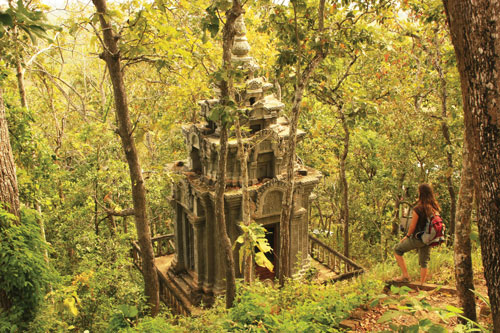
Home to ethnic minorities and an abundance of sprawling jungle and pristine wildlife, Cambodia’s wild frontiers are quickly becoming hotspots for the booming ecotourism trade as tourists step off the well-trodden tracks of Siem Reap, Phnom Penh and Sihanoukville coastal area.

Somborath Dy, operations manager at Cambodian Rural Development (CRD) Tours, which promotes ecotourism in north-east Cambodia, said: “Cambodia has the potential to develop ecotourism because it not only has rich cultural but also diverse natural resources.”

In the Tourism Development Strategic Plan 2012-2020, the Cambodian Ministry of Tourism highlighted ecotourism as a market for development. And with recent research revealing millennial travellers are seeking more authentic experiences, industry players observed that this is an area with the potential to thrive in Cambodia.

Speaking at this year’s Mekong Tourism Forum in Sihanoukville, James Dion, National Geographic Society’s sustainable tourism programme manager, said: “Cultural experiences reign over partying. Authenticity sells and can bring benefits to people and a place. When people come to a place like Cambodia, they’re experiencing a culture you will find nowhere else.”

Jo Crisp, general manager of Peak DMC, said: “More people are keen to see the country at the pace of a bicycle, kayak or through trekking, and want to venture out into more remote areas where they can see people and sights that are relatively untouched by tourism.”

Koh Kong’s Cardamom Mountains has become a community-based ecotourism (CBET) hotspot, with trekking, kayaking, mountain biking and camping in the wild offered. Home to some of the last remaining Siamese crocodiles, the biodiverse area also boasts about 30 other endangered species such as hornbills, dragonfish and slow lorises.

Tour operators have started rolling out a range of authentic experiences centred on CBET in the area.

The Wild KK Project is one example. Started as a tool to provide an alternative source of income to the area’s 1,300 indigenous people, the tours also raise awareness of the threats the region faces such as illegal logging and hunting.

Wildlife Alliance, an NGO, also runs a successful CBET project in nearby Chi Phat. The community-run initiative sees visitors trek and bike through dense jungle terrains, where elephants and wild boars live. Guests can explore traditional burial sites and caves, and sleep in hammocks in the wild or at village homestays.

The country’s rural north-eastern provinces have also proven popular, with intrepid travellers flocking to Mondulkiri’s rolling hills where elephants are a huge draw. Several initiatives provide visitors with the opportunity to get up close and personal with endangered Asian elephants in their natural habitat.

In Kratie, tour operators such as CRD Tours offer trips to view endangered Irrawaddy dolphins in the Mekong River, where they learn about the mammals’ conservation and history. Ibises and Cantor’s softshell turtles can also be spotted.

Despite the growth potential, Dy thinks more needs to do done to market ecotourism on both national and international levels. “Tour operators need to be encouraged to not just focus on the temples or city tours but more on nature and ecotourism,” he said.

In addition, ecotourism players have to grapple with other challenges such as a lack of infrastructure and environmental issues such as illegal logging and hunting, which is rampant across Cambodia.

“It’s true there are some real opportunities (in ecotourism), but on the other hand, deforestation and plastic pollution are growing issues,” said Pierre-Andre Romano, general manager of Exo Travel Cambodia.

This article was first published in TTG Asia October 2016 issue. To read more, please view our digital edition or click here to subscribe.
Changing perceptions

0

Persistent doubts over rewards and reputation are causing Singapore millennials to shy away from a tourism career. Yixin Ng finds out what needs to be done

oct28_pata-temasek-poly-1
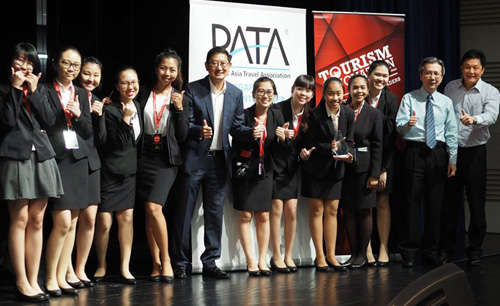
PATA Singapore Chapter chairman Soon-Hwa Wong (centre), Temasek Polytechnic (TP) School of Business’ director Daniel Yeow (second from right) and TTG Asia Media’s managing director Darren Ng (rightmost), with TP event helpers at Tourism Innovation Competition 2016

Exciting prospects await Singapore’s future tourism workforce, but more needs to be done to push past lingering misconceptions that are dulling the industry’s shine for millennials, leading industry stakeholders expressed.

“The tourism sector is competing for talents, in some ways unfairly, with other attractive industries such as banking,” Soon-Hwa Wong, chairman of PATA Singapore Chapter told TTG Asia, alluding to the longheld beliefs that customer-facing roles are the be-all and end-all of hospitality and tourism careers.

Young Singaporeans may also shy away from tourism pathways because of assumptions held by parents and peers that “low pay, long hours and limited prospects” typify tourism careers, Wong added.

Joan Henderson, associate professor at Nanyang Technological University’s Nanyang Business School, also agreed that “salary considerations” have quelled interest.

Perhaps more striking is the low retention rate of hospitality professionals, with “large numbers” of students deciding to pursue other pathways after their tourism industry internships, according to a spokesperson from Temasek Polytechnic’s (TP) hospitality faculty.

In practice however, tourism holds coveted prospects, be it up the hotel rungs or in destination planning roles, assured Wong. The emergence of non-traditional business models in recent years has also emphatically broadened this scope.

“The industry now includes mobility players, tech platforms, analytics and big data systems. Even major tech players such as Google and Facebook now have tourism components,” he said. “Now is a good time to redefine the boundaries of travel and tourism careers.”

Change is already underway to assist young Singaporeans in discovering the multifaceted nature of tourism and how diverse skillsets are valued within the trade.

oct28_changingquote

Earlier in June this year, the Tourism Innovation Competition (TIC) 2016 concluded after students took a week to develop ideas for the Singapore Zoological Gardens with the guidance of mentors from TP’s Hospitality and Tourism Management course.

Benjamin Cassim from the organising team at TP told TTG Asia: “We view the competition as a very relevant platform because it offers students the opportunity to learn, be exposed to and participate in tourism-building efforts in an enjoyable way.”

While lauding the TIC for generating awareness of the trade in young talents, Wong stressed that sustaining their interest is the larger challenge. One way to go about this, he suggested, is to highlight industry role models to raise the profile of the industry.

“Also, we could identify cross-sectoral ambassadors who would then talk up the industry – this is a role that associations (such as PATA and hotel associations) can fill.”

He added that invigorating industry news could be disseminated online to better engage a larger audience.

“Everyone loves feel-good news, which can lead them to think it’s an exciting and dynamic industry and not a tired one (as some might think),” Wong stated.

This article was first published in TTG Asia October 2016 issue. To read more, please view our digital edition or click here to subscribe.
Dubai positions itself for mass market appeal

0
Destinations of the World, based in Dubai (pictured), will give WebBeds 5,600 unique direct hotel contracts

dubai

The addition of a slew of new tourism attractions and products this year is expected to give Dubai a boost and put it on track to welcome 20 million visitors annually by 2020.

Dubai is hosting the World Expo in four years’ time and the August opening of indoor theme park IMG Worlds of Adventure and Dubai Parks and Resorts, the region’s largest theme park, will give the destination ammunition to go after families and young couples.

The destination has also filled the gap for affordable stays with Rove Hotels, developed by Emaar Hospitality Group, offering rates starting from around US$100. The group is planning to roll out 10 properties across central locations in Dubai and the region by 2020.

The July launch of 24/7 food truck park Last Exit, located between Dubai and Abu Dhabi, will be expanded to another 10 destinations and include play zones for children, exercise areas, an open air cinema and a business centre.

LCC flydubai, which operates to many destinations in the Indian subcontinent, has also launched services to Bangkok, offering a budget option to South-east Asian travellers.

One Hong Kong buyer TTG Asia spoke to at the show was surprised to learn of the new developments. “It’s good to know Dubai is on its way up again and Dubai Tourism must do more to rectify any misconception that the destination is expensive,” commented Ken Chang, vice president, Associated Tours.

Meanwhile, closer to Dubai, Rashmi, senior executive – commercial and contracting of Mumbai-based Kesari MICE, said she was aware of Dubai expanding its budget options a few years ago.

UFTAA marks 50th anniversary with Istanbul congress

0

hilton-istanbul
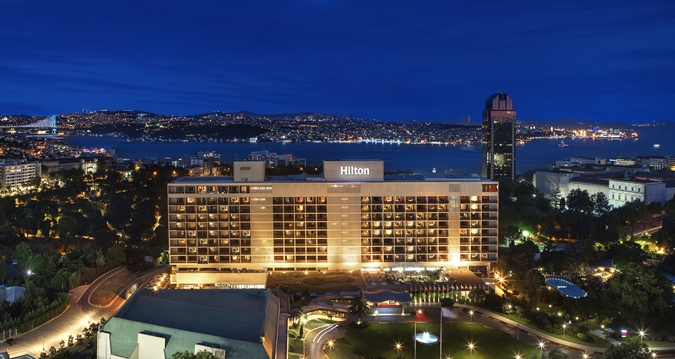
Hilton Istanbul Bosphorus

The United Federation of Travel Agents Association (UFTAA) will be celebrating 50 years in existence with a Golden Jubilee Congress to be held in Istanbul, Turkey at the Hilton Istanbul Bosphorus from November 25-26.

Hosting the event will be the Ministry of Tourism & Culture of Turkey and supported by the Association of Turkish Travel Agencies as well as Turkish Airlines, who is offering complimentary air passage to registered guests subject to availability.

Congress highlights include business sessions with speakers and panelists, a forum conducted by UFTAA members, an awards ceremony, a gala dinner and a B2B exhibition and tradeshow.

Incepted in 1966, UFTAA is the longest established and only global body representing travel agencies in negotiations with other international industry associations the likes of IATA and UNWTO.

Events: Singapore River Festival 2016

0

party_girl_with_headphone_-_photo_credit_silent_disco_asia
A girl wearing headphones at a Silent Disco. Credit: Silent Disco Asia

Singapore River Festival is returning this year from November 4-5 with a new theme, River Connections.

The headline act, Crossings, will be performed by French performance group Underclouds Cie on a tightrope that will be extended across the Singapore River. It will be the group’s maiden performance in Asia, with showtimes at 20.00 and 21.30 on both nights at Clarke Quay.

A variety of other performances and activities will also take place along the riverside at Clarke Quay, Boat Quay and Robertson Quay. Visitors to Clarke Quay can party at a silent disco event, or head to Boat Quay to partake in a street festival with roving performances and live bands. Meanwhile, Robertson Quay will sport an open-air cinema and mass workout area for workshops such as Barre Bootcamp and Pound Workshop.

For the younglings, there will be puppet-making and face-painting workshops, as well as a cardboard and chalkboard playground.

Also as part of Singapore River Festival, 21 dishes – handpicked by four local chefs – will be awarded the Singapore River Signatures accolade. Restaurants will also be running promotions on these dishes during the festival.

Organised by Singapore River One, manager of the Singapore River precinct, the Singapore River Festival is a free-for-all event with some ticketed workshops and activities.

Thailand to hold record breaking prayer event for mourners

0

thailand-funeral

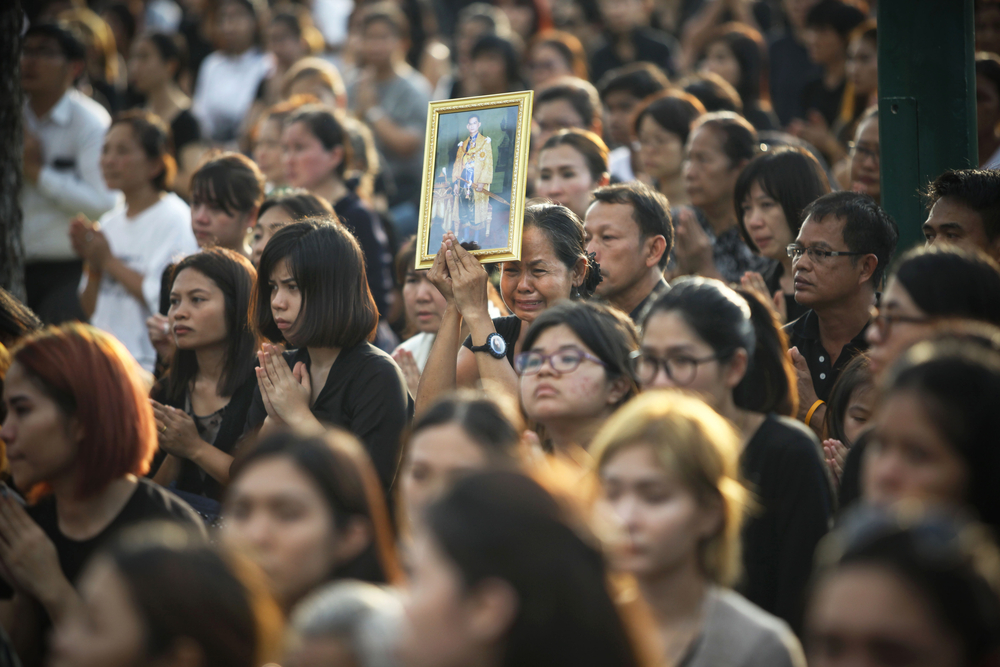
Thailand’s Ministry of Tourism and Sports plans to turn the Kingdom’s sorrow into a world record event during the 2017 New Year countdown.

Conventional countdown activities will be replaced nationwide by religious and praying ceremonies to mark the New Year with at least 20 million participants expected. While such events aren’t new, there is greater impetus now to hold prayer gatherings rather than parties. About 10 million people took part in such sessions last year.

Tourism and sports minister Kobkarn Wattanavrangkul told the press earlier this week that organisers are working closely with the ministry to make sure events held are appropriate as the country mourns for the late King Bhumibol Adulyadej.

“This year, countdown events at main tourism locations will be proper, grand and beautiful. Fireworks will be replaced with lit candles, for example,” explained Kobkarn.

She adds that life goes on for people despite the country’s loss. Therefore, tourism activities and events should run as usual, albeit with tweaks.

The number of foreign arrivals in Thailand grew four per cent to 1.61 million visitors in the first 22 days of this month and tourism income stood at 82.22 billion baht (US$2.3 billion) with a growth of 7.78 per cent year-on-year.

With this positive momentum, Kobkarn said she is confident that 2016’s tourism revenue target of 2.4 trillion baht will be achieved. The country will welcome at least 5.81 million visitors in the last two months of this year, bringing total foreign tourists in 2016 to more than 32 million, she adds.

New hotel openings: October 24 to 28

0

The latest hotel openings and announcements made this week.

shangri-la_songbei

Songbei Shangri-La, Harbin
Shangri-La Hotels and Resorts’ second hotel in Harbin, a 344-key property with 32 serviced apartment units, is scheduled to open in December. For meeting and event needs, the hotel boasts Songbei’s largest pillarless ballroom – a 1,616m2 space – in addition to a 408m2 ballroom and two function rooms. F&B options include upscale Chinese restaurant Shang Kitchen; all-day dining restaurant Café Song; Grab & Go, which offers a selection of gourmet pub food for takeaway; the Lobby Lounge which serves classic high tea and refreshments; and De Drunk’n Pig for evening entertainment and live music. A spa, indoor swimming pool, Jacuzzi, steam room, sauna and fitness centre are also available.

hilton_garden_inn_zhongshan

Hilton Garden Inn Zhongshan Guzhen
Hilton has opened the 246-room Hilton Garden Inn Zhongshan Guzhen. Hotel features include a 24-hour fitness centre, a self-service laundromat, a flexible meeting room and a board room. The property also boasts all-day dining restaurant Garden Grille and Bar; the 24-hour Pavilion Pantry, stocked with snacks and drinks; noodle bar Mian Tan; and the Garden Bar, which provides a relaxing space for cocktails and informal meetings. The property is located in the commercial district of Guzhen Town, adjacent to Lihe Lighting Exhibition Center and 1.5km from the Guzhen Convention and Exhibition Center.

ramada-japan-niigata

Ramada Japan Niigata
Wyndham has brought its Ramada brand back to Japan with the opening of the Ramada Hotel Niigata. Formerly the Niigata Tokyu Rei hotel, renovations were completed over the past year to revitalise its 300 guestrooms and facilities. The full-service hotel is equipped with five F&B outlets and a bar, including El Dorado restaurant, which serves Japanese-fusion cuisine and accommodates up to 105 diners. To cater to business travellers, the hotel offers six meeting rooms, complimentary Wi-Fi and an on-site laundromat. The property is a three-minute walk from the Niigata train station, close to the Toki Messe Convention Centre and the Niigata City Aquarium.

Aichi draws on samurai roots to boost foreign arrivals

0

world-samurai-summit

Aichi prefecture in central Japan is drawing on its history as the homeland of the famed samurai to attract tourists, culminating in the inaugural World Samurai Summit to be held from November 19-20.

Activities there include dressing up as samurai, a traditional battlefield demonstration and taking part in samurai performances.

This builds on the prefecture’s launch last year of a drive to promote Aichi as the ‘Home of Samurai’ to mark 400 years since the death of Tokugawa Ieyasu, a renowned shogun who originated from the region.

Organisers hope the festival, which is open for the first time this year to foreigners, will attract both international and domestic tourists.

Earlier in May, seven ninja performers were also hired by the prefecture to boost the destination’s appeal. The project has been successful, according to Keno Kano, director general of tourism in Aichi, who revealed that arrivals for 1H2016 was four per cent higher than national numbers.

The ninjas welcomed visitors at Chubu International Airport and performed at a castle in Nagoya. They also ran a ninja school, attracting participants from the US, China, Taiwan and Indonesia. Every session held was full, said Kano, pointing out that some tourists even came to watch the shows everyday of their stay.

Fumito Sasaki, CEO of tour operator Japan Wonder Travel, believes the interest is likely to stem from popular culture. “While in Japan, they want to have experiences with ninja and samurai in the same way tourists want to go to England’s Abbey Road because of The Beatles,” he said.

Jarrod Stenhouse, managing director of Destination Asia Japan, says that Aichi’s initiative is sure to appeal to younger visitors. While he says it remains to be seen whether it will attract tourists who wouldn’t have normally visited Aichi, he points out that other regions are also embracing the theme.

He said: “Matsue castle in Shimane prefecture often has a samurai greeter, which has been very popular with our cruise groups.”

Learning on the go

0

Qooco’s David Topolewski shares how mobile learning will make an innovative, cost-effective way to transform training delivery in the hospitality sector

shutterstock_469451066 [Converted]

Governments and companies are embracing mobile learning today, reflecting an effort by society to support and accommodate populations that are increasingly more mobile.

In fact, one of the earliest forms of mobile learning still exists today – reading a book while travelling – although back then it was just called ‘learning’, as the acquisition, transference or sharing of knowledge was traditionally done in the classroom.

The invention of the first mobile phone in 1973 and the surging use of the Internet since 1995 by businesses, students and individuals set the foundations for the arrival and subsequent evolution of mobile learning, which has come a long way since the 1980s.

The first modern instances of mobile learning were conducted through cassette tapes and CDs. Between 1983 and 1987, Singapore telecoms companies even offered Mandarin lessons via telephone.

In the early 1990s, software companies such as Apple and Palm Corporation started developing mobile learning software and European universities started evaluating mobile learning for their own students.

Since these early days, mobile learning has boomed and is afforded much greater attention by institutions and policymakers alike, yet it is still in its infancy. With an already high and still fast-growing smartphone penetration rate and highly developed mobile infrastructure, Asia is in the perfect position to benefit from this phenomenon.

As more smartphones enter the market and infrastructure continues to develop, this trend is set to grow with more governments and companies realising the value and cost-effectiveness of mobile learning over the time-consuming and expensive methods of traditional teaching.

The Ministry of Education in Singapore has already begun mobile learning pilot projects in one of its schools and Malaysia’s YTL is providing 4G wireless access, a countrywide online education system and tablet computers to over 10,000 schools.

Faced with ever-increasing staffing costs and continuous challenges of finding qualified employees, mobile learning has emerged as a low-cost yet highly effective way to train hotel staff, improve service and drive revenues higher. While continued growth in international travel has been a boon for hotels and resorts, it also means that more people from diverse backgrounds and speaking different languages are checking into hotels.

oct28_hotel-solutionsquote

This is where mobile learning comes in to play. Rather than disrupting staff schedules with lengthy classes and forcing employees to attend study sessions for a few hours a week, hotels are subscribing to mobile learning programmes. Mobile language learning has evolved to provide specialised speech interactive content for each department, providing a near-real simulation of guest interaction with immediate actionable feedback. So, for the first time, hotels have both scale and performance information on the competencies of their employees in real time.

It doesn’t stop at language learning either. Hilton Worldwide has recently announced a complete F&B training course that, supported by a mobile learning company, is available online for their staff worldwide. Courses have been developed for a variety of hotel scenarios, including housekeeping, spa, F&B and front office, with even solutions that train a user on how to upsell in a hospitality setting.

But it is the future of mobile learning that poses even more exciting opportunities. Today, militaries around the world use virtual reality (VR) to train their troops, testing them in a variety of realistic battlefield situations and accurately gauging their ability to cope with pressure and stress, and develop their leadership skills. While the front office is a million miles from the battlefield, the same principles can be applied to hotels.

There is no reason why a typical hotel scenario – an overbooked hotel, irate guests, children playing in the lobby, etc – can’t be replicated through VR, with entire teams working together to fix the problem. This would test the leadership skills of the team leaders, as well as provide a realistic introduction for new employees.

Qooco’s developers are working with Microsoft’s HoloLens to apply mixed reality to staff training. HoloLens blends digital content with the world around us, projecting three-dimensional graphics around the wearer of the lens. We are exploring how this augmented reality (AR) platform can be used to enhance staff training by incorporating digital scenarios into real-life training situations.

Linked to mobile learning is the effective use of artificial intelligence and big data. Once you have an accurate picture of the individual strengths and weaknesses of your employees, you can better place them in situations where they excel. For example, should a large group of Chinese tourists be due to check in on a certain date, the system will automatically assign the employees who are strong in Mandarin (based on their mobile learning scores) and who have shown strong organisational and teamwork abilities during the VR training.

In its purest form hospitality is about cultivating an attitude of great service, teamwork and leadership; it is about having initiative, curiosity, flexibility and care for others. Mobile learning provides a way for individuals who are truly serious about hospitality to take the initiative to continuously cultivate those values.

David Topolewski is CEO of Qooco, which provides mobile language learning and vocational training solutions for employees in the hospitality and service industries.

This article was first published in TTG Asia October 2016 issue. To read more, please view our digital edition or click here to subscribe.
By David Topolewski