TTG Asia
Asia/Singapore Thursday, 1st January 2026
Page 1693

Fiji Airways targets Singapore travellers with lowest ever fares

0

Fiji Airways has launched promotional airfares for flights from Singapore to Fiji in time for the holiday season.

This is its steepest discounted ticket sales to date with up to 66 per cent off economy class fares amounting to S$599 (US$423) return and up to 40 per cent off business class flights amounting to S$1,888 return.

Children aged 2 to 11 years old enjoy further discounts at S$349 for return economy class tickets.

Fares are inclusive of checked luggage allowance, in-flight meals, beverages and entertainment aboard the Airbus 330-200 aircraft deployed between Singapore and Nadi.

The sale runs from now to November 30 and is eligible for travel from now to June 30, 2017.

Airbnb homes operator GuestReady receives fresh funding

0

3__airbnb_management_-_london

Three months after its launch, GuestReady, an operator for private homes, has gotten a new round of funding amounting US$750,000 from investors Senn & Partner Holding, former Airbnb director Georg Bauser and Swiss Founders Fund (SFF), who acted as the lead investor.

“The majority of the funds will be allocated to filling vacant positions in our primary markets, as well as bringing our tech platform to the next level,” said Alexander Limpert, co-founder and CEO of London-based GuestReady.

The startup, which began operations in August, currently has offices in London, Singapore, Hong Kong, Paris, Kuala Lumpur and Amsterdam, and has plans to roll into more markets soon.

GuestReady provides property management services for investors, homeowners and sharing economy accommodation hosts. Services include listing creation, guest communication, housekeeping, laundry, key management and yield optimisation, among others.

Homeowners and hosts can choose to engage GuestReady for a full-service Airbnb management package or pick from standalone services individually.

Sri Lanka looks to China for FDI in tourism

0

qifeng-ning
Qifeng Ning of Wanda will be part of the delegation

A delegation of travel industry leaders from China is set to make their way to Sri Lanka later this month as the South Asian nation seeks interest from foreign investors to build up its tourism attractions and infrastructure.

Facilitated by the Centre of Asia Hotel Forum, the delegation comprises the likes of Haibo Bai, chairman and president of HNA Hospitality Group; Yun Cai, secretary-general of China Real Estate Association Commercial & Tourism Estate Committee; Qifeng Ning, senior vice president of Wanda Commercial Properties; and many others.

During their seven-day trip, they will be introduced to Sri Lanka’s themed tourism development zones as well as attend the inaugural Asia Hotel and Tourism Investment Conference (AHTIC), taking place from November 27-29 at the Hilton Colombo, and organised by Bench Events and the Sri Lanka Tourism Club.

At AHTIC, the Chinese delegates will also meet with the Sri Lankan president, prime minister and minister of tourism for further discussions.

Sri Lanka Tourism Club chairman Prabath Ukwatte said: “We will be working with government ministries to deliver themed international tourism and family entertainment zones, and to open them up for foreign investment. The conference will be an ideal opportunity to explain what we will be doing and to attract international finance.”

Besides the Chinese delegation, AHTIC will also be hosting international leaders of the hospitality industry to Sri Lanka to take part in three days of high-level discussions, forums, speeches and networking sessions.

Corporate travel up despite rise in travel risk perception

0

business-travellers_online

A study conducted by medical and security specialists International SOS and Control Risks indicated that 72 per cent of over 1,000 corporate travel decision-makers perceive travel risk to have increased this year.

Despite the rise in perceived risk in travel, 44 per cent reported an increase in business travel activity in 2016 and more than 50 per cent expect further increase in 2017.

“Events of 2016 have resulted in a sense of increasing challenges in travel to places once thought secure. While risks are changing, organisations must ensure their actions to mitigate those changes are proportionate, and based on reality and not perception,” said Rob Walker, security specialist at International SOS and Control Risks.

“Issues like healthcare provision and road safety, which account for over 70 per cent of the assistance services we have provided in the past year, can often be obscured by more prominent, but less likely issues. With many organisations increasing their business travel activity, it is essential for decision-makers to be able to communicate that objective advice to their people, including in an actual crisis.”

The report further revealed that 80 per cent of organisations surveyed have modified their travel itineraries in the past year due to health and security concerns.

Meanwhile, 48 per cent of respondents state that their investment in travel risk mitigation has increased over the past year, and 47 per cent believe this will increase further in the coming year.

“Travellers are much less likely to encounter unexpected or avoidable problems if they plan ahead. Using objective advice to prepare travellers, and by staying up to date on any changes and how they might affect plans, will further reduce, both the likelihood of people experiencing problems, and the extent of the impact,” added Walker.

Short-term pain for long-term gain?

0

As a crackdown on zero-dollar tours in Thailand dents arrivals from China, some insist this is a worthwhile tradeoff for lasting gains
nov11-thailand-rgb

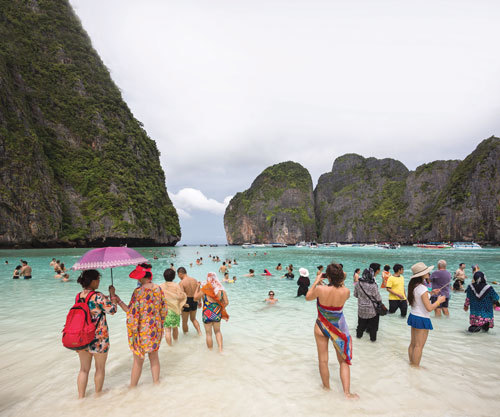
Thailand will miss its 2016 Chinese inbound tourism target because of a crackdown on zero-dollar tour operators, but the trade is embracing the move as a big step towards rebranding Thailand as a quality destination.

As part of a tourism reform under junta rule, prime minister Prayuth Chan-o-cha had ordered tourism authorities to put down mafia-type parties as well as zero-dollar tourism businesses to reposition the destination and let local communities share in tourism-related income.

This order led to the closure of four big nominee tour companies and arrivals from China have since dropped.

In the last week of September, the number of incoming Chinese tourists grew only 2.8 per cent, compared with 35 per cent growth in the first week. The three destinations experiencing the most severe impacts were Bangkok, Pattaya and Phuket, according to the Department of Tourism (DoT).

The DoT forecasted that tourist arrivals from China to Thailand will stand around 9.4 million visitors this year, lower than the previous estimation of more than 10 million visitors.

And according to Ronnarong Cheewinsiriamnuai, president of Thailand-China Tourism Association, the number of Chinese tour groups started declining in September and plunged after China’s peak outbound season during the Golden Week in early October. In Bangkok, numbers fell to around 50 groups per day, down from 300 groups in the past.

Still, local tourism stakeholders are generally voicing support for the clampdown, which Tourism Authority of Thailand (TAT) governor Yuthasak Supasorn said is a step forward in the country’s ambitions to court high-end tourists.

Association of Thai Travel Agents (ATTA), vice president Surawat Akaraworamat, added: “We must consider

natural resources and national benefits. Many tourism sites have become rotten as they have been overloaded by tourists. Is it worth it?”

Both TAT and ATTA expect that the impact on Chinese arrivals would be relieved by this year-end, although Ronnarong projects that the negative sentiment will drag till December.

There are some encouraging signs though, with the strongest one being support from the China National Tourism Administration (CNTA), which expressly encouraged Thailand to proceed with the crackdown.

Support is also evident in an MoU between the Thai Ministry of Tourism and Sports and CNTA to improve skills of Thai tour guides and develop pricing standards for Chinese tourists.

Meanwhile, TAT revealed that the price of a China-to-Thailand package now exceeds RMB3,000 (US$450), close to the price of a package from China to Japan, which starts at around RMB4,000.

Concerned by the rising prices, Ronnarong said: “If package prices to Thailand are equal to those in Japan, I have no idea how to compete. Japan and South Korea will benefit while Thailand loses.”

This article was first published in TTG Asia November 2016 issue. To read more, please view our digital edition or click here to subscribe.


Putting an end to ‘endo’ labour

0

Philippines authorities are clamping down on the contractualisation of labour practices, putting some tourism and hospitality companies in a bind

nov11-philippine-employee

The Philippine government’s aggressive drive against the “endo” (end of contract) scheme has led to some confusion and misunderstanding among tourism and hospitality employers on legitimate hiring practices under contractualisation.

Endo refers to the hiring practice that companies engage in to prevent a contractual employee from becoming regularised by terminating him prior to the sixth month of service. After a short layoff, he will be rehired to assume the same role and perform the same functions. Such practices enable companies to save on pay and employee benefits for their contractual staff.

With the no-contractualisation policy starting next year, hotels, restaurants and other businesses in the hospitality industry will have to increase the headcount for their regular staff, according to the director of distribution and analytics at a Manila-based luxury hotel group, speaking on condition of anonymity.

Reacting to industry fears that the end of contractualisation might “spell the death of smaller hotels and those outside of major tourist destinations”, the director explained that those hotels “can hire under the legitimate contracting, but this is subject to evaluation after the end of the contract term and outsourcing which can be done for positions not in line with a hotel’s business like security personnel”.

For large hotel groups that rely on contractors to supply their stafff, they are not covered by endo “if they supply manpower services under the ‘outsourcing’ contract, such as for housekeeping attendants during high occupancy periods and waiters for functions”, the director pointed out.

But they are covered by endo “if they assign housekeeping room attendants or waiters in hotels for a straight five-month period and terminate their services only to rehire them after a short layoff for another straight five-month period”.

She said the impact of endo is that hotels will then have to review their headcount as to how many regular staff are really required in a department regardless of seasonality or occupancy levels.

“If the position is required on a full-time basis, then hotels will have to replace (contract staff) with a regular staff. Contractual staff can still be done by hotels based on occupancy levels, and ad hoc functions or events, (but not for) augmenting the regular staff because of the surge in business levels,” she said.

At press time, the Cagayan de Oro Hotel and Restaurant Association is seeking the consensus from its 43 members regarding endo, according to executive secretary Nollie Arguelles.

Carol Valdez, director of sales and marketing at Seda Centrio Hotel in Cagayan de Oro, said the property will comply with the rules but highlighted the difficulty of getting permanent staff due to the lack of skills and training in the provinces.

While Angel Ramos Bognot, president and managing director, Afro Asian Travel and Tours, is not aware of contractualisation in the travel agency sector, she does however contract staff like usherettes for conferences and tour guides on a per tour/project basis in line with the Department of Tourism regulations.

This article was first published in TTG Asia November 2016 issue. To read more, please view our digital edition or click here to subscribe.

Carlson Wagonlit makes two new senior appointments

0

Carlson Wagonlit Travel (CWT) has appointed Matt O’Keefe as chief technology officer of hotel distribution and Matt Brennan as vice president of hotel operations.

matt-okeefe
Matt O’Keefe

O’Keefe has more than 20 years of experience in technology and software and was most recently the chief technology officer at Hyatt Hotels & Resorts, where he was responsible for global technical architecture, technology standards and software development to support ecommerce and marketing.

In his new role, he will report to Scott Brennan, president, CWT Hotels, and Andrew Jordan, CWT’s executive vice president and chief technology officer.

matt-brennan_online
Matt Brennan

Meanwhile, Matt Brennan has been in the facilities space since 2009 and has supported other third-party service industries since 1996.

He most recently served as vice president of field partner management of QSI Facilities, prior to which he was the vice president of operations for a waste management company. He will report directly to Scott Brennan.

Hotel Indigo Bangkok Wireless Road offers trade deal

0

hotel-indigo-bangkok-wireless-road

InterContinental Hotels Group (IHG) is offering those in the travel trade a special industry rate for bookings at Hotel Indigo Bangkok Wireless Road.

From now till December 15, bookings and stays by travel professionals start from about 3,000 baht (US$84) per night for its entry level superior rooms, compared to more than the 3,500 baht usually charged for rooms of the same category.

Prices are inclusive of breakfast and a staff ID is required upon check-in for verification.

Ascott sets record growth with 10,000 additional units

0

metropole_bangkok_facade

Ascott has achieved record-breaking growth this year by securing more than 10,000 apartment units in 51 properties, bringing the company’s portfolio to more than 52,000 units globally.

Said Lee Chee Koon, Ascott’s CEO: “Of these new units, 90 per cent are located in gateway cities across Asia-Pacific and the Middle East.”

Half of the new inventory are contracts in South-east Asia. And according to an Ascott statement, Vietnam is one of its best performing countries and largest market in South-east Asia with the most number of properties. The company seeks to achieve 7,000 units there by 2020.

“This year, Ascott has also opened 20 properties with more than 3,700 units, our fastest pace ever. As more of the newly signed properties come into operation, we can expect a further boost to our management fee income,” Lee added.

Ascott’s latest additions are 10 new management contracts in Hanoi, Halong City, Phnom Penh, Bangkok, Manila and Cebu.

Operators in Cebu call for end to travel advisory from the US

0

cebu

The travel trade in Cebu are hoping that the US will lift its travel advisory levied against the region’s southern territories despite businesses being unaffected.

The US issued the warning two weeks ago due to risk of kidnappings in Dalaguete, Santander and at the popular tourist haunt of Sumilon Island.

But as high season approaches and with no incidents involving tourists since then, local businesses hope the advisory can be removed so that things can go back to normal.

Bluewater Sumilon Island Resort had to issue an official statement to assure the public that “the island remains safe from any threat”. The resort said that apart from its own security detail, the Philippine Coast Guard also maintains a detachment on the island.

The Philippine National Police has added personnel in tourist areas as well, while working with their counterparts in the armed forces, navy and airforce to further intensify security protocols.

Operators such as Southwind Travel and Tours have not received booking cancellations on pre-booked tours due to the US travel advisory, but needed to take extra precautionary measures, according to its general manager Syrah Queblatin.

Two days after the advisory was made, a group of 10 bikers from Switzerland decided to go ahead with their sojourn to Siquijor, including spending two nights in Oslob and Badian, both located in southern Cebu.

Queblatin said she had to communicate with the hotel and local security forces in southern Cebu to ensure their safety, but was worth doing so to make sure nothing untoward happens.

A group of five South Koreans also went on a day tour to Badian with Southwind and returned safe and sound.

Rajah Tours sales officer Carla Molina reported that there were no tour cancellations for them as well, and that the demand for destinations like Oslob and Badian were not affected. She added that two US clients have just spent a day in Badian fully aware of the travel advisory.