TTG Asia
Asia/Singapore Thursday, 1st January 2026
Page 1689

Photo of the Day: Virginia tourism’s visit to Singapore

0

img_5786

(From left) Tng Ah Yiam, deputy CEO, NTUC FairPrice Co-operative; Terry McAuliffe, governor of Virginia; Kirk Wagar, United States ambassador to Singapore; and Michael Chow, group publisher, TTG Asia

The governor of the US state of Virginia was in Singapore last week as part of a trade mission in the Asia-Pacific that also included Japan, South Korea and Australia as stops. McAuliffe hopes that Singapore can act as a South-east Asian hub for more corporate and leisure travellers to fly to Virginia via direct services to Washington Dulles International Airport.

Mantra adds five hotels to booming portfolio

0

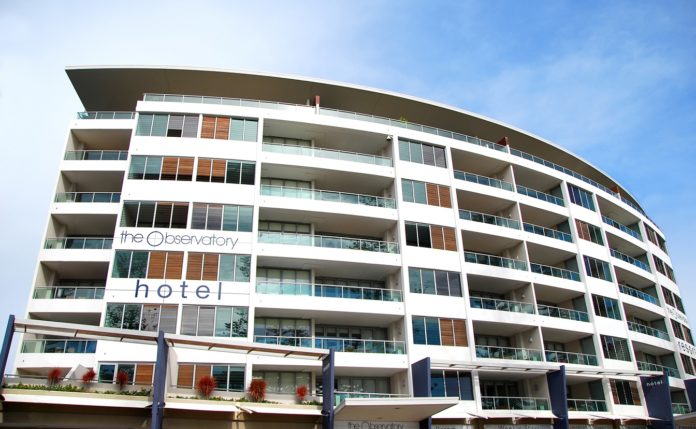
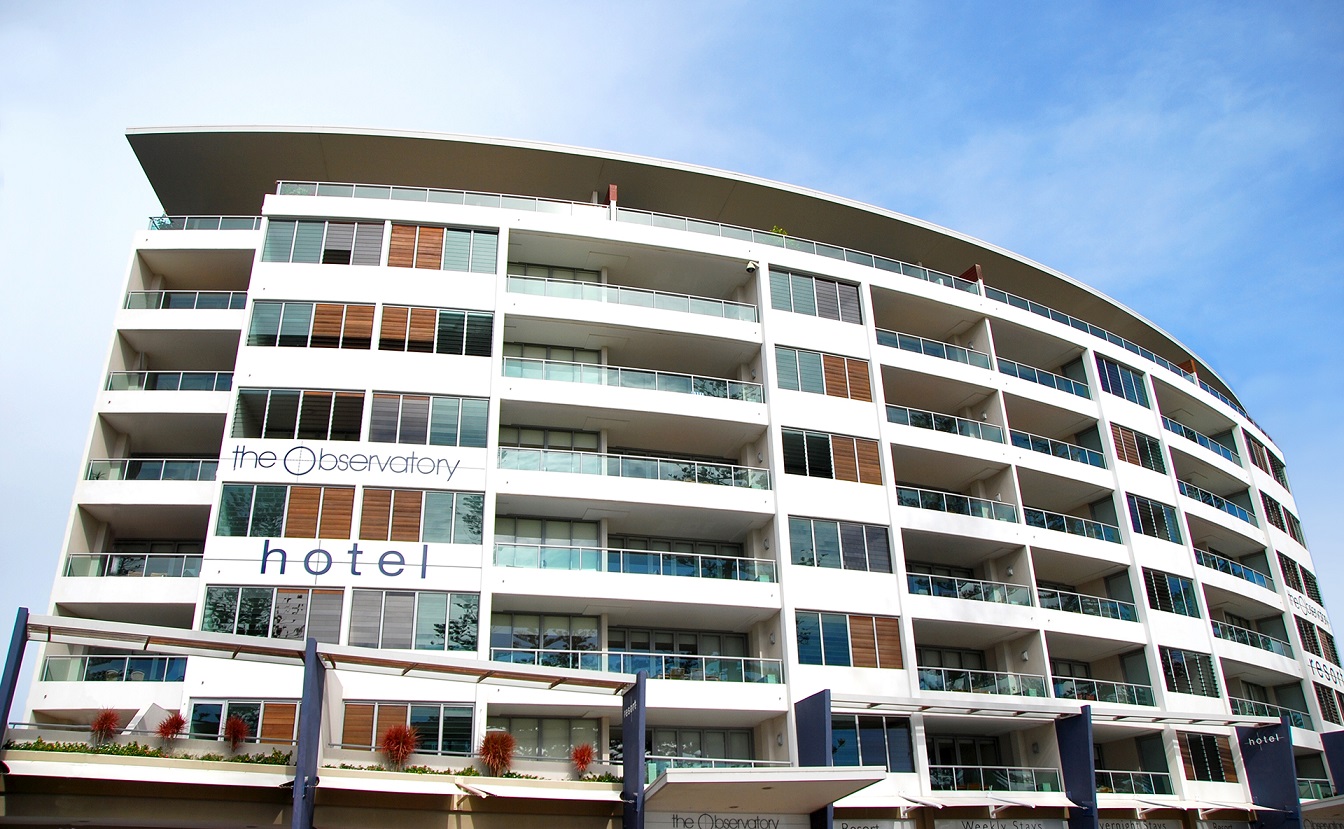
mantra-observatory-port-macquarie

Australia-based hotel and resort operator Mantra Group has secured five additional hotel signings, adding to its inventory 900 rooms across Australia and New Zealand.

The hotels are newbuilds Peppers Southbank (Melbourne), Mantra 900 Hay Street (Perth) and Peppers Queenstown Resort (Queenstown), in addition to Mantra Club Crocodile (Airlie Beach) and Mantra Observatory (Port Macquarie), which are being rebranded from the existing Club Crocodile and The Observatory respectively.

“The latest group of acquisitions reinforces the strong momentum in our growth strategy and highlights our ability to convert our pipeline,” said Mantra Group CEO Bob East.

In FY2016, Mantra Group increased its inventory by 3,000 rooms across 11 new properties, making it “Australia’s fastest growing hotel group for the year”, according to Mantra.

East added: “With seven acquisition announcements in the first five months of FY2017, we’re well-placed to exceed last year’s record result.”

Mantra currently operates the second largest network of accommodations in Australia by room number.

Bigger destination marketing budget wanted by Maldivian trade

0

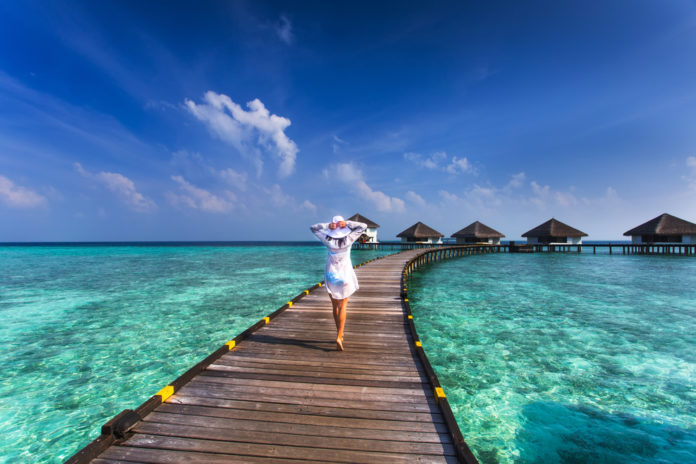
maldives

Industry players in Maldives are urging the government to spend more on destination marketing to coincide with the opening of an array of high-end resorts in the next 16 months.

More resorts are opening in Maldives in the next two years than in the past decade, with at least 1000 new rooms spread among 10 resorts being added from 2016-2017.

The suggestion for a bigger warchest was put forward by the travel trade during the Maldives Travel Conference, the country’s first such event, held earlier this month on November 19.

Speakers at the Maldives Travel Conference included PATA CEO Mario Hardy, UNDP Representative Shoko Noda, and the Maldives Marketing & Public Relations Corporation (MMPRC) chairman Mohamed Khaleel, who, during the conference, all alluded to the need for more robust funding for promoting Maldives.

Khaleel said a bigger marketing budget may be necessary in view of the new properties that are about to open and in consideration of stiff competition coming from other destinations.

Among the resorts due to open within the next two years are the Four Seasons Private Island Maldives at Voavah, the St Regis Vommuli Resort on Dhaalu Atoll, the Soneva Jani on Noonu Atoll, and the Hurawalhi Island Resort & Spa on Lhaviyani Atoll.

In Asia, Netherlands sees strongest demand from India

0

amsterdam

India has shown strong growth to the Netherlands this year and is projected to end the year with a 30 per cent increase in arrivals as compared to 2015, which saw 101,000 Indian visitors.

According to Carola van Rijn, project manager at The Netherlands Board of Tourism and Conventions, the increase is mainly due to Jet Airways establishing Amsterdam as its European gateway since March.

In terms of percentage growth, Indonesia comes second in Asia and is projected to end the year with a 20 per cent increase from the year before. In 2015, arrivals from Indonesia totalled 47,000.

Beyond arrival numbers, Rijn also hopes to increase the average stay duration of its Asian tourists.

She said: “To further increase the length of stay of longhaul arrivals, which currently stands at four days for Chinese visitors and three days for Indonesians and Malaysians, we are promoting destinations beyond Amsterdam. These include destinations such as Utrecht, The Hague and Rotterdam.”

The NTO has also developed several campaigns centred around famous Dutch themes, such as waterways and flowers, in collaboration with local operators, to inspire tourists to step off the beaten track and discover new places.

Ctrip set to acquire Skyscanner for US$1.7 billion

0

ctrip

China’s Ctrip has signed a definitive agreement with Skyscanner for the acquisition of all of its shares at an estimated value of 1.4 billion pounds (US$1.74 billion).

The boards of directors of both Ctrip and Skyscanner have approved the transaction, subject to customary closing conditions, and is expected to close by the end of 2016.

Skyscanner’s current management team will to continue to carry out their own operations independently as part of the Ctrip group.

“This acquisition will strengthen long-term growth drivers for both companies,” said James Jianzhang Liang, co-founder and executive chairman of Ctrip.

“Skyscanner will complement our positioning at a global scale, and we will leverage our experience, technology and booking capabilities to help Skyscanner.”

Ascott breaks into communal living concept with Lyf

0

lyf_-_big_bed_room

Serviced residence operator Ascott is joining the co-living hospitality space with its latest brand offering, Lyf (pronounced as “life”), targeted at millennials.

Plans are for there to be 10,000 keys carrying the Lyf flag to be up and running by 2020.

Unlike conventional properties, Lyf establishments are run by residents themselves, community managers, city guides and bar keepers, among others, in hopes to bring in a sense of local communal living.

“Going beyond traditional hospitality concepts, Lyf signifies a new way of living and collaborating as a community, connecting guests with fellow travellers and change-makers,” stated Ascott in a press release.

Millennials currently form a quarter of Ascott’s customers with the segment expected to grow exponentially in the coming years.

Many pathways to success

0

Game-changing developments are opening up the tourism workforce to a greater mix of talents, but these have far from shrouded the better-trodden paths to the top.

nov11up-the-career-ladder

As the tourism workforce evolves with a changing milieu and new needs of the industry, some careers have deviated from tradition while others become more entrenched in known pathways.

“Technology has made the world our playground. But to grow, travel companies need talents. Technology does not replace people, in fact, it requires more people,” said Yeoh Siew Hoon, founder of Tern, a travel career event launched this year.

More potential entry-points
More diverse skill sets are becoming valued by travel businesses, creating many potential industry entry points for mid-career jobseekers without prior background in tourism. Soon-Hwa Wong, chairman of PATA’s Singapore Chapter, said there are new opportunities in big data analytics, tech platforms and the mobility space.

Digital marketing know-how is another attribute that is gaining currency as travel businesses respond to the changing ways in which travel consumers access information and make buying decisions.

Dave Chinwan, product manager APAC, accommodation & destinations at TUI Travel, said: “Online travel businesses such as Expedia rely a lot on advertising low rates to reach as many people as possible while traditional businesses like established hotels pay more attention to customer service to retain customers.”

By extension, Chinwan posited, traditional players are more likely to seek years of experience than non-traditional ones, as the latter tend more to value “what you can do rather than what you have done”.

But established hotel players too have been investing in digital marketing talents who may hold more promise than experience or qualifications. For instance, Jackson Sim, associate director of digital marketing – complex at The St Regis Singapore and W Singapore – Sentosa Cove, professed he had “no formal training in digital nor marketing”, having started his career working in a kitchen before becoming a food writer.

Sim explained: “For both The St Regis Singapore and W Singapore – Sentosa Cove, digital marketing plays a vital role – with more than a third of our revenue coming from web, through internal and external channels.”

And in corporate travel, demands for price comparison, along with smart reporting tools and intuitive online booking tool user experience, are constantly driving the need for analytics and programming capabilities, a discussion during the recent CTW Asia-Pacific revealed.

Apart from particular sets of expertise, an entrepreneurial spirit is increasingly viewed as a prized attribute in the industry, especially as recent technological disruptors cast the spotlight on innovation.

Said Janet Tan-Collis, president of the Singapore Association of Convention and Exhibition Organisers and Suppliers: “In our early days, we (relied) on the infrastructure in the hotel industry, but we have evolved over time. Now, (the conventions and exhibitions sector) is very much more cerebral – it’s no longer about brawn but also brains.

“What the MICE industry needs (is) for young people to come in, know what the terrain is, then ask ‘can we make it better?’. But if they don’t understand what’s available, they will be led down a very straight and narrow path that’s a lot more task-driven rather than talent-driven. ”

While Tan-Collis looks to expose young minds to real industry situations through the association’s partnership with the Singapore Institute of Technology, industry players elsewhere are channelling their efforts into creating environments that encourage entrepreneurial ideating.

Suraj Nair, co-founder of TravelSpends, which provides auditing services and technology solutions, told TTG Asia that the company recently signed an MoU with the MS Ramaiah Institute of Technology in Bengaluru to open a travel technology incubation lab for MTech students.

“We want to create our intellect to be powered by the new generation. Say they bring in 20 ideas, is it okay if only two or four eventually work? That’s okay. We got minds interested, and that’s a big thing.”

Traditional roles here to stay
Although transformative potentials and aspirations for the cutting-edge are rife in the industry’s workforce, good old-fashioned hospitality remains well and alive, along with well-trodden career paths in the hotel business.

Commenting on his role as a mentor in SHATEC’s Industry Mentorship Programme (see sidebar), Sunshine Wong, general manager (GM) of Crowne Plaza Changi Airport, alluded to the notion of there being a “right path” in hotel careers.

“(In some cases), it is about knocking some sense into (young entrants). Many have aspirations, but when (they’re new) and want to be GM in three years, (I would) share with them the right path… We mentors can be the living example to show the progression that one takes.”

Wong contended that though there is some room for graduates to fast-track their careers, hierarchies and advancement pathways remain relatively structured for good reason.

“Besides being technically and operationally sound, GMs today are expected to be well-versed in other functions including finance and revenue management, so cross-exposure is beneficial.”

He elaborated: “Leadership competencies, from working collaboratively to driving results, are paramount to the success of an individual. These competencies (are) worthless if they are not practised at different levels of the hierarchy.”

Regardless, one thing seems certain – far from taking the place of traditional hospitality, the emergence of online travel brokers has reinforced the need for trained service staff in the travel value chain.

In an attempt to recapture sales and differentiate themselves from OTAs, the very essence of hospitality is being reasserted and hotels are relying even more on customer service and personalisation to drive loyalty, explained TUI’s Chinwan.

Indeed, hospitality veteran Jessie Khoo-Gan, executive assistant manager, sales and marketing and rooms at One Farrer Hotel & Spa, said “people-orientedness” continues to be one key trait that she looks out for in potential candidates.

Likewise, Graeme Ham, vice president of talent & culture at AccorHotels, suggested that those who lack people skills are better off pursuing careers in other industries such as engineering.

Unlocking future potential

Singapore Hotel and Tourism Education Centre (SHATEC) in August celebrated the one-year anniversary of its Industry Mentorship Programme (IMP) with a sharing of key takeaways and future goals.

Through the programme, the first batch of 21 mentees were given the opportunities to observe department meetings, understand how F&B outlets are run, attend networking sessions, etc, according to Tan Wee Wei Ling, director of SHATEC.

The larger hotel industry also stands to gain. Sunshine Wong, general manager of Crowne Plaza Changi Airport, said: “As we take them through the programme, we lay out opportunities in front of them. This will (prevent) manpower leakage, which is currently happening in a lot of our schools.”

Sharing his personal experience, Pek Chin Siong, vice president of hotel operations at Marina Bay Sands (MBS), added: “At one point I was on the verge of (exiting the industry) until I came across my mentor. It’s very important for us to do the same and groom the next generation of Singapore’s hotel workforce.”

But IMP was not without its hiccups. One graduating mentee told TTG Asia that his assigned mentor had to relocate for a new job, hence limiting the important face-to-face interactions.

In response, IMP representatives explained that a mechanism is already in place to allow students to appeal for a change of mentor or other programme-related support.

Beyond its early success, SHATEC aims to have more than 500 students benefiting from the programme by 2020.

The ultimate goal is to make hotels the choice employer, said Margaret Heng, SHATEC’s chief executive. The newly-forged relationships could also evolve into hotel internships, she added, which are currently undersubscribed in Singapore.

Pek is positive that IMP could be a springboard to more meaningful industry experience for young entrants. “I would like my mentee to work in MBS after the programme so I can expose him to the various (areas of work).

“Currently, not many (interns) have the luxury of being exposed to many areas because we are obsessed with operations… Many get stuck in housekeeping, F&B or a single area and stay there forever,” he added.

This article was first published in TTG Asia November 2016 issue. To read more, please view our digital edition or click here to subscribe.


Paradise found and lost?

0

Hotel development and surging arrivals are weighing on Boracay’s natural environment, and actions have to be quickly taken to save the island from losing itself to mass tourism, writes Rosa Ocampo

nov_18-philippines-boracay-island

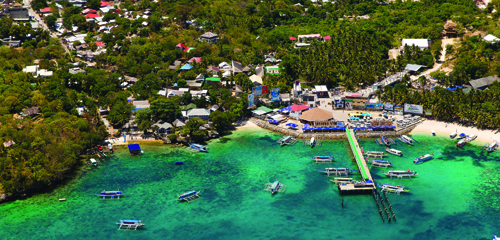
As Boracay becomes such a popular leisure destination that it no longer has any low season, signs of mass tourism taking its toll on the island are becoming apparent, from dirty streets and flooding after rains to pollution from tricycle fumes and strained infrastructure from the higher arrival numbers.

These issues are forcing industry players to grapple with questions if Boracay could cope with tourism growth without causing further damage to the natural environment, the very reason attracting tourists to flock to the island, and how the island resort could better harness its potential as a growing destination.

Randy Salvador, general manager of the recently-opened Coast Boracay, thinks that Boracay can sustain its growth in tourist arrivals.

“I believe Boracay has yet to achieve its peak compared with other beach destinations like Bali, Hua Hin or the Maldives”, he said.

Salvador expects Boracay, which is already renowned as one of the world’s premier islands, to become even more popular following the normalisation of Philippine relations with China – its second biggest market after South Korea.

The ongoing expansion of Caticlan Airport would bring with it “more air and foot traffic”, said Salvador. He added that more flights utilising bigger aircraft, resulting in cheaper airfare, would also follow.

Likewise, Joyce Jocson, Nexus Travel operations manager, also posited that the island resort can cope with increasing tourist numbers.

“Accommodation is usually the problem but in Boracay’s case, it has a growing number of accommodations, from the most economical to the most expensive,” she explained.

Meanwhile, the island continues to bask in the investment boom as more hotels and resorts are being built, an impressive number of which are upmarket and global brands. In addition, several international hotels are tabled for opening in the next year.

However, there seems to be not enough environmental planning and zoning, as many of these new developments are concentrated in the crowded White Beach area while other parts of Boracay remained underdeveloped.

The White Beach area – which has the best white sandy beach in Boracay – has done away with the division of Station 1 (luxe resorts), Station 2 (mid-market) and Station 3 (backpackers, mass market) – as new hotels and resorts blur the imaginary divisions that define the quality of accommodations in this patch of white beach.

And as the island swells in popularity, travel consultants are starting to wonder if Boracay is now becoming a victim of its own success.

Simon Ang, managing director-operations of Celebrate Life TLC, has “intentionally stopped selling” Boracay because it has been spoilt by mass tourism.

Jessica Kuan, travel consultant at Mobilair Travel, shared that Boracay now appears less inviting to tourists who perceive it as overcrowded and less pristine than before. “We have clients who prefer going to Palawan, especially El Nido, instead of Boracay,” she said.

Jeanie Ramos, inbound officer, Travel Warehouse, also observed client preferences changing from Boracay to Palawan, Davao and Bohol. She also lamented that “not much attention” has been given to the road systems in Boracay because authorities are focused on the White Beach.

Still, Ramos acknowledged that there are visible efforts to keep Boracay in good shape such as through the presence of tourist police and the overall maintenance of the island as a clean destination.

Currently, the local authorities are working towards building and improving infrastructure such as port operation facilities, widening of roads and proper sewage treatment.

This article was first published in TTG Asia November 2016 issue. To read more, please view our digital edition or click here to subscribe.

Asia’s lifelong voyagers

0

As populations grey in Asia, senior tourists are making up a growing proportion of leisure travellers to become a business goldmine for travel agencies. TTG Asia uncovers the unique preferences of this segment

nov_18-silver-tourism

SINGAPORE

Paige Lee Pei Qi
Singapore has one of the fastest-ageing populations in Asia, and the outbound silver tourist segment is becoming increasingly valued by local agents.

Chan Brothers Travel’s head of marketing communications, Jane Chang, said the company observed a continuous increase in demand from silver travellers, who constitute 40 per cent of bookings to Europe and Asia, and about 60 per cent of bookings to China with a fairly consistent year-on-year growth of about 10 per cent.

Some 35 per cent of Dynasty Travel’s leisure travel segment now belong to the “silver category” of travellers aged 50 and above, according to director of marketing communications Alicia Seah.

And this segment is proving a stable and valuable one too. Said Seah: “They are lesser risks takers (and) will rely on travel agents’ expertise to provide the travel packages – whether group tours or customised travel.”

She also observed a greater willingness among this segment to “pay more to get value for money tours, stay at quality hotels and (sample) the best of local cuisines”.

Seah explained: “With a satisfactory disposable income, less home responsibilities, more time to travel and relatively good health, (seniors) are expected to spend more than all other age groups on their travels.”

Chan Brothers has likewise witnessed “an increasingly strong co-relating trend of higher spending and frequency of purchases” in the senior segments than other age groups, said Chang.

As for preferred destinations, Seah said this group has the appetite to visit lesser explored destinations like Namibia, Tanzania, Iceland, Greenland and Eastern Europe.

MALAYSIA

S Puvaneswary
In Malaysia, changing travel motivations have pegged senior tourists as a significant segment of leisure travellers with desire for particular itineraries and destinations.

“In the past, senior travellers (tended to go) abroad for a (given) reason, such as to visit friends and relatives or attend their children’s convocation. But the trend has started to change with more seniors travelling simply to enjoy the destination and what it has to offer,” noted John Chan, business development director at Kris International Traveltours.

Abdul Rahman Mohamed, deputy general manager, channel management at Mayflower Acme Tours, said: “Many of them are well-travelled, so they like to visit (fresh) destinations such as Latin America, Scandinavian countries and the Balkans. In ASEAN, Myanmar and Laos are popular with this segment as both are relatively new destinations.”

Chan further observed in the segment a returning preference for North Asian destinations in the past two years over traditional favourites like Australia, Europe and the US due to a weak ringgit.

He explained: “China, South Korea and Japan are popular destinations due to the aggressive marketing efforts of the respective NTOs and the travel documentaries on TV about these destinations. With LCCs flying into secondary destinations, many are also venturing beyond capital cities to secondary cities (in North Asia).”

Abdul added: “They also like to be engaged in activities while travelling, so we throw in items such as cooking classes, art appreciation workshops or introductory wine tasting workshops.”

Meanwhile, Desmond Lee, group managing director at Apple Vacations & Conventions, sees an uptick in demand for cruise holidays among senior citizens in recent years. He shared: “This is due to more cruises coming to Singapore, more awareness created by the cruise operators, and more travel agents selling cruises.”

Specifically, cruises appeal to seniors for their all-inclusive packages and offer “a convenient way of visiting destinations without having to move hotels”, said Lee.

HONG KONG

Prudence Lui
With 1.2 million residents above the age of 65, Hong Kong has an active market of silver tourists.

For CTS International Science-Technology & Culture Exchange, the segment makes up half of group tours and 30 per cent of FIT business, according to director Ng Hi-on.

For Sunflower Travel Service, participants over 50 years old comprise “one third of (its) departing tours”, according to managing director Cindy Young. And unlike young travellers who favour OTAs, silver tourists rely heavily on agents as they treasure their time and don’t bother to shop around on Internet.

She added: “We have been (catering to) this segment for years and regularly roll out some unique itineraries (for them). This segment is characterised by higher spending power and medium to high-end travel products.”

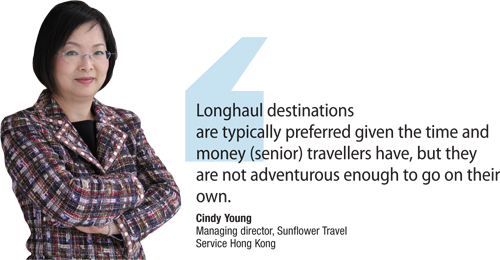
Young added: “(Being) mature and sophisticated travellers, they seek something different such as Inner Mongolia and Africa. Longhaul destinations are typically preferred given the time and money these travellers have, but they are not adventurous enough to go on their own.”

Indeed, more agents are eyeing this segment. Two years ago, Morning Star Travel Services launched a series specially catering for mature travellers.

Director of marketing director, Wilson Yeung, said: “We are approached by associations with senior members to arrange tailor-made private group travel. They choose shorthaul destinations like China and mostly depart on weekdays. Our role is to ensure smooth transportation (and comfortable itineraries involving) wine and dine.”
nov_18-silver-tourism_quote1

JAPAN
Kathryn Wortley
Japan’s large segment of silver tourists are increasingly choosing Asian destinations over the traditional European favourites, agents observed.

Europe has historically been a choice destination, but the Japan Association of Travel Agents reported that European tour sales at major agencies in March 2016 fell 4.8 per cent “due to the negative influence of the simultaneous terrorist attacks in Paris and devaluation of the yen.”

According to a representative at the association, a top priority of Japanese silver tourists when choosing a destination is safety and security.

Jumbo Tours in Okinawa Prefecture has seen their European sales fall since last year. “As a result of IS terrorism in Europe, older people are worried about going there,” said Miyuki Kinjo of the company’s outbound division.

Now, Asian destinations are most popular with customers, with Taiwan in top place, followed by Shanghai. “Many seniors are going there on sightseeing tours with their partner or friends, staying an average of two or three nights,” shared Kinjo.

The US is another popular option. “Japanese baby boomers like to visit the US because they absorbed American culture in the 1970s when they were young,” observed Hiroshi Kurosu of JTB Research and Consulting.

Many see retirement as a chance to make travelling to their dream destinations a wish come true, he explained.

Meanwhile, a study by Japan Tourism Marketing shows that, from age 50, Japanese people tend to find planning for trips troublesome, prompting travel agencies to offer greater support.

The research also shows that seniors primarily choose destinations that will boost their health and well-being.

AUSTRALIA

Rebecca Elliott
Aussies are known for their sense of adventure and propensity to travel to far-flung locations, and this desire seems to grow with age, said Australia’s leading outbound agents.

A recent survey by Peregrine found that older travellers are more interested in getting off the beaten track (30 per cent) than Gen Y (25 per cent).

“We have seen an increase in sales to adventurous destinations,” said James Thornton, managing director, Intrepid Group, whose top-selling Eastern European trip for passengers above 50 is Russia, adding that sales to Cuba for this segment is up 158 per cent from last year.

Similarly, Marty Byrne, national travel manager, National Seniors Travel, said travellers aged between 50 and 65 had overtaken younger travellers as the most adventurous group.

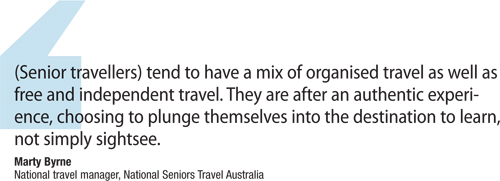
He added: “They tend to have a mix of organised travel, such as a cruise or tour, as well as free and independent travel. They are after an authentic experience, choosing to plunge themselves into the destination to learn, not simply sightsee.”

Haydn Long, Flight Centre Travel Group’s global media and investor relations manager, commented: “Customers of all ages are benefiting from (greater affordability), but particularly retirees because they have the flexibility to travel outside peak seasons when fares tend to be at their cheapest.”

Sujata Raman, managing director, Abercrombie & Kent Australia, said travellers over 55 were outperforming all other sectors and that multi-generational travel was a major trend for Aussie seniors.

“We are finding that grandparents are increasingly driving travel decisions for the whole family,” she said. “The purpose is often to commemorate a milestone event or simply to spend quality time together as a family.”
nov_18-silver-tourism_quote2

THAILAND

Michael Sanderson
Thai retirees are increasingly independent and app-happy travellers in familiar Asian countries, but tend to rely on tour operators when venturing farther afield.

MD Tours operations officer Wasuma Sivapiroonthep said Thailand’s baby boomer generation is becoming more tech savvy when travelling aboard but they are not necessarily more adventurous.

Wasuma said Europe, Japan and the US were top destinations, similar to the broader outbound trends from Thailand, although South Korea and South-east Asia were a higher priority for younger travellers. “In Europe they tend to buy tours and go in groups,” Wasuma said.

On the other hand, those visiting Japan tend to opt for independent travel. “With Google, even in Japan they can see everything, from train schedules to hotels. They can Google and book through Agoda,” Wasuma added.

While Wasuma was unable to provide the proportion of MD Tours’ clients in the baby boomer age bracket, she said they prefer relaxing activities like sightseeing and walking tours.

Thai Mice’s Jim Kullapat said while the majority of his company’s outbound customers were business-focused, there had been a recent spike in the number of older travellers arranging trips to Myanmar as it had been off-limits for so long and the country’s temples are top draws for seniors keen to see other cultures practising Buddhism.

Meanwhile, the Thai government’s push for domestic tourism and its attempt to cope with the ageing population by allowing civil servants to delay retirement until 65 may hamper outbound travel from the retiree market in the years ahead.

INDONESIA

Mimi Hudoyo
Unique needs and preferences are surfacing among Indonesian senior travellers, a segment that often travel as part of multi-generational families and within like-minded communities.

Travelling with the extended family is seen as an important activity for bonding. The preferred time to do it is during Lebaran (Muslim end of fasting month) holiday, where offices and schools are closed, usually for one week.

Such travel configurations require special efforts by agents to make sure needs of the different age groups are taken care of.

Putu Ayu Aristyadewi, vice president marketing & communications, Smailing Tour, said: “The elderly travellers may not be able to follow all the programmes that their children and grandkids like, such as climbing the Great Wall. We (arrange for a guide) to stay with silver travellers while their family enjoy the Great Wall.”

Meanwhile, most senior travellers opt for tours specially tailored for the family. Willy Sihombing, owner of Sedona Holidays, Medan, said such tours are usually designed to leave out strenuous physical activities, on top of having itineraries which are less packed with activities.

Another group of silver travellers are those who travel with communities of fellow seniors, which could include friends, prayer groups, sports groups or those who share similar interests.

Adi Pratama, assistant vice president product & market development of Panorama Tours, shared that cruising holidays are becoming popular among these senior communities.

“We see such groups taking cruise holidays together. As they are retirees, they can spend up to a month cruising.

“This is quite a new development. In the past, travellers think that cruising is boring. They started with a short cruise (before progressing to) longer cruise trips,” he added.

Willy remarked: “Not all silver travellers are weak. We have catered a group who were healthy and strong. They took a hiking tour of a tea plantation. The members are 65 years old and above.”

This article was first published in TTG Asia November 2016 issue. To read more, please view our digital edition or click here to subscribe.


To dazzling new heights

0
BKKPH-DOF-101915

Thailand is drumming up its upscale hotels and niche products as it puts on a new face for travellers with deep pockets and a taste for luxury. By Michael Sanderson

BKKPH-DOF-101915

A new suite of luxury hotels and growing airlift to destinations such as Krabi and Samui are helping Thailand gear itself towards high-end travellers as ASEAN neighbours snap at its heels.

Park Hyatt Bangkok is opening 1Q2017, while recent openings and renovations in Chiang Mai and Phuket have ramped up the country’s tourism focus firmly on the high-end segment.

Exo Travel Group assistant marketing manager Amy Mayhew said the DMC was trying to push the Park Hyatt property, which will open above the upmarket Central Embassy mall in Bangkok’s downtown, with 222 rooms including 30 premier suites, in addition to three restaurants, four bars and a ballroom.

Another property on Exo’s radar is the 25-key River Arun on Bangkok’s Rattanakosin Island, the historic heart of the city. The ornate property sits in a neighbourhood of cafes and galleries near Wat Pho, Wat Arun and the Grand Palace.

Exo is also highlighting Chiang Mai’s Akyra Manor, Phuket’s Nai Harn and Keemala, and the Hloyo mud house in Mae Salong as part of its commitment to a sustainable future.

Meanwhile, the Tourism Authority of Thailand (TAT) is looking to reframe its marketing position from value-for-money to value-for-experience as it seeks to become a quality leisure destination.

Mayhew lauded TAT’s successful use of themed marketing campaigns in recent years, with the Bangkok-based Exo having participated in a project to develop marketing material to appeal to luxury travellers.

“This included shooting both a short- and long-length video at particular participating hotels and places,” she said. “The campaign was successful and it worked well for Exo Travel’s target on the high-end market. The luxury campaign also enabled Exo Travel to gain more exposure with luxury tour agents globally.”

Meanwhile, Asian Trails e-commerce and marketing manager Niels Steeman said it was important for the company to adapt to customers’ requirements.

“Overall, we see a movement towards more niche products for our core markets, and tours and excursions that fit the wishes of the customers, mainly (for) themed excursions like culinary, honeymoon, upmarket and/or wellness programmes.”

SI Tours founder and owner Sophida Tohsofee said Thailand could shoot for the same market Dubai was appealing to, but where the Middle Eastern megastructures might be a once-in-a-lifetime trip, the Land of Smiles benefitted from repeat business.

“I think our tourism is still the best in the world,” she opined. “In Thailand, we have the land, we have the food, we have everything.”

Bill Barnett, managing director of hospitality consultancy C9 Hotelworks, pointed to the resurgence of business travellers and the MICE sector after “some dark days in 2014” as a sign of the country’s strong position.

Barnett said resorts had rebounded, with improvements from the Eastern European and Russian markets. Phuket, in particular, recorded a growth rate in domestic and international passenger arrivals on par with Bali and well ahead of Hong Kong.

“It pushes back the message of how reliant we are on the China market, and that continues to be a fact,” Barnett said. “I looked at the Phuket figures and it wasn’t just the Chinese that were growing this year; we saw proportionate growth against all the markets of 19 per cent. So it’s not just a China story.”

As well, luxury destinations Samui and Krabi both recorded increased hotel occupancy as a result of greater airlift, according to C9 Hotelworks reports.

However, Barnett expects more low-tier hotels to emerge in Samui in the coming years and warned that Krabi could be betting too heavily on mass tourism.

“As nearby Phuket is learning, bigger is not necessarily better in the long run,” he remarked.

While tourism stakeholders anticipate more luxury tourists in Thailand’s future, neighbouring destinations are also competing for leisure travellers arriving in South-east Asia.

The competition could be getting stiffer as more flights now connect to Cambodia and Vietnam.

Barnett added: “We saw Vietnam bottom out a few years ago, but we’re seeing it rising now and becoming more of a competitive force to Thailand’s traditional leisure market.”

This article was first published in TTG Asia November 2016 issue. To read more, please view our digital edition or click here to subscribe.