TTG Asia
Asia/Singapore Friday, 10th April 2026
Page 1667

Chinese travelling more in Japan but spending less

0

The number of foreign tourists arriving in Japan continued its upward trajectory in 1Q2017, although a sharp decline in per capita spending is attributed to Chinese visitors exercising more prudence with their cash.

According to Japan Tourism Agency, an estimated 6.5 million people visited the country in the first quarter, up 13.6 per cent on the same period last year. The total amount those visitors spent came to 967.9 billion yen (US$8.9 billion), up four per cent on the previous year, although the expenditure per person tumbled 8.5 per cent to 148,066 yen.


Souvenir shops at Senso-ji Temple, Tokyo

Significantly, while the number of Chinese arrivals climbed 25.2 per cent to nearly 1.7 million during the three-month period, they spent 14.9 per cent less per person.

“Last year, Chinese visitors’ main purpose for visiting Japan was to go shopping; this year, they are more keen to visit cultural and historic sights and see scenic spots,” said Nori Hayashi, director of sales for Tokyo Asean Service.

“Also, they are spending significantly less on accommodation than previously,” he told TTG Asia. “Before they were staying at big city hotels; now they are choosing cheaper business hotels or Airbnb-style accommodation.

“We are seeing this reduced spending most clearly in Chinese travellers, but also in arrivals from Taiwan, South Korea and Hong Kong,” he added.

Another factor has been the introduction of an import tax by the Chinese government on tax-free goods purchased in Japan, negating the savings.

Yukihiko Hashimoto, of the marketing division of Celebrity Cruises in Japan, agrees that the reduction in spending is most visible among Chinese travellers.

“We are hearing that stores in port cities are working harder to attract Chinese visitors and to encourage them to spend money,” he said.

Despite the reluctance of a large proportion of Japan’s inbound tourists to splash out – a trend that travel agents expect to continue – they say there has been no impact as yet on the price of Japan packages and tours.


Oakwood’s 11th property in Tokyo set for launch

0

Come May, Oakwood Asia Pacific will open its 11th property in Tokyo, its first in the region since Oakwood Worldwide was acquired by Mapletree in February.

Oakwood Apartments Azabudai’s 48 units, which range from studios to one-bedroom units, come fully equipped with a Western-style kitchen, household appliances and a home entertainment system. Services and facilities such as concierge and front desk, regular housekeeping services, high speed Wi-fi and a Residents’ Lounge are offered.

The new residence is located within Azabudai district of Minato ward, within three minutes’ walk to Tokyo Tower, 15 minutes to the Roppongi night life district and a stone’s throw from a supermarket. It also provides access to two subway lines minutes from the property.

Paying the price at national parks

0

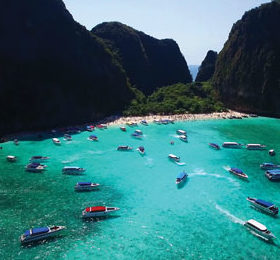
Tour operators in southern Thailand are adjusting their business strategies following The Department of National Parks, Wildlife and Plant Conservation’s (DNP) announcement that the admission fees to the Hat Noppharat Thara-Mu Ko Phi Phi Marine National Park will maintain its current rates for foreign tourists at 400 baht (US$11.50) for adults and 200 baht for children.

In February, some 500 tourist boats staged a protest at the park to demand a reduction of the admission fees for foreign tourists, citing the high charges as a deterrent for tourists to the destination.

However, DNP officials dismissed the claims and pointed out that foreign visitor numbers to Phi Phi Islands had surged on the contrary,  from 435,462 in 2015 to 1.4 million in 2016.

While it seems the park entrance fees are affecting the boat operators, some inbound agents in southern Thailand are feeling the heat too.

Nattakit Lorwitworrawat, managing director of SeaStar Andaman, said foreign tourists are not directly affected by the entrance fees as these charges are usually included in tour packages.

However, the high entrance fees weigh down on tour operation costs for inbound agents amid fiercer market competition. “We try to deal with it by introducing new products or services to our clients so that we can generate more income and survive during this difficult time” Nattakit said.

As well, the Seastar Andaman chief would like DNP to help tour operators to overcome this chronic issue by setting a more moderate price instead.

Worranuch Muangthong, sales manager of Love Andaman, said that its overseas agents had requested for the company to lower its tour package prices to the Phi Phi islands, as European  customers – which makes up around 20 per cent of its clientele – are showing a greater concern over the tour prices.

Similarly, Love Andaman has also been affected by the high entrance fees to Similan Islands (500 baht for foreign adults and 300 baht for children), and Worranuch would like the authorities to reduce the admission fees as the facility management and security on these islands still do not reach standards compared with other marine national parks.

“The measure to achieve quality tourism of the DNP is acceptable if the officials call on all tour operators to make an agreement to trade fairly by not (undercutting) tour package prices too much,” Muangthong remarked.

On the other hand, Sasina Kaudelka, general manager of Ancient Thai Travel, told TTG Asia that the entrance fees have not made a great impact on her company but she thinks entrance fees to all national parks in the country should not be raised in the future.

Moreover, she suggests that all tour operators should seek to find a solution together, control quality of services and avoid slashing tour prices. Tour operators should also adjust their business strategy to overcome unexpected obstacles and achieve sustainable business, she urged.


This article was first published in TTG Asia April 2017 issue. To read more, please view our digital edition or click here to subscribe.

Aviareps appointed as Deutsche Hospitality’s SE Asia sales rep

0

German luxury hotel chain Deutsche Hospitality has appointed Aviareps its representative in Singapore to head sales activities in the country as well as Malaysia and Thailand after recently signing its first hotel in South-east Asia.

“We are on an international growth path, and constantly expanding our portfolio by adding new markets. In the course of the expansion, South-east Asia is also moving into focus,” Marcus Cameroni, director leisure sales at Deutsche Hospitality, said.

“With the signing of our first hotel project in Thailand – the Steigenberger Hotel Riverside in Bangkok – an important step has been taken in order to gain permanent foothold in the region. We want this development to be perfectly supervised by local experts.”

Aviarep has 62 offices in 46 countries around the world.

Dusit forays into Bangladesh’s capital city

0

Dusit International will make its debut in Bangladesh with the opening of DusitPrincess Dhaka come end-2017 in the country’s capital.

The upper-midscale business hotel will open under Dusit’s newly developed franchising model – which is designed to give owners maximum returns while operating under a global brand – as part of a long-term arrangement with a subsidiary of Lakeshore Hotels.


Rendering of DusitPrincess Dhaka

Located in the north of the city, a five minutes’ drive from Hazrat Shahjalal International Airport, the 13-storey hotel will comprise 80 stylish guest rooms and 10 well-appointed suites. Facilities on-site will include an all-day-dining restaurant, a Grab ‘n’ Go outlet, a meeting room and recreational amenities such as a rooftop swimming pool.

Dusit International currently operates 29 properties in key destinations worldwide with a further 51 projects in the pipeline within the next three years.

AirAsia seizes 50% stake in travel planning startup Touristly

0

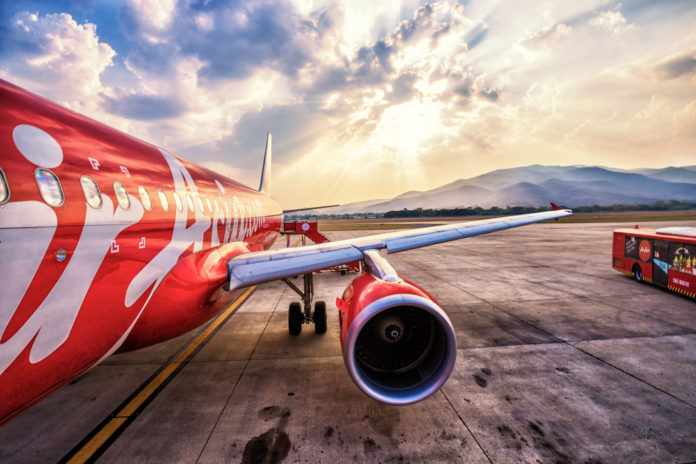
AirAsia is acquiring a 50 per cent stake in online travel planner Touristly Travel through an asset injection and loan deal valued at RM11.5 million (US$2.6 million).

Upon completion of the deal, AirAsia Group CEO Tony Fernandes will serve as chairman of the Touristly board.

AirAsia’s investment will comprise an injection of its digital Travel 3Sixty inflight magazine, valued at RM6.5 million, via AirAsia Investments and a RM5 million convertible loan for working capital and development.

Touristly, which will operate under the Travel 3Sixty brand following this deal, will gain reach via the 3Sixty digital platform and access to AirAsia’s offline advertising assets.

The transaction is expected to strengthen AirAsia’s ancillary portfolio by offering its guests on-ground activities such as restaurants, theme parks, attractions, spas and tours at more than 70 destinations that the airline operates to.

Fernandes said: “We see enormous potential in Touristly, which complements AirAsia’s existing travel offering. Our guests will be able to choose from thousands of activities when purchasing a flight and this brings us a step closer to becoming a truly one-stop digital airline.”

In May 2016, Touristly successfully raised an undisclosed pre-Series A round from Tune Group startup incubator Tune Labs, headed by Fernandes and other investors.

SriLankan Airlines revives leisure arm in Thailand

0

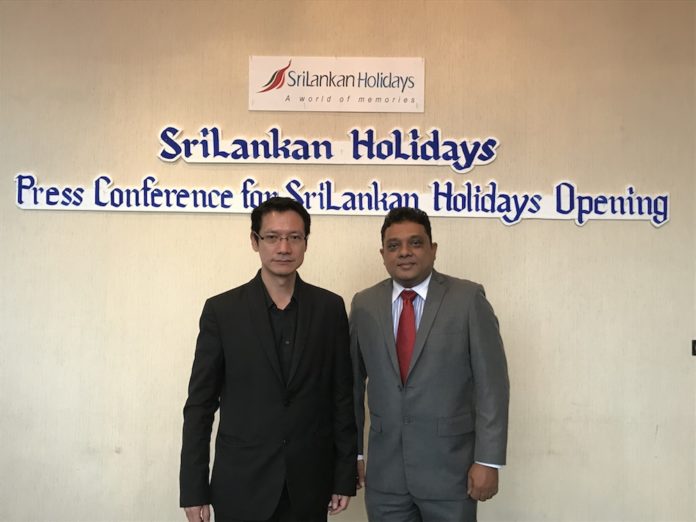
SriLankan Airlines has relaunched its SriLankan Holidays leisure arm in Thailand, with Pete Ratanachetkul, managing director of Billion Aviation, appointed to manage the business.

At a press conference last Thursday, Jayantha Abeysinghe, manager Thailand & Mekong Region of SriLankan Airlines, explained that airline is targeting to promote more offerings to Thai tourists beyond Buddhist tourism, especially in the face of increased competition from regional rivals like Japan and India.


New chief Pete (left) with Jayantha

The relaunch is expected to boost SriLankan Airlines passenger volume by 10-20 per cent in its first year.

SriLankan Holidays was tested in the Thai market in 2002. Though it met success, the project was suspended due to changes in the company.

Now, seeing the potential of Thailand as a key market to promote Sri Lanka’s tourism with the purchase of package tours soaring, SriLankan Holidays is bundling flight tickets, accommodation and tours to attract more Thais.

“Nearly 10,000 Thai tourists travel to Sri Lanka and the number increases every year. The main route from Sri Lanka to the Maldives for Thai tourists is showing continued growth,” said Pete.

SriLankan Airlines also plans to step up its frequency on the Bangkok-Colombo route from twice to thrice-daily starting July 15, 2017.

SriLankan Holidays targets six main routes – the Maldives, Sri Lanka, Seychelles, India, the Middle East and London.

Asia’s a growth market for Airbus

0

With its high population density, burgeoning passenger demand and fast-growing aviation sector, Asia-Pacific is outpacing other world regions to become a key growth engine for aircraft manufacturer Airbus.

There is demand for 13,460 aircraft worth US$2.2 trillion in the next 20 years for Asia-Pacific, making up more than 40 per cent of global demand for the European planemarker.


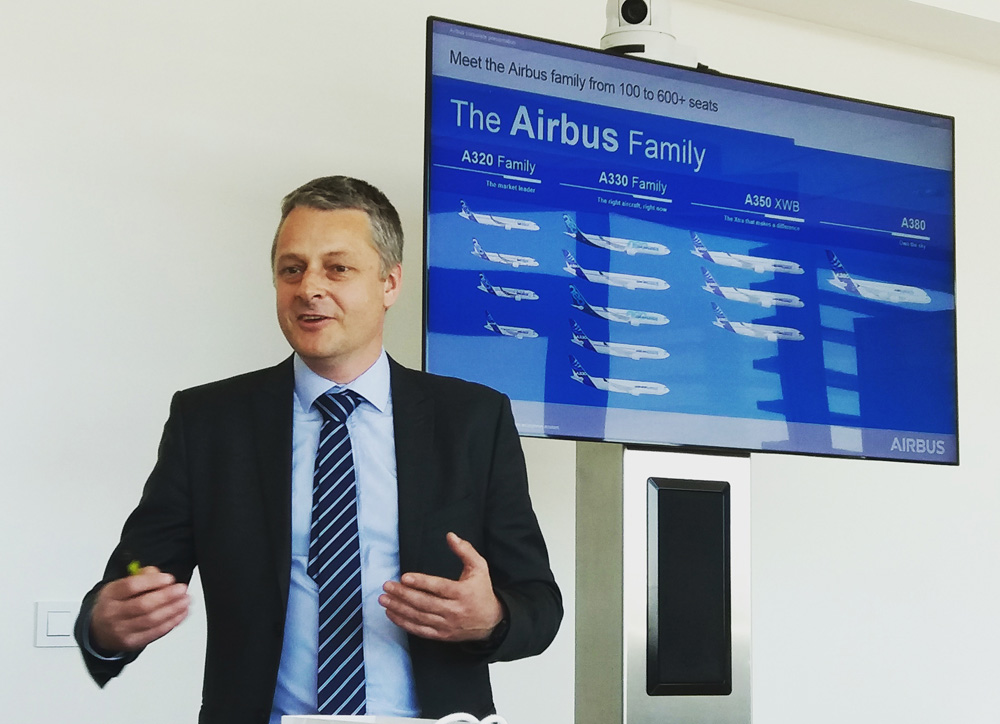
Van der Heijden: upcoming A350-1000 to meet APAC airline needs

Speaking at the delivery of the third Airbus A350-900 aircraft for Thai Airways International (THAI) in Toulouse, Isabelle Olivier, head of operations Asia, Airbus, said: “Asia-Pacific is where Airbus’ growth is, therefore our relationship with Asia is very significant.”

Of the 11 operators worlwide which have taken delivery of the A350-900s, five of them are from Asia, including THAI, Cathay Pacific, China Airlines, Singapore Airlines and Vietnam Airlines, she told TTG Asia.

Following the delivery of A350-900 to THAI last Friday, Asiana Airlines will today take delivery of its first A350, bringing to date the number of A350s delivered to 80.

“We have met big success with the A350,” said Olivier.

In particular, the A350 XWB – the latest wide-body member to the Airbus family – also sees “particularly strong demand in Asia-Pacific, said Airbus’ head of marketing, Asia, North America, Joost Van der Heijden.

Airbus has received 821 orders from 44 customers for this model, and continues to have a “strong backlog” of 744 aircraft on its order book, he added.

Furthermore, the upcoming A350-1000, with its same flying range as the -900 variant but with 40 more seats, will be well-positioned to meet the needs of airlines amid Asia-Pacific’s strong growth and competition, Van der Heijden commented.

The A350-1000 is expected to enter into service in 2H2017 with Qatar Airways as the launch customer. It is currently en-route to certification with three flight test aircraft.

Meanwhile, the A320neo and A330neo, with their lower fuel burn of of 20 per cent and 14 per cent respectively, also see strong demand from Asia-Pacific carriers, the Airbus excutives said.

In particular, the A380 continues to be a firm favourite, said Van der Heijden, with over 50 per cent of the superjumbo flights originating from or flying into Asia.

How buying GTA will strengthen Hotelbeds

0

With GTA under its belt, subject to regulatory approvals, and its acquisition announcement last February of Tourico Holidays, Hotelbeds will be by far the dominant, global B2B bedbanks player.

While the Tourico deal will strengthen its footprint in North America, the GTA buy will give Hotelbeds significant presence in the fast-growing Asia-Pacific and Middle East markets.

Former Hotelbeds’ chief in Asia-Pacific, Manuel Ferrer, who is now chairman & founder of Olea Consultancy, observed: “The GTA deal combined with Tourico means that now, there is only one world leader in the B2B wholesale business, Hotelbeds, and it is far, far, far (ahead) from the second.”

The ‘seconds’ include the likes of Hotusa, Miki, JacTravel and DOTW. When TTG Asia contacted one of them, JacTravel, for comments on how an acquisitive Hotelbeds may impact its business and the sector, JacTravel did not reply at press time.
That Hotelbeds is acquiring GTA comes as a surprise to Judy Lum, general manager of Diethelm Travel Singapore, in that both are “direct rivals and are major B2B bedbanks in their own right”.

“At the same time, it is not a surprise as consolidation is the name of the game today. Moreover, in the last five years, GTA seems to have gained ground with both suppliers and travel agents and wholesalers in Asia-Pacific, thus has become an ideal strategic acquisition target for Hotelbeds.”

Time will tell how the Hotelbeds Group intends to integrate GTA into the company. Joan Vilà, executive chairman of Hotelbeds Group, will not comment on questions such as if the GTA brand would be kept. As well, at press time, GTA’s CEO, Ivan Walter, did not respond how GTA would be integrated into Hotelbeds and whether the consolidation would lead to job cuts. Walter was quoted in a statement issued by Hotelbeds as saying: “We believe that today’s news is a milestone for the industry, and great news for our respective suppliers and customers.”

In the same statement, Vilà said: “Both of these important deals (GTA and Tourico) clearly underline our steadfast commitment to accelerate the growth of our business both organically and via M&A activity.


Vilà

“GTA is a very successful B2B travel distributor with a proven track-record providing hotels, transfers, and activities to the world’s travel trade including intermediaries, OTAs and travel agency retailers. Like Hotelbeds Group, it directly contracts an outstanding global portfolio of hotel and travel ancillary products that it connects and distributes via API integration or online booking platform.

“GTA’s global footprint and in particular its well-developed presence in the fast growing Asia-Pacific and Middle East markets is closely aligned to Hotelbeds Group’s growth strategy. We are looking forward to welcoming them to our group.”

Industry players believe that there may be several drivers for Hotelbeds Group’s move to solidify its position through organic and M&A growth. “One is perhaps the realisation that the larger B2C guys, Priceline, Ctrip and Expedia, are becoming so big that anytime soon they will compete in the B2B arena, thus you need to be very strong to face this competition if it comes,” said Ferrer.

Added Lum: “The trend of major hotel chains driving direct business via their websites and offering the best rate guarantees to loyal clients, dynamic rates to travel agents, etc, will inevitably affect the business model of bedbanks.”

Observed a source who declined to be named: “Looking forward, the hotel space will continue to be a highly competitive business. Hotelbeds enjoys the benefit of in-country purchase and delivery services throughout the world. That is a true value which OTAs do not possess. They have an opportunity to deliver measured product quality control and to sell hotels and ground services on to customers once they arrive in the destination country. If they can leverage that, coupled with the huge volume they certainly will enjoy, that would be a winning hand. It will be interesting to observe.”

Meanwhile, EQT which owns Kuoni declined to comment whether it will also be selling the other two remaining arms of the company, VFS and GTS.


Norwegian to launch London-Singapore low-cost flights

0

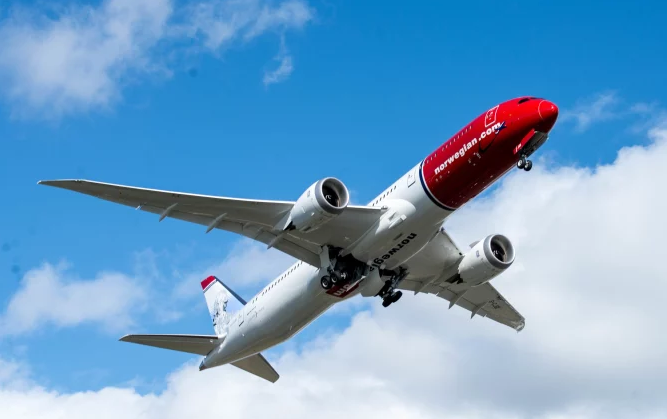
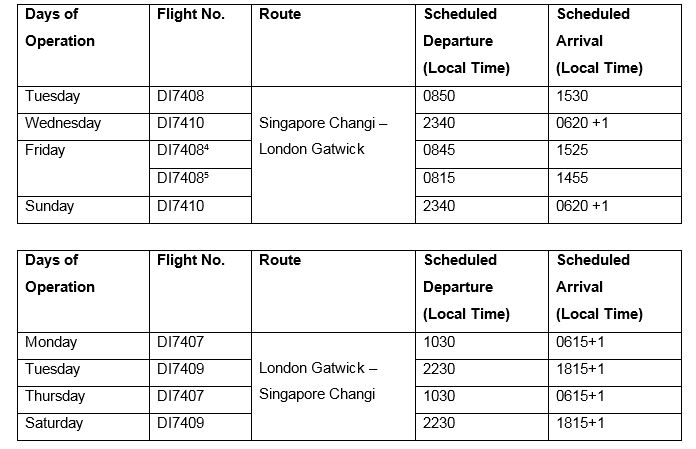
LCC Norwegian will expand its UK longhaul network into Asia when it launches the London Gatwick-Singapore route come September 28, with one-way tickets starting from S$199 (US$142.70).

Norwegian UK will operate the new four-times weekly service on the Boeing 787 Dreamliner, offering up to 344 seats across economy and premium cabins, before bumping the frequency up to five-times weekly in winter (October to March).

With a huge aircraft order and new traffic rights in place, the new Singapore route marks the first step in Norwegian’s ambitions to expand its longhaul network into new global markets, according to a statement from the airline.

Norwegian CEO Bjorn Kjos said: “The UK is at the heart of Norwegian’s ambitious plans for growth so it is a significant moment not only to launch this exciting new route, but also for it to be the first longhaul route to take to the skies with our new ‘Norwegian UK’ subsidiary.”

Headquartered at London Gatwick, Norwegian UK was established in 2015 to give the airline a stronger foothold in the UK market, and allow it to access bilateral traffic rights to new markets in Asia, Africa and South America.

The flight schedule is below.