TTG Asia
Asia/Singapore Monday, 29th December 2025
Page 1657

It’s bonjour Maldives for Air France

0

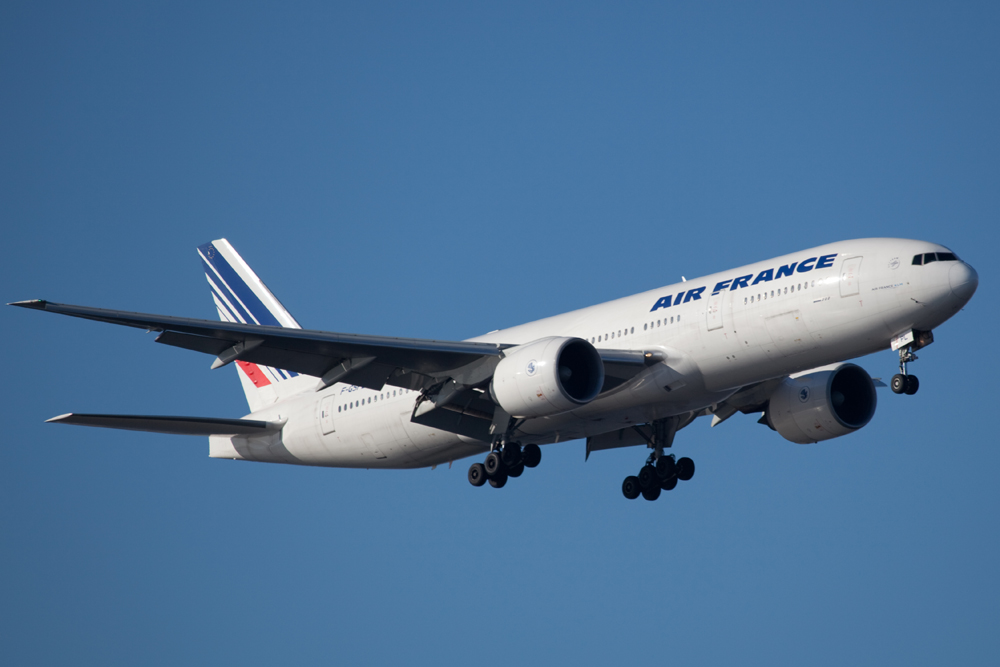
air-france-boeing

Air France will commence twice-weekly flights between Paris and Malé in the Maldives from November 1 this year.

On Wednesdays and Saturdays, the service will depart Paris-Charles de Gaulle at 20.50 and arrive in Malé at 10.20 the following day. It then returns from Malé at 13.05 (Thursdays and Sundays) and lands in Paris at 19.35.

The flights will be operated by Boeing 777-200 with 312 seats – 28 in Business, 24 in Premium Economy and 260 in Economy.

Franck Terner, Air France CEO, said the launch of this route will strengthen the airline’s position as a “European leader in services to the Indian Ocean”.

New hotel openings: February 6-10, 2017

0

The latest hotel openings and announcements made this week

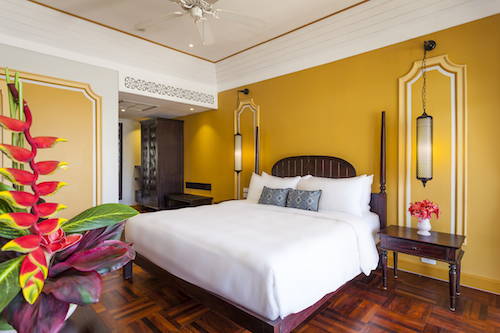
banyan_tree_luang_prabang_deluxe_room

The Grand Luang Prabang
The Banyan Tree Group has welcomed The Grand Luang Prabang into its fold. Located along the banks of the Mekong River, the 59,000m2 Xiengkeo Palace houses 75 rooms and suites, all of which are decorated in a blend of French colonial architecture and Laotian motifs. Facilities on the compound include a restaurant, bar, swimming pool and the Xiengkeo Museum.

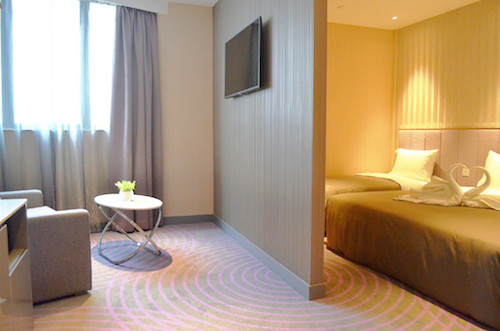
Silka Tsuen Wan
Dorsett Hospitality International has opened its value-led brand Silka Tsuen Wan in Hong Kong. Featuring 409 rooms across five categories, all guestrooms come with free Wi-Fi and the use of a handy smartphone. As well, the hotel provides complimentary shuttle buses to nearby shopping attractions and MTR stations. Facilities on-site include a gym, multifunction room and an all-day dining eatery.

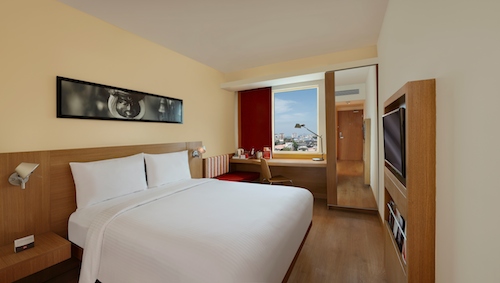
ibis Kochi City Centre
AccorHotels has opened its first ibis in Kochi, Kerala, near to the upcoming Kochi Metro Station. There are 115 guestrooms, furnished with the signature Sweet Bed by ibis and Wi-Fi access. Facilities include a gym, lobby bar, Spice It – the in-house restaurant that features live cooking stations – and an eight-hour breakfast concept starting from 04.00 until 12.00. There are two meeting rooms as well, which can accommodate up to 70 guests.

Oaks Bodhgaya
Marking the Oaks Hotels & Resorts’ debut in India is the new-build Oaks Bodhgaya. Located in the state of Bihar, the property features 78 rooms and suites, all of which come with regular mod cons such as Internet access, a flatscreen TV, minibar and an in-room safe. Amenities on the property include a gym, rooftop meditation space, library lounge, an international all-day dining restaurant and a banquet hall for events.

Indonesia attempts to win over Singapore’s millennial travellers

0

ubud-food-festival
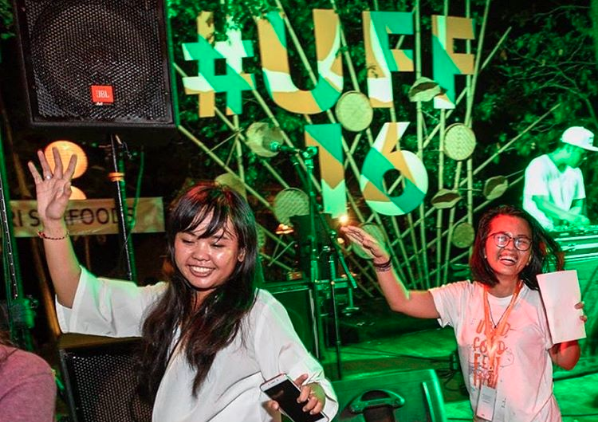
Ubud Food Festival 2016 (Photo credit: Instagram @ubudfoodfest)

Indonesia is tapping into Singapore’s emerging millennial market by going beyond conventional methods of promoting the country, as part of its efforts to reach its vision of 20 million tourists in 2019.

According to Rizki Handayani, director of promotion for South-east Asia at the Indonesia Ministry of Tourism, the industry is working with creative communities to explore what millennials expect in a destination and develop ideas.

“A lot of young Singaporeans are already experienced travellers,” she said, with more of them now preferring to experience the lifestyle, gastronomy, traditional living and arts at a destination, rather than sightseeing and shopping.

To keep up with the digital-savvy millennial market, Indonesia’s Smailing Tours DMC intends to launch an online booking platform that allows consumers to book properties, tours and activities individually.

“This provides them the flexibility of choice because millennials don’t want to be told what to do, rather they want to tell you what they want. It’s whether we listen to them or we disregard this market altogether,” said Jason Lim, COO, Smailing Tour DMC.

“We have to be able to cater to their needs because although millennials normally try to save as much as they can in terms of air tickets and hotels, they, surprisingly, are willing to splurge on experiences,” he added.

For Gupta Sitorus, culinary tourism expert and publicist at WIR Group, a creative technology and branding strategy firm, the real challenge for the travel sector lies in providing something beyond the traditional packages.

“Bali is now trying to position itself as a gastronomic centre with the Ubud Food Festival, (and) other regions also have potential to leverage this market with their own unique selling points. It is up to us in Indonesia to rebrand and revamp.”

Turkish Airlines to begin Phuket flights come July

0

turkish-airlines

Turkish Airlines will begin four-times-weekly flights between Istanbul and Phuket from July 17, 2017.

The flight will depart Istanbul on Mondays, Thursdays, Saturdays and Sundays at 14.30, and arrive in Phuket at 04.00 the following day.

The return leg will operate on Mondays, Tuesdays, Fridays and Sundays, and will depart from Phuket at 05.30 and land in Istanbul at 12.00.

New interactive map lights up nightlife at Hotel Jen

0

hotel_jen_night_light_map01_-_landing_page

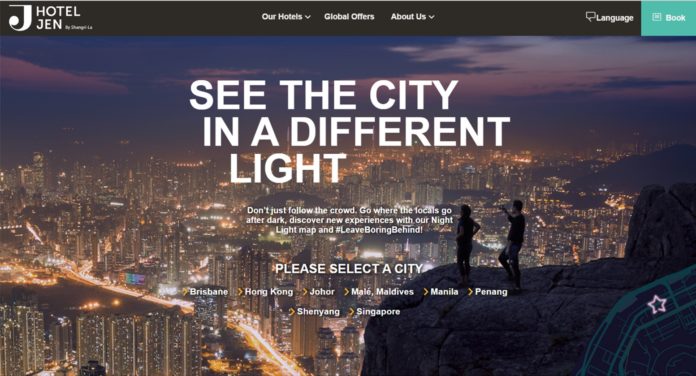
Shangri-La Group’s newest hotel brand Hotel Jen has unveiled its first experiential programme, Night Light, which will run across all its properties in the Asia-Pacific.

Going live after sunset each day, the interactive Night Light maps use real-time geo-tagged social data from residents in each of the nine Hotel Jen cities – including a select group of local influencers – to highlight hotspots where travellers can go after dark to eat, play and relax like a local.

Guests staying at Hotel Jen can also participate in the weekly Night Light events organised by the hotels. Activities range from salsa dances and rooftop yoga lessons in Singapore to night-time walks atop Hong Kong’s Victoria Peak to aqua Zumba at Puteri Harbour.

Marisa Aranha, vice president of sales and marketing for Hotel Jen, said: “Through this new Night Light programme, we are encouraging our guests to head out and explore the thriving activities that each destination has to offer between sunset and sunrise. There’s more to a city after dark than what is featured in conventional guidebooks and we want to provide a new perspective for busy business travellers, unabashed night owls and curious families through curated insider insights.”

Roland Fasel is the new COO at Aman

0

roland-fasel-coo-aman
Roland Fasel

Aman has appointed Roland Fasel, formerly general manager of The Dorchester and Regional Director, UK, for Dorchester Collection, as COO.

In his new post, Fasel will work closely with chairman, Vladislav Doronin, and oversee all facets of Aman’s hotel, resort and private residence operations and help define the future vision and strategy.

He commented on his priorities as COO: “The continued integration of Aman Wellness, the forthcoming introduction of a new culinary concept and a robust pipeline of development projects are all high on my agenda.”

A Swiss native, Fasel has over 25 years of experience within the luxury hospitality industry, including positions at Badrutt’s Palace, St Moritz, Four Seasons Hotels, Regent Hotels and Shangri-La.

Most recently, during his eight-year tenure with the Dorchester Collection where he held dual roles, he was instrumental in growing their business, overseeing new openings, residences, spa and the repositioning of the Dorchester Collection brand.

Bernabé joins Avani Hotels & Resorts as group director

0

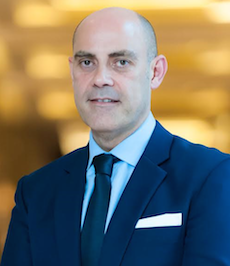
Minor Hotels has appointed Alejandro Bernabé as group director of Avani Hotels & Resorts to drive performance of its properties in sales, distribution, marketing, PR, brand standards and guest experiences.

A seasoned hotelier of over 20 years, Bernabé has covered assignments including management, practical operations and F&B, accumulating experience in both city hotels and resort properties.

Alejandro_Bernabe_-_Group_Director_AVANI_Hotels_&_Resorts

He was previously with Kempinski hotel group for 16 years in various roles including food and beverage manager, resident manager and general manager, across its numerous hotels.

In for a wild ride

0

Australia has over the years gained a reputation as a prime destination for theme parks, but this now hangs in the balance with newer and more affordable alternatives surfacing elsewhere in Asia-Pacific

02FEB-10-sunway-lagoonThe combined thrill power of Dreamworld, Sea World, Movie World and the likes in the Gold Coast was one of the key drawcards for Asian travellers to Australia before the turn of the century. A new generation of theme parks and integrated resorts has since mushroomed across Asia, with Asian agents now reporting mixed views as to whether Australia can retain its status as a reigning theme park destination.

Outbound agents in markets such as Singapore and the Philippines are confident that Australia will remain a top destination for theme park lovers, while elsewhere in Malaysia, Cambodia and Japan, sentiments are strong that new and innovative theme parks in Asia could give their Australian counterparts a run for their money.

It’s wholesome Down Under
“Even with a gradual increase in theme park openings in various parts of Asia, Australia still maintains its charm and is perceived as a classic year-round destination with well-built theme parks,” said Chan Brothers group managing director, Anthony Chan.

Other agents, too, are quick to point out that there’s more to Australia than just theme parks, which, when combined with its unique wildlife, natural sites and adventure offerings, make the country an attractive proposition across a broad spectrum of age groups and demographics.

Dynasty Travel Singapore’s managing director, Clifford Neo, said: “Australia has always been popular as a family playground with great food, and the good exchange rate will make the destination even more affordable for (Singaporean) travellers.”

Karan Anand, head – relationships, Cox & Kings India, agreed: “Australia offers some of the most splendid coastlines and marine tourism that are unique compared to the rest of the world. Australia ranks among the top go-to places for many Indian travellers and is viewed as a composite travel destination with an array of activities.”

Rakshit Desai, managing director, FCM Travel Solutions, India, stated that theme parks constitute just a small part of holiday packages for an “aspirational destination” like Australia. “With theme parks opening in Asia, it is safe to assume that Indians will now shift their attention to the overall experiential quotient that Australia offers instead of (solely on) theme parks,” he added.

Outbound travel behaviour from the Philippines also tell a similar story, with agents such as Marites Pastorfide, assistant general manager of the Philippines’ Wayfair Tours, stating that Filipinos visit Australia “for its totality”.

02FEB-10-AustraliathemeparkIn China, Nicole Wang, director of resource procurement, CTS MICE Service, said Australia remains one of the most popular outbound destinations with its theme park draws, which are commonly used by incentive groups for training programmes and pre- and post-tour visits. However, she urged the greater use of Chinese signs and information in order to appeal to Chinese theme park goers.

And for markets with no shortage of theme parks on their home grounds, Australia’s uniqueness becomes even more important as a pull factor to justify an overseas theme park experience.

“Parks that feature animals are far more popular because iconic Australian animals – kangaroos, koala bears, crocodiles – are hard to find in Japan,” observed Koichi Suzuki, sales manager for Australia specialist Southern Travelnet.

Tsuneaki Aoyama, CEO of Tokyo-based A’sway, concurred, pointing out that Australian theme parks that “show off sports, the outdoor life and wildlife” best capture the attention of his Japanese clientele.

However, David Yan, MICE general manager at Hua Yuan International Travel China, notes that theme park visits are “not a must” for Chinese travellers to Australia. “While (Australia) remains popular, demand is not as strong as before,” he remarked.

“Theme parks can be part of a tour, but it is usually not a priority or the reason to go to (Australia) unless it is a family vacation or part of a teambuilding group.”

The deadly mishap, which took place at the Gold Coast’s Dreamworld late last year, hence didn’t receive much attention in the local media as it was not a well-known destination for Chinese travellers, added Yan.

As well, most trade players interviewed across Asia-Pacific also stated the Dreamworld accident has not dealt a significant blow to demand, although Hong Kong’s Morning Star Travel Services told TTG Asia that it took the attraction off its itineraries shortly after the accident.

Pastorfide is positive that Australia theme parks’ overall reputation of being well-maintained, professionally run and offering different kinds of attractions remain its strongest suite.

Novelty rides, affordability keep Asia hot
The success of theme parks in Japan is demonstrated by the frequency with which they open or new attractions are added to existing parks.

Universal Studios Japan has announced plans to add an area dedicated to the Super Mario character, while a Nemo attraction will open next year at DisneySea. Legoland Japan is scheduled to open in Nagoya this year, while the Moomin characters will have their own park in Saitama Prefecture by end-2018.

Said Southern Travelnet’s Suzuki: “Interest in Australian theme parks was higher 10 years ago, but the typical reaction we get from Japanese travellers now is that Tokyo Disneyland, DisneySea or Universal Studios Japan are bigger and have better rides.”

This is also a trend that Adam Kamal, CEO of Olympik Holidays, observes of the “mass market of Malaysian theme park goers”. Promising Malaysian destinations such as the Movie Animation Park Studios opening this year in Perak and Sunway Lagoon in Selangor, as well as foreign ones like Shanghai Disneyland, have roused the curiosity of many Malaysians, he added.

The attractiveness of Australia’s theme parks is clearly sliding for mature markets like Hong Kong.

Morning Star Travel Services, general manager, Dannia Cheung, said Hong Kong travellers’ love for novelty have them seeking new theme parks in South-east Asia and undermining traffic to establishments in Australia, which “have been built for a while and are (relatively) outdated”.

Furthermore, more Asian travellers are turning away from Australian parks in favour of more affordable alternatives sprouting up across the region.

Desmond Lee, group managing director at Apple Vacations & Conventions, remarked that Asian theme parks have a broader appeal to Malaysians as entrance fees and overall travel expenses are lower than Australia.

In the Philippines, Lyn Galon, travel consultant, Scorpio Travel and Tours agreed that affordability is now an especially large factor that has affected travel to Australia and other outbound destinations, with the peso at an eight-year low of 50 to the US dollar in November 2016.

Dreamworld was removed from packages at Hong Kong’s Hong Thai Travel Service, with deputy general manager Daniel Chan citing lack of updates to its attractions and pricey admission fees as the main reasons.

Some outbound operators in Thailand have gone as far as to remove theme parks from their itineraries altogether. Suparerk Soonrangura, founder and managing director of NS Travel & Tours, elaborated that the growth of charter flights to Thailand and competition among LCCs caused price wars in outbound tour business in Thailand. Clients were hence looking for cheap tour packages, prompting tour operators to exclude theme parks.

Meanwhile, agents in Cambodia expressed that Australia remains off the map for Cambodian travellers who are instead opting for theme parks nearer home, such as Disneylands in Hong Kong, Shanghai and Tokyo.

Seang Volak, owner of Cambodia’s Palm Tours, said: “China is traditionally a more popular destination for theme parks. Cambodia has close ties with the country, there are more frequent and direct flights and it is closer.”

Still, some opine that efforts to refresh theme park attractions may not be enough to guard against the winds of change affecting travel demand.

Somchai Chomraka, managing director of Weekend Tour Thailand noted that while theme parks were popular among Thai travellers in 2006 – especially with the opening of Disneyland parks in Hong Kong and Tokyo – this soon dwindled in 2010 when online games became famous, leading many agents to exclude theme parks from their main programmes.

Even the newly opened Shanghai Disneyland was relegated to an optional part of Weekend Tour’s itineraries with demand already on the decline, according to Somchai.

To him, these are all part of a business cycle. “Theme parks are replaced with water parks which can be found in Thailand’s beach destinations such as Hua Hin, Pattaya, and Phuket. Then again water parks will lose its attractiveness eventually,” he mused.

– Reporting by Paige Lee Pei Qi, S Puvaneswary, Julian Ryall, Rosa Ocampo, Caroline Boey, Prudence Lui, Rohit Kaul and Marissa Carruthers 


Can HK keep its amusement?

Shanghai Disneyland attracted four million visitors in just four months since opening in June 2016, but agents in Hong Kong insist that the declining performance of their domestic theme parks are attributed to factors in the broader economic landscape rather than a mere diversion of traffic to Shanghai.

Observing that the new Shanghai attraction has had no impact on Hong Kong Disneyland (HKDL) was Wing Wong, managing director, W Travel Service, who explained that the former mostly targets traffic from northern China while the latter caters more to south and south-west China as well as South-east Asia.

hong-kong-disneyland-iron-man-experience-aspirantsgWong added: “Both parks have different styles – the Shanghai one clings to Chinese culture while HKDL has a more international style.”

Still, theme parks in Hong Kong have found themselves in the weeds, with industry players pointing to the global economic uncertainty and a plunge in mainland Chinese arrivals, a trend that preceded the opening of Shanghai Disneyland.

HKDL laid off nearly 100 staff in April 2016 and recorded a net loss of HK$148 million (US$19.1 million) for the fiscal year ending early October 2015, with vice president, sales and distribution marketing, Terruce Wang stressing that the park’s 2016 performance was “aligned with Hong Kong’s overall arrival numbers”.

Wang continued: “We observed some positive trends in our international markets over the past few months and attribute this to our efforts in South-east Asian markets and the launch of a strong franchise in our park, Star Wars: Tomorrowland Takeover. This proved to be popular not just with our traditional family segment, but also male and young adult guests.”

He added that the park would continue to ride on the excitement and leverage popular Disney franchises, such as through the launch of the Iron Man Experience last month and the opening of 750-room Disney Explorers Lodge in 2Q2017.

Further ahead, a multi-year development plan spanning 2018 to 2023 (subject to funding approval) may result in the addition of Frozen and other Marvel Super Heroes attractions.

Also moving forward with new plans is Ocean Park, whose 2015/16 annual report showed a 18.8 per cent drop in visitors to six million.

Executive director of sales & marketing, Vivian Lee said starting January 2017, admission fees were increased to HK$438 for adults and HK$219 for children/seniors. In addition to the two hotels under construction, the new all-weather Ocean Park Water World will extend opening hours to offer night attractions. – Prudence Lui  


This article was first published in TTG Asia February 2017 issue. To read more, please view our digital edition or click here to subscribe.

Getting Gen Y to love cruising

0

Cruise lines are doing more to change Asian millennials’ mindset of cruising from ‘what my parents and grandparents do’, to a vacation alternative they too desire to have.

02FEB-10-ITS2016_D1_PhotoCredits__COLOSSALPHOTOSXALLISAMAZING_468
Photos by Colossal Photos and All is Amazing

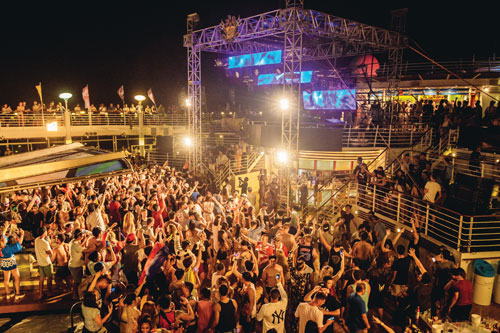
It was an unusual sight – 3,800 passengers almost all under the age of 30 onboard the Mariner of the Seas last November for a three-night cruise. Their main attraction? The Electronic Dance Music (EDM), Asia’s largest music festival at sea since its inception in 2014.

It’s The Ship transformed the Royal Caribbean vessel into a non-stop heart thumping dance floor. Parties went on from dawn to dusk everywhere on the ship, from the main deck with its hot tubs and pools, to the bars, clubs and lounges.

This hedonistic floating music festival is a way cruise lines are changing the mindset of millennials that cruising is only for the rich or their parents’ generation. Royal Caribbean’s managing director, Singapore and South-east Asia, Sean Treacy, said millennials comprise about 20 per cent of the cruise line’s guests in the region.

“Many young people in Asia have never cruised before or have only done so once or a few times in their childhood, so their idea of cruising can be rather outdated and limited. It’s no surprise that a lot of them do not find cruising appealing.” Hence, said Treacy, there is a huge opportunity to grow the pie.

Events like It’s The Ship and other music-themed cruises lure the younger generation. Treacy pointed out the enormous publicity generated, especially on social media, raising awareness that there’s a slew of onboard entertainment and activities that can be enjoyed, from ice skating, inline skating, rock-wall climbing and basketball to street parties.

Royal Caribbean has added more facilities that appeal to youths, including the first sky-diving simulator at sea, a zipline and digitally innovative shows.

Princess Cruises too is seeing an upward trend for shorthaul cruises by first-time millennial cruisers, according to South-east Asia director, Farriek Tawfik.

Last October, it launched a new Time Back advertising campaign for the South-east Asian market, aiming at millennial women with hectic lifestyles to relax on a cruise.

The campaign showed how guests could de-stress onboard at places like the Izumi Japanese Bath or enjoy fine food at the ships’ specialty restaurants.

Tawfik said: “Given today’s demanding work environment, we decided to cater specifically to the region’s growing traveller segment of savvy yet work-weary female professionals in search of a holiday of elegant service and ultimate pampering.”

As staying connected is their top priority, Princess Cruises also now offers Wi-Fi packages to millennials. “They document every detail on social media,” Tawfik said.

Another cruise company that is taking the millennial market seriously is The Uniworld Boutique River Cruise Collection, part of The Travel Corporation. Uniworld even launched a new brand, U By Uniworld, last December just for this customer set.

Dangling the “Instagram and Snapchat-worthy rivers of Europe”, the company promised that the new brand will  deliver immersive itineraries with longer stays that focus on local experiences, restaurants, bars and nightlife.

Ellen Bettridge, president and CEO of Uniworld, said in a statement that the brand will offer “a new way for exploratory, younger travellers to experience the pulse of Europe”.

“We are targeting an active traveller between the ages of 18 and 40, with everything from the décor, dining and cocktail service to the land activities thoughtfully curated to appeal to, and meet the needs of, this audience,” she said.

Hip and fun
Tour operators interviewed too believed there is huge potential to tap younger cruise travellers, and laud efforts of cruise lines to position themselves as, in the words of Jess Yap, general manager at Country Holidays Singapore, “hip and fun”.

However, Dynasty Travel’s managing director Clifford Neo opined that shorter cruise itineraries of four to six days will be more than enough for this crowd as they may get bored beyond that.

There are also other factors that deter millennials to cruise, which cruise lines must overcome, he said. “They may not like the strict food and entertainment schedule, as well as the lack of time they get to spend in a destination when the ship pulls up there.”

Nevertheless, Neo agreed that the injection of new forms of entertainment onboard is helpful in changing the perception of cruises as boring.

“Cruise ships are now brimming with activities and all these developments can show the (younger) cruise passengers that cruising is actually more active than they think,” he said.

Chan Brothers Travel Singapore observed that while its main bulk of cruise travellers is families, the proportion of millennials has been stable and is expected to increase. A spokesperson attributed this to an overall paradigm shift in travel over the years, where holiday-makers, both young and old, start to appreciate vacations to recharge and rejuvenate instead of packing the holiday with endless sightseeing.

“A regional cruise vacation may include up to three offshore destinations, which millennials may find appealing to them as they are able to explore different cities,” she said.


This article was first published in TTG Asia February 2017 issue. To read more, please view our digital edition or click here to subscribe.

Priceline Group snaps up Momondo for US$550 million

0

momondo-priceline-acquisition

The Priceline Group has announced the acquisition of the Momondo Group in a cash deal worth US$550 million.

The Momondo Group, which operates European travel meta engine Momondo and global flight comparison and travel deals publishing platform Cheapflights, will now roll under The Priceline Group’s leading travel meta brand, Kayak.

“Metasearch is appealing to consumers and we’re keen to expand our global footprint,” said Glenn Fogel, CEO of The Priceline Group. “Momondo and Cheapflights will be nice additions to our meta portfolio under Kayak.”

The deal is expected to close later in the year, subject to regulatory approval. Headquartered in the UK and Copenhagen, with offices in Boston, the Momondo Group, currently a portfolio company of Great Hill Partners, will report to Kayak CEO Steve Hafner after the acquisition.