TTG Asia
Asia/Singapore Friday, 24th April 2026
Page 1651

New SVP and chief HR officer for Oakwood Worldwide

0

Seasoned HR executive Craig Simmons has joined Oakwood Worldwide as senior vice president (SVP) and chief human resources officer (CHRO), reporting directly to new CEO Chris Ahearn.

Simmons has more than 25 years’ experience and was most recently CHRO for American Apparel. He has been an HR leader for the Screen Actors Guild Pension & Health Plans, Catholic Healthcare West, Cedars-Sinai Medical Center and Nestlé and has had his own consulting company.

Craig Simmons

Embattled but unbowed, Philippines’ all out to counter negative image

0

The embattled Philippine travel trade is using every avenue to improve the destination’s image, following the latest attack of a heavy indebted gambler at the casino of Resorts World Manila (RWM) last Friday after a series of unfortunate events in recent months.

The RWM casino attack, which claimed 38 lives including the gambler’s, came on the heels of ongoing clashes between the military and ISIS affiliated terrorists in Marawi that led to the imposition of martial law in Mindanao. An earlier failed terrorist attack in Bohol and terrorist threats in central Visayas had also led to travel advisories from various countries.

Marlene Insigne, tours division manager, Southeast Travel Corp, said they immediately sent assurance to their clients and counterparts abroad, attaching the letter of Benjamin Santiago, director, National Capital Region (including Manila) on the Department of Tourism addressed to tourism stakeholders.

Santiago in his letter urged Philippine stakeholders to assure their counterparts abroad that Manila and the nearby regions remain a safe destination for visitors, emphasising accurate information dissemination is critical.

“We continue to work closely with you by providing you with reliable updates on matters that may affect tourism and your businesses and assist in minimising any adverse effect that may arise because of lack of information or worse, inaccurate reporting in the media,” he wrote.

Insigne said that a group of eight from the US has not cancelled their booking for this week at Belmont Hotel, part of the RWM complex, which she expects to have tighter security.

Bernadette de Leon, general manager, Amiable Intertours, said that while they can only “wait and see until things get better”, the Philippines still has time to recover its image.

De Leon said that the RWM attack is “an isolated case” and not an act of terrorism, adding that martial law in Mindanao is only for 60 days and will be lifted once the terrorists are defeated in Marawi.

Fe Abling-Yu, one of the founders of the Asia Premium Travel Mart (APTM) which will be held in Manila on June 20, said the mart is hit by some cancellations “but that this is also the best time to promote the Philippines”. She is also encouraged that there are over 10 APTM buyers and media who will go on a Davao fam trip.

On Facebook, travel agents began challenging their friends here and abroad to post pictures of the Philippines to show it as a great place. “Let’s counteract the negativity and help ourselves,” said Rajah Tours president Jojo Clemente.


Nepal tourism seeks new source markets

0

An interest in cultivating new visitor source markets is apparent among Nepal’s tourism stakeholders at the inaugural Himalayan Travel Mart, which took place in Kathmandu last week.

Deepak Raj Joshi, CEO of Nepal Tourism Board, said tour operators should target emerging markets such as Vietnam and Cambodia, away from the traditional sources of Europe, China and the US.


One of the temples in Lubmini, a Buddhist pilgrimage site in the Rupandehi District of Nepal

He said: “We need to reach out to new markets where the economy and outbound tourism are growing rapidly.”

Home to many important Buddhist sites – the largest being Lumbini, the birthplace of Buddha – Nepal appeals to many South-east Asian Buddhist countries, and this element needs to be pushed.

Suman Pandey, chairman of PATA Nepal, added: “We have more direct flights, and many of these countries can reach Nepal within three to four hours. Nepal needs to be promoted to these countries.”

Tapping into the youth sector from neighbouring India and Bangladesh for weekend getaways and short breaks is another viable segment, said Joshi.

Growing flight connectivity has made the country more accessible, coupled with new products such as ecolodges and community projects being developed in Kathmandu and the surrounding areas.

Shital Chandra Dharel, executive director of Himalaya Heart Treks and Expeditions, said: “While trekking or safaris may take a week or more, there are a lot of experiences in Kathmandu and the surrounding areas that can be enjoyed in a short few days.”

Ctrip advances global ambitions with Centara partnership

0

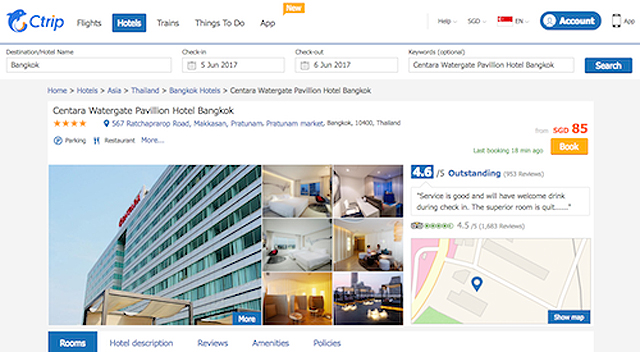
Ctrip has partnered Centara Hotels & Resorts, one of Thailand’s largest hotel groups, as it seeks to strengthen its presence in South-east Asia and offer products from a broader range of geographical locations.

The Chinese OTA giant will work with Centara on issues of supply support, online marketing, user rights protection and system direct connection, said deputy general manager of Ctrip hotel business, Xiao Yuan.

Ctrip is also expected to seize the opportunity from the cooperation to create more travel package deals in Thailand.

“Thailand is one of the most popular destinations for Chinese tourists, and will remain so for a long time. Therefore, through closer cooperation (with Centara), Ctrip’s overseas presence in Thailand will continue to deepen and will extend elsewhere in South-east Asia, better serving customers,” Xiao added.

Thomas Russell, Centara’s vice president, added: “Ctrip is Chinese tourists’ preferred website for booking outbound travel. With the support of Ctrip’s site traffic, we have a great opportunity for exposure, which will further enhance public awareness of our brand.”

According to data from Thailand’s Ministry of Tourism and Sports, nearly 8.8 million Chinese travellers visited Thailand in 2016. Among them, 2.5 million (+91 per cent y-o-y) had used Ctrip, meaning that almost one in three Chinese tourists to Thailand booked through the OTA.

Xiao also noted that Ctrip will accelerate the pace of its overseas expansion this year. In addition to Thailand, Ctrip will also focus on Japan, Singapore, Australia, Indonesia, Vietnam and eight other countries.

First ASEAN Sustainable Tourism Awards now open for entries

0

The inaugural ASEAN Sustainable Tourism Awards (ASTA) is welcoming entries from tourism operators in South-east Asia.

Launched as part of ASEAN’s Tourism Strategic Plan 2016-2025, ASTA aims to boost the profile of sustainable tourism businesses in South-east Asia, promote responsible tourism in the region, combat seasonality and rebalance tourist flows towards best practice tourism experiences.


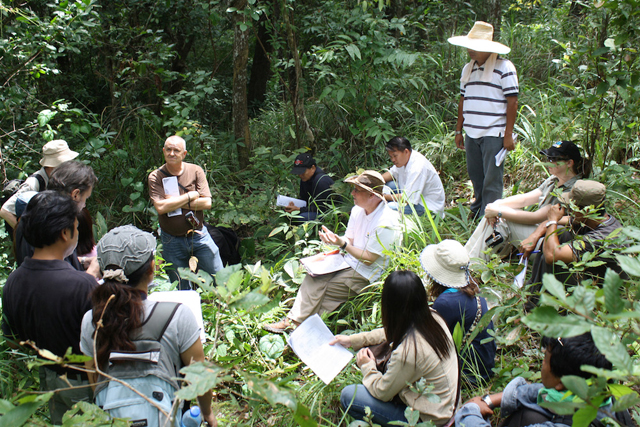
Learning in the forest

The biennial awards will take place every two years with a dedicated theme decided jointly by ASEAN NTOs.

With nature-based tourism as its theme this year, the award will recognise two winners from each ASEAN member country, representing urban and rural sectors respectively.

The 20 winners will be highlighted on their NTO’s website and www.aseatourism.travel and receive exposure as a national best practice operator during press conferences and trade shows such as ATF, TRAVEX, ITB and WTM.

The awards ceremony will take place during the ASEAN Tourism Forum in Chiang Mai in January 2018.

Applications close on August 15, 2017.

New shuttle service links Jakarta airport and metropolitan area

0

The Indonesian Ministry of Transportation has launched the Jabodetabek Airport Connexion (JAConnexion), a bus service connecting 15 hotels and seven malls in Jabodetabek (Jakarta-Bogor-Depok-Tangerang-Bekasi) to Soekarno-Hatta International Airport.

Initiated by the Jabodetabek Transportation Management Board, the service is operated by four major bus operators deploying a total of 91 buses.


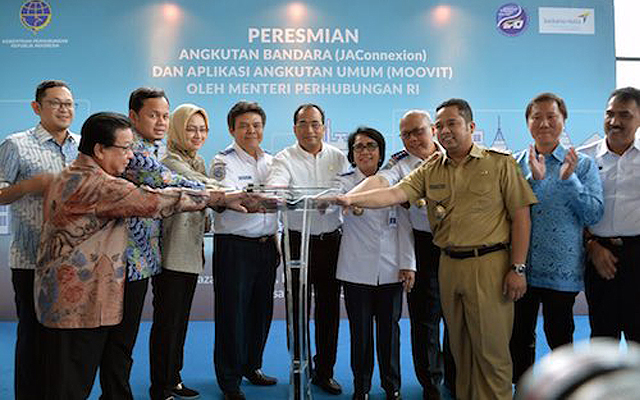
Officials at the launch of JAConnexion. Photo credit: kabartangsel.com

Indonesia’s minister of transportation Budi Karya said: “Soekarno-Hatta (sees) traffic of 150,000 (people) a day and 25,000 (more) work at the airport. Such a transportation service has become mandatory, but 91 buses are not enough. I expect by the end of the year, we will have 400 buses.”

JAConnexion will give travellers an alternative mode of airport transport on top of the Jakarta Lite Rapid Transit train service, which will start operating soon.

Among the hotels and malls enjoying the shuttle connections are Alila Jakarta, Hotel Borobudur Jakarta, Sari Pan Pacific, Grand Indonesia, Taman Anggrek and Plaza Senayan.

The service costs 50,000 rupiah (US$3.75) from hotels and half the price from malls.

Victoria Dockside to rise on Tsim Sha Tsui waterfront

0

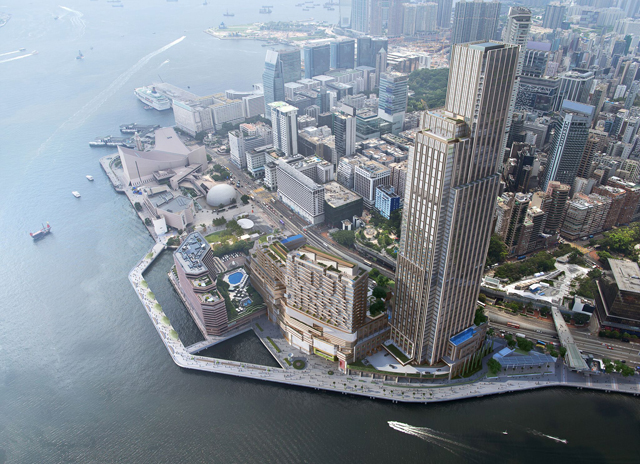
New World Development will spearhead the US$2.6 billion Victoria Dockside development, a 27.9ha art and design district on Hong Kong’s Tsim Sha Tsui waterfront.

Set to fully open in 2019, the mixed-use development will offer office space, a Rosewood Hotel, Rosewood Residences, plus art, design and leisure experiences.

It is located near key cultural institutions in the city including the Museum of Art, Cultural Centre, Salisbury Garden and Space Museum.

Victoria Dockside is built on the site formerly known as Holt’s Wharf – a godown terminal which dates back to 1910 and served as a global freight and logistics hub.

The Victoria Dockside masterplan was created by architectural firm Kohn Pedersen Fox and landscape architect James Corner Field Operations in collaboration with Adrian Cheng and over 100 designers and consultants across the globe.

Three more hotels underway in Japan for Best Western

0

Best Western Hotels & Resorts has signed three hotels in Japan, all on track for opening in 4Q2017.

The company secured license agreements for the 105-room Best Western Osaka Tsukamoto, 60-room Best Western Sapporo Odori-Koen and a conversion project in Honshu, the Best Western Yamagata Airport with 94 rooms.


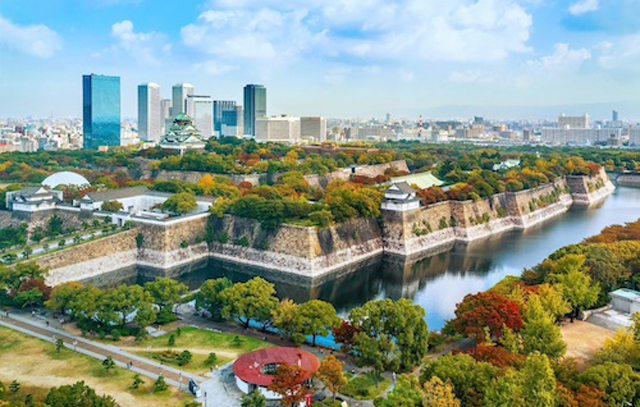
Osaka, Japan

These follow the recent opening of the 105-room Best Western Tokyo Nishikasai Grande, Best Western’s third property in the Japanese capital, and the rebranding of The Hotel Nagasaki to become Asia’s first operating BW Premier Collection hotel.

The new additions would bring Best Western’s Japan portfolio to 15 properties.

“Japan’s tourism industry is booming. Having welcomed a record total of 24 million international visitors last year, the government is now targeting 40 million arrivals by 2020 – the year Tokyo hosts the Summer Olympic Games – and a staggering 60 million visitors by 2030,” commented Olivier Berrivin, Best Western Hotels & Resorts’ managing director of international operations – Asia.

Hilton, BRG talk tourism with Vietnam PM

0

Hilton CEO and president Christopher J Nassetta, together with business partner and chairman of BRG Group Nguyen Thi Nga, met with Vietnam’s prime minister Nguyễn Xuân Phúc during a recent Vietnamese trade delegation’s visit to the US.


Hilton and BRG shared perspectives on Vietnam’s travel and tourism sector as a key pillar of future economic and employment growth, already contributing 7.3 per cent of employment and 9.1 per cent of GDP.

The two companies also outlined details of their partnership, which includes two trading hotels in Hanoi, Hilton Hanoi Opera and Hilton Garden Inn Hanoi, plus the recently announced dual brand project to develop Hilton Hanoi Westlake and DoubleTree by Hilton Hanoi Westlake.

When too much love can hurt

0

Tourism is such a wonderful industry. As a reporter working in and writing about this industry, I have had many first-hand opportunities to see how this industry has shaped the lives of many around the world, whether it’s improving livelihoods, preserving traditions or opening borders and minds alike.


But if there’s one nagging thought, it’s that I’m one of the 1.8 billion travelling masses who are complicit in enjoying the spoils of tourism and stretching infrastructure to breaking point.

McKinsey & Company’s senior partner Alex Dichter, at the recent WTTC Global Summit in Bangkok, drove home the point when he pointed out that the fault doesn’t lie in the number of tourists around the world. Rather, it’s that “tourists come from everywhere but they don’t go everywhere”.

When tourism to a destination booms, crowds soar and often the crush of visitors disrupts local residents’ lives – including wildlife. Famous cases in point: Venice and Machu Picchu. Nearer home, there’s Koh Phi Phi, Beijing’s Forbidden Palace, Angkor Wat and the list goes on.

The downside of tourism boom became more apparent to me during a recent trip to Penang to visit my maternal uncle and his family. In the two decades that I’ve been visiting him, the latest trip was the first time I heard him grousing about tourists in his hometown.

When we were stuck in traffic behind tourist buses at Gurney Drive, he lamented that the famed seaside promenade had become a tourist trap offering street food at inflated prices. When we craved for cendol  on a sweltering afternoon in Georgetown, we were dismayed by the snaking queue outside a particular stall. My uncle assured me the stall next door was just as good but saw fewer tourists because it wasn’t propelled to social media fame by bloggers and foreign websites. (True enough, he was back in the car with eight packs of cendol minutes later.)

While overcrowding is not yet a dire issue for Penang’s tourism, the fear that visitors who once kept the local traditions and livelihoods alive are also now slowly destroying them is becoming a valid one. And when that happens, the soul of a destination will be lost.

The challenge – and hard work – thus lies in finding the balance. City officials or tourism authorities must not blindly chase the economic benefits of tourism without proper management plans or guidelines drawn up to manage visitor numbers. Sustainability and responsible stewardship must be at the forefront of any tourism management policy to deliver smart and strategic growth.

What can we do to travel sustainably? I’ll adopt my uncle’s cendol mantra – don’t follow the crowds. Also, why not give popular destinations a break during their high-season months and visit during their off-peak periods to disperse visitation more evenly over the year? Share the love, spread the money and spare the footfalls.