TTG Asia
Asia/Singapore Sunday, 28th December 2025
Page 1644

Millennials, LCCs prop up Chiang Mai’s rising popularity: C9

0
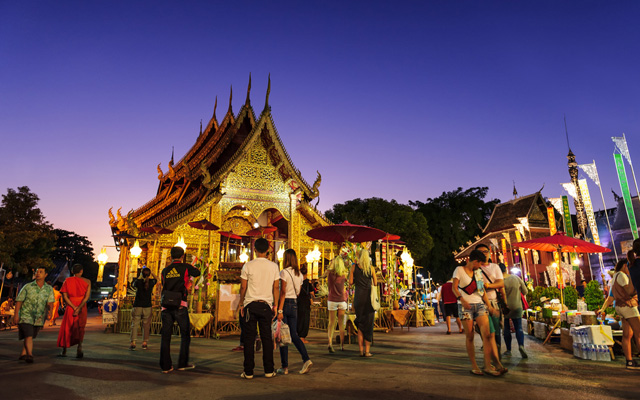
Srisuphan temple market

With the rise of LCCs and millennial preferences, passenger volume into Chiang Mai grew 13 per cent to hit 4.6 million arrivals in 2016, trailing only Phuket among Thailand’s provincial airports last year, according to C9 Hotelworks’ Chiang Mai Hotel Market 2017 report.

Commented Bill Barnett, managing director of C9: “Thailand’s legacy Chiang Mai tourism market has undergone a millennial transformation that is now tapping into a new base of travellers seeking authentic Thai experiences.”

Srisuphan temple market

Of total arrivals, 77 per cent entered the destination on domestic routes and 79 per cent were from Chiang Mai’s top five overseas source markets – China, Malaysia, South Korea, Hong Kong and the US.

Between Greater China and Chiang Mai, 5,346 direct flights were routed. Top feeder cities from the region include Hong Kong, Shanghai, Chongqing and Chengdu.

The report further revealed that in the past 10 years, 62 per cent of passenger arrivals were on LCCs.

In that period, total arrivals shot up threefold with 2013 being the turning point, fuelled by the success of the Chinese film Lost in Thailand. In that year, Greater China posted a dramatic growth of 235 per cent.

Noting the “explosive impact of cinematic wanderlust on tourism”, Barnett said: “Be it Eat Pray Love or Notting Hill, the impact on film in destination marketing is remarkable. While Thailand’s travel market outside of Bangkok had shifted to the beach in the early millennium, a rising tide of Asian travellers and westerners who increasingly want to get into the culture club instead of the surf and turf are changing the markets.”

Meanwhile in the hotel sector, C9 reported a downscaling of room inventory per hotel, reflecting a trend towards boutique hotels and hostels.

Currently, Chiang Mai has a total of 33,593 keys in 831 registered and unregistered tourist accommodation establishments. An additional 524 keys are expected to come on stream by 2019, with the majority of pipeline properties concentrated in the Old City catchment area.

“As Thailand’s government has pivoted its tourism ambition from quantity to quality, Chiang Mai has fitted nicely into the equation with a range of impressive new boutique hotels, a rampant art scene and budding culinary offerings. The shift is resonating with Thai and foreign travellers alike,” said Barnett.

The Mulia throws wedding convention to woo celebratory event business

0

The Mulia, Mulia Resort & Villas in Nusa Dua, Bali is keen to build up the reputation of its complex and Bali as a desirable destination for honeymoons and wedding with a recent dedicated weddings convention.

Marry at the Mulia, a four-day event held last August, was attended by more than 50 wedding and special event planners from across the globe, director of communications Adhiyanto Wongso told TTG Asia during a media update in Singapore last week.

harmony chapel at the mulia bali

Apart from highlighting the hotel’s many indoor and outdoor venues, restaurants and recreational facilities, the convention also brought attendees to Ubud for an introduction to Bali’s rich culture and connected them with various suppliers needed for a celebratory event.

“Ideally the destination wedding showcase would be led by the local tourism board, but we found the process for approvals, planning and execution too tedious,” said Adhiyanto, revealing that the event was largely funded by The Mulia itself. “Running it ourselves allow us more flexibility,” he added.

“Most Asians know about Bali but it is relatively unknown in the US or Europe; some only heard of Bali for the first time through us. Most of the planners from these longhaul markets are not sure how a wedding could be conducted there. We hope to change that through Marry at the Mulia,” he said.

When asked if the event had generated strong business leads, Adhiyanto said it was still “too soon to tell” as couples needed months to consider wedding plans and logistics attached to a destination wedding held overseas.

“This is a long-term investment for us. Although there are no bookings yet, the number of enquiries have gone up,” he continued.

Adhiyanto added that the high-profile wedding of Taiwanese singer/actor Ken Chu and Chinese actress Han Wenwen last September had significantly raised the popularity of The Mulia complex in the regional market and led to to enquiries from many Asian couples.

The Mulia, Mulia Resort & Villas is made up of the ultra high-end 111-key all-suite The Mulia, the 526-key Mulia Resort and 108-unit Mulia Villas.

Amadeus’ new merchant model link agents with rail offers

0

Amadeus will begin to act as a sales agent for rail operators in a new merchant model, which it says will enable railways to expand their global reach and simplify commercial links to travel agencies.

With the model, Amadeus is hoping to provide travel agencies globally with one link to sell multiple railways, bypassing the need for one-to-one commercial relationships between both parties.

Rail travel

Meanwhile, foreign travellers can more conveniently book rail travel through their travel agency before flying and have their entire trip – including air, hotel and rail – on the same itinerary.

Rail companies could also save costs as Amadeus takes care of all setup, billing and settlement activities, and assumes financial and legal risks of selling via travel agencies. With Amadeus as a sales agent, the model will enable railways to reach new travellers in new markets.

Currently the model houses full offers of Germany’s Deutsche Bahn (DB), Spain’s RENFE, France’s SNCF (French, available in Central, Eastern and Southern Europe only), Italy’s Trenitalia and select eastern European rail operators, with more expected to join soon.

“Rail travel today is still largely domestic but this will soon change – our merchant model marks the beginning of a new era, giving the industry what it needs to take a global leap, and unlock growth,” said Antoine de Kerviler, global head of rail and ground travel at Amadeus.

This new agreement will enable Deutsche Bahn to “vastly extends its global network.” and the rail operator will “improve the availability of (its) tickets to all travel agencies, particularly those with a wide travel offer,” said Ronn Kostecki, project manager at DB.

Alessandra Bucci, commercial director of long haul passenger division at Trenitalia, added that the Amadeus partnership marks a further step in the company’s “ambitious project of offering (its) customers an integrated travel solution, covering their trip door-to-door in Italy”.

Yotel makes key appointments as it powers ahead with expansion

0

Yotel has announced several key appointments at the senior level as it prepares to launch multiple new hotels in Asia, Europe and the US.

In the newly established role of senior vice president of global operations is Belinda Atkins, who will head the company’s global operations including all existing and future Yotel and Yotelair hotels, reporting directly to Hubert Viriot, CEO of YOTEL. She previously held senior positions in the hospitality industry, including brand CEO at Amba Hotels and vice president of brand operations for the Wyndham Hotel Group.

Yotel New York
Yotel New York

Atkins will be assisted by Keir Wingrove, who has been named assistant vice president for openings and transitions to manage and coordinate the pre-opening and transition programme, managing support for all new Yotel hotels under development.

Yotel has also promoted Rohan Thakkar to the role of vice president of development, focusing on the rest of the EMEA region.

The trio will be based at Yotel’s headquarters in London.

Meanwhile, Yotel has also appointed Nikhil Manchharam as managing director of business development for Asia. Based in Singapore, Manchharam will oversee the sourcing of new opportunities and develop the Yotel and Yotelair brand throughout Asia, as well as manage relationships with investment partners in the region. He was most recently vice president of acquisitions and development at Starwood Hotels and Resorts Worldwide.

The tech-centric hotel chain currently has four Yotelair properties – London Heathrow, London Gatwick, Amsterdam Schiphol and Paris Charles de Gaulle Airport – and one Yotel in New York.

In 2017, Yotel will open three city centre hotels in Boston, Singapore and San Francisco, followed in 2018/2019 with London (Clerkenwell), Dubai (Business Bay), Miami, Williamsburg (Brooklyn) and Yotelair Singapore Changi

SIA, SilkAir simplify fare structure

0

Singapore Airlines and regional arm SilkAir are set to fold fuel and insurance surcharges into base airfares, simplifying the fare structure for its customers.

Although this will not result in immediate changes to “all-in” fares, with the removal of the surcharges as a separate component, customers will be presented with a single base airfare when purchasing tickets.

Singapore Airlines

The new format will kick in progressively by region from March 28 and is expected to be completed by May 2017. However, codeshare flights operated by other airlines may still include surcharges.

In addition, fuel and insurance surcharges will also no longer apply to KrisFlyer frequent-flyer programme redemption bookings, effective March 23, 2017.

The KrisFlyer programme will also undergo changes the same day, including the removal of a 15 per cent discount for redemption bookings made online. Adjustments are also being made to redemption award charts in the Saver category for selected zones.

U-Fly Alliance aims to spread wings beyond North Asia

0

U-Fly Alliance, the first LCC alliance in the world, expects to have 10 members by year-end and has ambitions to expand beyond its North Asian roots into South-east and South Asia in the long term.

Deputy CEO Steven Greenway, interviewed on the sidelines of the Aviation Festival Asia in Singapore recently, said there are lots of small LCCs and full-service carriers (FSCs) that are “waiting and watching” how best they can expand in the future and LCC alliances are part of the game.

U-FLY_Alliance_Steven_Greenway (1)
Steven Greenway

Having done well in their markets, these carriers, typically with a fleet of around 50-60 aircraft, are constrained to break out of their “geographical fix”. The trend of setting up subsidiaries such as what AirAsia has done in Thailand or Jetstar Asia in Singapore has also slowed, while joint ventures can pose the risks of losing their identity and independence.

“We are building everything to be usable around the world, we’re not just a North Asia LCC alliance,” said Greenway.

“There are many airlines out there, even FSCs, with 50 or so aircraft. Few get to above 100 aircraft. If they are around the same size, are like-minded and are confronted by the same challenges, they are a logical fit. Not a carrier who’s lightyears away coming in and telling you how to do it.”

U-Fly, launched in January last year, has five members – HK Express (Hong Kong), Lucky Air (Kunming), Urumqi Air (Urumqi) and West Air (Chongqing). Combined, they have a fleet of 111 aircraft serving over 23 million passengers to 106 destinations and 206 city pairs in North Asia.

The alliance coordinates on behalf of members’ “central projects” across five working streams, namely strategy network, system connectivity, marketing and branding, plus cost synergies and airport operations.

Greenway said a lot of the focus in the past year has been on cost savings, even though U-Fly has also raised incremental revenue for the members through interlining via GDS and soon, B2C promotions on its website.

“A lot of small LCCs never had the opportunity to get cost savings. With 20-30 aircraft, they may have good crewing costs and lease costs on aircraft, but struggle to get to the cost base of the AirAsia’s and Jetstar’s because they don’t have group buy. I probably spend a tenth of the effort to save a dollar (through bargaining power) than raising a dollar by increasing connecting traffic,” he said.

When asked if Value Alliance, another LCC grouping which launched six months after U-Fly, is a competitor, Greenway said: “Value (Alliance) is very much a South-east Asian play, how it pans out on one knows, and there may be a different dynamic there with Tigerair and Scoot being owned by Singapore Airlines.”

Tigerair will also be merged and carry Scoot’s name by year-end. Aside from Scoot, Tigerair Singapore and Tigerair Australia, other Value Alliance members are NokAir, NokScoot, Vanilla Air, Cebu Pacific and Jeju Air.

Greenway said LCC alliances are “very new, each promising slightly different things, and it’s still a short time frame for anyone to get an evaluation of what they are about”.

“It’s very experimental at the moment but that’s better than sitting on the bench doing nothing. We have to prove that the concept is demonstrably productive and beneficial to members. Otherwise we deserve to die,” he said.

Aviary Bintaro hires opening GM

0

Indonesia’s Sumampau Hotels and Resorts has appointed Didit Anthony as opening general manager of Aviary Bintaro, a millennial-influenced, new-build hotel and serviced apartment set to open in April.

Anthony brings with him a wealth of hospitality experience spanning airlines, travel agencies and theme parks, and is specialised in sales and marketing, having worked with BW International (BW Hotels, formerly Aston), Prasanthi Hotels & Resorts, AccorHotels and Pan Pacific Hotels Group.

Didit_Anthony

Experiences the new frontier

0

Airbnb was the epitome of sharing economy cool when it first started out, but it has lost its founding aspirations as it increasingly turns into a giant accommodation distribution for private landlord empires.

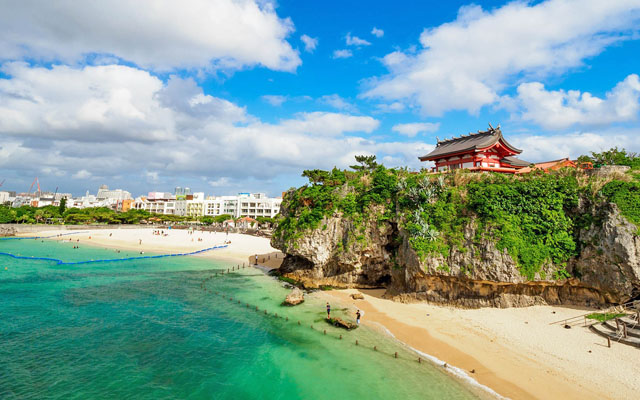
MARCH3_xinyi-Blessing Ceremony
Source: Asian Trails

As Airbnb begins to face stronger regulatory headwinds around the world – with Singapore becoming the latest city to make it illegal to rent out private residences for short-term rentals – it’s hardly surprising that the home-sharing giant is seeking new ways to grow by broadening the range of services it can offer.

Enter Airbnb Trips, which was launched last November to enable locals to offer immersive and authentic guided tours to travellers, which could range from a lesson in ancient pottery in Tokyo to checking out London’s burlesque scene with a showgirl.

Still in its early days, Airbnb Trips is currently a modest service featuring some 500 experiences in 12 cities, including Los Angeles, San Francisco, Miami, Detroit, Havana, London, Paris, Florence, Nairobi, Cape Town, Tokyo and Seoul. The new product is expected to be rolled out to another 39 cities in the near future.

Do tour operators have reason for worry? Not yet, if going by trade feedback (see page 5), and industry members largely welcome the increased competition as they join in the reinvention game.

But Airbnb Trips, like how its accommodation rental arm has demonstrated, could potentially face the same regulatory complications in its quest to be a holistic travel service provider. One foreseeable issue is the special licence requirement for tour guiding in many countries, an area many incumbents in the tour operation space have invested in to stay legal and professional.

And to make this business model profitable, Airbnb will need to scale up its Trips endeavour for millions of tourists to participate. And when that happens, how can Airbnb screen against scams and rip-offs or ensure the safety of guests partaking in riskier activities? More importantly, will it be able to sustain its identity and the social value its service purports to bring?

Airbnb was the epitome of sharing economy cool when it started out, but it has lost its founding aspirations as it increasingly turns into a giant accommodation distribution for private landlord empires. I’m saying that because friends who are Airbnb hosts are typically not renting out an empty room but an idle apartment(s) in their buy-to-let portfolios, while some are even relying on companies to manage their apartments on Airbnb.

Where’s the ‘live like a local’ selling point as touted by Airbnb? I’m attracted to the social promise of the sharing economy, but I’m also disappointed by the non-sharing phenomenon that is becoming more apparent for Airbnb.

But one thing for sure, the quest for enriching and engaging experiences cut across savvy travellers of all ages, so greater competition in the tour operating space may foster the development of a more mature, responsible tourism worldwide.

So will Airbnb Trips live up to its idealistic frame of the sharing economy and revolutionise the travel and tourism industry? The jury’s still out.

This article was first published in TTG Asia March 2017 issue. To read more, please view our digital edition or click here to subscribe.

Chasing a port of gold

0

Ten years ago, Adam Goldstein unlocked the Asian cruise market potential for Royal Caribbean Cruises (RCC) and made Singapore the regional homeport for the line. Raini Hamdi catches up with the president and COO of RCC, recalls his views from the first interview over a decade ago and asks, what’s next?

MAR3_VFTT-Adam Goldstein copyWelcome back to Singapore, Adam.
It’s good to be back…I remember I was speaking at the first or second Seatrade (conference) in Singapore and the question was, ‘how many people will cruise in Asia in year 2000?’. Of course you’d want to say a big number as if you say a small number, you might not get invited to speak again. The market was then may be 200,000 passengers or not even for all of Asia and when we thought it would grow to a million, we assumed it must come mostly from Japan. That’s what I was thinking. Then I realised there was a map on the projection and I looked at it and noticed that China was not marked. Whoever made that map literally could not imagine that China would be a source market for cruises. And now it’s the fastest-growing market and spurring the growth in the region.

Looking back, what’s the one thing you wish the company had done?
Like anything that turns out to be a good thing, you wish you could have done it faster, that’s the nature of life (laughs).

If you ask what we were doing before 2007 when we declared Singapore as our regional headquarters in Asia, we were spending a tremendous amount of time building our presence in Europe, while continuing to build our presence in North America and the Caribbean. In the years prior, we were introducing all of the Voyager, Radiance, Celebrity and Millennium class cruise ships, so we were very busy. The last 10 years were really our time to focus on the opportunity here and also, to be fair, the rise of income level and outbound travel that have propelled this region to the forefront of travel & tourism has really occurred in the last 10-15 years. We’ve been a leader and beneficiary of that and we hope someday Asia will move down a path to be either the largest cruise region in the world or right up there.

Yet in the 10 years, Asia has grown to around 2.2 million cruise passengers, a fraction of the 24 million worldwide. Shouldn’t it be bigger, considering the masses that travel by air?
We always think it should have grown faster, we’re impatient. We know what a great vacation a cruise is and what wonderful value it is, and we always think people should catch onto it faster. But life isn’t that easy and we have a lot of work to do to build up an appropriate level of consumer awareness and knowledgeable and supportive distribution.

If you think abut it, there’s something like 1.2 billion international person trips and 24 million cruise passengers, so that’s a two per cent share of international travel. There are a lot of options based on land around the world and we respect the fact people choose those options all the time. But we want to make sure people understand what the cruise proposition means and that they will choose it often.

I guess even in North America you are still developing the new-to-cruise market.
Yes, right now, even in North America, where there are about 12 million cruise passengers a year. We know there are millions of people in North America who have the wherewithal to cruise, would love it if they did and who almost certainly now have friends and family members telling them what a great thing it is – and still they haven’t cruised!

So obviously in Asia we have a long way ahead of us, but the sheer numbers that reflect the opportunity in this part of the world are so immense that it is well worth our effort to pursue that.

Is it a question of patience, or the industry doing a poor job at selling cruises?
One element is patience. We can’t expect that Asia will be this year everything it can be. Most people still don’t know what a cruise is. Most travel agents still aren’t comfortable to distribute them, recommend them. We’ve made progress and I’m sure we will make a lot of progress in 2017 as a company.

Here in Singapore for example Royal Caribbean (International) has its most extensive programme of cruises in a year, including a brand new ship, Ovation of the Seas. There’s going to be more capacity in Asia, more itinerary varieties, different types of ships, newer ships than ever before, so it’s going to be a year of progress in the region.

Can Asia be the biggest cruise market?
I know it’s exciting to talk about whether Asia can be the largest region of cruising or whether China as a country can be the largest source market. Right now with the US providing 12 million cruise passengers a year, and the rest of the world providing another 12 million a year, it’s clearly going to take a long time before any market displaces the US as the no. 1 cruising market. We don’t really obsess about that. We just know that the opportunity to increase the Asia cruise market by one to five million customers per year is real. Like everywhere else in the world our Asian customers love their cruises. We just need to do a better job of attracting them, of marketing and selling, of working with travel agents, to compete with all the other choices that they have.

But much of Asia does not have the ports to support the big ships you have.
It is absolutely clear that the continued development of cruise infrastructure is one of the most signficant challenges we face as an industry.

And because our industry isn’t so well understood yet, we have to be proactive in our outreach to governments and investors, to say what we believe the opportunity is, why the infrastructure is needed both in the homeports and in the ports of call, to discuss solutions to overcome these challenges. Because unless we have places we can take the customers to, where the right ships are capable of docking or anchoring, and the right tour products and destination experiences, we are not going to grow how we wish to.

Do you invest in port infrastructure and are you planning to in Asia?
Yes, we either are the most active cruise company in cruise-related commercial development, or we’re certainly right up there and we are constantly in a dialogue with governments and investor groups about finding solutions to infrastructure challenges.

Yes we are planning to invest in the region in commercial development without question and when the time is right to announce it, we aren’t shy to do so.

What’s your take on ASEAN specifically?
Singapore as a hub of the ASEAN region has an instrumental role to play in the overall development of the Asia-Pacific cruise sector. With Sydney in the south, Singapore more or less in the centre and China homeports in the north, these are the crucial centres of cruise activities. There will be other homeports and cruises over the course of time but these are the ones propelling the cruise industry today.

Singapore, like Sydney, needs to provide warm weather cruise options that complement the China cruise market. ASEAN too in itself has over 600 million people in it and is a growing region economically.

10 Need to Know’s about Adam Goldstein

Who’s in your family? My wife Cheryl, my son David and my daughter Julie.

What do you do for fun? Competitive running, table tennis, rowing and travelling

Your ideal vacation? Anywhere in the world with our ‘vacation gang’ of my law school friends and our families

How do you book your own leisure trips? My wife is a wizard at travel bookings, having once run the air/sea department at Royal Caribbean

What are you reading right now? The Economist, as always

How do you stay healthy? Constant training with my running coach

Favourite food? Pad Thai

A bad habit you cannot kick? Chocolate croissants

Your pet peeve, something that never fails to annoy you? When a colleague has no point of view on a way forward

Most people don’t know that you…have season tickets to the Philadelphia Eagles (American) football games despite living 900 miles from the stadium

This article was first published in TTG Asia March 2017 issue. To read more, please view our digital edition or click here to subscribe.

The reinvention of tours

0

With unicorn Airbnb and new players foraying into their turf, traditional players are redesigning tours and boosting their strengths, Raini Hamdi writes  

FEB_analysis Screen Shot (triip-me)

One of the local experiences offered on Triip.me, a peer-to-peer online startup that has amassed over 6,000 local experts in 660 cities in 98 countries, beckons travellers to Taste the Weirdness of Hong Kong. In three hours, Hong Kong resident Bella will take them through such unique experiences as tasting turtle jelly and snake soup, and ‘petty person beating’ – a living culture in Hong Kong where, under a flyover called Ngo Keng Kiu, professional old ladies will ‘beat’ the ‘petty person’ (boss, jealous friend, for some maybe even Trump) out of their life with a shoe.

It’s hard to imagine how ‘experiences’, compared with mere tours, will not appeal to tourists who want to ‘live there’. With the launch of Airbnb Trips last mid-November, this sharing economy space is unlikely to go away. At launch, Airbnb had claimed 500 experiences in 12 cities worldwide, and tour operators recognise it’s just a matter of time before more Asian experiences will be offered and possibly too by unicorns such as Google.

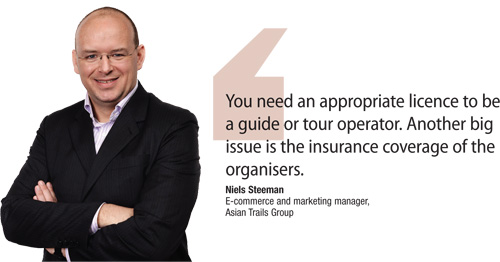
“Looking at the roll-out plans of Airbnb Trips, the focus is more into Europe, the US and South America, but Asia will be on their radar,” said Niels Steeman, Asian Trails Group e-commerce and marketing manager, who expects “a rumble” in the tours industry, just as vacation rentals has disrupted the hotel sector.
FEB3_Analysis_Niels Steeman

New vs traditional
Asian tour operators are watching the development keenly but believe it will take a lot for the new players to disrupt their bread and butter.

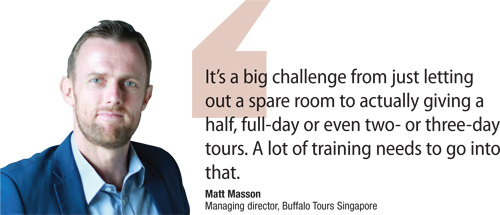
Matt Mason, managing director of Buffalo Tours in Singapore, pointed out that the knowledge, experience and connections of a DMC are hard to beat.

“There’s a lot of attention in the tours and activities space. That’s the stronghold of tour operators and DMCs.

“But I think with Airbnb specifically, it’s a big challenge from just letting out a spare room to actually giving a half, full-day or even two- or three-day tours. A lot of training needs to go into that, to deliver the kind of experience DMCs deliver. I know the amount of effort we put in, from guide and driver training, to the audits that we do to make sure all our experiences are safe. There’s a lot of intelligence behind it and it will take time for other players to build that kind of  knowledge,” said Masson.

Another strength of traditional players lies in a key word, assurance, particularly in current times when crises are common. A traveller is assured that in the case of an emergency, there is always the travel agent or the land operator to turn to which Airbnb Trips may not necessarily provide, said Dynasty Travel Singapore’s managing director Clifford Neo.

And just as in home sharing, there are issues of licensing and safety standards. Said Steeman: “What worries us is, as soon as they operate tours, hosts become tour operators. In many countries within the Asian Trails Group, you need an appropriate licence to be a guide or tour operator. Another big issue is the insurance coverage of the organisers, should anything happen. At Asian Trails, we offer immersive local trips that are off-the-beaten track, but with the security of operating fully-licensed and fully-insured operations.”

Boosting strengths
With the trips sharing economy being a potential disruptor, tour operators are boosting their strengths, rethinking strategies and remaking tours.

Just like in the peer-to-peer space, Buffalo Tours has reinvented the image of the tour guide as someone in a coach who dishes out historical facts to passive tourists,  to “real life” people – a colourful restaurant owner, a passionate art curator, etc – who take insights-hungry clients into their lives.

As far back as in 2014, Buffalo Tours started adapting to new tourist desires by launching Local Life, featuring tours connecting clients with local communities. A lot of these tours are done on foot, bicycle or other forms of public transport. Local Life was followed by Essence in 2015, offering more private touring, and Masterclass last year, featuring even more unique experiences such as a date with the winner of MasterChef  Indonesia.

Being on the ground, knowing the hidden places, having the local contacts – “that’s where DMCs can control the experience better than an OTA”, said Masson.

Asian Trails has also reinvented tours by developing the Explore Asia programmes which are designed to deliver out-of-the-ordinary tours for couples, families and those seeking new roads within existing destinations. “The market demand (not Airbnb) constantly pushes us to deliver something new,” Steeman said.
FEB3_Analysis_Matt Masson

Branding
Others believe it is also time to up their game in branding and marketing, which players such as Airbnb does with wizardry. A retail agency, Urban Rhythms Tour Adventures & Travel, Malaysia, is investing heavily on drones and video publishing software to showcase its specialised inbound tours such as mountain climbing, extreme sports and diving.

Director Nigel Wong explained: “The segment of consumers who are attracted to (the new players) are technology-savvy, looking for a convenient way to plan their holiday without having to spend much. To compete with these disruptors and others who use Facebook and claim to be local experts selling tours, or even specialised activities such as birding and diving, we have taken steps to revamp the way we market and brand our products and services. We started our first shooting in early February to promote soft adventure in Sabah, which includes mountain climbing, ecolodge stays and wildlife spotting. These videos will be uploaded on our website and we hope it will entice potential clients that we offer top-notch service and competitive pricing.”

Agreeing, Agustinus Pake Seko, president director of Bayu Buana Travel, Indonesia, urged tour operators to focus on building “a solid brand”.

“At the end of the day I believe the customer values reliability over pricing.We also need to (evolve) our distribution channel. We cannot rely on the conventional method only. We need to develop an omni-channel strategy to make sure our products and services can be accessed conveniently,” he said.

Yet others believe they should focus on the higher-yield clientele, seeing that the trips sharing economy is more for low-budget, free-and-easy travellers who are willing to take risks and do not mind the hassle of making their own travel plans.

Said Jaclyn Yeoh, managing director of Siam Express in Singapore: “Travellers in this high-end spectrum still need the expertise of travel agents. What we can provide that Airbnb Trips cannot is our personal human touch and experience.”

This article was first published in TTG Asia March 2017 issue. To read more, please view our digital edition or click here to subscribe.