Following its foray into Vietnam last month, Malaysia is now the latest destination to be added to Rove’s adventure tour portfolio.
The Bangkok-based operator has launched a new 11-day through Malaysian Borneo, focusing on trekking through some of Borneo’s most remote wilderness, with some water-based activities added for variety to the itinerary.
Rove now boasts nine destinations altogether, including Malaysia, Vietnam, Thailand, Sri Lanka, Mongolia, Indonesia, Cambodia, Myanmar and Laos.
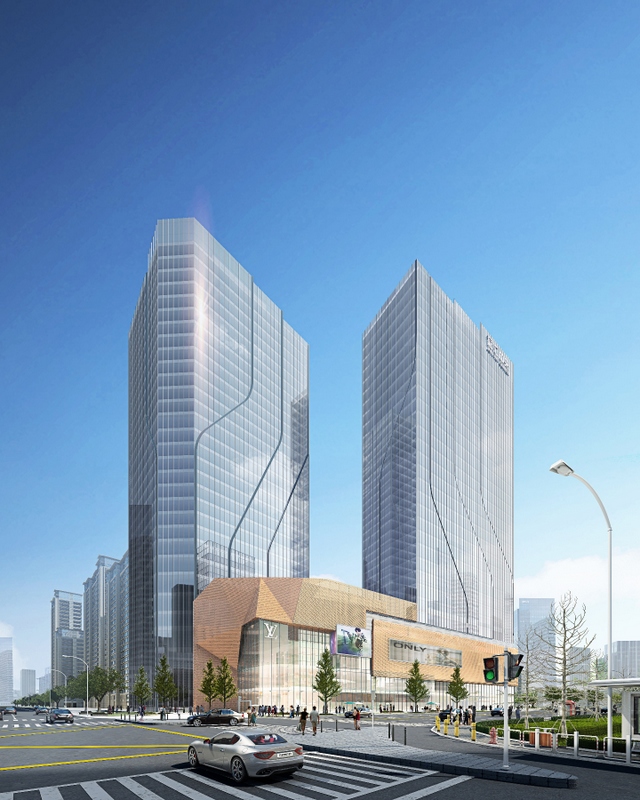
Langham Hospitality Group has signed an agreement to manage Cordis, Hangzhou, which will become the brand’s first hotel in Hangzhou and the fourth in China after two in Shanghai and one in Ningbo.
Slated to open in 2019, Cordis, Hangzhou will feature 200 guestrooms and suites, plus over 1,500m2 of dedicated event space including an 800m2 Grand Ballroom, spa, fitness centre and indoor pool. Dining experiences will include a Chinese restaurant, all-day dining restaurant with buffet stations and lobby lounge.
Cordis, Hangzhou
The hotel will form part of a mixed-use development in the Future Technology City in Hangzhou, comprising offices, an integrated shopping complex and residences developed by Hangzhou Baoli Kanghua Real Estate Company.
Robert Warman, CEO of Langham Hospitality Group, said: “This project will play a key role in growing the Cordis brand in China. Hangzhou’s heightened popularity as an economic hub will stimulate demand for business travel in the long run. In addition, the Asian Games 2022 will be a catalyst in spurring Hangzhou’s city development and raising its city profile.”
Medical tourism is a budding segment for VisitBerlin, which this year started targeting the Chinese market, following similar initiatives to lure visitors from Russia & CIS countries, Saudi Arabia, Qatar and the UAE last year.
Last year, Berlin attracted some 21,000 medical patients from Russia & CIS countries, Saudi Arabia, Qatar and the UAE. “This year, by entering the Chinese market, we expect a big growth,” said VisitBerlin’s director market management Asia, Australia and the Middle East, Ralf Ostendorf at WTM Connect Asia held in Penang last week.
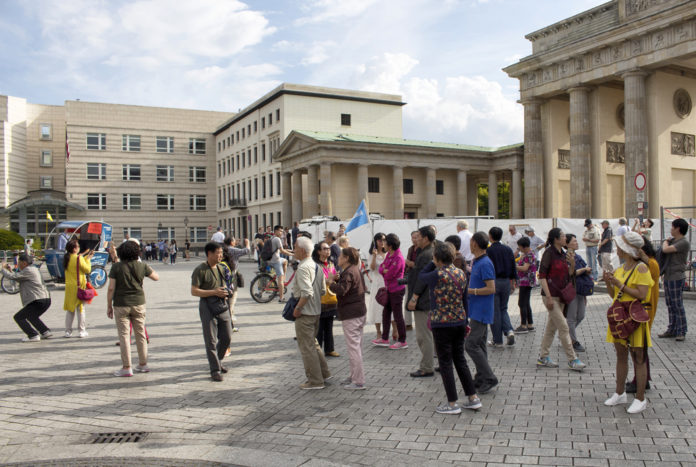
Chinese tourists in front of Berlin’s Brandenburg Gate
“These countries show a special interest in medical tourism and those seeking treatments for simple and complex procedures are willing to travel to seek treatment. The governments of some countries in the Middle East also provide support for their citizens to do so,” said Ostendorf.
A dedicated English language website, www.berlin-health-excellence.de, was launched in March 2017 to provide information on medical facilities in Berlin, and a Chinese version was rolled out this month. The site offers details on hospitals, doctors and their specialisations and maps that show the closest pharmacy and accommodation providers.
Similar websites were previously developed in Russian and Arabic languages.
VisitBerlin promotes medical tourism by organising roadshows and inviting foreign tour operators handling medical tourists to meet with hospital representatives. It also attends medical trade shows together with inbound tour operators in Berlin and medical departments in the countries targeted.
With its remarkable growth of 70 per cent in arrivals to France last year to become the largest visitor source from South-east Asia, it’s no wonder Indonesia is now a new focus market for the European nation.
In an interview with TTG Asia during a recent visit to Jakarta, Morad Tayebi, regional director ASEAN of Atout France, said: “Although the total number of arrivals to France dropped by some 1.5 million last year, we have seen tremendous growth from Indonesia, and a 15-20 per cent increase from the Philippines and 10 per cent from Vietnam (the latter two are new markets to France).”
Aval of Etretat, Normandy
Arrivals from Indonesia last year totalled 150,000 – with first-timers making up a majority – surpassing even France’s mature markets of Malaysia and Singapore.
Tayebi is optimistic that the number of arrivals from Indonesia will surge even higher in the coming years.
“We are expecting arrivals from Indonesia to exceed 200,000 this year,” he said. “We believe that within two years, Indonesia will take over South Korea and will become the third biggest market in Asia after China and Japan in five years.”
Part of the reasons fuelling the market’s rapid growth, according to Tayebi, could be attributed to Atout France’s appointment of an Indonesian representative to work with the travel trade in 2015, in addition to the implementation of the 48-hours’ Schengen Visa application process by the French embassy in Jakarta last year – by far the fastest visa service offered by any European mission in Indonesia.
Although Jakarta is the key target market for outbound travel, Atout France also sees growth potential in Indonesia’s secondary destinations, having organised a training seminar in Surabaya and Medan a few weeks ago plus a similar one planned for Jogjakarta later this year.
To encourage the Indonesian outbound trade to expand their products beyond Paris, Tayebi added that the seminars will highlight other French regions like Normandy, France Riviera, Burgundy, Bordeuax and Lourdes.
He elaborated: “I also want to push halal tourism because we want to show that France is a Muslim-friendly destination. We have the biggest Muslim community in Europe; we are used to hosting Muslim travellers.”
Apart from inviting travel companies to travel events in France this year, Atout France will also bring suppliers from French provincial regions for a sales mission in Jakarta in October and organise its biggest trade event in South-east Asia this year with a three-day workshop, incentive programme and gala dinner for some 100 delegates in November.
Amadeus has rolled out Destination Insight, the latest product suite from its Travel Intelligence division, to equip DMOs with timely insights into the competition and traveller intentions in order to roll out more effective campaigns.
By analysing billions of up-to-date global air travel transactions in near real time, the suite can remove some of the guesswork often involved in making key marketing decisions and reveal hidden opportunities for DMOs to boost their destinations’ growth, said Amadeus in a statement.
With its two modules – Top View and Navigator – Destination Insight’s flexibility and scalability allows it to be used by DMOs to monitor travel at city, country or region levels.
Top View grants DMOs a comprehensive picture of their performance with the ability to benchmark versus other destinations and quickly develop strategies in response to market developments. For example, they can gain insights into searches and bookings, when travellers are going there, how long they’re staying for and pinpoint origin markets in need of attention to grow visitors.
Navigator provides travel agency booking data that can improve DMOs’ response to external factors such as currency fluctuations or weather, e.g. an unusually warm period contributing to an unexpected spike in bookings.
The doors are open and we welcome you in. Located on the Kowloon Waterfront, our new urban destination embraces all sides of life, from the casual catch-ups and everyday moments to dynamic meetings and memorable celebrations.
With green spaces, wide open terraces and spacious rooms with some of the best views of Hong Kong’s spectacular skyline, we’ve got more room for life. Strike up stimulating conversations at our vibrant mix of restaurants and bars, brainstorm away in and outside of our business facilities or get your heart racing with our fitness programmes, we bring the best of work and play together.
STAY
Stay in Hong Kong’s first urban destination and enjoy any of our introductory room offers. You can choose from a room upgrade, daily buffet breakfast for two or 20% off the Best Available Rate.
DINE
Indulge at our modern bars and restaurants. Share stories with family and friends, while you savour some inspiring cuisine.
MEET
Our spectacular skyline views and flexible spaces inspire fresh ideas, fire up brainstorms and set the mood for dynamic meetings. Discover the perfect meeting and events options for you.
PLAY
When it’s time to unplug and connect, we’ve got you covered. Relax by the pool, re-energise in our green spaces or find your zen along the waterfront.
AirAsia and the Terengganu state government have signed an Memorandum of Agreement to jointly promote tourism in Terengganu.
“With this collaboration, we will drive our marketing efforts to promote Terengganu as a must-visit destination in Malaysia. We are confident this will contribute significantly in achieving the state government’s target of 5.5 million tourist arrivals in Terengganu for this year,” said Aziz Bakar, who sits on AirAsia’s board of directors.
Beach in Terengganu
Ahmad Razif bin Abd Rahman, chief minister Terengganu, said: “Terengganu is ready to be known as a tourism state with efficient land and air accessibility, good services, modern infrastructures and treasures of nature, culture and heritage.
“The additional Johor Bahru to Kuala Terengganu direct flights will definitely boost the arrival of tourists into Terengganu.”
AirAsia currently flies from Kuala Lumpur to Kuala Terengganu with 28 times weekly flights and will soon connect Kuala Terengganu to Johor Bahru with thrice-weekly flights.
In 2016 alone, AirAsia flew more than 420,000 passengers to Terengganu, with the top three feeder markets being Malaysia, China and Indonesia.
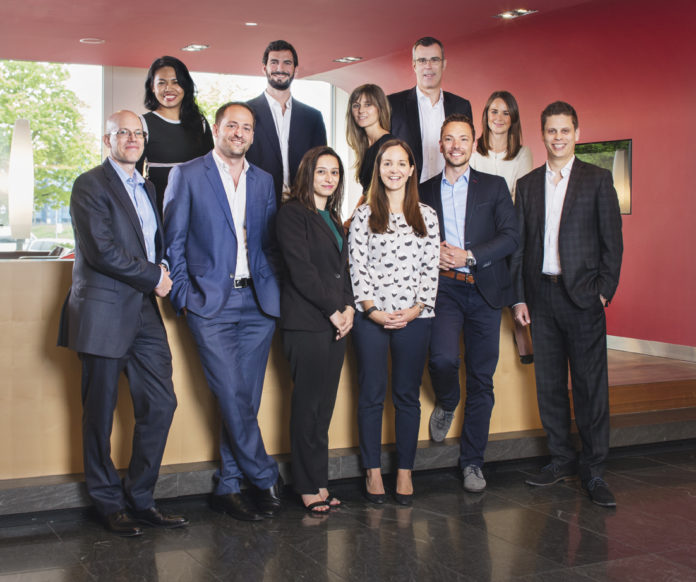
Mövenpick Hotels & Resorts has recruited a team of Generation Y employees and entrepreneurs to closely collaborate with the hospitality firm’s executive team, mirroring AccorHotels’ creation last year of a “shadow executive committee” made up of young talents.
Looking to glean ideas on attracting millennial guests and talents, Mövenpick handpicked an ExCom–Y Committee comprising 10 millennials, six of whom hail from its hotels in Dubai, Pattaya, Karachi and Switzerland to represent areas including front office, digital content and strategy, sales, marketing, F&B, and brand and quality assurance.
The remaining four are young business leaders brought in from various locations across the globe. They include Jessica Houlgrave, who spent six years working for leading global financial institutions and is now researching the impact of technology on the art ecosystem as part of an Art Business Master’s degree at Sotheby’s Institute of Art.
Houlgrave is joined by entrepreneurs and business executives from countries including Germany, France and the US, proficient in disciplines such as technology, hospitality and pharmaceuticals.
“As we embark on an unprecedented growth phase, expanding our portfolio at a rapid rate, it’s paramount we seek input and insights from our colleagues, particularly our young talent, who possess an intimate understanding of Generation Y trends,” said Craig Cochrane, the company’s senior vice president human resources.
“As millennials become a more influential demographic and contribute significantly to our overall guest profile, it is imperative we incorporate their needs and wishes into our hospitality offering.”
Millennials represent around one-third of the global population and account for more than 30 per cent of Mövenpick’s total guests.
The ExCom–Y Committee will be called on around five times a year to attend and contribute to executive meetings in various geographical locations.
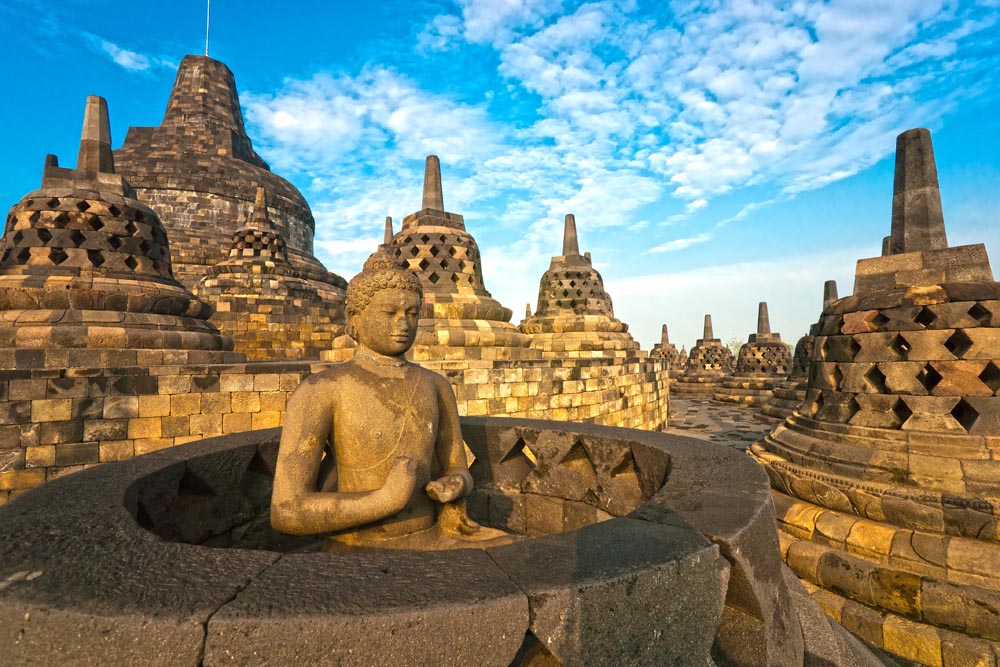
The Indonesian trade is up in arms over the lack of information surrounding the management’s decision to raise the entry fees at a trio of temples in Central Java.
The US$5 fee hike, a decision made by Borobudur Park Corporate for maintenance and upgrading of facilities at Borobudur, Prambanan and Ratu Boko temples, raised entry prices to US$25, US$23 and US$18 respectively as of May 1.
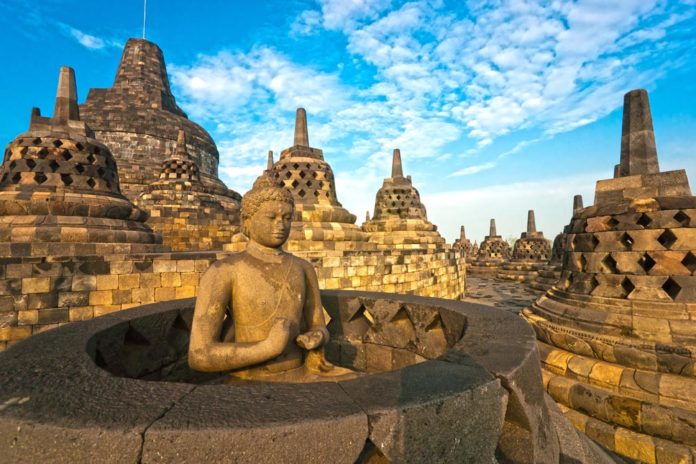
Borobudur temple, Yogyakarta
In response to the temple admission fee hike, the Association of Indonesian Tours and Travel Agencies (ASITA) said the news should have been communicated to them earlier, even though the temples’ management is allowing them until year-end to enjoy the old prices for packages.
Ketut Ardhana, ASITA Bali’s chairman said it’s regrettable that neither he nor his members were informed on the price increase. “I think this is something that should be discussed with the trade (beforehand).”
While Emilia Utari, head of marketing of the temples’ management, said agents should not be affected as they are under contract for the pre-increase price until year-end, agents who have issued programmes for the following year disagree.
“We have no problem with the increment but the (announcement) should be made by November of last year (as) we set our programmes a year ahead,” said Udhi Sudhianto, ASITA Jogjakarta chairman, who was notified through the grapevine days before the price increase.
On the other hand, Ricky Setiawanto of Panorama Destination said the company was informed on the increase at the beginning of this year via an official letter from Borobudur temple’s management.
With an eye on growing Singapore into a bigger visitor source market by attracting the niche as well as repeat segments, the Philippines’ Tourism Promotions Board (TPB) conducted a sales mission in the city earlier this week to introduce fresh destinations to outbound agents.
In 2016 Singaporeans made up just 2.9 per cent of arrivals to the Philippines, a dismal number for the TPB, which has set up its 2017 aim to grow the figure to 3.1 per cent, an increment of 7,000 arrivals. This, according to TPB’s deputy COO, marketing and promotions Maricon Ebron, was “easily achievable, particularly if we get the meetings market”.
She elaborated: “We’re trying to position the Philippines to appeal to the Singapore MICE market. Singapore is so near us, we can probably lure some of the MNCs to come to the Philippines to hold their board meetings. But this is just one of the few segments we are targeting.”
The TPB is promoting new destinations like Legazpi; Cagsawa church ruins with Mount Mayon volcano in the background
Other niche segments the TPB hopes to lure include golfing, diving, adventure sports like mountain climbing, and marine-based activities such as game-fishing and surfing.
When asked how those segments can be translated into visitor numbers, Ebron shared: “We have to keep on advertising online and offline, and getting the right people – like the golf and dive segments – to notice. We’re also introducing new activities such as surfing; I’m sure there’s a market in Singapore for that as people diversify their interests.
Conducting regular sales missions, attending tradeshows as well as organising fam trips for both agents and bloggers are ways the TPB has identified to raise awareness of the Philippines, she added.
As well, she notes that repeat visitors from Singapore is another segment the TPB wants to tap, especially as the country is seen as a prime market source within South-east Asia, thanks to its stronger currency and relatively advanced economy.
Select Travel Services’ director, John Emsermann, agreed: “The Philippines is very affordable for Singaporeans, and is a place where five-star hotel rates begin at US$90… A lot of Singaporeans have not been to the Philippines, and the market is huge.”
Emsermann hence wants to “use a variety of entertainment, from shopping to soft adventure, and the proximity of the country to lure Singaporeans”, who are usually FITs who are sophisticated and educated.
The TPB is also promoting new destinations such as Palawan’s Puerto Princessa, and Legazpi in the Bicol region. Both destinations recently had their main airports upgraded and expanded, and can now accommodate direct flights.
National carrier Philippine Airlines also plans to support the TPB’s aim to grow arrivals from Singapore.
Marie Jemma Saranillo, country manager Singapore/Indonesia/Malaysia, Philippine Airlines, shared: “We will come up with competitive fares as Singapore is a price-driven market. We will also promote the Philippines through promotional tie-ups with the private sector such as hotels and travel agents, as well as create in-house packages.”