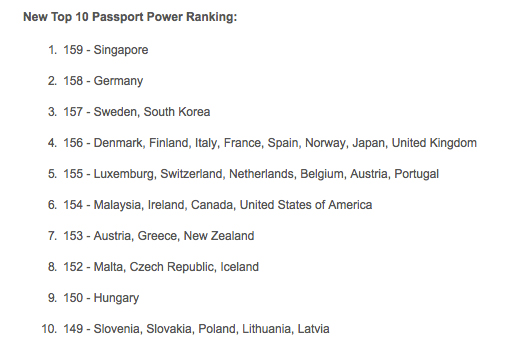
Paraguay’s removal of visa requirements for Singaporeans has propelled Singapore’s passport ahead of Germany and to the top of Passport Index’ most powerful ranking with a visa-free score of 159.
Historically, the top 10 most powerful passports in the world were mostly European, with Germany having the lead for the past two years.
Singapore climbed into a tie with Germany in April this year
Since early 2017, the number one position was shared with Singapore, which was steadily climbing the ranks. Other Asian passports in the top 20 include those of South Korea, Japan and Malaysia.
“For the first time ever an Asian country has the most powerful passport in the world,” said Philippe May, managing director of Arton Capital’s Singapore office. “It is a testament of Singapore’s inclusive diplomatic relations and effective foreign policy.”
In contrast, the US passport has fallen since Trump took office, with Turkey and the Central African Republic most recently revoking their visa-free status to US passport holders.
Developed by Arton Capital, a leading global advisory for residence and citizenship solutions, the Passport Index has become the most popular interactive online tool to display, sort and rank the world’s passports. The Index ranks national passports by the cross-border access they bring, assigning a “visa-free score” according to the number of countries a passport holder can visit visa-free or with visa on arrival.
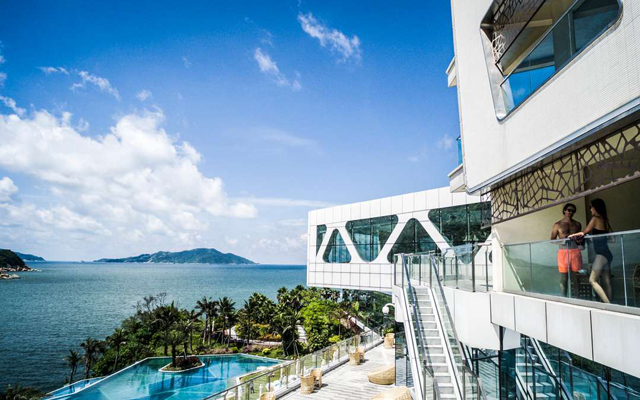
Club Med has ceased operations of its first beach resort in China, Club Med Dong’ao Island since June 1, 2017.
Set on an island neighbouring Hong Kong and Macau, the property owned by China’s GREE Group had originally opened under the Club Med brand – with the 5T (Tridents) luxury section launched in 2014 followed by the 4T premium section in June 2015.
Club Med undeterred from opening in China
Sebastien Portes, general manager Hong Kong & Macau at Club Med, told TTG Asia that both Club Med and the owner had agreed on the outcome after “friendly negotiations”, citing strategy and business adjustments from both parties as factors.
“Club Med re-evaluates its portfolio every year (and) we are not at the level expected,” he added.“Unexpected extra costs and access difficulties to the resort by ferries made it impossible for Club Med to manage this resort in (accordance) with its quality standards.”
Local partners and agents were informed of Club Med’s decision prior to the closure. Guests who had bookings were compensated and/or offered stay in other Club Med resorts.
The hotel’s ‘Gentil Organisateurs’ (ambassadors and hospitality staff) were relocated to other Club Med resorts, and local staff remained in Dong’ao as per GREE’s new management direction.
While all Club Med intellectual property were removed and Club Med’s unique business model discontinued, resort hardware has remained.
Contrary to Club Med’s account on the mutual agreement to separate, industry sources claimed otherwise.
Shenzhen-based Shangpin Tours (Southern Region), general manager, Jason Liang, said: “It’s typical to see owners end management contract and take the operation back after experiencing stable and lucrative growth. Frankly, weekend getaways have been so popular in China and demand is always there for holiday resorts.”
Hong Kong-based Lotus Tours’ general manager and chief distribution officer, Keller Mak, observed similarly that the Club Med product had done well in the mainland market, but pointed out that it was not the case in Hong Kong.
She, too, was unsurprised by the premature termination of Club Med’s management contract. “If they don’t feel ready to do it on their own, they will ask for professional management. However, once they have learnt the ropes, they’d do it by themselves,” Mak said, adding that Club Med’s international Gentil Organisateur experience was what set the resort apart from the others.
Mak said she would wait and see what the Dong’ao premise can offer before putting the product back on the agency shelves.
Guangzhou-based GZL International Conference and Exhibition Services, project director, Landy Leung, would still recommend the product to clients – but noted that her clients trust international hotel brands.
Portes reiterated the closure of Club Med Dong’ao island does not affect growth plans in China and Asia. In China, it will open three new resorts under Club Med Joyview in January 2018 – namely in Golden Beach, Qinghuangdao; Great Wall; and Anji (near Hangzhou).
GuestReady, a PropTech startup in the urban short-term rental management space, has closed US$3 million in seed funding and will be acquiring Easy Rental Services, a former competitor in London and Paris.
Currently operating in London, Paris, Hong Kong, Singapore, and Kuala Lumpur, the startup says it plans to utilise the seed funds to expand to five more cities by summer 2018.
Developing an improved product
Beyond geographical expansion, GuestReady is also planning a move further into the B2B space by building a product backend to automate and streamline property management tasks.
The funding round was led by Impulse VC, with participation from Xponova and Boost Heroes, the venture capital firm led by Fabio Cannavale, founder of the Lastminute Group, among others. Existing investors including Swiss Founders Fund and Senn & Partners also renewed their investments.
Since its launch in August 2016, GuestReady has acquired a portfolio of about 600 apartments and welcomed over 20,000 travellers from over 120 countries into their apartments. Initially an on-demand platform for activities like cleaning, GuestReady now focuses exclusively on fully managed properties that they advertise on short-let platforms like Airbnb, HomeAway, and Booking, among others.
The company has been focusing on developing a product that provides the property owners full visibility and control over the calendars and financials of their properties. It syncs real time with sales-side platforms like Airbnb, and provides a lean logistical setup that allows it to minimise the turnaround time between guests.
Air China will launch thrice-weekly services connecting Los Angeles to Shenzhen starting December 7.
Operated with a Boeing 787-9, flight CA769 will depart Shenzhen on Mondays, Thursdays and Saturdays at 23:30 and arrive in Los Angeles at 20:00. Flight CA770 leaves Los Angeles at 22:50 those same days, for arrival in Shenzhen at 05.40 two days later.
This will be the first direct flight between the two cities.
Scoot to launch Palembang flights, up Bali frequency
Scoot has launched ticket sales for its four-times-weekly services between Singapore and Palembang, which will commence on November 23.
To be operated with an Airbus A320 aircraft, flight TR250 departs Singapore at 15.00 on Tuesdays and Sundays to arrive in Palembang at 15.10. On Thursdays and Saturdays, it departs Singapore at 10.30 and 11.05 respectively, for arrival in Palembang at 10.40 and 11.15.
TR251 returns from Palembang at 15.50 on Tuesdays and Sundays, arriving in Singapore at 18.15. On Thursdays and Saturdays, it departs Palembang at 11.20 and 11.55 respectively, for arrival back in Singapore at 13.30 and 14.25.
On the same date of the route’s launch, Scoot will add a third daily service between Denpasar and Singapore, served by an Airbus A320 aircraft. TR284 will depart Singapore at 10.30 for arrival in Dempasar at 13.20. On the return, TR285 leaves Denpasar at 14.05 and arrives in Singapore at 17.00.
Hainan Airlines links NYC with Western China
Hainan Airlines has introduced two new routes between New York’s John F. Kennedy International Airport (JFK) and the Chinese cities of Chengdu and Chongqing.
Services to Chongqing commenced on October 21, and flights to New York from Chengdu will begin on October 27. Each route will be operated twice weekly.
On Wednesdays and Fridays, flights from Chongqing to New York depart at 22.00, and will land at 00.50 the following day. The return flight, occurring on Thursdays and Saturdays, will depart New York at 02.50 and arrive in Chongqing at 05.55 the following day.
Flights will depart Chengdu at 22.00 on Thursdays and Saturdays, and will arrive in New York at 00.50 the following day. The return leg will see flights depart New York at 02.50 and arrive in Chengdu at at 05.55 the following day on Fridays and Sundays.
Gybels: pushing forward 'great startups' that lack resources
Booking.com is turning its attention to mentoring start-ups at that are at seed level with Booster Lab, an offshoot from its Booster programme launched in June which saw three Asian start-ups, Authenticook, LocalAlike and Backstreet Academy as among finalists receiving no-strings-attached grants from Booking.com to scale up their businesses.
Booster Lab not only focuses on start-ups that bring local and/or marginalised communities into tourism, but makes a deliberate attempt to support those that have the potential to alleviate overcrowding, an issue that has created resentment and anti-tourism in some destinations.
Gybels: pushing forward ‘great startups’ that lack resources
Fittingly, the first Booster Lab will be held in Barcelona, Spain this December, covering start-ups in Europe, and is slated to run globally, including in Asia-Pacific, throughout 2018. It features a regionally-focused weekend programme of workshops, mentoring plus a chance to pitch for growth-hacking grants of up to 25,000 euros (US$29,396).
In an interview with TTG Asia, Marianne Gybels, manager Booking Cares who leads the development of Booster, said one of the major learnings from Booster was that many of the 700 applicants were “great start-ups with amazing ideas but are still at seed level – no staff, do not make revenue – and so didn’t fit our Booster which are for start-ups that are ready to scale”.
“We want to push them forward,” she said.
When asked what sort of solutions Booking.com was looking for in alleviating overtourism, Gybels said: “We have a team called Destinations Unlock to look at these start-ups. For example, there are many beautiful destinations in the world, yet we tend to concentrate on the same areas. A new destination can be a city within a city. For example, in Amsterdam city, there are so many beautiful surroundings that are waiting to be unlocked. Showing different sides to a destination (can) help spread tourism to more areas.”
Booster Lab has 265 applications from Europe and will be selecting 15 start-ups soon.
The grants of up to 25,000 euros each are much smaller than Booster grants. Singapore’s Backstreet Academy, for instance, received this year’s top Booster grant of 400,000 euros that it asked for, while Thailand’s LocalAlike got 300,000 euros.
One reason is, as Booster Labsstart-ups are at seed level and have not made any business investment, the risk of them just walking away after receiving a grant is real.
Gybels said the grants “truly have no strings attached” and are meant to ease the “struggle these start-ups go through”.
“We want to show our commitment to them and are happy to share our knowledge and expertise in helping them scale.”
Find out how Asian start-ups are using the grants in tomorrow’s TTG Asia e-Daily.
Six of 10 fastest growing cities are in China; Chongqing in (pictured) in top spot
WTTC has produced its first study that looks at the economic and employment impact of travel and tourism on cities, and found that the top 10 fastest growing cities are all in Asia.
The research looks at 65 global cities, chosen for being tops for arrivals and visitor spend, of which 21 are in Asia-Pacific.
Six of 10 fastest growing cities are in China; Chongqing in (pictured) in top spot
Rising prosperity across the region is fuelling increased travel demand, and investment in transport and hotel infrastructure, the report indicated. As well, government policies that facilitate the ease of borders crossings have helped to boost travel and tourism connectivity across the region.
Notably, the study revealed that the world’s top 10 fastest growing cities are in Asia, and projected that the region’s cities will continue to be at the forefront of tourism growth over the next decade.
Chinese cities took the top five spots, with Chongqing in pole position with a 14 per cent growth per year. It is followed by Guangzhou (13.1 per cent), Shanghai (12.8 per cent), Beijing (12 per cent) and Chengdu (11.2 per cent).
The remaining cities are Manila (10.9 per cent), Delhi (10.8 per cent), Shenzhen (10.7 per cent), Kuala Lumpur (10.1 per cent) and Jakarta (10 per cent).
In general, Asia-Pacific records almost six per cent of annual growth – 50 per cent more than the world average of four per cent.
Gloria Guevara, president & CEO, WTTC, said: “The power of Asian cities when it comes to driving the travel and tourism sector is clear to see in this new data.
“With this level of forecast growth, the importance of investment in long-term planning, infrastructure and sustainable public policies cannot be underestimated. It is vital that city authorities understand the economic impact of travel and tourism, GDP and employment contribution, and not just visitor arrivals, as they seek to develop new products and opportunities to increase traveller spend and sustainable growth.”
Other highlights from the report include the doubling of Singapore’s travel and tourism contribution in the past 10 years to US$12.4 billion in 2016 and supporting 164,000 jobs; and Macau coming up as the most tourism intensive city in Asia-Pacific with 27 per cent of the economy a direct result of tourism spend.
Wong: offering packages that exclude flights to reel in young travellers, FITs
With an increasing number of LCCs jetting to longhaul destinations, travel agents in Singapore are now open to working with these budget flight options.
In June this year, Scoot launched direct flights to Athens. The airline will also be introducing seasonal direct flights to Sapporo in November, and a service to Honolulu via Osaka in December. Meanwhile, Norwegian Air recently began plying between Singapore and London on what is currently the world’s longest low-cost flight.
As a result, travel agents in Singapore have started working on longhaul packages with LCC options in mind, and TTG Asia understands that Scoot is currently in talks with a number of travel agents.
Wong: excluding flights in longhaul packages to cater to FIT preferences for LCCs
Trevor Spinks, Scoot’s head of sales and distribution, revealed that his team is working with travel agents that are offering leisure and tour packages to Australia, China, Greece and North Asia, as well as labour agents and pilgrimage agents.
He explained: “We work with key agents and consortium partners on short- and long-term sales initiatives, including offering private fares for packages, joint promotions and incentives to include Scoot prominently in their advertising.”
One of these agents is Chan Brothers Travel, which recently started including LCC flights in packages for destinations where there are such options.
For other destinations, the agency offers land-only packages – comprising airport transfers, hotel and attraction passes.
Meanwhile, EU Holidays recognises the significance of providing LCC options for the “young traveller and FIT” markets.
To cater to the LCC-loving crowd, EU Holidays has been rolling out FIT packages, as well as land-only versions of their regular packages for budget-conscious travellers, said its director, Wong Yew Hoong.
However, Wong noted that his customers still prefer full-cost carriers for longer flights.
He shared: “When it comes to longhaul trips to Europe and US – our speciality – customers always prefer travelling on a full-service airline as it is all-rounded in terms of providing comfort, meals, and luggage allowance.”
To increase collaboration with the trade, Scoot has been engaging new agents, actively collaborating with existing partners, improving ease of partnership, as well as raising awareness among agents on Scoot’s offerings, said Spinks.
Wyndham Hotel Group is set for a major expansion of two of its upscale brands in South-east Asia, with five new signings in Indonesia and Vietnam expected to add 3,585 rooms to its portfolio.
“There is enormous potential in growing the upscale segment in South-east Asia which is a booming tourism hotspot thanks to the region’s rising affluence, improved infrastructure and increased flight connectivity,” commented Barry Robinson, president and managing director of Wyndham Hotel Group South East Asia and the Pacific Rim.
Wyndham Opi Hotel Palembang to open next year
The 259-room Wyndham Opi Hotel Palembang – Sumatra is scheduled to open in March 2018 in Palembang’s new OPI entertainment precinct. The city’s first five-star hotel from an international chain will offer accommodation from superior rooms to presidential suites, two restaurants, a lounge, an outdoor pool, a fitness centre and a spa. Conferencing facilities will be available across seven venues including a ballroom accommodating up to 2,200 people.
Another Indonesia property, the Wyndham Dreamland Resort Bali will open in December 2017. Offering 190 one-bedroom suites and private pool villas, the resort will also feature three F&B outlets, two swimming pools, one children’s pool as well as a spa and wellness centre complete with a yoga studio.
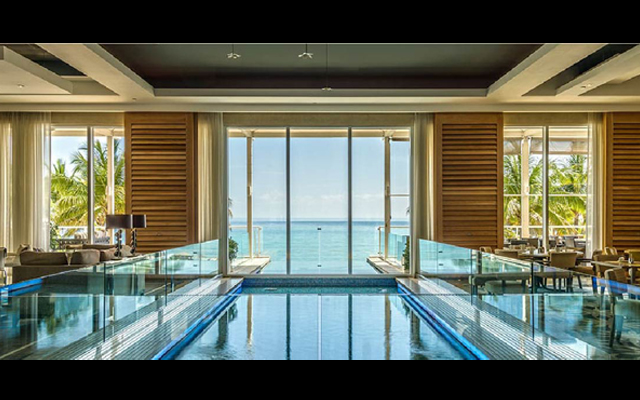
VIP lounge at Wyndham Tropicana Resort Nha Trang
In Vietnam, a Wyndham Grand and a Wyndham Hotel will add a combined 1,427 keys within a 800ha Cam Ranh Bay development comprising an entertainment zone, an upscale marina, a polo club, a theme park, luxury villas and other attractions.
The 423-room Wyndham Grand Cam Ranh, due to open in 2018, is situated on an 18-hole golf course designed by Greg Norman. The links-inspired golf course features an elevated site of rolling sand dunes as well as a 6,000m2 club house, driving range, and golf beach club. Other facilities include restaurants and bars, swimming pools, spa and wellness facilities and a convention centre.
Scheduled for opening in 2019 is the Wyndham Cam Ranh, located on the oceanfront of Cam Ranh’s Long Beach and offering facilities such as a pool and pool bar, two restaurants and a bar, a spa and gymnasium as well as meeting rooms.
In the same year, Wyndham is expected to launch the US$200 million Wyndham Resort Tropicana Nha Trang mixed-use development, the largest hospitality development in the coastal city offering 1,709 keys. Located on a beachfront, the development will comprise two 50-storey towers with hotel rooms and condominium units ranging up to 250m2, along with a retail complex spanning six floors, a convention hall, a spa, a pool and a wellness centre.
Sabre Corporation says it has developed the hospitality industry’s first analytics platform that uses artificial intelligence (AI) to help maximise total hotel revenue.
Combining AI, big data and modern visualisations, the SynXis Analytics Cloud offers predictive analytics and pattern recognition to recommend revenue strategies across channels. By analysing data from operations, finances, room-stay production, ancillaries and rate-room channel configurations, the tool delivers targeted actionable insights to help hotel users avoid lost revenue.
AI, big data to drive automation
A hotel user is also able to design and test different predictive models by choosing a variety of pre-built machine learning algorithms.
The solution combines pre-built insights allowing hotel users to see performance at a region/brand/chain level down to rate code level, and on-demand analytics. It can host and integrate multiple sources of hospitality data in the cloud and empower customised, on-demand analytics consumed through self-service business intelligence capabilities.
According to Sabre, the lack of an industry-grade automated solution has left many hoteliers hamstrung with separate – often manual – reports, creating an expensive lag in their revenue-focused decisions and making them reactive to market dynamics.
“Our vision for SynXis Analytics Cloud is focused on solving the hospitality data integration challenge and meeting hoteliers’ need for self-service business intelligence and AI capabilities,” said Balaji Krishnamurthy, vice president of global strategy, corporate development and business intelligence for Sabre Hospitality Solutions.
“The move to predictive forward-looking analytics represents a tectonic shift for the hospitality industry that has traditionally been limited to static backward-looking reporting. We are bringing AI to operations, distribution, personalization and retailing.”
SynXis Analytics Cloud has already seen take-up from Sabre customers including Denihan Hospitality Group, Preferred Hotels & Resorts and Two Roads Hospitality.
Performance Insights, Self-Service BI (Business Intelligence) and Rate Insights are the flagship products available today in the SynXis Cloud Analytics suite of solutions. Sabre expects to expand its business intelligence offering later this year with additional AI-powered solutions.
Code structured to make site easier to navigate for assistive technology users
Expedia has unveiled enhancements to make its site more accessible to users with visual disabilities as part of an ongoing relationship with the National Federation of the Blind.
For greater compatibility with screen readers commonly used to relay information to blind web users, Expedia engineers have attached text to pictures and structured the website code in a way that allows users of assistive technology to navigate product pages.
Code now structured to make site easier to navigate for assistive technology users
The OTA giant has an Expedia Accessibility Technology Team of front-end developers and testers who design and test site improvements that make the Expedia.com and Travelocity.com websites as inclusive as possible.
Expedia said in a statement that inclusive enhancements – such as for blind users, those who require captioning for audio or video and those who don’t use a computer mouse – improve the user experience for all travellers. Moreover, while recent activity has been focused on the current site, it is also working to educate and train all of its engineers to design and develop their products, mobile and desktop, with accessibility in mind.