Hong Kong Disneyland Resort (HKDL) held the Marvel 10K Weekend this month with a record-breaking 10,000 runners, among whom were travel industry professionals and 600 corporate guests running alongside their colleagues.
They ran in four races: Captain America 10K, Thor 5K, Spider-Man 3K and Kid Races, with leaders from various sectors, including the travel industry, participating in the first ever Leadership 3K.
Fun times with family
Travel agents also brought more than 800 guests from Australia, Japan, Thailand, Taiwan and Mainland China to the race.
Cheering runners on were Marvel Super Heroes including Captain America, Thor, Spider-Man, Star-Lord and, for the first time at HKDL, Black Widow, Hawkeye, Gamora and Doctor Strange. Many runners also dressed up as their favourite Marvel Super Hero.
The Marvel 10K Weekend 2017 was co-organised by the Hong Kong Amateur Athletic Association, and the official results of the Captain America 10K will be recognised in members’ Hong Kong rankings.
Air China to launch new Beijing-Brisbane route
Air China will begin non-stop flights between Beijing and Brisbane from December 11, 2017. Served with an Airbus 330-200 aircraft, flights depart Beijing at 02.30 for arrival in Brisbane at 15.10 on Mondays, Wednesdays, Fridays and Sundays. On the same days, flights depart Brisbane at 07.30 and arrive in Beijing at 04.45 the next day.
At present, Air China already operates direct flights from Beijing, Shanghai and Chengdu to Sydney and Melbourne. The addition of the Beijing-Brisbane route will bring the number of weekly flights between the two countries to almost 40.
Thai AirAsia X ups frequency on Bangkok-Osaka route
Thai AirAsia X will increase the frequency of services from Bangkok (Don Mueang) to Osaka (Kansai) route to twice daily starting December 1. The new flight will depart Don Mueang International Airport at 01.15 and arrive Osaka at 08.40 daily, and return from Osaka at 09.55 for arrival in Bangkok at 13.55.
Hong Kong Airlines codeshares with WestJet
As part of a new codeshare agreement that builds on an interline deal introduced this year, Hong Kong Airline will place its HX marketing code on WestJet-operated flights, extending its network in Canada beyond Vancouver and towards Edmonton, Calgary and Toronto.
Two flights depart Vancouver for Edmonton International Airport daily. WS0166/HX3608 departs Vancouver at 17.55, arriving in Edmonton at 20.21, while WS0180/HX3612 leaves at 12.30 for a 14.56 arrival. On the return, WS0135/HX 3609 departs Edmonton departs at 08.00 to arrive in Vancouver at 08.36.
Further details on the codeshare flights, including are below.
Schedule for Calgary and Toronto flights from Vancouver, Thai
Air NZ extends seasonal HCMC service
Air New Zealand will continue to operate its seasonal non-stop service from Auckland to Ho Chi Minh City, introduced in 2016, following strong customer demand.
For its 2018 season running from June 23 to October 23, the airline will operate twice-weekly services between Auckland and Ho Chi Minh City on Tuesdays and Saturdays, using its Boeing 787-9 Dreamliner.
Helsinki brings its strength as a smart destination together with product services and technologies of Tencent
Helsinki will serve as an “intelligent tourism model” for China outbound tourism, as part of a tripartite agreement signed by Chinese-founded internet giant Tencent, Helsinki and World Tourism Cities Federation (WTCF).
Signed at the WTCF Los Angeles Fragrant Hills Tourism Summit 2017, the cooperation seeks to help Helsinki reach out to Chinese travellers by utilising network broadcasts, a Helsinki WeChat account set for launch by year end, mini programmes, AR techniques, panoramic maps, big data and other related product services.
Helsinki brings its strength as a smart destination together with Tencent services and technology; photo credit: Helsinki Marketing
In particular, a Helsinki mini application for travellers will be made available to almost one billion Tencent users, giving them access to important information about the destination and local services, in addition to pictures, videos, maps, intelligent translations, one-touch SOS function and even online tax returns.
Laura Aalto, CEO of Helsinki Marketing, said the deal represents a huge opportunity for Helsinki to be seen on the biggest digital platform in China. She added: “Helsinki is the shortest and fastest route between Asia and Europe, which has helped (the destination) become the leading longhaul airport in Northern Europe. (The programme) will help make Helsinki and its attractions more accessible to Chinese travellers.”
Helsinki has become increasingly popular among Chinese tourists in recent years. The number of overnight Chinese visitors in the city has more than doubled in the past five years, reaching almost 90,000 in 2016. And in the first six months of 2017, the number rose 43.6 per cent year-on-year.
The growth has been supported by Finnair’s Asian strategy, which sees Helsinki enjoying connections from six major Greater China cities (Beijing, Shanghai, Guangzhou, Hong Kong, Chongqing and Xi’an). The airline will launch Helsinki-Nanjing direct flights in May 2018.
Juha Jarvinen, chief commercial officer at Finnair, remarked: “Travel planning and decision-making in China have already moved onto mobile platforms, and the Finnish tourism industry should utilise this.”
Meanwhile, WTCF, founded in Beijing in 2012 to provide a platform for international tourism cooperation, has selected Helsinki as host city of its 2019 summit.
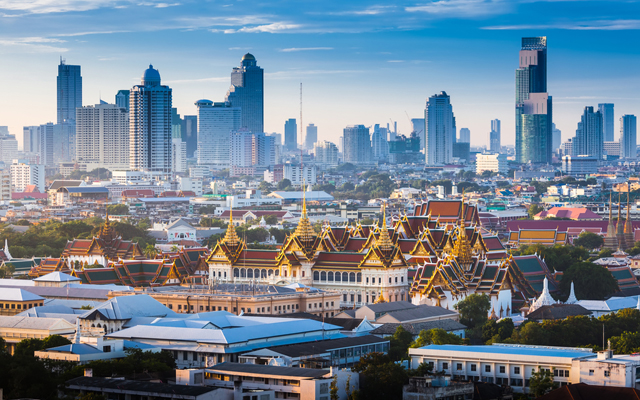
Bangkok still winning city, but others are catching up fast
Bangkok clinched top spot in the Mastercard Global Destination Cities Index of most visited cities for the second year running in 2016.
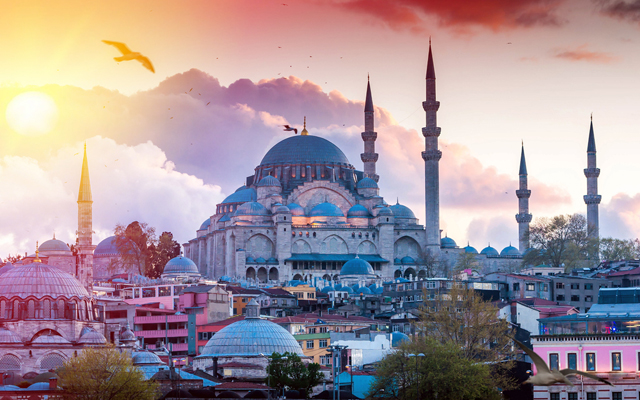
The leading city attracted over 19.4 million international visitors last year, followed by London (19.1 million), Paris (15.5 million), Dubai (14.9 million), Singapore (13.1 million), New York (12.7 million), Seoul (12.4 million), Kuala Lumpur (11.3 million), Tokyo (11.2 million) and Istanbul (9.2 million).
Bangkok still winning city, but others are catching up fast
Among the top 10, Tokyo is projected to see highest growth (+12.2 per cent), followed by Dubai (+7.7 per cent), Kuala Lumpur (+7.2 per cent) and London (+five per cent).
Meanwhile, New York (-2.4 per cent) is the only city in the top 10 expected to experience a dip in international visitors this year.
Across the top 20 destination cities, Mastercard observed that the majority of travel was conducted for leisure purposes, except in Shanghai where nearly half (48.4 per cent) of visitors were travelling on business. Conversely, Kuala Lumpur had the greatest percentage of visitors on vacation (92.2 per cent).
The index also shows that dining consumed the greatest percentage of visitor spend in Seoul (47 per cent), Istanbul (33.6 per cent) and Prague (29.3 per cent).
People spent more on shopping while in London (46.7 per cent), Osaka (43.4 per cent) and Tokyo (43.1 per cent), while lodging was the most expensive part of the trip when visiting Paris (44.8 per cent), Milan (40.4 per cent) and Rome (40.4 per cent)
And with efficient transport systems in place, less was spent on transit in London (4.3 per cent), Singapore (4.6 per cent), & Hong Kong (4.6 per cent).
While not in the top 10 in terms of visitor arrivals, Osaka is showing to be a strong contender, with top growth performance (for 2009-2016 period) at 24 per cent. Chengdu is in second place showing 22.7 per cent growth, followed by Colombo (20.3 per cent), Abu Dhabi (18.9 per cent), Jakarta (18.2 per cent), Tokyo (17.7 per cent), Hanoi (16.4 per cent), Riyadh (15.9 per cent), Lima (15.2 per cent) and Taipei (14.5 per cent).
Forty-five per cent of international travellers say the terror threat will have an influence on their travel plans this year, up six percentage points over last year, according to IPK International’s latest Terror Threats and Tourism survey.
Though not majorly quelling the hunger to travel, IPK International stated that the fear of terror attacks is affecting destination choice, with travel flows expected to continue shifting from “unsafe” to “safe”.
Turkey perceived as least safe
Sixteen per cent of international travellers polled said they will not travel in the next 12 months or will only go on domestic trips within their own country. A further 29 per cent indicated they will continue to travel abroad, but only to countries they consider “safe”.
Compared to 2016, the safety perception of some travel destinations has declined. For example, the proportion of respondents rating Turkey as “unsafe” rose to 76 per cent from 64 per cent in 2016.
Overall, IPK International said destinations with the weakest safety image are Turkey, Israel, Egypt and Tunisia – whereas Canada, Switzerland, Australia and Scandinavia were perceived as safest.
However, results from the survey show regional differences between source markets in Europe, Asia as well as North and South America.
IPK International revealed that travellers from Asian source markets such as South Korea, China and Japan as well as Russia are more likely to let instability and terror warnings influence their travel plans. In contrast, travellers from European source markets such as Denmark, Sweden and Finland are less sensitive to the threat of terror attacks.
Singles are also relatively unimpressed by terror warnings, whereas people travelling with children are more cautious, according to IPK International.
WBF Online Nao Temmyo (left) and Atsushi Shimada (centre)
Japan-based WBF Online will next month launch Manekineko Online, a B2B platform for travel agents located overseas.
With this, partner travel agents will be able to access, manage, and book activities, car rentals and buses in Japan for clients in real time. The content management system makes it possible for agents to offer these bookings on an individual basis, or combine the services to create new tour packages. The application programme interface also offers participating companies the flexibility to connect with and collaborate with each other, without having to set up a new system.
WBF Online Nao Temmyo (left) and Atsushi Shimada (centre)
Up until recently, WBF Online only offered B2C services for the domestic market. Boasting 1.6 million Japanese users, the company manages and offers approximately 3,000 intercity bus connections, 150 rental car companies, and 1,000 activities and tours around Japan.
On his decision to branch out, Atsushi Shimada, WBF Online’s president, told TTG Asia he felt it was an apt time to move on from B2C to B2B after a decade of being in the business.
Furthermore, he sees a market in offering bus bookings, as places like Niigata on Honshu’s north-west coast are not as easily accessed by bullet train – for instance between Tokyo and Osaka.
“We are targeting to grow this platform to 100 companies within one year, in the markets of Hong Kong, Taiwan, and Singapore. We have been and will (continue) making sales calls in these countries,” Shimada shared.
“When we begin operations in October, we will be starting this system with 20 companies, some of whom will be from Visit Japan Travel & MICE Mart,” he pointed out.
Nao Temmyo, WBF Online’s inbound team member, elaborated: “Currently, one company is using it on a trial basis and is helping us to test the system.”
Aside from the soon-to-launch B2B platform, Temmyo shared that “a hotel booking system is also in the works”, and that WBF Online hopes to be able to offer combined bookings such as hotels and activities, or hotels and car rentals, in the near future.
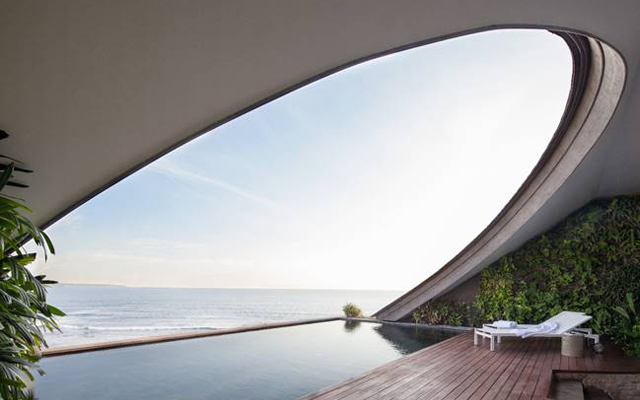
COMO Echo Beach will open in Bali’s south coastal village of Canggu come February 2018, to become COMO Hotels and Resorts’ third property on the island.
Located on 8,903m2 of land 11.3km from Seminyak, the property’s 119 guestrooms are a combination of rooms, suites, one- and two-bedroom residences, as well as three-bedroom duplex penthouses featuring individual rooftop pools.
The resort will be COMO’s third in Bali
At the central point of COMO Echo Beach is COMO Beach Club, which serves up food prepared with locally-sourced ingredients and Australian contemporary flair, and charcoal grilled options.
For wellness, COMO Shambhala Retreat features seven treatments rooms (five single and two double), Asian-inspired therapies (including the signature COMO Shambhala Massage and deep tissue massage), twice-daily yoga and Pilates classes and personal training in the gym.
The resort also offers a “luxury surfing” concept for a range of experience levels in partnership with Tropicsurf. Away from the waves, COMO Echo Beach can organise walking tours, golf excursions, and adventures into the heart of Bali accompanied by English-speaking guides.
Javier Beneyto is the appointed pre-opening general manager of COMO Echo Beach, after playing a role in the successful opening of COMO Metropolitan Miami Beach three years ago.
Special opening rates start from US$250 + 21 per cent tax based on two-pax sharing, including breakfast.
Mao: consumers likely to look elsewhere if one business fails to respond to feedback
Driven by the rising middle-income and millennial population who are now more willing to set aside time and spend more on trips, Asia-Pacific is set to lead growth in the global travel industry with the largest tourism market the world by GDP contribution and employment, according to MasterCard’s Asia Pacific Destination Index 2017 report.
Within the travel industry, customers’ perception of product quality is often tied to service received, and customer experience (CX) is hence increasingly becoming a key differentiator for top Asia-Pacific organisations.
Mao: consumers likely to look elsewhere if one business fails to respond to feedback
While CX can make all the difference between their success or failure, the reality remains that brands are still missing the mark – 80 per cent of CEOs believe they are delivering a superior experience and only eight per cent of consumers agree, according to Bain & co.
A 2017 Qualtrics survey revealed that 41 per cent of Singaporean travellers feel ignored by hotels and airlines as they believe that their feedback never reaches the relevant department or employees. This is (cause for concern), as 39 per cent of respondents in Asia-Pacific are unlikely to continue doing business with an organisation that does not respond to their feedback, according to the 2017 report by Qualtrics.
Consumers in the region are extremely critical when it comes to response time by brands. In fact, instantaneous responses are almost an expectation that needs to be met and is fast becoming the norm. Seventy-five per cent of Singapore and Hong Kong consumers demand action from organisations and nearly half of them expect a reply within the working day. Australia and New Zealand consumers on the other hand tend to be more laidback, with less than 40 per cent expecting a response within 24 hours.
For most brands, creating a positive experience is the key to customer acquisition and retention. The top element that creates a positive travel experience is a clean, comfortable hotel room while the least important factors were fast baggage pick-up and non-stop flights.
Understanding these insights will thus allow companies to successfully reduce the “experience gap”, which refers to the (discrepancy) between what companies believe they are delivering and the experience their customers are actually receiving.
When service providers nail experience management, they will be positively rewarded. Those who get it wrong, on the other hand, will suffer severe consequences with regards to lost customers, lost revenue, reduced market share and damaged brand reputation.
With 63 per cent of business leaders in Asia-Pacific having listed improving customer experience as their top business priority, the recent establishment of Qualtrics’ South-east Asia presence came at an opportune time. The Singapore-based regional headquarters will offer greater strategic vantage in serving the needs of Qualtrics’ South-east Asia clients, as well as supporting the business’ growth and objectives for the region.
While agencies in Bali brace themselves as Mount Agung’s hazard status was raised from alert level three to four last Friday evening, there remains a strong hope that it will be business as usual for tourism on the island.
Indonesia Centre for Volcanology and Geological Disaster Mitigation (PVMBG) raised the hazard status to ‘danger’ following the intensifying tremors, and extended the danger zone from a nine-kilometre radius to 12 from the crater. High atop the mountain, the iconic Besakih Temple has been declared closed to tourists.
Intensifying tremors felt around Mount Agung
Further concerning the travel trade is the fact that Mount Agung is located 72 km away from Kuta Beach and other popular tourist destinations including Denpasar and Nusa Dua.
Still, Sutopo Purwo Nugroho, head of central data information and public relations of the National Disaster Mitigation Agency (BNPB), assured travellers that the areas beyond the delineated red zone are safe to visit.
Reports also showed places of interest such as Tanah Lot, Uluwatu, Lake Beratan Bedugul, Tampak Siring Palace, Garuda Wisnu Kencana, Sanur Beach, Tanjung Benoa and Nusa Penida had remained busy during the weekend.
Similarly, activities at Ngurah Rai International Airport up to press time were operating as per normal, as were all domestic and international flights.
Speaking to the media following a meeting to anticipate threats over aviation safety should the mountain erupt, Agus Santoso, director general of air communications of the Ministry of Transportation, said: “(Until Sunday morning), there was no detection of volcanic ash emitted from the mountain and all flight operations to and from Bali ran normally.”
Agus called on all flights taking off or landing in Bali to be extremely cautious and to observe all standard operating procedures.
He said Notice to Airmen (NOTAM) would be issued immediately should changes be detected in the status of the mountain and should an eruption occur.
He also announced that a number of airports have been made ready to receive diverted planes bound for Bali. These international airports are in Lombok, Surabaya, Semarang, Jogjakarta, Banyuwangi and Makassar.
Meanwhile, The Australian reported on Saturday that all flights operated by Virgin Australia, Jetstar and Qantas remained unaffected. Virgin Australia announced that some of its Bali-bound flights would make a refuelling stop in Darwin as a precautionary measure, so that if the mountain erupted while a flight was on the way, it would be able to get passengers back to the original airport safely.
Local dishes such as braised pork adobo could get greater tourist interest
Tour operators are creating tours that include culinary and farm stops as awareness for Filipino food builds up, thanks in part to the culinary festival Madrid Fusion Manila which the city will host for the fourth consecutive year in 2018.
But will Filipino food win the palate – and hearts – of travellers who are more enthralled with Thai, Japanese, Chinese, Korean, Malaysian cuisine?
Local dishes such as braised pork adobo could get greater tourist interest
Marisa Nallana, secretary-general of PACEOS (Philippine Association of Convention/Exhibition and Suppliers), which handles the month-long Flavours of the Philippines festival as part of Madrid Fusion Manila, noted a greater demand for local cuisine as Filipino chefs who trained and worked abroad and foreign chefs open more sophisticated restaurants in Manila.
Nallana said tourists are also discovering the Philippines’ regional dishes, including those from Pampanga, known as the country’s culinary capital with its slow-cooked and elaborate food including lechon (roast pig) and exotic ones such as crickets, frogs legs and fermented rice. Then, there are Bicol dishes, known for their spicy tang and lavish use of coconut milk, fresh seafood in the Visayas and Mindanao, and unique offerings like curacha (spanner crab) and various paellas in Zamboanga.
Mike Haim, groups manager, Corporate International Travel and Tours (CITI), too observed growing demand with more Filipino restaurants opening in the US and other countries, overseas training of local chefs, growing demand for fresh, organic produce, and more appealing aesthetic branding.
But for Filipino cuisine to get to the level of its more popular Asian cuisine counterparts, “realistically, it will take a while”, he opined. CITI’s culinary tours are not yet marketed as singular products, but as part of larger leisure and incentive group packages.
To create interest in this lesser-known Asian cuisine, he shared that Japan imports huge volumes of tuna from GenSan in Mindanao and that from its abundance of fresh seafood, the Philippines has kinilaw, the local version of ceviche and sushi.
“Filipino cuisine is a melange of different cuisines, influenced by Spain, Mexico, etc….with dishes like adobo (marinated pork or chicken or both) and kare-kare (oxtail stew served with thick peanut sauce) cooked differently from region to region,” he added.
Meanwhile, Vilma De Claro Mendoza, president of Mart Evers Travel, who organised Flavours of the Philippines in Cavite, expects that demand for Filipino food should improve as many Filipinos are now travelling and working abroad – but opined that the cuisine needs continued marketing and promotions to truly take off internationally.