Winding Tree to launch a token sale of its cryptocurrency "Líf"
A Swiss-based startup is dedicating itself to “the reorganisation of travel distribution”, starting by building the first public blockchain-based marketplace for travel content with the Lufthansa Group on board as content partner.
With a decentralised B2B marketplace system powering blockchain-based travel booking transactions, startups and companies will be able to gain direct access to travel service providers’ offerings without the need for many intermediaries, according to the startup, Winding Tree.
Winding Tree to launch a token sale of its cryptocurrency “Líf”
Winding Tree envisions that in the future, airlines, hotels and other travel service providers will offer their services on its platform, and companies interested in content will only connect to its B2B marketplace to present specific offers, which will result in a large number of new apps for travellers.
“Lufthansa Group has engaged in the development of APIs, for instance supporting IATA NDC standard, to offer a direct access to its offers to customers and distribution partners”, said Markus Binkert, senior vice president distribution & revenue management Lufthansa Group Airlines.
“By integrating these APIs with Winding Tree’s public blockchain Lufthansa Group enables all innovative partners who develop cutting-edge travel applications to access these offers via a decentralised and intermediate-free travel marketplace.”
In order to finance the initial development and facilitate acceptance by suppliers, Winding Tree will on November 1 launch a token sale of its cryptocurrency “Líf”. Lufthansa Group will participate in the presale upon regulatory clearance from Swiss authorities.
The contact with Winding Tree was established via the Lufthansa Innovation Hub.
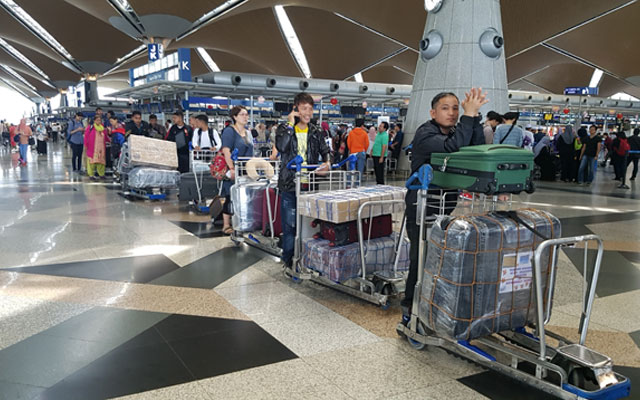
Malaysia Airports Holdings will introduce airside transfer check-in service at Kuala Lumpur International Airport (KLIA) and LCC terminal klia2 from next year.
The new service is expected to provide greater convenience to passengers with onward international destinations as they will not be required to check out their baggage at the point of transit, explained Malaysia Airports Holdings managing director, Badlisham Ghazali, in a Bernama report.
Part of the company’s larger modernisation plans, the transfer will be introduced at both KLIA and klia2. Badlisham also announced that both passengers and their baggage will be transferred free between both terminals.
Ally Bhoonee, executive director of World Avenues, said: “While it is a good improvement in services, there is an operational issue that needs to be addressed. There must also be interlining baggage between different airlines which do not have codeshare agreements. For example, if someone were to travel by Emirates from Dubai to KLIA, then proceeds on to Laos on AirAsia departing from klia2, their bags must be tagged correctly all the way through so that he collects it in the final destination.”
Agreeing, Adam Kamal, manager, Aidil Travel, said: “More international passengers will use airlines flying into Kuala Lumpur if Malaysia Airports can resolve the issue of interlining baggage between two different PNR numbers. The airlines that will benefit are the local carriers. Providing free shuttle services between the two airport terminals makes it very convenient and (saves cost) for passengers.”
ForwardKeys attributes fall to a "Trump Slump" compounded by stronger US dollar
Since US president Donald Trump first initiated a travel ban, the country has suffered a slowdown in international arrivals while the rest of the world pushes ahead, according to recent ForwardKeys analysis.
The decline also coincides with the strengthening of the US dollar, making the destination more expensive, ForwardKeys acknowledged.
ForwardKeys says there’s been a “Trump Slump” compounded by the stronger US dollar
Since January 27, there has been an overall dip of 1.4 per cent compared to the same period last year, while international arrivals in the rest of the world shows an increase of 4.6 per cent.
ForwardKeys observed that the decrease is from around the world – Europe, Asia-Pacific and the Middle East. Only travel from elsewhere in the Americas, and Africa (which has a small 2.1 per cent market share of travel to the US) have shown growth.
Europe, with a 39.4 per cent market share, slumped by 2.3 per cent over the year to the end of September, while Asia-Pacific, with a 23 per cent market share, was down 3.8 per cent.
ForwardKeys co-founder and CEO, Olivier Jager said: “Our latest findings confirm what our data has been predicting since the first travel ban. There has been a Trump Slump and the strong dollar has compounded it.”
“This must be worrying for the US economy – travel is a huge earner for the US and relative to the rest of the world, its tourism exports are losing ground.”
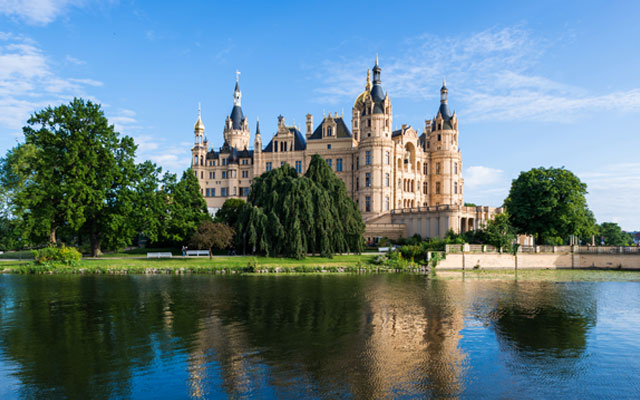
Although it is not a country, Mecklenburg-Vorpommern, a federal state in northern Germany, is the official partner country of ITB Berlin 2018, picked for the destination’s strong sustainable tourism concept, according to the show organiser.
Those visiting Mecklenburg-Vorpommern will be able to offset their carbon footprint by purchasing so-called forest shares, 85,000 of which have already been sold. Five square metres of mixed woodland can be planted for 10 euros (US$12).
Schwerin Castle is just one of the more than 2000 castles and mansions in Mecklenburg-Vorpommern
As a result of the project, extensive reforesting is now taking place, according to a statement from the show organisers.
ITB Berlin is also expected to have its opening ceremony leave zero carbon footprint next year.
A public tree-planting ceremony was held last weekend in Göhren-Lebbin in the Mecklenburg Lake District, at which ITB Berlin will become a forest shareholder.
Chairman of the Tourism Association of Mecklenburg-Vorpommern Wolfgang Waldmüller said: “We are looking forward to organising Mecklenburg-Vorpommern’s appearance at ITB Berlin 2018. This is a big challenge, which we gladly accept, and it gives us the opportunity to score points on the international market.”
At ITB Berlin 2017 Mecklenburg-Vorpommern occupied a stand covering 400m2. According to the Statistics Office, last year the state registered 30.3 million overnights. Tourism is a mainstay of Mecklenburg-Vorpommern’s economy and currently provides jobs for a total of 130,000 people.
Furthermore, annual gross turnover in this sector is around 4.1 billion euros, and consumption by visitors totals 7.75 billion euros.
Club Med will make its Sri Lanka debut with the opening of Club Med Ceylon in the small town of Beruwela come August 2019.
A 90-minute drive from Colombo International Airport, Club Med Ceylon will sit along he 1.5km Golden Beach and feature 372 rooms ranging from deluxe rooms to suites.
Beruwela
Apart from a children’s club, MICE facilities and restaurants and bars, the resort will also offer over 20 facilities including flying trapeze, tennis, football and archery.
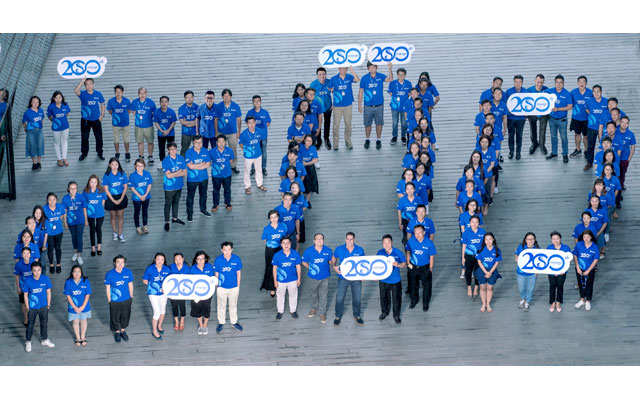
SkySea Cruise Line kicked off its 200th cruise with an inaugural cruise departing from the new seasonal homeport of Zhoushan.
The four-night cruise on the company’s flagship vessel, SkySea Golden Era, will shower its 2,000 guests with gifts, such as a commemorative T-shirt and a cocktail.
Since its inception in May 2015, SkySea Cruise Line has served some 340,000 guests. In honour of this, the company will be surprising its 340,000th cruiser with a free sailing in 2018 from any of the line’s homeports.
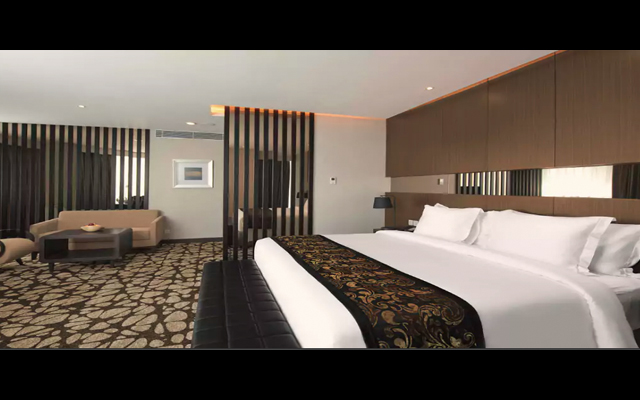
While OTA bookings make up a sizeable portion of Meliá Makassar’s business, the one-year-old hotel is stepping up cooperation with local inbound operators to increase international guest numbers.
Since opening last year, the 135-key business hotel has been attracting mostly Europeans who arrive in the South Sulawesi capital for their trip to Tanah Toraja – many of whom are FITs who booked through OTAs – Guillermo Bastarrica Mora, hotel manager, told TTG Asia during a recent visit to Jakarta.
Hotel working more closely with agents
“We are going to work more with the local travel companies to boost (the number of) international leisure travellers choosing to stay with us,” he said adding that the hotel would also start being active in trade shows.
Yayan Suryana, director of sales and marketing at the hotel, elaborated: “We will participate in ITB Berlin next year, as the longhaul travellers seem to be the market for South Sulawesi when it comes to leisure.”
And although the corporate market already contributes the bulk (20 per cent) of its domestic business, there is still room for growth, Yayan said.
Yayan explained: “Makassar’s economic growth (this year) is 7.9 per cent, higher that the country average, which is only 5.2 per cent. A lot of developments are taking place in the city.”
Apart from the country’s major business capital of Jakarta, Surabaya also has the potential to grow as a source as some Indonesian and international companies base their East Indonesia regional office in the city, according to Yayan.
In Asia, Japan and South Korea represent promising markets for business travel growth, Yayan added.
Travel & tourism (T&T) competitiveness is especially improving in Asia-Pacific, led by Japan, according to the World Economic Forum’s (WEF) latest Travel & Tourism Competitiveness Report 2017.
While countries in the region are at different development levels, the majority of nations have shown steady growth and have experienced improvements across a number of T&T competitiveness pillars, especially international openness, projects to create visa-free areas, pricing and ICT (Information and Communications Technology) readiness.
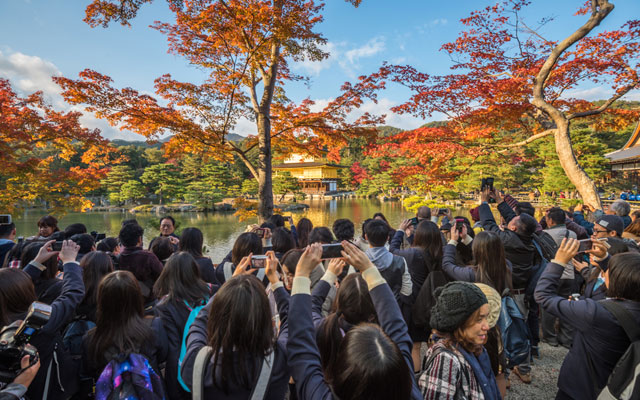
Tourists at the Golden Pavilion in Kyoto, Japan
Japan moved up five positions to take the fourth place globally, with WEF pointing to an improvement in price competitiveness (up 25 spots to 94th) as one main driver. Cost of travelling in the country has significantly been reduced – although the average cost of accommodation sees a slight increase – due to a decrease in fuel prices and air-ticket taxes.
Japan also boasts some of the most developed ground transportation infrastructure systems and ICT networks globally (both 10th), well-developed air connectivity (18th), overall openness to T&T activities (112th), although it has a tight visa policy.
Environmental sustainability remains the area where the country has yet to achieve better results, WEF stated, with high PM emissions (93rd), overfishing (71st) and increasing share of threatened fauna (129th), posing serious concerns both for tourism and for the country’s overall sustainability and biodiversity.
South Korea is one of the five most-improved countries, climbing 10 places to reach 19th position. It improved in eight of WEF’s 14 index pillars, with remarkable improvements on international openness (14th, up 39 places) and price competitiveness (88th, up 21 places). International openness has improved due primarily to newly signed trade agreements that have facilitated international transactions and investments, while its price competitiveness performance has benefitted from lower fuel and hotel prices, the report revealed.
Indonesia ranks 42nd, climbing eight places. The country stands out for making use of its natural resources (14th) at very affordable prices (fifth). Areas worth addressing, WEF pointed out, are deforestation (113th), insufficient treatment of wastewaters (109th), augmenting species listed as threatened (127th) and tourism service infrastructure (96th), with the supply of hotel rooms still low (93rd).
Vietnam rose by eight places, ranking 67th globally, driven chiefly by natural resources (34th), cultural resources (30th) and price competitiveness (35th), WEF observed. Moreover, the destination has made significant progress on its human resources and labour market pillar scores (37th, up 18 places), thanks to a better-qualified labour force (53rd) and partially simplified regulation to hire foreign labour (75th).
WEF noted that the country has also made “exceptional improvement” to its ICT capacity and usage (80th, up 17). Security and safety perception (57th) is also making Vietnam an increasingly attractive destination for developing its travel and tourism sector.
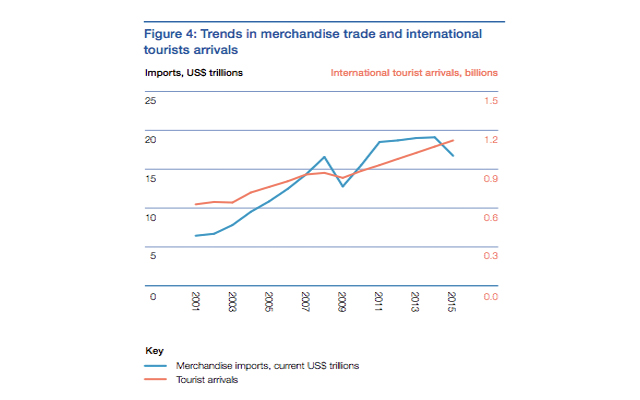
Overall, despite nativist and protectionist rhetoric making front pages, the T&T industry – unlike global trade – continues building bridges rather than walls.
WEF said this resilience is apparent from the growing volume of international travel and trends toward less restrictive visa policies. While data reveals there has been a slump in merchandise imports, the number of people travelling keeps rising.
Widening reforms for foreign property ownership in South-east Asia expected to further drive transaction volume
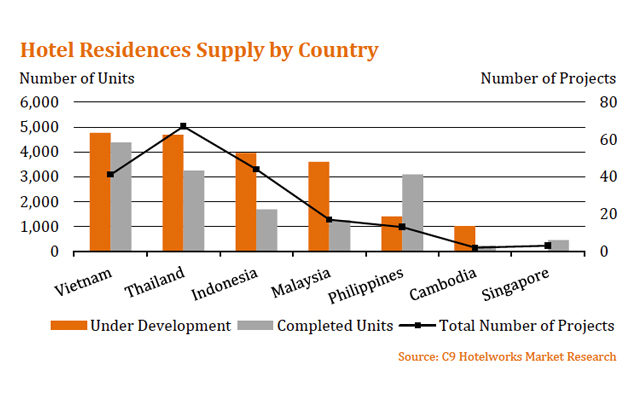
New completed hotel residence units in South-east Asia will represent a massive 83 per cent rise over existing supply between 2018 and 2020, with Danang, Phuket, Kuala Lumpur, Bali and Bintan the top pipeline project locations, according to C9 Hotelworks.
Widening reforms for foreign property ownership in South-east Asia expected to further drive transaction volume
“Currently across South-east Asia, there is an estimated 94 mainstream hotel residence projects with more than 21,000 units online. This year 15 hotel branded projects will be completed and 2,496 units will enter supply. The region is expecting a sharp rise in supply in 2018 with 43 projects currently under development,” said Bill Barnett, managing director of C9 Hotelworks.
The report further shows that projects are largely established in resort areas, accounting for 75 per cent of the current supply overall. For those under development, over 78 per cent of the properties are located in resort destinations, with over 95 per cent set in Indonesia, Vietnam and Thailand.
With an onslaught of supply entering the market, developers are looking to increase sales by offering guaranteed yields, especially in emerging markets such as Vietnam, Indonesia and Cambodia, C9 Hotelworks observed.
And as domestic demand flattens and overseas buyers increase, Barnett said “widening reforms for foreign property ownership are expected to further push transaction volume given the region’s favourable price competitiveness”.
Branded hotel chains continue to dominate the market, with 148 projects representing 79 per cent of existing and new supply. C9 Hotelworks said its latest research reflects that the marketwide premiums of recognised hospitality groups range between 25-35 per cent versus independent properties. Chains that are most active include Marriott, Banyan Tree, Hyatt, Melia and Minor.
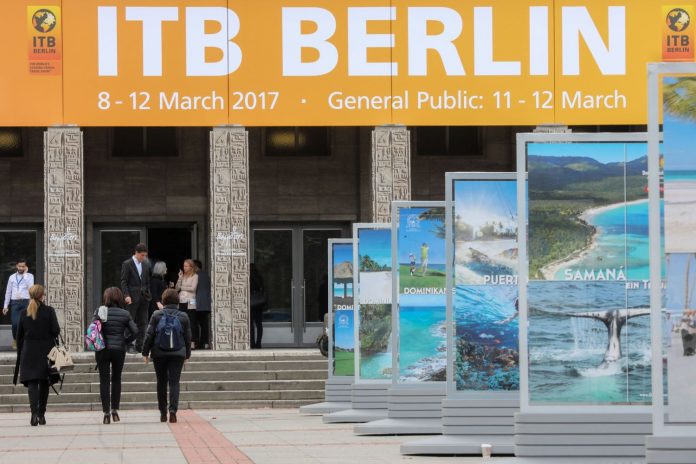
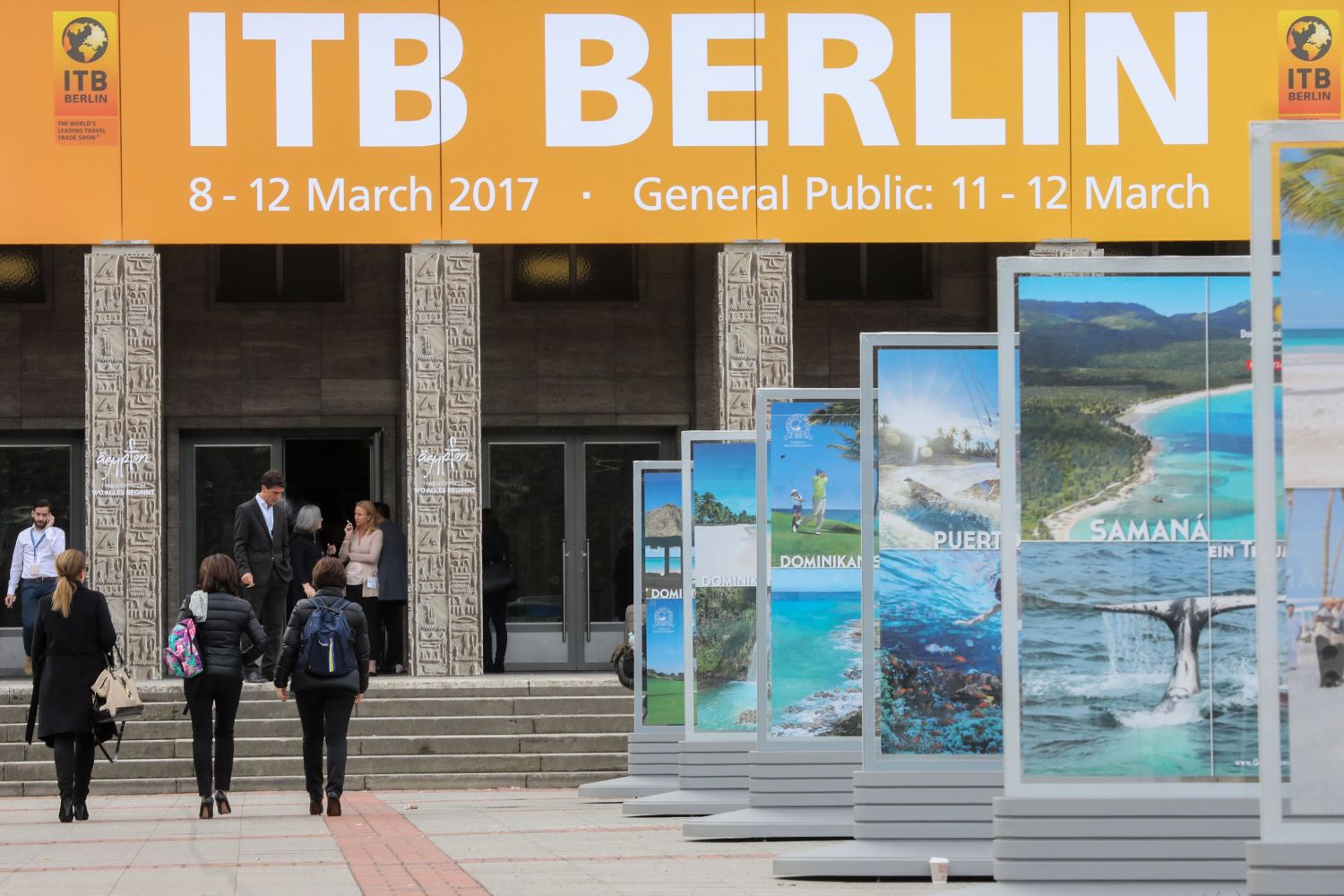
Executive council members of the Malaysian Association of Tour and Travel Agents (MATTA) have announced plans for 2018, which include the purchase of a pavilion at ITB Berlin, a first for the association, and roadshows to nordic markets in the first half of the year.
MATTA president KL Tan said: “We just opened for (the ITB) registration. We expect 25 members to join us as well as 15 hoteliers and product owners.”
ITB Berlin 2017
Following the ITB Berlin travel trade show, MATTA will be organising a roadshow to Sweden, Denmark and Finland from March 12-15.
In addition, MATTA will more aggressively organise B2B roadshows in New Delhi (January), Mumbai, Pune and Ahmedabad (February), Chengdu, Chongqing, Jakarta and Surabaya (March), and Dhaka, Kolkata and Hyderabad (April).
Tan said there will be a focus on South Asia, China and Indonesia – key inbound markets for Malaysia. Arrivals from these markets comprised 21.5 per cent of total arrivals to Malaysia for the first five months.
MATTA, which only started organising its own roadshows this year, intends to work closely with Tourism Malaysia’s overseas offices and travel agents associations in the country it brings its events to.
In addition, MATTA has submitted its proposals to the government to be taken into consideration when Budget 2018 is tabled on October 27. Tan shared: “Our proposals include easing conditions to assist new and small companies, providing tax incentives to tour operators who handle more than 750 foreign tourists and 1,500 domestic tourists annually, and providing funding for capacity building in the travel sector including apprentice training to reskilling and upskilling of current practitioners.
“We also asked the government for incentives for online marketing and promotions to enable agents to compete more effectively with online travel agents. And to attract more high-end travellers, we have asked for a waiver of import duty for luxury tour vehicles and excise duty exemption to be extended to all classes of tourism vehicles.”







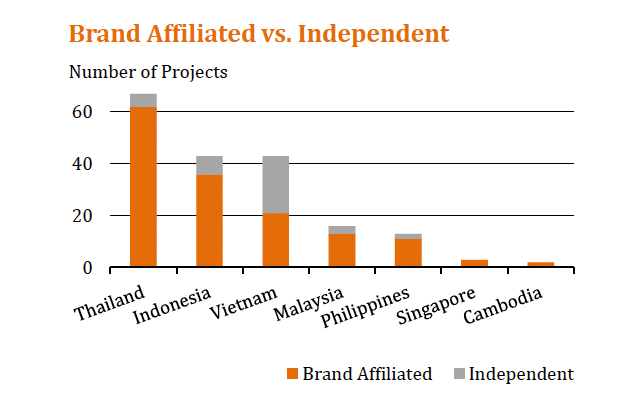 Branded hotel chains continue to dominate the market, with 148 projects representing 79 per cent of existing and new supply. C9 Hotelworks said its latest research reflects that the marketwide premiums of recognised hospitality groups range between 25-35 per cent versus independent properties. Chains that are most active include Marriott, Banyan Tree, Hyatt, Melia and Minor.