The latest hotel openings and announcements made this week.
Pan Pacific Beijing
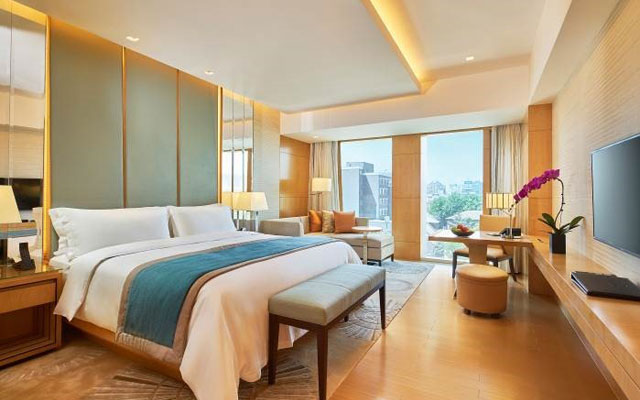
Come August 20, Pan Pacific will open its latest outpost in China’s capital. Located in the Xicheng district, the hotel features 220 guestrooms and suites which start from 45m2. Recreational amenities include a 24-hour fitness centre, spa with steam and sauna, and 20m-long indoor swimming pool. Other facilities include includes a Grand Ballroom with a double volume ceiling, an indoor conservatory Winter Garden, and four F&B venues.
Element Chongli
Located in the Taiwoo Ski and Mountainous Resort of Zhangjiakou – the co-host city of the 2022 Beijing Winter Olympics – is the 164-room Element Chongli. A room in the new-build ski resort comes with a Heavenly Bed, spa-like bathroom, kitchenette, work station, complimentary Wi-Fi and a telescope to view the night-sky. Amenities within the building include the 24/7 self-serve pantry Restore, all-day dining venue Salon Restaurant, a 90m2conference room, indoor swimming pool, fitness centre and a bike-borrowing programme.
Sunway Velocity Hotel
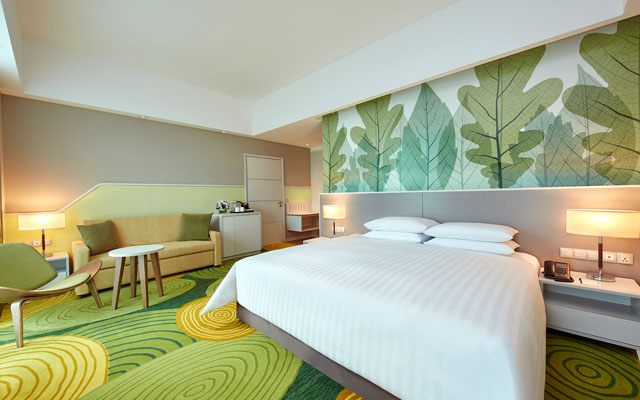
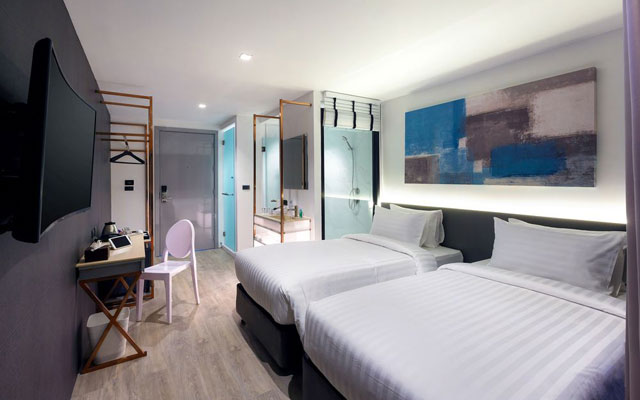
Part of the 9.3ha Sunway Velocity Kuala Lumpur mixed development is the 351-key Sunway Velocity Hotel. Opening on September 20, the property offers three guestroom categories, the largest of which is a corner room with an additional settee that pulls out to a queen-size sofa bed, accommodating up to three adults. Regardless of category, every room will have complimentary Wi-Fi, LED Smart TV, electronic safe, mini fridge and coffee- and tea-making facilities. Amenities on-site include a boardroom, an express café that serves light snacks and refreshments, a 24-hour fitness centre and an outdoor infinity swimming pool.
Haven’t Met Hotel Silom Bangkok
Standing a short stroll from the Chong Nonsi BTS skytrain station is the 72-room Haven’t Met Hotel Silom Bangkok. There are two room types – the Awesome Room (Superior Double Room) and Sensational Room (Deluxe Double Room) – both boasting 40-inch smart TVs with cable channels, high-speed Wi-Fi, minibars, extra-large double beds, and ensuites with rain showers. There are two F&B options on-site, the 24-hour High Lounge offering daily breakfast buffet, and The Moment bar and restaurant on the roof deck.
La Siesta Central
At this private dwelling turned boutique hotel in Hanoi’s Old Quarter, 19 of the 27 rooms boast views of Hoan Kiem Lake. The property offers a few room types, but all rooms feature a rain shower and toiletries from the in-house La Siesta Spa brand. Amenities on-site include the La Siesta Spa with seven treatment rooms, and the Red Bean restaurant and Twilight Sky Bar, both on the rooftop.
Starting September 3, Star Cruises will deploy the SuperStar Libra from Kuala Lumpur (via Port Klang), Penang and Phuket to leverage the Malaysian capital’s role as a regional air hub and afford more fly-cruise options.
Previously with Penang as its only Malaysian homeport, the SuperStar Libra in the coming season will make two cruises a week – a three-night Kuala Lumpur/Phuket/Penang cruise and a four-night Kuala Lumpur/Langkawi/Phuket/Penang option.
Star Cruises aims to grow its source markets in SEA; SuperStar Libra pictured
“Star Cruises is optimistic this will grow our source markets in South-east Asia, allowing guests more access to multiple homeports and concurrently developing and stimulating the growth of the cruise tourism sector across borders through fly-cruise options,” said Ang Moo Lim, president of Star Cruises.
China-based Wanda Hotels & Resorts will bring its Wanda Realm brand overseas for the first time with the management of a property within Langkawi’s Tropicana Cenang, a RM1.9 billion (US$451.9 million) integrated resort development by Cenang Resort.
Under the agreement, both Wanda and Cenang Resort will spearhead new resort management directions. Wanda Realm Resort Langkawi will offer 350 hotel rooms, restaurants, conference, entertainment and fitness facilities.
Tropicana Cenang is Wanda Realm’s first overseas foray
Scheduled for completion in 2023, the mixed-use development sits on 2.1ha of freehold land fronting the Andaman Sea and comprises a hotel, two 40-storey residential towers and commercial components targeting the tourism and services industry.
With two towers (one expected to be completed by 2021 and the other by 2022), the RM1.6 billion serviced residences component will feature 1,102 fully furnished units across two-, three- and four-bedroom types. The units are sized between 71.6m2 to 120.2m2.
The commercial component has a development value of RM54.3 million and will offer 16 units with built-up areas ranging from 44.5m2 to 135m2.
Separately, Cenang Resort is also partnering Sino Great Wall, which will act as a joint development partner and contractor of the development.
Destination Asia Group has promoted Katie Buxton from general manager for Hong Kong to the senior position of global director of sales.
In her new role, the Australian national will provide leadership and strategic direction for Destination Asia’s worldwide sales network.
Katie Buxton (left) and Sarah Noonan
Buxton has been with the group for more than seven years, and possesses an extensive knowledge of the global market and operations of the 11 countries within the group, cruise market, as well as comprehensive expertise in leisure, corporate meetings and events.
Meanwhile, the group has also appointed Sarah Noonan as general manager in Hong Kong.
A UK national, she moved to Hong Kong in 2012 and independently set up a regional sales office for a leading UK expedition company. Her previous roles include managing client accounts for a sports tours and events company to event operations for large scale overseas events.
Nepal tries to solidify signs of recovery by diversifying into eco- and spiritual tourism, but still faces infrastructaure and pollution issues, Marissa Carruthers reports
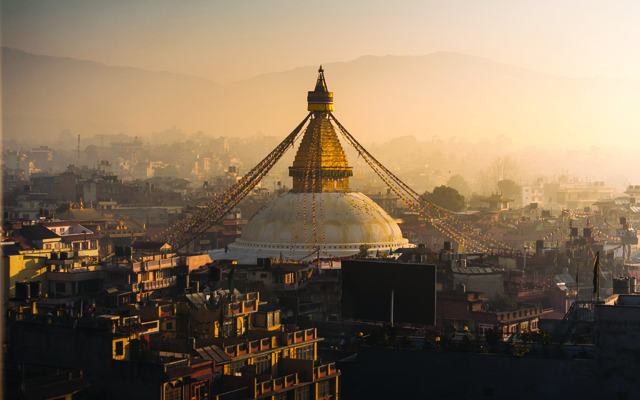
Recovery is underway in Kathmandu following the 2015 earthquake
While 2016 arrivals were still down by 4.7 per cent compared with 2014 figures, Nepal industry members said 2017 is looking bright, with one million international arrivals anticipated.
Last year, the market showed signs of recovery, with a 39.7 per cent increase to 753,002 visiting foreigners. India was the top source market, followed by China, the US, Sri Lanka and the UK.
The devastation caused by the 7.8-magnitude earthquake that hit Nepal on April 25, 2015, saw international visitors slump from 790,118 in 2014 to 554,747 in 2015, according to figures from the Ministry of Immigration.
Despite the earthquake being restricted to 10 of the country’s 75 districts, the damage was felt nationwide. An unofficial blockade along Indian border points coupled with a fuel crisis and trade embargo hit Nepal. Overnight, the country’s tourism trade crashed.
But as the market shows signs of turning around, high hopes have been pinned on the tourism sector.
Suman Pandey, president of PATA Nepal, said: “Things are slowly starting to pick back up. Last year, we were nearly back to the figures before the earthquake and this year looks to be even better, so this is encouraging.”
The country’s recovery was severely hindered by a blanket travel warning on visiting Nepal despite many popular tourist destinations remaining untouched.
Nepal Tourism Board (NTB) CEO, Deepak Raj Joshi, said: “After the earthquake, people assumed it was the whole country. This was very damaging and we directly saw the impact it had on travel.”
Despite suffering no earthquake damage, businesses in popular Pokhara – gateway to the Himalayas – saw tourism tumble. Tejina Malla, assistant sales manager at Shangri-La Village Resort Pokhara, said: “We were not hit physically by the earthquake but we were hit very badly financially, and it’s only now starting to pick back up.”
Initiatives
Hard-hitting marketing campaigns done in major source markets in the aftermath of the disaster, to spread the word that Nepal is safe and open for business, are finally paying off. Intrepid Travel said bookings have jumped 70 per cent this year from 2016, while G Adventures, which offers ecotourism trips, reported a 62 per cent rise – surpassing its 2014 figures.
However, the industry said post-earthquake fears remain a major hurdle. Bharat Kumar Basnet, managing director of Explore Nepal, said: “People across the world thought Nepal is not a safe place to visit and we weren’t able to pass the message to the world that Kathmandu and many other places survived. People need to learn more about Nepal.”
Stepping up its game, the country hosted its first annual Himalayan Travel Mart in June, attracting 74 buyers from 36 countries and more than 50 sellers. And the industry has started to actively sell the country’s other attractions, away from the Himalayas and trekking. Huge efforts are being pumped into developing ecotourism, which is seen by many as a way to elevate the industry.
Shital Chandra Dharel of Himalaya Heart Treks and Expeditions said: “We have much more than the mountains. We have national parks, safaris, wildlife with black rhinos and tigers, more than 60 different ethnic groups, culture and a lot of adventure activities. More is being done now to promote these activities and show that Nepal really is a diverse destination.”
Spiritual tourism is another area that is being actively promoted. Nepal is home to Lumbini, the birthplace of Buddha, and other religious sites, and tour operators are starting to target South-east Asian markets such as Cambodia and Vietnam which have strong Buddhist populations and growing economies.
In June, the Bangkok-based Nepali embassy to Cambodia organised an event in Phnom Penh to promote Buddhist tourist sites and activities in Nepal. And talks about starting direct flights between the two countries began.
Not enough
But concerns have been raised that this alone won’t be enough for Nepal to reach its tourism potential. Infrastructure remains weak, airports are in desperate need of upgrading, more flight paths are essential, as is increased investment in human resources.
Saurav Rajkarnikar, executive director of KGH Hotels, which operates a string of properties in Kathmandu and Pokhara, added: “Pollution is also a big factor that needs to be addressed.”
Political stability is necessary if investment is to be put into overhauling infrastructure and upgrading roads. Nepal’s first democratic elections in 20 years is taking place this year, with the third and final stage in September.
Pushka KC, Peak’s sales manager, said: “We are happy for these elections because we need (Nepal) to be politically stable. We can promote Nepal as a leisure or spiritual destination or whatever, but if we don’t have the infrastructure to get people around, it is no good.”
To cater to the predicted increase in visitors, construction of a new US$216 million international airport in Pokhara started in June. Three kilometres east of the current domestic airport, it is slated for completion by July 2020.
In addition, Gautam Buddha Airport in Bhairahawa, gateway to Lumbini, is set to open in 2019. It is also hoped that the stalled US$92 million improvement of Tribhuvan International Airport in Kathmandu will be unveiled the same year.
While hurdles remain, the industry remains confident of the country’s potential to achieve two million foreign visitors by 2020.
In Asia, the business of fun is a serious industry as attractions keep up the amusement war through constant reinvention.
SE Asia has a growing thirst for water parks; Siam Park City, Bangkok pictured
Asia has been the hotbed of a theme park rush, with intellectual-property (IP) partnerships on the uptick as destinations the likes of Shanghai Disneyland, Legoland Japan and Malaysia’s Movie Animation Park Studios seek out movie and cartoon producers to create new universes of amusement.
With fun being a serious business in Asia, water playgrounds have also been making a splash. From 2015-2016, visitor volume to water parks in the region climbed 5.4 per cent from 19.5 million to 20.9 million, reported the Themed Entertainment Association (TEA) and AECOM.
To quench the region’s thirst for watery fun, new operators are thronging the market – at least 15 water parks have opened in the last three years in Thailand alone, said Wuthichai Luangamornlert, managing director of Siam Park City, at the Asian Attractions Expo 2017 in Singapore in June.
“We’re seeing a growth in private investment in this new emerging market as tourism spreads from Pattaya, Bangkok and Chiang Mai to the second-tier cities,” observed Wuthichai.
Meanwhile, service supplier WhiteWater Southeast Asia has signed to develop “world-class water parks” in Thailand, Vietnam, Cambodia, Malaysia, the Philippines and Bahrain, said CEO Chris Perry.
Legoland Discovery Center in Osaka, one of the many intellectual-property partnerships in Asia
Yet, as the competition heats up, the market size is shrinking. In 2015-2016, overall visitor numbers in Asia-Pacific’s top 20 amusement parks dipped 2.8 per cent from 130.9 million to 127.3 million, according to the 2016 TEA/AECOM Theme Index and Museum Index.
The decrease, as outlined in the report, is in part due to more parks opening in China, drawing droves of Chinese visitors to domestic attractions and away from those in neighbouring countries.
Confronted with sliding popularity and a tightening market share, incumbents around Asia are facing a mounting pressure to reinvent.
Fun for the whole family
The key, industry players believe, lies in multigenerational experiences. President and CEO of the International Association of Amusement Parks and Attractions (IAAPA), Paul Noland, observed: “We are seeing parks capitalise on the nostalgia factor. Successive generations like to share experiences that they enjoyed growing up, so the trend is to create high-quality rides that all members of the family can enjoy.”
Wuthichai agreed, adding that family rides generate the most visibility and discussion on social media for Siam Park City, Thailand’s oldest water park.
“The trend is to become more family-oriented, so we’ve invested in rides that the whole family can go on,” said Wuthichai. “We’ve had customers who haven’t visited our park in five years come back.”
Operators also reported that more developers are capitalising on this trend by transforming casino complexes into mixed-use, family-friendly destinations.
According to Ken Wheatley, director of entertainment technology supplier Christie, Macau led the pack in the development of mixed-use integrated resorts, which was soon replicated in the Philippines, South Korea and Singapore.
The latest talk of the town is Okada Manila, a 44ha integrated resort in the Entertainment City gaming strip. The US$2.4 billion project boasts a casino, hotel, dining and shopping outlets, and conference spaces, in addition to a 1.2km-long multimedia show comprising choreographed water, light and music performances.
Such multimedia shows are also gaining traction with operators across Asia, checking off boxes as a multigenerational, sustainable and cost-effective revenue driver, with Marina Bay Sands’ Spectra light-and-water extravaganza by its promenade as a recent example.
“Multimedia presentations help us keep (attractions) current and relevant for the next generation, who come back to experience something old that’s new again,” said Paul Rivet, director of entertainment at Walt Disney Attractions Japan.
Often conducted in the evening, multimedia shows motivate visitors to stay longer at resorts or even overnight, and can drive on-site F&B spending to 15 per cent more, said Jean-Christophe Canizares, chairman and CEO of French multimedia provider ECA2, which developed the Wings of Time show in Sentosa.
They can also be “refreshed easily and changed seasonally”, said Michael Reid, founder of IconPath Curated Experiences.
This is a big selling point – especially for regional parks with smaller budgets – as operators prioritise the “sustained repeatable value” of an attraction, explained Ron Merriman, managing director of MR ProFun China, the company that helmed Ferrari World Abu Dhabi.
While parkgoers may be eager to embrace multimedia extravaganzas, industry experts caution operators against leaning on trending technology as the focal point of the attraction.
“We have to recognise it’s the story and experience that is important. The technology delivers it,” said Darrell Metzger, former CEO of Ocean Park. “We have to be willing to abandon the technology and replace it with whatever it is that can tell your story.
Spectra Light and Water Show, the latest multimedia show at Marina Bay Sands, Singapore
The park battle wages on
As Asia continues to receive new openings and expansions, China is seeing multiple IP projects – including Zhuhai’s Lionsgate Entertainment World and Universal Studios Beijing – in the development pipeline. TEA projects that by 2020, attendance at theme parks in China will surpass those in the US.
While numerous IP-driven developments are in the pipeline across Asia, countries outside of China may find greater favour in smaller or regional IP projects.
Malaysia and the Philippines were quick to hop on this trend, with the Genting Group’s 20th Century Fox World opening this year-end, and the launch of the DreamWorks-branded DreamPlay attraction in City of Dreams Manila.
Entertainment + Culture Advisors reported that other Asian markets, including Vietnam and South Korea, are in talks to develop integrated resorts with international IP.
Still, Indonesia currently lacks IP attractions, noted David Sutiono, director of Funworld Prima. He added that in order to boost international visitor volume, the country should promote its culture and islands, as it has potential for huge market growth in 10 years or more.
Wuthichai commented: “It can be difficult for major companies to come in because there is no major land mass like the US or China. In my opinion, smaller integrated resorts are the solution.”
On the other hand, Wuthichai is optimistic of Thailand’s theme park potential, as the country received 32.5 million visitors in 2016 and expects an upwards of 34 million this year. The country’s main concern lies in increasing repeat visitations, which will be tackled with continued government investment in man-made attractions over the next five years, he shared.
Elsewhere in Asia, previously untapped markets are emerging into the fore. Said IAAPA’s Noland: “Vietnam has huge growth potential right now, and we also are seeing growth in Malaysia, South Korea and India.”
Upcoming attractions in Asia Jeju Shinhwa World, South Korea Opening in phases this year, the 250ha Jeju Shinhwa World will be Jeju’s first integrated resort. It will encompass premium accommodation, a family theme park, water park, Jeju’s largest retail and F&B complex, a YG entertainment centre, MICE facilities and casinos. The 344-room Somerset Jeju Shinhwa World opened on April 25, while the 630-room Jeju Shinhwa World Marriott Resort & Spa will launch in two phases, starting with 486 rooms in late-2017. Wet’n’Wild Haikou, China Built on the Mission Hills Golf Resort Haikou on Hainan Island, Wet’n’Wild Haikou is one of Village Roadshow Theme Parks’ (VRTP) first debuts in Asia, bringing China its first Wet’n’Wild-branded theme park.The site is a cluster of hotels – including the recently opened Ritz-Carlton – and a retail, dining and entertainment precinct. VRTP is currently providing consultation for development and will operate the park following its opening, slated for later this year.
Lionsgate Entertainment World
Lionsgate Entertainment World, China Scheduled to open by the end of 2018 in Novotown on Hengqin Island in Zhuhai, the 2.2ha indoor park will be themed around Lionsgate’s key franchises, including The Hunger Games, The Twilight Saga, The Divergent Series and Now You See Me. It is developed by Thinkwell Group with consultation by VRTP, which will manage its operations after the opening.
20th Century Fox World, Malaysia
Under the 10-year Genting Integrated Tourism Plan, Genting Group is developing its Outdoor Theme Park into the US$300 million 20th Century Fox World. The 10ha park will feature six themed zones such as Alien vs Predator, Ice Age and Planet of the Apes. It is slated to open later this year.
Universal Studios Beijing, China
Universal Studios’ latest foray is a 405ha destination resort in Tongzhou, Beijing, with a reported US$3.3 billion initial capital investment.A joint venture between Beijing Shouhuan Cultural Tourism Investment and Universal Parks & Resorts, the theme park will feature existing Universal Studio attractions as well as new attractions reflecting China’s cultural heritage, alongside a retail, dining and entertainment district and themed hotels. It is scheduled to open in 2020 or later.
Although lacking direct flights from China, Sarawak could see Chinese inbound tourism take off thanks to new major incentives and partnerships.
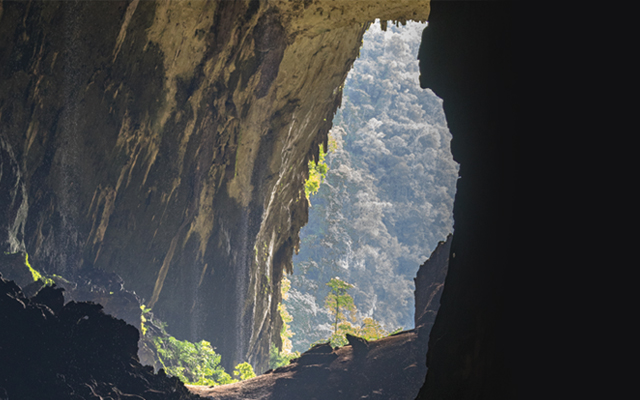
The Chinese market is still under-tapped for Sarawak; Mulu National Park’s Deer Cave pictured
Being a relatively late entrant in courting the high-growth China market, Sarawak is playing catch up with other destinations in Malaysia through major tourism partnerships and incentives targeting the Chinese.
As the top medium-haul market, arrivals from China to Malaysia reached a record 2.1 million tourists last year, yet only 38,345 Chinese tourists visited Sarawak. China as a visitor source market ranked fourth for Sarawak, after Brunei, Indonesia and the Philippines.
In the absence of scheduled direct services from China, the state government of Sarawak began offering a free-entry pass for Chinese tourists travelling to the state directly from China on October 30, 2016.
This is to encourage charter services from China to offer connections and provide alternative access to Chinese tourists who use Kuala Lumpur as the main gateway, for whom a single-entry e-visa for up to 30 days costs US$25.
Prior to this development, Chinese tourists visiting Sarawak had to connect through Kuala Lumpur or Kota Kinabalu, making it a challenge to sell the destination to budget-conscious travellers who would favour combining Kuala Lumpur with Langkawi, Penang, Malacca or Johor to avoid additional flight costs, according to Mint Leong, managing director of Sunflower Holidays.
Sarawak Tourism Board (STB) has signed MoU with three charter operators in Wuhan, which will also see the board assist in itinerary planning and fam trips for the media and bloggers.
The NTO is also promoting the destination through consumer advertising and B2B roadshows in China’s first-tier cities, as well as increasing visibility through film tourism with the Filming Support Unit – set up earlier this year – to process film permits from international production houses.
A 100-minute Chinese movie Blue Tears was released in May, with scenes shot in Miri featuring the beach, longhouses and Mulu National Caves.
Sarawak Economic Development Corporation (SEDC) recently entered into an MoU with international Chinese tourism development company, Beijing Glory International Culture Development, to develop the state’s tourism potential and hospitality management.
Under the agreement, Beijing Glory will manage two SEDC hotels, Damai Puri and Grand Margherita, take over the management of tourist attractions such as Bako and Mulu National Park, and make Kuching the South-east Asian hub for China Express Airline.
Gracie Geikie, director of Planet Borneo Consultants, is also providing consultation to a large conglomerate in China looking to develop a retirement village in Kuching comprising recreational facilities and a specialist centre. Once completed in three years’ time, it is expected to attract senior travellers from China.
Meanwhile, the growing force of Chinese FITs and their increasing thirst for diverse travel experiences stand Sarawak in good stead to court this burgeoning market.
“We see two types of Chinese FIT profiles. There are some who extend their stay in Sarawak for three or four days and experience the local food, city, heritage sites and culture,” observed Leong.
The second segment comprises “special interest travellers” who stay longer and seek activities ranging from diving and deep sea fishing off Miri, to visiting longhouses and birdwatching. These are typically millennial travellers who travel in small groups of less than six, she added.
But for Kuching-based Bel-Air Travel and Tours, arrivals from China dropped 30 per cent in the wake of the MH370 incident in 2014, and Hong Kong Airlines’ abrupt suspension of service to Kuching in February after launching in May 2016 further dented its Chinese FIT business – not just from Hong Kong but also from Shenzhen and Guangzhou, said managing director Alice Khor.
She added: “The main challenge in attracting the Chinese market (to Sarawak) is the lack of good beaches and beach activities, which is why the Chinese prefer Sabah.”
However, the opening of Borneo Samariang Resort City, a 202ha integrated resort featuring a water park, safari and 1,000-room hotel will attract more family travellers from South-east Asia and China to Sarawak, Khor said.
Sarawak’s potential to attract the China market has not gone unnoticed by Bandar Seri Begawan-based Freme Travel, which started to package Brunei with Miri early this year to leverage the free-entry pass that also applies to Chinese tourists entering Sarawak overland from Brunei.
Said Sugumaran Nair, manager, inbound & MICE division: “We are encouraged that agents from Shanghai are selling Brunei-Miri combinations, which showcase the cultural aspects of Brunei, and nature tours to Niah Caves and Mulu National Park in Sarawak.”
What are the three greatest challenges to Sapa’s tourism and how would you address them if you had your way?
Harassment: Street peddlers are mainly ethnic minority people selling handicrafts or providing unlicensed tours and homestays. They pester tourists over long distances to buy their products or harrass them to hop into minivans with the promise of low fares but instead charge exorbitant prices.
If these situations persist, the tranquil image of Sapa will be damaged and its appeal lost. Light-hearted videos and ways to deal with street peddlers can be made, and publicised via social media or shown on flights entering Vietnam.
Over-commercialisation: Sapa’s appeal is its ethnic minority cultures and traditions, climate and spectacular landscape. Over-commercialisation makes it feel unauthentic.
For example, the new Sapa market is too commercialised compared with the old, vibrant market. Another example is the cable car at Fansipan mountain. Foreigners prefer to climb it rather than take the cable car.
These big commercial developments mainly cater to domestic tourism but there needs to be a balance between
attracting domestic and foreign tourists.
Short-term gains: Locals go for short-term gains and often do not care about proper licensing and training. As a result, there are not enough trained workers in services and hospitality.
There needs to be a training facility in Sapa so local ethnic minorities can fit into this new economy; otherwise the vicious cycle of poverty will negatively affect tourism.
Outrigger Hotels and Resorts has promoted Andrew Gee as vice president sales and marketing, Asia-Pacific.
Gee has been serving as the company’s regional director of sales and marketing, Australia and New Zealand since 2014. Based in Sydney, his key responsibility was to drive Australian and New Zealand business and marketing activities for all outbound Outrigger properties.
Gee, a sales and marketing veteran at Outrigger
He has also served as director of sales and marketing in Outrigger Fiji Beach Resort, a position he held for more than 13 years. Before joining Outrigger, he was director of sales – inbound (international) for the InterContinental Hotel Group.
Gee began his hospitality industry career as a travel consultant with Thomas Cook Travel in Sydney, followed by seven years as the marketing manager at Taronga Park Zoo, Sydney.
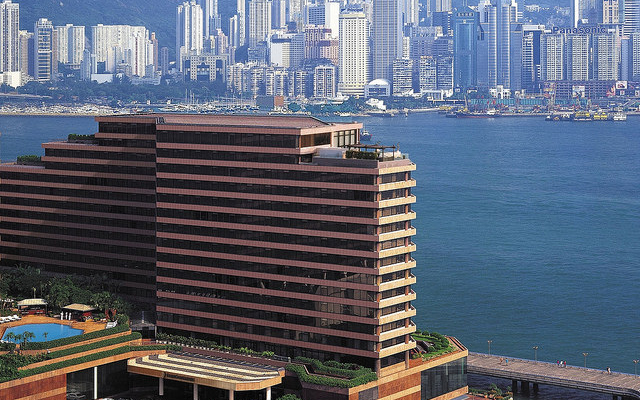
The building, long part of Hong Kong's landscape, will soon get a facelift
The InterContinental Hong Kong is scheduled to close in 1Q2019 for an extensive renovation lasting 12-16 months.
The transformation will span all rooms and suites including bathrooms, all public areas, restaurants and event venues, and include a redesign of the building façade. Tokyo-based design studio Curiosity has been appointed to create the redesign to transform the lobby and guestrooms.
The building, long part of Hong Kong’s landscape, will soon get a facelift
The hotel’s restaurants and event venues are expected to reopen in the evenings from late summer 2019, after approximately six months of renovation. Yan Toh Heen, InterContinental Hong Kong’s two-Michelin-star Cantonese restaurant, will remain open for dinner throughout the renovation.
Regular corporate clients will be redirected to sister properties under the InterContinental Hotels Group in Hong Kong over the renovation period, according to Claus Pedersen, general manager, InterContinental Hong Kong.





 Tropicana Cenang is Wanda Realm’s first overseas foray



 Harassment: Street peddlers are mainly ethnic minority people selling handicrafts or providing unlicensed tours and homestays. They pester tourists over long distances to buy their products or harrass them to hop into minivans with the promise of low fares but instead charge exorbitant prices.