TTG Asia
Asia/Singapore Monday, 15th December 2025
Page 1533

Sabah launches rural tourism charm offensive

0
Soft adventure one of the Kiulu river activities highlighted

Sabah Tourism Board has begun promoting rural tourism and will ramp up the effort in 2018 for its top source markets Brunei, South Korea, China, Taiwan, Europe and the domestic market from Peninsular Malaysia and Sarawak.

Areas promoted are Kiulu, Kandamaian, Kundasang, Tambunan and Kudat – all within a 45 minute to 2.5 hour drive from Kota Kinabalu.

Welcoming the move, Monika Tigges, product manager Asia – Arabia at Dusseldorf-based Explorer Fernreisen, interviewed at the recent PATA Travel Mart, said: “Sabah Tourism Board is on the right track. It is a smart move (that) will attract the savvy traveller who has been around the world, stayed in hotels and are now looking for new experiences. Also it will attract the visitors who have already been to Kota Kinabalu.”

Tigges said the company already offers Borneo tours beyond capital cities and that they are “doing very well”.
Soft adventure one of the Kiulu river draws

Likewise, Adam Kamal, CEO at Olympik Holidays, based in Kuala Lumpur said: “Gone are the days that you can make a broad assumption that Asians just like shopping, city experiences and hotel accommodation. We find that Asian millennials are more adventurous, they like to discover new places and get new experiences compared with Gen X. Rural tourism, (in allowing) them to live like locals and share their experiences on social media, is something they will be attracted to.”

However, both Adam and Tigges said they need more from the NTO support in the form of training and product updates.

Sabah Tourism Board said it is working with local inbound agents to assist them to package rural tourism into their itineraries, in addition to leveraging social media to promote the niche.

ITB Asia conference attempts to unravel the future of travel

0
Goocle, IBM to touch on AI at the conference

Under the theme of The Future of Travel, the conference component of ITB Asia 2017 will spotlight artificial intelligence and OTAs, as well as first-to-ITB Asia features such as a cruise panel and an innovation travel track.

Speakers for the first day’s keynote will include Tony Menezes, vice president of industrial and distribution sector at IBM Asia Pacific; Rob Torres, managing director of advertising and marketing at Google; and Jane Sun, CEO of Ctrip.

On the second day, the keynote panel will focus on the travel trends and market conditions and how OTAs are are transforming travel, particularly in South Korea, Japan and India. The panel will include Ike Anand, vice president at Expedia, Min Yoon, CEO of Tidesquare, Amit Taneja, chief revenue officer of Cleartrip, Ken Mishima, vice president of eCommerce Strategy at iJTB, and Jose Murta, global head of hospitality at trivago.

Google, IBM to touch on AI at the conference

This year will also see ITB Asia introducing its first cruise panel, bringing together global cruise operators such as SkySea Cruise Line, Norwegian Cruise Line Holdings, Princess Cruises, Carnival Asia and Royal Caribbean Cruises, with Christina Siaw, CEO of Singapore Cruise Centre, as moderator.

Another first is an innovation travel tech track hosted by Israeli startup InnoVel that will connect travel companies with startups. The cross-sharing is designed to address pains in areas such as revenue management, customer engagement and online marketing.

Hiverlab and Zebra Design will share their experiences on the opportunities for augmented reality and virtual reality in hospitality and tourism. Savioke, a Silicon Valley startup that makes autonomous indoor delivery robots, will also present key takeaways from its pilot project at M Social, Asia’s first deployment of front-of-house service robots.

ITB Asia will inaugurate a Corporate Day on October 26, with Global Business Travel Association, Egencia, Corporate Travel Management, UOB Travel and Airbnb delivering presentations and workshops.

MICE Day will return for the second edition on October 25.

ITB Asia 2017 will take place at the Sands Expo and Convention Centre, Marina Bay Sands from October 25 to 27.

New hotels: Pan Pacific Yangon, Travelodge Sukhumvit 11 and more

0

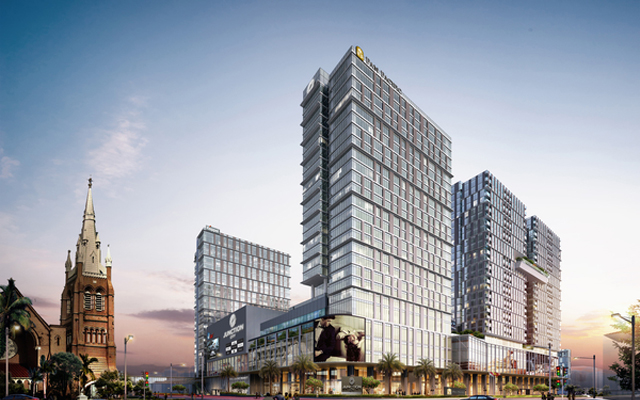
Pan Pacific Yangon
Myanmar will get its first Pan Pacific hotel when Pan Pacific Yangon opens within the Junction City integrated development on Shwedagon Pagoda Road come November. The hotel will feature 336 rooms and suites, a ballroom and several meeting rooms, a swimming pool, spa and fitness centre, as well as F&B outlets including an all-day dining and a Cantonese restaurant. On the sixth floor is a sky lobby that looks out to the Shwedagon Pagoda.

Travelodge Sukhumvit 11
Travelodge’s second Thailand property, Travelodge Sukhumvit 11, has begun accepting online reservations ahead of its official opening on November 1. Located a few minutes from the Nana BTS sky train station in a dining and entertainment district, the hotel offers 224 guestrooms enjoying complimentary Wi-Fi, a rooftop restaurant, outdoor swimming pool, and fully equipped fitness centre.

Swiss-Belinn Airport Surabaya
Swiss-Belinn Airport, Surabaya has opened at just two kilometres from Djuanda International Airport, featuring 120 Deluxe and nine Grand Deluxe rooms as well as four Suites with bathtubs. Ranging from 24-48m2, each room and suite comes with Wi-Fi access, laptop-sized in-room safes, mini refrigerators and 40” LCD TV with cable channels. The hotel also offers all-day lobby dining and lounging at BaReLo, a BBQ area, a swimming pool, a gym, 24-hour room service, in-room massage and laundry service.

Four Points by Sheraton Hefei 
Four Points by Sheraton Hefei, Baohe has opened in the ancient Chinese city. It features 271 guestrooms and suites, three stylish restaurants and bars, and more than 2,400m2 of flexible, multi-functional meeting spaces. It is an hour’s car ride from Hefei Xinqiao International Airport and 15 minutes from Hefei South Railway Station.

Pavilions expands to Hokkaido and Lisbon

0
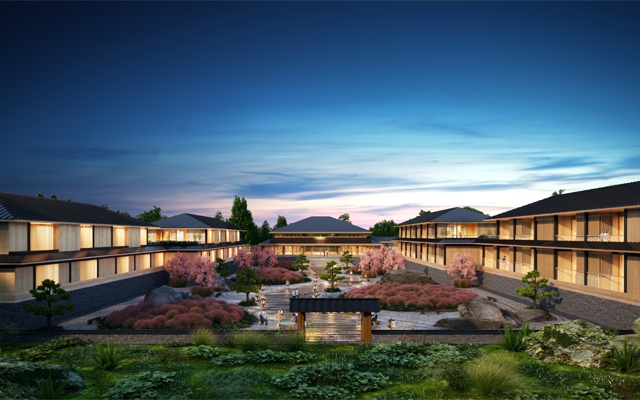
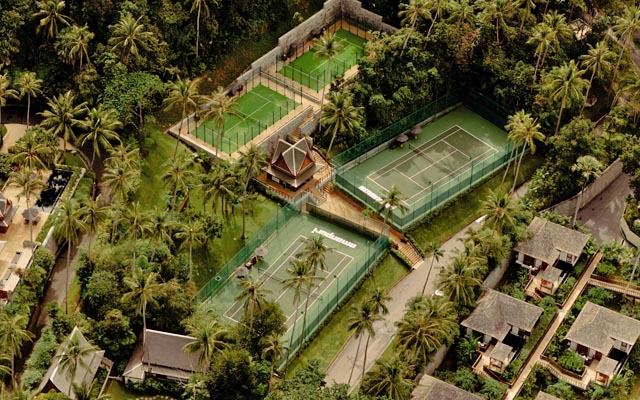
Artist impression of Pavilions Niseko

Hong Kong-based Pavilions Hotels and Resorts has announced two developments in Hokkaido, Japan, part of plans to introduce a series of hotels and residences in aspirational locations across Asia and Europe.

Artist impression of Pavilions Niseko

When open in 2019, The Pavilions Niseko hotel will feature 40 suites, a spa, indoor/outdoor onsen, gym, yoga studio and a fine dining restaurant.

It will sit adjacent to Pavilions’ The Ginto Residences, which is nestled in pinewood forests at Ginto Hirafu, with access to ski lifts and slopes.

Artist impression of a villa at Ginto Residences

Meanwhile, Pavilions Lisbon Hotel will be launched in the first quarter of 2018 and involve the renovation and restoration of two 18th century buildings, due to open in 2020.

Theses will join the company’s existing operating hotel inventory of six boutique hotels and resorts in Bali, Phuket, Nepal Himalayas, Amsterdam, Madrid and Rome.

Making South Africa a coveted destination

0
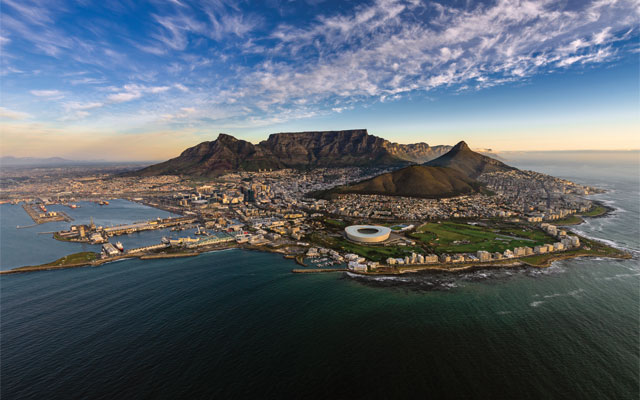
South Africa is getting more air connections from Asia; Table Mountain in Cape Town pictured

With Asia accounting for 10.2 per cent of total traffic and a 30.3 per cent growth in 2016, South African Tourism is optimistic the upward trend will continue this year especially with additional marketing budget and new experiences introduced for the market.

South Africa is getting more air connections from Asia; Table Mountain in Cape Town pictured

Asia-Pacific president, Bradley Brouwer, said: “2015 was a bad year given the Eboli outbreak in West Africa but this year’s outlook looks good as our weakening economy and the depreciating rand make it cheaper to travel to South Africa.
“We see massive growth from South Korea (42 per cent) for the first five months of this year. Despite a slight drop, China still registered a 38 per cent increase. Markets like Malaysia picked up while India is also strong,” he added.

“I believe South Africa will be the next hot destination for Asians given our aggressive promotions in Asia each year as well as the 12.7 per cent increase on marketing budget this year. We’ll (focus on) China a lot more due to its potential despite insufficient air access.”

According to Brouwer, Asia is seeing more flights connections to South Africa, Kenya and Ethiopia in recent years. For instance, Kenya Airways started Guangzhou-Nairobi (Kenya)-Livingstone (Zambia)-Cape Town service last July.

Amrho Tourism Aviation has introduced a charter service from China in 2016 and will double its Tokyo-Port Elizabeth charter services from two to four or eight in September/October to target the high-end FIT and group travel segments from Japan, said operations manager, Naseer Ismail.

In addition to established products like the Big Five and self-drive safari, South African Tourism has also rolled out a new ocean safari for the Asian market early this year, offering travellers opportunities to witness the world’s largest breeding colony of African penguins on St Croix Island or get up-close with thousands of bottlenose dolphins in Port Elizabeth in Nelson Mandela Bay. Another new experience is a tour to a mohair factory in Nelson Mandela Bay to see the production of the silk-like fabric spun from the hair of the Angora goat.

For operators such as E Travel SA, niche tours like wild flower tours along the west coast are a way to attract the burgeoning China market. Operating executive Suki Wu told TTG Asia: “This product is rare for Asian travellers but very popular for the western market. Rather than doing mundane tours without character, we want to push something new.”

Last year, the NTO introduced additional languages such as Chinese, Japanese and Korea to its two online training courses launched three years ago. So far, 800 specialists have been trained in China and 300 in South Korea.

As well, two more visa facilitation centres will open in China’s Chongqing and Kunming by end-2017. Brouwer hopes the online visa application service will be ready within the two years to increase the ease of travel of Chinese nationals to South Africa.

Good food pursuits

0
Asia’s 50 Best Restaurants awards will take place at Wynn Palace Macau this year

As Macau’s integrated resorts (IRs) increasingly seek an edge through culinary offerings, travel agents say the time is ripe to position the city as a gastronomic capital for both its gourmet and local fare.

Since IRs came onto the scene a decade ago, bringing with them upscale international dining concepts, Macau’s culinary profile has been significantly raised on the world stage.

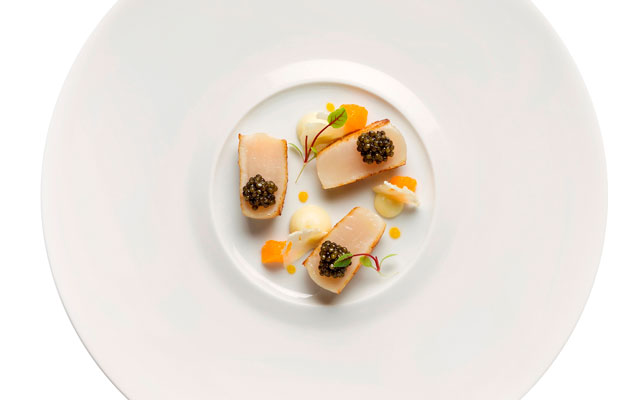
Gourmet dining options aplenty; dish from 8½ Otto e Mezzo Bombana pictured

The Macao Government Tourism Office (MGTO) recently submitted an application to the UNESCO Creative Cities Network for Gastronomy, and is collaborating with government entities and local associations on culinary events such as Lusofonia Festival and Macau Food Festival, a spokesperson told TTG Asia.

The HK$26 billion (US$3.3 billion), 1,390-room MGM Cotai, which will open in 4Q, is already dropping celebrity chef names to win travellers over.

Vice president of resort sales, Victoria Fuh, said: “We aim to impress our audience by offering versatile dining with four celebrity chefs (Mauro Colagreco, Mitsuharu Tsumura, Graham Elliot and Janice Wong) helming our restaurants.”

Over the last 12 months, Galaxy Entertainment Group (GEG) has been introducing new F&B concepts to answer demand for elevated gastronomic experiences, with additions such as oyster bar The Apron (December 2016) and luxury lifestyle cafe Cha Bei (January 2017) in Galaxy Macau; and Japanese-fusion Ufufu Café (May 2017) in Broadway Macau.

Said assistant senior vice president Jit Hoong Ng: “We do not discount the fact that our customers also need diverse and authentic experiences.”

CITS Macau’s international department manager, Cooper Zhang, said: “We are getting more enquiries and requests for gourmet experiences from mid- to high-tier Hong Kong clients craving a Michelin-star (meal).”

Indeed, international haute cuisine is just one part of the equation as Macau seeks to appeal to travellers, as tour operators also want Macanese delicacies and offerings to be highlighted in Macau’s culinary pursuits.

Estoril Tours Travel’s director of sales Johnny Choi opined: “It’s vital to retain our own culinary character. A spate of F&B boutique outlets and cafés established by the young generation in recent years also offer different taste and experience.”

CITS Macau’s Zhang agreed that local delicacy is a strong pull factor. While the agency does not yet have a dedicated gourmet tour, “a special or local meal experience is always one of the elements in our packages”.

Institute for Tourism Studies, executive assistant manager, David Wong added: “In the old days, tourists from the mainland were very much focused on Macau’s casinos but with the number of high-end hotels, restaurants and the attraction of Portuguese and Macanese cuisine, people are staying here longer and increasingly enjoying the more cultural side of Macau, and that includes fine dining and good local eateries.”

Furthermore, local restaurants also make good dining venues for corporates in the lead-up to bigger events, pointed out MCI Macau’s business development and events director, Olinto Oliveira.

“These culinary experiences, in conjunction with the venue offerings and the experiences that agencies are crafting, create an overall package that validates the destination as a premier option for events.”

Plugging the funding gap

0
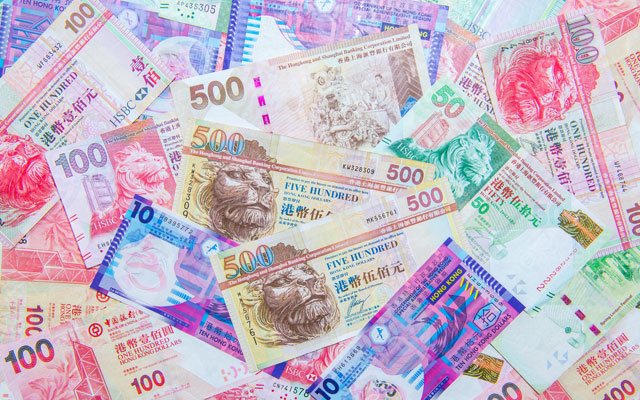
Hong Kong Dollars

As an industry among the most affected by the digital revolution, travel industry members are constantly under pressure to undergo training and renewal to keep up with the times.

Recognising the lack of resources that many travel agencies face in staff training, the Hong Kong government recently established the HK$5 million (US$639,000) Travel Industry Training Fund (TITF) while the Airport Authority Hong Kong (AA) pledged HK$10 million for the Travel Industry Development Fund (TIDF) to enhance enhancement opportunities for industry members.

Subsidies and funds can go a long way

The TITF is largely allocated to subsidise training courses organised by training institutions, with a small portion reserved for direct subsidy of selected courses organised by the Travel Industry Council (TIC), which administers both funds.

Commenting on the differences between the two funds, TIC executive director Joseph Tung explained: “Trade practitioners are in dire need of training to stay competitive. The TITF aims to strengthen our training programmes.

“For instance, we subsidised and organised courses like Continuing Professional Development Scheme for Tourist Guides, as the city lacks English-speaking tour guides and course attendance wasn’t good due to the high fees. With the fund, we are able to lower the fee or ensure smaller class sizes.”

He added: “The TIDF focuses more on enhancing members’ general knowledge on tourism and products. We will work with different tourism boards and arrange inspections if necessary. Members are also encouraged to take part in trade activities organised by Hong Kong Tourism Board.”

Futher details and frameworks of both funds will be announced later, he shared.
Welcoming the move, The Hong Kong Association of Registered Tour Co-ordinators’ chairman Wing Wong, said: “It really helps as the subsidies benefit frontline staff in agent operations like ticketing and not just tour guides. We’ll definitely take advantage of it because our tour guide course on Hong Kong Geopark was very costly due to expenses like boat rental. Therefore, the fund enables us to lower the course fee.

“Moreover, our association organises various training courses every month so our members would not be discouraged by expensive fees,” he continued.

CTS International Science-Technology & Culture Exchange, director, Ng Hi-on plans to ride on the subsidies to elevate service quality and standard of frontline staff. But with 1,700 travel agents in Hong Kong, he reckons that more than HK$10 million should be allocated for the funds to effectively serve the trade.

Apart from software skill upgrade, since mid-2016 the government also set aside HK$10 million for the Pilot Information Technology Development Matching Fund Scheme for Travel Agents, a matching fund with the ceiling set at HK$100,000 for each application.

So far, more than HK$6 million have been approved for qualified applications made by agents to upgrade their IT systems. Tung said that government has agreed to pump in additional resources once existing funds are exhausted.

Langrick picked for new Indochina role at Tour East

0

At Tour East, Kelly Langrick has been appointed to a newly created role of product development and marketing manager for operations in Vietnam, Myanmar and Cambodia.

Based in Ho Chi Minh City, Kelly will manage brand integrity and the further development of group products and services. Her role will also encompass communications and distribution to global clients of the group.

Mt Agung warnings yet to alter Bali passenger movements

0
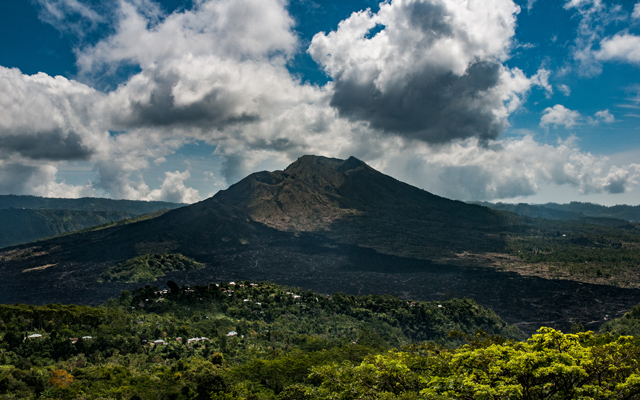
Increase in volcanic activity at Mount Agung

Ferries and fast boats between Bali and Lombok, as well as airline activity around Bali, are running normally, despite the Indonesia Disaster and Mitigation Agency last week raising the Mount Agung volcano alert status to level three.

Dheny Nurdiana Putra, spokesperson of Indonesia Ferry (ASDP), was quoted in the local media as saying there had been no sudden increases in passenger movements between Padangbai (Bali) and Lembar (Lombok) ports.

Increase in volcanic activity at Mount Agung

Similarly, Angkasa Pura Lombok International Airport spokesperson Purei Muslimah said all flights were running as normal.

In the meantime, AirNav Indonesia, the flight navigation service company, is working together with PVMBG, the disaster and mitigation agency of Australia to monitor the volcanic activity.

Novie Riyanto, president director of AirNav Indonesia, yesterday said: “The cooperation is to ensure flight safety, especially if the mountain spurt volcanic material to the air. As per today, the airline activities around Bali airspace are still normal.”

IHG’s new brand is US-centric for now

0
First avid expected to open in 2019

InterContinental Hotels Group (IHG), which has unveiled avid as the name of its new brand, is not likely to transport the brand to Asia soon.

IHG CEO Keith Barr told TTG Asia the chain would want to “get it right in the US quickly”, besides there’s still a huge opportunity to grow the Holiday Inn Express brand in Asia, in an interview that primarily discussed IHG’s new operating region.

First avid expected to open in 2019

The new brand is positioned US$10-US$15 cheaper than Express in the US. Asked if that’s nearly hitting no-frills, Barr said: “Holiday Inn Express is in the upper mid-scale, while this one’s mid-scale.”

In Asia however Express is widely seen as mid-scale, while Holiday Inn is perceived as upper mid-scale.

The launch of avid is, anyhow, targeted at the US market, IHG’s largest operating region but one that has slowed after years of healthy numbers. IHG has a 21 per cent share of supply and 24 per cent share of the pipeline in the US, and a new brand of scale may help increase that.

The chain claims that more than 150 owners have expressed interest in the brand, and expects the first avid hotels to begin construction in early 2018 and the first avid to open in early 2019.

So what does a cheaper-than-Express look like? Asian outbound tour operators who book US holidays need not worry about avid being spartan. In fact, it will have a modern design, public work areas, inviting communal spaces – as is the rage today even in Asia. It even includes free breakfast and has fastest Wi-Fi in the industry (although it does not mention if that’s free).

For owners, the initial owner offer includes five per cent royalty fee and the first 100 signed licence agreements are eligible for a two per cent discount in year one, and one per cent in year two (2/1 royalty fee reduction).