TTG Asia
Asia/Singapore Monday, 12th January 2026
Page 1525

Eva Moral heads first Hilton Garden Inn in Singapore

0

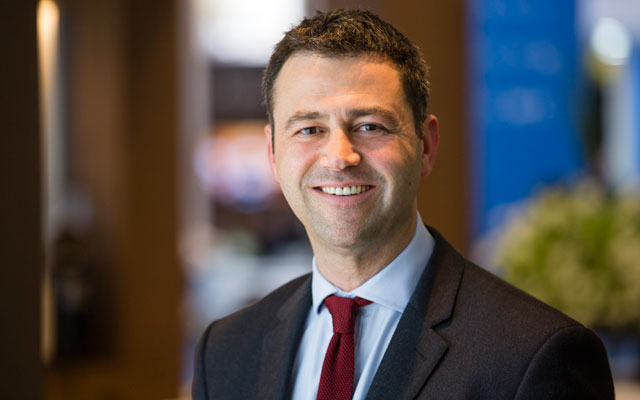
Hilton Garden Inn has appointed Eva Moral as general manager of Hilton Garden Inn Singapore Serangoon. Moral replaces Carey Osborne, the pre-opening general manager for the hotel.

With more than 19 years of hospitality experience, Moral was most recently director of operations of Hilton Pattaya in Thailand.

Since joining the Hilton team in 2007, Moral has worked across the globe, in locations that include Dubai, Spain, Portugal and Thailand, at various Hilton, DoubleTree by Hilton and Hilton Garden Inn properties.

[Sponsored Post] Ideal Pricing for a Hotel’s Ideal Revenue Management Strategy

0

By: IDeaS Revenue Solutions

One of the most important decisions that every hotel organization needs to make is establishing their optimal public pricing structure. For some hotels, this can be an overwhelming challenge – they might be new to their market, constrained by parity commitments, or simply looking for an approach that brings better revenue results than their existing one. For other hotels, they might have a proven pricing strategy in mind – but their technology simply isn’t compatible for its successful deployment.

No two hotels are identical to one another – and a one-size-fits-all pricing approach simply does not drive optimal revenue performance for every single hotel. In an industry where stiff competition is growing even stronger, it is critical that hotels evaluate and consider the pricing strategies that will best fit their hotel’s unique needs. This paper will discuss three pricing methodologies available for hotels, who they work best for and considerations that all hotels need to evaluate when establishing their public pricing structure.

Daily Pricing

Daily Pricing is a pricing strategy where a different rate is charged for each night of a guest’s stay based on the price determined for each stay date. The price incorporates all of the demand which stays through that night. “BAR by Day” or “Daily BAR” are alternative names for this pricing approach.

An advantage of Daily Pricing is that any changes in rate due to changes in guest arrival dates and stay patterns are relatively simple and transparent to explain; however, it can become cumbersome to communicate changes in rates for longer lengths of stay, as well as potentially creating guest dissatisfaction if a reservation is extended into a more expensive night. An example of this scenario is a guest extension over the hotel’s peak night of Saturday, resulting in a marked increase for Saturday night’s rate.

Daily Pricing is generally the simplest pricing approach to implement across all of a hotel’s selling systems and channels; however, it may not provide the ability to capture the most optimal revenues based on the demand by the arrival date and the guest’s length of stay.

Daily Pricing tends to work well for hotels with an average guest stay of one to two nights or for properties that have unique room types that are priced and act differently than one another.

Length of Stay (LOS) Pricing

This pricing option offers rates that are based on both the arrival date and the total duration of a guest’s stay. This option (commonly referred to as “BAR by LOS”) considers the demand and price sensitivity for each arrival date based on the duration of stay – meaning that one rate is calculated by evaluating all of the desired nights in conjunction with one another.

An advantage of Length of Stay pricing is that guests are offered one simple rate for their entire stay – based on their arrival date and total reservation night length. This may help the hotel achieve optimal revenue performance since its rate is based on specific patterns by arrival date and length of stay.

Length of Stay Pricing works extremely well for city hotels that focus primarily on high demand – tending to accept longer length of stay reservations.

Daily Continuous Pricing

Daily Continuous Pricing provides hotels with the most flexibility within their desired rate structure. It employs a similar methodology as Daily Pricing; however, there is a range of available rate values defined by a minimum and maximum rate for each room type.

Daily Continuous Pricing brings similar benefits to Daily Pricing; however, it provides hotels with even more flexibility within their desired rate structure. Rather than relying on user-defined rate values, hotels identify their minimum and maximum public rates for an analytical, continuous calculation of the rate value within their desired range that drives optimal revenue. It allows hotels to get as close as possible to the exact analytically optimal price and adheres to any marketing rules (such as rates that must end with .00 or .99.)

This approach works extremely well for hotels that find Daily Pricing a suitable choice but are looking for even more flexibility in their rate offerings.

Pricing Approach Considerations

There are many variables that hotels need to consider when choosing the right pricing approach for their property. From pricing perceptions to business needs to rate deployment, hotels need to thoughtfully evaluate the following considerations to help them select the approach that best meets their strategic need:

•  How do your guests prefer to buy or how are they accustomed to rate offers? Some guests or markets prefer a single rate offer that applies to every night of their stay – regardless of how long they stay. Others happily accept a different rate for each night. Some markets prefer a total price for the entire stay – avoiding challenges with different rates for different nights of the stay.

•  Which strategy does your hotel need to capture optimal revenues based on your business mix? This will depend heavily on the hotel’s business model and average length of stay. For example, a luxury property often observes higher lengths of stay – meaning that additional value can likely be gained by offering an optimal price based on the guests’ stay patterns. However, for properties that average a one night length of stay, the value from arrival and length of stay pricing is often lower.

•  What are the selling systems, distribution systems and connected channels involved in your rate distribution? Hotels should evaluate any potential impacts to property management, central reservations, channel manager systems and web booking engines when considering various pricing approaches.

• What pricing approaches are supported and distributed by integrated systems?

• Can rate parity be achieved with the desired pricing option and integrations?

•  Which pricing approaches are accepted by integrated channels? For example, which approaches can be distributed to the hotel’s online travel agent (OTA) channels? What are the parity agreements and their willingness to accept minor deviations from small channels? If there are some OTA channels that can’t accept a particular pricing approach, consider the production volume that comes from those channels.

Revenue managers across the globe spend large portions of their days managing rates – constantly lowering, raising and analyzing their hotel’s pricing. And with the hotel’s bottom line depending heavily on revenue generated from proper pricing strategies, it is critical that hoteliers have thoughtfully evaluated all of their pricing options to determine the approach that best fits the needs of their business and technologies. With pricing options available to suit a variety of unique business needs and markets, hotels should carefully choose the approach that best fits their objectives – rather than limiting their needs to fit with a one-size-fits- all option.

Ideal Pricing from IDeaS Revenue Solutions offers an array of flexible pricing approaches and features for public, group and meetings & events business.

Listen to the on-demand webinar on ideal pricing to find out more on how to establish optimal pricing structure, how to choose the right pricing approaches and how to apply inventory control to optimize revenue. We will also share an ebook – Optimizing Revenue Performance: A Guide to Advancing Your Revenue Management Strategy with you if you register this on-demand webinar. Register Here Now.

About IDeaS

With more than 1.5 million rooms priced daily on its advanced systems, IDeaS Revenue Solutions leads the industry with the latest revenue management software solutions and advisory services. Powered by SAS® and with nearly three decades of experience, IDeaS proudly supports more than 9,500 clients in 111 countries and is relentless about providing hoteliers with insightful ways to manage the data behind hotel pricing.

IDeaS empowers clients to build and maintain revenue management cultures–from single entities to world-renowned estates–by focusing on a simple promise: Driving Better Revenue.

IDeaS has the knowledge, expertise and maturity to build upon proven revenue management principles with next-generation analytics for more user-friendly, insightful and profitable revenue opportunities–not just for rooms, but across the entire hotel enterprise. For more information, visit www.ideas.com.

Sabre AP appears hit by corporation’s cost-cuts but is upbeat about 3Q earnings

0
Mendis: cut instrumental in helping meet 2017 financial targets and aligning cost structure with slower expected Airline Solutions growth in 2018

Sabre Travel Network Asia-Pacific appears unspared by a massive cost-cutting exercise announced by Sabre Corporation on August 1, with its senior vice president (SVP) Asia-Pacific Roshan Mendis now doubling up as SVP for EMEA (Europe, Middle East and Africa), based in London.

Mendis has been based in Singapore since July 2015 when he took over the mantle from Robert Bailey, then CEO of Abacus International, upon Sabre’s full acquisition of the Asian GDS.

This is the first time in the GDS history that it is without a full Asia-Pacific head based in the region. Its competitor, Amadeus, is led by president Asia-Pacific, Albert Pozo, based in Singapore, while the other competitor Travelport is headed in the region by its managing director Asia-Pacific, Mark Meehan, also based in Singapore.

Mendis: “I am confident we have the right leadership on the ground to continue to grow and strengthen our footprint across the region.”

Todd Arthur, who joined as vice president sales and market development in June last year is now the most senior man at Sabre Travel Network Asia-Pacific in Singapore, continuing to report to Mendis.

“I am confident we have the right leadership on the ground to continue to grow and strengthen our footprint across the region,” said Mendis, when asked about who’s in charge in Singapore for the region, pointing to Arthur’s 20 years of experience and that he represents Asia on the board of the Association of Corporate Travel Executives.

Mendis would not comment on the question whether his expanded role was partly due to cost-cuts at Sabre Corporation, which announced a nine per cent headcount reduction during its 2Q2017 earnings report.

The US-based corporation said the cut was instrumental in helping to meet 2017 financial targets and aligning cost structure with slower expected Airline Solutions growth in 2018. It estimated savings of US$110 million per annum at full run rate. At the same time, Sabre would increase focus on the largest opportunities and create a more nimble, faster-moving organisation.

For 2Q2017, Sabre Travel Network adjusted EBITDA was down 2.3 per cent US$246 million, compared with 2Q2016, although revenue rose 6.3 per cent to US$636 million.

Total 2Q2017 bookings by region showed EMEA climbing 11.1 per cent; in contrast, Asia-Pacific dropped 1.1 per cent.

The other two Sabre business units, Airline & Hospitality Solutions, did better, roping in 10.6 per cent growth in adjusted EBITDA to US$102 million in 2Q2017 over 2Q2016.

Overall, Sabre Corporation saw a slower revenue growth than the double-digit growths it used to report, up just seven per cent to US$901 million in 2Q2017 over 2Q2016. Adjusted EBITDA dropped four per cent to US$261 million.

Mendis said his role to cover EMEA and Asia-Pacific “is aligned with Sabre’s focus on international growth, having successfully expanded Sabre’s business in the fast-paced APAC region through a healthy combination of organic growth and new customers”.

He would not comment on the question whether Sabre Travel Network Asia-Pacific was affected by the cost cuts and how many staff it has now compared to when he came onboard in July 2015.

But he said 3Q earnings, to be announced at the end of the month, “is something we’re upbeat about”.

“Whilst I do not have official numbers to share at this point, our results will demonstrate that we are headed in the right direction.

“For Sabre to stay competitive, we have identified some key focus areas for the business into 2018 – this includes making investments in modernising our core technologies and leading development of next generation distribution and retailing solutions,” Mendis said.

Wings acquires majority stake in Olympia Travels & Tours

0
Sofianos: expansion focus on ownership rather than joint ventures or partnerships

London-based Wings Travel Management is acquiring a 70 per cent stake in Singapore’s Olympia Travels & Tours for an undisclosed sum, a move that will give the former its first operational capabilities in Asia.

While the acquisition is expected to be completed by January 1, 2018, Wings said it has with immediate effect gained a better position to serve its existing customers in Asia from Singapore.

Sofianos: expansion focus on ownership rather than joint ventures or partnerships

The move gives Wings the platform not only to grow its business in Asia-Paific, but also the operational capabilities to fully service clients across the region via a hub and spoke model, the company said in a statement.

Tony Sofianos, CEO of Wings, commented: “As Wings continues to expand globally, our focus remains on wholly owned and controlled operations versus partner agencies or joint ventures so that we can ensure consistency of service, quality and data integrity.”

Nicole Liang has been appointed to the newly created position of vice president, Asia-Pacific, Wings, based in Singapore. She brings 27 years of corporate travel experience in the Asia-Pacific market, with specific strengths in the energy and marine sectors. For the last four years she has held the post of director of operations SEA at FCM Travel Solutions where she founded the TMC’s marine and energy brand. Her career has also included operational roles at Corporate Travel Singapore, CWT Singapore and Instone International.

Liang previously director of operations SEA at FCM Travel Solutions

Established in 1992, Wings has clients in the corporate, oil, gas and marine industries – and a reach that spans North America, South America, UK/Europe, Africa and the Middle East. It has 16 wholly owned and managed regional operations in key locations worldwide including Aberdeen, Cape Town, Dammam, Dubai, Houston, Johannesburg, Lagos, Luanda, London, Maputo, Stavanger and Rio de Janeiro. Wings said it employs over 400 people around the world and has a global turnover of around US$325 million.

Olympia is a medium-sized corporate travel company servicing clients in the energy, marine and corporate sectors. The company employs 30 travel management professionals, according to the statement.

Chinese visitors stoke duty-free brands’ interest in the Philippines

0
Shoppers at the Manila Ninoy Aquino International Airport

Philippine tourism secretary Wanda Teo is optimistic that more global premium brands would increase their duty-free retail presence in the country in anticipation of steady growth in Chinese arrivals.

“The Philippines is in a position to join the ranks of countries whose duty-free industry is expected to grow by an average of 40 per cent in the next decade,” said Teo at the recently-concluded 2017 Duty Free & Travel Retail Global Summit held at Cannes, France.

Shoppers at the Manila Ninoy Aquino International Airport

During a meeting at the summit, Clarins general manager for travel retail for the Asia-Pacific region, Alexandre Callens, told secretary Teo that with the recent approval and implementation of the Visa Upon Arrival (VUA) for Chinese tourists in the country, the brand will be expanding their presence in the Duty-Free Philippines (DFP) stores, according to a statement.

Callens added Clarins would also be deploying Mandarin-speaking sellers knowing that beauty products need explaining when being sold.

And in a meeting with Chanel managing director for travel retail for the Asia-Pacific region Herve Ducros, Teo was told the brand is set to open a section in DFP in 1Q2018.

Ducros is confident the Chanel brand will attract high-spenders, especially Chinese tourists, said the statement.

“Bringing in (more) global premium brands would be an additional incentive to attract more Chinese tourists, particularly the luxury segment,” Teo added.

In July this year, China outranked the US to become the Philippines’ second top tourist source market, next to South Korea.

Volcano panic blown out of proportion, Indonesia’s tourism players say

0
Some key tourist spots lie safe outside the affected zone

Tourism stakeholders in Indonesia are downplaying what some say to be unwarranted fears over volcanic activity in the country.

Amid concern surrounding activity at Mount Agung in Bali, another volcano in Karo district, North Sumatra, erupted last Thursday, spewing a column of volcanic ashes 2,000m high, followed by tremors and ashes scattered 1,500m down to the south and 2,000m to the east and southeast of the mountain slopes.

Some key tourist spots lie safe outside the affected zone

No casualty was reported during the eruption which took at 02.45 local time.

Further downplaying the situation, spokesperson of the National Disaster Management Agency, Sutopo Purwo Nugroho, said: “The (local) people are used to witnessing Mount Sinabung’s eruptions since the mountain was declared high alert in June 2015. It has erupted since then.”

Sutopo however advised locals and travellers to refrain from any activities within a three-kilometre radius from the top, and also warned people living and having activities around the rivers with the headwaters at the mountain to watch out for lava floods in rainy weather.

Mount Sinabung had been dormant for 1,200 years before starting to erupt in the 2010 to 2011 period, and again in 2013.

Meanwhile, on the situation in Bali, Herman Hoven, general manager of Khiri Travel Indonesia, said reports and social media comments have “created an unwarranted fear factor while the situation on the ground in Bali remains calm and tourism operators remain fully open for business”.

“There has been no explosion. There may never be. And the vast majority of Bali’s tourism activities take place between 30 and 60km from Mount Agung, at a safe distance,” he said.

Ubud is 30km from Mount Agung and 55km from Denpasar – both comfortably beyond the Balinese government’s current 12km exclusion radius around the volcano, according to a Khiri statement.

And while travel advisories admit that volcanic ash clouds may cause aviation disruption if Mount Agung erupts, Hoven said “that remains a distant and hypothetical scenario”.

Hoven shared that there had been at least a 20 per cent drop in tourism bookings in the Bali tourism sector at large, since Mount Agung volcano started to show increased signs of activity in the third week of September.

Travel tech pulls in more than just millennial business

0
Mobile users seen as lucrative market in travel

A spike in technology adoption rates in the trade sees not just millennials but consumers across all ages using the services.

Industry players that have adopted technology in recent months include Flight Centre with its new mobile-augmented services, Dynasty Travel offering Samsung Pay as a mode of payment, Singapore Tourism Board’s collaboration with Alipay, and KLM enabling bookings via Facebook Messenger.

Mobile users seen as lucrative market in travel

In Singapore, daily mobile usage time clocks in more than 12 hours, said Callum Brown, general manager, Flight Centre Asia, quoting a study by The New Paper.

Flight Centre recently introduced mobile consulting, which enables customers to arrange for a meet-up with a consultant at a location of their choice via WhatsApp, live chat, email and more.

The agency’s digital strategy aims to cast a wide net over “all generations (which) have become increasingly mobile savvy, including the baby boomers”, said Brown.

Since launching WhatsApp and live chat, Flight Centre has seen a five-fold and a year-on-year 155 per cent growth in enquiries for each respective medium.

Similarly, Dynasty Travel sees mobile users as a “highly lucrative market”, and has begun channelling more funds into digital advertising and platforms, said Alicia Seah, its director of public relations & communications.

She said the agency is increasing its digital social media budget from 10 per cent to 25 per cent of its overall 2018 budget.

In this move “to evolve from a single channel of interaction (in-store) to omni-channel” interaction, Dynasty aims to bring more products and services onto mobile platforms, said Seah.

The shift into mobile technology is not without its challenges. Brown shared: “There was an initial concern (about) real-time replies, as consumers expect to have their queries addressed almost immediately.”

However, employee adoption and training proved easier than anticipated, and Flight Centre’s staff was “able to quickly adapt to such technological changes”, said Brown.

For companies facing employee inertia, government-led initiatives and on-going training should be prioritised, opined Andrew Chan, founder and CEO of ACI HR Solutions.

He added: “Ideally, with widespread access to mobile technology, training could also be implemented digitally, thereby allowing the organisation’s employees access to new and relevant information.”

He also cautioned that “should a company be reluctant to invest in digital training for their employees, the organisation can expect to face a high turnover rate and the possibility of losing its staff to competitors”.

Singapore, Tokyo good for baby boomers, not so much millennials

0
Singapore well-suited to families and baby boomers

Singapore and Tokyo placed among weekenGO’s top 10 cities for baby boomers to visit for the weekend, but Asian destinations were absent from the ranking of best cities for millennial travel.

Singapore ranked sixth best city for baby boomers to spend a weekend in. With an overall ranking of 27th, the city placed well (11th) for families too, but is much less favoured for millennial travel (31st).

Singapore well-suited to families and baby boomers

The Lion City fared best in mobility (ranked second, scoring 96.13), security (ranked 14th, scoring 96.06) and dining (ranked 17th, scoring 95.15).

It did not do so well, however, on measures of walkability (84th, 81.72), concerts (74th, 77.88) and LGBT-friendliness (71st, 80.30).

With top marks (100) for dining is Tokyo, placing it close behind Singapore in eighth spot for baby boomer travel. Japan’s capital also did well on measures of mobility (89.3), cultural events (94.24) and security (98.49).

Meanwhile, weekenGO’s 10 best cities for millennial travel are (in order) Berlin, London, Amsterdam, Vienna, Paris, Toronto, Zurich, Dublin, Munich and Edinburgh.

To determine best cities for millennials, factors such as LGBT-friendliness, women safety, concerts, clubs, bars, accommodation, green spaces, walkability and mobility were considered.

While Asian cities did not make the top 10 for millennial travel, Shanghai snatched the winning score for the best club options.

Tony Fernandes gets hitched – and it isn’t a low-cost ceremony

0

AirAsia Group chief executive Tony Fernandes last Saturday wedded his South Korean girlfriend, known to the media only as Chloe, in the French Riviera or Cote d’Azur.

Fernandes and his wife had been dating for over two years, reported the New Straits Times.

Wedding bells a-ringing: Fernandes sporting a three-piece suit and his beautiful wife in an off-shoulder, mermaid-cut number

CIMB Group chairman and brother of Malaysian prime minister, Nazir Razak, was the best man at the wedding.

Congratulations Tony & Chloe from all of us at TTG Asia.

Wishing our Hindu readers Happy Diwali

0

As October 18 is a public holiday in Singapore, where TTG Asia is based, there will be no e-daily news tomorrow.

News will resume on October 19.

TTG Asia wishes all our Hindu readers a Happy Diwali.