Post-disaster Nepal attracting more attention from curious travellers
With inbound numbers on the rise, Nepal’s operators are introducing itineraries that reduce tourism carbon footprint and contribute to the growth of local communities.
Shiva Rimal, team leader of GAPNepal, noted that tourist volumes to the country have “increased dramatically” since his company opened in 2011, and hotels there now see an average occupancy rate of 80 per cent.
Post-disaster Nepal attracting the attention of curious travellers
“The Himalayas are a mainstream tourism product, but we are now trying to promote other things to do in Nepal, such as mountain biking,” shared Rimal.
While tourism was hit by the 2015 earthquake, Rimal said travellers have since regained confidence and are now more curious about the country.
In anticipation of a greater tourist influx, tour operators are taking sustainability into their own hands. GAPNepal, for example, has received sustainability certification from Travelife for its programmes that include a volunteer component, and for donating 10 per cent of its profits to charity.
Euro-Asia Treks has also substituted its diesel-run ground transfer vehicles with bicycles in order to reduce pollution that can result from “overtourism”, said a representative of the agency.
The representative also revealed that Euro-Asia Treks is currently in talks with non-government organisations to develop packages with a voluntourism aspect, where participants can stay in local villages and be involved in education or local construction projects.
“We have the responsibility to ensure that tourism does not degrade the local communities. Sustainability is the future,” said Rimal.
Emaar Hospitality Group is on the hunt for the ‘World’s Greatest Hospitality Talent’, an accolade accompanied by a three-year management training and fully-funded executive MBA programme.
Eight shortlisted candidates will be invited to Dubai in July for a one-week casting, where they will be evaluated for their personality, creativity, innovative approaches and passion for the industry.
Application deadline is on May 31
The winner will undergo a three-year training programme under Emaar Hospitality Group’s senior leaders, receiving remuneration including housing, transport allowance and other perks.
In the role of interim general manager, she/he will work across diverse aspects by shadowing the CEO and senior managers, and pursue a fully-funded executive MBA programme in Dubai.
Olivier Harnisch, CEO of Emaar Hospitality Group, said: “With the guest profile changing and a new generation of travellers and entrepreneurs demanding new hospitality experiences, it is important to have youthful thinking and young leaders, who can lead the industry (into) the next era.
He added that the group “embraces diversity” and welcomes the interest of talents “from any background”.
The winning candidate must be below 26 years old and hold a bachelor’s degree or equivalent from any discipline by the time training commences in September 2018.
Tin Hotels International Group, a GHM and van de Bunt Partners joint venture, has inked a management agreement with China’s Tibet Da’ji Hotel to launch Tin Hotels in Tibet’s cultural and religious centre of Lhasa.
Scheduled to open in 2020, Tin Lhasa will serve as the anchor to a nearly 29,000m2 six-store, mixed-use development located close to the main tourist attractions of Jokhang Temple, Barkhor Square and Potala Palace.
Facilities include a main restaurant, meeting spaces and function rooms that incorporate co-working spaces as well as a rooftop teahouse that look out to Potala Palace. Himalayan art is expected to be featured prominently throughout the hotel.
Royal Caribbean Cruises (RCL) has appointed Adam Goldstein as vice chairman, a post he will assume in May.
Goldstein, a 30-year RCL veteran, has served as RCL’s president and COO since 2014.
In his new role, he will continue to oversee RCL’s global government relations and destination development efforts, and will represent the company in industry associations.
Goldstein told TTG Asia: “As it relates to Asia-Pacific, I see my new role as completely in sync with my current role. I will continue to apply myself to establishing relationships with key constituencies in the region including government and media. We aim to grow in the region as we have already been doing and that will require additional infrastructure. As everywhere else in the world, we need to ensure our growth unfolds in a responsible and sustainable way. And we need to communicate to the region the amazing products and services that our brands provide and why they are a fantastic vacation choice.”
The cruise industry veteran began his career with RCL in 1988. He has served in numerous senior roles, including president and CEO of the Royal Caribbean International brand.
Goldstein has also played a prominent role in industry affairs. He currently serves as chair of the Florida-Caribbean Cruise Association was previously chair of Cruise Lines International Association (2015-16) and the Travel Industry Association of America (2001, now US Travel).
Note: This article has been updated to include Goldstein’s comment about his latest appointment.
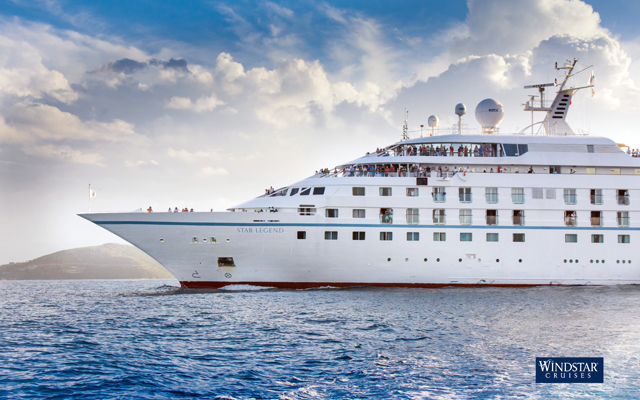
The Star Legend will make 27 sailings in Asia this season
In its second season of sailings in Asia, Windstar Cruises is introducing new itineraries – including an Asian pop culture journey from Toyko to South Korea and Bangkok.
From September 2018 to April 2019, the 212-passenger Star Legend will sail on four new 11-day sailings, in addition to four returning cruises from its 2017/18 season, for a total of 27 sailings in the region.
The Star Legend will make 27 sailings in Asia this season
New Asia itineraries include cruises between Singapore and Bali (Benoa), offering stops in Jakarta and Semarang in Indonesia, where guests can explore Dutch trading buildings in the Old Quarter or Borobudur. Among other on-shore highlights are Mount Bromo and Komodo National Park, while the cruise also takes guests to Pulau Bawean and Pulau Menyawakan, remote island locations not accessible by large cruises or scheduled flights.
Windstar will also cruise from Bangkok to Singapore, stopping by Malacca, Phuket, Kuala Lumpur and Langkawi.
Pop Culture Kings of Asia sailings will take guests from Tokyo to Beijing (or reverse), combining big cities such as Toyko, Osaka and Seoul (via Busan) with off-the-beaten path spots like Karatsu (Japan) and Tarnano/Uno.
This will allow guests to experience the birthplaces of J-pop, Harajuku culture and Korean dramas as well as shopping at top retail spots.
As well, the Comprehensive China Exploration cruise will sail from Hong Kong to Beijing, visiting Shanghai, Beijing, Hong Kong and Taipei. The cruise also stops at Japan’s Ishigaki Island, known for clear waters and coral reefs, and China’s Qingdao.
These join four existing itineraries of Grand Japan, a 10-day voyage coinciding with fall and cherry blossom seasons; Icons of South-east Asia, a 12-day cruise from Hong Kong to Bangkok (or reverse); The Best of the Philippines & Borneo, a 14-day cruise from Singapore to Hong Kong; and Malay & Singapore Sojourn, a seven-day Singapore round-trip cruise that now features an overnight in Phuket.
Meanwhile, longer sailings include the returning Star Collector: The Grandeur of South-east Asia, a 26-day cruise from Singapore to Bangkok (or reverse) combining Windstar’s most popular itineraries. Star Collector Voyages in Asia range from 14 to 47 days.
New for 2018/19 in Asia are Star Collector: Shrines and Cities of Asia, a 22-day cruise from Tokyo to Hong Kong; and Star Collector: Epic East Asia, a 47-day cruise from Bangkok to Tokyo departing February 8, 2019.
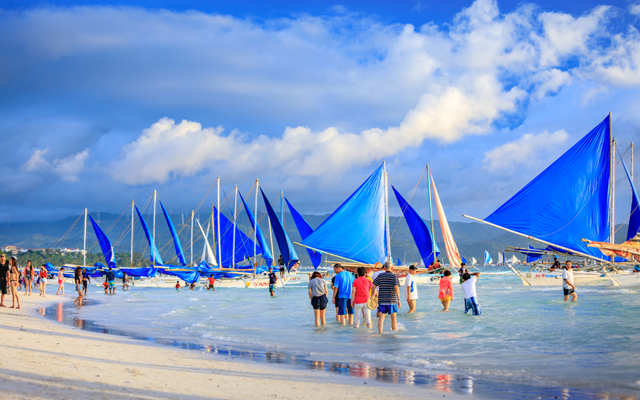
Questions such as how long the closure would last hang overhead for tourism players in the country
With just a month to go before Boracay’s closure, the travel trade is bemoaning the lack of details on the government’s drastic decision that will heavily impinge on business and the Philippines’ economy.
The government has been shutting down establishments found violating the law and environmental regulations, but the Department of Environment and Natural Resources last week recommended the full closure of the island to give sufficient time for an undisrupted cleanup, according to media reports.
Questions such as how long the closure would last hang overhead for tourism players in the country
Christine Ibarreta, president, Hotel Sales and Marketing Association (HSMA), said Boracay stakeholders should be made aware of the details of the plan “they have to manage bookings that will be displaced during the period covered either for change of booking dates or relocation of guests to other resorts together with their booking partners, travel agents or conference organisers”.
They also have to “manage manpower leaves, relocate to sister properties or others, (make) provisions for the duration of the closure” as well as inform the market on changes.
Hotels, in addition, have to draw up operation plans to mitigate the adverse effects of the shutdown – including drop in revenue, displaced workers and inconvenienced business partners.
One area the trade wants clarification on is whether Boracay will be closed for two or six months, or a year. “All these (questions) are hanging over our heads,” said Mary Ann Ong, general manager of Luxus Pacific Travel and Tours specialising in inbound from China, the island’s biggest foreign market next to South Korea.
While chartered flights from China have not been cancelled, they are likely to be diverted to other destinations in the country or abroad like Phuket, Pattaya or the Maldives once Boracay is closed. It will be difficult for these flights to return to Boracay if they are dealt good business in other countries, Ong warned.
Sharp Travel Service no longer accepts bookings to Boracay on the dates likely to be covered by the island’s shutdown, said tour operations manager Benjie Bernal.
Marjorie Aquino, senior sales and marketing manager, Blue Horizons Travel and Tours, revealed that the company has blocked FIT bookings and back-to-back blockings for certain seasons affected by Boracay’s shutdown.
She said that declaring Boracay under the state of calamity and shutting it down, as announced by the government, will fall under force majeure. Travel agencies will refund passengers who paid their bookings. If the agencies have already paid the hotels for the bookings, the amount will become credit rate for future use.
Cruise tourism in Boracay, the second most popular cruise destination in the Philippines after Manila, is expected to be affected by the closure as ships with scheduled sailings to the destination will now have to look for alternatives, remarked Travel Experts consultant Arnie Bayag.
The trade fears Boracay’s closure will tar the Philippines’ image as a beach destination. At the recent ITB Berlin, for instance, a participant noted the last-minute changes in the Philippines booth, replacing Boracay on the photo wall with mountains.
The same happened at the recent Seatrade Cruise Global expo in Florida when Boracay was not featured in the photo wall of the Philippines booth.
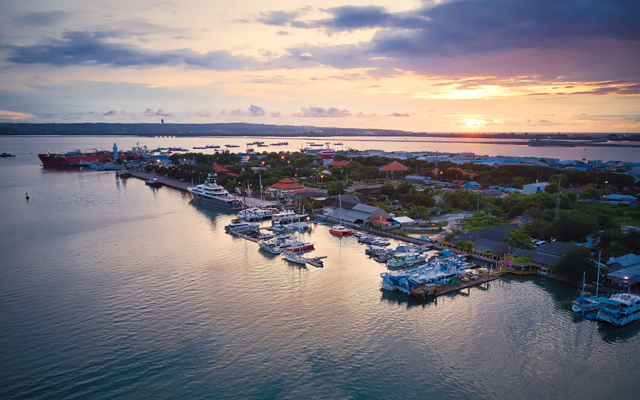
New cruise terminal will be able to accommodate volume brought in by 44 Boeing 737 planes, some say
Industry players are eagerly anticipating the completion of a cruise terminal at Bali’s Port Benoa late this year after multiple delays, with the enhanced infrastructure expected to help address capacity strains at Denpasar airport and boost tourism numbers.
Once construction is completed, the Port of Benoa is expected to transform into a world-class port that can accommodate three cruise ships at once as well as hundreds of yachts. Currently, cruise ships stopping in Bali have to moor off shore and passengers are transported ashore on small boats.
New cruise terminal will be able to accommodate volume brought in by 44 Boeing 737 planes, some say
Ida Bagus Agung Partha, chairman of Bali Tourism Board, said the cruise terminal was vital for the island with Denpasar airport’s current shortage of capacity. So far, cruise ships visit Bali more frequently than any other ports in Indonesia.
“We hope Benoa Port will open soon (as it has been delayed several times), as Bali is a hub to Indonesia and also being the central of tourism activity,” he said.
Indroyono Soesilo, special advisor to the tourism minister on marine tourism development, said that the Benoa Master Plan was focused on optimising supporting facilities, which would entail dredging the sea 12m deep and widening the area up to 200m.
“The Cruise Ship Terminal will be able to accommodate 5,000 passengers and 1,500 crew members, or equal to 44 Boeing 737 planes,” he said.
The future Benoa Port is also equipped with supporting facilities such as hotels, shopping centres, restaurants and convention centre.
According to state-owned port authority Pelindo III, Benoa Port has been battling a decrease in cruise ship arrivals due to the lack of infrastructure. In 2015, Pelindo III only attracted 58 cruise ships with 68,534 passengers and the figure was down to 53 cruise ships and 62,859 passengers in 2016. The figure for 2017 was not available at press time.
There are also plans to develop a second port in northern Bali. The new facilities at Celukan Bawang Port will accommodate seven ships at a time, each with a capacity of up to 1,000 passengers.
“Celukan Bawang Port already has the sea level that fits the standard so no further dredging is needed. The huge area of the part provides easy access for hundreds of vehicles to transport arriving tourists to attractions,” Indroyono said.
The government will also develop five other ports, such as Belawan in North Sumatera, Tanjung Priok in Jakarta, Tanjung Perak in Surabaya and Soekarno-Hatta in Makassar.
Such developments are in line with the government’s programme to develop the cruise business and become a regional cruise hub in the region.
Tourism minister Arief Yahya said in in 2016 that 260,000 tourists arrived in Indonesia on cruise ships, an increase of 30 per cent from 200,000.
Last year, visiting cruise ships made 350 calls with 320,000 passengers. The figure is expected to rise to 420 calls and 350,000 passengers in 2018.
The minister said: “Compared to cruise traffic in Singapore per-year, Indonesia still lags far behind. Singapore gets approximately 1.2 million passengers per year.”
The country seeks to boost visitors to 500,000 passengers and at least 500 cruise calls by 2019, he added.
Airbnb says absence of long-term contracts among the merits of listing on its platform rather than OTAs
Having declared its intentions to be ‘for everyone’, Airbnb last week penned an open letter to “boutique hotels and B&B owners”, touting its lower fees compared to hefty commissions charged by OTAs.
“Time and again, small business owners told us that the fees charged by travel agents like Expedia and Booking – which can be as high as 30 percent – are too high,” the home-sharing giant wrote in the letter.
Airbnb says absence of long-term contracts among the merits of listing on its platform rather than OTAs
“We want Airbnb to be for everyone, including professional hospitality providers that offer unique spaces and personal hospitality to the Airbnb community.”
Besides lower commissions fees, the absence of long-term contracts allows independent hoteliers to “have full control over when (their) inventory appears on Airbnb” and need not compete against big chain hotels on the platform, it claimed.
Airbnb said the addition of four property types – Vacation Home, Unique Space, B&B and Boutique – will enable hosts to better classify their accommodation better and attract Airbnb users.
It also hinted that a new guest membership programme, slated for a roll-out later this year, will help hospitality providers better manage their inventory.
MATTA is also partnering Indonesian association to boost arrivals
The Malaysian Association of Tour and Travel Agents (MATTA) has joined forces with the Malaysian Association of Hotels (MAH) to develop a B2B and a B2C booking platform to help members better compete in the digital marketplace, one of its recent partnerships forged with trade associations.
Through the platform, MAH hotel members will provide inventory for MATTA member agents to purchase at competitive rates.
MATTA is also partnering ASITA to boost arrivals
MATTA president, KL Tan, said: “This collaboration with MAH will benefit both parties. It will allow hotels and agents to compete more effectively with OTAs. Hotel inventory will also be more widely available to the 3,200 odd MATTA members and at good rates. The booking platform will empower agents to sell directly to consumers through the B2C platform. Eventually the system will incorporate the sale of tour packages as well as tickets to attractions and events.”
The platform, focused on promoting inbound and domestic travel, is timely as tourism industry players prepare for Visit Malaysia Year 2020 campaign, a national initiative spearheaded by the Ministry of Tourism and Culture Malaysia which is expected to generate 36 million tourists and RM168 billion in tourism receipts.
On the development of the booking platform, Tan said: “We are collaborating with the National ICT Association of Malaysia for the design, development and operation. We hope to kick start the project by mid 2018 and for the platform to be operational in early 2019.”
Separately, MATTA has also partnered the Association of Indonesian Tours and Travel Agencies (ASITA) to boost visitor arrivals to Malaysia and Indonesia.
Tan said: “With more than 50 flights per week between Malaysia and Indonesia, MATTA and ASITA will be able to promote both countries as a single destination for longhaul markets. Such arrangement can be brought to a new level due to better air connectivity between both countries.”
Moreover, with Indonesia being Malaysia’s second top visitor source market contributing over 2.7 million arrivals last year, MATTA aims to grow the number to 3.4 million by 2020.
An individual in Singapore has been convicted for carrying out the business of a travel agent without a valid licence.
A total of 27 charges were brought against Bambi Kee Kim Noi, who was fined a total of S$7,500 (US$5,702) in default of 25 days’ imprisonment for five such charges. The remaining 22 charges were taken into consideration for the purpose of sentencing.
Kee sentenced to 12 months in prison
Kee was also charged and convicted for a related offence under the Penal Code, and sentenced to 12 months in prison for criminal breach of trust by her misappropriating monies entrusted to her by consumers as an agent.
Under the amended Travel Agents Act that took effect on January 1, 2018, any person found guilty of carrying on the business of a travel agent without a valid travel agent licence faces a maximum fine of S$25,000 – an increase from S$10,000 – and/or imprisonment of up to two years.
Investigations revealed that Kee started her unlicensed travel agent activities in 2012, when she had claimed to be a freelance travel agent and sold air tickets and hotel accommodation vouchers. In early 2013, Kee ran into financial difficulties but continued to take on consumer transactions without fulfilling them, thereby affecting 16 consumers who then lodged police reports.
In a statement, the Singapore Tourism Board said it “takes a serious view against those who engage in unlicensed travel agent activities” and will take action against them to protect consumer interests and uphold the destination’s reputation.