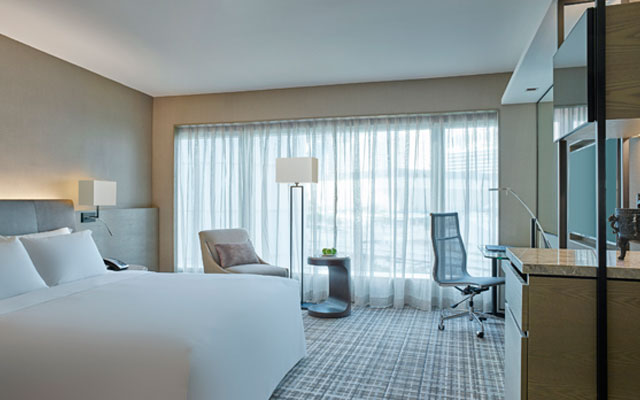
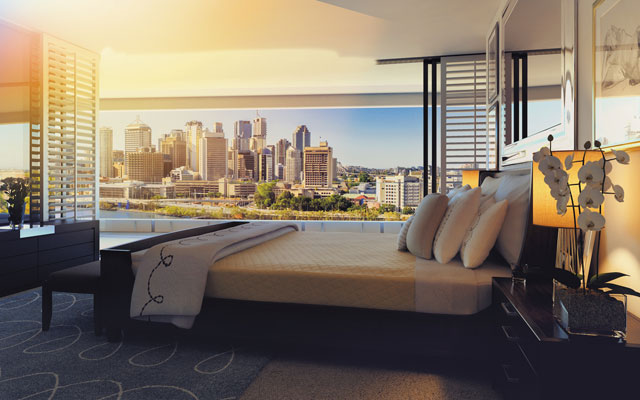
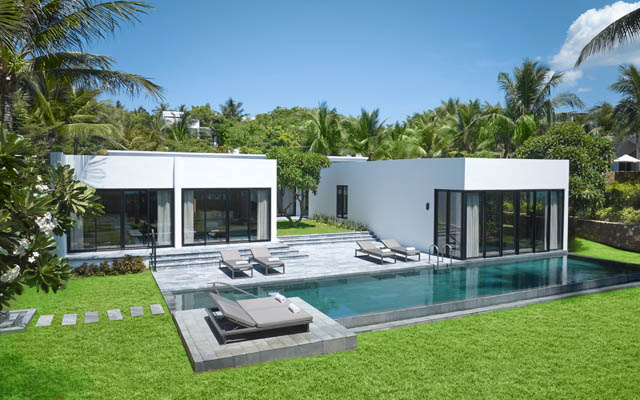
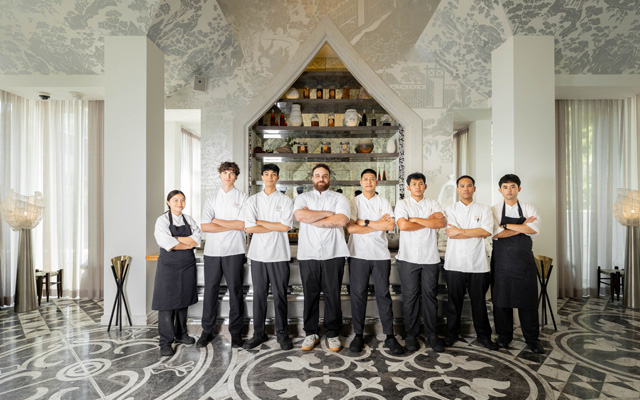
The recently refurbished New World Millennium Hong Kong Hotel has launched a special deal for airline and travel agent associates.
Valid for leisure stays from now to June 30, 2018 inclusive, the industry rate starts at HK$1,200 (US$153) per night for a stay in the City View room, including benefits such as an upgrade to a Deluxe City View room (subject to availability); breakfast at Café East for one person (special price for additional breakfast is HK$180 per person); shuttle bus service to Tsim Sha Tsui hotspots and nearby MTR station; and complimentary Wi-Fi.
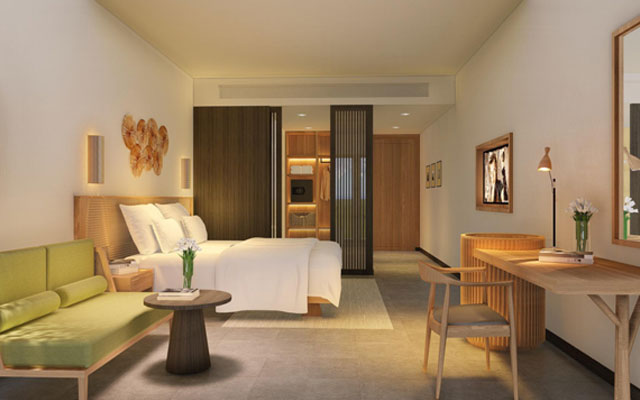
City View Room
The room rate is subject to a 10 per cent service charge. A daily supplement of HK$150 per room per night applies for upgrading to a Harbour View room, subject to availability at the time of booking.
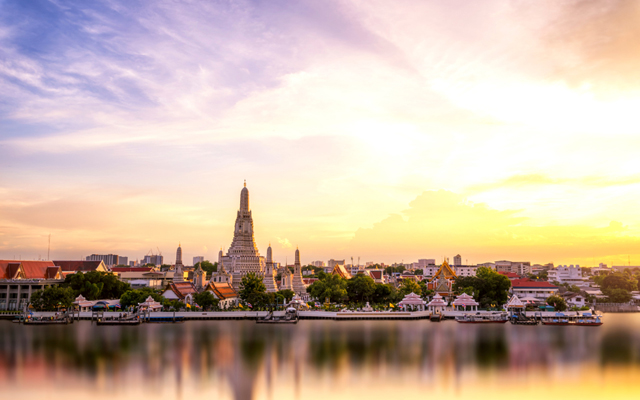
Thailand started the first four months of 2018 with international arrivals climbing 13.9% year-on-year to 13.7 million, led by growth from India and China.
Pongpanu Svetarundra, permanent secretary, Ministry of Tourism and Sports, shared at a press briefing that tourism income in January-April 2018 was 730.7 billion baht (US$22.8 billion), up 17.6% from the same period in 2017.
East Asia is the biggest source of arrivals for Thailand
The results in the first four months show growth coming from all regions except the Middle East, with declines in arrivals from the UAE, Saudi Arabia and Egypt.
Visitors from East Asia totalled about 8.9 million (+17.5%), Europe over three million (+9.8%), the Americas 599,431 (+3.6%), South Asia 607,379 (+15.2%), Oceania 296,741 (+0.3%), the Middle East 237,322 (-6.8%) and Africa 59,371 (+7.1%).
About 64.9% of total visitors originated from East Asia, making it the largest feeder region for Thailand. China, Thailand’s top source market, recorded 4.2 million.
South-east Asian countries generated over three million arrivals, with growth from Cambodia (+25.1%), Laos (+13.2%), Vietnam (+6.5%), the Philippines (+5.8%), Singapore (+4.4%), Indonesia (+3.7%) and Malaysia (+1.6%). The only declines were from Brunei (-9.2%) and Myanmar (-3%).
In Europe, Russia retained its status as the largest source market in the region with arrivals of 745,398, up 25%. Germany was the second highest source market with 386,951 (+7.7%), followed by the UK with 371,054 (+0.4%) and France with 342,825 (+3.7%).
Strong growth was also reported from East Europe (+14%) and Austria (+18.7%), Denmark (+8%), Finland (+8%), Italy (+7.7%) and the Netherlands (+7%); the exception was Sweden, which declined by 2.3%.
The main market in the Americas, the US, generated 396,330 arrivals (+7%). Arrivals from Canada were up 10.4% to 113,881. Declining source markets from Latin America include Brazil (-20.3%) and Argentina (-25.7%).
As for South Asia, India topped the list with arrivals up by 16.9% to 481,573. Other growing markets include Bangladesh (+19.4%), Pakistan (+2.7%) and Sri Lanka (+1.3%). Nepal (-0.4%) was the only market that saw a decline.
Small increases were seen from Oceania markets. Australian visitors were up 0.03% to 261,496; and arrivals from New Zealand increased 1.8% to 34,133.
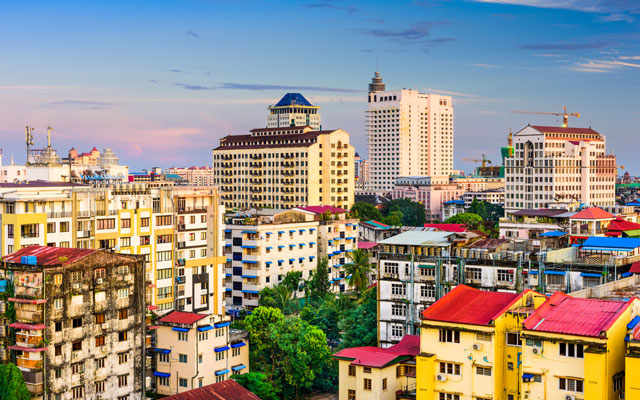
Myanmar is currently grappling with hotel oversupply as a swathe of properties continue to open while tourist arrivals fall short of the country’s target.
Su Su Tin, managing director of Sanctum Inle Resort and Yangon Excelsior Hotel – slated to open in July – said the limited room supply during the sudden tourist boom between 2011-2013 triggered a surge in interest from investors looking to fill the gap.
Hotels are continuing to pop up even though tourists are not arriving fast enough; Yangon’s skyline pictured
The influx in investment was further fuelled by the Ministry of Hotels and Tourism’s (MoHT) announcement in its 2013 tourism master plan to attract 7.5 million international visitors by 2020.
However, Yangon International Airport welcomed 5.9 million passengers in 2017, of which 66 per cent were international. While this represents an 8.5 per cent increase year-on-year, it is far from the predicted growth of arrivals.
Edwin Briels, managing director of Khiri Myanmar, said: “There will be an undersupply of tourists. For example, Bagan had 380,000 tourists last year; that’s nothing, we need to get more tourists to these destinations.”
Figures from MoHT reveal that as of March 2018, there were 1,628 hotels and guesthouses with 65,470 rooms across the country. More properties by major players are slated to open their doors this year.
Bertie Lawson, managing director of Sampan Travel, said: “Many of these hotels thought tourism was going to boom. When they, (the boom in tourism did not happen) and it’s causing a lot of stress for hoteliers.”
Despite this, the industry remains positive. Su Su Tin said the result is more competitive prices, attractive packages and an increase in quality of services – all positive selling points for tour operators.
May Myat Mon Win, Myanmar Tourism’s marketing chairperson and Chatrium Hotel’s general manager, said that moving forward, it is vital that expansion of hotel rooms should be in line with destination planning.
“What is the current capacity? What do we expect? For example, Hpa An is a rising destination but it’s a small town. If we suddenly have a load of five-star hotels cropping up, it will change the landscape. I am confident the situation will balance out in the future, but these new destinations need to be planned properly,” she said.
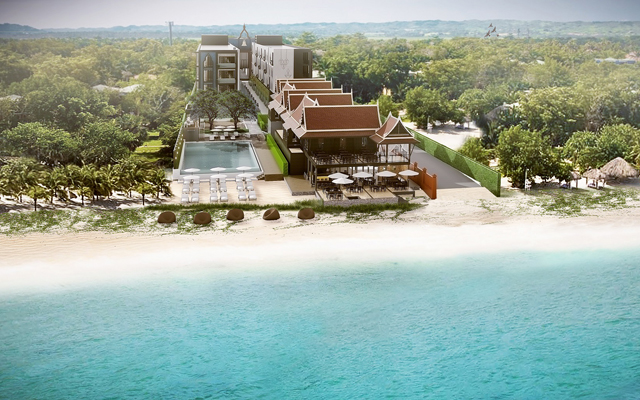
Artist impression of the Aksorn Rayong, The Wellity Collection
Thai real estate developer Mida Assets is collaborating with Singapore-based Wellity to launch Aksorn Rayong, The Wellity Collection, a property integrating science-driven wellness and an arts and culture theme on the Laem Mae Pim coastline in the eastern Thailand province.
Anthony Jude Tan, CEO and co-founder of MW Wellness Management, established in 2017 a joint venture between Wellity and Mida Assets, explained that the Rayong property is the first hotel to combine features of both Aksorn, an arts and cultural concept-theme hotel brand, and The Wellity Collection, an integration of medical wellness aspects based on evidence-research for hotels and resorts.
Artist impression of the Aksorn Rayong, The Wellity Collection
Wisood Leosivikul, president and managing director, Mida Assets and co-founder of MW Wellness Management, added: “We’ve invested over 20 million baht (US$627,000) with Wellity to set up MW Wellness Management (last year), with over one billion baht budgeted to build Aksorn Rayong, The Wellity Collection.”
Of this amount, an estimated of 35 million baht alone was pumped into the project specifically for wellness equipment and element fittings.
The first resort under MW Wellness Management devotes equal emphasis to health and hospitality, distinct from “wellness retreats with accommodation options”, said Vincent Tan, COO of Wellity.
“The resort, as with all upcoming Wellity Collection properties, paves the future in the hospitality and tourism industry by incorporating science-based wellness features into every facet of guests’ experience,” he elaborated.
An example of a treatment offered is the Wellity Center’s Ozone Infrared Therapy, which uses a “deep penetrating heat that promotes sweating at lower temperatures”.
Beyond Thailand, The Wellity Collection brand is also present in Malaysia, China and Vietnam. There are plans to expand to the rest of Asia in the coming years, Tan said.
The Laguna Lăng Cô integrated resort in central Vietnam is expected to have a casino by 2022, after being awarded the first casino licence to be issued by the Vietnamese government in 10 years.
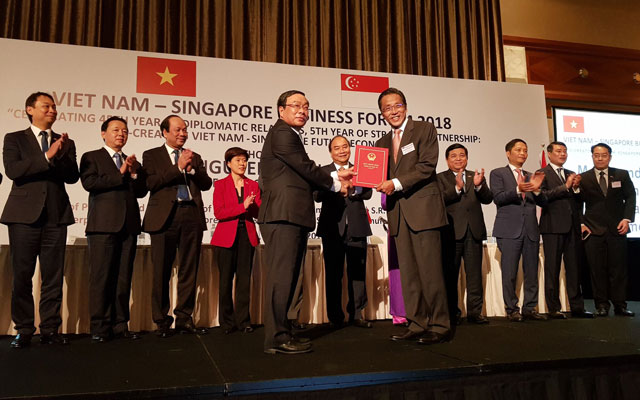
At the recent Vietnam-Singapore Business Forum 2018 in Singapore presided by the Vietnamese prime minister Nguyen Xuan Phuc, the license was presented by chairman of the Provincial People’s Committee Nguyen Van Cao to executive chairman of Banyan Tree Holdings Ho Kwon Ping.
From left: Provincial People’s Committee’s Nguyen Van Cao; and Banyan Tree Holdings’ Ho Kwon Ping.
This license issuance kicks off the second phase of development at the Banyan Tree-operated resort. Said Ho: “Many hotel investors and development funds have been awaiting the casino license and the selection of a casino operator before finalising their investment into (the property’s second phase).”
The five-year-old property is undergoing an expansion from 2018 to 2022, expected to see investment capital increase from US$875 million to US$2 billion.
Laguna Lăng Cô’s first phase of development, with an investment value of US$285 million, comprises both Banyan Tree and Angsana hotels, a 18-hole championship golf course designed by Nick Faldo, luxury private villas and residences, convention facilities, recreational activities and beachfront land for six more hotels, part of a 280ha project.
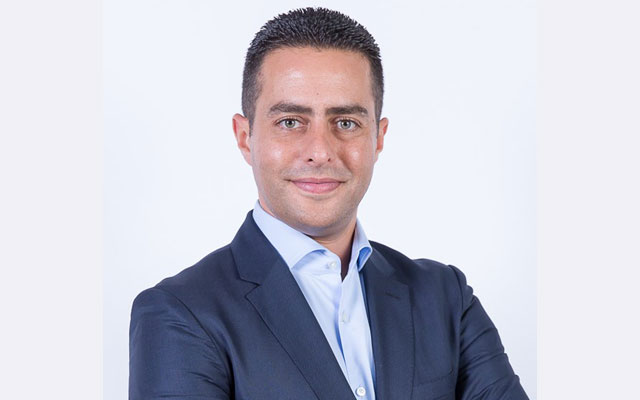
The Radisson Hotel Group, as part of its new strategic and operating plan to expand in the region in the next five years, has appointed Ramzy Fenianos as chief development officer for Asia-Pacific.
Joining the company’s Asia-Pacific headquarters in Singapore on June 11, Fenianos will oversee all aspects of the group’s regional development activities, including leading the Asia-Pacific development team in identifying new opportunities to drive growth and strategic expansion of the group’s hotel portfolio.
He will also be a member of the Asia Pacific executive committee, according to a statement.
Prior to joining Radisson, Fenianos was based in Dubai as vice president, development EMEA, for Minor Hotels.
With more than 15 years of experience in the real estate and hospitality sectors, he has held key positions with several other major companies, including Dubai Holding Group and Starwood Hotels & Resorts Worldwide.
Qantas has launched a new technology platform to enhance its retailing, booking and servicing capabilities for trade partners, enabling them to provide their customers with a more personalised experience.
The Qantas Distribution Platform (QDP) improves the functionality of indirect agent channels by closely aligning them with the capabilities currently available via qantas.com, making it easier for trade partners to sell Qantas products and provide more seamless customer service.
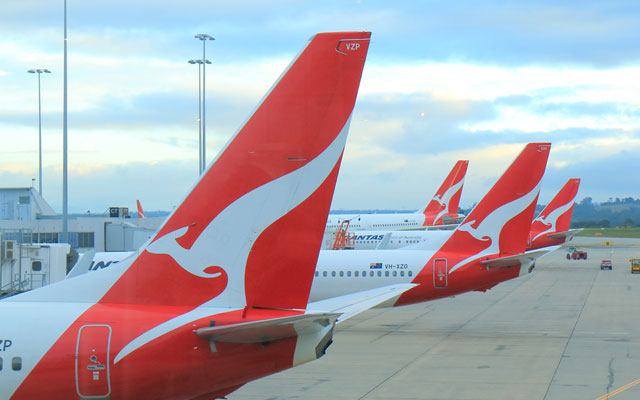
Qantas launches new technology platform for trade partners
Qantas trade partners will have access to richer content relevant to a customer’s journey, including images of cabins and meals and the ability to book extras such as Extra Legroom seating. It will also provide Qantas Frequent Flyer information and tier status at the point of sale.
The airline’s chief customer officer Vanessa Hudson said the platform is a key part of a broader digital evolution of Qantas’ booking channels and an important step in the delivery of the best possible experience for trade partners and customers.
“There have never been more ways for a customer to research and book their travel. We want to make the booking experience as seamless and enjoyable as possible, no matter their booking channel preference. This new platform will help us provide that to our trade partners and customers, modernising the way Qantas delivers content.”
QDP was developed in partnership with travel technology company Farelogix, and utilises IATA’s New Distribution Capability (NDC) industry standard. The new Qantas platform has been certified to NDC Level 3, IATA’s highest certification.
Travelport, Serko and CTM are among early adopters of the QDP, and Qantas is currently working closely with other GDS and agency partners to adopt the new technology and innovate as the platform evolves.
Trade partners are able to access the QDP either via approved partner connections, or directly by developing a connection to Qantas’ NDC XML Application Program Interface.
For more information, please visit the QDP website qantas.com/NDC.
The integration of Tourico Holidays and GTA ancillary units into the Hotelbeds Group has given the group a much bigger ancillary bank, a significant step for the group which now sees this category of products as a core part of its growth strategy.
Carlos Muñoz, bedbank managing director at Hotelbeds Group, stated: “This fast-growing area for our group forms a core part of our strategy for growth by offering the 60,000-plus travel intermediaries around the world who use our platform the opportunity to upsell their customers with the full range of travel needs and experiences.”
Javier Arevalo will head up the much larger ancillary bank
The group has confirmed that Javier Arévalo will be director of ancillary bank, while three dedicated regional sales & sourcing roles for ancillary bank have also been introduced to ensure the company is optimising cross-selling opportunities.
The company is also reshaping its hotel extras brand, which provides in-destination and in-origin distribution of ancillary products to hospitality industry partners, mainly accommodation suppliers, cruise lines, activity providers, tourism boards and other in-destination points of sale.
With the integration of Tourico and GTA products, the group’s ancillary bank now boasts an expanding offering comprising cruise products from over 16 cruise companies; over 18,000 activities and 24,000 transfer routes worldwide; 400 theme and water parks including Disney Parks, Universal Parks & Resorts, SeaWorld Parks & Entertainment, Legoland, Port Aventura World and Parques Reunidos; 230 round trips and car rentals from the group’s B2B car rental brand Carnect, which offers 500-plus car rental companies.
Dusit Princess Moonrise Beach Resort, Vietnam
Dusit International has made its debut in Vietnam with the opening of its latest property on Phu Quoc island. The four-star resort offers 108 guestrooms ranging from the 32m2 Deluxe Rooms to the 90m2 Suites, most of which offer views of the ocean. Dining options include an all-day-dining restaurant, lobby lounge, swim-up pool bar, and beachfront bar and lounge. Leisure amenities span a large infinity pool set within a tropical garden, gym, kids’ club and Luna Thai Spa, in addition a large ballroom that can accommodate up to 190 people.
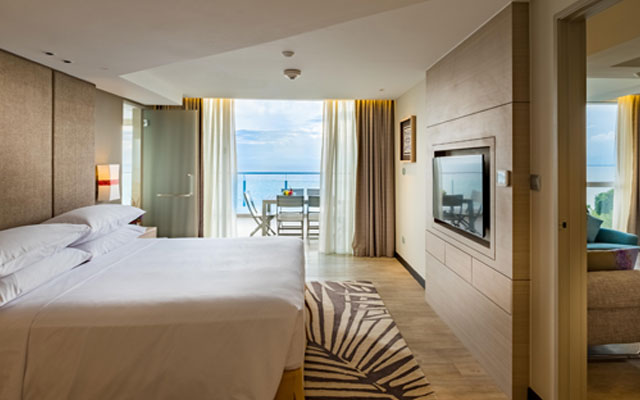
DoubleTree Resort by Hilton Penang, Malaysia
Malaysia’s first resort-style property under the DoubleTree brand has opened on Penang’s north coast, overlooking the Indian Ocean. There are 316 rooms and suites, all equipped with walk-in rain showers, 40-inch LED TVs and Wi-Fi. Many rooms also feature a private balcony with sea views. The family-friendly resort offers facilities such as a kid’s club, babysitting service, and special children’s buffets at the all-day-dining Makan Kitchen. There are also two other F&B venues, a spa, fitness centre, outdoor pool with its own beach,three flexible meeting rooms and a ballroom for up to 550 guests.
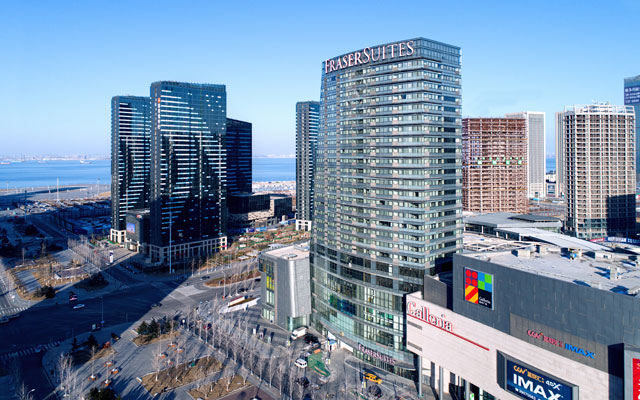
Fraser Suites Dalian, China
Located in the city’s new CBD of Donggang is Fraser Suites Dalian, part of the mixed-use Europark Tower development with a 100,000m2 lifestyle shopping mall, offices and residential apartments. The property offers 259 fully furnished serviced apartments ranging from studios up to three-bedroom configurations. Business amenities include an executive floor, a library lounge and meeting rooms. Recreational facilities include an indoor heated pool, 24-hour gym, billiards room, children’s play area and restaurant. This Dalian property is within walking distance of the Dalian International Conference Centre.
Emporium Hotel South Bank, Australia
Scheduled to open on July 1, 2018, this 143-suite hotel is part of the mixed-use Southpoint development on Grey Street in Brisbane. Rooms will be set over 21 levels, and recreational facilities include a rooftop bar, 23m-long infinity pool, gym, steam room and sauna. For conferences and meetings, there is also a grand pillarless ballroom, and three state-of-the-art boardrooms. Bookings are now open.