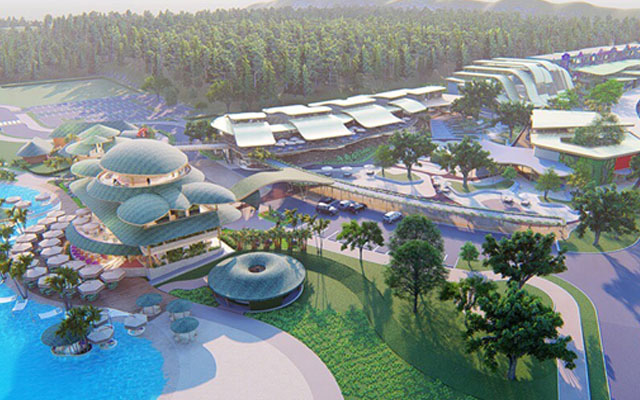
The water park battle in Phuket is about to get more intense as a number of new players are entering the marketplace, among them Blue Tree Phuket, which is set to open its doors come early 2019 as an upscale family entertainment and lifestyle complex, and touting the island’s first crystal lagoon.
The sprawling 22.5ha development, located in the upscale Cherngtalay district, is the result of a joint venture comprising unnamed Thai and international partners, who see opportunity in the family-oriented attractions sector by pumping investment upwards of US$40 million into the project.
Blue Tree Phuket will be positioned as a one-stop destination for family activities, retail and relaxation
“Pattaya has two water parks, Hua Hin has three water parks, but Phuket has just small water parks. There’s been a clear demand for inland entertainment alternatives for some time now,” said Michael Ayling, general manager of Blue Tree Phuket. He was speaking to TTG Asia about the upcoming project in an exclusive interview ahead of its pre-launch in August.
“Blue Tree will offer an immersive lifestyle experience that combines the fun of water sports, family activities, retail and relaxation in one strategically located destination that will cater precisely to this demand,” he added.
Facilities within the 11ha first phase, which opens to the public in 1Q2019, includes a Water and Entertainment park, a four-storey vertical Beach Club, Fitness Zone, Kid’s Club, restaurants and food outlets, and multiple retail spaces.
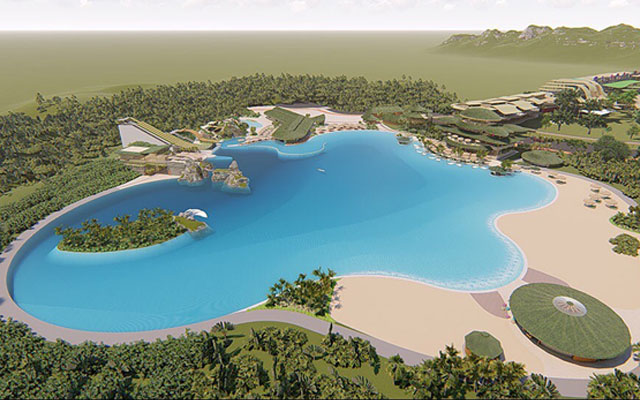
The complex’s centrepiece – the 17,000m2 man-made Blue Tree Lagoon – is flanked by artificial beaches and offers an experiential aquatic playground for families, with spaces ranging from a splash zone for young kids to adrenaline-driven activities such as Slip N Fly water slides and cliff jumping.
Ayling envisions Blue Tree to be an “accessible destination” that will appeal to “middle class Thai families and Amanpuri guests” alike. Admission fees will be kept “affordable” with a pay-and-use concept, while full access to all activities will be priced at around 1,000 baht.
Acknowledging the competition upcoming water parks like Vana Nava Phuket and Kata Water Park will bring – both of which are currently in development – Ayling thinks there is still “a lot of space for competition” in Phuket. “We will likely have the (water park) market to ourselves for a few years,” he commented.
A rendering of Blue Tree Phuket’s crystal lagoon
As well, Phuket’s growing inbound tourism arrivals and airlift will “induce demand” for Blue Tree, especially as the island’s tourist demographics move from traditional European beach holidaymakers to Asian travellers more inclined to seeking activities off the beach.
“Blue Tree Phuket will also suit the seasonality of the destination and make a great low-season product,” he added, referring to the island’s monsoon months from May to October when the seas experience rougher surf and strong currents.
When asked about the absence of accommodation at Blue Tree Phuket, Ayling stated: “Do we need a 120-room hotel when we have 12,000 rooms in the (Cherngtalay) vicinity? Phuket’s hotel scene is very competitive, but what isn’t competitive is entertainment.”
Kerzner International Holdings, owner of the ultra-luxury One&Only Resorts and Atlantis Resort & Residences brands, will introduce the One&Only brand on Malaysia’s Desaru Coast.
The 52ha beachfront development will have 42 suites, two luxury suites and an exclusive four-bedroom villa, as well as approximately 50 One&Only Private Homes available for purchase.
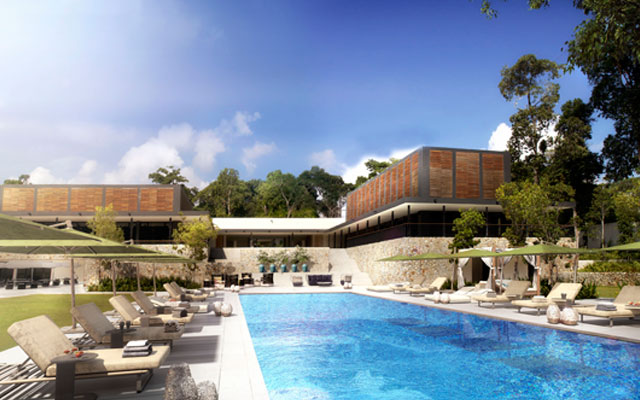
A rendering of the upcoming One&Only Desaru Coast
“As part of the continued strategic global growth of Kerzner International, Malaysia is the perfect location for the next One&Only resort and for the brand to enter Asia,” said Michael Wale, CEO of Kerzner International.
“We are proud to have been selected to operate the ultra-luxury resort on Desaru Coast as One&Only, and we look forward to announcing an opening date in the near future.”
Travel professionals in ASEAN, do you want to win a free hotel stay in either Singapore, Bangkok or Malaysia?
TTG Travel Trade Publishing is proud to be the travel trade media partner of the ASEAN Tourism Competitive Committee, and we’re giving away free hotel stays in celebration of this partnership!
Simply follow these steps to participate:
1. In the comments section below, tell us which ASEAN city is a ‘hidden gem’ to you (e.g. Ho Chi Minh City).
2. Nominate a ‘hidden gem’ spot in that city and tell us why!
3. Like TTG Asia’s Facebook page and share this post.
4. For extra chances of winning, tag 3 colleagues!
The top 3 most creative entries picked by TTG Asia will get to win:
1st Prize: 3N Hotel Stay at Mercure Singapore Bugis 2nd Prize: 2N Hotel Stay at Ariva HYDE Sukhumvit 11, Bangkok
3rd Prize: 2N Hotel Stay at ARIVA Trillion Residences, Kuala Lumpur*
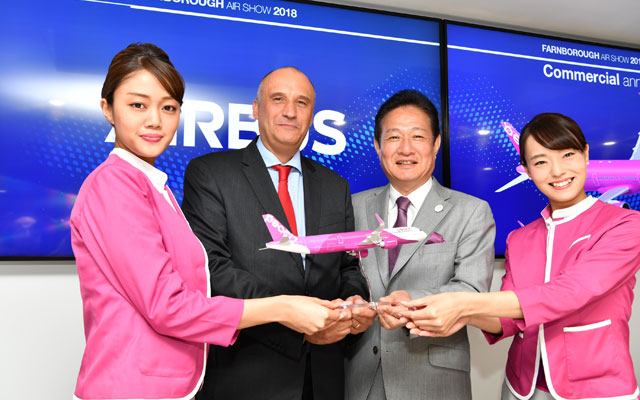
Airbus Chief Commercial Officer Eric Schulz and Shinichi Inoue, Peach Aviation Managing Director and CEO
Japan’s Peach Aviation has sealed an agreement with Airbus at the Farnborough Airshow to purchase two Airbus A321LRs, which will make it the first Asian airline to operate this aircraft model in Asia as it works towards becoming an established medium-haul LCC in north-east Asia.
The newest member of the A320 family of jets, the A321LR model boasts a range of 7,400km, the longest in the world for a single-aisle jet, and will greatly extend Peach’s reach throughout Asia.
From left: Airbus’ Eric Schulz and Peach Aviation’s Shinichi Inoue
The airline revised its purchase agreement with Airbus concluded in November 2016, updating its order from 10 A320neos to eight A320neos and two A321LRs.
The two A321LRs are expected to be delivered in fiscal 2020. As of 2020, and after completing the merger with Vanilla Air, the Peach fleet will consist of more than 50 aircraft, operated across more than 50 routes.
CEO Shinichi Inoue said in a statement: “By taking on the challenge of establishing a medium-haul LCC business in Japan, we will continue to play a leading role in shaping the history of LCCs in Japan and North-east Asia. The introduction of the A321LR in fiscal 2020 will be the next major step in the evolution of our business and will further accelerate Peach’s transformation into the leading LCC in Asia.”
Spain-headquartered Veturis Travel has joined forces with cloud platform SiteMinder to deepen its penetration in Asia and Europe, as it seeks to grow beyond its established presence in France, Italy and the US.
The wholesale travel agency is upping its investment in cloud-based technology as part of a recent transition to dynamic online rates and a strategy to expand its direct contracts with hotels.
In a world where digitisation has become the order of the day, traditional hotel distribution channels such as wholesalers are facing new challenges and more competition
“The landscape for wholesalers is changing and key to remaining relevant is specialisation and adding value to our partners, to help them compete through distribution,” said Irma Mesa, head of sales support at Veturis Travel.
Mesa added that the partnership with SiteMinder is a strategic evolution, offering opportunities for the Veturis Travel to explore new possibilities.
The partnership also reflects the “continued value” of traditional hotel distribution channels like wholesalers in the digitalisation age, said Mateus Coelho, regional manager for Spain, Portugal and Brazil at SiteMinder.
Veturis Travel supports more than 180,000 hotels via a business-to-business interface and connectivity with travel agencies and DMCs in more than 70 countries, including Thailand where more than 8,000 hotels are based.
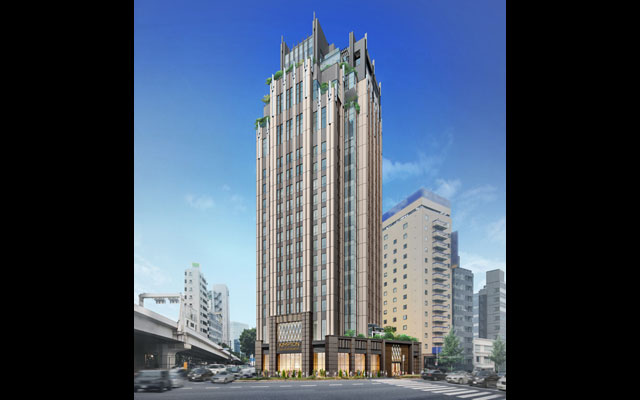
InterContinental Hotels Group (IHG) is bringing Kimpton Hotels & Restaurants to Japan, with Kimpton Tokyo Shinjuku set to open in 2020 as the brand’s first in the country.
The 162-room hotel will feature three meeting spaces that accommodate up to 300 people, a wellness studio, and a multi-function chapel.
Japan is the newest market for the Kimpton brand
Kimpton Tokyo Shinjuku will also offer three locally-inspired restaurants, in addition to Kimpton signature perks such as complimentary morning coffee and tea in the living room lobby and an evening social hour.
Tsukada Global Holdings, the owner of Kimpton Tokyo Shinjuku, is a long-time IHG development partner, currently owning four IHG hotels including Intercontinental Tokyo Bay and The Strings by Intercontinental Tokyo.
Japan marks the newest market for the Kimpton brand, continuing the recent growth trajectory in Asia with signings in Greater China and South-east Asia.
There are currently 66 Kimpton hotels open globally, with another 20 in the pipeline, including cities such as Bali, Shanghai, Sanya and Taipei.
The ITB Asia 2018 conference will take place at the Sands Expo and Convention Centre in Singapore’s Marina Bay Sands from October 17-19 with a focus on the major trends provoking disruption across the travel industry.
The opening keynote session on October 17 will be led by global leaders from Facebook, Microsoft and Trip.com. It will touch on the major technological changes driving disruption in the travel industry, such as the rise in global smartphone ownership, how organisations are evolving their business models to remain competitive and their vision for the future of the travel industry.
Global leaders will provide insights on the major trends driving change and transformation within the travel industry
The keynote addresses will be delivered by Nikhilesh Ponde, global head of travel strategy from Facebook; Shane O’Flaherty, global director of travel and transportation from Microsoft; and Xing Xiong, CEO from Trip.com.
Day two’s keynote will be a new intermediaries panel session with a focus on the future of travel distribution, given how OTAs, metasearch engines and new intermediaries are disrupting distribution.
The second keynote panel session will be led by industry players including Amy Wei, vice president, Asia-Pacific from Kayak; Andrew Hughes, regional director of sourcing from Hotelbeds; Filip Filipov, vice president of product from Skyscanner; and Charlie Osmond, founder & chief tease from Triptease.
The keynote panel session on day three will look at China’s outbound travellers are reshaping the world today with their spending power.
Sharing their insights on connecting travel brands with Chinese millennials are Alessandro Dassi, CEO & general manager, Greater China & Far East from Thomas Cook; Troy Liu, founder & CEO from Mileslife; and Changle Yang, COO from Tujia.
Attracting high-quality website traffic is vital to any brand. This fact isn’t lost on travel marketers with roughly 90 per cent of digital ad budgets going towards traffic generation. However, traffic generation, while important, is only one half of the job. The next step is converting this traffic into actual bookings.
Jamie Pierre
Recent research showed that the travel sector is hit hardest by consumer hesitation – more specifically, when potential bookers make their way to the checkout process only to bail out early. This is also known as booking abandonment, and it happens with nine out of every 10 consumers in the travel sector. Travel agents are hit even harder online, seeing a miserably high 97.4 per cent average abandonment rate.
A certain amount of shopping around for inspiration is a hallmark of the travel industry, with customers always likely to dip their toe before taking the plunge on an often expensive outlay. However, there are some easy ways travel agents can reduce this number to increase bookings.
Know your type online: get with the programmatic
The first chance travel agents have to decrease booking abandonment rates is actually before consumers even arrive on site. With so much marketing budget going on driving wannabe travellers to your website, making sure that this traffic is relevant and interested in your product is vital to success. This can be achieved with programmatic display ads.
Display advertising has undergone a revival of late, driven by a few reasons. For one, the widespread change to programmatic buying of inventory has made it more accessible and affordable for a greater number of companies to run display campaigns. But the main reason behind the resurgence of display advertising is the results it can now achieve.
The huge quantity of data available today allows travel companies to reach their target demographic with unprecedented accuracy. With a programmatic strategy in place, travel agents can pinpoint the difference between traffic and qualified traffic – driving only worthwhile, relevant consumers to their sites. And as a general rule of thumb, the better suited your offering is to the people who view it, the more successful bookings your website will generate.
Less persona, more personal
I’m assuming that you will be familiar with, and most likely use, buyer personas. Effective marketing, and ultimately business practice, has always involved the ability to find and develop a strong relationship with your customer – speaking to and not at. And how can you do that without knowing who they are?
However, traditional buyer personas are of limited use in the modern online landscape, and in display advertising in particular. While they’re great at telling you who your customers are, it’s only through data reporting that you can see how they act.
Take an active holiday provider, for example. Their ideal candidate for booking is 30-50 years old, a fitness nut, with moderate levels of disposable income and a fondness for running wear. With the traditional model of manual inventory purchasing, ad space would be paid for on sports news and retail websites in the hope that their readership overlaps with this customer profile. However, customers are far less one-dimensional in reality.
By using a mix of automated data points and real-life market expertise, brands can not only reach their target audience, but make a positive impression with their advertising.
Every time a visitor uses your website, their actions tell a story, it’s up to travel companies to read it. Doing so will mean travel agents can cater to behavioural trends on site and in their marketing, leading to better booking rates online.
Make your website a one-stop shop
Making travel plans often starts with a spark of inspiration, and inspiration is often followed up with a good deal of research. The more travel agents can stay relevant during this transition, the better chance they have of being there at the decisive moment – the booking.
Embed Instagram accounts, integrate TripAdvisor reviews and publish share-worthy blogs to allow consumers to continue their research journey but remain on your site to do it. Also, a thumbs up from fellow travellers along with some stunning snaps is often more persuasive than your carefully crafted and articulately illustrative website copy alone.
By bringing everything together, travel agents, regardless of size, will cut booking abandonment.
Declutter the booking process
Bookings rely on momentum, and nothing kills momentum like boredom or confusion. So any booking process needs to be kept lean, intuitive and easy to use. This means short forms, inline field validation and offering a number of different payment options to remove any blockers in the process and keep bookers on track.
Although customers are now more comfortable with online payments in general, displaying security logos and clear delivery options still goes a long way to instilling trust. If you’re unsure of what’s working and what isn’t in your booking process, run version-controlled A/B testing to find out where customers are checking out.
Reach back after rejection
Booking holidays can take up to 45 days with people visiting as many as 38 travel sites before committing, so even the best functioning sites will lose travellers at the final hurdle. This is where travel agents can make significant gains on the competition.
Given the role played by research in the booking process, those abandoning ‘almost bookers’ are far from lost causes – quite the opposite. They’ve showed solid intent at this stage, so proactively reaching back out via email or retargeting ads will oftentimes be welcomed as an extension of customer service.
So there you have it, five top ways for travel agents to reduce booking abandonment rates online that actually work. Abandonment rates may be high but as the number of bookings made online continues to skyrocket, this points more to the opportunity for travel agents to win back bookings than the threat of losing them.
Ve Global is a marketing and advertising technology business that operates from product discovery through to purchase.
Pullman Luang Prabang, Laos
The 16-hectare resort situated 10 minutes away from the UNESCO-listed Old Town features 123 guestrooms, suites and a two-bedroom villa nestled amid infinity pools, watercourses and streams. Lead-in rooms start with the 42m2 Deluxe Room and extends to the two-bedroom Villa – complete with separate living and dining areas, garden and pool – which can host up to 50 guests for a cocktail party or 12-seater private dinner.
Facilities on-site include the all-day dining L’Atelier restaurant, two bars, gym, spa, outdoor pool and kids’ club. The property is also home to Luang Prabang’s largest conference centre, which can cater up to 300 guests and whose outdoor patio can also host al-fresco events and pre-dinner cocktail functions.
Four Seasons Hotel Kuala Lumpur, Malaysia
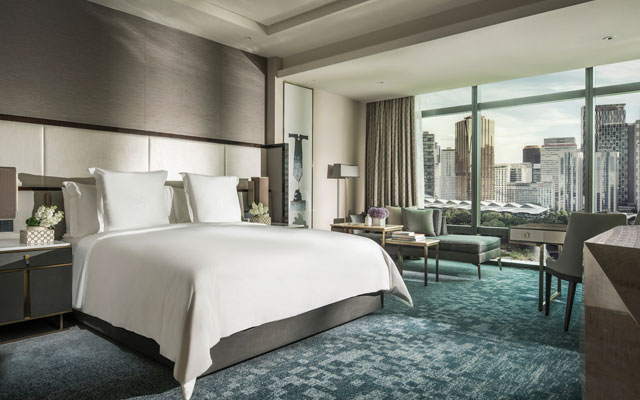
Four Seasons has taken up residence in a new 65-storey building just next to the Petronas Twin Towers. The property houses 209 guestrooms and suites, 27 serviced apartments, and 242 private residences.
Recreational facilities include an outdoor pool complete with private cabanas, a spa with eight treatment rooms, and fitness centre. There are also six F&B venues, ranging from the Cantonese restaurant Yun House to Bar Trigona. For meetings and events, the hotel offers 1,821m2 of flexible event space over two ballrooms and four meeting rooms.
The Mantra Albury Hotel, Australia
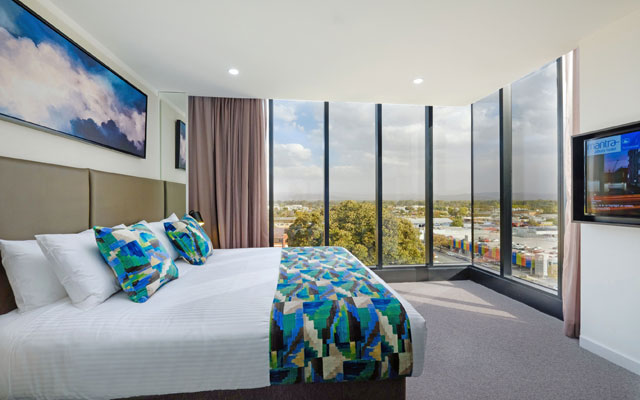
This new eight-storey hotel in Albury, New South Wales offers 146 one- and two-bedroom studios and suites, all of which come furnished with a microwave and fridge. Amenities on-site include a restaurant and bar called La Tierra, 24-hour reception, an Internet lounge, and a fully-equipped gymnasium. There are also conferencing and events facilities that can cater for more than 200 people, and an exclusive Sky Lounge available for hire on the top floor with sky lighting, wet bar and lounge seating.
Ascott Harmony City Nantong, China
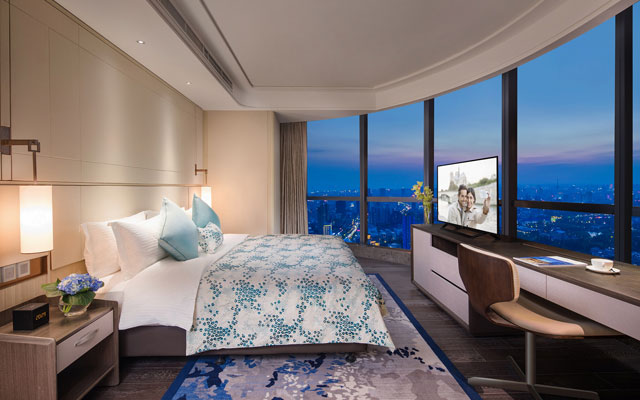
The Ascott has opened its first property in Nantong, a city along the Yangtze River Economic Belt in China’s Jiangsu province. The property offers 164 apartments, ranging from studio to three- bedroom units. Each apartment comes with a living room, dining area and a fully-equipped kitchen. Recreational facilities include a breakfast lounge, gym, sky garden and indoor swimming pool. A library, conference room facilities and business support services are also available for corporate travellers.
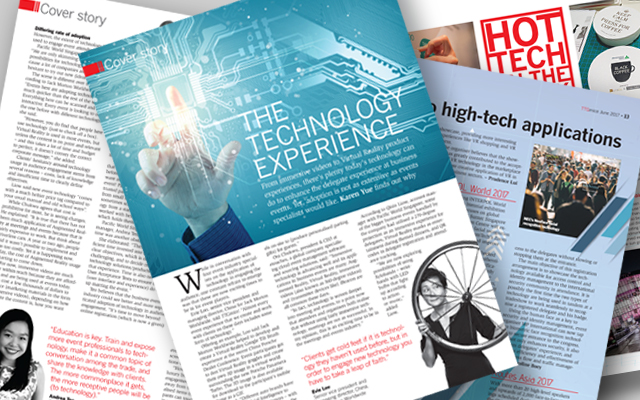
A cover feature on the use of technology to enhance the delegate experience at business events, published in TTGmice’s June 2017 issue, has won the PATA Gold Award 2018, Travel Journalism – Industry Business Article.
Written by group editor Karen Yue, The Technology Experience sought to understand the types of event technology available in the marketplace, the benefits they bring to the delegate experience, and the rate of technology adoption in business events, drawing insights from industry specialists.
TTGmice joins 29 other winners of the PATA Gold Award 2018, which recognises organisations and individuals across the categories of Marketing, Environment, Corporate Social Responsibility, Women Empowerment Initiative, Education and Training and more.
The annual awards also celebrates four PATA Grand Awards recipients in the areas of Education and Training, Environment, Heritage and Culture, and Marketing.
According to a PATA statement, this year’s awards attracted 200 entries from 87 organisations and individuals worldwide. The winners were selected by an independent judging committee consisting of 14 senior executives from the travel, tourism and hospitality sectors.
These awards have been generously supported and sponsored by the Macao Government Tourism Office since 1995.
The awards ceremony will take place in Langkawi, Malaysia, on September 14 during PATA Travel Mart 2018.