TTG Asia
Asia/Singapore Tuesday, 16th December 2025
Page 1334

Growth isn’t the enemy as Asia’s tourism hotspots hit breaking point

0
Regulating traffic at hotspots a chief concern as tourists still want to see icons such as Angkor Wat (pictured)

As overtourism becomes a growing challenge in Asia’s tourist hotspots, industry stakeholders are calling attention to the importance of tourism management.

“While it’s right to understand ‘overtourism’ (literally), what it basically means is a lack of tourism management,” said Willem Niemeijer, founder and CEO of Khiri Travel.

Promoting new destinations is one way to ease crowding, but it is far from the full solution.

Regulating traffic at hotspots a chief concern as tourists still want to see icons such as Angkor Wat (pictured)

Niemeijer said governments need to step in with measures to jump-start development in lesser-known destinations. “The Tourism Authority of Thailand’s (TAT) 12 Hidden Gems campaign is great, but we still need to get international brands in (to attract travellers from around the world)…There should be tax holidays, investment incentives in (the secondary destinations) they want to promote.”

Moreover, Carl Needham, general manager of Peak DMC’s office in Thailand, pointed out: “TAT has done a good job making these new areas look attractive. Still, once people start (flocking to the next new place), there comes question of where’s next, and (so on).”

Some DMCs TTG Asia interviewed at the recent PATA Travel Mart shared that while more travellers are seeking new areas to visit, they typically still want to see icons in popular cities. This highlights the need for better regulation of traffic within tourist hotspots, something the private sector is already actively pushing for.

“There’s a lot of growth still possible even for places at breaking point, it comes down to management,” Niemeijer said.

For example, Peak DMC, which just opened an Indonesia office, will include areas in Bali overlooked by tourists. “We are working on community-based tourism projects that include Mount Batur. For now, lots of tourists merely pass by that area, and communities don’t get to benefit. We’re working with NGOs to open up some of these areas in Bali and beyond,” said Needham.

One way crowds can be managed at tourist sites, Niemeijer said, is through a pre-booking system. “Taking the example of museums in New York, Amsterdam or Paris, you need to buy tickets ahead and there are time slots for bookings. Even though (key attractions are packed with) tons of people, tourists don’t feel that because the traffic is well regulated,” Niemeijer remarked.

When scaled up however, the work of regulating visitor flow will require government involvement. “When (efforts are centred around) the destination, such as Phuket, it becomes a tougher situation.

“To think about issues like where people can build hotels, what public spaces need to stay free, etc, (requires) public sector work… but (as long as) the government allows people to build hotels anywhere they like, (overtourism) will happen,” Niemeijer said.

There is currently a lack of public-private sector collaborations to better manage tourist flows, he stressed.

Likewise, Needham opined that to address crowding and build up new destinations and better distribute tourism benefits to local communities would require partnership between different parts of the tourism ecosystem.

On top of government collaboration, community-level partnerships are also key. “It’s about looking at crowded tourist spots, identifying similar areas (whose communities can benefit from that boom) and expanding operational capabilities there by partnering local NGOs, which have great traction with communities,” said Pravin Tamang, general manager, Peak DMC India.
Industry-first API launched to allow digital distribution of Umrah packages

0
Raudhah app now offers the Umrah package feature with the API connection, which is also available to third party OTAs

With the introduction of an industry-first Umrah API, Muslim-friendly hotel booking portal Tripfez and Malaysian digital marketing specialist Media Prima Digital have launched a new Umrah package booking feature on Islamic app Raudhah.

The API connection gives third-party travel sites access to an Umrah feed and enable them to more easily access and digitally package Umrah travel.

Raudhah app now offers the Umrah package feature with the API connection, which is also available to third party OTAs

Raudhah’s over 250,000 existing users can search for flights and hotels for Umrah travel according to multiple criteria, including date of travel and the number of travellers in their group, thanks to live supplier feeds facilitated by Tripfez. Once they have selected each component of their Umrah package, bookings can made via an online order form.

“This new Raudhah app feature marks an exciting development in the Islamic travel and marketing space, with two dynamic Malaysian-headquartered companies working together to pioneer the digital distribution of Umrah packages, which until now, has been a traditional, non-digital business,” said Tripfez founder & CEO, Faeez Fadhlillah.

“Our collaboration with Media Prima Digital will not only make it easier than ever for Muslim travellers – in just a few taps of their smartphones or devices – but also facilitate the future growth of the Umrah travel sector, catering to pent-up demand for digital Umrah solutions, which today is driven by tech-savvy Muslim millennials.”

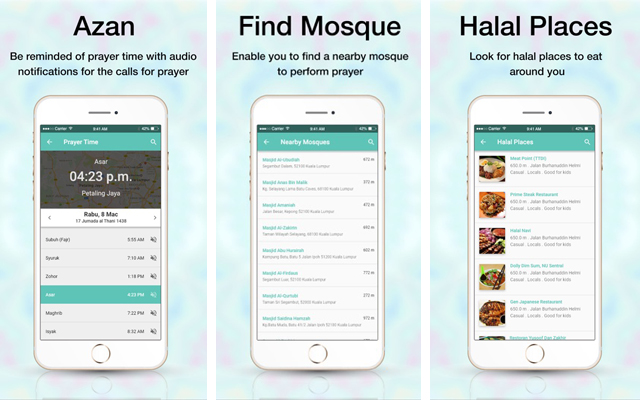
Raudhah provides users with easy access to exclusive videos from popular religious programmes such as Al- Kulliyyah, Tanyalah Ustaz and Halaqah, as well as prayer times based on location, azan notifications and listings of nearby mosques and restaurants.

The app has 14 features in total and is designed to cater to the religious needs of Muslims in Malaysia and around the world, providing them with accurate and verified lifestyle- and education-driven content.

The introduction of Raudhah’s Umrah feature is timely, with the number of Umrah visas issued to Malaysian travellers via official agents reaching an all-time high of 248,117 between 2016 and 2017, according to Saudi Arabia’s Ministry of Hajj and Umrah. This compares to 188,487 between 2013-2014.

Of the estimated 18 million visitors to Saudi Arabia in 2017, around 6.8 million performed Umrah during the Hijri year 1438 (October 2, 2016 to September 20, 2017), according to figures released by Saudi Arabia’s General Authority for Statistics. The kingdom aims to increase total Umrah visitor numbers to 30 million by 2030.

Former STB chief Lionel Yeo is CEO advisor at Grab

0

Former Singapore Tourism Board head Lionel Yeo has joined Grab as CEO advisor in addition to his involvement on several boards.

“Grab is honoured that Lionel Yeo has joined as CEO advisor, following his recent departure from the civil service. In addition to his involvement on several boards, Lionel’s experience from an illustrious career spanning 22 years in the public sector will add insight and value to the leadership team.

Singapore’s former tourism chief to steer Grab through growth in South-east Asia

“Lionel will steer the organisation through our next phase of growth, as we work towards building South-east Asia’s first everyday super app,” Grab spokesperson Fangying Ang said.

Yeo told TTG Asia: “I’ve always been a keen observer of Grab and I’m immensely proud of a homegrown company’s achievements and contributions to South-east Asia over the years.

“Grab is at an inflection point as it transforms from an on-demand transport solution to a super app, and I look forward to contributing as Grab embarks on its next phase of growth and creates more meaningful impact across South-east Asia.”

Mark Meehan heads Travelport’s newly formed APACMEA region as MD

0

Travelport has appointed Mark Meehan as managing director of its newly formed Asia-Pacific, Middle East and Africa (APACMEA) region.

The Travelport veteran has held a range of high-profile global and regional roles over his 19-year tenure with the travel technology company. He was most recently managing director of Travelport’s Asia-Pacific operations, and prior to that managing director for Travelport Africa, a role that saw him grow the company’s share across the continent and establish owned operations in both South Africa and Kenya.

Before his time in Africa, Meehan was senior vice president of global operations at Travelport. He also held the role of vice president of finance and acquisition, where he led the integration of several businesses acquired in countries including the UK, Italy and Denmark.

In his new role, Meehan will focus on bringing greater alignment across Travelport’s operations in APACMEA, which are high-growth territories that share commonalities in customer needs and operational delivery.

While he will continue to be based in Singapore, Meehan will also regularly work from Travelport’s office in Dubai, which acts as the company’s sub-regional headquarters for the Middle East and Africa.

Myanmar wants to enchant with new destination branding

0

Myanmar has introduced the Be Enchanted brand, replacing Let the Journey Begin launched five years ago.

According to a statement from the Myanmar Tourism Marketing Association, the new brand “portrays Myanmar as a friendly, charming, mystical and as-yet-undiscovered destination”.

Be Enchanted is as much a promise as it is an invitation. It’s realisation. It’s a memory. It’s a moment. The word ‘enchanted’ holds within it the true heart of Myanmar,” the statement read.

The logo font is based on the shapes and identification of the Myanmar alphabet.

The new brand will be used officially in Myanmar’s marketing activities such as travel shows, tourism road shows and any digital marketing related to tourism promotional activities/events.

Shared mobility shifts Avis’ ride-sharing focus up a gear

0

In an age of collaborative consumption, the booming sharing economy is spurring car rental giant Avis Budget Group to navigate creative ways to grow the size and share of the travel pie through the inking of partnerships with multiple peer-to-peer car sharing players.

The latest to sign a multi-year deal with Avis is ride-hailing company Lyft. Under this partnership, Avis will contribute thousands of vehicles from its fleet of 600,000 to the Lyft Express Drive programme in cities across North America.

Avis will contribute thousands of vehicles from its fleet of 600,000 to the Lyft Express Drive programme

In Asia-Pacific, Avis has launched various strategic initiatives with popular local ride-sharing players, including China’s Didi Chuxing and Singapore’s Grab. Avis Philippines – together with Avis Global and Metro Davao Taxi Association – also developed Hirna, a taxi-hailing app that aims to improve taxi services in key cities outside Manila.

Angeline Tang, Avis’ regional director – leisure travel & partnerships, Asia, told TTG Asia: “Ride-hailing companies are our allies, not competitors. The more opportunities consumers have for mobility that do not involve owning their own car, the more we benefit.

“As this decline in ownership continues, the future holds a greater need for more, and more flexible mobility options, which explains why the pie is getting bigger, not shrinking or just being divided up differently.”

On average, Avis reports mileage of some 724km over four rental days, or 177km per rental day. In comparison, on shorter-length rentals – lasting over one to two days – the mileage per day increases, described Tang. Such cases, for which ride-hailing are not economical, are where car rentals come in, she said.

Avis also works with Luxury Retreats, acquired by Airbnb in February 2017, as the official mobility partner of the full-service premium villa rental company.

Further, in 2013, Avis acquired car-sharing network Zipcar, which has more than one million members across the world. This movement is poised to give Avis “a foothold in the rapidly growing world of collaborative consumption”, explained Tang.

She added: “By working with ride-hailing players, we can address the growing demand for transportation in key markets, and further leverage our assets.”

SuperStar Virgo to become Dream Cruises’ pathfinder Down Under

0

Nearly two decades since Star Cruises took delivery of the SuperStar Virgo, Genting Cruise Lines will transform the ship into the Explorer Dream, which will join the Dream Cruises fleet in spring 2019 as a pathfinder for the brand’s global aspirations.

The SuperStar Virgo will undergo a US$30 million dollar transformation in March 2019 that will incorporate new facilities including The Palace, Dream Cruises’ signature, luxury private enclave featuring 50 suites and butler service. Guests will be able to enjoy new East-meets-West F&B options and a new Crystal Life Spa.

Superstar Virgo was in 1999 introduced as the second ship in the Star Cruises fleet

Taking the first step to bring Dream Cruises outside Asian waters, in autumn/winter of 2019, Explorer Dream will homeport in Sydney and Auckland where she will embark on 21 seven-night itineraries.

Explorer Dream will feature a multi-lingual crew conversant in English, Putonghua and other Asian languages and entertainment options reimagined to appeal to Asian passengers.

With pre and post stays available in Sydney and Auckland, Dream Cruises’ seven-night itineraries in Australia and New Zealand is set to be an important cornerstone for Asian travellers who typically enjoy nine- to 14-day vacations when visiting “down under”.

Starting October 27, 2019, there will be six sailings under the Queensland and the Barrier Reef Cruises itinerary, calling at Mooloolaba/Sunshine Coast, Brisbane, Newcastle and Gladstone.

Tasmania Island and Melbourne Cruises will voyage on eight sailings from February 9, 2020, calling at Port Arthur, Hobart, Burnie, Melbourne, Phillip Island and Eden.

And for North and South New Zealand Cruises, seven cruises will sail beginning December 15, 2019, calling at Wellington, Milford Sound/ Doubtful Sound, Dunedin, Napier, Bay of Islands, Akaroa, Picton and Gisborne.

Around 13 million visitors currently visit Australia and New Zealand annually with about five million of this number from Asia, according to Genting Cruise Lines.

Meanwhile, Explorer Dream is also expected to strengthen Dream Cruises’ brand in North China with homeports in Shanghai and Tianjin during Spring/Summer 2019 with a selection of voyages of various durations from Shanghai or Tianjin to Japan, Russia, Hong Kong and the Philippines.

“Dream Cruises will extend its brand recognition to 300 million Chinese in Shanghai and Tianjin/Beijing next summer as well as offer cruises in Australia and New Zealand to its Asian-sourced passengers during winter 2019 – the first time Dream Cruises will be sailing outside Asia,” said Lim Kok Thay, executive chairman of Genting Hong Kong.

Explorer Dream will offer another option for our Asia-based guests to expand their travel horizons with new rail/cruise and fly/cruise opportunities to see the world.”

TAT, Expedia in pact to promote secondary destinations in Thailand

0
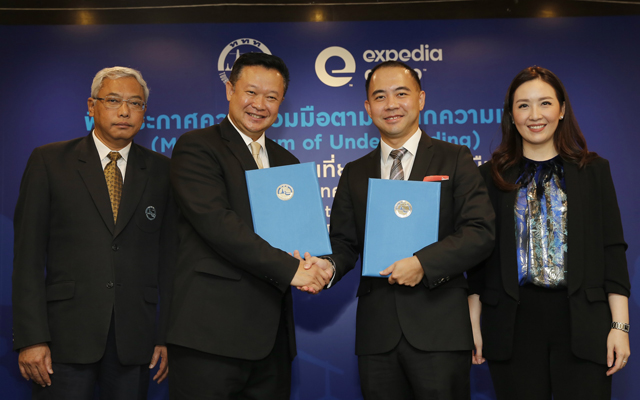
TAT's Yuthasak Supasorn with Expedia Group's Ang Choo Pin and Pimpawee Nopakitgumjorn

Tourism Authority of Thailand’s (TAT) governor Yuthasak Supasorn and Expedia Group’s director of market management Pimpawee Nopakitgumjorn, yesterday signed an MoU to boost tourism to secondary cities in the country, aligned with the TAT’s direction.

As part of the MOU, the collaboration will include the sharing of traveller-centric insights and trends that will boost TAT’s capabilities to plan effective promotional campaigns to attract more travellers and encourage longer stays in Thailand.

From left: TAT’s Charun Ohnmee and Yuthasak Supasorn with Expedia Group’s Ang Choo Pin and Pimpawee Nopakitgumjorn

Both parties are also expected to embark on joint destination marketing campaigns to spotlight Thailand’s hidden and unique tourist attractions in its secondary cities, promoting the variety of lodgings to Expedia Group’s 675-plus million monthly visitors globally.

Expedia Group will also launch key programmes in destination marketing and skills transfer to the local hospitality industry in secondary cities. Workshops for local hotel partners will include ways to leverage Expedia Group’s Partner Central platform to accelerate skills development and build revenue and hotel management capabilities among local SME hotels.

Other aspects of the cooperation include a joint corporate social responsibility campaign aimed at enhancing environmental consciousness among hotels in Thailand and reducing the use of single-use and general plastic items in their properties. This is targeted at reducing the environmental pollution and damage resulting from tourism growth.

Pimpawee said: “A large majority of accommodations in secondary cities are still primarily offline which means international travellers cannot find or book them easily. This results in missed opportunities for hoteliers, as they are not capitalising on the growth of inbound travellers.

“We will be launching a series of initiatives to educate them on the value of online distribution. They will also have access to our partner-facing tool, which allows them to effectively manage their rates and availability, online content and guest satisfaction. By improving the digital skills of the hospitality sector, we will play a pivotal role in boosting the local economy.”

Minnesota hotel to materialise from Mayo Clinic’s partnership with Pontiac Land

0

Mayo Clinic and Singapore-based Pontiac Land Group have partnered to kick off a long-planned expansion of the Gonda Building on Mayo’s Rochester (Minnesota) campus in the US, which will add four floors of new clinical space and seven floors of hotel space.

Preliminary plans are for construction to begin by the end of 2019 or early 2020, with the project being completed by the end of 2022. The project timeline will become available as details are confirmed.

Rendering of the expanded campus

“Our medical teams experience ongoing clinical space constraints,” said Terese Horlocker, a Mayo Clinic anesthesiologist and chair of Mayo’s Midwest Facilities Committee. “We have explored options to accelerate the expansion of the Gonda Building. However, without a collaborator, the expansion would not be possible for at least a decade and at a significant additional cost.”

The 11-floor expansion includes four floors for new clinical space and seven floors for a premier hotel space. The four-floor clinical space expansion provides an additional 18,581m2 to accommodate current patients and meet the needs of future patients.

Through this collaboration, Mayo Clinic and Pontiac Land will engage in a joint venture for ownership of the hotel, which will be operated by a major hotel group to be identified and announced at a later date. Pontiac Land will develop the hotel space under the joint venture.

While specific plans for this development are being finalised, Mayo Clinic plans to invest US$190 million into the clinical expansion and use the additional space for expansion to the Mayo Clinic Cancer Center and Outpatient Procedure Center.

“The collaboration will bring together two fields of complementary expertise: medical and hospitality. Each partner will be able to leverage their individual expertise to enhance the patient and guest experience. We are excited about this collaboration and look forward to delivering a distinctive hospitality experience to match Mayo Clinic’s clinical excellence, commented Philip Kwee, COO, Pontiac Land.

The Gonda family has shared their enthusiastic support for this project.
“This third and final phase of the Gonda Building fulfills Susan and Leslie Gonda’s lifelong dream for Mayo Clinic to create a one-of-a-kind, integrated destination of hope, healing and hospitality for the patients that Mayo Clinic serves,” said Lou Gonda on behalf of the Gonda families.

SE Asian outbound markets a force to be reckoned with

0
Regional and longhaul travel picking up in South-east Asian outbound markets

Much attention has been given to Asian travel markets with huge population bases like China and India, but overlooked markets in South-east Asia such as Vietnam, Thailand and the Philippines are proving to be formidable forces in travel.

In South Korea, Vietnam is now the top market for Nami Island, a destination popular with Thais, Vietnamese and Indonesians, according to marketing manager Kim Kyu Han. While the attraction’s initial claim to fame came from popular Korean TV series Winter Sonata over a decade ago, it has in recent years also received film crews from Thailand, Malaysia and Indonesia.

Regional and longhaul travel picking up in South-east Asian outbound markets

At the 280-key Flamingo Hotel in Penang, Thai travellers make up 15-20 per cent of total guests, compared to European guests, who add up to less than two per cent, according to Ronnie Ng, senior sales manager.

He said developing South-east Asian travel markets should not be underestimated or ignored, given their growing appetite for travel and rising affluence.

Agreeing, Bernard Gene Luna, operations manager at U-Travel Services in the Philippines, said leisure travel has become a larger part of life for many Filippinos in the past decade.

“Compared to previous generations, millennials are more willing to (dip into their savings) to travel. Travel is becoming such an aspirational part of their lives,” said Luna.

The most popular destinations at the Philippine agency are Japan and South Korea, where the visa application process is less of a hassle, he pointed out, while Taiwan is also rising quickly due to a recent visa-free facility for Philippine passport holders.

“There is also a growing number of seasoned Filipinos travellers. They tend to travel longer haul to France, Italy and the UK. For them, the visa application process is no issue.”

While China remains the strongest source market for longhaul buyers TTG Asia spoke to at the recent PATA Travel Mart (PTM) in Langkawi, many are upping efforts to target South-east Asia’s expanding travelling class.

Sellers at PTM also noted a rise in Asians looking for alternative European destinations to the traditionally popular hotspots of London and Paris.

Ralf Ostendorf, Visit Berlin market manager for Asia, said China is firmly the country’s top Asian source market, however, an increasing number of direct flight connections has spurred growing interest in Europe from other parts of South-east Asia.

Thailand, Indonesia and the Philippines are the strongest South-east Asian source markets, with Malaysia slowly picking up.

Hikmet Atilla, general manager of Raffinesse Travel, has also noticed more interest from South-east Asia for Turkey, with Istanbul being the main attraction.

Thailand, Japan and South Korea are the main markets after China, with the emerging outbound destinations of Myanmar and Cambodia starting to gain momentum.

Reporting by Yixin Ng and Marissa Carruthers