Keel has been laid on the first of numerous ships planned under a Thien Minh Group (TMG) and Wendy Wu Tours (WWT) joint venture.
The 35-cabin Victoria Mekong will begin operations on December 11, 2019, offering three- and four-night cruises between Can Tho, Vietnam and Phnom Penh, Cambodia.
Designed by VISEC and constructed by SSIC shipyard, the four-deck ship will measure 76.8m in length and 13.2m in width, and is able to accommodate up to 70 passengers. It has received SB (Inland water – Coastal line) classification and will sail under the Vietnamese flag.
The Victoria Mekong will offer passengers a “green” experience plying the waters of the Mekong Delta between Vietnam and Cambodia. Booking is now open for the first six cruises in 2019.
TMG’s existing network of hotels, cruises and other tourism brands include L’Azalée Cruises, Emeraude Cruise – both operating Halong Bay itineraries – and Peak Vietnam.
Aiming to make Goa a fully accessible destination and address different mobility issues of tourists, Cox & Kings’ Enable Travel has partnered Ezy Mov, the first wheelchair taxi service in India, to provide accessible guided tours in the state.
Ezy Mov, which has completed more than 100,000 rides, has a fleet of taxis fitted with equipment like hydraulic lifts and wheelchair restraint systems.
Touring Goa has gotten easier for persons with disability
Debolin Sen, head, Enable Travel, said: “Due to lack of transport facilities available, people with mobility issues including elderly travellers are unable to experience a destination in its broadest sense. To ensure barrier-free travel and enhance transportation within a destination, we have partnered Ezy Mov.”
Bennet D’cunha – CEO, Ezy Mov, added: “Our mission is to position India as the leading country with regards to accessible tourism. What better place to start the journey than Goa (one of the country’s top holiday destinations). Moreover, the public infrastructure in Goa currently is more accessible compared to other states.”
Touring for disabled travellers in India is now easier
Aiming to make Goa a fully accessible destination and address different mobility issues of tourists, Cox & Kings’ Enable Travel has partnered Ezy Mov, the first wheelchair taxi service in India, to provide accessible guided tours in the state.
Ezy Mov, which has completed more than 100,000 rides, has a fleet of taxis fitted with equipment like hydraulic lifts and wheelchair restraint systems.
Touring Goa has gotten easier for persons with disability
Debolin Sen, head, Enable Travel, said: “Due to lack of transport facilities available, people with mobility issues including elderly travellers are unable to experience a destination in its broadest sense. To ensure barrier-free travel and enhance transportation within a destination, we have partnered Ezy Mov.”
Bennet D’cunha – CEO, Ezy Mov, added: “Our mission is to position India as the leading country with regards to accessible tourism. What better place to start the journey than Goa (one of the country’s top holiday destinations). Moreover, the public infrastructure in Goa currently is more accessible compared to other states.”
Olympic and Asian Games gold medalist Joseph Schooling takes some tips from young indoor skydivers Vera Poh and Kai Minejima-Lee
The Singapore Tourism Board (STB) has launched its next promotional campaign under the Passion Made Possible brand, with the latest theme courting global fans of sporting activities.
Marketing under the Action Seekers tribe of the brand, STB will push out films featuring young Singaporean athletes as well as renowned international sports stars such as Olympic & Asian Games gold medallist Joseph Schooling and former tennis champion Martina Hingis.
Behind the scenes of STB's Tiny Trainers Tutorial video
1 of 4
Olympic and Asian Games gold medalist Joseph Schooling takes some tips from young indoor skydivers Vera Poh and Kai Minejima-Lee
Former WTA champion Martina Hingis (right) getting ready to learn fun-karting from Christian Ho
The films will spotlight sporting activities available in Singapore, such as go-karting, skating and wakeboarding, as well as sporting events such as the annual Formula 1 Singapore Grand Prix and HSBC Singapore Rugby Sevens.
Lim Shoo Ling, director, brand, STB, told TTG Asia: “People know Singapore for food, shopping, our museums and art, but not so much for our (sports) activities and events.”
As such, this campaign aims to bring to light what Singapore has to offer for adrenaline seekers and sporting fans, said Lim.
She clarified that these efforts are not directed at “competing with otherwise established or recommended adventure destinations like New Zealand”, rather to “flesh out the offerings” in Singapore and showcase authentic “emotional stories”.
This campaign falls under the second wave of Passion Made Possible, a destination brand that has been rolled out since August 2017. In this phase of the campaign, STB will launch activities in Germany and South Korea in March and April 2019 respectively.
Also part of the brand’s second wave, a three-minute music video directed by Singaporean filmmaker Jacky Lee was launched last month. Titled In Transit, the video featured the track Vacation by Singaporean indie-pop band Sobs, key tourist locations, and personalities such as rapper TheLionCityBoy aka Kevin Lester, comedian Rishi Budhrani, DJ Myrne, and mixologists Cedric Mendoza and Lee Panying.
To speed up recovery of the tourism industry in the Sunda Strait area hit by a deadly tsunami last month, Indonesia’s Ministry of Tourism is now encouraging government agencies and other organisations to hold their events in Anyer and Pandeglang.
A coordination meeting with the local industry and government sectors has been scheduled for January 11.
Tanjung Lesung, Sunda Strait
Arief Yahya, Indonesia Minister of Tourism said: “Our first (marketing) move is to (bring) events here. As the tourism minister, I invite government agencies and (other) organisations to organise their events here.”
The minister believes that the government-led move would speed up recovery, as was the case in Bali post Mount Agung’s eruption and Lombok following the earthquake and tsunami last year.
This is part of a three-step recovery undertaken by the government to get the affected areas on their feet, including trauma healing, institutional and destination rehabilitation as well as destination marketing.
Arief set a goal for the destination to be back on its feet within three months.
A devastating tsunami hit the coasts of Banten and Lampung on December 22, causing damages along the tourism belt of Anyer, Carita, Labuan, Tanjung Lesung and Menes.
The affected areas were closed following the event, but operations gradually resumed from December 24.
According to Guntur Sakti, chairman of the Tourism Crisis Centre of the Ministry of Tourism, 69 hotels and villas were affected.
“Hotels along Carita Beach were the most severely damaged, (some) up to 90 per cent.
“While about 50 accommodations were not (directly) affected, they suffered just the same as no guest came to Carita following the tsunami,” Guntur said, citing data issued on December 25.
Banten, however, is not all about the beach, according to its provincial tourism authority.
Eneng Nuchayadi, head of Banten Tourism Office said: “Banten has many destinations and attractions – natural, cultural and man-made – located in Serang City, Serang Regency, Lebak, Tangerang City and South Tangerang City just to name a few.”
Some of the sites include Batoe Koewoeng hot water bath, the 25m-high Cihear Waterfall within the Halimun Salak mountain area and Banten Grand Mosque.
Tanjung Lesung is one of the 10 New Bali destinations the government has identified, with special economic zone and infrastructural development planned.
Ongoing work by Marriott’s internal and external forensics and analytics investigations team has shown that the total number of guest records involved in the data breach that came to light last year is less than what was initially disclosed, the hotel giant said.
Providing updates of the incident in a statement, Marriott added that the number of payment cards and passport numbers exposed is a “relatively small percentage of the overall total records involved”.
Marriott says it is putting in place a mechanism to allow guests to find out if their passport numbers were part of the compromised set of data
Marriott is updating its press release of November 30, 2018, which stated that information of approximately 500 million guests who made a reservation at a Starwood property on or before September 10, 2018 were believed to have been compromised in a data breach.
The company is clarifying that at the point of releasing the announcement, the company had not completed the analytics work to identify duplicative information.
Marriott has identified approximately 383 million records as the upper limit for the total number of guest records that were involved in the incident. It concluded with a “fair degree of certainty” that the information of fewer than 383 million unique guests were involved, as “in many instances, there appear to be multiple records for the same guest”. The company however was not able to quantify that lower number “because of the nature of the data in the database”.
As for passport information, Marriott now believes that under 5.3 million unencrypted passport numbers were included in the information accessed by the unauthorised third party.
The information accessed also includes approximately 20.3 million encrypted passport numbers. There is no evidence that the unauthorised third party accessed the master encryption key needed to decrypt the encrypted passport numbers, Marriott said.
Marriott is putting in place a mechanism to enable its designated call center representatives to refer guests to the appropriate resources to enable a look up of individual passport numbers to see if they were included in this set of unencrypted passport numbers.
A website has been set up, listing phone numbers to reach the company’s dedicated call centre and including information about the process to be followed if guests believe that they have experienced fraud as a result of their passport numbers being involved in this incident.
Meanwhile, Marriott believes that approximately 8.6 million encrypted payment cards were involved in the incident. Of that number, approximately 354,000 payment cards were unexpired as of September 2018. Again, Marriott highlighted that there is no evidence that the unauthorised third party accessed either of the components needed to decrypt the encrypted payment card numbers.
While the payment card field was encrypted, Marriott is undertaking additional analysis to see if payment card data was inadvertently entered into other fields and was therefore not encrypted.
Marriott believes that there may be a small number (fewer than 2,000) of 15-digit and 16-digit numbers in other fields in the data involved that might be unencrypted payment card numbers. The company is continuing to analyse these numbers to better understand if they are payment card numbers.
The company has completed the phase out of the operation of the Starwood reservations database, effective the end of 2018. With the completion of the reservation systems conversion undertaken as part of the company’s post-merger integration work, all reservations are now running through the Marriott system.
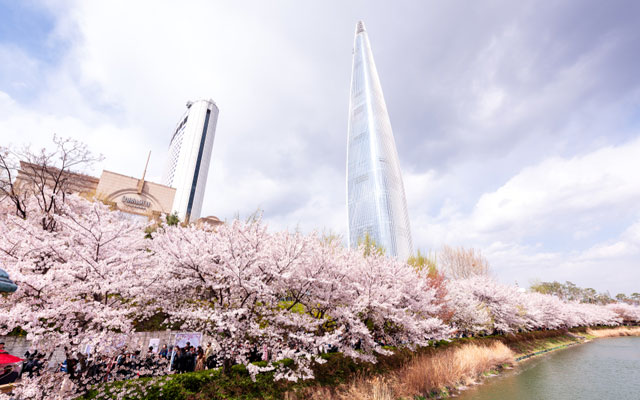
Merlin's 10th Legoland park will be in South Korea's Hajungdo, about an hour east of Seoul
Merlin Entertainments has entered into a partnership agreement with the Gangwon Provincial Government to build a Legoland Park in South Korea.
Scheduled to open by 2022, Legoland Korea will be situated on the island of Hajungdo in Chuncheon, approximately an hour’s journey east of Seoul and within a two-hour drive time of nearly 24 million people. The theme park resort will also have a fully-themed Legoland Hotel.
Merlin’s 10th Legoland park will be in South Korea’s Hajungdo, about an hour east of Seoul
Merlin will invest 210 billion won (US$190 million) into the development of the 290 billion won resort, which will be fully owned and operated by UK-based entertainment company.
The remaining funding of 80 billion won will come from LL Developments, the investment arm of Gangwon Province. Additionally, the funding for necessary additional infrastructure adjacent to the resort will be provided by national, regional and local governments.
The Korean Government, Gangwon Province and Chuncheon City have already invested in the construction of a new bridge to Hajungdo island and undertaken groundworks on the site. Further retail and complementary leisure offerings are planned as part of the island’s overall development.
This will be Merlin’s 10th Legoland Park, following the scheduled opening of Legoland New York in 2020. The company is also in discussions with third parties about a number of sites for Legoland Parks in China.
AirAsia ceased charging the RM3 fee (US$0.70) for all flights departing from Kuala Lumpur International Airport 2 (klia2) starting yesterday.
The fee, which the airline terms “klia2 fee” was introduced in May 2014 to cover the additional cost imposed by Malaysia Airports Holdings (MABH) for the use of mandatory facilities such as aerobridges and SITA check-in and boarding systems at klia2.
AirAsia scraps the klia2 fee amid an ongoing legal battle with Malaysia Airports
This was not charged when AirAsia operated out of the LCC Terminal previously.
AirAsia Malaysia CEO Riad Asmat said: “We have said from the very beginning that klia2 is not fit for LCC operations, and we will be going directly to Malaysia Airports for all extra costs they’re (levying on) us.”
This comes on the back of the Malaysian Aviation Commission saying that AirAsia’s klia2 fee would become illegal once the Malaysian Aviation Consumer Protection Code is updated to prohibit airlines from imposing unnecessary charges on passengers, The Malaysian Insight reported.
The proposed amendment is currently awaiting approval by the Attorney-General’s Chambers.
Meanwhile, the airline is in the middle of a legal battle with MABH, which sued the airline last month over unpaid passenger service charges, according to the same report. Malaysia Airports is claiming RM9.4 million from AirAsia and RM26.71 million from its longhaul affiliate, AirAsia X.
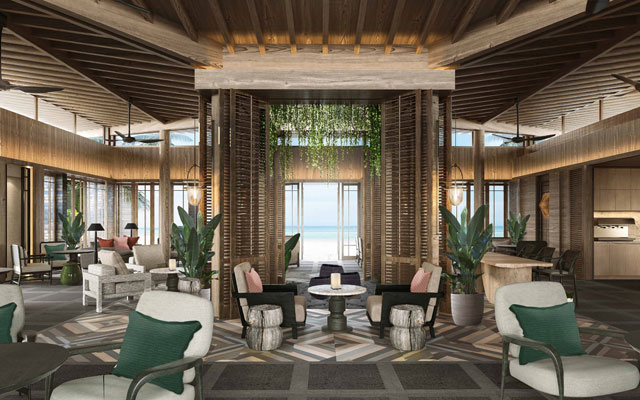
The Asai brand targets the 'millennial-minded' with its affordable lifestyle positioning
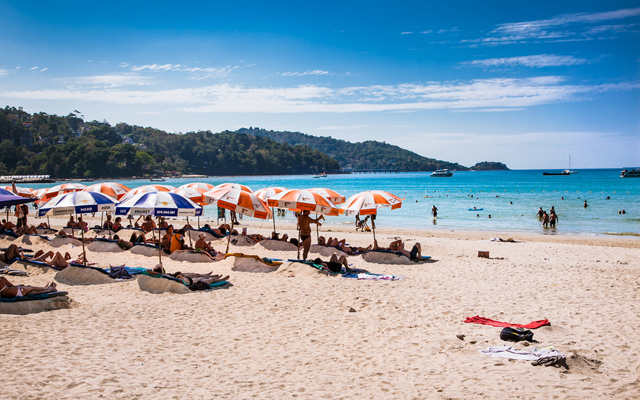
Asai Yankin is slated to open in the northern central part of Yangon come 2020, one of the first properties to be signed under Dusit International’s new affordable lifestyle brand.
Reflecting the four key pillars of Asai Hotels – Thoughtful Essentials, Common Areas, Locally Inspired, and Connected Community – Asai Yankin will comprise 111 compact rooms (15-22m2), while a large mixed-use space will offer areas for work, leisure, and a restaurant.
The Asai brand targets the ‘millennial-minded’ with its affordable lifestyle positioning
Other facilities include a fully equipped gym and two retail floors highlighting local brands and products.
The hotel is located approximately 25 minutes by car from Yangon International Airport, and next to Myanmar Plaza, the city’s first international retail shopping centre. Attractions such as Shwedagon Pagoda, Kandawgyi Lake and Yangon Zoological Gardens are only 20 minutes away be car.
Four more Asai properties are already confirmed in the pipeline – three in Cebu (in Lapu-Lapu, Oslob, and the city centre); and a flagship in the Sathorn district in Bangkok.
Asai Hotels’ management team hopes to secure 10 more properties in the pipeline by the end of the year across South-east Asia and Japan. This includes owned and joint venture properties as well as properties under management agreements.
The writer (middle) in traditional performance garb
A behind-the-scenes experience of this fast-disappearing performance art
Why
Teochew opera is a fast disappearing trade that few understand and even fewer practise. The art form survives today through second- and third-generation performers, emerging during key religious events such as the Hungry Ghost Festival, as one of Singapore’s last vestiges of tradition.
A participant getting up close and personal with the art form
What
The Art of Chinese Teochew Opera immerses participants into the backstage world of opera troupes, from their symbolic makeup to thousand-dollar hand-woven costumes.
Our session was held comfortably indoors in a clan association, where we met some of Singapore’s last opera performers – a local family, led by mother Tina Quek.
As they worked on their intricate makeup, university researcher Caroline Chia narrated the heritage of Chinese opera and explained the significance of each performer’s dress and appearance.
The highlight of the experience was donning the elaborately embroidered costumes and headdresses, with the expert help of Quek and her daughter. Wearing the heavy and regal robes gave me great perspective and respect for the performers, who typically perform in the humid heat.
The session ended with a sample skit by the troupe that brought to life the costumes and choreography of traditional opera.
The writer (middle) in traditional performance garb
How
Although opera is normally performed outdoors, this session was conducted comfortably in an air-conditioned room. While listening to Chia’s exposition, participants were urged to step forward for a closer look, interact with the props and quiz the performers or Chia.
Photography is also encouraged, and while quiet and serious, the performers are not camera shy and were happy to engage in conversation about their work.
Transport is provided from the central pick-up point to the clan association, during which the Xperience Travel guide provided a brief background of opera in Singapore.
Pricing for groups of more or less than 10 pax may differ.
Verdict
A rare and immersive dive into a side of Singapore that’s truly hidden, even to many locals. This rich experience is best suited for guests who are curious about traditional Chinese art forms and culture, as well as those adventurous enough to dress in flamboyant costume.
No. of participants: Around 10 Rates: S$175 (US$129) per person