

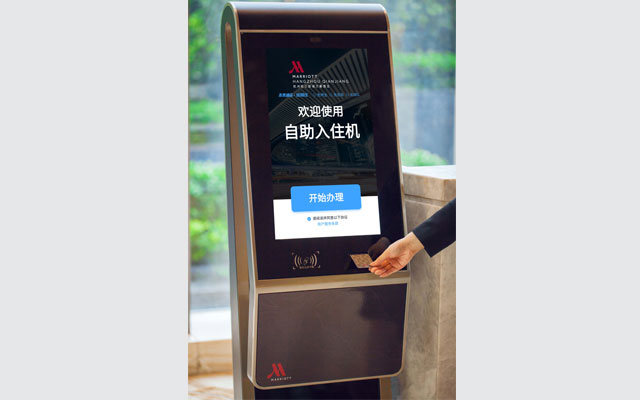
The recent launch of Alibaba’s first automated Flyzoo Hotel in Hangzhou is a clear reflection of the fast state of technology development and strong consumer demand for smart hotels in China, as hospitality players scale up their efforts in smart technologies to provide better customer experiences and meet the expectations of tech-savvy travellers.
In fact, the Chinese hospitality sector abounds with examples of collaboration with the technology world.
The Shangri-La Group has partnered Tencent Holdings to develop smart hotels, leveraging the Chinese tech giant’s cloud and artificial intelligence solutions.
As well, Alibaba Group and Marriott International have entered into a joint venture to trial facial recognition check-in technology at two Marriott hotels in China, Hangzhou Marriott Hotel QianJiang and Sanya Marriott Hotel Dadonghai Bay.
Peggy Fang Roe, chief sales and marketing officer for Asia-Pacific, Marriott International, commented: “For the China market, market research results by consulting firm Ipsos indicated that Chinese travellers have shown a strong interest in new technology in hotels, with over 60 per cent showing preference for facial recognition technology.”
The Alibaba-Marriott joint venture has also enabled wallet-free travel through the deployment of Post Post Pay functionality across over 1,000 Marriott International hotels globally by end-2018, allowing qualified users to travel first and pay after their stay, Fang shared.
Another example is the cross-industry initiative by online entertainment iQIYI to install virtual reality (VR) experience rooms in selected hotels across China. It has already signed agreements with five hotel brands across China and talks for potential cooperation with a further six hotel brands are underway. The number of iQIYI VR Experience hotel rooms is estimated to reach 100,000 by the end of 2019.
Hongkong-based Regal Hotels International, which has 12 hotels in China, is taking a more measured approach to smart technology implementation at its properties.
The group has, however, launched the Riva chatbot in Greater China as a virtual employee to assist customers with room reservations and guest enquiries round the clock, vice president for China, Joseph Yung told TTG Asia.
“We never underestimate the customer acceptability of the smart hotel, but at this stage, people base usage on their curiosity rather than their personal preference, so we prefer to take a gradual approach (to rolling out hospitality technology),” said Yung, adding that the group might consider the implementation of facial recognition technology in the near future.
“After we have implemented the smart solution projects in Regal & iClub Hotel Hong Kong, we will review the effectiveness and apply it to the appropriate China hotels based on the demand, locations, customers profile, etc. As you know, the market segmentation in China will be quite different, so it will require different facilities and services.”
Confident that the Chinese market will continue to show a healthy desire for smart hotel technology, W Shanghai, director of sales and marketing Jordi Pedro, noted: “New smart solutions will bring both hotel and customer new experiences and opportunities that target better service, but also present new challenges to both sides.
“From a hotel point of view, the additional control a hotel gives to customers to book and access any facilities inside the hotel will require new measures and new technology in order to guarantee the legitimacy, safety of the customer and compliance of policies that in China has direct links to public security,” said Pedro.



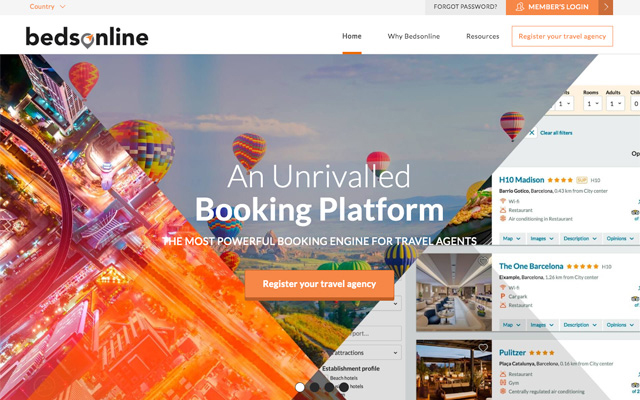
 Alistair Rodger, retail travel agents director at Hotelbeds, said: “This promotion has prompted the last remaining travel agents from our legacy brands – TravelBound, TravelCube and GTA – to move over to the Bedsonline platform during the last few weeks.















In some ways, hotels today have hardly changed from those a hundred years ago. Guests will still walk into a lobby, check in at the reception, dine at the hotel restaurant and ask the concierge for city recommendations. Yet hidden from the guests’ view is a web of technologies that facilitate their stay from the moment they book to the moment they leave.
VR for sales presentations
One of the most interesting pieces of technology that we employ is virtual reality (VR). We use an Oculus Go VR set that essentially allows travel agents, meeting planners and guests from around the world to view our rooms and facilities almost as if they were here. While PowerPoint files and images are all very well they cannot provide the same immersive experience that true VR can.
Every hotel is unique, and all hoteliers will want to show off every nook and cranny to potential guests and agents, that is what Oculus Go allows us to do. Meeting planners and travel agents are able to travel throughout our hotel and view our facilities as if they were there. This matters because each agent will have their own requirements from the size and style of rooms, the size of the lobby, number of swimming pools to the shapes and sizes of the meeting rooms.
Equipped with this new technology, we have already seen results. We have seen an increase in the number of travel agents visiting our property after viewing it through the VR headsets, site inspections and contracting has also improved. Agents are not going to spend their time viewing a hotel that they do not think fits the needs of their guests and the Oculus Go headsets allow us to bring the hotel to them first. When they do come and visit, they feel like they are returning to a hotel they have already visited!
Training technology
Oculus Go is not the only technology that brings results. We train our staff in language and upselling skills using Boost’s mobile learning solutions. Since we started using Boost we have increased upselling revenue by five per cent and have received positive online reviews on the quality of English language skills that our employees possess.
This has also generated better relations with travel agents as they understand that our staff can speak the language of their guests – if their guests are happy then they are happy. Importantly as a leader, my employees are simply more confident and have acquired new language and upselling skills that they will take with them throughout their careers.
Revenue management
We also use LodgIQ as a revenue management tool which provides analysis of anonymous Big Data to extract revenue insights. This allows us to manage our room inventory in a much more efficient way. Importantly, it has improved our partnerships with travel agents as we are able to provide more rooms at more flexible price points.
Technology does not (and cannot) replace good service, rather it must be seen as an enabler. General managers need to be careful when choosing what technology to employ. Sometimes, technology is at its best when it is hidden.