TTG Asia will be taking a break on Wednesday, May 1 for the Labour Day holiday. We will continue to bring you the most updated information in the travel trade industry when news resumes on Thursday, May 2.


TTG Asia will be taking a break on Wednesday, May 1 for the Labour Day holiday. We will continue to bring you the most updated information in the travel trade industry when news resumes on Thursday, May 2.

Organisers have postponed the world’s largest wildlife conference – Sri Lanka’s biggest ever – in the aftermath of Easter Sunday bombings which killed 253 people, as the country braces for another week of tight security and armed guards at key economic centres including hotels as security forced hunted for more Muslim extremists.
Sri Lanka was scheduled to host the 18th Conference of the Parties to the Convention on International Trade in Endangered Species of Wild Fauna and Flora (CITES) from May 23 to June 3 drawing 3,000 delegates from nearly 200 countries.
But Geneva-based CITES secretary-general Ivonne Higuero said in statement on Friday that the event has been postponed “out of respect for the victims of the recent attacks and the recognition by the Standing Committee, the Secretariat and the United Nations Department of Safety and Security of the time needed for the government of Sri Lanka to address the current situation in the country”.
This came as several countries heightened their travel warnings. The US Embassy in Colombo said State Department has “ordered the departure of all school-age family members of US government employees in kindergarten through 12th grade. The Department also authorised the voluntary departure of non-emergency US government employees and family members”.
Stating that terrorist groups continue plotting possible attacks in Sri Lanka, the advisory also urged US citizens to reconsider travel to Sri Lanka. It added: “The US government has limited ability to provide emergency services to US citizens in Sri Lanka due to the security environment.”
India and China, Sri Lanka’s largest tourism source markets, as well as the UK and Canada were among other countries urging their nationals to avoid non-essential travel to the country.
Tourists arrivals are set to drop by 30 per cent and result in a loss of US$1.5 billion in revenue this year owing to the attacks, finance minister Mangala Samaraweera told reporters on Friday. Tourism is the country’s fastest growing economic sector.
Prior to the Easter Sunday atrocities, Sri Lanka’s tourism industry was showing healthy growth, Forwardkeys analysis revealed. Flight bookings to Sri Lanka in 2019 (January 1 to April 20) were 3.4 per cent up on the same period in 2018. The tourism highlights were Russia, Australia and China, which showed visitor increases of 45.7 per cent, 19.0 per cent and 16.8 per cent respectively.
But a tidal wave of cancellations has hit Sri Lanka in the aftermath of the Easter Sunday terror attacks, according to ForwardKeys. In the three days immediately after the bombings, cancellations of existing bookings surged 86.2 per cent whilst new bookings fell away. Forward bookings for July and August, which had been running 2.6 per cent ahead of last year, as of April 20, fell to 0.3 per cent behind as of April 23.
John Keells Holdings, owner of the affected Cinnamon Grand hotel in the April 21 blasts, noted that the latest incident will have a negative impact on the tourism industry and other sectors of the economy. “We call upon the relevant authorities to take urgent steps to prevent a recurrence of these heinous acts,” it said in a statement.
Cinnamon Grand, the Shangri-La and the Kingsbury Colombo were the hotels where suicide bombers, also at three churches, detonated bombs on Easter Sunday. Other than the Shangri-La which has been closed indefinitely, the other two hotels alongside other luxury hotels on the same stretch of road in Colombo were operating amidst tight security. Hotel car parks have been closed for security reasons.
Forty tourists died in the blasts, including foreign nationals from Australia, Bangladesh, China, India, Denmark, Japan, the Netherlands, Portugal, Saudi Arabia, Spain, Switzerland, Turkey, the UK and the US.

With the signing of a new deal, Naspers will exchange its entire shareholding in MakeMyTrip for newly issued shares of Ctrip, while Ctrip will acquire Naspers’ current shareholding in the Indian OTA.
Concurrent with the share exchange, Ctrip will invest certain ordinary shares and class B shares of MakeMyTrip in a third-party investment entity.

Following the transaction, Naspers will own 5.6 per cent of Ctrip’s outstanding ordinary shares, and Ctrip and the third-party investment entity will own ordinary shares and class B shares of MakeMyTrip representing approximately 49.0 per cent and four per cent of MakeMyTrip’s total voting rights, respectively.
Deep Kalra, chairman and Group CEO of MakeMyTrip, said: “We have worked with Ctrip in the past years and are excited to take this partnership to the next level. We will leverage this investment to benefit from the tremendous growth potential in travel and tourism between our two countries (China and India).”
“We are also delighted to welcome Naspers to become our shareholder. Ctrip will continue to work hard to create greater value for our customers, our partners and all shareholders,” Jane Sun, CEO of Ctrip commented.
The transaction is expected to close as soon as practicable in the second half of 2019 and is subject to customary closing conditions, including the requisite regulatory approvals.
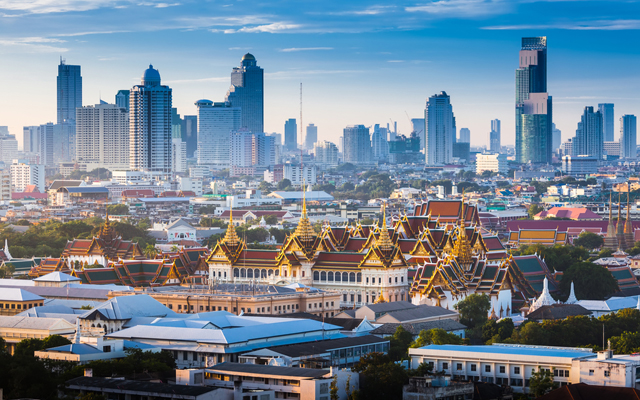
DMCs in Asia have announced temporary changes to itineraries in view of next weekend’s official coronation of King Maha Vajiralongkorn, the first in nearly seven decades for Thailand.
In a notice issued to partners, Asian Trails Thailand said that during the celebrations around the royal coronation of Vajiralongkorn – also known as King Rama X – from May 2 to 6, many roads, particular near the Grand Palace and some parts of the Chao Phraya River will be closed.
“All excursions around the Grand Palace have to be cancelled,” the DMC announced.
The crowing will take place on Saturday, May 4, with Monday, May 6 declared a public holiday for the whole country. Celebrations and ceremonies in relation to the coronation are expected to take off during this three day royal and religious event.
Various roads and landmarks in Bangkok’s Rattanakosin district will be closed off in lieu of this nationwide broadcasted ceremony. According to government channels, security measures around the official coronation venues are extremely tight which may result in operational changes and possible congestion in other parts of the city, the DMC explained.
“Asian Trails Thailand is taking all measures to ensure that we continue to run our operations as smooth as possible. During these days, we will monitor the situation closely and continue to offer alternative tour options for in-house guests,” the DMC said, adding that it will inform partners of any major changes to itineraries that may ensue.
Also acknowledging the road closures and restricted access to key tourist attractions such as the Grand Palaces and temples in the Rattanakosin area, Destination Asia Thailand said it is closely monitoring the situation and will provide updates as necessary.
On the other hand, it pointed out to partners that clients in Bangkok during this period will have “a unique opportunity to bear witness to a once in a life time event”.
Khiri Travel advised: “The Royal Coronation is a joyous occasion for the Thai people and you will see many wearing yellow shirts during this time, as part of the nationwide celebrations. If your customers would like to participate, they are welcome to wear yellow, the royal color, from April to July.”
In addition to the Hindu and Buddhist rituals that began this month and ceremonies performed by the king leading up to his official coronation in May, later in the year, a Royal Barge Procession will give visitors to Thailand another chance to see the nation’s new king.

The Tourism Authority of Thailand (TAT) has partnered Thrillophilia, an Indian platform that lists over 10,000 activities and experiences.
With an estimated 50 million Indian tourists expected to travel abroad by 2020, Thailand is eyeing about two million Indian tourists in 2019. India is currently the sixth visitor source market for the destination.

Commenting on the partnership, Cholada Shiddhivarn, director of TAT’s Mumbai Office, said: “As a destination, we want to reach out to the millennials who are constantly seeking for offbeat experiences and also adventure sports… Through this association, we are aiming to introduce and promote New Shades of Amazing Thailand to the new age Indian traveller”.
Thrillophilia says it will promote “off beat destinations” such as Chiang Rai, Ko Samui, Khao Yai and Chiang Mai, beyond the popular the Bangkok-Pattaya circuit.
More than 100 experiences in Thailand are now available for booking on Thrillophilia. Examples include Flight of the Gibbon in Chiang Mai, Art in Paradise in Pattaya, Temple Tour in Chiang Rai, Death Railway in Kanchanaburi, Adventure at Khao Yai, Khao Sok tour and more.
The partnership also seeks to encourage more Indian women travellers to travel to Thailand by highlighting special experiences that cater to them, such as culinary lessons, Muay Thai boxing classes and meditation in temples.
Thrillophilia’s promotions on online channels as well as marketing and social media campaigns will be built around the theme of ‘Experience Thailand Differently’.

Bali and Beyond Travel Fair (BBTF) 2019 will return for its sixth year, taking place on June 25-29 at the Bali Nusa Dua Convention Center (BNDCC).
Organised by the Bali Chapter of the Indonesian Association of Travel Agents (ASITA Bali), this year’s event has adopted the theme of Journey to Sustainable Tourism.

Once again the venue for BBTF 2019, the BNDCC is located within Bali’s Nusa Dua Complex operated by the Indonesian Tourism Development Corporation (ITDC) on the southernmost tip of Bali.
In addition to being home to the BNDCC, the ITDC Complex is home to some 5,000 starred hotel rooms; a wide-range of dining, shopping and entertainment venues; and a championship 18-hole golf-course – all scattered along a white-sand beach.
BBTF 2019 is on target to attract over 200 sellers with the closing deadline falling on May 8, 2019. Meanwhile, the organisers say sellers are registering at a record pace.
Some 250 buyers from 52 countries are already confirmed with one month remaining before the event. The organisers expect an eventual buyer turnout of 300. Most of this year’s buyers hail from Europe – 30 UK buyers have registered, follow by France, the Netherlands, Italy, German as well as Eastern European countries like Bulgaria, Estonia, Poland and Russia.
The sixth BBTF is supported by the Ministry of Tourism. A gala dinner will open the event on June 26 (Wednesday) with another festive farewell dinner hosted by the ITDC slated for June 28 (Friday).

Courtyard by Marriott Nagoya will open in early 2022 to become the brand’s sixth property in Japan.
The hotel will be located in the largest city of the Chubu region, where many Japanese manufacturing companies’ headquarters are located including Toyota Motor Corporations in Toyota City.
Courtyard by Marriott Nagoya will have 12 storeys, and feature 360 contemporary rooms including 10 suites. Guests will be able to dine in Nagoya Kitchen, a semi-open kitchen with live cooking stations. Aside from a fitness centre, the hotel will have a a ballroom, divisible by two, and four meeting rooms.
Located in 10-minute walk distance to the nearest Fushimi Station and 18 minutes’ walk to Nagoya Station, guests will be able to reach Sakae for shopping, dining and entertainment options within a 15-minute walk, while other attractions including Higashiyama Zoo and Legoland are also only a short distance away.
The property is a 45-minute drive from Chubu International airport, a 100-minute journey by bullet train from Tokyo and 50 minutes from Osaka.

In celebration of the Singapore Cable Car’s 45th anniversary, Mastercard cardholders will be able to purchase the Singapore Cable Car Sky Pass at S$4.50 (US$3.30).
The promotion is valid for a limited time for purchases on One Faber Group’s online store paid by Mastercard only.
Sky Pass holders will also be entitled to additional 45th anniversary treats, including Miraculous, a daily multi-media light show, and a self-guided activity.

Australia’s Queensland State has unveiled a new indigenous interactive culture experience entitled Spirits of the Red Sand.
During the interactive production, guests move from set to set as they journey back in time to 1880s Queensland and experience the trials and challenges as the British and Aboriginal ways of life collide. Told by Jarrah, the only surviving member of three Aboriginal brothers, the show is set within a real 19th-century Australian town complete with Church, Pub and Indigenous village.
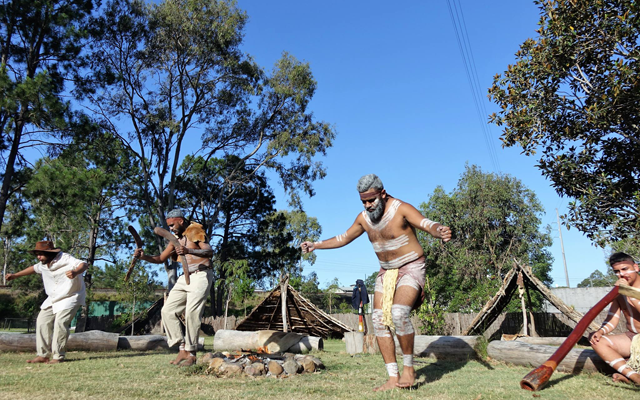

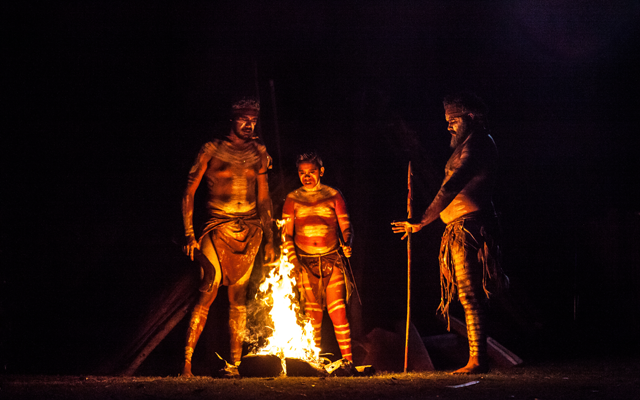
The theatre and dinner experience can be found in Beenleigh, a town located between Brisbane and The Gold Coast. Round-trip transfers from select hotels from both Brisbane and The Gold Coast.
Tickets cost A$120 (US$85) for adults, A$25 for children aged between five and nine, A$65 for 10-15 year olds, and A$99 for students and seniors. Dinner is a chargrilled Australian barbecue with dessert and a licensed bar.
Spirits of the Red Sand is the only South East Queensland tourism experience to be endorsed by Tourism Australia’s Discover Aboriginal Experiences Program.

As one of the world’s largest countries by land and population, Indonesia holds vast potential for tourism, some economy hotel players say, but there are obstacles in the way of unlocking growth opportunities, including the lack of local market understanding of international businesses as well as human resource challenges.
Hartono Liman, CEO of LoyalGuest.com said: “Compared to other destinations (in the region), there are so many untapped destinations in the country. The government has been developing infrastructure – airports, seaports and roads across the country, resulting in the growth of domestic travel.
“Thanks to budget airlines, the middle to low income classes can now travel. The new infrastructure being built now allows people to vacation in nearby destinations,” Hartono said.
Speaking at a keynote panel at Travel Meet Asia organised by Messe Berlin in Jakarta, Hartono said that the growth of the vast low to middle class market would still be huge in the years to come as the national GDP climbs.
“Destinations within two- to three hours’ drive will be in demand,” he surmised, adding that the new highways built across Java and Sumatra have cut short travelling times and given travellers new options farther afield.
Amit Saberwal, founder & CEO of RedDoorz, a South-east Asian value hotel chain, said: “Indonesia is the most exciting travel market. It has among the (highest rates of e-commerce consumption) in the world. In fact, it is bigger than China: 76 per cent of the people have bought (at least) one e-commerce or done an economic transaction on the mobile phone, while China is 74 per cent.”
Saberwal added: “The government has really been pushing the domestic market, so we plan to go wider across the country and deeper into the cities.”
Domestic travellers typically pave the road for international tourism in emerging destinations. Local travel spurs the development of infrastructure, before these areas open up to the international travel community, he explained.
However, Albina Lanina, COO of Zen Rooms, a chain of independent budget hotels in South-east Asia, said: “Human resources in an asset but at the same time it is a challenge in Indonesia. The budget segment (accommodations) is not ready for international travellers. (There are) language and skills barriers.
Zen Rooms, which assists budget accommodation providers across South-east Asia in areas like operation efficiencies and online presence, also provides English language classes for staff in Indonesia.
She also noted that with only some three per cent of the population utilising cards for online payment, cash payment option is essential in the country.
Saberwal further highlighted the need for businesses to understand the situation and characteristics of local markets. Home-grown players like Traveloka and Tiket.com are more successful than global players in Indonesia because of this.
He said: “Cities in Indonesia are different. Online penetrations is not the same in each city. In Jakarta it is extremely high but it may not be the same in other cities. Therefore players like Traveloka, Tiket.com and all are reaching out to the customers both online and offline. You see their (promotions) at the airports, on TV, everywhere.”
Meanwhile, Hartono said that based on LoyalGuest data, Indonesians book more than one room (1.2) per visit, which suggests they travel either with families or groups of friends.
“They like to spend time together. Therefore, a hotel with limited common rooms is likely to be less favoured by the market,” he said.