China’s aviation data technology provider, VariFlight, has partnered with Amadeus to integrate Dynamic Flight Schedule, a move that is expected to benefit over 300 million air travellers and significantly expand its services beyond its dominant home market in China.
VariFlight currently offers airline schedules, live flight status and real-time service data for airports and aircrafts in China, covering more than 94 per cent of global commercial flights. Travellers are kept updated on flight schedules, including delays.
China’s aviation data technology provider VariFlight has partnered with Amadeus to integrate dynamic flight schedule, which will benefit over three hundred million air travellers.
These services are provided through VariFlight’s own app, which has accumulated over 180 million downloads on iOS and Android platforms, as well as partners such as Baidu and Wechat.
Following this partnership, VariFlight is gearing up for global expansion and adding on ancillary services like airport transfers and online travel bookings.
Hongfeng Zheng, founder and CEO of VariFlight, said the integration of Amadeus flight schedule data into the VariFlight database will enrich the “content and data accuracy” for its members. “With this partnership, we’ll be able to further develop our services and expand globally,” he said.
Crowne Plaza Hotels & Resorts has announced plans to open six flagship hotels around the world by early 2020, two of which will be in China.
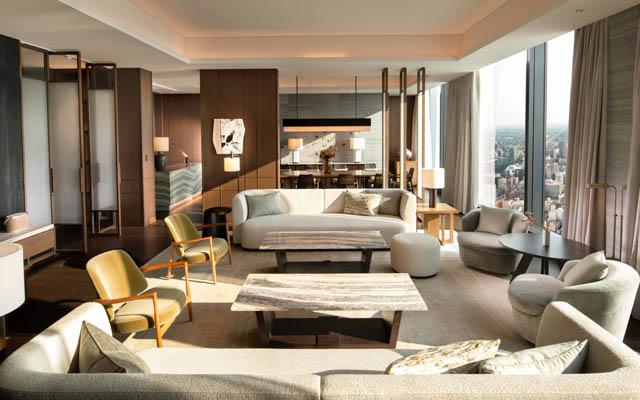
These new properties will be a reinvention of the upscale hotel brand, and will mark “the global rollout of new hallmark design innovations and the brand’s latest standards across public spaces, guest rooms, F&B, technology, service and more”, said Crowne Plaza in a statement.
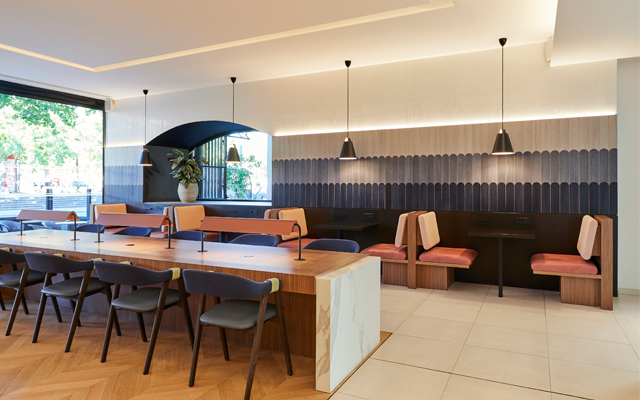
How Crowne Plaza’s new lobbies are envisioned to look like
Each flagship property will feature new designs for public spaces and guestrooms to meet the continued guest demand for flexible spaces. The lobby design and guestrooms will include distinct areas embedded with technology, while some properties will also feature on-demand meeting spaces in the lobby areas as well.
China will see the launch of two flagship properties, Crowne Plaza Shenzhen WECC and Crowne Plaza Wuzhen, by the end of this year.
Crowne Plaza Shenzhen WECC will be located near the Shenzhen Bao’an International Airport and next to Shenzhen World Exhibition & Convention Centre, the largest of its kind in the world. This hotel will also be the first Crowne Plaza in Greater China to tout a modernised guestroom design and flexible spaces. The property will feature 1,400m2 of meeting space with five meetings rooms, including a grand ballroom that seats up to 500 guests.
In Zhejiang, Crowne Plaza Wuzhen will offer 216m2 of flexible event space in three meeting rooms, and another 500m2 banquet room that seats up to 260 guests. The new flagship hotel will be located near Hangzhou International Airport and close to the World Internet Conference Center. It will feature a full-service restaurant, Cai Feng Lou, and Tong Café for all-day dining.
Outside of China, the US has opened the 495-room Crowne Plaza Atlanta Perimeter at Ravinia in Atlanta, with three more properties due to open in Europe – the Crowne Plaza Paris Republique in France; Crowne Plaza Hamburg in Germany; and the Crowne Plaza London in the UK.
At of March 2019, there are 427 Crowne Plaza properties around the world.
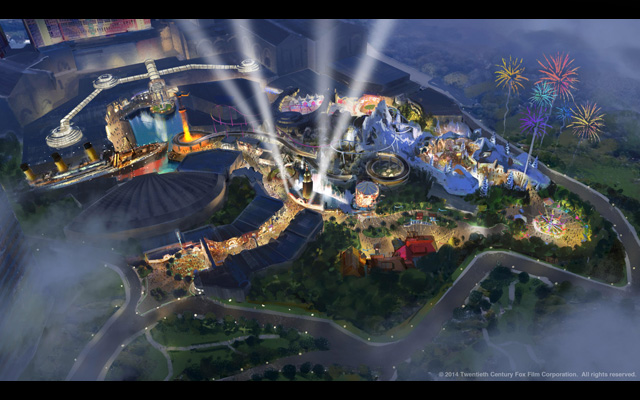
Under the settlement agreement, Genting Malaysia has been granted a license to use certain Fox intellectual properties. The company is currently updating its development and construction plans to complete the outdoor theme park utilising both Fox and non-Fox intellectual properties. The outdoor theme park will also be renamed.
A rendering of the theme park
This is part of the restated memorandum of agreement, Genting Malaysia said in a Bursa Malaysia filing last Thursday.
“The settlement will serve as a big boost to investors’ confidence on future earnings, which would otherwise be clouded by the litigation. In our opinion, the long-term positive implication is much more important than the US$1billion counterclaim against the defendants,” said the group.
The Malaysian casino operator took action against both Disney and Fox in November last year, alleging that the Hollywood pair failed to honour a 2013 deal to license intellectual property for the park outside Kuala Lumpur.
The planned reopening of the outdoor theme park is music to the ears of inbound players, as the repeated delays and uncertainty surrounding the Fox-branded theme park have affected promotion plans of Genting Highlands in overseas markets.
Uzaidi Udanis, Malaysian Inbound Tourism Association president, said: “It will be easier for our overseas counterparts to convince their clients who have been to Malaysia before to revisit the country. Getting repeat visitors to revisit the country and see new destinations and experience new products is a less expensive process as compared with finding new tourists, which involves more advertising and marketing. The theme park will also attract more business event visitors as Genting also has big convention facilities.”
Arokia Das, director, Luxury Tours Malaysia commented: We had earlier forecasted a minimum 30 per cent increase from Asian markets because of the planned opening of Twentieth Century Fox World Theme Park. Now we project the same with the opening of the new theme park, even though it will not be a full Fox theme park.”
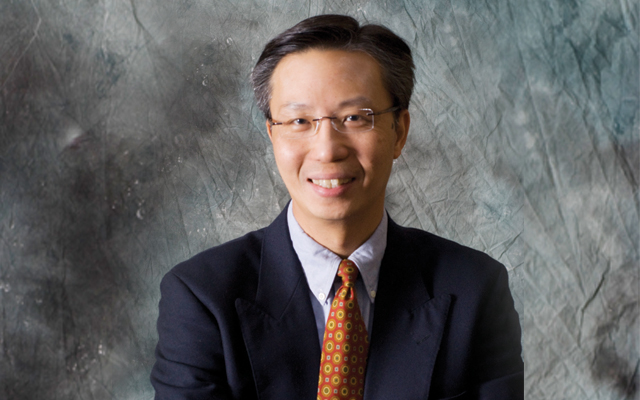
The board of directors of UOL Group, parent company of Pan Pacific Hotels Group (PPHG), has announced that Choe Peng Sum will be appointed CEO of PPHG with effect from September 1, 2019.
In his new role, Choe will be responsible for the day-to-day operations of PPHG’s hotels and serviced apartments, marketing and brand standards, as well as business development and expansion of the group’s hospitality business under the Pan Pacific and Parkroyal brands.
Choe will report directly to Liam Wee Sin, group chief executive of UOL.
Choe takes over the CEO post from Lothar Nessmann, who stepped down on June 30 after two years on the job.
Choe was the CEO of Frasers Hospitality International from 1996 to 2019, and will be a senior adviser to mainboard-listed Frasers Property until August, reported The Business Times.
The hospitality veteran has over 30 years’ experience in the hotel industry worldwide including Singapore, Malaysia, Australia, Japan, Scotland, the UK and Germany.
Long-time Genting Hong Kong executive Michael Goh has been appointed the president of Dream Cruises, and head of international sales for Genting Cruise Lines.
Succeeding former Dream Cruises president Thatcher Brown, Goh will continue to be based in Singapore, reporting to Kent Zhu, president of Genting Cruise Lines.
Michael Goh
Goh joined Genting Hong Kong 20 years ago and was the senior vice-president of international sales for Dream Cruises, Star Cruises and Asian sales and marketing for Crystal Cruises. Together with Brown, he has played a key role in the launch of Dream Cruises four years ago.
“Michael’s long experience developing the Asian cruise industry with Genting Hong Kong and as a key member in the start-up of Dream Cruises will further strengthen the brand with his appointment as president of Dream Cruises,” said KT Lim, chairman and CEO of Genting Hong Kong.
“With his strong relationships in the travel industry, he will lay the sales and marketing strategies for the successful arrival of the first of two 204,000 gross ton Global Class ships in 2021,” he commented.
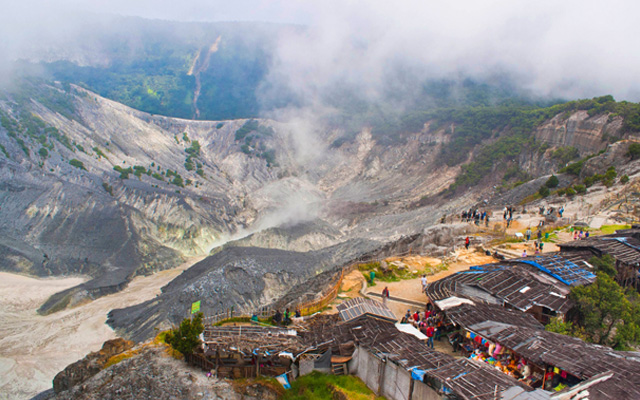
Mount Tangkuban Perahu in Bandung, West Java, a popular tourist spot in Indonesia, erupted on Friday afternoon, prompting authorities to restrict access to the area.
The volcanic ash soared 200m up from the mountain’s peak, which is about 2,284m above sea level, said the Center for Volcanology and Geological Hazard Mitigation (PVMBG). After the eruption, thick grey volcanic ash spread to the south and north-east.
Kawah Ratu, a volcanic crater on Mount Tangkuban Perahu
Being a phreatic eruption, the volcanic activity has taken travellers and residences by surprise as there was no signal prior to the eruption.
At press time, the Mount Tangkuban Perahu tourism complex remains closed as the area has been covered in ashes and cleaning works were carried out over the weekend.
PVMBG updates this morning stated that the closed area now was 500m from the crater, and activities and accommodations in the tourism complex would gradually start operating today.
PVMBG head, Kasbani, however, warned locals, traders and travellers to stay alert for any possible increase in volcanic activities.
“A phreatic eruption could happen at any time without any clear volcanic signals,” he said.
Meanwhile, activities in the Bandung city and surrounding areas as well as the Husein Sastranegara Airport are operating as per normal.
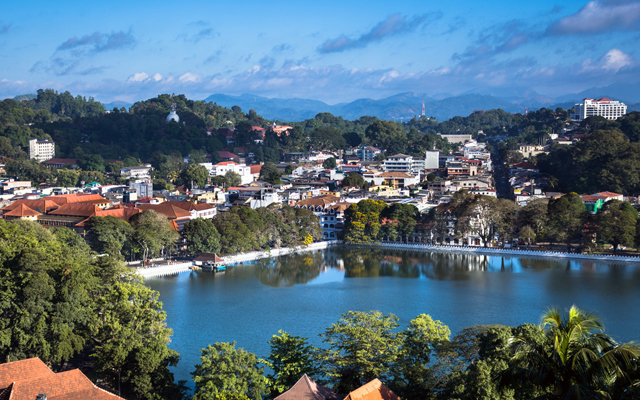
Kandy, a UNESCO World Heritage listed city in Sri Lanka
Three months after the Easter Sunday suicide bombings, Sri Lanka’s tourism industry is starting to show signs of recovery, with flight bookings stabilising at 26 per cent down, a report has shown.
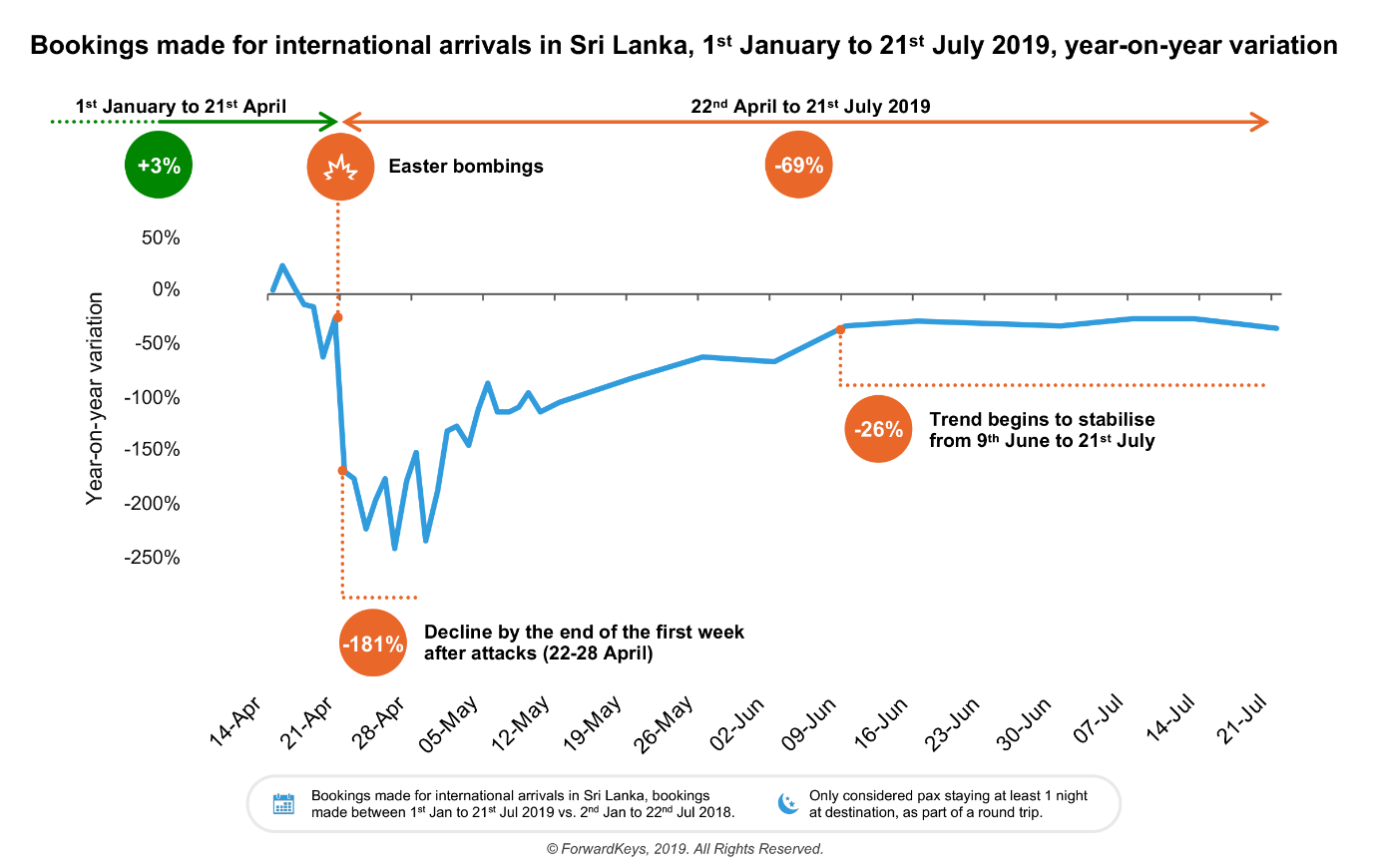
The report from ForwardKeys, which analyses over 17 million flight bookings a day, has shown that between January 1 and April 21, international flight bookings to Sri Lanka rose 3 per cent up from the year before.
Kandy, a UNESCO World Heritage listed city in Sri Lanka
But in the immediate aftermath of the attacks, there was a spike in cancellations and bookings collapsed. The first week saw a decline of 181 per cent, which means that in addition to no new bookings being made, there was a wave of cancellations of existing bookings.
From the beginning of May, a timid recovery trend began. But bookings still have a long way to go before they bounce back to last year’s levels. Over the three-month period from April 22 to July 21, bookings have been 69 per cent down from the equivalent dates in 2018.
Less than two months after the suicide bombings, flight bookings to Sri Lanka stabilised. From June 9 to July 21, the level plateaued at 26 per cent down from the equivalent period last year.
Jameson Wong, Asia-Pacific business development director of ForwardKeys, said: “One has to feel deep sympathy for the people of Sri Lanka. They suffered from a coordinated campaign of ghastly suicide bombings on Easter Sunday, a day of the year which will make the horrors harder to forget. The deliberate targeting of tourists, as well as locals, is having a severe impact on a valuable sector of the country’s economy, which (according to the WTTC) is responsible for 27 per cent of export revenue.”
He added: “We are seeing initial signs of recovery, but it is likely to take time before visitors regain their confidence in travelling to this beautiful country. The irony is that this is a really good time to visit Sri Lanka, as there will be pressure on prices. Also, it will be a fantastic experience to support a recovering nation and feel the warmth of Sri Lankan hospitality.”
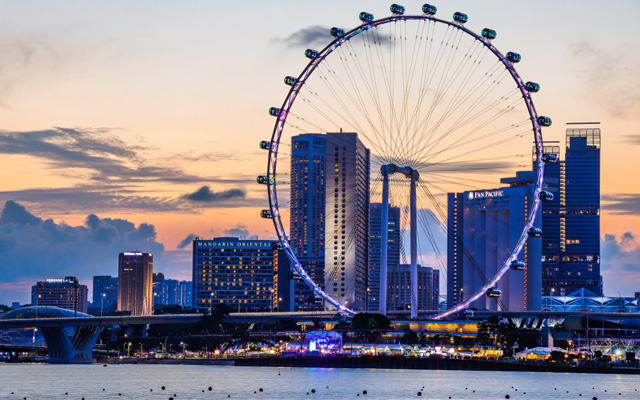
The skyline of Singapore with hotels such as Mandarin Oriental and Pan Pacific in the background
Alibaba Cloud, the data intelligence backbone of Alibaba Group, and the Singapore Association of Convention & Exhibition Organisers & Suppliers (SACEOS) signed an MoU last week at the recently-concluded Singapore MICE Forum 2019.
The agreement will see the two parties work together to offer trainings and technologies collaborations in the fields of artificial intelligence (AI), big data and cloud.
The skyline of Singapore with hotels such as Mandarin Oriental and Pan Pacific in the background
As part of the collaboration, SACEOS and its members will explore hosting training and workshops to equip SACEOS members with the technology competencies to transform their businesses.
On the leisure traveller front, Alibaba Cloud will also connect Singapore hospitality industries with the Alibaba ecosystem, and with it millions of potential Chinese customers to drive arrivals and spending. This will benefit hotels and resorts, restaurants and retail companies as they can build and launch mini programmes into Alibaba’s ecosystem.
Earlier in April 2019, Alibaba Group and Singapore Tourism Board signed a three-year MoU to drive inbound Chinese visitor arrivals and spending.
Phuket is set to push the sustainability agenda when it plays host to PHIST (Phuket Hotels for Islands Sustaining Tourism) come September 23, when the free-to-attend one-day conference organised by Phuket Hotels Association, C9 Hotelworks and Greenview takes place at the Hilton Phuket Arcadia Resort & Spa.
Over 1,000 delegates – including more than 70 of Phuket’s leading hotels, retailers and other key stakeholders from across the region – are expected to attend the second edition of PHIST to discuss critical environmental issues and devise ways of tackling them head-on.
A key focus at this year’s forum will be on the tourism slump in Phuket, and how sustainable tourism can help drive recovery efforts. The event will be attended by Kanokkrittika Kritwutthikorn, the Tourism Authority of Thailand’s (TAT) director for Phuket, who will speak on how the TAT aims to ensure the island’s longevity by targeting more high-end, eco-conscious travellers.
From left: C9 HotelWorks’ Mr. Bill Barnett; Tourism Authority of Thailand’s Kanokkrittika Kritwutthikorn; Central Pattana Group’s Wilaiporn Pitimanaaree; Blue Tree Phuket’s Mr. Michael Ayling; and Phuket Hotels Association’s Sumi Soorian
“The recent drop in arrivals to Phuket shows just how damaging the boom and bust of mass tourism can be. More than 15,000 new hotel rooms are set to enter the market over the next five years, but who will fill them? Phuket, like all island destinations, needs to develop a sustainable tourism industry that works for the island, is immune to global economic volatility, and ensures the preservation of the island’s natural resources for generations to come,” said Bill Barnett, managing director of C9 Hotelworks.
Another important delegate will be Wilaiporn Pitimanaaree, senior vice-president of Central Pattana Group, who announced at last year’s inaugural PHIST their pledge to stop giving out plastic bags to their customers, resulting in the reduction of over four million plastic bags per month.
Guests at PHIST 2019 will work with the TAT and each other to concoct creative and original ways of managing mass tourism in South-east Asia’s island destinations. By day’s end, the participants will sign a collaborative pledge for the sustainable management of the tourism industry.
At last year’s PHIST, the Phuket Hotels Association’s 71 hotels agreed to remove single-use plastic water bottles from their properties, resulting in a 51 per cent reduction in 2019, and over 4.4 million bottles saved. In addition, Phuket Hotels Association is now launching the Great Big Green Guide, a collection of eco-friendly ideas and practices.
PHIST 2019 will also aim to engage the next generation with a series of children’s workshops and activities. The forum will also feature the finals of Green Beat 60, a film-making contest that invites eco-warriors of all ages to comment on critical issues.
Anthony Lark, president of Phuket Hotels Association, said: “At PHIST 2019, we want to push sustainability to the top of the agenda by tackling the key issue facing Asia’s island destination: The shift from mass tourism to a more sustainable future. We want all visitors to be able to experience our wonderful destinations, but this must be achieved without negatively impacting the environment.”
One Travel Trade Connection. Infinite Possibilities.
TTG Asia Media’s Travel Trade Publishing group has been connecting Asia-Pacific’s travel industry with its leading trade publications since 1974. The one-stop integrated portfolio of print and online titles spans the leisure trade, corporate travel, MICE and luxury travel domains, reaching key decision makers, influencers and professionals in each sector. The group’s titles are widely acclaimed as the industry’s preferred read and chosen by advertisers as an effective marketing platform. With its online titles, circulation now reaches readers worldwide. Core titles include TTG Asia, TTG China, TTG India, TTGmice, TTG-BTmice China, TTGassociations, TTG Asia Luxury and TTG Show Daily.