Sabre Corporation has partnered Singapore Airlines (SIA) for the expansion of the carrier’s NDC programme, KrisConnect.
Effective November 2019, the collaboration will provide select Sabre connected agents in Singapore with the ability to access and book NDC content from the airline. As the programme continues to roll out across the region, all Sabre connected agents will have the ability to leverage KrisConnect.
Sabre partners SIA for the expansion of the carrier’s NDC programme, KrisConnect
SIA has been a member of Sabre’s Beyond NDC programme since 2018. The new KrisConnect programme, which will expand the airline’s digital distribution capabilities and enrich the customer experience, further establishes collaboration between both companies, said Sabre in a statement.
Under the KrisConnect programme, Sabre will provide travel agents with scalable, NDC-enabled offerings from SIA, and enable end-to-end workflows with rich, integrated content. With this launch, Sabre agencies will have access to a broader array of fares and a more tailored shopping experience via the Sabre agency point-of-sale, in addition to having access to new, KrisConnect-exclusive content categories, ancillary bundles, and third-party content.
Rakesh Narayanan, vice president, South Asia and Pacific, Sabre travel solutions airline sales, said: “With our scalable platform, we can transform the way air products are retailed, fuel product differentiation and optimise time-to-market to generate incremental revenue for the carrier.”
Red Planet Japan and GreenOak Investment Management KK, the Japanese arm of GreenOak Real Estate, has acquired a prime site on Horikawa Dori in Kyoto to open a new hotel.
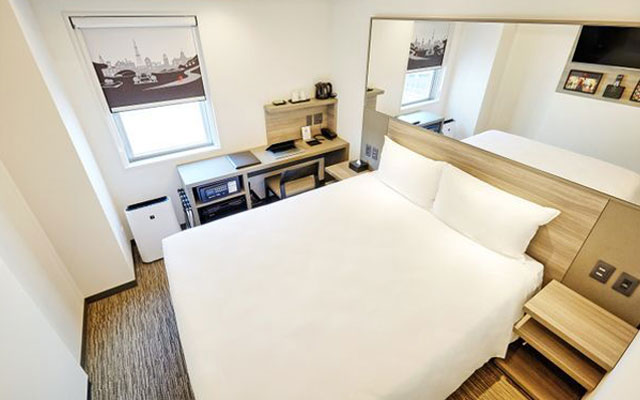
Set to be Red Planet Japan’s eighth hotel in the country, the 191-room hotel in Kyoto is scheduled to open in November 2021.
Red Planet Japan to open eighth domestic hotel in Kyoto come 2021 (Pictured: Red Planet Sapporo Susukino South hotel)
The Kyoto hotel will be the second hotel under a joint venture between Red Planet Japan and Bentall GreenOak to develop up to six new hotels in key cities across Japan by 2021.
The new Kyoto hotel site is just 250m from Nijo Castle and a short walk from the Kyoto Imperial Palace. The hotel’s guests will have easy access to public transportation along Horikawa Dori, with several subway stations within short walking distance.
Red Planet’s chairman Simon Gerovich said: “This site acquisition builds on our strategy to continue rapid expansion in Japan through financial partnerships. We remain unique in Japan as a brand which acquires, develops, and operates its own hotels.”
Dan Klebes, managing partner of Bentall GreenOak and president of GreenOak Investment Management KK, added: “Our joint venture with Red Planet is now developing new hotels in Kyoto and Hiroshima, and we aim to acquire further prime plots in key gateway cities across Japan. We expect inbound visitation, especially from regional tourists, to continue unabated over the coming years, supported by increasing airlift capacity from across Asia.”
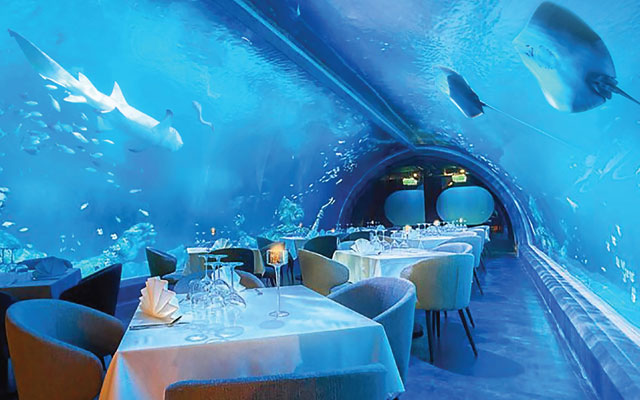
Central Pattana (CPN) has launched two new attractions at the Central Phuket mega mall: Thailand’s largest aquarium, Aquaria Phuket, and Andasi, the world’s largest underwater restaurant and Asia’s first underwater bar.
Nattakit Tangpoonsinthana, executive vice president of marketing of CPN, said Aquaria Phuket and Andasi are “the final jigsaw pieces that complete Central Phuket’s world-class attractions”.
Thailand’s largest aquarium, Aquaria Phuket, and Andasi (above), Asia’s first underwater bar, open at Central Phuket mega mall
With a capacity of over seven million litres, Aquaria Phuket is home to more than 51,000 aquatic animals from over 300 species. It was designed under the concept of “An Ocean of Myth and Legend”, inspired by Thailand’s mythology and culture from the mystical Himmapan Forest to the deepest ocean.
Aquaria Phuket is divided into several zones: Mystic Forest, a land filled with creatures from Thai folklore; River Giants, the world’s largest freshwater planted tank featuring arapaima, Mekong ray, Mekong giant catfish, and more; River Caves, where playful otters reside; Coastal Haven, home to a bunch of penguins; Station Aquarius, offering an interactive and educational encounter with the inhabitants; and Trick Eye Museum, the world’s first augmented reality art museum featuring the latest AR technology to produce realistic art and incredible panoramas.
Travel experience company Really Really Cool (RRC)’s CEO Patee Sarasin was recently named “Yamagata Special Ambassador of Tourism and Tsuyahime” by Meiko Yoshimura, governor of Yamagata Prefecture, Japan.
The title was conferred upon Sarasin, the former CEO of Nok Air, in recognition of his role in pioneering Thai outbound travel to Japan’s Yamagata Prefecture. RRC firmly put the prefecture on the map as a popular new destination for Thai tourists, especially the ski resorts at Zao during winter and other seasons throughout the year, said the company in a statement.
Really Really Cool’s CEO Patee Sarasin named “Yamagata Special Ambassador of Tourism and Tsuyahime” by Meiko Yoshimura, governor of Yamagata Prefecture, Japan
In the letter of appointment, governor Yoshimura wrote: “Your role will be to spread the word of Yamagata throughout Japan and the world: of its strikingly varied seasonal vistas, relaxing hot springs, food and spiritual cultures nurtured by a rich natural environment, the charm of ‘Japan’s hometown, Yamagata’. It warms the heart and soothes the soul, and [offers] the delight of the unparalleled taste of Yamagata-born Tsuyahime rice. I ask you to do your utmost in your capacity as ambassador.”
Sarasin has already collaborated with travel businesses in Yamagata, advising them on the itineraries that will most appeal to Thai tourists and the types of services that will enhance the prefecture’s travel offerings.
RRC, in collaboration with Yamagata Prefecture, was instrumental in launching bespoke itineraries to Zao and introducing its “snow monsters” –famous ski resorts and family-run onsens – to a new generation of Thai travellers.
Travel between Thailand and Japan peaked in 2018, with new destinations and attractions fuelling bilateral tourism growth. Japan received 1.1 million (+14.7 per cent year on year) Thai tourists in 2018, while 1.5 million (+6.8 per cent) Japanese travellers visited Thailand during 2018.
Richard Schestak has been appointed the new managing director at Siam
Kempinski Hotel Bangkok.
Prior to his move to Bangkok, Schestak was general manager at Fairmont Marina Resort and Fairmont Marina Residences in Abu Dhabi.
The Austrian-born hotelier brings a wealth of international hotel experience gained in Europe, North America, the Middle East, Africa and Asia-Pacific with an extensive background in hotel operations – in particular F&B concepts and Michelin-star restaurants. His leadership experience embraces luxury mixed-use developments, hotels and residences with Fairmont and Raffles.
In total, Schestak spent 21 years with Fairmont Raffles Hotels in positions such as general manager of both Raffles Jakarta and Raffles Hotel Le Royal, Phnom Penh; opening director of operations at Fairmont Bab Al Bahr in Abu Dhabi; regional director of F&B – Middle East & South Africa; and director of F&B a Fairmont Dubai.
Since declaring its proud intentions to openly promote Thailand as an LGBT+ friendly destination in Asia, Thailand is now stepping up its pursuit of this niche yet lucrative segment by positioning the country not just as a destination for holidays and parties but also as a top-of-mind choice for milestone events for LGBT+ travellers.
Stars appear to align in favour for Thailand’s tourism industry when the Thai cabinet recently passed a bill to a proposed civil union bill. If approved by the Parliament, Thailand will become the first South-east Asian country to legalise same-sex relationships.
With Thailand looking set to legalise same-sex unions, the country’s tourism players are now aggressively pursuing LGBT+ travellers
And Thailand’s tourism sector is clearly paying close attention to the proposed move, if sentiments at the recent LGBT+ Travel Symposium in Bangkok – the second time the event was held in the country – were anything to go by.
The civil partnership bill presents an “exciting time for the LGBT+ community in Thailand”, stated Chattan Kunjara Na Ayudhya, Tourism Authority of Thailand’s (TAT) deputy governor for international marketing (Asia and South Pacific), at this year’s LGBT+ Travel Symposium.
Not only will the near-approved bill send “a positive message” to the world that Thailand is “open to all people and cultures”, said Chattan, the move will also enhance TAT’s mission to position the country as a top destination to “experience diversity”. “We are going deeper and becoming more intensive in what we do to welcome the community,” he added.
Building a deeper connection
A two-pronged approach is undertaken for TAT’s international LGBT+ strategy, according to Steven Johnson, marketing manager of TAT’s New York Office, where the organisation’s global LGBT+ efforts were spearheaded and have been most concentrated.
This involves getting Thailand’s private sector, including hotels and DMCs, on board to train their staff to be more sensitive to the LGBT+ community, and also fostering conversation and knowledge sharing on the Go Thai, Be Free website, a platform launched to share travel information specific to LGBT+ travel in Thailand.
Another key tenet is “making sure Thailand is represented from a LGBT+ perspective” by continuing TAT’s participation at major trade shows like ITB Berlin and FITUR, as well as joining Pride Parades at Tel Aviv, Canada and Germany, revealed Johnson.
While Chattan acknowledges that TAT’s LGBT+ promotional efforts have been predominantly focused on the Western markets – starting first in North America before expanding to Europe – he has plans to establish similar efforts in Asia. Taiwan, which legalised same-sex marriage earlier this year, is earmarked as a potential market for Thailand’s growing LGBTQ tourism sector.
Johnson added: “Thailand has always been a safe haven for LGBT+ community in South-east Asia. (Everyone in this region) knows if they want to get away as a LGBT+ person, the place to go to is Thailand. But to formalise this will definitely boost Thailand’s credibility among the LGBT+ community in South-east Asia. And what is a great place to start but Taiwan?”
But Chattan made clear that TAT’s LGBT+ marketing efforts are unlikely to be rolled out in Asian countries where the acceptance or tolerance of same-sex relationship is low. “We will respect all countries’ beliefs. Marketing is a two-way street, you cannot do advertising and promotion without a certain level of support from the local level. We just want to be more open and inclusive,” he reiterated.
From party destination to wedding material
Thailand’s gay events calendar in recent years has grown even more colourful and louder, with Circuit Festival Asia (launched 2018) in Pattaya, Tropout Phuket (launched 2016) and White Party (launched 2015), adding to established events like gCircuit, an annual Songkran staple since 2007. Coming up later this year is XXO Party Bangkok, set to take place at So Sofitel Bangkok in October.
With such a vibrant line-up of events for the gay community in Thailand, Vincent Jones, founding CEO & chief experience curator at Citizen Jones Travel, a Los Angeles-based travel company specialising in LGBT+ travel, thinks that Thailand has the makings to become the party capital of Asia, not unlike Ibiza or Mykonos in Europe.
However, TAT’s Johnson was quick to point out that such events only appeal to one component or sub-sector of the overall LGBT+ market, particularly a younger crowd, but that the luxury segment remains a priority market for Thailand’s LGBT+ marketing efforts.
“The weddings and honeymoon market has always been a very strong priority for us. Most people from the Western world who come to Thailand have some level of romance, whether it’s honeymoon or anniversary, and that will continue to be a strong focus, specifically as it relates to the LGBT+ community as well when the legislation passes (for civil union partnership).”
He added: “The trends in our part of the world show that most people doing destination weddings are (marrying) legally in their own source markets and doing it ceremonially at the destination of their choice, so that will add another layer of element to our promotions as well.”
Uwern Jong, editor in chief of OutThere, a luxury travel publication targeted at gay men, and organiser and host of the LGBT+ Travel Symposium, also underlined weddings and honeymoons as among the key trends for the LGBT+ travel market. “There is significant interest in destination weddings for Thailand, and 2020 is expected to be a big year for this trend. Now it’s time to consider LGBT+ weddings if you haven’t [already]”, Jong urged hoteliers in Thailand.
Already, The Sukhothai Bangkok is seeing lucrative prospects in same-sex weddings, the hotel’s director of sales Santichai Boonrasri told TTG Asia. The resort hotel has hosted several same-sex weddings and is actively courting more of such events, as the spending veer upwards of one million baht (US$32,800).
But some markets still have an impression that Thailand is not quite a “sophisticated” destination, pointed out Timothy Cook, Thailand country manager at Abercrombie & Kent.
The luxury travel operator wants to challenge that perception by developing LGBT+ tours to connect travellers with LGBT+ guides and experts in the field to elevate in-destination experiences. “A lot of these tours are about customising – we’re about experts first, orientation second,” he stressed.
A “fair-minded” hotel booking platform is touting to boost the profitability of the Asia-Pacific hotel sector with its “radically different business model based on zero commissions”.
Bidroom’s no-commission membership-based hotel platform has already attracted leading hotel brands and apartments, as well as Visa from the payments sector.
Bidroom brings its no-commission room booking model to Asia-Pacific
Launched in 2014 in the Netherlands, Bidroom currently offers 125,000 hotel properties in 128 countries to frequent travellers who benefit from guaranteed lower room rates compared to other OTAs.
Bidroom’s primary mission is to serve as a fair alternative to the online booking market which is currently defined by excessive OTA commissions that hurt hotel bottom lines, said the company in a statement.
For the first five years of operation, Bidroom focused on building its hotel stock in Europe and North America. Now, it is time for hoteliers in Asia-Pacific to benefit from Bidroom’s unique and “fair-minded” approach, said Bidroom’s COO and co-founder Michael Ros.
“Bidroom works as an annual membership model, whereby hotels only pay a contribution after proven success. This substantial saving is shared with the online frequent traveller who will subsequently be paying a guaranteed lowest-available price,” said Ros.
He added: “Bidroom is demonstrably cheaper than all known OTAs. The result is also a significant margin of financial improvement for hoteliers.”
Hotel industry analysts say that smaller hotels can rely on OTAs for up to 90 per cent of their bookings – at punitive commission rates of up to 25 per cent. Heavily-capitalised OTAs control the online hotel room market because they spend heavily on search terms. There is often an illusion of online competition in the online market place. Expedia owns around 12 OTA brands while Priceline Group owns Booking.com, Agoda, Ctrip, and Priceline.com, among others.
Bidroom aims to restore balance, transparency and fair play by attracting hotels in Asia-Pacific, the region with the fastest growth in online travel, said the company.
According to Horwath HTL, there are an estimated four million hotel rooms in Asia-Pacific. The region has 471,000 new rooms under construction, representing a year-on-year increase of 27 per cent, according to the July 2019 STR hotel intelligence report.
Hotel profits are already under pressure in Asia-Pacific destinations, with new openings in arguably oversupplied destinations such as Thailand, Vietnam, Indonesia and the Maldives. Reducing OTA commissions is therefore vital to hotel viability, said Ros.
He added: “While online travel will continue its massive expansion, especially in Asia, the honeymoon period with OTAs using manipulative techniques must end. Bidroom stands apart as a more profitable and fair-minded booking solution for hotels in the region.”
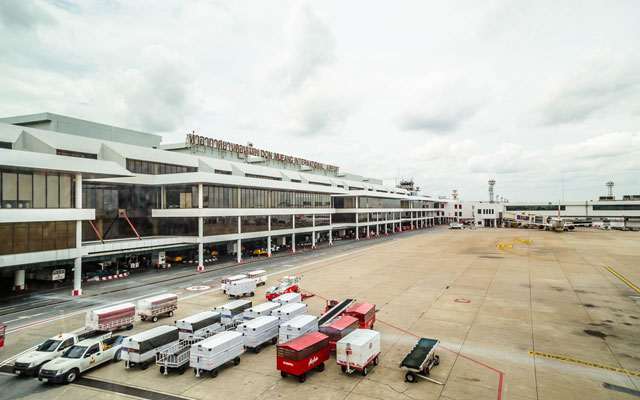
Thailand’s airport authorities are planning to build a three-kilometre monorail electric train route linking Don Mueang international airport with the Bangkok Transit System (BTS) Green Line on the Mor Chit-Saphan Mai-Khu Khot route in the city’s northern suburb, according to The Bangkok Post.
The report quoted Don Mueang airport deputy director flying officer Sumpun Khutranon as saying that the monorail system, which will cost about three billion baht (US$98 million), is to complement a plan to turn Don Mueang airport into a transport hub to link China with Bangkok and the Eastern Economic Corridor (EEC).
Airports of Thailand to build a three-kilometre monorail electric train route at Don Mueang international airport
The three-kilometre monorail route will be built from a point on the BTS Green Line into the airport, said the report, adding that there are two possible spots on the line for the monorail to start – the Saphan Mai and Air Force Museum stations.
Apart from the BTS Green Line, Don Mueang airport will also be connected to the high-speed train linking U-Tapao, Suvarnabhumi and Don Mueang airports, the Bangkok-Nong Khai-Laos-Kunming (China) high-speed train and the State Railway of Thailand’s Red Line.
Sumpun was also quoted by the report as saying that the third phase of Don Mueang airport’s 39 billion baht expansion, which will stretch from 2020 to 2025, is currently in the design stage.
The Transport Ministry will be submitting a project proposal for cabinet approval. Once green-lit, bidding for construction will proceed in late 2019 or early 2020. Upon completion, Don Mueang will be able to handle up to 40 million passengers per year.
Beep, Avis Budget Group’s one-stop training portal for travel trade professionals, is now available in five Asian languages: traditional and simplified Chinese, Japanese, Korean and Thai.
The portal was officially launched in English in Asia last year to provide a car rental one-stop shop bringing both Avis and Budget brands together on one platform.
Beep is now available in five Asian languages, including simplified Chinese
Beep equips travel professionals with all the information they need to offer their customers the most appropriate mobility service for their trip, said the company in a statement.
Additionally, the portal offers training modules, booking tools as well as destination and driving guides. It aims to help travel professionals and make the booking process simpler by providing a more connected travel service.
Angeline Tang, regional director – leisure travel & partnerships, Asia, Avis Budget Group, said: “Beep was launched to help our travel trade partners offer mobility services to their customers with a more streamlined and efficient booking process. With the portal now available in five different local languages, we hope the increased accessibility will encourage more travel trade professionals to use Beep and in turn, see the benefits of being able to offer all the travel services customers need in one place.”
Travel agents can visit Avis Budget Group’s booth (B66) at the upcoming PATA Travel Mart (September 18 to 20) in Nur-Sultan, the capital of Kazakhstan, to learn more about the Beep portal as well as the Avis and Budget brands.
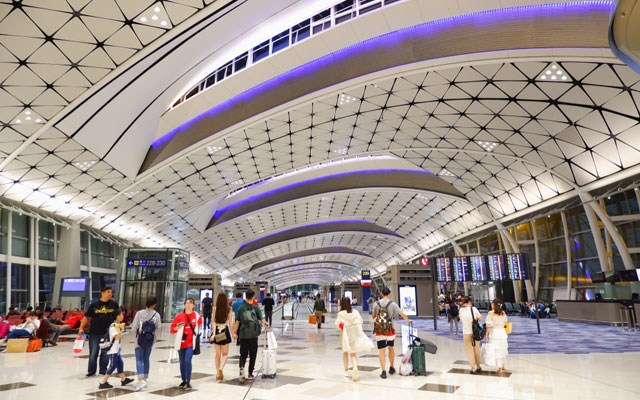
Hong Kong International Airport (HKIA) handled six million passengers and 35,655 air traffic movements in August 2019, representing year-on-year declines of 12.4 per cent and 3.5 per cent, respectively, according to figures published by Airport Authority Hong Kong (AA).
The drop in passenger volume mainly stemmed from a decrease in visitor traffic. Passenger traffic to and from mainland China, South-east Asia and Taiwan experienced significant declines compared to August 2018.
HKIA reported a dip in passenger traffic in August 2019
During the month, airport and flight operations were disrupted by public assemblies at the airport on a number of days. C K Ng, executive director, airport operations of the AA, said: “In the past few months, there have been huge challenges to airport operations at times. Thanks to the concerted efforts of the airport community, we managed to maintain normal operations and minimise impact on travellers.”
Over the first eight months of the year, HKIA handled 50.6 million passengers and 285,495 air traffic movements, up 0.3 per cent and 0.2 per cent, respectively, from the same period last year.
On a 12-month rolling basis, passenger volume and flight movements grew by 0.4 per cent and 0.3 per cent to 74.8 million and 428,290, respectively.