Thailand’s Designated Areas for Sustainable Tourism Administration (DASTA) and ASEAN Tourism Association (ASEANTA) have signed a four-year MoU to widen efforts to benefit the local communities in sustainable tourism sites beyond Thailand to other South-east Asian nations.
The partnership also aims to further promote community-based tourism and accessible tourism for all by encouraging tourist attractions in South-east Asia to take part in sustainable and community-based tourism.
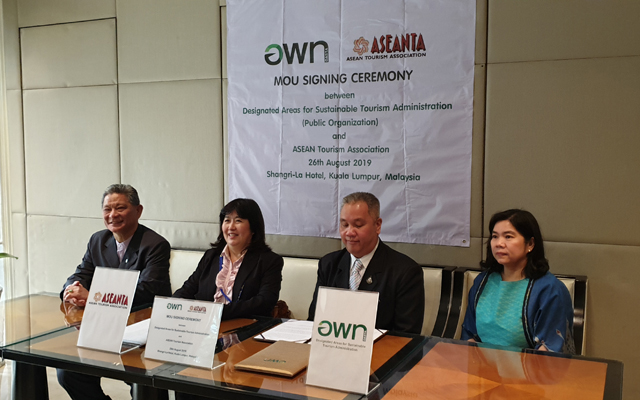
The ASEANTA-DASTA partnership was formalised with the MoU signing ceremony in Kuala Lumpur. From left: ASEANTA’s Sam Cheah and Mingkwan Metmowlee, and DASTA’s Taweebhong Wichaidit and Kesada Srisawasdi
The MoU was formalised with the signing between DASTA’s director-general Taweebhong Wichaidit and ASEANTA’s president Mingkwan Metmowlee on Monday at the 5th World Tourism Conference 2019 at Shangri-La Hotel Kuala Lumpur.
ASEANTA’s president Mingkwan said: “In November, TCEB together with ASEANTA plan to invite over 200 ASEANTA’s component members to Pattaya where the content will focus on best practices on sustainability and community-based tourism, focusing on the environment and community. ASEANTA also plans to organise with NTOs in (South-east Asia) to visit DASTA sites in Thailand.”
DASTA is a Thailand public organisation accountable to the Ministry of Tourism and Sports, with roles and responsibilities in sustainable tourism cooperation, through coordination for integrated administration of areas with valuable tourism resources and acting as an important driving force in the administration of the country’s tourism industry.
ASEANTA, a non-profit tourism association comprising both public and private tourism sector organisations in South-east Asia, counts the ASEAN Hotel & Restaurant Association, Federation of ASEAN Travel Associations, NTOs and airlines among its members.
Since last September, an eye-catching tram can often be spotted plying the streets between Western Market and Happy Valley Terminus. But unlike the iconic double-deckers cruising the streets of Hong Kong, this bespoke teakwood tram is actually a mobile social club and premium event venue.
The Circus Tram, which sees a regular roster of performances by young talents on board, is the brainchild of Alvin Yip, partner and curator-in-chief of local creative startup Circus. After initiating the idea to Hong Kong Tramways, Yip engaged a team of designers, architects, artists and curators to build the nostalgic vehicle with the tram company from scratch.
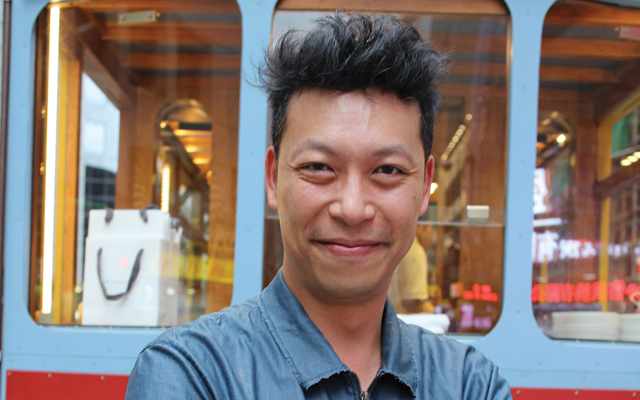
Alvin Yip was inspired by Hong Kong’s iconic 115-year tramways to launch the country’s first mobile social club Circus Tram (Photo Credit: Prudence Lui)
“We (thought of Hong Kong’s) iconic 115-year tramways as more than a transportation means, and first brought this notion to life in 2013 at a design festival called Detour. Fortunately, we successfully obtained a subsidy to produce four prototype trams and reimagined them as various mobile spaces – a library, restaurant and performing theatre,” Yip said.
He added: “Evolving from an academic research to a cultural and art experiment and now a new operation, the (most rewarding part) was being able to engage young designers and artists to work with experienced tram technicians, engineers and craftsmen. I am proud to say that our first Circus Tram is 100 per cent made in Hong Kong and by hand.”
From the outset, Yip wants to breathe new life into a beloved transport icon of Hong Kong by engaging the locals. He has also opened up the initiative to tourists by partnering with The Peninsula Hotels’ Peninsula Academy.
“Hotel guests interested in cultural experiences may charter the whole tram or join the two-hour ride through the Peninsula Hotels. Unlike ordinary sightseeing tram tours, we combine a unique range of onboard experiences like fortune telling, music and a magic performance. Even if a tour guide is deployed, we stress interactive conversations rather than mundane presentations,” Yip explained.
The posh tram interior boasts three lounges: Chatham House on the lower deck, and The Freudians and Darwin Gardens on the upper deck. The tram also boasts first-of-its-kind features, such as a modern electrical and mechanical system that can support lighting and sound systems for events, as well as a restroom.
The Circus Tram is also designed to accommodate artistic salons, concerts, cultural exchange, small business meetings, as well as private functions and receptions.
The launch of Circus Tram has added to Hong Kong’s growing array of iconic venues, opined Yip, offering inbound visitors and locals different possibilities to enjoy and appreciate the local culture.
“Our second and third trams are in the pipeline with more interesting ideas – they are not going to be the same,” he shared.
Airports and airlines hold enormous amounts of passenger data. By sharing it, they’ll be able to create and deliver the personalised experiences that customers demand.
Jewel Changi Airport’s spectacular opening has been headline news around the world. After four years of construction and S$1.7 billion (US$1.2 billion) in investment, Jewel is designed to make the airport a destination in its own right.
Tansey: airlines and airports need to work together to create a seamless passenger experience
Jewel raises the bar for future passenger experiences. However, to provide truly transformational, hyper-relevant and seamless travel experiences, the biggest challenge (and opportunity) centres on collaboration between airlines and airports.
Moving to the next level
The objective is to connect passengers to relevant experiences, services and information at each step of their journey. However, for this to happen, there needs to be a rethink. Relationships between airlines and airports have been fraught because of their complexity: the airport supplies services to each of the airlines that take off and land there but, at the same time, it’s also competing with them for a share of the customer wallet.
Friction over who “owns” passenger relationships is a key issue. Whether or not passengers consider themselves to be airport customers (and most don’t), that’s what they are from the moment they leave their car, through pre-boarding and on to the departure gate.
All this boils down to a central tension: who owns the data? Up to now, the argument has been that because airports own the Wi-Fi networks, they also own – by association – the data that flows through these channels.
Sharing data: the benefits
As with most complex and contentious relationships, communication is key. If airlines and airports want to create the seamless customer experiences that translate into passenger loyalty, collaborative data-sharing has to be the logical next step. Passengers, airports and airlines will all benefit.
Here are three examples:
• Single-token biometric-enabled self service
By partnering to implement biometric-enabled self service, airport, airlines and border control collaboration could make seamless travel through airports a reality. Whether from kerb to gate (with passengers enrolling at self-check-in kiosks in the terminal), or from couch to gate (enrolment at home through a mobile app), average passenger journey times through participating airport terminals could be cut by up to a third.
Heathrow Airport has launched one of the world’s largest self-service deployments which, when complete, will offer 275 bag drops and 370 boarding gates powered by biometrics. This could potentially mean smoother, faster journeys for 80 million passengers a year.
Meanwhile, Canada is testing the use of blockchain technology under the Known Traveller Digital Identity agreement to improve security and support the seamless flow of people across borders. This uses biometrics, cryptography and distributed ledger technology to enable travellers to share their information with authorities and travel providers ahead of travel to get hyper-personalised services.
• Turnaround management automation
Think about the wealth of operational data held by airlines, airports, ground handlers and the air traffic controller. If this could be integrated and accessed in real time, it would be possible to accurately predict an event’s on-time performance. This would translate to more efficient use of infrastructure and resources, fuel savings for airlines, reduced carbon footprints and an enhanced travel experience for passengers.
Gatwick Airport has launched AirTurn to manage aircraft turnaround times. This enables parties including handling and ramp agents, air traffic controllers and airlines to share information seamlessly during a turn. With intelligent technologies, including voice-activation and collaborative chat, deployed across smart devices, AirTurn works in real-time to coordinate activities and minimise any delays.
• Integrated baggage status tracking
Baggage problems can ruin the best travel experiences. Data sharing could make them a thing of the past. With a common platform integrating baggage data between airlines, the airport operator and its ground handling agents, real-time information would be available on the status of every item of luggage. This would optimise baggage operations and reduce the mishandling of baggage.
Helsinki Airport is pioneering developments in this space through a collaboration between the airport airlines and ground-handling companies. This looks ahead to providing seamless customer experiences and reducing the costs involved in tracing, retrieving and delivering missing or delayed baggage.
It’s all possible today
These examples illustrate that the technologies needed to deliver truly connected customer experiences are already available, together with the governance frameworks that are essential to support secure data-sharing between airlines and airports.
And this is just the beginning, with other initiatives pointing the way to future possibilities. Dubai International now operates a system for supervising operations and visualising aircraft flows in real time. By collecting data from Dubai Airports and its service partners, this will help to enable Airport Collaborative Decision Making and Total Airport Management, supporting smooth operations and improving the customer experience.
Meanwhile, Dublin Airport in Ireland now uses integrated data and advanced analytics to improve forecast accuracy, enable predictive security screening, reduce the risk of delays and help transferring passengers to connect with their flights on time. It also allows partners to plan for demand for their services, adding value for organisations including airlines, Irish Border Control and US Customs and Border Protection.
Airlines and airports can come together to share the data they hold, turning the dial on personalisation by delivering the hyper-relevant travel experiences their customers crave.
Hong Kong-based company Tink Labs, which equips hotels globally with in-room handsets for guests, is terminating its services in multiple markets following the cessation of operations, according to a South China Morning Post (SCMP) report.
The report said that the company recently informed hotels in certain countries, such as Morocco and Thailand, that it will no longer be supplying its Handy smartphone services and that cellular service to their devices will cease within hours.
Tink Labs is terminating its in-hotel smartphone services in most markets after it ended operations. Tink Labs has since rebranded under the name hi Inc. (Photo Credit: hi Inc.)
The company had also previously announced to employees internally in July that certain markets, such as China, Denmark, Indonesia, the Philippines and South Africa, will cease to have Handy services, said the report.
Handy, however, will continue to operate in its home market of Hong Kong, Singapore, as well as some hotels in the UK, according to emails and internal documents reviewed by the SCMP.
Hotels in Hong Kong and Singapore were informed that their contracts with Tink Labs were being reassigned to a separate entity, Blockone, said the report, adding that Blockone will also cease to provide its Handy devices for free to certain hotels in Hong Kong.
At one stage, Tink Labs had its Handy devices in 600,000 hotel rooms across more than 82 countries.
The company, which was set up in 2012 by Terence Kwok, became one of Hong Kong’s few start-ups to have commanded a valuation of more than US$1 billion.
Since its inception, Tink Labs has raised US$160 million in funding from investors, which included Lee Kai-fu’s Sinovation Ventures, Meitu founder and chairman Cai Wensheng and Foxconn subsidiary FIH Mobile.
Be inspired by sand sculptures from a galaxy far, far away as this year’s Sentosa Sandsation will see iconic Star Wars characters take over South-east Asia’s largest sand sculpture festival.
The inaugural Sentosa Sandsation: Star Wars Edition kick-starts a three-year collaboration between Sentosa Development Corporation (SDC) and The Walt Disney Company Southeast Asia.
This year’s Sentosa Sandsation will feature Star Wars-themed sand sculptures
The sand fest, which spans almost 3,000m2, will run from 31 August to 15 September 2019, between 10.00 and 20.30 daily. Entry into the event is free for all.
All Singapore residents will also enjoy free entry into Sentosa from August 31 to September 15, 2019, via the Sentosa Express or when driving through the Sentosa Gateway vehicular gantry in Singapore-registered cars.
Sentosa Sandsation: Star Wars Edition will feature 20 Star Wars-themed sand sculptures by renowned sand artists, including Singapore’s very own JOOheng Tan, sand sculpting workshops and “live” demonstrations, as well as the Sentosa International Sand Sculpting Competition. There will also be free movie screenings and exclusive Star Wars-themed merchandise for sale on-site.
As part of the collaboration between SDC and The Walt Disney Company Southeast Asia, guests can look forward to unique and creative experiences at Sentosa which are inspired by Disney’s beloved characters and stories over the next three years.
Sentosa FUN Shops and Singapore Cable Car Gift Shops, operated by One Faber Group (1FG), will also offer merchandises exclusively produced by Disney and 1FG from August 31, in conjunction with this collaboration.
Lynette Ang, chief marketing officer, SDC, said: “The Walt Disney Company Southeast Asia is no stranger to us at Sentosa, having collaborated (with us) on past projects such as Sentosa Sandsation: Marvel Edition in 2018. Our three-year collaboration with Disney builds on this synergy to bring even more unique and fun leisure experiences to our guests.”
More information about the event can be found at www.sentosa.com.sg/sandsation.
Graeme Rutherford has joined Sage Hotel West Perth (under Next Hotels & Resorts) in Australia as general manager.
The industry veteran began his hospitality career with Rydges Hotels, working his way up to his first general manager position in Melbourne. Since then, Rutherford has managed a number of hotels in Australia and New Zealand, including Rydges Perth and Frasers Suites Perth.
Adara, a travel data co-op and provider of traveler intelligence for travel brands, has appointed Frank Teruel to the newly-created position of COO as the company expands its business and operations around the globe.
Teruel has more than 25 years of experience in venture-backed start-ups and tenured technology businesses. With his dual financial and operational background, he is expected to bring to Adara deep expertise in sales, operations, and finance.
Most recently, Teruel led ThreatMetrix through rapid global growth and expansion to new industries culminating in an US$830 million sale to LexisNexis Risk Solutions. Previously, Teruel held executive management positions at Vormetric and other software companies.
He is also a frequent speaker and thought leader on contributory data, digital identities, cybersecurity and internet fraud prevention topics.
Sri Lanka has lifted its state of emergency – imposed after the Easter Sunday bombings in April – bringing hopes to the travel trade that the move will lead to a much-needed boost to tourist arrivals.
Trevor Rajaratnam, president of the Travel Agents Association of Sri Lanka, said the move would send a positive message to the rest of the world that Sri Lanka is open for travel. “It’s a huge positive move and will also help airlines which depend on more inbound travellers,” he noted.
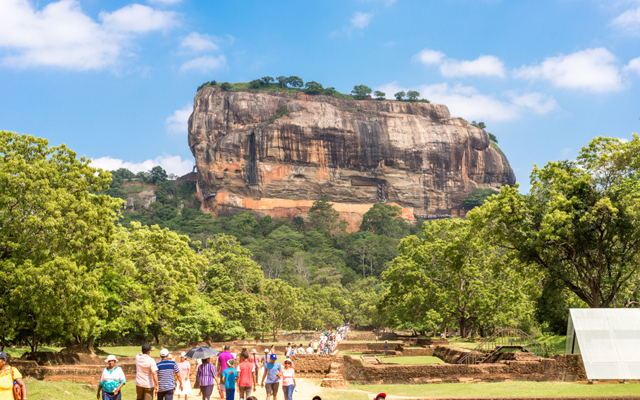
Sri Lanka has lifted a four-month state of emergency which hopefully will boost tourist arrivals
Arrivals have dipped monthly since the attacks, and tourists have stayed away. Officials also believe winter arrivals will drop by 30 to 40 per cent, but hope that since the month-on-month emergency lapsed last Thursday, the situation could improve. Emergency rule permits the government to mobilise the armed forces on the streets among other security-related measures.
Mahen Kariyawasam, former president of the Sri Lanka Association of Inbound Operators, said that the removal of emergency rule was a very positive move and would help in the recovery of tourism efforts.
As well, tourism industry officials said that even though several countries have relaxed travel advisories, these advisories were still at the category 2 and 3 levels, which denote ‘be cautious’ when travelling to Sri Lanka. Some countries like Russia have not relaxed its travel advisory.
“Even though many countries have relaxed travel advisories, they were at a category where government officials are not advised to travel (to Sri Lanka). A forthcoming major business conference was unable to invite government officials from other countries for this reason, which would now help in their participation,” Kariyawasam said.
Meanwhile, Achini Dandunnage, senior manager at the Sri Lanka Convention Bureau, said: “With the lifting of the emergency, hopefully, travel advisories will be further relaxed.”
But there is light at the end of the tunnel, as authorities are in the midst of preparing for 21,000 to 25,000 followers of the minority Bohra Muslim community from 40 regions and countries that will descend into Sri Lanka for a mega international convention. The event, to be held from September 1-10 in Colombo, is a positive boost to business tourism.
Malaysia has recorded RM41.7 billion (US$13.7 billion) in tourist receipts in 1H2019, a growth of 6.8 per cent from the corresponding period in 2018.
Speaking at a press conference on the performance of Malaysia’s tourism sector, minister of tourism, arts and culture Malaysia Mohamaddin Ketapi said that the number of foreign visitors to the country rose 4.9 per cent to 13.4 million in the first six months this year, up from 12.7 million in the corresponding period last year.
Malaysia welcomed 13.4 million tourists in the 1H2019, up 4.9 per cent from the same period last year
Asia-Pacific continues to dominate Malaysia’s foreign arrivals at 70 per cent, he revealed, accounting for six of the top 10 international tourist source markets in 1H2019. Arrivals from Singapore topped the list with 5.4 million tourists, followed by Indonesia (1.9 million), China (1.6 million), Thailand (990,565), Brunei (627,112), India (354,486), South Korea (323,952), the Philippines (210,974), Vietnam (200,314) and Japan (196,561).
Overall, the short-haul, medium-haul and long-haul markets registered positive growth at 4.7 per cent, 7.2 per cent and 1.8 per cent respectively, compared with the first half of 2018.
The top five countries with the highest expenditure per capita were Saudi Arabia at RM11,376 (US$2,715), the UK at RM5,241, Canada at RM4,593, China at RM4,546 and the US at RM4,537.
With steady growth recorded for the tourism sector in the first half, Mohamaddin is confident that Malaysia would meet its target of 28.1 million tourist arrivals for 2019 as the third quarter is also the peak summer travel season for the Indian, Middle East and European markets.
“We recorded over 13 million tourists in the first half of 2019. It is not the peak travel time for tourists from some countries yet. We have several more months (to) achieve our target,” he said.
Tourism Malaysia’s director general, Musa Yusof, who was also present at the press conference, said that he was optimistic that arrivals from China will continue to grow positively in 2H2019, despite China’s economic slowdown.
“Tourism Malaysia will be participating at the upcoming China (Guangdong) International Tourism Industry Expo from August 30. It will be great if we can capture 10 per cent of the Chinese population of Guangdong, which is around 111 million,” he said.
Apart from incentives such as the Joint International Tourism Development Program, Tourism Malaysia is also in discussion with China-based airlines and top Chinese outbound operators to attract more charter and scheduled flights from China to fly to Malaysia.
Next year also marks the Malaysia-China Cultural Tourism Year, which Musa believes will attract more Chinese tourists to Malaysia.
Thailand’s quarterly tourism confidence index in 2Q2019 held steady at 100 from its 1Q prediction, and is expected to remain at 100 in the third quarter of this year, a recent study found.
The survey, which is a collaboration between the Tourism Authority of Thailand (TAT), Tourism Council of Thailand and Chulalongkorn University’s Faculty of Economics, is based on responses from over 600 tourism operators and government officials from related agencies. It also interviewed 350 international and 350 domestic tourists, respectively.
Thailand’s quarterly tourism confidence index in 2Q2019 held steady at 100 from its 1Q prediction, and is expected to remain at 100 in 3Q2019
The findings in the second quarter of this year highlighted both the micro and macro factors affecting Thailand’s tourism industry: The slowdown of the world economy as well as Thailand’s economic stagnation; the Thai government’s stimulus and tax reduction scheme; extension on the visa-arrival fee waiver for citizens of 20 nations for another six months until October 2019, and the strength of the Thai baht to a weakening US dollar combined with rising inflation.
The index forecasts that the number of foreign arrivals in Q3 will increase 7.1 per cent year-on-year to 9.7 million visitors. It also projects that total arrivals will rise 4.7 per cent to reach 40.1 million international tourists for all of 2019, compared to 2018.
These findings, however, reflected a more positive sentiment than the latest projections from Thailand’s Ministry of Tourism and Sports, which had cut its foreign arrivals forecast further to 39-39.8 million this year, down from 40.2 million.
Thai tourism in the first half of this year saw only a 1.4 per cent growth in foreign arrivals to 19.7 million, prompting the Thai ministry to slash its target in July from 41.3 million to 40.2 million, according to a Bangkok Post report.
The report also quoted Thai tourism and sports minister Phiphat Ratchakitprakarn as saying that he is confident the new projection is attainable as the government has been doling out incentives to foreign visitors.
Phiphat added that the Thai cabinet will continue to promote tourism in the upcoming months by extending the waiver of visa-on-arrival fees to 19 nations, which already covers China and India, from October 31 this year until April 30, 2020.
TAT governor Yuthasak Supasorn was also quoted as saying that the Thai cabinet believes the incentive will help draw some 20 million foreign tourists in the second half, maintaining tourism momentum to support the country’s three per cent GDP growth this year.
Despite a dip in foreign arrivals, especially from China, Yuthasak is positive that the goal of 3.4 trillion baht (US$111.9 billion) in tourism revenue this year is achievable, a 9.5 per cent increase from last year.
Meanwhile, the latest statistics of the Thailand Tourism Intelligence Centre report 23.1 million foreign tourists visited Thailand in the first seven months this year, up by 1.94 per cent year-on-year.
China still accounts for the biggest portion with 6.63 million visitors, a contraction of 3.3 per cent, followed by Malaysia with 2.24 million, up 6.2 per cent, and India at 1.14 million, up 24 per cent.