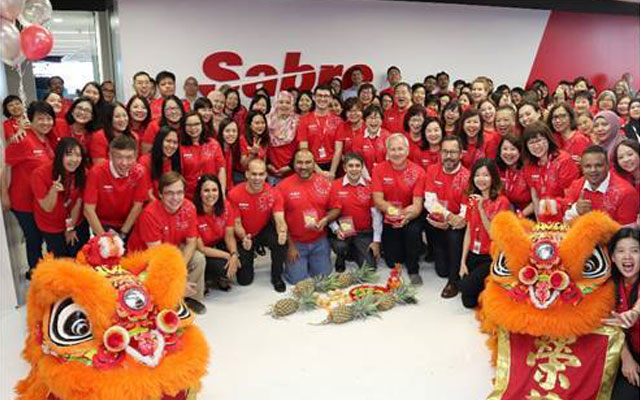
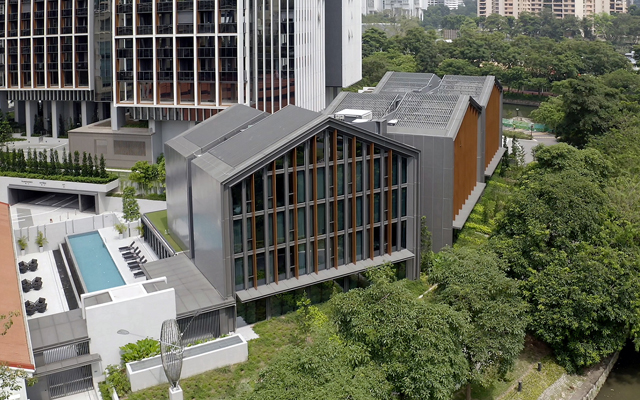
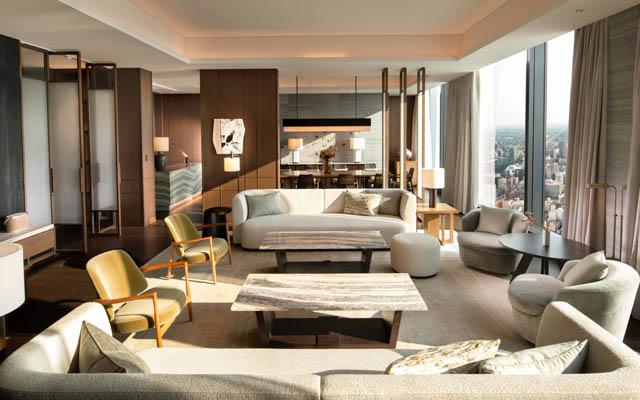
Sabre Corporation has inaugurated its new Asia-Pacific headquarters at Paya Lebar Quarter in Singapore.
Part of a S$3.2 billion (US$2.3 billion) complex, Sabre’s new custom-built office will span over two floors and accommodate up to 350 employees. With common areas and meeting rooms, the open floor plan will feature individual workspaces with ergonomic tables.
Sabre has inaugurated its new Asia-Pacific headquarters at Paya Lebar Quarter in Singapore
The new office is said to boast a complete work ecosystem that enables knowledge sharing, innovation and collaboration, while providing an array of activities that promote a balanced, healthy lifestyle.
With a presence in Singapore since 1997, Sabre’s new headquarters will serve as a central hub for its regional teams, while facilitating operations and enabling the deployment of a consistent Sabre brand across all markets, said the company.
IndiGo inaugurates flights between India and Myanmar
Indian air carrier IndiGo has inaugurated flights from Kolkata to Yangon International Airport, marking the first scheduled daily flight from an Indian city to the gateway to Myanmar.
Using Airbus A320, the service takes off from Kolkata at 11.30 with landing scheduled in Yangon at 14.30. On the return, the outbound flight from Yangon departs at 15.30 to land in Kolkata at 16.30.
LOT Polish Airlines launches Budapest-Seoul route
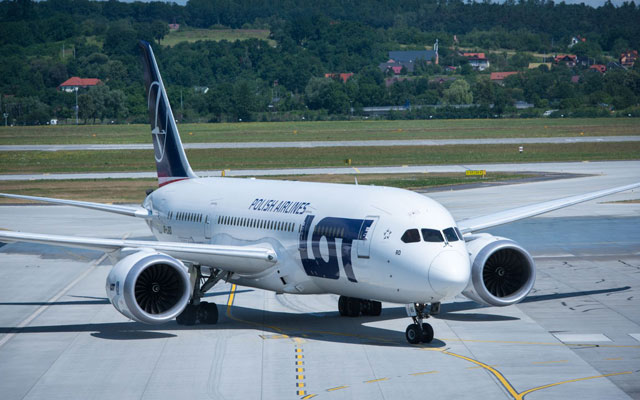
LOT Polish Airlines has commenced thrice-weekly flights from Budapest to Seoul on Boeing 787 Dreamliner aircraft, marking the first longhaul service launched by the carrier from the Hungarian capital city to Asia.
The outbound flight from Budapest takes off at 12.25 and arrives in Seoul at 6.05 on Tuesdays, Fridays and Sundays, while the return flight will depart Seoul at 07.30 and arrives in Budapest at 13.15 on Mondays, Wednesdays and Saturdays.
AirAsia becomes first international airline to fly to Vietnam’s Dalat
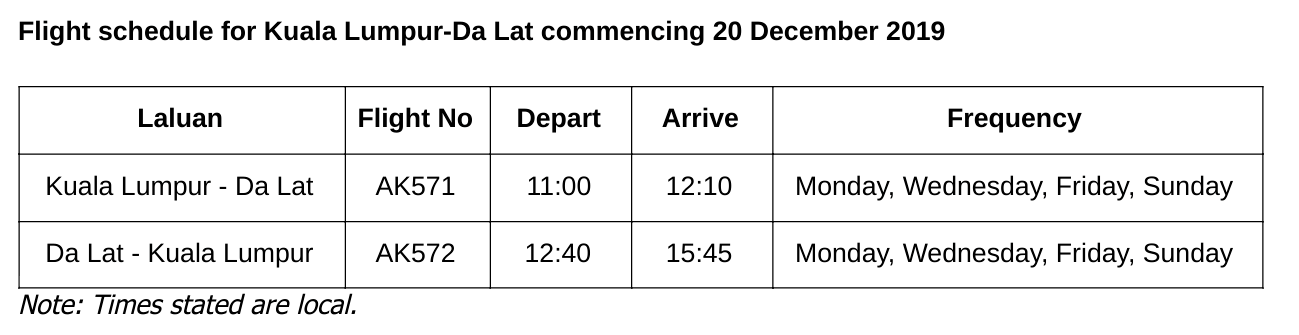
AirAsia will launch a new route to Dalat from Kuala Lumpur, further expanding its footprint in Vietnam. The four-times-weekly service to Dalat, capital of Lam Dong province in the Central Highlands, will commence on December 20, 2019.
Jetstar ups flight frequency from Singapore to Danang
Jetstar will increase its services between Singapore and Danang to five-times-weekly, up from thrice-weekly, from October 29, 2019, to meet the strong demand for this route.
The new service will depart Singapore at 07.00 and arrive into Danang at 08.40 while the returning service will depart at 09.20 and arrive into Singapore at 13.05.
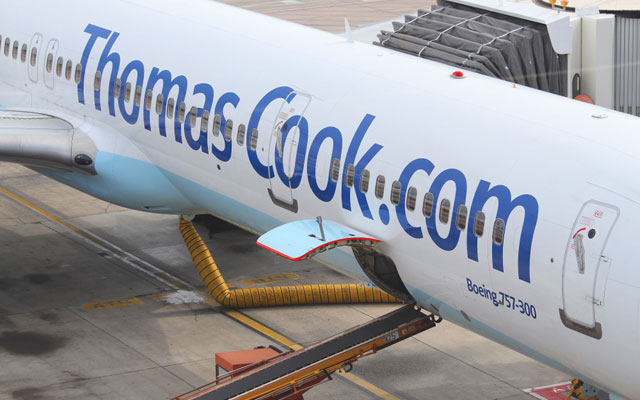
The global travel industry is coming to terms with the demise of 178-year-old British tour operator Thomas Cook following its bankruptcy announcement earlier this week. As the collapse of Britain’s oldest travel company reverberates around the world, industry members worldwide are also saddened by the fall of a travel giant which many have worked or came into contact with through their years in the travel industry.
Who’s affected
For now, Australian travel group Webjet is said to be among the companies which are feeling the pinch most from the shutter of Thomas Cook, as the Australian travel group takes a 27 million euros (US$29 million) hit from the collapse, Reuters reported.
Trade sees Thomas Cook’s collapse as a wake-up call for the travel industry
In Asia, questions naturally surround the joint venture DMC that Thomas Cook Group and Asian Trails established last year.
When contacted by TTG Asia for an update on the partnership, Asian Trails CEO Laurent Kuenzle said: “The joint venture company – Thomas Cook In Destination Management (Thailand) – takes care of local services such as transfers and optional tours (not hotels which are booked by Thomas Cook directly) for Thomas Cook in Thailand, and no other destinations in Asia. Asian Trails is a non-exclusive supplier to the joint venture company.
“Thomas Cook UK business constitutes less than five per cent of the total Thomas Cook business to Thomas Cook In Destination Management (Thailand). The largest business comes from Thomas Cook Continental (i.e. Central Europe) and Thomas Cook Nordics; Thomas Cook France and Thomas Cook China also buy services from Thomas Cook In Destination Management (Thailand).”
Following the closure of the Thomas Cook UK business, there are less than 70 pax in Thailand from Thomas Cook UK at the moment, Kuzenle added.
“What will happen to the Thomas Cook Continental business is not decided,” said Kuzenle, citing media reports that “it is business as usual” for Thomas Cook Nordics and Thomas Cook China.
Kuzenle reiterated: “We have nothing to do with Thomas Cook. We are owned by Fairfax, a Canadian company through Thomas Cook India. Thomas Cook India is a completely different company from Thomas Cook.”
Thomas Cook India, in an earlier statement, has also reiterated that it is an entirely separate entity from Thomas Cook in the UK and that its financial position remains secure.
Fosun International, which is the single largest shareholder of Thomas Cook with an 18 per cent stake, had earlier expressed its disappointment over the failure of its last-ditch bid to rescue the British travel firm from bankruptcy.
Most tour operators that TTG Asia spoke to do not work directly with or get business from Thomas Cook in the UK, with several reporting that companies elsewhere partly or fully owned by the former British travel giant continue trading.
In Indonesia, Padma Hotels’ partnership with Thomas Cook Germany is so far running well, according to corporate director of marketing & communications, Yohanes Hatauruk.
The Bali-based hotel group did not earlier pursue any partnership with Thomas Cook UK as the UK market was not deemed a big market for his hotel in Legian, said Yohanes. Furthermore, Thomas Cook UK itself was not seen as a travel agent with a big production value.
Fairmont and Raffles Philippines’ director of sales and marketing, Eugene Tamesis, said it is “truly unfortunate” that a once-influential company like Thomas Cook has to fold up. But he doesn’t foresee any direct impacts on hotels and tour operators in the Philippines “as we were never really big with UK leisure travellers and charters as compared to our ASEAN neighbours like Thailand, Vietnam and Indonesia”.
A wake-up call for industry
The bankruptcy of a storied British tour operator ignited a wave of sadness among the travel industry members, many of whom have worked with or came into contact with the established company through their years in the travel industry. It has also opened up questions on ripple effects, which would more likely be seen in the coming days.
While Steve Lidgey, general manager at Travel Asia a la Carte (Cambodia), doesn’t see impacts as Thomas Cook only sent small numbers to Cambodia, he is saddened for the Thomas Cook staff on a personal level. “In my previous life as an agent in the UK, I dealt with them and have lots of friends with good connections. Everyone is affected in some way,” he said.
“Clearly, the collapse was down to multiple reasons though the (biggest) blame should lie with the management for being unable to adapt to the changing travel industry,” he opined. “Thomas Cook was far too big to cope in a time where many people book their holidays online and not down the High Street. Brexit, the strong dollar and the European summer would have all been manageable had the company been in better shape.”
Alcuin Li, who was Hong Kong & China general manager of Thomas Cook until the group sold its financial services business to Travelex in 2002, said: “I reckon the bankruptcy is related to low profit margin and lack of clear brand positioning to retain clients. It branched out without clear positioning, just like a department store, and found it hard to compete with the others when it came to pricing. On the contrary, it should had stick to its upscale positioning and niche market despite keen competition, while continuously upgrading products and services to stay ahead of the competition.”
Edwin Briels, general manager at Khiri Travel Myanmar, which had “worked very well together with the incentives department of Thomas Cook Belgium”, believes that the lack of creativity and innovation is probably a key reason behind Thomas Cook’s collapse.
Thomas Cook’s fall is a reminder to tour operators to avoid the pitfalls of being complacent and not proactively looking to offer added value to the experience for clients, Briels maintained.
“I foresee more ‘mainstream’ tour operators worldwide to collapse if they don’t focus more on real experiences and rather focus on price of products like accommodation and flights only; that’s why Khiri Travel creates unique travel experiences for their clients,” he added.
Fairmont and Raffles Philippines’ Tamesis agreed: “(Thomas Cook’s collapse) is indeed a big blow to the travel industry and traditional travel as we know it, given the obvious shift in how travel products are being consumed nowadays, especially by the younger market. This will definitely serve as a wake-up call to other tour operators who have not adjusted their approach to the fast-changing market shifts!”
In the wake of Thomas Cook’s solvency, the UK government has launched its biggest-ever peacetime repatriation to bring stranded travellers back to the country
More ripple effects ahead
Inevitably, Thomas Cook’s dismal also opens up more questions, including whether travellers can still trust larger companies with a long history, or if there is risk in booking with any agent even if they are protected by ATOL (which stands for Air Travel Organiser’s Licence), Lidgey said.
David Kevan of Chic Locations UK thinks that the fall of an established name like Thomas Cook will have knock-on impacts on client confidence in the travel industry as a whole, including a reevaluation of the pre-payment process.
“I am sure credit controllers at many hotels will be looking at their industry receivables generally and thinking what can be done for the future. Two solutions are likely: either pre-payment prior to client arrival or if that is not acceptable, to ask for bank guarantee up to a realistic level based on the performance of the operator. Provided the tour operator accounts are in good shape, the cost of the guarantee is minimal although it does ring-fence the amount so it cannot be touched.
Kevan thinks that such pre-payment requests are not unusual. “Many operators already have this in place with carriers such as Emirates, Cathay Pacific and Singapore Airlines so it could be easily applied to individual hotels or to a collective hotel association if this is workable. Logically, the same principle would apply if overseas operators were using DMCs to make hotel bookings,” he added.
The fallouts from the collapse of a travel giant like Thomas Cook will certainly by played out in the months to come, but there could be winners too from this, said Travel Asia a la Carte’s Lidgey.
“The UK travel industry will see ruptures for several months with some prospering out of the collapse of Thomas Cook. Tui’s share value has gone up as a result,” she said.
Rescue mission underway
In the wake of Thomas Cook’s solvency, the UK government has already launched its biggest-ever peacetime repatriation by sending planes to bring stranded travellers back to the country over the next two weeks.
In the Maldives, a popular travel destination for the UK travellers, the Maldives Ministry of Tourism and the Maldives Marketing & Public Relations Corporation have issued a statement that they are working closely together to “provide the best possible support for these tourists on their return journey”.
Ali Waheed, the Maldives’ minister of tourism also said in a statement that “the government will do everything in its power to ensure the well-being of the passengers affected”.
The Maldives authorities have contacted all resort partners to confirm the number of Thomas Cook travellers currently staying in the Maldives and to determine their return destination, and efforts will be made to provide food, assistance and accommodation if required. Affected travellers are asked to approach the designated service staff on site.
Meanwhile, the travel industry is rallying around staff affected by Thomas Cook’s collapse. Virgin Atlantic, which is owned by Richard Branson, is encouraging affected industry members to apply for roles at the airline.
“At this difficult time for our industry colleagues at Thomas Cook, we have opened a recruitment window for existing flyers to apply for cabin crew with Virgin Atlantic,” the airline announced in a LinkedIn message.
“We know this is a challenging situation for all impacted, so this vacancy will be exclusive to current Thomas Cook Cabin Crew, and will be available until Monday, September 30.”
Additional reporting by Marissa Carruthers, Kurniawan Ulung, Rosa Ocampo and Prudence Lui
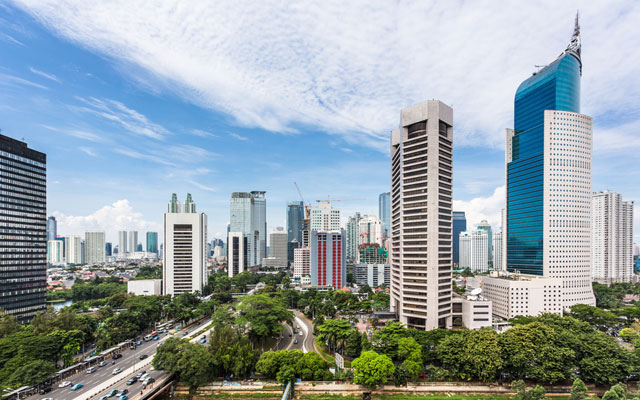
Since Indonesian president Joko Widodo announced the plan to move the country’s capital from Jakarta to East Kalimantan, hospitality consulting firm Horwath HTL projects that the revenue that Jakarta hotels will lose to their counterparts in Kalimantan stands at around 1.4 trillion rupiah (US$99 million) annually.
Horwath HTL Jakarta’s business development manager Christy Megawati said: “While the global media scrambled to locate Balikpapan and sensationalise the plight of the Bornean orangutan, we got to thinking about the effect it will have on the bottomline of Jakarta hotels.
Indonesia’s capital move could lead to US$99 million revenue loss annually for Jakarta’s hotels: Horwath HTL
“Government-driven room night demand, for both FIT and business events, is integral to the business of Jakarta hotels, so what are hoteliers going to do (about the loss of business revenue from that sector)? How are they going to fill the burgeoning number of rooms? How big is that slice of (Indonesian hotel business) pie?”
In terms of rooms, the estimated total room night demand (RND) in Jakarta from government- and business-related events in 2018 was around 2.1 million room nights or the equivalent of 5,800 rooms per day or 18 occupied rooms per hotel per day at an average daily rate of 972,000 rupiah (US$68).
On the F&B front, the estimated total number of business events in 2018 for both in-house and external guests was nearly 13.8 million, which translates to around 115 covers per hotel (three-star and above) per day at 215,000 rupiah per cover.
“We have created two doomsday scenarios: an estimated 25 per cent or a 50 per cent loss in RND of the total RND from government- and business-related events,” Megawati explained.
Under the first scenario, a 25 per cent loss equates to a reduction of 528,000 room nights – or 10 empty rooms every day – and a total 1.2 trillion rupiah loss in annual revenue to Kalimantan.
Under the second scenario, a 50 per cent loss equates to a reduction of more than one million room nights – 20 empty rooms every day – and a total 2.3 trillion rupiah loss in annual revenue to Kalimantan.
Horwath HTL’s conservative estimate of the amount of business revenue that Jakarta hotels will lose to their counterparts in Kalimantan is around 1.4 trillion rupiah annually, based on 2018 values.
To estimate the amount of losses, Horwath HTL based its calculation on several assumptions, using 2018 as its base year.
“The year 2018 was a pretty good base year with a healthy 5.3 per cent GDP growth; an improved unemployment rate (currently 5.3 per cent); strong foreign direct investment (US$27.8 million) boosted further by a weaker IDR; and the year preceding a national election was typically a strong stable year for hotels, before the tumult of an election year,” said Megawati.
An assumption is that the Jakarta provincial government will continue to generate RND and that Jakarta will always be the country’s beating economic heart.
Another assumption is that a significant proportion of RND in Jakarta is driven by government-related business events, including those of state-owned companies.
The calculation is also based on Statistics Indonesia’s data that Jakarta has 326 hotels and 46,899 rooms, or around 144 keys per hotel.
India’s GST Council last Friday announced a GST rate cut on hotel rooms, bringing a much-welcomed relief to industry stakeholders who have long voiced their concerns of the impacts of high GST rates on the competitiveness of the country’s tourism and hospitality sectors.
With the new move, the tax on room tariffs of Rs7,500 (US$105) and above is now cut from 28 per cent to 18 per cent. Similarly, the tax on room tariffs of less than Rs7,500 is slashed from 18 per cent to 12 per cent.
India’s GST Council cuts tax rate on hotel room tariffs
The Federation of Hotel & Restaurant Associations of India (FHRAI) anticipates the move will give a boost to the tourism and hospitality sector during the upcoming festive and holiday season, said vice president Gurbaxish Singh Kohli.
“The reduction in the GST rates will make India an attractive tourism destination to foreign as well as domestic tourists who presently choose to vacation in the neighbouring countries on account of price competitiveness,” he stated.
Also lauding the move is president of the Hotel and Restaurant Association of Northern India (HRANI), Surendra Kumar Jaiswal, who is positive that the reduction of tax rates on hotel room tariffs should help in lifting market sentiments.
Likewise, Sarbendra Sarkar, managing director and founder, Cygnett Hotels & Resorts, said: “This move will help travellers gain more out of their dispensable budget, luring them to travel more. Moreover, this would also help the industry receive the traction that was not evident since the past few months. It will certainly boost the average occupancy of hotels.”
He added: “Additionally, it will also help us propel our value proposition at a competitive price point that we are operating in.”
Sri Lanka’s government wants to set up a promotion agency with the private sector to circumvent bureaucratic difficulties in launching a destination marketing campaign.
Speaking at the Future of Tourism conference in Colombo on Monday, Sri Lanka’s prime minister Ranil Wickremesinghe acknowledged the delay in getting a post-crisis marketing campaign off the ground. He said: “This campaign has taken too long (to approve), so we need to find other ways of getting this going.”
Sri Lanka’s government seeks private sector’s help to set up a tourism promotion agency
He said that the Sri Lankan government is willing to partner the private sector in setting up a promotional unit using state funding to cut through state bureaucracy and processes. “If the private sector is willing, then we can move forward,” he said during a Q&A session with CNN business correspondent Richard Quest.
The Easter Sunday terror attacks that killed more than 250 people, including 50 tourists, led to a 70 per cent plunge in tourist arrivals to Sri Lanka in May. Half a year on, arrivals are slowing picking up, despite a continued drop in numbers from before the attacks. Speaking at the same event, Sri Lanka Tourism Promotion Bureau (SLTPB)’s chairman Kishu Gomes said that arrivals are projected to drop by 15 per cent this year.
Due to cumbersome state procedures and necessary cabinet approval, the SLTPB has been unable to proceed with a US$5 million tourism recovery plan, which entails a two-month emergency PR campaign and a six-month marketing campaign.
Plans to roll out the recovery campaign have now been abandoned as it is too late to capture winter bookings. Instead, last week, the SLTPB launched a global TV campaign, in collaboration with CNN, in 12 key markets.
At the same event, Thailand-based Minor Hotel Group’s CEO Dillip Rajakarier said that Sri Lanka needs to focus on high-end tourists and lamented the lack of strong PR agencies in key markets which would have sped up the recovery efforts.
Echoing that sentiment was Malik Fernando, managing director, Resplendent Ceylon – which runs three luxury boutique hotels – who said that Sri Lanka neither have a single trade partner to promote inbound tourism overseas nor external PR agencies, which could pose a huge disadvantage to the country’s tourism recovery efforts.
In the absence of tourism recovery efforts by the Sri Lankan government, the country’s private sector industry has been taking action to attract tourists back to the country.
InterContinental Hotels Group (IHG) have joined forces with boutique hotel specialist Mr & Mrs Smith on an exclusive loyalty partnership.
From early 2020, IHG Rewards Club loyalty members will be able to earn and redeem points at over 500 of Mr & Mrs Smith’s luxury and boutique hotels worldwide when booking through IHG’s direct channels, including IHG.com and IHG mobile app.
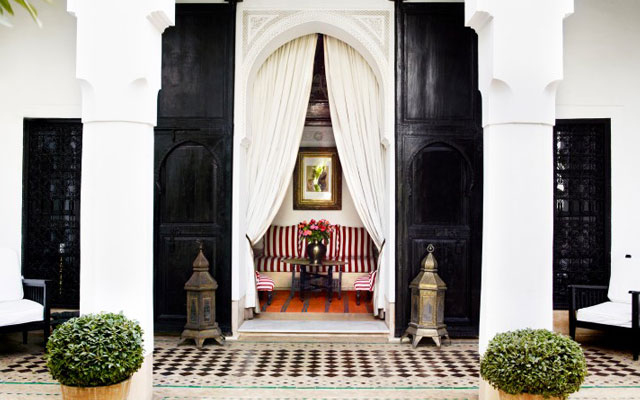
IHG Rewards Club members will be able to earn and redeem points at over 500 of Mr & Mrs Smith’s luxury and boutique hotels worldwide, including L’Hôtel Marrakech (above)
This partnership will more than double the number of luxury and boutique hotels available to IHG Rewards Club members; complementing IHG’s luxury and boutique portfolio of hotels and resorts across Six Senses Hotels Resorts Spas, Regent Hotels & Resorts, InterContinental Hotels & Resorts, Kimpton Hotels & Restaurants and Hotel Indigo.
IHG’s most loyal members, including InterContinental Ambassadors and Kimpton Inner Circle members, can expect free room upgrades whenever available as well as a free gift, such as a bottle of champagne, picnic hamper or 30-minute massage, on arrival at every Mr & Mrs Smith hotel.
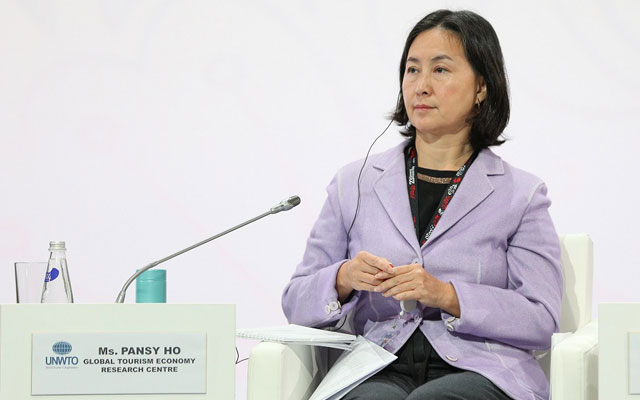
Pansy Ho, vice chairman and secretary-general of the Global Tourism Economy Forum (GTEF), participated in the Ministerial Debate on Education and Employment in Tourism: Realizing SDG 4 and SDG 8 at the recent 23rd General Assembly of the World Tourism Organization (UNWTO) in St Petersburg, Russia.
Joined onstage by 12 global tourism ministers, key corporate leaders and leaders of academic institutions, Ho spoke of the future of work in tourism and the sector’s contributions to the UN Sustainable Development Goals.
During the debate, she highlighted the key role that women play in tourism, the opportunities tourism offers young people, and the importance of public-private partnerships in fostering a talented workforce.
GTEF’s vice chairman and secretary-general Pansy Ho (above) at UNWTO’s recent 23rd General Assembly in St Petersburg, Russia
Ho also brought attention to the importance of the human touch and how the trend of immersive travel creates opportunities for local communities to present a holistic view of their heritage, art, food and environment.
In terms of education, she highlighted the success of Macau, which has emphasised community engagement as a means to expose students to the different dimensions of tourism and to potential career opportunities. Macau is taking the long view on talent management, aiming to engender pride in its local heritage, traditions, arts and crafts.
As well, Ho highlighted how the GTEF, founded in Macau in 2012, illustrates the importance of home-grown service talent for both the tourism and MICE markets. By hosting the annual GTEF, Macau is facilitating the continuous development of human capital, in terms of employment and vocational training, while showcasing Macau as a tourism and leisure destination.
The GTEF was also the sponsor of the 15th edition of the UNWTO Awards, which took place on September 10. Held during the UNWTO General Assembly, the awards celebrate inspirational projects that have made a valuable contribution in the advancement of sustainable tourism.
GTEF says its support of the UNWTO Awards strengthens the collaboration between the two organisation in promoting the sustainable development of tourism. Past examples of this collaboration include the appointment of Ho as UNWTO tourism ambassador in 2018 for her contributions in promoting regional and global tourism cooperation and sustainable tourism and, in 2017, GTEF acting as a key sponsor of the UN International Year of Sustainable Tourism for Development.
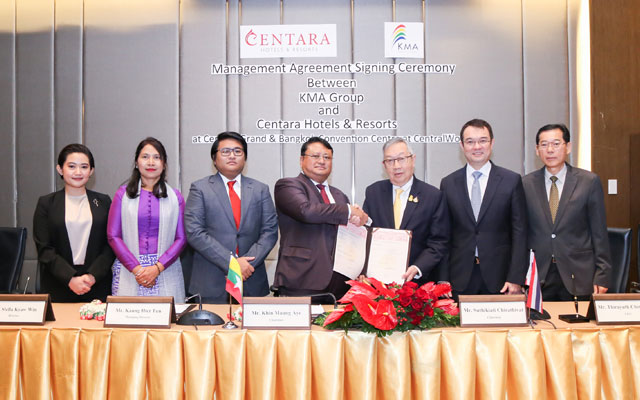
Centara Hotels & Resorts and KMA Group have signed a deal to manage a new hotel in Myanmar.
Owned by KMA, the 95-key Centara KMA Resort Inle Lake will be rebranded and managed under the Centara brand when it opens in 4Q2019.
Centara Hotels & Resorts’ Thirayuth Chirathivat (second from right), Central Group’s Suthikiati Chirathivat (third from right), KMA Group’s Khin Maung Aye (centre) and KMA Group’s Kaung Htet Tun (third from left) at the signing ceremony of a deal between KMA Group and Centara Hotels & Resorts to manage a new Myanmar resort
In May, Centara signed a MoU with KMA for the management of six hotels and resorts in Myanmar. This new management agreement represents the completion of the deal for the first of these properties, with the others set to follow imminently.
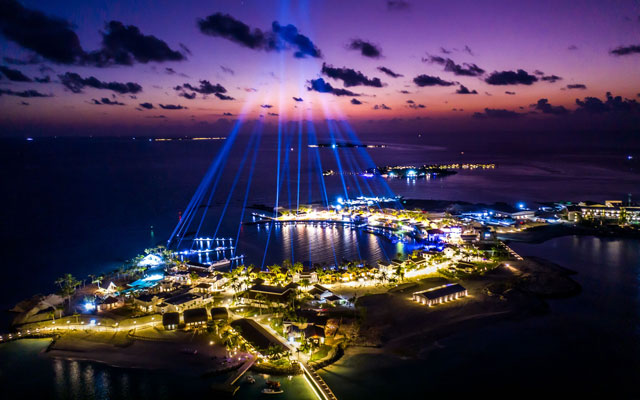
After two years of development, Crossroads, the first and largest integrated leisure and lifestyle destination in the Maldives by Thai developer Singha Estate, will be opening two of its nine islands.
The first island is home to the lifestyle district and heart of the megaproject, The Marina @ Crossroads, an 11,000m2 retail and entertainment space. The attraction, which is in close proximity to the city, houses luxury retail outlets, fine dining restaurants, a state-of-the-art event hall, as well as a PADI-certified water sports and dive centre.
Crossroads, the largest integrated tourism destination in the Maldives, will be opening two of its nine islands
A transit hotel, SAii Lagoon Maldives, which is under the Curio Collection by Hilton, targets short-term visitors who can utilise the facilities at the town centre during their stopover for connecting flights.
The project’s sustainable development aspect can be seen through the efforts made at Maldives Discovery Centre, an interactive educational-centre-cum-museum that promotes environmental conservation and Maldivian local arts and crafts.
Another is the Marine Discovery Centre, a marine life laboratory that hosts biologists who carry out research and longitudinal studies on sea-life and coral propagation through a Junior Coral Curator programme and a clownfish release initiative that span within the area of 64,000m2.
The second island is the Hard Rock Hotel Maldives, which is developed and managed by S Hotels & Resorts. The hotel, which introduces music-inspired stays, is also considered to be the brand’s first Maldivian outpost.
Singha Estate’s CEO Naris Cheyklin said that while setting sights on promoting tourism and the local economy, Crossroads is also committed to its mission of “building big, protecting the small”, which entails promoting the livelihoods of its inhabitants while fashioning this mega project.