TTG Asia
Asia/Singapore Sunday, 1st February 2026
Page 1228

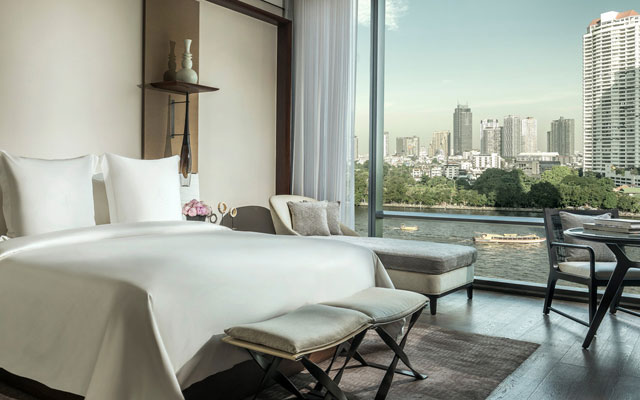
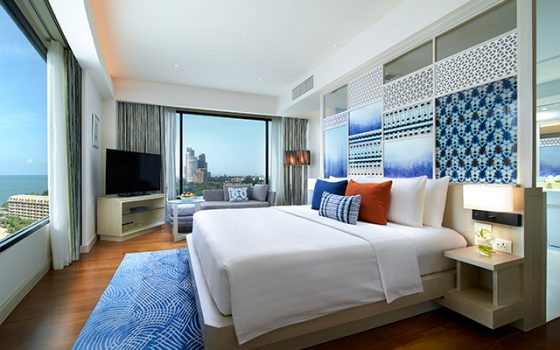
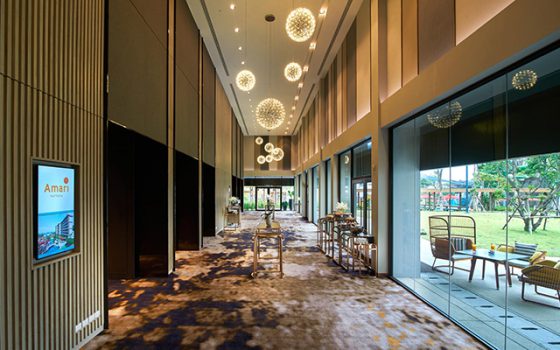
Jean-Philippe Jacopin put at helm of Orchard Hotel Singapore

0

Millennium Hotels and Resorts (MHR) has appointed Jean-Philippe Jacopin as general manager of Orchard Hotel Singapore.

Jean-Philippe will spearhead the development of MHR’s flagship 656-room property, following a multimillion-dollar transformation including a new lobby, grand deluxe rooms, function and event spaces, and F&B venues.

The hospitality veteran has over three decades of hotel management experience with global luxury hospitality brands in countries such as China, Japan, South Korea, Thailand, Switzerland and UK.

Making room for all

0
Pan Pacific Yangon

Increasing business activities, an expanding middle class and a growing bleisure market are some of the key factors driving demand for serviced apartments in Asia, spurring accommodation providers in the region to respond with robust pipelines and new brands.
The regional inventory of serviced apartments has exploded over the last four years.

According to the Global Serviced Apartments Industry Report 2018-2019, there are 116,603 serviced apartment units across Asia today, an increase of 63 per cent from 2015.

Onyx Hospitality Group’s Shama Hub room prototype, touting flexible spaces

The growth trajectory for business travel, especially in Asia-Pacific, will continue to drive demand for bleisure across all regions worldwide, particularly for top destinations such as Singapore, Hong Kong, Tokyo and Shanghai, according to Richard Tan, vice-president, serviced suites, Pan Pacific Hotels Group (PPHG).

South-east Asia is projected to grow faster than elsewhere in the region, with demand primarily driven by Chinese travellers throughout the region, especially into Indonesia, Thailand and Vietnam, he added.

Shifting needs, blurring lines
While demand for serviced apartments continues to grow, international assignments are getting shorter as companies become more cost conscious.

Some of the cost-cutting measures include companies sending fewer married people with children overseas and offering international assignments of shorter duration, observed Onyx Hospitality Group’s president & CEO Douglas Martell, resulting in reduced demand for serviced apartments with several rooms.

At the same time, the modern working world is increasingly characterised by short-term contracts, freelance and remote work, co-living and co-working concepts have risen in popularity. The Great Room, Justco and WeWork are just some of the co-working brands that have popped up in Asia in recent years, and hotel operators like Ovolo have also jumped onto the bandwagon.

“The rising trend of co-living, along with co-working, is here to stay,” said Kevin Goh, CEO of Ascott.

Ascott has launched its co-living brand, lyf, to provide flexible communal spaces that facilitate collaboration, community building and social activities among guests. The first lyf property, lyf Funan Singapore, will open in 4Q2019.

The community spirit espoused in co-living is not a new concept though, said Arthur Kiong, CEO of Far East Hospitality (FEH). The company already segments its brands based on travellers’ profiles, e.g. serviced residences under the Village brand provide options for guests to engage in local festivities throughout their business trip, he shared.

In particular, families have risen as a notable growth segment for all the serviced apartment operators that TTG Asia spoke with, especially as multigenerational vacations grow in popularity among Asians.

“Millennials, who have become parents, are bringing their parents – active, healthy Babyboomers – along on trips as the grandparents play a large part in (grand) parenting the children. This is true of the Chinese market, as outbound family travel is often accompanied by grandparents,” observed PPHG’s Tan.

The trend is a perfect fit with the “homely” serviced residence product, he stated, as each unit typically comes with one or two bedrooms which can fit the whole family, plus a common living area, kitchen and family-friendly amenities such as washer and dryer.

“We also see a growing trend of families choosing to stay in serviced residences instead of booking multiple hotel rooms,” Tan added. “Compared to two connecting rooms or a suite in a hotel, a serviced apartment unit offers families or groups the convenience of space and facilities without a hefty price tag.”

A new breed of serviced residences
As lengths of stays become shorter and more leisure segments show a demand for serviced residences, operators have responded by offering more hotel-like services, further blurring of lines between the traditional focus of hotels and serviced apartments.

Pan Pacific Yangon

The “stronger demand for studio apartments over three-bedroom apartments and much shorter stays” has led Onyx Hospitality Group to roll out the Shama Hub concept targeting travellers from the “informal generation”, Martell revealed.

Unveiling the concept in conjunction with the recent Serviced Apartment Summit Asia 2019 in Bangkok, Onyx launched its prototype Shama Hub Bangkok Pratunam studio apartment to offer a first-hand experience of how the flexible space can sleep up to four people, incorporating a king-sized bed complemented by a foldaway wall with two additional beds, a modular mini-kitchen, modular seating that can be rearranged, and separate shower and WC rooms with dedicated vanity space.

“We came up with the Shama Hub concept because we already see from our existing Shamas that the demand for three- and four-bedroom apartments is getting less but demand for studio apartments and shorter stays is really increasing,” Martell said.

“Shama Hub is designed to meet the needs for high demand of studio apartments and (families or groups of friends) wanting to share a room together while getting a proper sleeping area,” Martell elaborated. “It’s a really inventive way to maximise a small footprint.”

The desire “to widen our range of products and services to appeal to the fast-growing middle-class hotel segment of customers who demand shorter stays at a mid-tier price” also underscored Ascott’s recent investment in Tauzia, a major hotel operator in Indonesia, according to Goh.

The Ascott has also launched Citadines Connect, a line of business hotels with selected services, in a bid to widen its short-stay offerings.

Hotels under this sub-brand will have tech-enabled features such as mobile keys, self check-in kiosks, smart washing machines or laundromats, content streaming-enabled TVs and Google cloud printers. Rooms within a Citadines Connect business hotel will mostly be studios ranging from 18m2 to 21m2.

As a predominantly corporate player, Oakwood now wants to tap growth in the leisure market where it sees rising demand, said Asia Pacific managing director Dean Schreiber.
“Our customers are demanding short stays, so we want to address our customers’ needs and develop products suited for them,” he said.

As well, the longer stay nature of guests make serviced residences a desired partner for consumer brands, Schreiber told TTG Asia.

The Oakwood Showroom was launched in its Singapore corporate office earlier this January for property owners to view and purchase in-room amenities. The showroom is a mock-up of a suite featuring the latest gadgets, furnishings and other homewares from various product partners, such as Samsung, Bang & Olufsen and Serta.

“A lot of partners we’re working with are all interested in this space because the customers engage with their brands a lot more in serviced apartments,” Schreiber shared.

“Our partners are very encouraged by the fact that they can put their brands in front of customers longer and the customers actually touch and use them, so we see an exciting opportunity. Our rooms are like showrooms for them.”

Airbnb opens up possibilities
As lines are blurred between serviced apartments and hotels, and the accommodation sector gets more crowded, what FEH’s Kiong finds a challenge is the “uneven playing field” that home-sharing platforms have brought in Singapore.

Village Residence Clarke Quay Facade

“Regulations here state that private residences can lease out their premises as long as guests stay for a minimum of three months. Yet, on home-sharing platforms, these lodgings can be booked for even a one-night stay. The intention and reality on the ground is very different,” he said.

“Serviced apartments on the other hand face a minimum six-night requirement, and are strictly regulated. The security and safety of the guests are also a high priority.”

Kiong added: “That brings us to the opportunity to reconsider the relevance of the service residence model with the six-night restriction; perhaps, doing away with or shortening the six-night requirement. This may be judiciously regulated to increase the room supply in Singapore, instead of allocating more land for hotel development where land is in short supply.

“With the deregulation of the serviced residences sector, we see the prospect of creating a new category of accommodation – aparthotels. This will target guests who would trade services for space. Those who do not need fancy services of a hotel, but need more space to have family with them or to cook in the apartment,” he elaborated.

But while Airbnb may have been perceived as a major disruptor in the hospitality sector, particularly persuading younger travellers to seek out alternatives to traditional hotel accommodation, the home-sharing trend has also shown that serviced apartments offer more freedom and space.

“Airbnb didn’t disrupt but made us rethink (our products). They are a solution, not a product,” Oakwood’s Schreiber stated.

“The likes of Airbnb puts us on our toes a bit more to be open-minded and give what the guest want, not what we want, e.g. getting rid of check-in and check-out times. We have to challenge ourselves a lot more.”

It’s an opinion endorsed too by PPHG’s Tan, who added that “the rise of the sharing economy has created unprecedented awareness in the accommodation space”.

“At the same time, lines between accommodation categories have definitely ‘blurred’, with home-sharing options, aparthotels and branded residences joining serviced apartments and hotels, not forgetting the proliferation of blended spaces, such as co-working spaces that double up as co-living spaces and vice versa.

“To capture this group of travellers, serviced apartments will need to better segment their markets to drive revenue and profitability, and employ a different strategy given shorter stays and higher guest turnaround,” said Tan.

From exclusivity to inclusivity

0
Kayak in the Maldives

Arrivals from Germany to the Maldives look set to keep its growth momentum, as the market’s traditional preferences hold steady while more affordable accommodation options open the destination up to new segments.

Overall, the German-speaking markets of Germany, Austria and Switzerland have posted slow but positive growth to the Maldives every year. While its growth is modest relative to other source markets, Germany represents one of the most resilient feeders for the Maldives.

Germany remains a core market for the Maldives

Germany is the Maldives’ second largest source market after China. Arrivals from Germany grew by 3.5 per cent year-on-year to reach 106,660 in the January-November 2018 period.

It seems demand could be further stimulated as the Maldives welcomes more big hotel chains and mid-market options.

“This makes a holiday in the Maldives affordable, especially for young couples, (but also for) friends or young families. The winners are the three- and four-star hotels, while five- and six-star ones are having a hard time,” according to Stéphanie Appenzeller, senior sales manager, Europe at the The Small Maldives Island, which has two properties in the Maldives.

Even as more affordable options open up, some maintain that five-star accommodation remain popular among Germans.

Thomas Meier, senior vice president-operations Asia for Minor Hotels, said: “Our five hotels have each seen an increase in guests from these markets during 2018, especially Anantara Kihavah Maldives Villa with an increase of 22 per cent versus 2017, and Anantara Veli Maldives Resort of 55 per cent year-on-year.”

While new resort categories are appealing to Germans, Andrew Ashmore, CCO at Coco Collection Hotels & Resorts/Sunland Hotels, said the German market remains “very traditional, brochurised and seek the peaceful style”.

At Coco’s Maldives resorts, which range from affordable to five-star, German guests have been steadily coming in, and stay for 10 to 14 nights, the longest among its feeder markets, Ashmore told TTG Asia.

Tracy Neureuther, director, Mosaic Tourism Consulting, said: “For Coco Collection, which we represent, the German-speaking market remains a very strong feeder with all key tour operators (recording) increasing figures.”

She added: “In general, positives speaking for the increase are airlift into the destination – with a good choice of direct connections from key cities, as well as the excellent coverage via Emirates.”

Meanwhile, Minor’s Meier pointed to an emerging preference for half-board accommodation among the German market.

“Luxury clients do not want full board or all-inclusive. Half board ensures they retain the freedom to choose during their holiday (while still) helping with budget planning at the time of booking.”

This contrasts with the observations of Howard Brohier, general manager of Diethelm Travel Maldives, who noted a growing popularity of resorts offering all-inclusive meal plans, complete with dine-around options and mini-bar inclusions.

Said Brohier: “In the past, all-inclusive meal packages lacked certain inclusions and were not offered by many five-star properties. However, as resorts add more value, we see the popularity of such resorts growing immensely.”

Suresh Dissanayake, assistant vice president – sales & marketing, Heritance Aarah & Adaaran Resorts, said: “(There is reason to be optimistic in 2019) with tourism bodies in the Maldives having planned a series of activities, starting with participation at ITB Berlin, to create more visibility in German-speaking markets.”

All aboard the Tiger Express

0
Six-night itinerary

To raise awareness of the dwindling population of wild tigers, Belmond is partnering Save Wild Tigers to offer a six-night itinerary onboard its Eastern and Oriental Express, taking guests from Bangkok to Singapore through historic tiger territories in Malaysia and Thailand.

Launching on September 7, the Tiger Express package also includes stays at the Siam Bangkok and Raffles Singapore, as well as a guided visit to the River Kwai and a tour of Kuala Kangsar.

Six-night itinerary includes table d’hote meals, one night accommodation at Siam Bangkok, one night at Raffles Singapore, three nights on board the train including excursions

The Belmond-Save Wild Tigers initiative will also be supported by prominent names from different walks. Ping Coombes, MasterChef UK 2014 champion and ambassador for Save Wild Tigers, will cook up a storm for guests. Working on a themed carriage design, artist Jacky Tsai will draw on his love of pop-art combined with Chinese aesthetics to create a train design featuring the fast disappearing wild cats and Asian landscapes. The third generation of the Eastern & Oriental Express’ Art in Motion initiative will remain on the train for a year.

It is a little-known fact that tiger numbers worldwide are now at critical levels with only 3,800 left in the wild globally, on the way to extinction based on the current rates of decline, according to Save Wild Tigers.

Commenting on the return of the Tiger Express, Gary Franklin, vice president, Trains & Cruises, Belmond, said: “It is a sad fact that today there are more tigers in captivity than there are in the wild, our train travels through the heart of the historic tiger territories in Malaysia and Thailand and we are proud to lend our support to this worthwhile cause. We find that our guests are increasingly looking to give back to have an impact on the places they are visiting in a bid to travel more consciously.”

Simon Clinton, founder, Save Wild Tigers, added: “With potentially as few as 10 years left to save this iconic species from extinction, the clock really is ticking… Wild tigers are being hunted for their skins, bones and parts by the illegal poaching trade. The illegal trade in endangered species is worth around £12 billion (US$15.7 billion) every year. Additionally, the tigers’ natural habitat is being decimated by greedy developers, which increases the risk of human/animal conflict points.

“Our mission is to raise awareness levels, targeting the public and all related stakeholders, while providing urgent and ongoing financial support for tiger conservation in a bid to combat and reverse the increasing threat of extinction that wild tigers face.”

Prices start from £3,724 per person based on two people sharing a twin cabin and including all table d’hote meals, one night accommodation at Siam Bangkok, one night accommodation at Raffles Singapore, three nights on board the train with excursions and transfers. Up to 20 per cent of ticket prices for this journey will go directly to Save Wild Tigers.

Ovolo makes two new appointments

0

Ovolo has appointed Joanne Sproule as general manager of Ovolo Central in Hong Kong, while Tanya Ritter has been promoted to the hotel manager role at Ovolo 1888 Darling Harbour.

From left: Joanne Sproule; Tanya Ritter

Sproule, with her extensive hotel industry experience, joins Ovolo from QT Sydney and QT Bondi where she was director of sales.

Meanwhile, Ritter was previously the operations manager at Ovolo Woolloomooloo.

Indonesian trade anticipates more pro-tourism policies ahead of elections result

0
Jokowi at the Asian Games held in Jakarta last year (photo by Lintao Zhang/Getty Images)

With early results from the national and presidential elections yesterday pointing towards a victory for Joko Widodo, travel industry members express hopes for a continuation of a tourism-friendly roadmap in the next presidential term.

The official and final result of Indonesia’s first simultaneous elections will be announced by the Indonesian Election Commission on May 22, however, the quick count tallies of votes showed Widodo was leading between 7.1 and 11.6 percentage points over Prabowo Subianto.

Jokowi at the Asian Games held in Jakarta last year (photo by Lintao Zhang/Getty Images)

Private pollsters data based on a partial count of samples from polling stations showed him winning the popular vote with about 54 per cent.

While the travel trade awaits the official results, Nunung Rusmiati, chairperson of Association of the Indonesian Tours and Travel Agencies (ASITA), is optimistic that tourism would continue to benefit in the event of a Jokowi victory.

“We are on the right track. Jokowi’s government has led our nation’s tourism industry forward. For the second term, I hope he will involve more private sector (players) and associations to develop tourism. Because, after all, we are in the field and understand the market situation.”

Adjie Wahjono, operations manager of Aneka Kartika Tours & Travel services, also noted that Jokowi has taken steps in the right direction, particularly when it comes to infrastructure.

For example, Adjie explained, the infrastructure development carried out by Jokowi not only improved logistic performance and drove economic activities. It also makes it easier for travellers to reach more destinations throughout Indonesia in a shorter time.

Adjie said: “The (new) trans-Java toll road, which spans from Merak Port in Banten to Surabaya in East Java, can revive overland tourism. Tour packages can also be more varied because everything can be reached easily and faster.”

“In the past, it took between four and five hours to reach Bromo from Surabaya, now the trip can be (completed) in only two hours. This time difference can be used to visit other tourist destinations,” he continued.

While hoping for Jokowi to continue the existing roadmap, Eduard Rudolf Pangkerego, COO of Artotel Group, opined that the focus should be shifting from numbers to quality.

He said: “Quality tourism makes business more sustainable and makes the right impact in other areas as well. The image of Indonesia will also improve, because (we will be seen as) protecting nature, rather than exploiting it for tourism.”

Whatever the election result may be, Rusmiati wishes for better core competency in human resources. “Services play an important role in the tourism business. And quality services are determined by quality human resources.”

Jet Airways halts services after fund rejection

0
Jet Airways aircraft in Changi Airport Singapore

Jet Airways, once India’s largest private airline, yesterday evening halted all flight operations indefinitely after lenders led by State Bank of India declined to extend more funds, Channel News Asia reported.

The debt-ridden carrier failed to receive a stop-gap loan of about US$217 million from its lenders, as part of a rescue deal agreed in late March. Amid financial trouble, its founder stepped down, unpaid pilots went on strike and flights were suspended.

Jet Airways aircraft in Changi Airport Singapore

Jet Airways’ lenders have decided that the best way forward for the airline’s survival is to get the binding bids from potential investors with expressions of interest, Channel News Asia reported.

“Lenders are reasonably hopeful that the bid process is likely to be successful in determining fair value of the enterprise in a transparent manner,” the article quoted.

Shortlisted suitors are believed to include private equity firms TPG Capital and Indigo Partners, Indian wealth fund National Investment and Infrastructure Fund (NIIF), and Etihad Airways, which already owns a minority stake in the airline.

Sentosa opens gates as testbed for local enterprises

0
Sentosa Island

The Sentosa Development Corporation (SDC) has launched a scheme to allow trial runs by local enterprises to be conducted on the island, announced key players at the Singapore Tourism Board (STB) Tourism Industry Conference on Tuesday.

The Sentosa x Enterprise scheme is aimed at driving innovation among local enterprises while enhancing the destination.

Sentosa Island

The first public call for the applications opened on Tuesday and will close on June 30. Proposals will be evaluated based on how innovative or novel their concepts are, and their ability to enhance focus areas including connectivity, guest experience, environmental sustainability and biodiversity, as well as digital solutions.

Two innovations are currently being tested in Sentosa: mobile augmented-reality wayfinding tool Fooyo and on-demand e-scooter solution Scootbee.

Chin Sak Hin, assistant chief executive, SDC said: “SDC is constantly on the lookout for novel and game-changing ideas that will help us further enhance Sentosa as a world-class destination.

“(With) more than 19 million visitors annually, Sentosa is an ideal testbed for innovators and companies to test the viability of business concepts and prototypes.”

If a solution proves to have high yield in Sentosa, SDC may consider adopting them on a permanent basis, confirmed Chin.

SDC is also an industry pilot partner for STB’s new Singapore Tourism Incubator, which will be launched later this year. Under this project, STB will work with local tourism players to test new transformational solutions and ideas that will help the industry “solve perennial issues or create new business opportunities”, shared STB’s chief executive Keith Tan.

Chin observed: “The tourism space is getting more disrupted. Travellers are looking for more experiences rather than just your usual sightseeing. Digital solutions will certainly play a big part in connecting our guests from overseas as well as locally.”

Far East Hospitality says Xin Chao to Vietnam

0

Singapore-headquartered Far East Hospitality (FEH) is making its Vietnam debut with two boutique hotels set to open in Ho Chi Minh city by the end of this year.

To result from a hotel management and technical services agreement with Five Elements Development, both Lê Công Kiều Hotel and Ngô Văn Năm Hotel will open in Ho Chi Minh City’s District 1.

Lê Công Kiều Hotel will be located along its eponymous street, and will have an Indochina theme and a heritage flair. Facilities accompanying the 56-key property include a bar on the eighth floor; a steakhouse and wine cellar in the basement; and an all-day diner on the ground floor.

Over in Ho Chi Minh City’s Japan district, Ngô Văn Năm Hotel will have 30 rooms. The hotel will feature a Japanese-inspired design, alongside Japanese-style facilties such as an onsen on the rooftop, and an omakase restaurant franchised from Osaka.

“We are trying to position (these properties) as a collection of luxury boutique hotels, where each will have its own concept and key selling point,” said Hai Dang Tran, director, assets management, Five Elements Development.

Arthur Kiong, CEO of FEH, shared: “The price point of the hotels will be within the US$200 to US$300 range, and will be affordable for a large segment of the mid-tier market.”

Kiong indicated that the property will be targeting affluent travellers in their 30s, and believes that “China will be a very big market for these sort of products”. In addition, FEH is also targeting Singaporean travellers thanks to the attractive air fares and flight frequencies between the two countries; Australians; the longhaul American market; and domestic travellers.

On the decision to expand to Vietnam, Kiong, said: “Vietnam is a very exciting leisure destination that is seeing double-digit growth, has a high potential for international visitors, and also has a young dynamic population that is hungry for travel and sophistication.”

As for where the group is looking to expand, Kiong said that in addition to Ho Chi Minh City, Hanoi and Danang were of interest, while Nha Trang also presents opportunities.

“Our plans in Vietnam are to grow to several thousand keys in the next five to 10 years,” Kiong concluded.

Philippines gears up for tourist influx during Holy Week

0
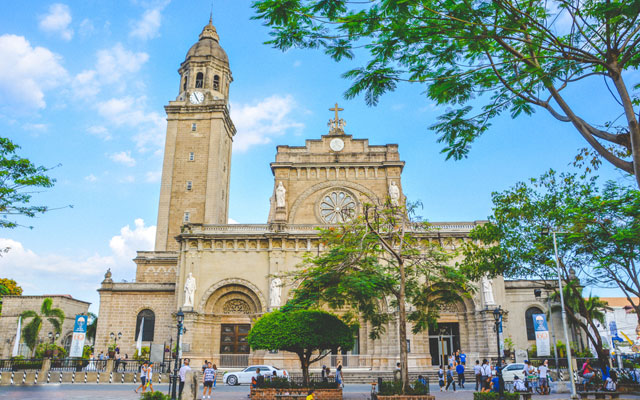
Nine churches and chapels in Intramuros including the San Agustin Church will be open to pilgrims and visitors starting April 18, Maundy, Thursday, until April 20, Black Saturday

The Philippines Department of Tourism (DOT), through its regional offices, has coordinated with various local government units and agencies to ensure that destinations are equipped to handle the expected influx of tourists and pilgrims this Holy Week.

Lent in the Philippines is a solemn period that begins on Ash Wednesday and culminates with the Semana Santa or Holy Week, where rituals and customs are practised in all corners of the country. Over the six-week period of Lent, Filipinos make extensive preparations for themselves, their communities and visitors.

Nine churches and chapels in Intramuros including the San Agustin Church will be open to pilgrims and visitors starting April 18, Maundy, Thursday, until April 20, Black Saturday

DOT and the Intramuros Administration expect over 900,000 devotees and visitors in the Walled City this coming week. Nine churches and chapels in Intramuros including the San Agustin Church will be open to pilgrims and visitors starting April 18, Maundy Thursday, until April 20, Black Saturday.

“Lent is an integral part of our national identity. It reflects our faith, history and traditions passed on by our forefathers,” stated DOT Secretary Bernadette Romulo Puyat. “Pilgrims and tourists are encouraged to take part in this unique Philippine experience, but to always be cautious about their personal safety and be respectful of others.”

As part of the annual protocol during Holy Week, DOT has issued letters to LGUs requesting that safety and security measures are in place in tourist destinations. DOT has likewise collaborated with airport authorities to set up tourist Help Desks.

To step up security and maintain order, the DOT has coordinated with LGUs, the Philippine National Police (PNP), and other government security agencies. DOT and PNP have an existing Tourist-Oriented Police for Community Order and Protection (TOP-COP) programme where police personnel are trained to handle and assist tourists.

In addition, DOT issued a reminder notice to resorts and hotels to deploy life guards in their beach areas or swimming pools, while urging the public to choose DOT-accredited establishments that can ensure the availability of first-aid trained staff and first-aid kits.

The public is also advised to take precautions during their journeys especially in areas the Philippine Atmospheric, Geophysical and Astronomical Services Administration has identified as heat danger zones. These include Infanta in Quezon, Ambulong in Batangas, Casiguran in Aurora, Pasay City in Metro Manila, Dagupan City in Pangasinan, San Jose City in Occidental Mindoro, and Tuguegarao City in Cagayan.

DOT has also requested that travellers practice responsible tourism by respecting local traditions and practices. This means observing silence in houses of prayer, avoiding the use of flash photography in churches and not taking photos of individuals without permission. Sustainable tourism practices such as properly managing one’s personal trash and avoiding single use plastics by bringing personal water tumblers and utensils are also encouraged.