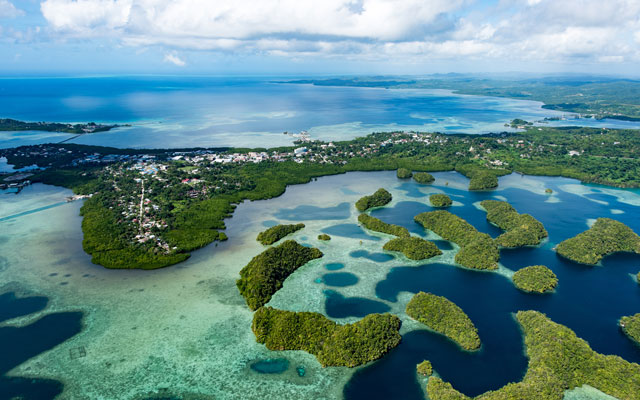
Direct air connections and the changing perceptions of Palau and The Marianas as simply diving destinations are top-of-mind concerns for the two destinations in the Pacific Ocean, as they look to sustain their traditional visitor source markets while seeking out new prospects.
Palau share similar top inbound markets – primarily North Asia – of China, South Korea, Taiwan and Japan, most of which with direct connections to both destinations.
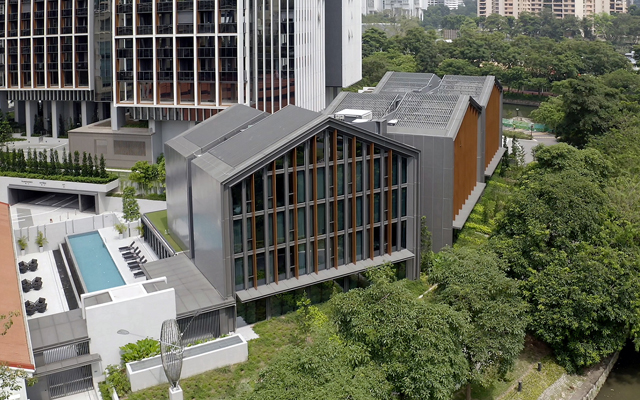
Tourism authorities say direct air connections key to growing tourism for Palau (pictured above) and The Marianas
Speaking to TTG Asia at the recent PATA Travel Mart in Nur-sultan, Kazakhstan, Priscilla Iakopo, managing director, Marianas Visitors Authority (MVA), shared: “The reason why we focus on these Asian countries is because we have direct flights to major ports, as well as the short amount of flight time of between three to 3.5 hours.”
New source markets are clearly on the cards for MVA, with Iakopo indicating The Marianas will be participating in ITB Asia for the second time this year to woo “South-east Asian markets like Singapore and Malaysia”.
Palau Visitors Authority (PVA), chairman, board of directors, Ngiraibelas Tmetuchl, has the same sentiments: “One market we would really love to have direct flights to is Singapore. They are the type of customer we want, but the challenge is that this market wants direct flights. The last thing a Singaporean wants to do is to stop somewhere else and shorten their already limited vacation time.”
Should direct flights from Singapore take off, they would also help to open Palau up to the European markets, Tmetuchl said.
Hence, both tourism authorities agreed that the most important thing now was to grow more direct connections, which would in turn help to bring in new source markets.
“The Marianas signed an agreement last year with Skymark Airlines – a domestic Japanese carrier – for a direct flight between Tokyo and Saipan. Saipan is also the first international flight on its network,” Iakopo revealed.
Similarly, Tmetuchl hopes that direct flights out of Narita, also operated by Skymark, will be able to start by March 2020. He added that South Korean LCC T’way Air currently has some scheduled charters coming up in 2020, with the possibility of daily flights in the future.
In South-east Asia, Vietjet will commence twice-weekly direct flights between Ho Chi Minh City and Palau on September 20. While the target is naturally the Vietnamese outbound market, Tmetuchl hopes that Chinese travellers will also use that route.
Both tourism authorities also see the need to diversify their offerings beyond dive tourism, which is just but one sector in the destinations.
“The divers will find their way here anyway. We want to diversify our markets to families and honeymooners – and we’re missing out on this market due to the lack of direct connections,” Tmetuchl said.
He added that PVA is also working to develop other attractions such as community-based tours and cultural experiences, in order to “balance out” the destination’s diving offerings.
For The Marianas, new marketing initiatives include promoting sports tourism such as marathons and water sports, according to Iakopo. “We are also exploring ecotourism, as people are increasingly concerned about sustainable tourism,” she said.
Other initiatives include developing a regional marketing scheme with other Micronesia islands to exhibit together at Asian tradeshows.
“For instance, we exhibited together with Guam and The Marianas at Asia Dive Expo in Singapore. It was a success, and we replicated it at the Taiwan International Tourism Expo. We’re currently in talks for another Micronesia booth at the upcoming International Travel Fair (also in Taiwan) this November,” Tmetuchl revealed.
A more defined marketing message needs to be relayed to showcase the diversity across the destinations though, Tmetuchl stated. “We are all very unique destinations. Each set of islands is different. We have different cultures, languages and food!”
The Myanmar government has granted visa-on-arrival (VoA) for visitors from six more countries, namely, Australia, Germany, Italy, Russia, Spain and Switzerland, as part of its efforts to open up the country to foreigners and attract travellers from longhaul markets.
Passport holders of those nationals can apply for a VoA for US$50 at Yangon, Mandalay and Nay Pyi Taw International Airports, starting from October 1, 2019.
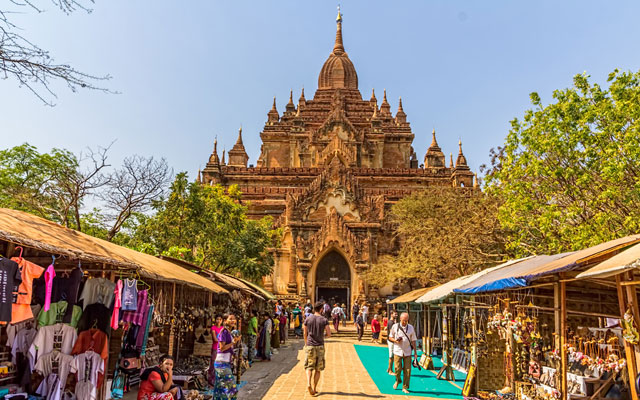
Myanmar offers VoAs to six more countries to attract travellers from longhaul markets
Japanese, South Korean, Hong Kong and Macau tourists were granted visa-free entry last year. Indian and mainland Chinese nationals were also granted VoAs into Myanmar in a move to attract more Asian tourists into the country. In 2Q2019, Myanmar saw an increase in the number of arrivals from nationals who had visa-free or VoA access to the country.
Myanmar Tourism Marketing’s chairperson May Myat Mon Win said: “We do hope that all these new regulations to ease access into Myanmar will lead more travellers from around the world to discover the unique Myanmar culture, nature and most of all, the hospitality of the people.”
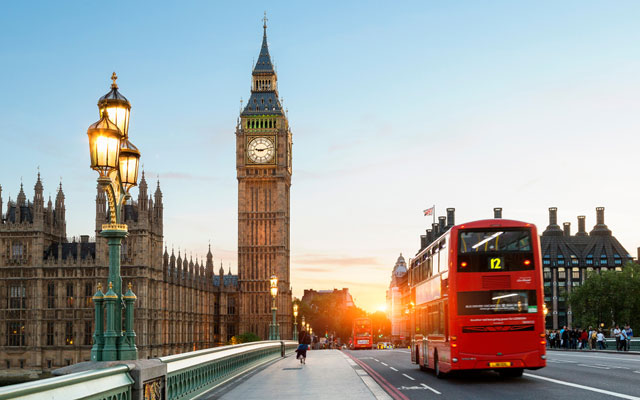
UK is a popular longhaul destination among outbound travellers hailing from Singapore and Indonesia; London's Westminster Bridge pictured
Europe remains the most aspirational holiday spot among longhaul destinations for South-east Asian holidaymakers, according to the latest research from the European Travel Commission (ETC).
The South-East Asian Outbound Travel Market report, which aims to provide a thorough analysis investigating the potential of this market for European tourism, is based on primary research among potential visitors to Europe, with a focus on four key markets, namely, Indonesia, Thailand, Malaysia and Singapore.
UK is a popular longhaul destination among outbound travellers hailing from Singapore and Indonesia; London’s Westminster Bridge pictured
The research found that first-time travellers who visit multiple destinations on their trip prioritise countries that are perceived to be more “prestigious”, such as France, Italy and Germany. The ease of borderless travel between countries, backed by a well-developed tourism infrastructure, adds to Europe’s appeal as a continent with “unity in diversity”.
Just as European destinations are united in diversity, so too are the tourism interests amongst the four markets. Specific exploration of passion-related or interest-based travel themes among South-east Asian travellers establishes Europe’s competitive advantage on slow adventure, culture and history, nature, city life and local gastronomy – the top five travel themes considered as the “main reason for travel”.
The report found that longhaul travellers from South-east Asia are mainly young couples and families. But evidence points to the rise of solo travellers, especially financially independent working women, in countries such as Singapore and Malaysia. Group travel with friends and/or family also remains popular in this market, with travel parties usually consisting of two to four people. This trend is larger in Malaysia and Indonesia, where multigenerational travel is more common than in Singapore and Thailand.
As for age and frequency of travel, the travelling class tends to be between 21 to 54 years old, with evidence suggesting that South-east Asians undertake an average of two to three holidays overseas, with one longhaul trip typically lasting 10 to 21 days.
In terms of accommodation preferences, family travellers prefer four-star hotels across all four key markets, with a larger proportion of Singaporeans opting for five-star hotels, and some cost-conscious Malaysian and Thai travellers choosing to stay in budget accommodation. When deciding where to stay, OTAs like Expedia, booking.com and Agoda are increasingly being used.
South-east Asian travellers are mostly city enthusiasts, therefore travel itineraries that incorporate these interests are expected to appeal to both first-time and repeat visitors to Europe.
For Singaporeans, destination choices vary significantly as they are more likely to tick one or more destinations off their bucket list each time they travel overseas, with traditional holiday destinations such as the UK, Germany, Italy, and Switzerland proving to be the most popular.
In Malaysia, preferences have undergone noticeable change over the years, with Central/Eastern destinations enjoying more travellers from this market in recent years, while demand for Turkey and the Balkans is also rising, due to their Muslim-friendly environment.
For Indonesians, the evergreen destinations in Europe are the UK, Italy, Germany, Switzerland, Netherlands and Turkey, while in Thailand, Europe commands the largest share of longhaul travel, with the traditional Western European destinations most popular.
Europe is perceived as an expensive holiday destination which appears to be the main barrier to travel to the continent for South-East Asian travellers. Limited air connectivity, especially from Malaysia and Indonesia, and the need to apply for a Schengen visa for Indonesia and Thailand citizens are mentioned as some of the key deterrents for travel to Europe from these markets.
Collector and distribution of airline fare data ATPCO is expanding its Next Generation Storefront (NGS) standard globally, forming four new advisory boards for four international markets – Asia-Pacific, Transatlantic, Transpacific, and Canada domestic – following the completion of version one of the US domestic standard.
Exactly a year after ATPCO first unveiled its intent to develop the NGS standard, the new advisory boards were introduced recently at the company’s annual Elevate Conference in Washington, DC, highlighting the rapid pace at which the NGS standard has been developed.
ATPCO expands both its reach and accessibility, bringing dynamic pricing to more airlines
The new advisory boards will consist of airline and distribution leaders who represent over 50 per cent of flying capacity in each region where the standard will be applied. Each group will have oversight in creating and ratifying the definition of the NGS standard for its respective region.
Members of the new advisory boards include Ctrip.com, Air China, British Airways, Virgin Atlantic, Skyscanner, CWT, American Airlines and Delta Air Lines. Additional members will be announced in the coming weeks.
ATPCO’s head of R&D Gianni Cataldo said: “The US domestic evolution of NGS went at such an incredible pace and achieved success earlier than we were expecting. Our plan was to create the first standard here in the US and then expand into international markets. The fact we are doing this one year after initially unveiling the standard is something to be proud of. The positive industry reaction to, and participation in, what we are building has been incredible. We are really motivated to now branch into new markets based on the impressive interest shown by our partners globally.”
Lyrics Zhao, director of product and business development on air ticketing at Ctrip, said: “We have been watching closely the trial implementations of the US domestic standard as it evolved. Now that version one of the US domestic standard is complete, we jumped at the chance to be involved with shaping the Asia-Pacific and Transpacific standards. It’s important to ensure all voices are heard in an equitable way, both channels and airlines. This standard can greatly help OTAs differentiate offerings that airlines are investing in to indicate different service levels customers have access to, in an obvious and unified way. We are excited to be included in the conversation and planning.”
Fei Jia, manager of product and services, product design, sales at Air China, reiterated the same sentiment for the Transpacific and Asia-Pacific advisory boards: “Comparison shopping on third-party channels has generally not shown all the investments in our products and fares. NGS is solving this problem and we are pleased to have a seat at the table in determining how the standard should be presented in the Asian market. Given the market differences between Asia-Pacific, EMEA, and the US, we are encouraged to see ATPCO isn’t implementing a one-size-fits-all approach to the standard. We look forward to bringing our perspective to the advisory board.”
The newly formed advisory boards will be meeting monthly, either virtually or in-person, with each group conducting defined sprints to improve data quality and validity. Participation in the advisory boards are by invitation only, but ATPCO encourages all airlines, channels, and systems interested in participating in its working groups to join. For more information, visit atpco.net/ngs.
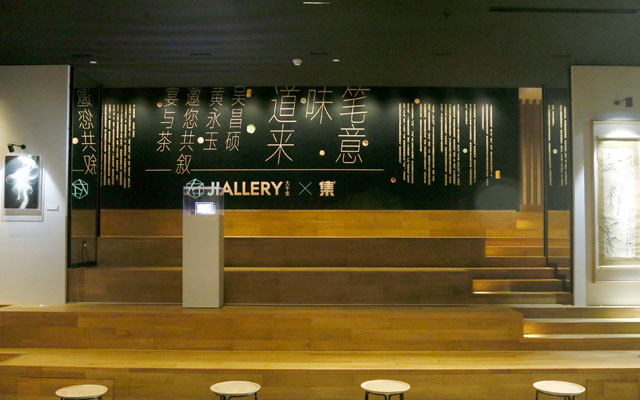
Pop-up gallery “Jíallery” with leading art curator Dachin Contemporary Art Centre
Hong Kong-based international hotel management company Artyzen Hospitality Group (AHG) has unveiled its new brand Habitat, alongside its first creative concept, Ji, which aims to bring people and culture together.
AHG’s president Robbert van der Maas said: “People are seeking more personalised experiences when travelling, whether the purpose is for business or leisure. Our hotels empower guests to have deeper cultural experiences of the destination by engaging with them in a way that makes them feel part of the local community. Our Habitat brand is unique because of its focus on showcasing and embodying a sense of community and connection by conceptualising a concept that epitomises the essence of the destination – in this instance Ji.
Pop-up gallery “Jíallery” done in collaboration with the Dachin Contemporary Art Centre
“We will further enhance the Ji concept by curating different collaborative projects that enlarge the diversity of the community, delivering and sharpening a deeper cultural experience for travellers in all its properties in operation and under development,” said van der Maas.
Habitat’s Ji concept was launched via a series of activations designed to help guests feel part of the fabric of the local community, including a live photo shoot by post-90s Chinese fashion photographer Leslie Zhang Jiacheng, a pop-up gallery called Jiallery with Da Chin Art Centre to showcase traditional ink wash paintings, a flash mob with a storyboard that illustrated the milestone of the Habitat launch, as well as a series of hands-on activities, including a coffee-making programme and portrait creation experience by local art students.
Artyzen Habitat is a brand within AHG’s broader portfolio, offering unique lifestyle hospitality concepts that embraces local communities. Aside from Artyzen Habitat, AHG also comprises Artyzen Hotels & Resorts, an upscale lifestyle hotel brand that celebrates local culture with a focus on local heritage and craftsmanship. Thus far, AHG has a total of six operating hotels, with eight developments in the pipeline, aiming to get up to 14 hotels by 2020.
Why
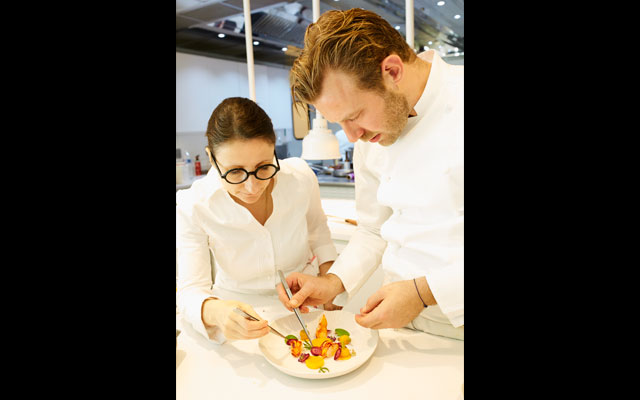
Acclaimed French chef Anne-Sophic Pic – who has seven Michelin stars under her belt – made her debut in Asia with the opening of La Dame de Pic at the restored Raffles Singapore earlier in July.
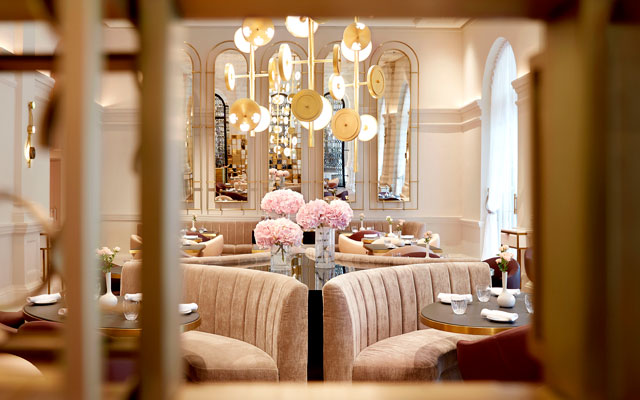
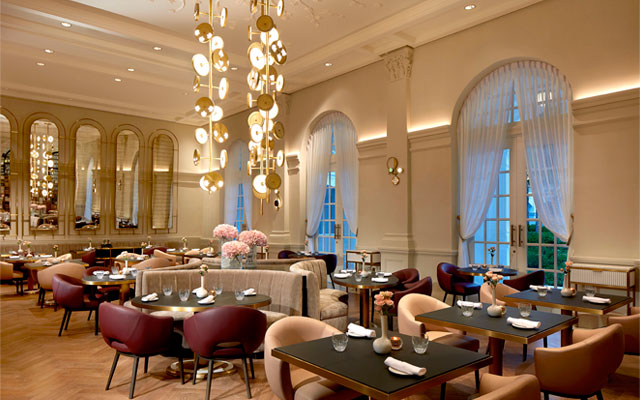
The 46-seater in the main hotel building took over the space that once housed the Raffles Grill. Gone are the wooden chairs and stiff white tablecloths of yesteryear, all of which have been updated with plush maroon armchairs and black-topped tables rimmed with metallic accents.
Pic follows in the footsteps of her father and grandfather, hailing from a long lineage of chefs. Her great grandmother started Maison Pic in Valence in 1889, which was succeeded by her grandfather André, who earned the restaurant its first three Michelin stars in 1934. Pic’s father Jacques took over the business in 1956 and helmed the company’s operations until his death in 1992. After which, Pic’s brother ran the restaurant briefly before she decided to continue the family business.
The third-generation chef-owner runs two other La Dame de Pic restaurants in Paris and London.
What
Over the course of a languid three-hour lunch, every canapé, amuse bouche, and dish that was placed before me was gorgeously plated, brightly coloured, and light on the palate. Cuisine-wise, evident is the creativity of Pic and her prodigy of eight years, chef de cuisine Kevin Gatin, as they added a local twist to contemporary French dishes.
For instance, her signature berlingots – pasta parcels adapted to reflect its own locale in all three of her restaurants – have been given an Asian twist.
Here in Singapore, the pyramid-shaped pasta parcels was matcha-flavoured, filled with molten French cheese fondue, and covered in a consommé derived from green zebra tomatoes and infused with the herb of grace or chou cao (literally translates to “stinky grass” from Mandarin). Apparently, Pic chanced upon the local medicinal herb while strolling through one of our wet markets!
Some of the snacks served also demonstrated Pic’s boundless creativity, and revealed how she wields her flavour combinations like a sharp-edged knife, constantly surprising my palate. Think curry inside liquid chocolate balls; a cracker topped with lemon confit and mushroom gel; and yoghurt dollops on basmati rice chips.
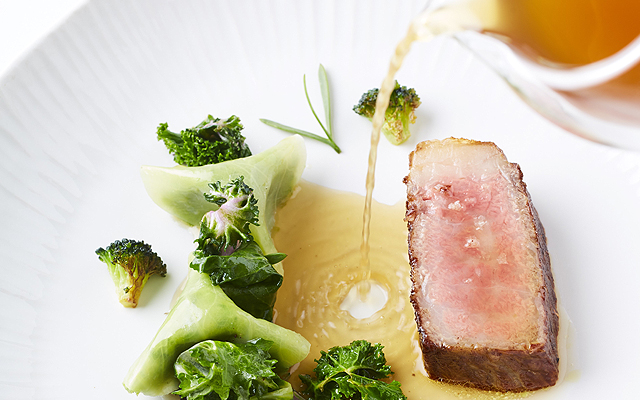
I also noticed that all of our main courses came graced with a consommé. Without fail, every time a consommé was poured into the dish, its delicious aroma would waft lazily to my nose, helping to whet my appetite. Pic values aroma complexities, which is something she tries to bring forth in all of her dishes.
More Asian influences could also be found in the Wild Turbot where the dish’s apple-based broth was infused with marigold; and the pièce de résistance, the Saga Wagyu Beef – a juicy, roasted slab of Japanese Wagyu paired with smoked beetroot and an osmanthus-infused mushroom broth.
Even the dessert wasn’t spared the gentle touch of an Asian herb, with the White Mille-feuille, another of Pic’s signatures, featuring a ginger flower light cream, confit grapefruit and Litsea cubeba emulsion. The dessert, which resembled a wobbly block of tofu, proved an intricate and complex work of art when sliced apart. Definitely do not judge a book by its cover, or a dessert by its appearance, for I was astounded by the number of layers and textures contained within its unassuming white shell.
As a teetotaller, I was pleasantly surprised that La Dame de Pic offered a tea pairing. I opted for the Bo Hojicha Coffee Tea, a smooth, roasted tea with a green tea base, that was refreshing and absolutely delightful. The tea is one of two blends, the other being Chamomile Oolong, that chef Pic has created for her restaurant here.
Verdict
Splendid. It was an impeccable five-course meal – peppered with numerous canapés and palate cleansers – in an iconic hotel on a lazy afternoon.
Here’s a tip: Try to get a window-side table. Not only will the natural sunlight make your food photos look fantastic, the palms and grassy courtyard that the window opens out to will put you in a relaxed mood.
Despite the plethora of options crowding the Singapore dining scene, only a handful are founded or helmed by female chefs, which is another solid reason why this restaurant stands out.
Rates Set lunches start from S$128 (US$93) per person, with an extra S$58 for wine pairing.
There are three menus (Exploration, Experience and Elegance) for dinner, which differ by the number of courses. Menus are pegged at S$198, S$218 and S$328, respectively, with an extra S$98, S$118, S$158 for wine and sake pairing. These three menus are also available during lunchtime.
There’s also an optional pre-dessert cheese course at S$30. Contact details
Website: www.ladamedepic.com.sg
Accor has appointed Ken Wong as its new vice president sales & distribution Greater China.
In his new role, Wong will focus on providing strategic direction to drive sales and distribution performance along with Accor’s digital innovation; while at the same time expanding and reinforcing client partnerships and relationships.
The industry veteran has more than 30 years of experience, 18 of which were spent in mainland China. Wong joins Accor from Shanghai Disneyland resort, where he was vice president commercial.
Prior to working at Walt Disney Parks and Resorts for four years, he spent more than seven years with the InterContinental Hotel Group in several leadership roles including the head of sales and marketing. He has also held several senior roles with Marriott across Greater China.
Instead of keeping the brand legacy of Buffalo Tours Asia and Olympus Tours Americas, what’s the motivation to rebrand into Discova?
The plan for the “global DMC network”, as we called it back then, was to continue to grow across the world through acquisitions and organic startups. When that happens, it’s very difficult to maintain so many brands across the world as you acquire them. It also confuses our customers because the first thing they ask is, “Is it under the same company? Do you operate in the same way?”
So for us, it made sense to rebrand under a single brand to give us a platform to get onto the global stage. The name “Discova” is a little bit more international, and it’s an easy brand to take to new destinations. It’s easier to say we’re Discova Asia, Discova America or Discova Europe.
Following the merger of Buffalo Tours Asia and Olympus Tours Americas and their rebranding into Discova, managing director for Asia, Suyin Lee (above), says that the DMC will continue in its sustainable tourism efforts by working with local communities
What will Discova do differently compared with your DMC operations now?
Part of this brand change involves refocusing on our B2B partners. We’ve long noticed that a lot of DMCs look and feel a bit B2C, and even Buffalo Tours had a small B2C segment. But we’ve come to realise that our B2B partners is where we can add the greatest value.
What’s important to us is having the flexibility to lend our products and services – even our commercial models – to really suit our B2B customers, ensuring that our partners’ brand DNAs really come through across all the destinations that we operate for them.
We’re certainly able to make it a lot easier for our partners to do business with us. Olympus and Buffalo work on two completely different systems – it’s not efficient.
We can have a single point of contact and consistency in the look and feel of how we do things (worldwide). The systems that we use, the documents we produce, the way our guides are trained, even our drivers – there needs to be some consistency in our portfolio of products and services.
It will certainly be so much easier to have a single platform across the world so whether our partners are buying for the Americas, Asia or Australia they’re using the same platform. For sure it’s going to be a combination of a system and technology that we can now invest in as a single brand.
What kind of competition are you seeing from other DMCs? Are they also taking a global approach?
Currently, there isn’t a global DMC that is consistent across the world. There are some big and strong DMCs based out of Europe and Asia, but they’re not really global – they’re very regional – so this is a great space for Discova to create something different and new.
As you bring your operations global, how will you balance that with keeping your experiences local and authentic?
Some 95 per cent of our workforce are locals. We’ve grown up in those communities, so anything that happens in the destination, how it’s evolving and the new products coming up, our people are there to share that with our partners.
Working with locals to ensure sustainable tourism is an important aspect of your business. How will Discova continue in this area?
Buffalo Tours has historically been very focused on sustainable and responsible tourism, largely because our people are from these communities, and we need to be able to ensure that they continue to benefit from tourism without being exploited.
For some of the community projects that we run, we have close to 30 social enterprises in our supply chain. We constantly look at environmental impacts like plastics and wet tissues, and over time we’ve been pushing and educating our partners to swap those products out for more sustainable alternatives.
In the same way that we’ve tackled the use of plastics, we’ve decided to educate our partners – tell them that instead of going to a certain popular destination, here is an alternative. It may not be as developed, but that is its charm, and if we continue to bring people there in a responsible way, the standards of that destination will be lifted. We do need to try to help all communities, rather than just a small community.
How have your partners responded to these efforts?
A lot of our partners are from Europe and they are phenomenal in terms of environmental consciousness and responsibility. They have really taken on board things like refill bottles – in the year before, we took out about 200,000 single-use plastics. I think it’s just about changing the mindset and I think most people in our business are really on board.
I want to roll it out at a greater scale across the world, particularly in Asia. This region is quite a mature destination and we would like to (expand) these existing initiatives (here).
Sustainability does seem to be picking up more slowly in Asia.
When we travel around Asia, it’s really disturbing how much plastic waste there is everywhere, on the roads and in villages. We work with many local communities to change that.
In Yangon, this incredible woman started to pay local villagers to collect plastics so she can (upcycle them) into reusable goods like handbags and tote bags. These people are making an impact because the villagers are earning money by collecting rubbish, while learning how to recycle plastics and tyres.
It’s our job to take travellers to these local enterprises. You’d need a DMC with people who live there and know about these enterprises, you can’t just pop them on your radar.
What about the issue of animal welfare in tourism?
Animal welfare is such a hot topic at the moment, (with elephant rides being a major concern now) from a consumer perspective.
We, the travel sector, (in part) created these problems of elephant camps, circuses and parks. Now to say that we’re just going to stop selling them and abandon all of these camps is impractical.
For example, in Thailand, there’s more than 3,000 elephants in captivity. What are you going to do, just let them go? If we stop supporting them in a responsible way, the elephants are not going to be looked after because the communities that benefit from tourism won’t have the money to look after them, and they’re going to have a massive collapse.
So it’s about how to work with these local communities, animal parks or elephant camps to really bring up the standards of welfare. A big focus for us at the moment is making sure that we follow well-informed guidelines, rather than just bowing to public pressure.
How does the company internally focus on such efforts?
We put a fair bit of investment and leadership support in it. We have a really great responsible travel working group with members from different parts of our businesses at all levels. They work on initiatives and we reward the best initiatives with incentive travel for the team, and we fund ideas where they’ve demonstrated the concept.
You’ve also been making leaps in glamourising tour guiding. Why is that needed?
We really take pride in developing our guides. In Indonesia, we launched a guide ambassador programme by inviting young men and women from marginalised communities to join us for six months. We pay for their living allowances and so forth, and they go through this guiding programme to get accredited before going on an apprenticeship with us.
We want to roll that out to Cambodia and Vietnam. Guiding is a bit of a dying trade, so we need to bring in fresh talent and nurture them by giving them a career path.
Some of our competitors don’t spend that kind of money because a lot of guides are freelancers. That’s where we create a stronger community among our guide base and we engage them in training whether they are freelancers or not. It’s important to show these communities that there is good living to be made in guiding, and it’s fun.
A multibillion dollar mixed-use project by AWC will soon join Bangkok’s tourism infrastructure
As Thailand projects to hit nearly 40 million foreign arrivals this year, non-traditional tourism players are looking to cash in on the booming tourism sector.
Asset World Corporation (AWC), a hotel company owned by beverage tycoon Charoen Sirivadhanabhakdi’s TCC Group, has unveiled an ambitious hotel expansion plan to open 13 hotels worth over 40 billion baht (US$1.3 billion) by 2025 over the next six years. The group already has 14 hotels across multi brands, all under management contracts.
A multibillion dollar mixed-use project by AWC will soon join Bangkok’s tourism infrastructure
Wallapa Traisorat, CEO and president of AWC, said the new projects will expand the group’s portfolio to a total of 8,506 rooms, up from 4,960 existing rooms. This expansion into the hotel business, he said, is encouraged by Thailand’s tourism boom.
The group will also develop a US$3.1 billion mixed-use project comprising five-star hotels and retail space on Chao Phraya River, next to Asiatique the Riverfront under its management. Construction work will begin 2020.
Meanwhile, it is engaged in an ongoing feasibility study for a potential investment on a piece of land opposite Asiatique the Riverfront. In addition, it plans to invest in two high-end hotels and a commercial space in a mixed-use project in Pattaya. That development is expected to cost another US$3.1 billion.
Singha Estate, another giant beverage company, is also actively moving into the travel landscape not just in Thailand but globally. It has acquired six hotels in four countries from APAC Holdings at a cost of more than US$3.1 billion. The acquired hotels – located in Phuket, Koh Samui, the Maldives, Fiji and Mauritius – will be rebranded as S Hotels and Resorts, a subsidiary of Singha Estate.
S Hotels and Resorts currently manages 39 hotels globally, including two existing hotels in Thailand – Santiburi Beach Resort & Spa in Koh Samui and Phi Phi Islands Village Beach Resort – owned by Singha Estate.
Singha Estate is now focused on investments overseas. Currently, it is working on Crossroads in the Maldives, a mega development that will turn nine islands into an integrated resort destination. Each island will have hotels and tourist facilities. The company is set to open two hotels in the first phase by end-2019 before starting the second phase in 2020.
Origin Property, one of the leading real estate firms in Thailand, has unveiled a five-year plan with a new focus on hotel, mixed-use spaces, retail and food business. Its new company, One Origin, will handle the expansion.
Kamonwan Wipulakorn, CEO of One Origin, said the company expects to develop 15 hotels and serviced apartments with total of 4,000 units as well as more than 10 offices and retail projects mainly in Bangkok and in the east coast of Thailand.
Origin Property has already entered the eastern region with condo projects in Sriracha to capitalise on the government’s Eastern Economic Corridor initiative. Earlier, Origin had signed a contract with the InterContinental Hotels Group to manage upcoming hotels in Bangkok and Sriracha.
New Zealand Getaway and Horseplay (Auckland, New Zealand)
Having added Adventure offerings to its activities arm earlier this year, Airbnb is further widening its Experiences portfolio with the launch of Airbnb Animal Experiences, a brand-new category that seek to offer travellers “a fresh new way to connect with animals”.
The new initiative, with some 1,000 Experiences co-hosted by over 300 species and their human advocates, enables guests to “meet animals in places that allow for gentle observation and bring a sense of connection far beyond animal selfies or performances”, Airbnb said in a statement.
Airbnb's Animal Experiences
1 of 5
New Zealand Getaway and Horseplay (Auckland, New Zealand)
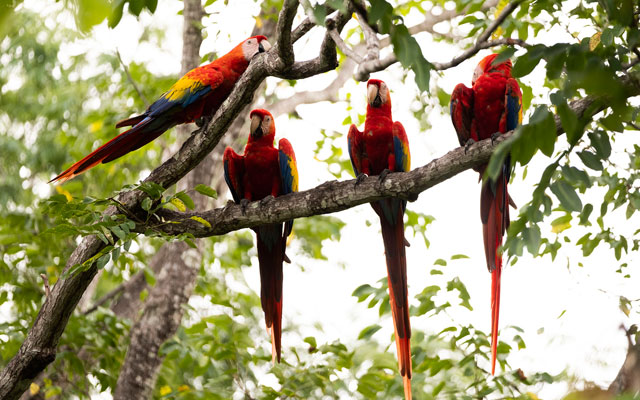
See Released Macaws (Nosara, Costa Rica)
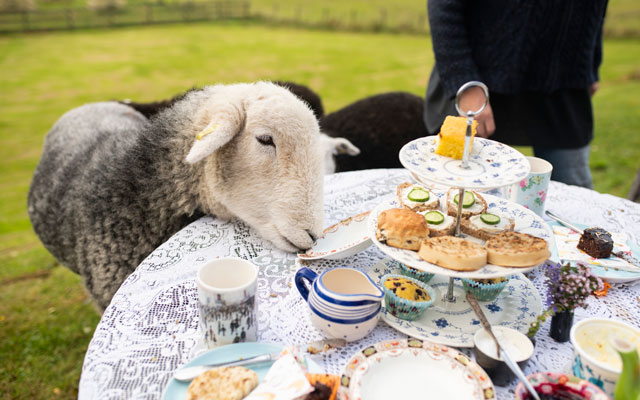
Tea with Naughty Sheep (Loch Lomond, UK)
Meet the Dogs of Chernobyl (Slavutych, Ukraine)
Discover Arctic Foxes (Sudavik, Iceland)
The latest venture from Airbnb follows TripAdvisor’s earlier announcement this week to end ticket sales to attractions that contribute to the future captivity of marine animals, signalling the greater attention global travel businesses are now putting on animal welfare.
Airbnb Animal Experiences, created in collaboration with World Animal Protection, is committed to protecting the welfare of animals and helping people appreciate their intrinsic value.
Airbnb’s animal welfare policy stipulates that there should be no direct contact with wild animals, including, petting, feeding, or riding them; working animals should never be overworked, and shall only carry a maximum of one rider and never more than 20 per cent of the animal’s weight; marine mammals should never be in captivity for entertainment; broader host business should not feature elephant rides, big cat interactions, illegal wildlife trade, sporting events such as canned and trophy hunting, as well as animals performing for entertainment; and no wild animals should be used as selfie props or be taught any negative training techniques.
Ranging from afternoon tea with sheep to multi-day safaris, Airbnb Animal Experiences are hosted by caring experts as an antidote to typical tourist attractions that are notorious for ethical concerns, the company said. Controversial activities like dolphin kissing or elephant riding will never be found in an Airbnb Experience, it added.
Alesia Soltanpanah, executive director, World Animal Protection, said: “We know people love animals and want to see and experience them when they travel, but we also know they most want to see animals in a setting that respects their well-being. This new animal welfare policy created in consultation with our animal welfare experts combined with the creativity and dedication of Airbnb will ensure that adventurers have many options to experience the beauty of animals in a way that considers their welfare first.”
Airbnb said that beyond helping people get to better understand animals and meet them in a new way, over 100 Airbnb Animal Experiences are Social Impact Experiences, cementing their commitment to animals in the long-term by directing all proceeds from bookings to nonprofits. Supporting causes such as conservation, animal rescue, and veterinary care, these Experiences help scale impact, foster empathy and include caring for rescued horses, seeing released macaws and spending a day with donkeys, it added.
Other notable Airbnb Animal Experiences will come to life both on and offline through an exclusive partnership with The Dodo, an American-based mobile animal-centric media brand.
Some examples of Airbnb Animal Experiences unveiled include having tea with sheep in Loch Lomond, the UK); meeting the dogs of Chernobyl in Slavutych, Ukraine; being a gibbon research assistant experience in Phuket, Thailand; and going on a safari with a Maasai guide in Nakuru, Kenya; among others.