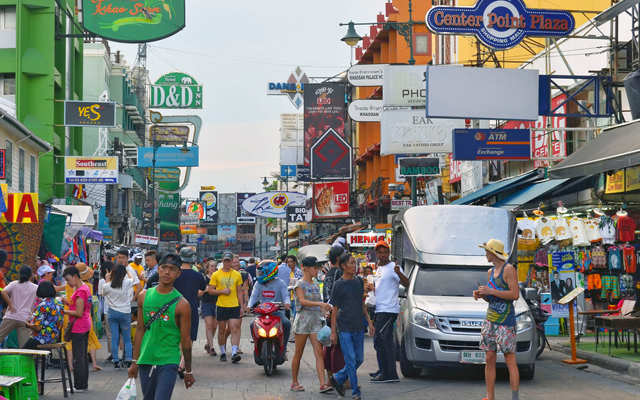
The Bangkok Metropolitan Administration (BMA) is planning to turn Silom, Yaowaraj and Khao San roads, which are popular among tourists, into pedestrian-only zones during certain hours in the coming months, in a bid to boost domestic tourism and the country’s economy, according to a Bangkok Post report.
Deputy Bangkok governor Sakonthee Patthiyakul was quoted by the report as saying that during the trial experiment, Silom Road will be shut to all vehicles from 12.00 to 22.00, starting December 15. The closure will then occur on the third Sunday of every month until May.
Khao San Road will be one of the tourist spots in Bangkok to be turned into pedestrian-only zones next month as part of tourism push
Elsewhere, Yaowaraj Road will be turned into a “walking street” every Friday, Saturday and Sunday, from 19.00 to midnight, during a three-month trail period starting December 13.
Khao San Road will also become vehicle-free every Monday from 17.00 to midnight, starting December 16, said Sakonthee.
The pedestrian-only zone will also be extended to include the adjacent Tanao and Sip Sam Hang roads, with vehicles only allowed to pass after 02.00, he added.
Entertainment activities, such as concerts, will be held on Silom and Yaowaraj roads, according to a report by Thai PBS World. Meanwhile, arts and cultural activities, such as khon masked dances and talung shadow play, is planned for the Khao San area, which is currently undergoing a US$1.6 million facelift to turn it into an “international walking street”.
BMA is also considering turning some roads in the Kudeejeen-Khlongsan area into “walking streets” every three months, according to Sakonthee.
Australian and New Zealand travellers are searching and booking in January for travel during the Easter and even Winter break next year, said Sojern, calling on travel marketers to kick-start their campaigns by December 15 to leverage on the demand spike.
Nearly one in two Australia and New Zealand travellers (48 per cent) are searching for trips more than 91 days out, according to data from the travel marketing engine.
Sojern reports a spike in travel bookings in January for Australia, New Zealand and Singapore markets
Likewise, Sojern’s data also revealed that Singapore travellers are searching and booking in January for holidays over the Chinese New Year and National Day periods, urging travel retailers to start launching their campaigns from December 15 to ride the demand wave.
Some 32 per cent of Singapore travellers are searching for more than 91 days ahead and 46 per cent are booking for trips within the same month, according to Sojern.
In response to a question posed by TTG Asia as to why December 15 has been singled out as the optimal date for kick-starting campaigns targeting these two markets, Sojern replied: “Algorithms can take up to three, four weeks to learn the data before it gets into the stable state. Hence, December 15 is what we consider the latest date to start a campaign (for optimal results) in January.”
Airlines and airports in China are embracing artificial intelligence and automation to provide the hyper-personalised self-service experience demanded by today’s travellers.
According to the SITA 2019 China IT Insights report, China’s airlines and airports are using these technologies to expand mobile services and automating the journey with self-service every step of the way.
China’s airlines and airports are using AI and automation to expand mobile services
A key technology that is attracting investment is artificial intelligence (AI). SITA’s China IT Insights reveals that 88 per cent of both airlines and airports are planning major programmes, or R&D, with AI by 2022, with a focus on virtual agents and chatbots.
This investment matches the demands from passengers. SITA’s research of passengers in China shows that 64 per cent of them want a digital travel concierge. Already nearly half (43 per cent) of airlines in China have AI-driven chatbot customer services and the planned investment should see the availability of them rising quickly over the coming years.
Speaking at the SITA China Air Transport IT Summit in Nanning, May Zhou, vice president and general manager of SITA China, said: “China’s airlines and airports have a strong record in embracing technology and automation to drive efficient operations and high levels of passenger services. Now, they are moving to the next level where they will harness artificial intelligence to deliver more services, faster and to more people.”
For passengers of China’s airlines and airports, self-service has reached a strong level of maturity, but a step-change is coming as biometrics is being adopted. Today, 27 per cent of airports have self-boarding gates using biometrics with travel documents, but in just three years, that figure will jump to 66 per cent.
And more than half of the airports have plans for secure single biometric tokens for all touch points by 2022. Airlines too are committing to self-boarding gates using biometrics with ID, with 60 per cent planning to use them to drive a secure and seamless passenger experience in airports over the next three years.
Zhou added: “The adoption of self-service by passengers across China has been very encouraging for airlines and airports. At SITA, we see many in the industry who are now ready and planning to add biometrics to bring self-service to the next level.”
The report also found that mobile services are vital to meet China passengers’ demands and by 2022, all airlines and 93 per cent of airports are planning investments in them. Services including flight discovery, airline offers, check-in and flight status notifications via mobile are already provided by all airlines. One fifth are also using mobiles to sell newspapers, magazines and movies/TV to passengers.
Airports too are investing in mobile services to offer a more personalised experience for passengers. Services, including notifications about flight and airport status, and customer relationship management, are well established and are offered by up to 81 per cent of airports.
Keeping the passenger informed and connected is not only what China’s airports are providing via mobile, they are also facilitating mobile payments. Close to three quarters enable passengers to buy airport services and allow cashless payments via mobile. This hyper-personalised service via mobile confirms it as a vital tool for China passengers.
The report highlights that blockchain technology is another key area of investment for airlines. Today, only 24 per cent have major programmes, or R&D, planned but that number is set to jump to 80 per cent by 2022. This is in line with the recent trends and commitments to blockchain technology in the country.
Lotus Cruises will launch a boutique 14-cabin ship, Mekong Muse, in the Upper Mekong River in Laos come October 2021.
The new ship will offer 10-night itineraries, both upstream and downstream, between Vientiane and Chiang Saen in Laos as well as shorter, five-night itineraries between Vientiane and Luang Prabang or between Chiang Saen and Luang Prabang, and vice versa.
Mekong Muse will set sail in the Upper Mekong River in Laos come October 2021
Ports of call will include the Laos capital of Vientiane, Wat Chanthaboury, the villages of Xanamkhan and Ban Mouang, the market town of Pak Lay, the Kuang Si Waterfall, the UNESCO World Heritage Site of Luang Prabang, the Pak Ou Caves, as well as Huay Xai and Chiang Saen.
The Mekong Muse will offer three suite types, including two Grande Suites, each spanning 30m², with a separate seating area, marble bathroom and private terrace; Six Signature Suites, each offering 20m² of space, with French balcony and floor-to-ceiling French doors located in the upper deck; and six Vista Suites which come with a French balcony.
All guests in these suites will enjoy a complimentary one-hour spa treatment and a private dining experience in the room or on the balcony.
Ship facilities include a library, a gift shop, a restaurant, a lounge-bar with an observation area, a spa, a seating area with canopies, sunbeds, a herb garden and a jogging track.
Prices start from US$3,880 per pax, based on twin sharing, for the 10-night itinerary. Prices for the shorter, five-night itineraries start from US$2,520 per pax.
Mekong Muse will join Lotus Cruises’ existing vessels – Mekong Navigator, which launched in 2014; and Mekong Jewel, which launches in January 2020. Both ships sail itineraries on the Lower Mekong, between Vietnam and Cambodia.
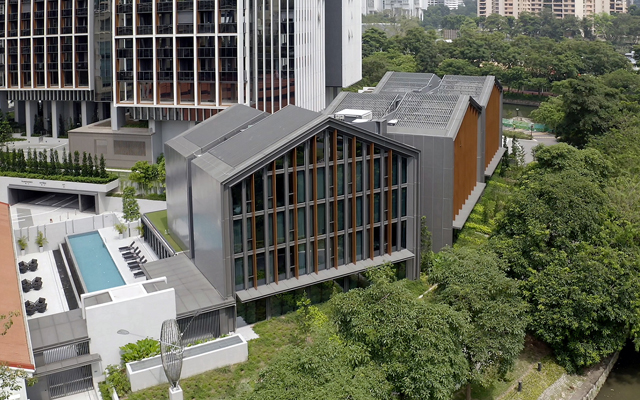
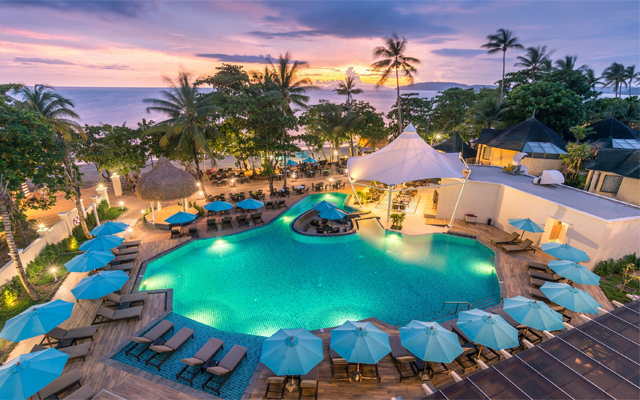
Centara Ao Nang Beach Resort & Spa Krabi, Thailand
There are 179 rooms and suites in this brand-new upscale resort in Ao Nang, each ranging from 39m² to 81m² and offering modern amenities such as Smart TVs and complimentary Wi-Fi. Pool Access Rooms allow guests to step straight into the resort’s outdoor pool from a private terrace, while others feature private plunge pools. There are also Family Residences, which come equipped with bunk beds and kitchenettes.
For events, the hotel provides a 292m² meeting room and pre-function area. Guests can enjoy a lagoon-style pool, spa, fitness centre, and kids’ club, as well as four F&B venues onsite.
BEI Zhaolong Hotel, China
Hyatt has opened the BEI Zhaolong Hotel – the first Joie de Vivre hotel in Asia – in Beijing’s Sanlitun area. There are 202 guestrooms including 16 suites within these walls, all of which are furnished with an 55-inch IPTV, Nespresso machine, and De’Longhi kettle for complimentary coffee and tea service.
Amenities onsite include the BEI Commune restaurant and bar, a grab-and-go counter, as well as a 240m2 multifunctional space decked out with floor-to-ceiling LED screens which can accommodate up to 120 people banquet-style.
Avani Melbourne Box Hill ResidencesAvani Adelaide Residences Avani
Avani Melbourne Box Hill Residences and Avani Adelaide Residences Avani, Australia Avani Hotels & Resorts has opened two new residence-style properties in Australia, one each in the business hubs of Melbourne and Adelaide.
Avani Melbourne Box Hill Residences, located in the neighbourhood of Box Hill, features 75 one- and two-bedroom suites with chef-style kitchens, bath amenities and upscale-hotel facilities, including a heated rooftop infinity pool, spa, and an onsite gym and sauna.
For Avani Adelaide Residences, located on Franklin Street, close to Rundle Mall, there are 76 keys, spread across studios and one-, two- and three-bedroom suites. All rooms come with fully equipped kitchens and laundry facilities, as well as access to the hotel’s heated pool, cinema, library, and AvaniFit gym with steam room and sauna. There is also a state-of-the-art golf simulator and rooftop terrace lounge and outdoor barbecue area.
Ibis Styles Jakarta Simatupang, Indonesia
Located in South Jakarta’s TB Simatupang Business district, this ibis Styles property offers 142 superior and family rooms, each furnished with the signature Sweet bed by ibis Styles. Aside from a fitness centre and a Streats restaurant and bar, the hotel also features one junior ballroom and five boardrooms with a capacity of up to 240 persons.
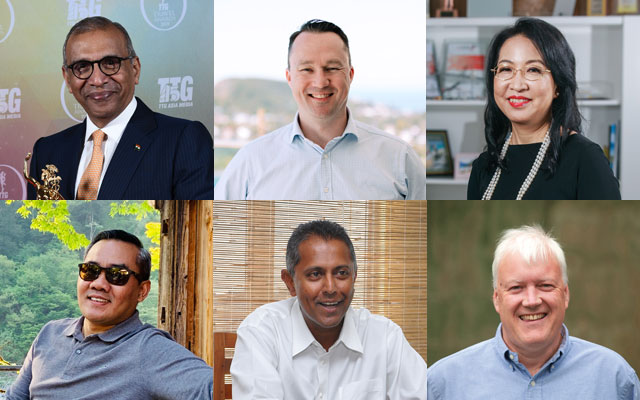
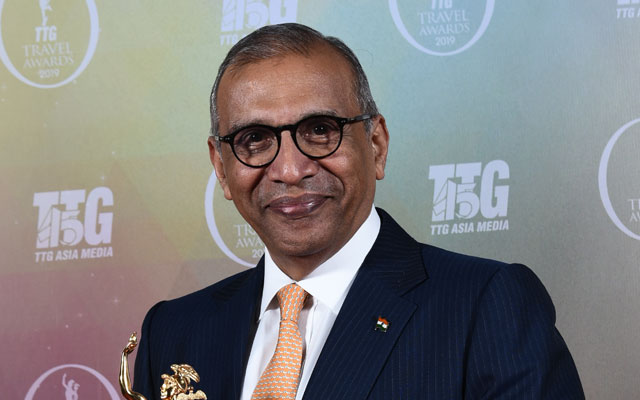
Madhavan Menon Chairman & managing director, Thomas Cook (India)
Major trend observed in 2019: Online access to travel is creating additional demand and is increasing the market size. We have therefore been investing strongly in the digital transformation of the company. Today, over 26 per cent of our overall holiday packages are booked via our online platforms. Some of the new age initiatives that are helping us reach out to India’s millennial and digital natives include our upgraded portal, our holidays and foreign exchange apps, customer self-service app and TeeCee, our recently launched AI-powered chatbot. With deeper penetration of the Internet in India’s tier 2 and tier 3 cities, technological evolution has elevated the convenience factor and the rise of our e-business stands testimony to the same.
Lush valleys in Tuscany, Italy
My travel bucket list for 2020: I would love to cycle around the picturesque hilltop villages of Tuscany, and walk around the medieval and Renaissance buildings of Siena, accompanied by sumptuous cuisine and the famed Chianti, Brunello and Nobile wines. – Rohit Kaul
Larry Lo
Larry Lo CEO, Asia Corporate Travel Management
Major trends observed in 2019: It is a global trend for travellers to seek out authentic experiences over traditional tourist offerings, as more and more people want to interact with locals and explore the local culture. Personalisation is another important trend to engage with customers.
At Corporate Travel Management, we use innovative technologies to gain valuable insights from our customers’ past purchase journey. In turn, we strive for personalisation in our service by offering highly relevant and pro-active offers to our customers.
My travel bucket list for 2020: Sports-themed travel is one of my favourite vacation types. Apart from skiing, I also enjoy experiencing the excitement of international sports events such as The Championships, Wimbledon, the tennis tournament held annually in London. Sports travel has also become a popular product in the global travel industry. – Prudence Lui
Cameron Holland
Cameron Holland CEO, Luxury Escapes
Major trend observed in 2019: The rise of experiential travel continues to grow, particularly for younger generations who are increasingly opting to purchase experiences over things. People want personalised, customised travel and to experience as much of the destination as possible. We launched our own Experiences product in response to our customers telling us that “unique, personally curated experiences” were the number one trend they were excited about in 2019. We’ve seen a very successful launch so far, indicating this trend isn’t likely to disappear in 2020.
My travel bucket list for 2020: As the father of two children, I’d love to take one of our small group tours and take my family to an adventurous destination like Morocco, Egypt or Jordan. Experiencing the best of these destinations handpicked by our travel experts – and without the headache of organising every little detail – would make for an unforgettable family trip. – Adelaine Ng
Jackie Harris
Jackie Harris CEO, Charlotte Travel
Major trend observed in 2019: We are experiencing growing interest in highly personalised experiences for individuals, couples and families. Unusual destinations are becoming particularly alluring, while interest in soft adventures in remote wilderness locations that provide luxury accommodations and fine dining are also increasing. For example, we recently curated a family visit to northern Finland for Christmas. Such experiences are usually once-in-a-lifetime, and nothing can be left to chance. Accordingly, we need to have direct knowledge of the products and suppliers and this can involve a reconnaissance pre-visit to the destination to ensure the client’s expectations will be matched, if not exceeded.
Frozen vastness of the North Pole
My travel bucket list for 2020: Next year, a temporary igloo hotel will open at the North Pole, consisting of 10 heated domes for guests to sleep under the stars. The North Pole can be reached by helicopter in April and as only around 1,000 people make the journey annually, it’s one of the most exclusive adventures out there. – Prudence Lui
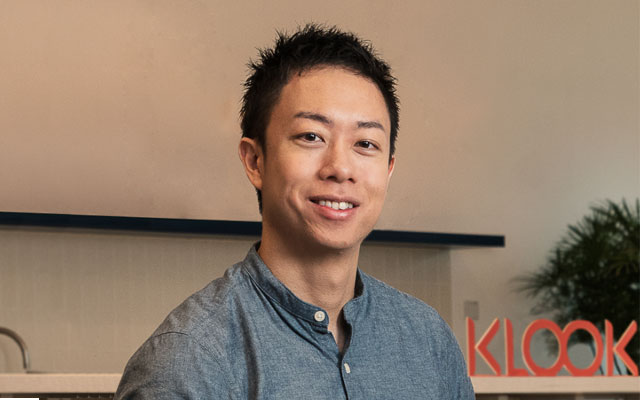
Major trend observed in 2019: We continue to see the trend of travellers becoming increasingly mobile-centric. More than 75 per cent of all Klook bookings in 2019 were made via mobile devices. Same-day bookings have also increased 11-fold from 2016 to 2019.
Local travel operators have also started to adapt to this paradigm shift. We collaborate closely with them, assisting them in the digitisation process and ensuring that they are able to meet the demands of the new-age consumer.
With the upcoming Tokyo 2020 Olympics, there will be unprecedented demand (for tours) in the city. We have collaborated with local Japanese operators to increase the roster of attractions and things to do outside of the Tokyo metropolitan area by 600 per cent (compared to) 2016, helping hyper-local small businesses to tap into the growing demand.
The Ad Deir monastery in Petra, Jordan
My travel bucket list for 2020: Visiting Jordan comes out top on my bucket list. My trip to Israel last year was eye-opening in culture and experience, and this has inspired me to go across the Dead Sea to Jordan and enjoy its unique architecture and culture. – Pamela Chow
Agustinus Pake Seko
Agustinus Pake Seko President director, Bayu Buana Travel Services
Major trend observed in 2019: The way people plan and buy their trips have changed in the past few years, so tour operators should personalise their communications. It takes proper customer analysis for travel companies to be able to deliver a deep, authentic and personal connections with travellers. Like many others, I spend many hours online and I believe that the best tools and talents will not guarantee success if travel companies are not playing to the same tune (as their customers); they should orchestrate their technologies to create unique and personalised experiences.
My travel bucket list for 2020: A safari trip to Africa. It is not so much about the destination but the promise of an adventure – and experience – that has always excited and ignited my interest. – Mimi Hudoyo
Sanjay Narula
Sanjay Narula CEO, Apex Tours and Travels
Major trend observed in 2019: More and more Indian travellers are looking to experience luxury rather than just indulging in luxury products. The term luxury has also become relative, as what’s affordable for one is a luxury for other. So on one hand we have outbound travellers looking to hire a Ferrari, while on the other hand we have tourists that are opting for private villas for their stay. There is a section of luxury travellers interested to learn about the culture of the destination they are visiting. We have come up with customised products and experiences to cater the luxury aspirations of our clients instead of just selling or promoting popular high-end products.
My travel bucket list for 2020: I would like to discover the Antarctic on a polar expedition cruise. This part of the world is surely fascinating and its breathtaking landscapes are high on my bucket list. – Rohit Kaul
Abbas Esufally
Abbas Esufally Chairman, Serendib Hotels
Major trend observed in 2019: Technology is playing an ever-growing role in influencing the choices of travellers, be it in the choice of destination, accommodation or experiences sought. Technology provides so much transparency that travellers can select exactly what they wish to do and read the ratings of others. In order to respond to this trend, the business model is being aligned to meet the expectations of the informed traveller, ensuring the products and services on offer follow the best practices in sustainability, environment, conservation and limits the impact on the carbon footprint.
Alpine life in the Himalayas
My travel bucket list for 2020: Viewing wildlife in its natural habitat, together with an experienced naturalist is top of my bucket list. Also, I would like to travel to the Himalayan region to enjoy the scenery, learn the culture and traditions of the people there. – Feizal Samath
Major trend observed in 2019: A major trend is the use of mobile technology to support the consumer once they have booked a holiday. We have noticed a rise in enquires from boutique tour operators, who focus on providing complex itineraries, needing technological solutions.
During the last few years, we have invested heavily in our flagship solution Travel Studio. Using drag-and-drop technology and artificial intelligence, quotes can now be created three to four times faster.
In 2017, Open Destinations also acquired the Tineri App solution, which allows operators to provide their clients with a stylish, engaging and user-friendly mobile app comprising itineraries, updates, help and relevant content. Tour operators can also upsell new activities and products to travellers while they are in-destination.
Scenic coastline in Tenerife, Canary Islands
My travel bucket list for 2020: In May, I did a fantastic cycling trip in Kazakhstan and Uzbekistan and got a real taste of Central Asia. I would now like to either cycle more of the Silk Road or sail down the North African coast. Recently I read a travel blog of a sailing trip from Spain to Morocco, down the coast to Essaouira and Tenerife. This sounds like a perfect escape from the cold British winter. – Pamela Chow
Hiran Cooray
Hiran Cooray Chairman, Jetwing Symphony Hotels
Key disruptions in 2019: The biggest disruption in Sri Lanka was the Easter Sunday bombing, which brought all of us in tourism down to our knees. After 10 years of exceptional growth, it was sad to see this happen to my beloved country and the industry I love so much. What we experienced almost immediately after was the love and support we received from the international and Sri Lankan media, tour operators and travellers at large who wanted to come back and support our island nation. I wish no other country in the world will have to undergo such a man-made tragedy ever again.
The second disruption was the collapse of global travel giant Thomas Cook, which confirms that buying cheap from suppliers and offering a small mark-up to sell packages to end users is not the way forward. I hope and pray that the other tour operator giants will learn from this and not fall into the same mess.
My travel bucket list for 2020: Ethiopia and Antarctica. I am looking forward to leading a group of enthusiasts to where Christianity and Islam flourish. – Feizal Samath
Nigel Wong
Nigel Wong Director, Urban Rhythms Tours, Adventures & Travel
Key disruptions in 2019: Malaysia is seeing a proliferation of e-hailing ride services where drivers are also moonlighting and illegally selling tours and travel services to customers. This takes away business from legitimate tour operators, and as a result we have received fewer ad-hoc requests from tourists visiting Kuala Lumpur. Thus, we have stepped up our marketing efforts on social media, particularly Instagram, to reach out directly to millennials who tend to travel on the spur of the moment. We have also rolled out our packages on B2C travel apps such as Klook, and we are also considering putting our packages on Airbnb Experiences.
Salar de Uyuni in Bolivia
My travel bucket list for 2020: I’d very much love to visit South America, particularly the ancient cities of Peru and Salar de Uyuni in Bolivia, which is the world’s largest natural salt flat and natural mirror. – S Puvaneswary
People are placing greater value in experiences over possessions than ever before. According to the Next Big Thing consumer futurist, Will Higham, people are increasingly seeking out meaning in what they do, placing greater importance in experiences than possessions, and the memores and learnings gained from them. Future generations, he said, will care more about status updates than status symbols.
Nowhere is this prioritising of experiences over products most intensely played out than the travel sector, where an arms race has erupted among travel and hospitality brands in launching more immersive and multi-sensory ways to engage travellers and turn them into loyal consumers.
Which is why we have devoted the 2019 year-end issue of TTG Asia to experiences, as we take a deeper look at the experiential trends driving the global tourism sector, and how travel businesses are in turn responding to travellers’ demand for greater immersion and personalisation.
Airbnb is among the leading purveyors with its Experiences offerings, which has recently branched out into Adventure and Animal categories. Meanwhile, Oakwood Premier AMTD Singapore is already offering distillery tours for residents to sniff out the local drinks scene, while The Travel Corporation is working with refugees to get travellers to better understand the underlying social fabric of Berlin.
As 2020 nears, travel pundits are predicting the rising interest in slow, purpose-driven travel. As well, the phenomenon of JOMO (joy of missing out) – described as disconnecting and being present at the moment – is becoming more commonplace as an antithesis to the sense of FOMO (fear of missing out) prevalent among today’s hyperconnected travellers.
But will JOMO, alongside other notable societal and behavioural shifts towards more environmentally responsible, carbon-friendly travel, dampen travellers’ desire to visit far-flung places and look towards domestic or nearby destinations to seek fulfilment from travel?
And if more people start opting for staycations and nearcations, would it be travel businesses’ turn to experience FOMO?
Philippine tourism stakeholders have taken it upon themselves to troubleshoot the logistical nightmare that plagues this year’s South-east Asian (SEA) Games, with reports of athletes having to grapple with airport delays, lengthy transfer services, insufficient food, and subpar accommodation.
These logistical chaos ahead of the 30th SEA Games, which will officially open on November 30, ensued in an emergency meeting convened yesterday by the Philippine Department of Tourism (DoT), where the Tourism Congress of the Philippines (TCP), Philippine Hotel Owners Association (PHOAI), Hotel Sales and Marketing Association (HSMA), and Philippine Association of Convention/Exhibition Organizers and Suppliers (PACEOS) were in attendance to pledge their unbridled support to assist with the SEA Games.
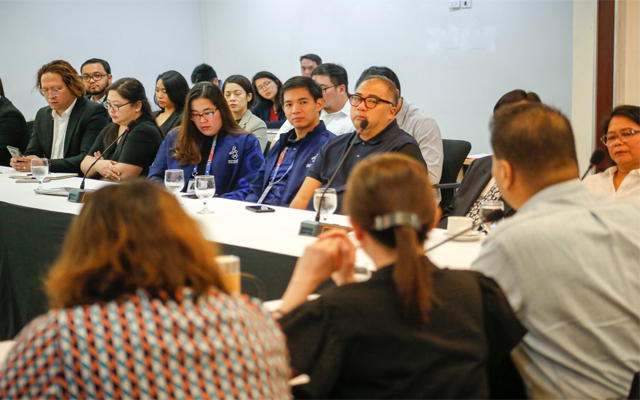
The emergency meeting held on November 27 served as a platform for tourism stakeholders to raise questions and suggestions in accommodating SEA Games delegates
To smoothen out the transport, accommodation, and food related problems, the DoT has assigned a focal person in each of the four clusters – Manila, Southern Luzon and La Union, Clark, and Subic – where delegates are staying from November 19 to December 19.
Initially intended for Philippine tourism destination promotions, existing information desks at the lobbies of participating hotels are now disseminating SEA Games-related information from the Philippine SEA Games Organizing Committee (PHISGOC) and assisting with concerns, which will be forwarded to PHISGOC for proper handling.
The DoT is also reaching out to hotels in Clark, Calabarzon, and La Union to ensure quality and consistent services throughout.
Orly Ballesteros, board member of both the TCP and PACEOS, speaking to TTG Asia on the sidelines of the 7th Summit of the Philippine Council of Associations and Association Executives (PACEOS) yesterday, said: “Planning is essential. We had three years to prepare (for the SEA Games). Logistics like transport and accommodation are small things (which should have been planned for).”
Having the right people, such as roping in the correct suppliers and partners to aid with the logistics planning, should already have been thought of from the onset, Ballesteros opined,.
“You need MICE professionals because an event organiser or a production company is only an expert in one particular core competency of an event. If you have (the help of a MICE professional), you will get an overall view of what elements are needed,” he elaborated.
Philippine Council of Associations and Association Executives’ founder and CEO Octavio Peralta agreed that the logistics should have been handled by professional event organisers.
“We have many expert PCOs and DMCs (who can help out with the planning). The DoT should have been allowed (by the SEA Games organising committee) to get involved, (and leave) the logistics and organisation to the experts,” Peralta lamented.
Against the public backlash the country has received due to ill preparation, Ballesteros believes that now with tourism experts joining the fray, it will help “government officials handling this event to avoid further embarrassment and errors”.
Believing that Filipino hospitality will eventually shine through, Peralta added: “Asians are always polite. (After) the initial knee-jerk reaction, I don’t think they will harp on it. They will forgive and forget. We have a good image and relationships with our neighbours.”
Malaysia’s tourism industry performance showed a 3.7 per cent growth to 20.1 million tourists for January to September this year, as compared to the same period in 2018.
The country’s top 10 source markets were Singapore, Indonesia, China, Thailand, Brunei, India, South Korea, Vietnam, Japan and the Philippines.
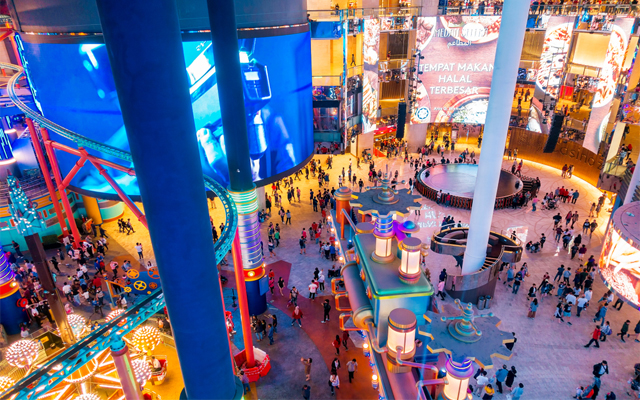
Malaysia’s tourism sector records 3.7% growth in first nine months; Skytropolis Funland at Genting Highlands in Malaysia pictured
Of these 10 countries, only Brunei saw a negative growth in arrivals. Musa Yusof, director-general of Tourism Malaysia, said that the 11.9 per cent drop to 929,789 tourists in inbound arrivals from Brunei was because Bruneians were travelling farther, due to their strong currency.
India registered the biggest growth of 23.2 per cent to 539,167 tourists, from 437,736 tourists in the corresponding period in 2018. China also saw a positive growth of 5.7 per cent and Musa expected the China market to continue performing well, despite the ongoing US-China trade war.
He said that contributing factors driving the growth in China arrivals were Malaysian tour packages that were competitively priced, unlike those from neighbouring countries that were pegged to the US dollar. Tourism Malaysia will also work with more OTAs to attract more FIT tourists.
Meanwhile, tourism expenditure from January to September 2019 grew by 6.9 per cent to RM66.1 billion (US$15.8 billion), up from RM61.9 billion from the same period in 2018. The top five markets for tourism receipts were Singapore (RM16.3 billion), China (RM12.8 billion), Indonesia (RM8.8 billion), Thailand (RM2.8 billion) and India (RM2.5 billion).
Per capita expenditure for the period of January to September 2019 also grew by 3.1 per cent to RM3,289, from RM3,191 during the same period last year. Countries with the biggest per capita expenditure were Saudi Arabia (RM11,394), China (RM5,302), the UK (RM5,246), Canada (RM4,8340) and Taiwan (RM4,761).
The average length of stay rose 0.1 nights to 7.4 nights, from 7.3 nights. Shorthaul markets retained its position as the largest contributor of tourists to Malaysia with a 68.7 per cent share, followed by mediumhaul markets at 21.6 per cent, while the longhaul markets accounted for 9.7 per cent of tourist arrivals.
Trip.com Group has partnered travel search engine Kayak Asia Pacific to offer car rentals on the Kayak platform in the Asia-Pacific region.
Bruce Wang, head of Trip.com Group car rental business, noted that the partnership would play an important role in extending the reach of the OTA’s car rental services overseas.
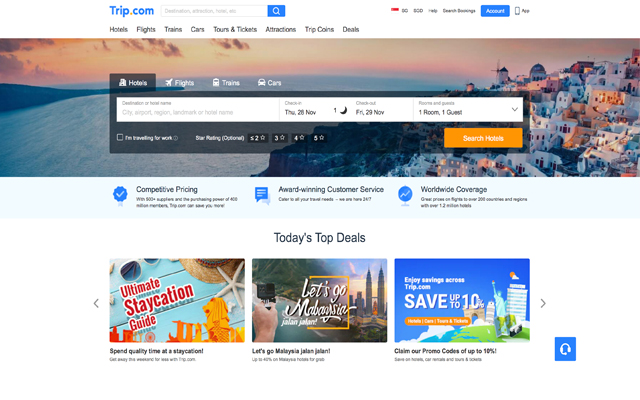
Trip.com partners Kayak Asia Pacific to offer car rentals on the Kayak platform in the Asia-Pacific region
“Since launching overseas car rentals in 2016, and on our Trip.com platform in 2018, we’ve seen annual growth of over 300 per cent, and reached a coverage of approximately 200 countries and regions,” he said.
Kayak’s partnership with Trip.com Group will enrich the choices of its users amid increasing demand for overseas car rentals, said Kayak’s Greater China director Joseph Xiao.
The joint partnership announcement was made by Kayak’s Xiao and Trip.com Group’s overseas car rental business head of product management Jommas Xu during a visit to Trip.com’s headquarters by a Kayak delegation.
During the visit, the partners also initiated discussions for closer collaboration in the Asia-Pacific region, and the launch of Trip.com Group’s car rental services in the US and Europe.
Trip.com Group has launched car rental products on its Trip.com platform in English, traditional Chinese, Korean and Japanese.
Trip.com car rental services will be available for searching in Greater China, Singapore, South Korea and other destinations on Kayak, among other search engines.












 Nowhere is this prioritising of experiences over products most intensely played out than the travel sector, where an arms race has erupted among travel and hospitality brands in launching more immersive and multi-sensory ways to engage travellers and turn them into loyal consumers.