TTG Asia
Asia/Singapore Thursday, 29th January 2026
Page 1181

NDC to unleash demand for premium airline products

0
NDC to open opportunities for premium fares

The advent of NDC may help airlines unlock a bigger customer base for their premium products – a segment that has fallen behind in a metasearch realm dominated by the lowest-fare-first approach, say industry names.

To secure mass demand, the majority of online travel aggregators and agencies are focused on pushing out the lowest air fares, offering little to no visibility for premium bundles.

NDC to open opportunities for premium fares

This discrepancy has done a “tragic” disservice to airlines and the sizeable segment of customers that actually would pay for premium seats and services, said Jeff Lobl, managing director of global distribution for Delta Air Lines, at the recent STX 2019 in Las Vegas.

He lamented: “We know there are customers who prefer premium products – we see overwhelming numbers on our direct channels – but 99 per cent of agencies are dominated by the practice of showing the lowest fare first.

“But customers don’t always want that. The lowest fare is no longer as attractive a product as before, and offers can now be personalised and exciting. But if these cannot be displayed properly and customers can’t see it, then they’re not buying.”

This is set to change with technology players such as Sabre churning out NDC-enabled application programme interfaces (APIs) that are becoming more adopted and user-friendly.

These APIs will allow indirect booking channels, such as travel agencies, to suggest and sell customised and complex flight bundles to consumers more easily and dynamically.

Sundar Narasimhan, senior vice president, Sabre Labs and product strategy, shared that there is currently a gap between the expectations of agencies and that of customers.

For example, while Sabre’s agency clientele holds expectations of dynamic retailing that are limited to the Digital Workspace and Sabre Red 360 solutions, customers have even higher expectations of “friction-free” smart shopping.

“We should be rethinking the way shopping ought to work, especially since it’s going to be more complicated with multiple itineraries, fares, ancillaries and other travel-related content coming up,” said Narasimhan.

“Our vision is to move towards offer management, leaning into intelligent advanced retailing. That’s our big target by 2025, and we’re already taking concrete steps now with the SynXis Intelligent Retailing tool.”

APAC travel bookers moving from mobile first to mobile only

0
XX

Travellers are moving beyond using their mobile devices for trip planning and inspiration, to now also making bookings on the go, according to Expedia.

Travellers in particular Asian countries are showing high willingness to make bookings on mobile, with India, Thailand, South Korea, Hong Kong, and Taiwan in the top five, a recent study conducted by Northstar Research Partners on behalf of Expedia found.

More and more travel bookings are being made on mobile devices today

In Thailand for example, of the 600 respondents surveyed, 67% said that they are extremely likely to book their flight tickets on a mobile device, 18% are somewhat likely and 15% least or not likely to do so.

When it comes to hotel bookings, 70% of the respondents indicated that they are likely to book their hotel using a mobile device, 18% are somewhat likely and 12% least or not likely to do so.

Moreover, Expedia said that approximately one in three global hotel room nights are booked via mobile. More than 50% of global traffic on Expedia Group sites are via mobile devices.

Expedia also cited new market research by AppsFlyer that showed that mobile users in Asia-Pacific will account for 50% of global app installs by 2020 – three times more than in any other region.

While growth is forecasted to gradually decrease as the market matures, Expedia expects it will be sustained by “substantial increment in media costs and mobile usage, as well as the overall number of paid campaigns, apps available, and mobile users”.

“The mobile booking findings from the study is an indication that our travellers are looking for speed, travel choices and mobile savings when they plan and book for travel. We continue to work on the areas that need improvement to knock down the barriers to travel,” said Lavinia Rajaram, APAC head of communications, Brand Expedia.

Centara unveils ambitious target for 20 more Vietnam hotels by 2024

0
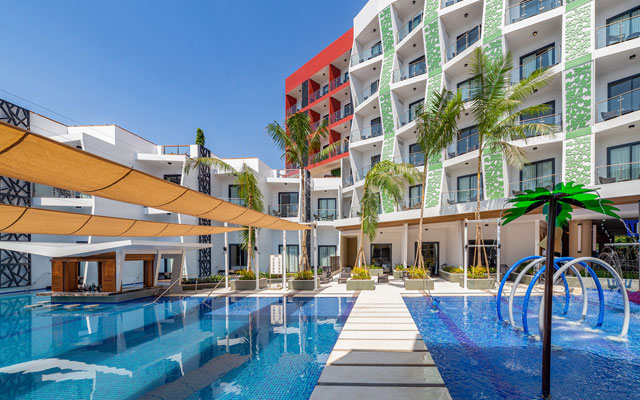
Centara Sandy Beach Resort Danang, the first property of the group in Vietnam

Thai hotel operator Centara Hotels & Resorts is planning a significant expansion of its portfolio in Vietnam, with the goal of opening at least 20 new hotels across the country in the next five years.

The hotel company already manages the Centara Sandy Beach Resort Danang, while its parent company and Thai conglomerate Central Group operates a range of retail brands across Vietnam, including GO! (formerly BigC Vietnam), LanChi Mart, B2S, Robins, SuperSports, Home Mart and Nguyen Kim.

Centara Sandy Beach Resort Danang, the first property of the group in Vietnam

Targeting a fast expansion of its hotel portfolio in Vietnam, Centara is eyeing destinations in the country’s main economic hubs such as Ho Chi Minh City (HCMC), Hanoi and Haiphong, and other high-growth areas like Danang, Phu Quoc, Nha Trang, Cam Ranh and Hoi An.

It also sees strong potential in the southern coastal areas of Vung Tau, Ho Tram and Mui Ne, due to new road infrastructure connecting the region with HCMC and the development of a major new airport in nearby Dong Nai province.

Centara says there are opportunities to expand all six of its brands in Vietnam, namely Centara Grand, Centara, Centara Residences & Suites, Centara Boutique Collection, Centra by Centara and its latest concept, Cosi, for freedom-loving and tech-savvy travellers.

Commenting on the potentials in the country, Thirayuth Chirathivat, CEO, Centara Hotels & Resorts, said: “Vietnam’s tourism industry enjoyed a great year in 2018 and we expect this to continue for many years to come. Boosted by booming intra-Asian travel, more relaxed visa policies and impressive improvements to transport infrastructure, the country is already well on track towards another record-breaking tourism year in 2019.”

International visitor arrivals to Vietnam reached a record total of 15.5 million in 2018, the majority of which came from Asia, a region where Centara feels it has strong recall. This upward surge is continuing in 2019; data from the Vietnam National Administration of Tourism (VNAT) reveals that almost six million overseas travellers visited the country in the first four months of this year.

Positive tourism trends are driving demand for new hotels and resorts. Recent data from industry analysts STR shows that over 23,000 new hotel rooms are currently being constructed in Vietnam.

Centara’s focus on Vietnam will form an important part of its global strategic vision, which includes the overall goal of doubling its total hotel portfolio by 2022. At present, the company has 71 hotels and resorts either operating or in the pipeline worldwide, comprising over 13,000 rooms. It has hotels and resorts in South-east Asia (including Thailand, Laos and Vietnam), the Middle East, Sri Lanka and the Maldives.

Air passenger demand slows with global trade slump, trade tensions

0
XX

International traffic demand is showing signs of slowing growth amid slumping global trade and rising trade tensions, with US-China trade tensions weighing on the Asia-Pacific region in particular, according to IATA’s latest data.

IATA’s global passenger traffic results for May showing that demand (measured in RPKs) rose 4.5% compared to the same month in 2018. This was in line with the revised April traffic growth of 4.4% and above the recent trough of 3.1% year-on-year growth recorded in March.

International passenger demand stays solid but trend has slowed

However, it remains below the 20-year average growth rate of around 5.5%. Capacity (available seat kilometres or ASKs) climbed by a modest 2.7% and load factor rose 1.4 percentage points to 81.5%, surpassing last year’s record load factor of 80.1%.

“Passenger demand growth has slowed compared to the past two years. This is in line with slumping global trade, rising trade tensions and weakening business confidence. In this challenging environment, airlines are managing capacity carefully in order to optimise efficiency,” said Alexandre de Juniac, IATA’s director general and CEO.

Asia-Pacific airlines saw their traffic rise 4.0% in May compared to the year-ago period, an improvement over the 2.9% increase in April. Capacity increased 3.0%, and load factor edged up 0.8 percentage point to 78.6%.

This is the second consecutive monthly increase in demand, but IATA notes that this still represents a soft outcome in a region that in recent years regularly saw double-digit growth rates. US-China trade tensions continue to weigh upon growth in the region.

Overall, international traffic demand rose 4.3% in May over the year-ago period, which was down from 5.1% growth in April. All regions recorded growth, led by airlines in Latin America. Total capacity climbed 2.1%, with load factor jumping 1.7 percentage points to 80.4%.

European carriers’ May demand climbed 5.4% over May 2018, a deterioration from the 7.7% year-over-year growth recorded in April. Capacity rose 4.6% and load factor was up 0.7 percentage point to 84.2%, which was the highest among regions. Most of the region’s growth, however, occurred in the first half of 2018, with demand moving broadly sideways since then.

Middle East carriers’ May demand growth decelerated to 0.8% compared to a year ago, from 3.3% annual growth recorded in April. This partly reflects the impact of the structural changes that are underway in the industry in the region. May capacity plunged 6.1%, and load factor soared 5 percentage points to 73.0%.

North American airlines’ traffic rose 4.8% in May compared to May 2018, a slowdown from 5.6% annual growth in April. Capacity climbed 2.7% and load factor strengthened 1.7 percentage points to 83.6%. The comparatively strong US domestic economy, and US dollar is helping to offset any trade-related softening in international travel.

Latin American airlines experienced a strong 6.7% increase in traffic in May compared to the same month last year, which was well up from 5.1% growth in April. Passenger demand is currently holding up well, despite a challenging economic backdrop in a number of countries. Capacity climbed 4.0% and load factor jumped 2.1 percentage points to 84.0%, second highest among the regions.

African airlines posted a 2.1% traffic rise in May compared to the year-ago period, which was up from just 1.1% growth in April. Capacity climbed 0.1% and load factor increased 1.3 percentage points to 67.0%. Traffic between Africa and Europe continues to expand strongly, but economic growth in South Africa – a key regional economy and air transport market– contracted sharply in the first quarter and this is adversely impacting air passenger demand.

Meanwhile, domestic traffic increased 4.8% in May compared to May 2018, well above the 3% year-over-year rise recorded in April. Russia was the only market to see double-digit demand growth. Domestic capacity rose 3.8% and load factor climbed 0.8 percentage point to 83.4%.

Russia’s domestic traffic rose 10.6% year-over-year, which is up slightly from the 10.4% year-over-year growth recorded for April. Russia continues to benefit from favorable economic conditions and lower airfares.

Japan’s domestic traffic rose 6.6% in May, up from 4.1% growth in April and the strongest performance since summer 2017. Fare stimulation, combined with robust economic growth, contributed to the result.

“While aviation is the business of freedom, connecting people and trade and creating new opportunities for growth and development. But to be effective, the business of freedom relies on borders that are open to the movement of people and goods—and aircraft. In recent weeks, we have seen extensive airspace closures owing to political tensions. These closures have contributed to longer and less efficient routings, higher operating costs and increased carbon emissions. Without any compromise on safety, it is vital that governments work to minimise airspace closures so that the Business of Freedom can continue to deliver its benefits as efficiently as possible,” said de Juniac.

Accor embarks on initiative to create employment for persons with special needs

0

Accor has embarked on a five-year partnership with community partners in Singapore to create long-term employment opportunities for persons with special needs.

Named From the Heart, the partnership with Singapore’s Community Chest and the Association for Persons with Special Needs (APSN) will see the hotel giant’s staff across Singapore raise funds and volunteer hours to provide hospitality training to people with special needs, with the goal to create long-term, meaningful employment opportunities within the group for graduates of the college.

Accor partners with APSN to create job opportunities for persons with special needs

“Beyond our commitment to supporting the students throughout their education, we will endeavour to provide inclusive employment opportunities within our network in Singapore,” Garth Simmons, COO, Accor Malaysia, Indonesia, Singapore and South Asia, said. “The project is aligned with our commitment to diversity and inclusion and our dedication to combating all forms of workplace discrimination.”

“We already have some APSN graduates employed within our hotels and we look forward to having even more in our teams,” he said.

The collaboration will last five years, which Accor hopes will help create a more significant impact in the community by allowing graduates time to work through the programme and find potential placements within the group’s network.

Christopher Tay, CEO of APSN said: “This joint partnership not only serves as a platform to empower persons with special needs for independence, but through the various initiatives, brings industry partners closer to the community by creating awareness and understanding. With more opportunities and increased interaction, the keen abilities and contributions of our beneficiaries will shine through as we work towards an inclusive society.”

APSN is a non-profit association focused on developing individuals with special needs and enabling them to lead dignified, fulfilling and independent lives. The Association prepares beneficiaries for employment and success via education and vocational training initiatives from their early years up into adulthood.

Community Chest, a non-profit organisation, which channels resources to the social service sector, will enable the collaboration from a fund-raising and engagement perspective.

“By creating such synergies, we can build an inclusive workforce that thrives on diverse abilities,” said Phillip Tan, chairman of Community Chest.

With Accor From The Heart, the group strives to ensure that persons with disabilities in Singapore continue to receive the education that they need. The name of the programme comes from the fact that Accor sees all of its employees as ‘Heartists’ – masters of the art of hospitality who serve from the heart, with curiosity and inventiveness.

Hotel Okura to check into Russia with new Moscow property

0
From left: Hotel Okura's Toshihiro Ogita and AEON Corporation's Roman Trotsenko

Russia-headquartered AEON Corporation and Japanese hospitality chain Hotel Okura have signed an agreement to build a hotel on the south side of Sheremetyevo, Moscow’s largest airport.

The new property, which marks Hotel Okura’s entry into the Russian market, is set to open in 2022 on a seven-hectare site.

From left: Hotel Okura’s Toshihiro Ogita and AEON Corporation’s Roman Trotsenko

The seven-storey hotel will boast around 300 guestrooms, with sizes starting from 35m2. Facilities on-site will include all-day dining, banqueting and meeting rooms, and a spa with the traditional Japanese onsens.

The company will decide on the hotel brand and name at a later date.

Sheremetyevo International Airport is located approximately 25km to the north-west of Moscow.

The missing link

0

With Thailand maturing past its image as an inexpensive destination, hospitality players are increasingly competing on service standards rather than price, although some continue to be encumbered by a talent shortage in the industry.

Thailand’s maturity as a destination has recently been accompanied by large-scale efforts to polish its image, including rebranding Pattaya from an entertainment town to a family-friendly destination, repositioning Hua Hin to a world-class beach resort, and anchoring Chiang Mai as a new gateway for FITs from China.

Thailand’s constantly expanding luxury travel operators continue to face manpower shortages (pictured: Moon Bar, Banyan Tree Bangkok)

Previously seen as an affordable destination, Thailand last year came in fourth in WTTC’s ranking of countries by tourism receipts.

Against this backdrop, travel service providers are finding that price competitiveness alone is not sufficient to vie for quality business. Instead, more are prioritising compelling branding, innovation and enhanced service standards in order to stand out in the destination’s ever-growing hotel supply.

Edouard Demptos, general manager of Grand Hyatt Erawan Bangkok, observed that more guests are looking for elevated experiences rather than discounts.

“At the same time, they are seeking memories and experiences, health and wellness, as well as dining with a social responsibility aspect,” he continued.

In order to capture the higher-end segment, the hotel is paying special attention to guests’ individual preference through recent service enhancements.

“For instance, Hyatt created a new luxury travel advisor programme, Hyatt Privé, designed for invited clients only. These guests get access to personal connections, local recommendations and exclusive promotions at Hyatt’s luxury, lifestyle and resort hotels.”

Patrick Basset, COO for upper Southeast and Northeast Asia at Accor, said Thailand has built up a strong heritage in hospitality as well as convenient access via strong regional flight connections.

“(Over the years) Thailand has transformed to offer an extensive collection of high-end products and services as luxury travellers seek experiences that are authentic and tailored to their personal needs.”

“If we do this (offer authentic, tailored expereinces) successfully, then there is an immense feeling of discovery for guests. They are more likely to go home and pass on their stories,” Basset remarked.

Overall, the travel industry is becoming much more adept in boosting guest satisfaction, he observed.

On the east coast of Thailand, Pattaya is expected to benefit from the Eastern Economic Corridor and expanded U-Tapao Rayong-Pattaya International Airport.

Similar to Bangkok, luxury supply is growing alongside a focus on elevated services.

Kasemsak Bhamornsatit, owner of Trikaya Cultural & Academic Travel Services, said what is important now is to raise professionalisation among service providers, especially when it comes to personalisation.

He further cautioned that price wars, common in the destination before its image was spruced up, will inhibit the destination’s success.

The boutique travel operator has set its eyes firmly on quality over quantity. In most cases, the company will check in with customers and tailor packages based on their interests and preferences. The company hires only certified and experienced guides and they must be able to assist clients and respond to enquiries round the clock.

Trikaya Cultural & Academic Travel Services also derives business entirely from overseas travellers, mostly from North America, Singapore, the Philippines and China, Kasemsak said.

As new standards emerge when it comes to service and marketing, manpower may be a growing concern in the destination.

Chooleng Goh, general manager of the Athenee Hotel Bangkok, said Thailand continues to be a top-of-mind choice for both leisure and business travellers.

New hotels may be opening in Bangkok every month, but growing supply has posed “no problem” to demand, Goh said. The major difficulty hotels are facing, according to Goh, is talent shortage.

“Like many other hotels, we find it hard to (hire and retain) talented people,” she said, adding that new properties tend to poach manpower from more established hotels.

Moreover, employing front-office staff such as chamber maids and cleaners is no easy task “because local people don’t want to work such jobs despite them paying more compared to other jobs”, according to Goh.

To retain talents within the group, relocation options are made available to staff who are willing to transfer to different Luxury Collection (a Marriott brand) properties. Moving within the group is better than losing talent altogether, Goh stressed.

The Ministry of Tourism and Sports reported that 38 million foreigners travelled into Thailand in 2018, with the number expected to climb to 41 million this year.

The sector generated direct and indirect income of up to 19 per cent of the country’s GDP – representing the largest portion alongside export and agriculture.

Thai government clamps down on unlicensed hotels

0
Operators who have not been compliant in the past will not be charged if they register themselves with the authorities

The Thai government is cracking down against hotel owners for operating without licenses, with the aim of improving standards in the hospitality sector amid a huge influx of non-licensed accommodation that has flooded the market.

On June 12, Thailand’s National Council for Peace and Order (NCPO) issued Order No. 6/2562 to temporarily suspend the enforcement of town planning and local building control regulations on certain buildings, built before August 19, 2016, that have been used for hotel business operations.

Operators who have not been compliant in the past will not be charged if they register themselves with the authorities

The nationwide order demands illegal hotel operators to notify the authorities only on the use of building while environmental impacts will not be considered. Prosecution charges will be waived for operators who have not been compliant in the past if they register with the authorities. The temporary amnesty is effective until August 18, 2021.

Once the operators receive permission, they will be required to take the necessary measures to ensure that their properties abide by a number of regulations, including the proper installation of a fire safety system, which is required under the Hotel Act but often missing in unlicensed properties.

In 2017, the government had revised the ministerial regulations mainly on environmental conditions and the use of building in a bid to encourage illegal hotels to get licenses, but only few did so while most of them remained unregistered.

Surapong Techaruvichit, former president of Thai Hotels Association (THA) and managing director of Asia Hotel Bangkok, said the government’s latest move is to push illegal hotels out of the market and make them conform to regulations.

La-iad Bungsrithong, general manager of Rati Lanna Hotel in Chiang Mai, said the new measure will make it easier for operators to obtain permissions, while unlicensed hotels will be watched by authorities. Registered hotels will also help to improve the sector’s overall standard and tourist’s safety.

Worapan Klampaiboon, founder of Samsen 5 Lodge in Bangkok, shared that many hotel owners wanted to obtain licenses to increase their business value and potentially transfer the properties to heirs, but were often unable to meet the criteria.

According to THA, non-registered hotel or illegal hotels include serviced apartments, guesthouses, condominiums and Airbnb home rentals.

The association gauged there are nearly 20,000 hotels excluding Airbnb are in the country. Of that number, only 8,000 are registered hotels with a total of 400,000 rooms, while there are over 10,000 operators with 500,000 illegal rooms.

Bangkok alone has more than 300 illegal hotels, while more than half of the total hotels in other major Thai destinations such as Phuket, Chiang Mai, and Pattaya also do not have licenses.

New tourism feeder markets heat up for Indonesia

0
More outbound travellers from emerging markets are choosing Indonesia as a holiday destination; tourist in Bali pictured

Destinations in Indonesia are seeing greater interest from emerging tourism markets, according to buyers and sellers at the sixth Bali and Beyond Travel Fair (BBTF) in Bali last week.

RD Tours, Bali, for example, has started receiving FIT and incentive groups from Nepal, a market it started to penetrate last year.

More outbound travellers from emerging markets are choosing Indonesia as a holiday destination; tourist in Bali pictured

Bambang Sugiono, director of marketing and overseas promotions of RD Tours, Bali said: “It all started when we participated at a sales mission organised by the Indonesian Embassy (in Bangladesh) in Kathmandu. We were surprised to see about 100 Nepal travel companies representatives attend the event. While they already knew about Bali from the Internet, the sales mission was really an eye opener to them and the result started to come in (this year).”

Flights from Kathmandu to Singapore, Kuala Lumpur and Bangkok have made it quite convenient for travellers to reach Bali, especially with the frequency betweens these hubs, according to Bambang.

“Travellers (many of whom are families) stay in upscale properties. They visit to Nusa Lembongan and Uluwatu due to their interest in water sports activities and culture. Watching the kecak dance performance is a must.”

Meanwhile, Sol Beach House Bali Benoa and Kuta, traditionally reliant on Australian and European markets, are now seeing growth from the Baltic Countries, South and North Africa.

Putu Yeni Navitarini, cluster director of sales and marketing at Sol House Bali, said: “Through our partnership with Go Vacation Indonesia, we have a back-to-back group series from Lithuania coming between September 2019 and May 2020, with each group staying for 13 nights.

“Africa is a growing regional feeder to Bali. South Africa is not a new market for us, we have been partnering with Panorama DMC to cater for this market, but we now see this growing significantly.”

Compered to the South African market, North Africa is relatively newer to Bali and Sol House Bali especially, according to Yeni. She said: “Our Sol House Kuta has received 18 group series from Morocco and six groups from Algeria. It is amazing.”

Youssef Mufarrej, sales and marketing manager of Clic Holidays Travels & Events, Morocco attributed the growth trends to the expanding middle class in the country and improved accessibility.

He said: “Bali and Indonesia used to be a luxury destination for the Moroccans and only the (more affluent) travellers could afford to come here, due to the long flights.”

But the destination is becoming more accessible to mainstream segments with services operated by Qatar Airways, Emirates, and more recently Turkish Airlines, which just launched its direct service from Istanbul to Bali.

“The middle class has grown in the last five years, and now more people can afford to travel this far. Bali has become one of the top destinations for middle class travellers,” he said.

Bali, however, is not the only Indonesian destination travellers are drawn to.

North Sulawesi in the last couple of years has seen the growth of the China market thanks to charter flight operations.

While the market to Indonesia dropped since last year, including to North Sulawesi, Cocotinos, a Boutique Dive Resorts & Spa, Manado continued to see FITs arriving.

General manager Martinus Wawanda said that while the resort is not a direct recipient of charter groups, it has benefitted from the greater awareness of the destination generated by their arrivals.

“The market we continue to get are the FITs and families, who are not necessarily divers. They do island hopping, and visit Minahasa Highland or mangrove tours.”

Manado is also a new destination on the radar of Asian tour operators, including those from Thailand and Singapore, who have already been to Lombok, where Coconitos has a property.

Amid the increased interest, the North Sulawesi regional government has stepped up promotional efforts.

Tomohon City, for example, took part in BTF 2019 to promote the Tomohon International Flower Festival (TIFF), an annual event taking place from August 8 to 11.

Jimmy Feidie Eman, mayor of Tomohon City, shared: “TIFF, which was launched in 2008, has managed to attract national and international participants, boosting tourist arrivals.”

International arrivals to Tomohon numbered 90,907 last year, up from 89,736 in 2017. “We are expecting the number will increase to 92,260 this year,” the mayor said.

The sixth BBTF 2019 was held at Bali Nusa Dua Convention Centre from June 25-29, 2019. The show attracted 230 sellers from 19 provinces in Indonesia and two regional sellers (Singapore and Timor Leste), as well as 303 buyers from 46 countries.

SIA invests S$50 million to spruce up lounges at Changi’s T3

0

Singapore Airlines (SIA) will invest more than S$50 million (US$37 million) in a major revamp of its SilverKris and KrisFlyer Gold Lounges at Changi Airport Terminal 3 (T3).

Renovations will commence in August 2019 and are expected to be completed by mid-2021.

The project, overseen by hospitality designers Hirsch Bedner Associates, will see an overall 30 per cent increase in space and total customer capacity for the T3 lounges.

Suites and first class customers can look forward to a brand-new Private Room and First Class Lounge. The First Class Lounge will continue to feature a flagship bar, while The Private Room will boast a full-service fine dining section within the lounge.

The Business Class Lounge will be expanded and feature four distinct zones. Customers with a short transit can have a light snack in a relaxed café setting, while those with more time may explore a full selection of Asian and international cuisines in the dining hall, including live stations offering local delights.

A highlight of the new Business Class Lounge will be a full service bar that doubles up as a self-service breakfast station in the mornings. Productivity pods will be available for customers who need a corner to work, and there will also be a rest area with chaise lounges for customers to catch some shut-eye.

The KrisFlyer Gold Lounge will also double in capacity and include dedicated working spaces, as well as larger al fresco seating and dining areas. It will also be equipped with restrooms and showers.

The construction process will be carried out over four phases, during which the lounges will be progressively renovated in sections, starting with the Business Class Lounge, followed by the First Class Lounge and The Private Room, and finally the KrisFlyer Gold Lounge. Customers, in the meantime, will be invited to temporary lounges.