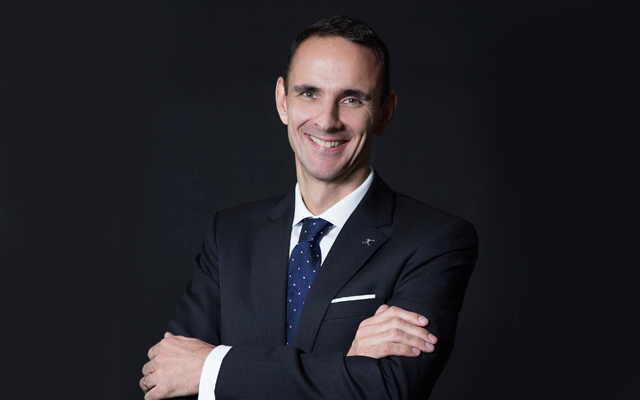
Hyatt Regency Phnom Penh has appointed Herman Kemp as general manager.
Kemp started off working on cruise liners, with the Holland America Line. After which, he joined the hospitality industry, where over 12 years he rose through F&B and management roles at Le Meridien, Sofitel and Carlton hotels, all in The Hague, a city in Netherlands.
His first posting as general manager was with Aryaduta Hotels in Indonesia in 2012. Prior to his Phnom Penh move, Kemp was general manager of Park Hyatt Siem Reap for nearly four years.
Expected to open in 2020, the 250-room Hyatt Regency Phnom Penh will mark the first Hyatt Regency hotel in Cambodia.
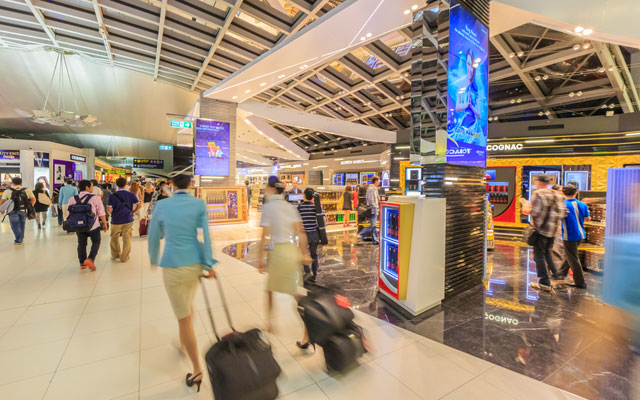
Happy travellers are likelier to splurge at the airport, according to new research from Collinson, urging airports and their ecosystem of travel-related businesses and brands to prioritise traveller satisfaction across the entire journey so as to increase passenger dwell time and spend.
Collinson’s Airport Journey report surveyed 6,667 people across 11 countries in the Americas; Europe, the Middle East, Africa (EMEA); and Asia-Pacific to track evolving traveller preferences and behaviours, and learn more about travellers’ satisfaction with the airport experience.
Retail spending in airports linked to travellers’ satisfaction: Collinson
Overall, traveller satisfaction with the airport experience is on the rise, found the report. In 2019, 63% of global travellers said they enjoy the airport experience, a jump of 13 percentage points from 2018 when only 50% of travellers said the same. Collinson’s 2019 data drew on five additional markets not included in the 2018 data; with markets held constant, a jump of eight percentage points year-on-year was recorded.
However, there is a significant gulf between traveller satisfaction in Asia and the Middle East, compared to the US and Europe. On average, three in four travellers (74%) across markets like India, China and the UAE enjoy the airport experience, compared to less than half (48%) across markets like the US, the UK and Germany.
The polarisation in airport experience should concern airports and their ecosystem of businesses since the research found that happy travellers spend more.
Nearly nine in 10 (88%) travellers who routinely spend over US$200 at the airport said the airport experience is an enjoyable part of the journey. On the other hand, the least satisfied travellers spend less than US$28, among whom only 40% saying that they enjoy the airport experience.
Mignon Buckingham, corporate strategy officer, Collinson, said: “It may seem unsurprising that happy customers spend more, but the devil is in the detail. The airport experience is fragmented and relies on an ecosystem of players, including airlines, airport authorities, security and operational service providers, merchants, duty-free, retailers, bars and restaurants. Dissatisfaction at any point of the airport journey can trigger a loss in overall satisfaction and have a knock-on impact for all other players.
“The staggering differences in satisfaction rates in Asia and the Middle East compared to Europe and the US point to a variety of conclusions. Asia and the Middle East are leading international tourism growth, with arrival numbers growing by 6% and 8% from January to June 2019, respectively. This boom in tourism arrivals and the regions’ growing middle class are major motivations for the development of new airports and the evolution of existing ones.
“Without the long-standing legacy infrastructure that other regions must contend with, airports in Asia and the Middle East can build ultra-modern facilities, cherry-pick best-of-breed features, and keep the customer experience absolutely central to it all. These are no doubt contributing factors to travellers’ strong enjoyment of the airport experience in these regions.”
Asia-Pacific has been called the busiest area on Earth for airport development, accounting for 48.5% of global spend on airport upgrades and 57% of investment in new airports. Starting from scratch in very recent years means airports in Asia and the Middle East can leverage innovative design and offer seamless technology and services to passengers, as seen in some of the world’s top airports like Singapore Changi, Incheon International and Dubai International.
On the other hand, airports in the US and Europe must contend with how to update long-standing facilities to accommodate booming passenger numbers. Europe and the US are home to the world’s 10 oldest airports, while the average US airport is over 40 years old.
Mignon continued: “But infrastructure alone does not deliver traveller satisfaction. With so many innovative travel experience solutions now coming to market, this is an exciting time for airports in every region to consider new ways to boost traveller satisfaction and spend. Airports in Asia and the Middle East can integrate trailblazing products and services into their offering, to ensure travellers’ on-the-ground experience matches the airports’ modern physical infrastructure.
“A brand new terminal may look impressive to a traveller, but unless the services offered are equally cutting-edge, customers won’t be satisfied. Airports in the US and Europe have a different challenge and must seek out solutions that enable a seamless journey and offer unexpected moments of delight, so that no matter the age of the infrastructure, travellers enjoy a world-class airport experience.”
New opportunities to help improve traveller satisfaction
Collinson’s Airport Journey research indicates many key opportunities for airports and other businesses to enhance traveller satisfaction and encourage engagement and spend. Travellers want more opportunities to take control and create a smooth, enjoyable trip even before the journey begins, with nearly three in four (70%) saying they would consider pre-ordering food and beverage if the option was available.
More than half (53%) of travellers who spend upwards of US$150 on retail said they do not spend more because of baggage restrictions, and 39% would spend more if a delivery or collection service was offered.
The travel retail app Inflyter is currently working to connect airports and duty-free providers to deliver services which will allow travellers to pre-order and collect duty-free purchases on their inbound journey or have them delivered to an airport lounge.
Travellers want relevant marketing communications
Another key finding from Collinson’s Airport Journey research is that there is considerable opportunity for airports to improve their traveller relationships via communications. Nearly one in two travellers (45%) receive communications at times when they are not planning to travel; indicating a lack of relevance and personalisation, not to mention wasted marketing spend for airport businesses and brands.
An explanation for this may be that, in the absence of a structured loyalty or engagement programme, many airports have no means of knowing when customers will be travelling. Still, 48% of travellers said they receive communications that encourage them to spend more time at the airport, and another 46% said receiving discounts ahead of travel encourages them to shop and dine at the airport. Both points reveal that travellers are in fact open to receiving marketing-driven communications from the airport, if these are relevant and tailored.
Mignon added: “Traveller satisfaction with airports is improving, but there is still a significant gap between travellers’ ideal experience and what airports deliver. Our research shows a number of opportunities where all of us in the travel experience landscape can help to give travellers a little more luxury, comfort and peace of mind right across their journey.
“For example, when we know who the traveller is, we can make their experience smoother via inbound or in-lounge duty-free collection services or the ability to pre-order airport meals. Travellers can also be incentivised with card- and payment-linked offers that are personalised and relevant. Ultimately, communications is key, which is why Collinson is focused on helping our partners get to know individual travellers better so that we can provide them with timely information and tailored offers that make the journey more efficient, enjoyable and stress-free.”
Visitors to Japan this year can enjoy more special offers, experiences and events as well as greater access to cultural properties, thanks to a new programme by the Japan National Tourism Organization (JNTO).
Promising a way for everyone to enjoy the whole country, the Your Japan 2020 campaign features discounted fares from most major airlines and LCCs on domestic flights to encourage travel to the regions.
Ozu Castle in Ehime Prefecture will be opening in April to host overnight visitors
Visitors’ shopping experiences will also get a boost, with discounts at more than 1,000 stores nationwide, cash-back services and gift campaigns. Half-price luggage storage and delivery services are also part of the plan.
Tourists can look forward to new experiences, including culinary classes, adventure travel programmes and historic activities related to ninja and samurai. In conjunction with the campaign, Japan’s popular anime characters have also been given a new look for 2020.
The campaign ties in with Tokyo’s hosting of the summer Olympic and Paralympic Games, but JNTO said that it is designed to appeal to any visitor to Japan throughout this special year for the country.
“Since the Olympics and Paralympics are held in Japan this year, it is a great time to gain interest (in Japan) from all over the world. We regard 2020 as the greatest opportunity to attract visitors to Japan,” Reiko Fujita, executive director of JNTO’s Global Strategy Headquarters, told TTG Asia.
In Ehime Prefecture, Ozu Castle will become the first castle in Japan to open its doors to overnight visitors, beginning in April. According to JNTO, guests can experience the life of a lord during the Edo Period (1603–1868) with a stay in the restored wooden keep. The tentative programme also features a reenactment of a lord entering the castle, a performance of historic court music and moon gazing from the turrets.
In July and August, Sado island in Niigata Prefecture will host Earth Celebration, a three-day arts and music festival. Attendees can enjoy sea kayaking and cook rice using traditional methods on terraced rice fields.
Pop culture fans, meanwhile, can attempt the Anime Pilgrimage 2020, the visitation of 88 iconic locations from Hokkaido to Okinawa featured in classic and contemporary anime, to receive a commemorative gift.
The future of air travel in Asia-Pacific, ideas to best tackle air travel challenges and opportunities, as well as updates on New Distribution Capability (NDC), will be among the many aviation-related topics to be discussed at the second SG Tourism Leaders Engagement Series which will be held in Singapore on February 11, 2020.
Organised by PATA Singapore Chapter and co-presented by TTG Asia Media, the aviation-themed edition welcomes the International Air Transport Association (IATA) as programme partner.
Clockwise; from top: Vinoop Goel, Bineetha Mohanan, Chang Chee Pey, and Lim Ching Kiat will be speaking at the second edition of the SG Tourism Leaders Engagement Series
The event will feature two sessions, leading with Asia-Pacific aviation outlook where speakers will share their projections for air travel in 2020 and beyond, and discuss how industry stakeholders should work together to overcome challenges, especially environmental concerns, to achieve opportunities presented in air passenger forecasts.
Vinoop Goel, IATA’s Asia-Pacific regional director of airports & external relations; Lim Ching Kiat, Changi Airport Group’s (CAG) managing director, air hub development; Chang Chee Pey, Singapore Tourism Board’s assistant chief executive, international group; and Wong Soon-Hwa, PATA Singapore Chapter chair and PATA vice chair are panelists.
Ven Sreenivasan, associate editor of The Straits Times, will be moderating the conversation.
The second panel will focus on NDC, which has seen its adoption gain speed in recent times as more stakeholders, beyond just airlines, move towards airline retailing. The session, led by Bineetha Mohanan, IATA’s Asia-Pacific head of customer services, seeks to provide clarity around the latest industry status of NDC and airline retailing.
Commenting on the programme line-up for the second SG Tourism Leaders Engagement Series, Wong said: “Aviation is a critical topic as air travel impacts all sectors of the tourism ecosystem. We must keep abreast of the latest trends and developments.”
He continued: “Asia-Pacific destinations could see foreign visitor arrivals grow an average of 5.5 per cent per annum between 2018 and 2023 to close to 900 million foreign visitor arrivals in 2023, according to projections by PATA in its Asia Pacific Visitor Forecasts 2019-2023. To fuel this growth, the aviation sector in the region must keep pace with capacity growth and airport infrastructure to meet growing traffic.”
“In Asia-Pacific, we are fortunate to have numerous world class airlines and airports, on top of world class destinations. How are we going to respond to the opportunities and challenges ahead?
“NDC is another interesting and important topic for all of us. What exactly is NDC and how does it impact industry players? The NDC session will bring us all up to speed.”
In line with its aviation theme, CAG has stepped in as venue sponsor, with the event being held at Changi Experience Studio @ Jewel from 15.00 to 18.00. A valuable hour-long networking reception will take place at the start.
First debuted on November 5, 2019, the SG Tourism Leaders Engagement Series is a collection of intimate knowledge exchange events featuring thought leaders from across various fields who discuss hot button issues surrounding and impacting the business of travel, tourism and events.
The Series is designed for intense learning and encourages speaker-audience interaction through compact panels in hour-long fireside chat formats.
Darren Ng, managing director of TTG Asia Media – the co-presenter of the SG Tourism Leaders Engagement Series – expects another strong turnout for the second edition, as it did for the debut edition which saw its initial attendance cap at 150 being lifted to accommodate almost 250 delegates.
Sowaka, Kyoto
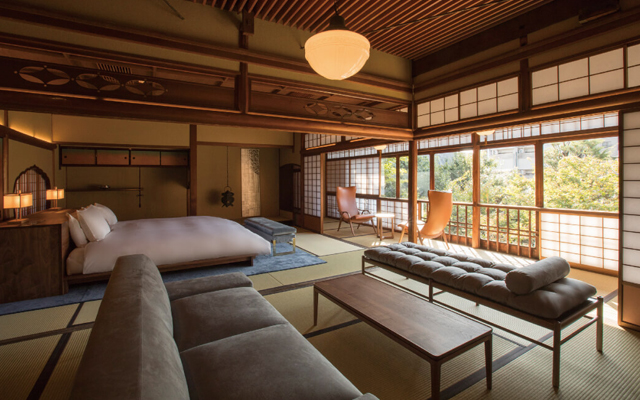
Located in the heart of Kyoto, Sowaka, a 23-bedroom luxury ryokan hotel, has opened its doors to international guests. Conceived through the renovation of a century-old sukiya-style building, Sowaka’s main building comprises 11 bedrooms, and a 12-bedroom annexe. Guests can select from rooms with a wide variety of styles and amenities – think outdoor bathtubs, private gardens, a wooden naguri wall, or a tea ceremony room. Hotel facilities include the La Bombance restaurant, a private bar, lounge, Japanese garden, and rooftop balcony.
Radisson Blu Resort Cam Ranh, Vietnam
Nestled on Long Beach, an 18km-long stretch of sand in Khanh Hoa province, Radisson Blu Resort Cam Ranh features 292 rooms, suites and pool villas, ranging from 45m² to 140m². The 36 villas also boast private pools, cabanas and alfresco dining areas.
The beachfront resort houses six F&B venues: Sunrise, an all-day dining destination; Blu Lobster, a Vietnamese restaurant and seafood grill; and four bars. Other facilities include a spa, an outdoor infinity pool, fitness centre, and nine meeting facilities, including a Grand Ballroom that can seat up to 385 persons for a gala dinner.
The Farm, the Philippines
Following its acquisition by CG Hospitality last October, The Farm at San Benito, an eco-luxury medical wellness resort and spa in Batangas, the Philippines, has recently completed its expansion to accommodate more wellness travellers.
One of the new additions to its portfolio is the Mahogany Villa. There are five Mahogany Villas available, four of them measuring 300m² and featuring one bedroom. The remaining Mahogany Villa spans 600m², with two bedrooms, a pantry, and a nanny room. The Farm will also be opening two new Bamboo Villas, which are 400m² spaces with one bedroom, a bathtub, and TV, for regular guests.
Centara Sonrisa Residences & Suites Sriracha, Thailand
The 145-key Centara Sonrisa Residences & Suites Sriracha in Chonburi Province offers an array of accommodation options: the Superior, Deluxe and Deluxe Seaview guestrooms are ideal for two, while the Family Residences and Two-bedroom Suites can comfortably accommodate families of four to five. Residences are also equipped with kitchenettes and furnished with children’s bunk beds.
There are three F&B options on-site: UMI which offers traditional Japanese cuisine; Zing, a casual delicatessen and café; as well as Tropicana Pool Bar and Sky Bar, which both serves light bites, refreshments and cocktails. Other facilities include a ballroom which can accommodate up to 120 persons theatre-style; fitness centre; kids’ club; outdoor swimming pool and water playground.
Novotel Perth Murray St, Australia
Accor & Fragrance Group have launched the 431-room Novotel Perth Murray St, which soft-opened on December 19, 2019. Situated in the heart of Perth’s CBD, the hotel features a fitness and spa facility, including a pool, steam room, day spa and sauna, four bars and restaurants, four meeting rooms and a conference room for up to 120 people banquet-style. The first phase saw 40 rooms open in December, with the rest of the hotel to be fully operational by 1Q2020.
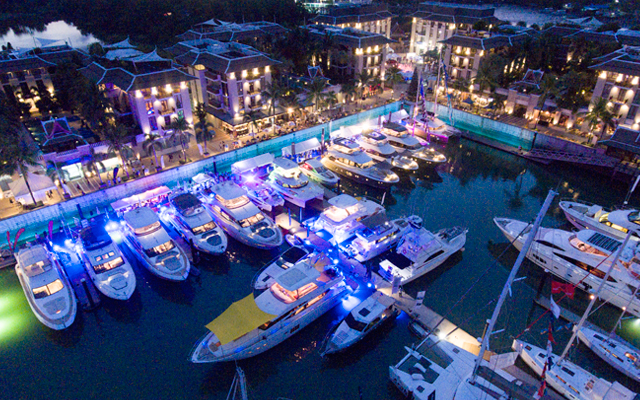
The fifth edition of the Thailand Yacht Show (TYS) is taking place at Royal Phuket Marina from now until January 12, 2020.
Targeting yachting aficionados and wealthy lifestyle enthusiasts from all over the region, TYS aims to position Thailand “as the primary Asian destination in the global yachting arena” and attract foreign yacht tourism.
Thailand Yacht Show returns for its fifth edition at Royal Phuket Marina from now until January 12
The show will feature an on-water display, which is a first-class array of luxury yacht models, including several premieres, from the region’s leading brokers and world’s biggest boat builders.
The exhibitor line-up includes renowned brands, charter agencies, high-end property developers and leading names in the automotive, hospitality and F&B industries. A mix of high-net-worth buyers and sellers, as well as aspiring yacht owners, will also be in attendance.
As well, Italian boatbuilder Azimut Yachts will display two brand-new models, while British brand Sunseeker will have a front-line showpiece yacht to demonstrate the ultimate in high-fashion luxury boating.
Visitors to TYS 2020 will find a whole host of new features, including interactive demonstrations, special Children’s Day events, art exhibitions and an artistic masterclass, live music, fashion shows and an array of F&B options, including a brand new Floating Bar in the heart of the marina.
The Show’s main draw remains the world-class selection of yachts and boats – from small sailboats to superyachts, RIB’s to jet-skis, navigation systems and chandlery to the latest water-sports toys – for visitors to admire, and to charter or purchase. TYS will also offer the opportunity for first-timers to try sailing a yacht from its Demonstration Platform.
The private island of Koh Rang Noi, situated a short ride from the main exhibition, will serve as the venue for TYS 2020’s Welcome Party on January 9, as well as the backdrop to the show’s Superyacht Hub, which will showcase a selection of international superyachts at anchor.
Tourism is one of the fastest-growing industries in the world, bringing tremendous economic benefits to destinations. But as the world becomes more accessible, tourism can become a double-edged sword, bringing with it overtourism – hordes of tourists that strain a destination’s infrastructure and resources.
In addition, travel contributes to the single-use economy as well, no thanks to plastic cups used onboard aeroplanes to unused blocks of soaps in hotels that have to be thrown away. Even flying itself is deemed shameful nowadays.
Tourism will never be completely sustainable, but we can all work towards a common goal of making it more sustainable
But on the alternative end of overtourism is sustainability, a buzzword throughout 2019, and I believe 2020 as well. This comes as the tourism sector discovers ways and means to make tourism both beneficial and sustainable.
From destinations like New Zealand and Thailand, to tourism services like airlines and cruise liners, to international hospitality companies like Marriott and Pan Pacific Hotels Group, many private stakeholders in the tourism sector have clambered on the sustainability bandwagon.
Numerous efforts undertaken by these companies include switching to large-format bathroom amenities, minimising carbon emissions by using fuel more efficiently, the introduction of limits to renowned attractions, and employing various zero-waste tactics to minimise food wastage.
But as sustainability has now moved beyond single-use plastics and recycling, a more conscientious approach is also required, according to a report by B2B4E travel management platform CWT. This means that companies in the tourism sector need to look at all aspects of the supply chain – from reducing their environmental footprint by sourcing locally to choosing a sustainable venue for their events, to helping to tackle human trafficking and promote gender diversity in the various industries.
I couldn’t agree more.
Cliché as it might sound, every little bit will help. But with the combined efforts of the private sector and the government, perhaps we may be able to better balance development and sustainability, and leave a lighter footprint wherever our feet take us.
A maiden call ceremony was conducted for Royal Caribbean International’s Spectrum of the Seas when it called at Subic Bay, the Philippines on January 7, 2020, during her seven-night sailing from Hong Kong.
At 169,379 gross registered tonnes, Spectrum of the Seas is the first Quantum Ultra Class ship that has a total capacity of 5,622 guests.
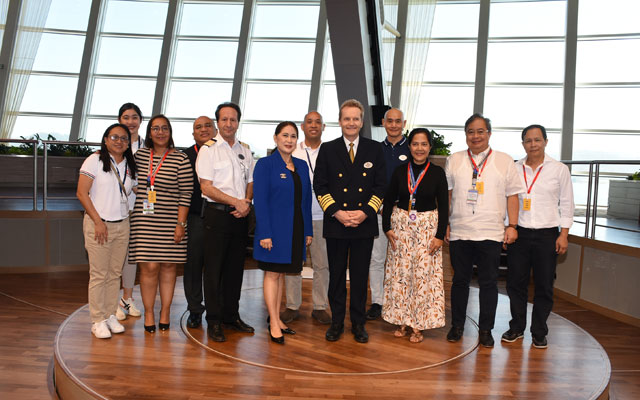
The plaque and key exchanges took place onboard the ship between captain Flemming Nielsen; and Wilma Eisma, chairman of Subic Bay Metropolitan Authority; Carolina Uy, director for Department of Tourism Region 3; as well as captain Terence Uytingban, general manager for Ben Line Agencies.
Edward E Snoeks has been appointed as the general manager of Sindhorn Kempinski Hotel Bangkok and The Residences at Sindhorn Kempinski Hotel Bangkok, which is slated to open in April 2020.
Prior to his current role, Snoeks held senior executive positions with Marco Polo, IHG, and most recently, Okura Hotels, across major destinations in Asia such as Kuala Lumpur, Hong Kong and Bangkok.
He has also served as vice president hotel operations for Hong Kong Parkview Group, and also played a key role in the openings of Eclat hotels in Taipei and Beijing, as well as other projects in Hong Kong.
OUTBOUND TRAVEL: STRONG OUTBOUND DEMAND FROM ASIA SINGAPORE
Ongoing socio-political unrest in Asia and beyond has limited impact on the travel confidence of Singaporeans, a market that does not typically shy away from riskier destinations.
For instance, following the Easter Sunday attacks in Sri Lanka, groups from Singapore continued to travel there without worry, as “they feel safe because security is really tight”, said Maleha Maarof, sales manager of Prime Travel & Tour.
Georgia is projected to be one of the hottest destinations for Asian travellers
However, this mindset has not applied to travel to Hong Kong. As riots rage on in the once-popular destination, Singapore’s travel agencies are reporting mass cancellations, triggered in part by heightened travel advisories from the Ministry of Foreign Affairs.
“Tourism to Hong Kong has definitely been impacted by declining numbers, especially for the leisure travel segment. Forward enquiries and bookings have dropped significantly due to the local political unrest,” shared Alicia Seah, director, public relations & communications, Dynasty Travel.
Euro-Asia Holidays’ managing director Maggie Tay agreed, explaining that while a few still dare to brave the city despite ongoing protests, the vast majority are shunning it altogether.
Instead, Singaporeans are fulfilling their wanderlust in other Asian destinations like Japan, where smaller unknown prefectures are capturing the attention of travellers.
Diana Ho, general manager of Royal Wings Travel, said: “Our focus next year will be on Japan. Singaporeans will travel around the Olympic Games or avoid Tokyo, so we will promote more tours into Kochi Prefecture and Aomori Prefecture.”
Longhaul destinations, including Eastern and Northern Europe, and the Balkans, are also attracting Singaporeans as the euro weakens against the Singapore dollar.
To ensure safety and quality in their tours, agencies are doubling down on efforts to build and maintain strong relationships with in-destination partners.
Dynasty Travel, for example, is involving its suppliers and partners in product development and planning, as well as inviting them to travel events as presenters. Come 2020, Dynasty Travel will launch even more exotic products, such as the first-ever Svalbard Expedition Cruise and packages for Iran. – Pamela Chow
MALAYSIA
Malaysia’s outbound travel sentiment remains strong in 2020, fuelled by new packages and destinations to whet travellers’ appetite, despite the US-China trade war uncertainty and a weak ringgit.
Sheikh Awadh Sheikh Abdullah, managing director, Gotz Travel & Tours, revealed that demand for longhaul holidays remained strong for the Chinese New Year period, with Turkey, the Balkans and Western Europe being popular destinations. For Muslim families, he said programmes to Spain and Morocco were in demand.
The company will be promoting the Caucasus region this year, namely Armenia, Azerbaijan and Georgia, as Sheikh Awadh believes that these destinations would appeal to the luxury and middle income travellers seeking new destinations beyond Europe. The Malaysian Association of Tour and Travel Agents Kuala Lumpur chapter, of which Sheikh Awadh is also a committee member, will be organising fam trips for its members to visit the three countries in 1Q2020.
Overall, he expects outbound business in 1Q2020 to increase by two to three per cent from the corresponding period in 2019.
Raaj Navaratnaa, general manager, New Asia Holiday Tours & Travel, shared that the company was seeing stronger demand from millennials travelling regionally to off-the-beaten-track areas in 2020.
“Millennials love soft adventure and discovering new places, but with limited disposable income, they focus on regional travel. They love venturing off the beaten path, exploring beyond the normal attractions,” he said, adding that there is strong demand for travel to Myanmar, Laos, Cambodia, Vietnam and India.
He added that NGOs and clubs in Malaysia are also showing increased interest in volunteer tourism, which are mainly community-based projects in the region such as helping with repairs and upgrading of rural school facilities.
William Chu, director, VIP – Corporate Travel & Tours, noted a keener interest to visit Japan in 1Q2020 as Malaysian travellers wanted to shun the higher ground rates during the 2020 Summer Olympics in Tokyo. – S Puvaneswary
INDONESIA
Indonesian outbound travel companies are expecting brighter market prospects in 2020, driven by a positive confluence of factors including aggressive marketing and promotions by international NTOs and inl airlines.
Pauline Suharno, managing director of Elok Tour and secretary general of the Indonesian Travel Agents Association (ASTINDO), said: “Travelling has become a lifestyle for Indonesians. They even take a short break or a long weekend to travel out of town.”
With the re-election of Joko Widodo as the Indonesian president during the recent election, the market’s interest in travel has risen.
Meanwhile, high domestic airfares have also given impetus to the outbound push. “With domestic airfares remaining high, we expect to see higher outbound traffic in 2020,” Pauline said.
While Japan and South Korea remain top of the list, travellers now have many more choices, thanks to promotions from various NTOs.
The Taiwan Tourism Information Center opened an Indonesian representative office in Jakarta in 2019 to grow outbound traffic from Indonesia, while India has launched its charm offensive in the country, starting with visa-free facilities.
Likewise, Sri Lanka, Nepal, Butan and Uzbekistan are stepping up their destination marketing efforts in the country. Uzbekistan Airlines also recently started direct flights between Tashkent and Jakarta, boosting connectivity between the two countries.
Anton Sumarli, director of Travelux Travel Services and ASTINDO board member said: “Sri Lanka is a visa-free destination for Indonesians and the country is eager to grab the outbound market from here. They have invited (agents) for a fam trip, participated at travel fairs here and is planning to organise photo exhibitions to create more awareness among Indonesians.”
Pauline added: “Nepal and Bhutan are high-end destinations that are likely to attract Indonesia’s younger travellers who are more enthusiastic to walk and hike, rather than the mature ones who like exotic destinations but still enjoy luxury and comfort.”
Sharing similar sentiments, Anton said: “Sri Lanka, Nepal and Bhutan have the potential to attract special interest tourists, especially those who like adventure or photography.”
Meanwhile, the memorial complex of famous theologian Imam Al-Bukhari in Uzbekistan is expected to attract Indonesian Muslim travellers, according to Anton. – Mimi Hudoyo
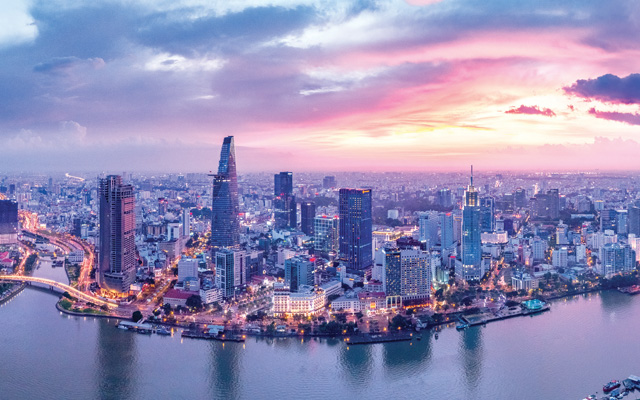
Whether as a tourism destination or source, Vietnam is seen as one of Asia’s hottest markets; Ho Chi Minh City pictured
INBOUND TRAVEL: ASIA PROPS UP REGIONAL TOURISM MALAYSIA
Inbound agents specialising in European markets are banking on stronger demand on the back of Tourism Malaysia’s more aggressive promotions in Europe over the last two years, coupled with the increased budget allocation to promote the Visit Malaysia 2020 campaign.
Asian regional markets are also expected to see a pick-up this year, thanks to improved air connectivity, visa relaxation for Chinese and Indian tourists, and the anticipated opening of Resorts World Genting’s outdoor theme park.
Saini Vermeulen, executive director, Within Earth Holidays, shared that the company has received strong bookings from Western and Eastern Europe, resulting in a 30 per cent hike in forward bookings over 2019. He said that this was partly due to the company’s efforts to conduct more sales calls in Europe last year, as well as Tourism Malaysia’s initiative of being partner country at ITB Berlin 2019 which generated further interest in Malaysia from Europe.
He noted that Qatar Airways’ flights to Penang and Langkawi have also triggered the interest of European tourists to visit both destinations, so the company has created more tour packages in both destinations to capture the European market.
Manfred Kurz, managing director, Diethelm Travel Malaysia, remarked that while travel demand from Central Europe and North America was strong, he expected bookings from the UK to be slow due to the uncertainty of Brexit. He said: “Once Brexit is solved, we expect demand from the UK to pick up. With the current uncertainty, the British people are reluctant to plan too far ahead.”
Ganneesh Ramaa, vice president, Destination Explore, projected a 10 per cent increase from Indian and regional markets this year, partly due to the recent relaxation of the visa rules for Indian nationals. He shared that the main challenge in 2019 was the Indian election in May which coincided with the peak summer travel period to Malaysia, resulting in a drop in Indian arrivals. He is upbeat that the upcoming summer travel season will fare better in 2020.
He opined that once Resorts World Genting’s outdoor theme park becomes operational, it will further boost arrivals from Asian markets. His company is also working closely with Sarawak Tourism Board to promote Sarawak packages to its Asian clients. For European markets, the company has created new packages highlighting nature and beach stays in Johor.– S Puvaneswary
INDONESIA
Indonesian inbound players are forecasting growth from countries in the Asia-Pacific as bookings from Europe and the US slow down.
INA Leisure is expecting the growth in inbound arrivals from the Indian and Middle Eastern markets in 2019 to continue into 2020, according to its owner and executive director Jongki Adiyasa.
“Most Indian travellers are still attracted to Bali, but Middle Easterners have started to venture beyond Bali to Lombok and East Nusa Tenggara,” he said.
Aneka Kartika Tours is also seeing a spike in visitor arrivals from South-east Asia in 2020, on the back of more direct flights between Indonesia and its neighbouring nations.
Its operations manager, Adjie Wahjono, said: “The South-east Asia market is quite promising for us. We are in the process of bidding for big incentive groups (over 100 pax) from the Philippines and Vietnam, which is a new market that has opened for us, thanks to Vietjet’s and Vietnam Airlines’ recent launch of (five-times weekly) direct flights between Ho Chi Minh City and Bali.”
Adjie said that his company’s foray into the Vietnam market four years ago started bearing fruit towards the end of last year when group enquiries rolled in, with scheduled arrivals between December 2019 and February 2020 at press time.
“Malaysia Airlines is offering competitive airfares from Vietnam to Bali via Kuala Lumpur, which also opens up more options for travellers from Vietnam to visit Indonesia,” Adjie said.
However, both Jongki and Adjie are seeing a slow start to inbound bookings from the longhaul markets of Europe and the US.
Jongki said: “Summer bookings from Europe are not looking promising yet. The beginning of the year seems to be very quiet and we expect to see the market start moving from April onwards and grow stronger after June, provided that the (social and political) conditions in Indonesia continue to stabilise.”
Adjie added: “On one hand, we have seen the market’s confidence, as our business partners have extended their contracts and new accounts added. We have also started to get group bookings, but there haven’t been many FIT bookings, which usually start pouring in between November and February, so I have not been able to project how summer 2020 will be like.”
While Panorama Destination’s director of business development Ricky Setiawanto said it’s too early to predict the longhaul market’s performance, the company has received positive feedback from its European business partners on its 2020 outlook.
He said: “Generally, our business partners, particularly from the Netherlands, are optimistic that our performance in 2020 will be better than 2019. However, we should see a clearer picture in January or February. Vakantiebeurs (a travel fair taking place in the Netherlands in January) is usually a (barometer) to see how the market will perform during the year.”
Meanwhile, a promising market is Denmark, whose extensive airline capacity to Asia reflects the market confidence in this part of the world.
Emirates, for example, offers extensive flights to Asia, including Indonesia; as well as a daily A380 service between Copenhagen and Dubai. Meanwhile, Singapore Airlines and Turkish Airlines also fly to Copenhagen. As well, South Africa is another longhaul market which is faring well, according to Ricky.
“The country has been performing well in 2018 and 2019, and should the economic situation in South Africa remain stable, we expect the market to grow even bigger in 2020 – both in volume and spending,” he said. – Mimi Hudoyo
Thailand’s Kanchanaburi is gaining prominence with the entry of upmarket resorts like the X2 River Kwai Resort
HOSPITALITY: SPOTLIGHT ON DESTINATIONS OFF THE BEATEN PATH
Asian destinations that sit off the well-trodden tourist trail will shine in 2020, predict hospitality leaders.
Interest in Vietnam has shown no sign of waning as a swathe of international hospitality brands gear up to expand in the country’s established and emerging destinations.
Javier Pardo, vice president of operations for Avani Hotels & Resorts, said: “Vietnam is developing rapidly and is improving its air and land infrastructure, allowing more developments into other destinations within the country.”
The brand plans to open properties in Doc Let, Nha Trang, Ho Chi Minh City and Cam Ranh by 2022.
Vietnam is also on the radar of Michael Issenberg, Accor’s chairman and CEO for Asia-Pacific. Besides Vietnam, he believes that India, Cambodia and the Maldives will be some of 2020’s “hottest” spots.
Added Issenberg: “Destinations like Phu Quoc, Inle Lake, Jaipur and Udaipur are going to grow in 2020 as people seek places that are a little bit less touristy.”
Despite travellers’ growing appetite for off-the-beaten-track destinations, Issenberg said that “places like Singapore, Bali, Bangkok, Sydney and Melbourne will continue to perform well”.
Even in the established tourist destination of Thailand, secondary cities are now growing in prominence among international travellers, noted Paul Wilson, executive vice president of commercial at Cross Hotels and Resorts.
“Kanchanaburi, for instance, is becoming a hotspot. Hotel infrastructure is getting better with more five-star hotel openings, including our two properties there, which come on top of existing attractions like the Death Railway, as well as easier access to the destination,” he remarked.
Neo Soon Hup, executive vice-president, operations, for Pan Pacific Hotels Group, said that Asian source markets will continue to drive business across the region come 2020, with China leading the pack.
Despite a slowdown in the Chinese economy, Issenberg said that this will not impact business due to the size of China’s population and fast-growing middle class. He added that Asia’s hospitality industry will be eyeing up some of 2020’s fastest-growing outbound markets – India, Indonesia, Malaysia and Vietnam.
As well, India is a market that “cannot be ignored,” said Wilson, as Cross Hotels plans to open a GSA in the country soon. “Although we don’t have that many guests from India yet, we want to be ahead of the curve in tapping business from the country.”
In spite of a healthy outlook, challenges remain. Pardo said that human resources is the biggest hurdle to overcome, alongside retaining staff in an industry where competition is rapidly growing.
He said: “Looking for passionate hospitality (staff) and preparing young hoteliers for future career progression is difficult. Maintaining the talent is the next challenge, as the industry is quite competitive now with all the major consolidations, so turnover is quite fast.” – Marissa Caruthers and Xinyi Liang-Pholsena
AirAsia takes delivery of first Airbus A321neo
AIRLINES: CAUTIOUS OPTIMISM
Asian airlines are bracing for slower growth in 2020 amid softening Chinese outbound travel demand and economic uncertainty owing to the ongoing US-China trade war, but industry leaders also say it is not all doom and gloom.
That was the common consensus among airline chiefs at the CAPA Asia Aviation Summit and Corporate Travel Summit held last November in Singapore, who said they saw pockets of opportunities in growing ancillary fees, focusing on untapped inbound traffic and market segmentation.
For regional LCCs, Jetstar Asia and Thai AirAsia both reported that revenue for ancillary fees was growing – at about one to two per cent annually – and now constitute between 18 per cent and 30 per cent of revenue.
Jetstar Asia’s CEO Barathan Pasupathi said that there are opportunities for airlines in the “vertical chain” and sharing platforms where passengers not only book air tickets, but also rides to and from the airport via a car-hailing service, and booking of hotel rooms, etc.
Ancillary fees for Jetstar Asia have jumped from the “tens” to around 30 per cent, he noted.
Thai AirAsia’s executive chairman Tassapon Bijleveld said that OTAs were “not selling ancillary (products and services)” and that the airline would have to drop big OTAs in China and work with those willing to sell ancillary products and services.
Chinese traffic has been slowing down over the last two years, he added, and despite a two per cent pick up, the market was not what it used to be.
Tassapon added: “The Thai baht is very strong and there are no fundaments to explain why. We are suffering because of the exchange rate.”
AirAsia group CEO Tony Fernandes said that he remains “very, very optimistic” about 2020. “We see further growth in network and passengers in 2020 and beyond, both in the domestic and international sectors,” he said, citing the carrier’s purchase of 353 Airbus A321neo aircraft as the backbone for its expansion plans.
The A321neo, which has a 27 per cent increase in capacity compared to the present fleet of 180-seat Airbus A320 and 186-seat A320neo, will eventually replace AirAsia’s existing fleet throughout the network.
For IndiGo, the Indian LCC is betting big on the potential of East Asia, with the launch of new services to Chengdu, Guangzhou, Yangon, Ho Chi Minh City and Hanoi, according to the airline’s CCO Willy Boulter.
Boulter said that the airline was changing its domestic focus, going international and tapping the Chinese inbound market to India, both for leisure and business. He added that IndiGo was also eyeing more outbound traffic to Thailand, with the introduction of visa fee waivers.
For full-fledged airline Garuda Indonesia, its strategy is to work with companies that provide services for travellers looking for a luxury experience such as private jet services.
Elsewhere, Tamas Hanyi, Finnair’s general manager for Asia-Pacific, was optimistic with forward bookings for 1Q2020.
He said: “Bookings on the Singapore-Helsinki route in 1Q2020 are looking really good, and hopefully, we can maintain it,” despite acknowledging headwinds as the result of the ongoing US-China trade wars and the uncertainty of Brexit.
Finnair will further expand its network in North Asia, by offering daily flights to Haneda from March 29 and three weekly flights between Helsinki-Busan from March 30.
Hanyi told TTG Asia at the recent ITB Asia in October that overall passenger growth on its Singapore-Helsinki route had increased by seven per cent year-to-date over last year, while group travel had increased by 30 per cent for the same period. He believed the reasons for this were the continuous education to consumers and travel partners that flying via Helsinki is geographically the shortest way between Europe from Asia as well as its high consistency and reliability of its product offerings.
Indonesia is an increasingly consolidated market where the government set a cap for the selling price of airline tickets, said Garuda Indonesia’s CEO I Gusti Ngurah Askhara Danadiputra.
Meanwhile, CAPA – Centre for Aviation chairman emeritus Peter Harbison said that the industry would face four game changers in the coming decade.
He said that there would be environmental headwinds caused by “flight shaming” and the impact on corporate travel; distribution and technology change due to data analytics and big tech companies that know more about the customer; new aircraft technology revolutionising route planning; and partnerships and foreign ownership changes, where individual airlines have to respond to bilateral agreements because of market needs and groupings like Star Alliance, Oneworld and SkyTeam being challenged.– Caroline Boey and S Puvaneswary
iFly skydive simulator onboard Royal Caribbean International’s Quantum of the Seas
CRUISES: CHARTING NEW WATERS
To draw more Asians on board cruising holidays, industry players are churning out more immersive and pampering products that regular travel cannot offer.
With new ships and infrastructure in the region – such as Royal Caribbean Cruises’ Quantum of the Seas homeported in Singapore until April 2020 and Dream Cruises’ Global Dream launch in 2021 – Asia’s cruise industry is set for an uptick in growth momentum starting 2020-2021, expressed Dream Cruises’ president Michael Goh.
The cruising experience has also been redefined by personalised guest engagement. Goh explained: “Global Dream will be equipped with state-of-the-art digital technology, such as facial and speech recognition, as well as climate and mood lighting controls via a mobile app. It will be optimally designed to meet the advanced digital requirements of the Asian cruise market.”
For Uniworld Boutique River Cruise Collection & U River Cruises, that personalisation is exemplified in afternoon tea gatherings with guests and handwritten postcards with personal greetings post-trip that create “a very good relationship between consumers and cruise liners”, explained Henry Yu, director, Asia.
Some companies have also collaborated with partners and authorities to enhance the off-ship experience. For example, Royal Caribbean International (RCI) recently entered into a five-year multimillion-dollar marketing partnership with Singapore Tourism Board and Changi Airport Group (CAG) to promote fly-cruises.
Under this partnership, RCI will tap on CAG’s seamless intermodal transfer service for passengers flying into Singapore and sailing out on cruise lines and ferries. RCI guests sailing out of Singapore from China will have their bags delivered from their arriving flights to their departing ship and enjoy facilities of the Changi Lounge located in Jewel Changi Airport, before being transferred to the cruise terminal.
RCI is also looking into drawing in more multigenerational travellers. Angie Stephen, managing director Asia-Pacific, Royal Caribbean Cruises, said: “We’re also working on a new children’s programme that we hope to announce next year. We’re also looking at themed cruises – for instance, we’re partnering a local radio station in March 2020 – and we’ve also successfully completed a halal-certified cruise for a partner in Malaysia with 500 guests on Voyager of the Seas (in November 2019).”